Author: Darrell Etherington

  • Early Apple iPhone Developer Prototype Looked More Like An iPad, Had Ethernet And Serial Ports

    iphoneprototype2

    Apple has been working on the iPhone since long before it hit the market in 2007, and today a new developer prototype has come to light that shows how it might have looked if they’d rushed it to market earlier. The 2005 internal prototype is pictured in photos obtained by Ars Technica, from an unnamed former Apple employee.

    The prototype iPhone doesn’t look like an iPhone as we know it at all, aside from the fact that it boasts a rectangular screen. The device is 5″ x 7″, closer to the current iPad mini than anything else, which is 5.3″ by 7.87″. It’s also two inches thick, which is around the depth of six iPad minis stacked, but that was necessary for including all the ports the iPhone prototype had on board.


    Yes, ports. The early iPhone design had a USB port, Ethernet and serial. They weren’t included so that you could hook up to your dot matrix printer – Ars’ source says the development team was simply making the gadget as easy to work internally with as possible in its early, pre-release form. The unit itself was designed completely around helping the internal team refine the product; a large display also makes it easier to work with. But back then everything was up in the air, meaning it was still arguably a real possibility that the iPhone could have shipped with wired Internet on board.

    Ars notes that the chip used in the prototype is the older, slower antecedent of the Samsung-made ARM design used in the actual first iPhone, so the partnership was in place long before Apple went into full-scale production.

    Apple co-founder Steve Jobs said in 2010 that Apple actually worked on the iPad before it ever began work on the iPhone, so it makes sense that an early prototype for an Apple phone would largely resemble the Apple slate that would later follow. And in basic engineering terms, it’s easier to work big before working small. And even though they never would’ve shipped it, it’s funny to imagine that Apple was making phablets long before Android OEMs were stretching the limits of what sized device can comfortably be termed a “phone.”

  • Galaxy S IV Reportedly Leaks, Remains Visually Similar To Galaxy S III

    i9502

    The Samsung Galaxy S IV is being announced later this week at a special event, but we’ve already seen plenty of leaks regarding the flagship phone’s hardware, but now there’s a new one (via SammyHub) that claims to depict the phone in the flesh, giving us an idea of what it could look like. If these leaks are accurate, the GSIV changes little from the previous generation and Galaxy Note II designs.

    Posted to a Chinese forum, it’s still very possible that these are images of another yet-to-be released Samsung device, or simply elaborate fakes, but if that’s what they are, then they’re very well done. The images show a Samsung-branded phone with a 5-inch display, a metal-look band surrounding the phone, and what looks like slightly textured front and back surfaces. The rear is a glossy white, the slab has rounded rectangular edges, and the screen looks to extend closer to the bezel than in any previous Samsung handset, meaning it could manage not to have grown that much in terms of physical size despite the larger display.


    The leak fits with reports that the Galaxy S IV will retain its plastic outer case, and agrees with other recent rumors about software and internal specs, since it’s shown to be running Android 4.2.1, has a 1080p displays, runs 2GB of RAM and offers a 13-megapixel camera. The CPU numbering also suggests that it has a Samsung Exynos Octa chip on board as previously reported.

    Samsung has been known to epically troll its fans, as it did last year with a disguised version of the Galaxy S III which was covered in an outer case that hid its true design. We could be seeing that sort of thing again, but this leak looks much more convincingly like a shipping device, not encased in any disguise. Regardless of whether it’s the real thing or not, we’ll find out for sure what Samsung’s latest flagship looks like on Thursday.

  • Philips Debuts Open APIs And An iOS SDK For Hue Connected Lighting System

    Hue-Starter-Pack

    Philips Hue is a lighting system that changes the definition of what your standard home lighting setup is, and now there’s an official developer program for the innovative Wi-Fi-connected bridge and bulbs, so that third-party apps and hardware can pick up what Philips has started.

    To be clear, people have developed apps for the Philips Hue system already; we covered one two Hue hacks just last week, including an iOS app that turn your Hue home lighting into a dance party, and a software add-on for Minecraft that changes your ambient lighting to match the day/night cycle in the world building game. But those, and other Philips apps to date, have been built mostly by developers who are reverse engineering their own solution.

    Philips recognized that devs wanted to do different things with the Hue, and decided to help them out, by opening up an official developer program, complete with an SDK for iOS developers, and APIs that allow both software and hardware makers to take advantage of the Hue’s connected features. The official tool means that developers can depend on it as a stable channel through which to build Hue integration into their products.

    Hue uses the ZigBee standard for home automation, which means that they can talk to each other, as well as motion detectors, connected thermostats, connected appliances and more. The new developer program will mean that hardware makers using these standards can build in Hue-compatible features, so that the lights can be triggered by various actions. You could have a specific light recipe come on whenever you open the door, for instance, or when a thermostat is set to specific climate setting.

    Other potential uses of the developer tools include apps for amateur and professional photographers, which could help them optimize lighting for a shoot with a simple app attached to a device with light level detection capabilities. Philips also plans to release future features around geo-fencing, scheduling and other smartphone sensor capabilities that could expand what developers can do with them.

    “We’re now at a point where there are already about 10 applications that have been shared and built from the unofficial developer community for new applications around Hue,” explained George Yianni, HUe System Architect in an interview. “Now what we want to do as Philips is we actually want to help and grow and encourage this community, and give them tools and proper documentation. Also, we want to give them commitment that this is the API and we’re going to support it and it won’t change overnight.”

    Yianni says that’s been the big roadblock stopping bigger developers and companies from creating apps and accessories for Hue so far. Specifically, it’s been holding up hardware development, he says, and that means you can probably expect to see some big names start to integrate Hue into their own lines of connected home devices.

    The developer tools will be available free to anyone who wants to create applications and devices that connect to the Hue system. Philips will also continue to work on expanding the Hue line, Yianni said, with new lightbulb types to follow soon. With new third-party investment in the Hue ecosystem, as well as more from Philips itself, it’s about to become a lot more than just a different kind of lightbulb.

  • Google Glass App Identifies People By Clothes, Hints At Tech That Could Counter Face Blindness

    google glass

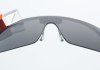
    That problem where you’re meeting someone for the first time, maybe to pick up something you bought through Craigslist? Google Glass can help with that. A new app designed for Google’s upcoming smart-mounted computer will be able to identify people based on what they’re wearing. The so-called InSight project (via 9to5Google) is funded in part by Google and developed by University of South Caroline and Duke University researchers, and uses a smartphone app to develop a clothing-based digital fingerprint to help identify strangers.

    The app would let users like sellers on Craigslist, or members of online dating sites, or anyone meeting someone for the first time create a profile of themselves using their smartphone camera, and shots from various angles. InSight would then piece together a virtual profile of that person based on what they’re wearing, which could then be used by Google Glass to make a positive ID when that person comes within range of its visual sensors. It’s very sci-fi, it’s very cool, and best of all, it’s very accurate: in tests so far the researchers behind the project have been able to get a positive match 93 percent of the time.

    The system uses clothes because it provides more visual signals at a distance to help with identification, and also because it keeps a user’s identity more or less private, since all they have to do is change clothes in order to not be identified by the same person’s Google Glass application in the future. But it could be refined to help with prosopagnosia, otherwise known as face blindness, and that’s where Google Glass’s therapeutic potential really starts to become apparent.

    Prosopagnosia may affect up to 2.5 percent of the world’s population to varying degrees, according to a recent study, so while rare a system that corrects it could still have a significant impact. InSight, or technology like it, could help by identifying people based on their facial characteristics and keeping a stored database of people know to the Google Glass wearer, so that they can ‘recognize’ faces thanks to information provided through their heads up display.

    The same kind of tech could also help with visual agnosia, a disorder resulting from strokes that can render a patient incapable of identifying everyday objects. And for more quotidian uses, it could work in tandem with language learning software to help learners identify the world around them in their target tongue.

    Google Glass may not be something consumers can buy quite yet, but it’s already showing that it could have plenty of applications beyond just acting as an extension of your smartphone.

  • HTC Facebook Phone Specs Leak, Outlining A Solid Mid-Range Device With FB And Instagram Pre-Loaded

    Facebook Phone

    Question: How do you attract a key youth, mobile-first demographic to your social network and get them to increase engagement? Answer: Partner with an OEM handset manufacturer to create a powerful yet reasonably priced branded device with all your software already on board. Facebook looks to be readying a follow-up to the HTC Status, a mid-market smartphone it released with a dedicated Facebook button in 2011, and a new leak shows off its specs.

    Over at Unwired View, noted leakster Evleaks claims to have obtained a recent list of HTC Facebook phone specs (from a source with a proven track record, unlike another recent Evleaks discovery), and they confirm earlier leaks on the same, with some improvements for the better. The HTC Facebook phone, codenamed the “Myst,” will reportedly have a 1.5GHz dual-core MSM8960 SoC processor from Qualcomm, along with 1GB of RAM and 16GB of internal storage, which isn’t expandable. It’ll have a 5 megapixel rear camera, and a 1.6 megapixel front-facing shooter, if the stats are correct, and will run Jelly Bean 4.1.2.

    The screen won’t be overly massive at 4.3 inches, with 720p resolution and 320PPI pixel density, but it should be a good-looking device regardless, with near-Retina resolution. That’s good for showing off Facebook’s upcoming News Feed redesign, which is hitting mobile platforms as well as the desktop over the course of the coming months.

    The HTC/Facebook collab should ship in the U.S. by sometime this spring, according to Unwired View, complete with Facebook software onboard, including the app for the network itself, Facebook Messenger, and Instagram. It’s not like the apps aren’t popular enough already, but a relatively inexpensive device with the software already onboard is a way for Facebook to target directly the market where it needs to start seeing more growth. The handset doesn’t seem to be too far below top-tier devices based on these specs (with the exception of that camera, which could use HTC’s Ultrapixel tech to still deliver solid photos), so if it’s priced right it could be a boon for both Facebook and HTC.

  • Ambify, A Music App For The Philips Hue Lighting System, Shows The Potential Of The Connected Home

    large_intro


    The Philips Hue lighting system is pretty neat on its own – it lets you control lighting in your house from your iPhone or iPad, adjusting bulb color and brightness remotely via your Wi-Fi network. Ambify is a new app from Stuttgart, Germany-based developer Kai Aras that makes the connected lighting system even cooler, by plugging it into a media player app on the iPhone to automatically generate real-life light shows from your own iTunes library.

    Ambify connects to a Hue bridge, and applies algorithms to the audio played back from your library via your own iTunes playlists in order to create real-time visualizations using Hue bulbs, altering color, brightness and the rate of change in time with the beat to create a club-like display without any complicated programming or control systems involved.

    The system works with both Philips Hue lightbulbs, and with Living Colors and Living White lamps, when those are connected to the Philips bridge. As you can see in the demo video, depending on how extensive your setup is, the effect can be pretty stunning.

    The app is $2.99, which is way cheaper than any other kind of complicated professional sound and light management apps you might get to pull off this kind of display. The Philips Hue isn’t cheap in terms of the cost of getting the base system ($200), but Ambify goes to show that you can do much more with the connected lighting kit than initially meets the eye. A Mac version of Ambify is also planned for release soon.

    Just yesterday, Romain covered a Minecraft hack that uses the Hue to mimic the in-game cycle of day and night, in order to provide a more immersive experience. Developers have clearly only begun to scratch the surface of what you can do with Hue, and there’s likely lots more exciting stuff on the horizon.

  • Thermodo Smartphone Thermometer Doubles Its Kickstarter Goal In 24 Hours, Now Offers Stretch Rewards

    stretchgoals

    For a company making a difficult switch from creating software to building hardware, Robocat is making very good early progress. The Danish startup’s Thermodo smartphone thermometer accessory hit its original Kickstarter goal of $35,000 in just seven hours yesterday, and is now at over twice that amount, with pledges still flowing in. Robocat accordingly announced some stretch goals this AM, in a manner that makes me think this is one of the best-engineered Kickstarter projects ever.

    The stretch goals for the Thermodo include a $125,000 level, where Robocat will turn their affection more squarely to Android. The thermometer was always going to be compatible with Android devices through third-party developers, but the team will make the official Thermodo companion app Android-compatible if funding hits that level, and will ensure that Thermo, the startup’s existing app, will also work with Thermodo on Android.

    At $250,000, a new colorway comes into the mix, with a red option available for all backers who pledged $25 or above. And finally, should the project exceed $500,000 in funding, everyone will get an aluminum Thermodo. Robocat is currently offering an anodized aluminum level, but that will remain special as the other levels will have only black, white and red as color options.

    The stretch goals look artfully planned to have been ready to go based on Thermodo’s early success, and that’s why I applaud the project’s design. Robocat went into it knowing exactly how much they needed to get the production line rolling, and asked for only that, but then were ready with upgrades designed to capitalize on the fact that it might be a hit with backers. Individual pledge levels are low, and the overall target looks very achievable, so backers are naturally less skittish about putting down their money since there appears to be little risk.

    Expect Thermodo to reach most, if not all of those tiers in its stretch goals. Which will add up to a huge amount of actual devices to ship when it comes time to deliver. That may be the most interesting part of the whole project: watching how a software company handles mass production of a hardware accessory.

  • Meet Thermodo: A Tiny External Thermometer That Lives In Your iPhone’s Headphone Jack

    3ebb48f440695911c77727d698bc946d_large


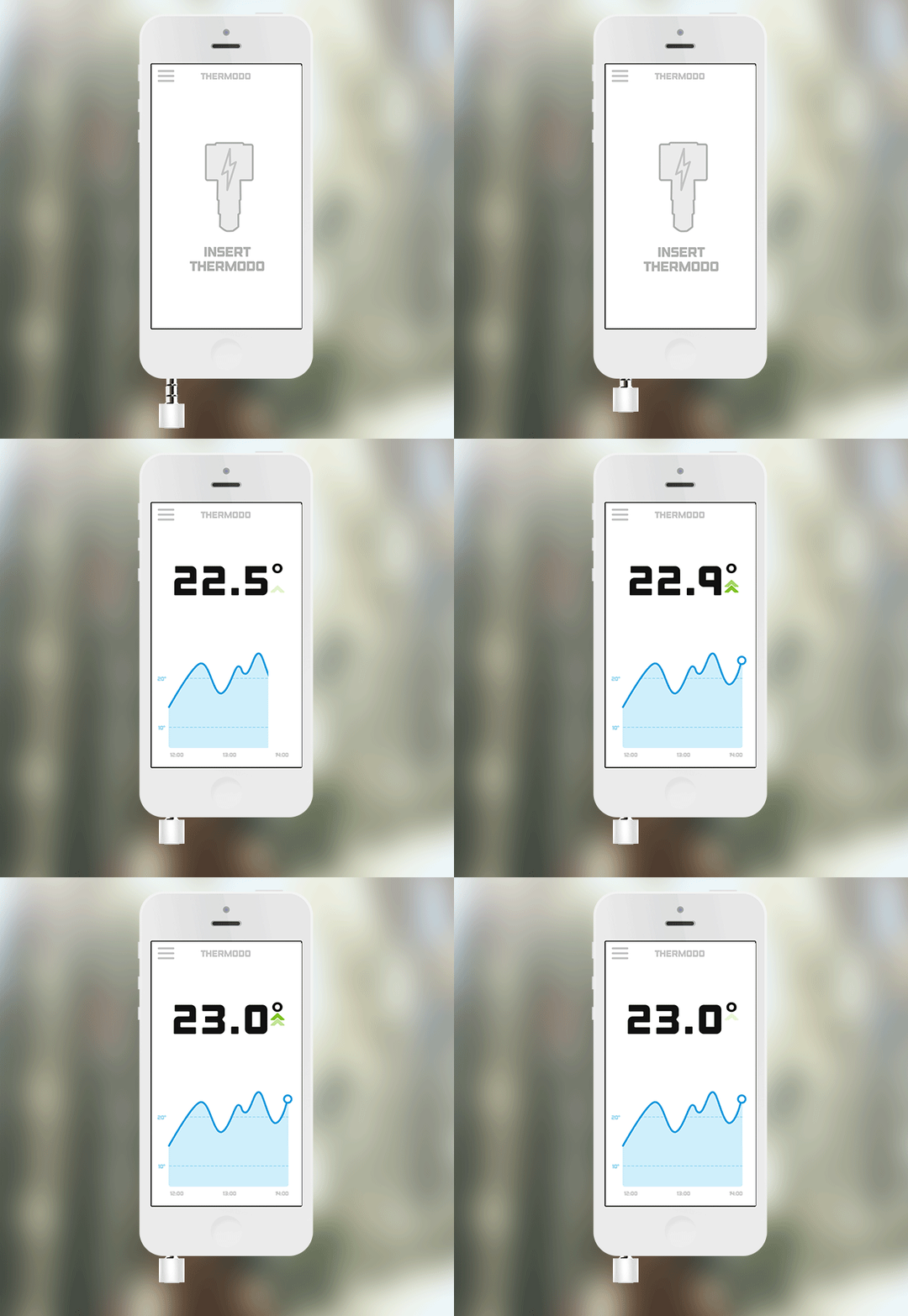
    Danish startup Robocat has built a lot of software for Apple’s iOS devices, but today the company is branching out with the launch of a new hardware accessory for the iPhone, iPad, and Android devices. It’s called Thermodo, and it’s a very small hardware thermometer that fits in your device’s headphone jack, and transmits real temperature data for use in apps.

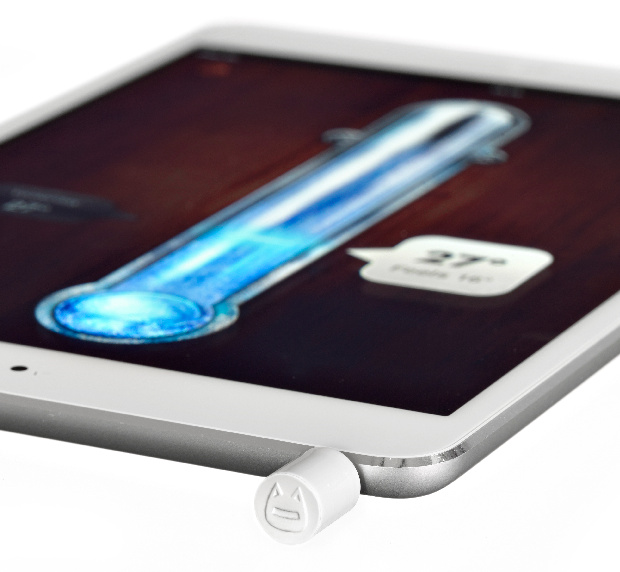
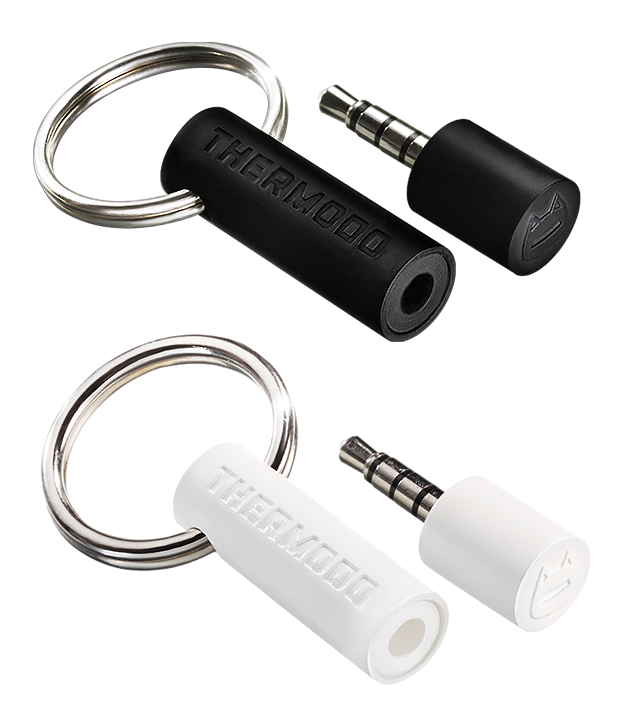
    The Thermodo hardware has a passive temperature sensor, housed in an audio jack and protected by a small cylindrical end cap that only extends around a quarter of an inch out from your device. It doesn’t need its own power source, and it transmits weather data as an audio signal that can be picked up by your phone and translated into the corresponding temperature on your phone via an API, which the company will first use in a dedicated Thermodo companion app for iOS, as well as in two of its previously released apps, Haze and Thermo.

    The Thermodo works offline, indoors and out, and comes with a carrying case keyring to make sure you don’t lose the tiny thing when it’s not in use. Robocat says that eventually, any device could potentially support Thermodo, including Raspberry Pi, Macs, and Arduino-based gadgets, thanks to the company’s open source SDK.

    I talked to Robocat founder Willi Wu about the project, and why it came to be in the first place. He says the company branched out from its core focus on mobile weather apps based on feedback from users.

    “The idea Thermodo is actually based on an indirect request from our users,” he explained.” We received several one star reviews because our users wanted the feature of measuring the temperature themselves right where they are. Currently the iPhone does not support any access to any temperature reading within the phone nor is there a dedicated sensor for this purpose. We wanted to attack to this problem anyway and came up with the most simple solution we could imagine, Thermodo.”

    While other devices like the Square credit card reader and the Jawbone UP fitness band use the headphone jack as a way for accessories to communicate with smartphone devices, Wu says that Thermodo is fundamentally different in its approach. That opens up plenty more possibilities for how the company could use the tech in the future to create other kinds of sensors, he says.

    “Thermodo is not translating sounds to data like Square or other softmodem-based products,” he said. “It turns out that we can apply this method to all kind of applications. What we do is converting the temperature into an electrical impedance and this impedance is determined by what we call the “Thermodo Principle.” Now we can convert all kind of things into an electrical impedance, like for example wind speed, pressure, brightness and so on.”

    Wu says Robocat’s technical lead is already measuring his resistors and capacitors in this manner, and that the company is experimenting with some of these alternate sensing capabilities already. Eventually  Thermodo could have a number of sibling devices to gauge just about everything under the sun (including the sun’s brightness).

    Thermodo is looking for just $35,000 in funding, and pre-order pledges start at just $19 for a single Thermodo unit. This is a project that will hit its goal quickly, and I can’t wait to see what comes next from Robocat’s new hardware focus.

  • Apple’s Growth Outpaces Samsung’s In Most Recent comScore U.S. Smartphone Share Report

    apple-samsung

    Apple’s iPhone made up some ground in the most recent comScore smartphone OEM market share numbers, covering the three-month period ending in January 2013. Apple’s share rose from 34.3 percent curing the previous quarter to 37.8 percent, a point change of 3.5. Samsung’s share also rose, going from 19.5 percent to 21.4 percent, growth of 1.9 percentage points. HTC and Motorola shed share, maintaining their third and fourth-place spots but each losing nearly as much share Samsung gained.

    ComScore also measured smartphone platform share, and found that Google’s Android accounted for 52.3 percent of overall U.S. smartphone subscribers aged 13 or older, a drop of 1.3 percentage points vs. the previous quarter. Apple’s iOS gained ground, adding 3.5 percentage points to its share, going from 34.3 percent share in the quarter ending October 2012, to 37.8 percent in the one that just ended in January.

    In other words, according to comScore’s number, Apple was the big winner for the holiday season. Which makes a lot of sense, given that it released the iPhone 5 in September, and the device continued to see supply constraints through October and November leading into the holiday sales season. Samsung’s flagship device, the Galaxy S III, had been on the market since June 2012.

    In terms of platforms vying for third place, BlackBerry shed nearly 2 percentage points of its share during the quarter, but a lot of that was likely due to the imminent release of BB10. The first BB10 devices didn’t go on sale anywhere in the world until the end of the month, and they have yet to arrive officially at any U.S. carriers. Next quarter results should be a better indicator of how BlackBerry will fare alongside Microsoft in the U.S. in the war for a third modern smartphone platform.

    Apple’s share of the smartphone market was also up from the three-month period ending in December, when comScore pegged it at 36.3 percent, with Samsung up to 21.0 percent, representing growth of 2.0 and 2.3 percentage points respectively. These two continue to slug it out at the top, but the most recent numbers show Apple pulling ahead at a faster rate. We’ll see if the Galaxy S IV launch, likely coming sometime next week, has any influence on consumer buying choices when it comes to the U.S. smartphone market.

  • U.S. Galaxy S IV Screenshots Leak, Backing Up Smart Scroll Claims And Some Hardware Specs

    compare-shot

    The Galaxy S IV leaks are coming fast, from a number of sources including the company itself, and this morning brings two in rapid succession. First, as Matt reported earlier, shots depicting the addition of new Smart screen settings from a version of Android 4.2.1 for the Galaxy S III surfaced, and now another source is claiming to have received images of the same thing from a U.S. model Galaxy S IV.

    The Galaxy S IV screenshots come from GSM Israel, a blog with a pretty solid track record in reporting early leak information. This time around, the blog say it’s very confident that these screenshots are legit, as they come from a “very reliable” source. Another reason to believe these are the real thing? They match up pretty closely to the earlier GS III screen leaks depicting similar changes to that device’s settings screens, as you can see in the side-by-side image below.


    Alongside a screen that seems to confirm Samsung will indeed be including “Smart scroll” in the new version of its Galaxy S smartphone, along with features that change screen orientation, pause media playback and disable screen timeout based on head positioning, these leaks also indicate we’ll see the rumored 1.8GHz quad-core processor powering this phone. Data from the Quick System Info Pro app also suggest rumors about the GS IV’s 1920×1080 pixel screen, with Retina-busting 440 ppi pixel density and an approximately 5-inch display, are also accurate.

    There’s also a screen of the device’s camera options, which indicate it’ll be able to max out at 13 megapixels, another oft-rumored spec for the still-unannounced device. Samsung likely won’t have many surprises left to deliver on stage when it unveils the Galaxy S IV next Thursday, March 14 at a presentation in New York City, but this still looks like a phone that will help Samsung continue its Android device sales dominance. And we’ll still be on hand to make sure you get the news and confirmations of these features live as they happen.

  • Hand Recognition, Gesture Support Landing On Microsoft Kinect For Windows Soon

    kinect-for-windows-sensor

    The Kinect is arguably Microsoft’s most important innovation of the past decade, and has done more for changing the nature of computer interaction than pretty much any other recently created input devices. Today, Microsoft Research has demoed how it’s about to get even better, with the addition of hand recognition complete with refined gesture support.

    Microsoft is showing off the new features at its TechFest even this week at Redmond HQ, and The Verge has a video of the new capabilities in action. As you can see from the video, you can use pinch-to-zoom, as well as hand gripping motions that allow for panning and scrolling too. The technique employs machine learning to recognize the difference between an open and closed hand, which is then integrated into Windows games and apps.


    The video shows navigating maps, as well as playing Jetpack Joyride in Windows 8, and shows how a simple close finger gesture can be recognized as a mouse click essentially, which would be a very handy tool to add to Kinect’s Windows-based powers. The upgraded features are destined for Windows soon (though no specific timeline was given), though sadly there’s nothing to announce yet for bringing the enhanced gesture detection powers to Xbox.

    The Kinect will soon have its own fair share of competitors when it comes to gesture-based input for desktop computing. The Leap Motion Controller ships May 13 to pre-order customers, and promises to deliver extremely fine gesture detection on both Windows and OS X, to the point where it should work for virtual painting and drawing applications, with a module much smaller and without the same physical space requirements as the Kinect. The MYO armband from Thalmic labs is also attracting a lot of early attention for its own, body sensor-based gesture control powers.

    Microsoft did some terrific ground breaking in this space, but now the company has keep pace with a number of hungry young startups eager to blow it wide open. These new feature additions for Kinect for Windows should help Microsoft keep the competition interesting.

  • Is This The Galaxy S IV? No – Just An Expansys Web Designer’s Mock-Up

    samsung-specs-and-design-leaked-0

    Don’t worry, the Samsung Galaxy S IV won’t look like an iPad mini with the camera relocated after all. Famed Android device leaker Evleaks tweeted out a render he suggested was the upcoming Galaxy S IV, but it turns out there was less to the image than meets the eye: it was in fact the work of an Expansys web designer, creating a placeholder image based on exactly no insider information, for illustration purposes only.

    Now normally, a bad leak isn’t a story so much as it is an expected outcome of obsessively watching the ‘nets for the slightest hint of the next big thing. But in this case, the source was Evleaks, the masked and anonymous leaker of some of the most reliable unverified pre-release information on the web. Seeing that kind of track record marred with a gaffe this big is enough to shake your faith in the whole dirty business.

    The original Evleaks tweet where he shared the image to begin with is long gone, but it survives in retweets and images saved by other publications. For its part, Expansys says it has been engaged in a massive effort via its social media channels to spread the word about the true source of the pics – even going so far as to claim that Evleaks “stole them and added his own logo.” We’ve heard separately that the image wasn’t stolen by Evleaks directly, but came in through their usual channels. Over the course of this morning, the Expansys social media accounts have been actively responding to RTs of the original Evleaks post in order to direct people to the correct source.

    Really, this is a good thing, because I didn’t want that phone depicted in the render anyways. But is it the end of an era for the normally solid Evleaks? Or just a one time slip up? Whatever the case, a little more transparency than deleting the tweet and pretending it never happened probably isn’t the best course of action.

  • Apple Patents Squeeze Sensitive Device Housings That Could Be Used In Future iPhones And iPads

    Screen Shot 2013-03-05 at 7.38.00 AM

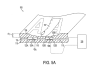
    Apple received a patent from the USPTO today (via AppleInsider) that describes a technology that would allow device casings to employ a combination of pressure and capacitive sensitivity to detect input. At the very least, the tech could be used to map functions like those Apple currently assigns to the home, power and volume buttons to areas of an iPhone or iPad’s bezel.

    Other uses for the patent, which was originally filed in 2009, are described by Apple as a backup or alternate input method for when standard capacitive-based touch interaction either won’t work or is impractical. Capacitive input, the kind used in the iPhone’s touchscreen currently, is much more accurate and responsive than resistive input, but it doesn’t work when wearing gloves, or when there’s sufficient grime on a screen, or when unwanted input signals are coming from a wrist resting on the display and confusing the sensors.

    Apple’s system is proposed as an alternative input mechanism for those kinds of situations. And since it’s not exactly a traditional resistive (pressure-only) resistive input method, it could also use capacitive clues to make it more refined as well as being much more sensitive to changes in pressure than capacitive systems. The combination of both types could guard against accidental input when a device is in a pocket, for example.

    As the system could live right in the housing of a device (the iPhone 5′s metal casing would be pretty perfect for it, in fact), it could greatly alter the way people interact with Apple devices. You could put scroll bars on either side of a smartphone, for instance, so that moving a finger or thumb up or down with differing pressure pages through content faster or slower.

    The company could build context-dependent controls into the back or side housing of all-metal devices with this tech, or even use it to add input to an iWatch housing. The benefits are mainly that it could provide a way to keep the screen clear, which becomes more important as we move to devices with smaller bezels, or smaller displays in the case of an iWatch.

    As with any Apple patent, however, this isn’t a roadmap. But it could be a neat way of adding another dimension of interaction to compete with recent changes from other OEMs, including touch input through gloves and eye movement tracking.

  • Galaxy S IV Gets The Pre-Launch Benchmark Treatment, Complete With Leaked Specs

    Screenshot_2013-03-04-16-42-56

    The Galaxy S IV, Samsung’s next big flagship smartphone, is only around a week from its public introduction, and it’s getting mighty leaky. Today, the NYT reported that Samsung will be including an eye scrolling feature in the GS IV’s software, and now a set of benchmarks have emerged that supposedly lay bare the smartphone’s complete hardware profile.

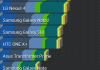
    Italian site HDBlog.it received word of a record of an Antutu benchmark from the device, which was later also found by SamMobile, and which details the specs associated with the Galaxy S IV supposedly tested. The test results reveal that the smartphone has an Exynos 5410 1.8GHz processor, with an ARM PowerVR SGX 544MP GPU. It was running Android 4.2, had a screen just under 5-inches with a resolution of 1920×1080, and featured a 13-megapixel rear camera, along with Bluetooth 4.0 and capacity of either 16 or 32GB. The display stats line up with what we’ve heard earlier about the Galaxy S IV’s screen, as do the processor details, the amount of on-board memory and camera information.


    The chipset supports GSM/WCDMA/LTE networks, which means that unlike previous Galaxy smartphones, this one will be a true worldphone, if these specs prove to be the real deal. The performance results on the GS IV should reassure any users who might have been expecting a less-than-impressive hardware release, following the NYT’s report earlier that the launch event March 14 will focus mostly on software: it easily beats current category leading devices like the Optimus G and Nexus 4, as well as the Galaxy Note II and Galaxy S III.

  • Samsung’s Galaxy S IV Will Scroll Content Based On Eye Movement, Report Says

    GalaxySIV

    Samsung is about to show off a new flagship phone at an event on March 14, and details continue to leak out about the new smartphone. The New York Times’ Brian X. Chen reports today that eye movement-based content scrolling will be among the Galaxy S IV’s features. Chen’s source, a Samsung employee, also says that the emphasis will be on software, not hardware at the upcoming press event.

    Samsung’s next smartphone will be able to track a user’s eyes and scroll articles and other types of content based on where they’re focused, the source said, so that if a user was reading a web page and hit the bottom, the device could automatically scroll more content up into view. There’s no guarantee it will be demoed on stage, according to the article, but the Korean company should be showing off more new software features, instead of demoing hardware advancements.

    A software-centric approach to an Android flagship device launch is nothing new. HTC showed off its own new flagship device, the One, at an event in NYC last month and the bulk of the presentation focused on Sense 5.0. Android OEMs seem keen to highlight what it is that makes the experience of using their devices fundamentally different from using the Android phones of other makers, a good strategy when each successive generation of devices seem to share more in common than not when it comes to specs and internal components.

    The NYT points out that Samsung already has trademarks on “Eye Scroll” technology, as it could be applied to smartphones as well as tablets, cameras and other devices. A trademark in this case might actually be more indicative of product plans than a patent, since it demonstrates at least some intent to actually bring the named product to market.

    Eye movement-based scrolling could work well, but only if perfectly executed. If the tech registers too many false positives or disappoints in other regards, it’ll end up being more of an annoyance than a feature, and users will simply turn it off. But if executed properly, it could definitely be a decent differentiating factor. And if Samsung opens up access to scrolling features to third-party apps, that could really help its platform stand apart from others in the Android space. But again, if it’s even a bit touchy in terms of implementation, the eye-tracking tech will likely be more of a forgettable edition than anything with real value, at least for this generation.

  • Apple iWatch Will Reportedly Run iOS, Still Has To Overcome Battery Issues Before Launch

    Image (1) ZShock-Lunatik-iPod-Nano-1110331005027.jpg for post 208159

    Apple’s iWatch will run full-flavored iOS, according to a new report, and the company is indeed targeting an end-of-year launch, but will first have to tackle battery life issues. According to sources speaking to The Verge, Apple’s prototype watch hardware is currently getting only a couple of days out of its battery, and the company is targeting at least four to five (around what the Pebble gets) before ramping up for a public release.

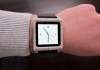
    The news that Apple is opting to go with a reworked version of iOS on the iWatch instead of an alternative system is very interesting, if true. In the sixth generation iPod nano, which was released in 2010, Apple used a separate mobile OS that resembled iOS but was actually a lighter-weight and much more limited platform. Using iOS instead of the nano’s operating system has some advantages for Apple (a single code base across its mobile line, more potential for third-party developers, and a familiar system for new users), it also comes with big challenges, and potentially adds one more degree of fragmentation to Apple’s mobile OS.

    It’s worth noting that Apple originally launched the iPhone’s operating system as being the same as OS X, a somewhat confusing move that they eventually went back on when they began referring to it as iPhone OS, and later iOS. The company could be taking a similar approach to the iWatch at launch, with an OS for the wrist-top computer that ends up diverging considerably from the version on the company’s phones and tablets, once modifications are built-in to account for its different features.

    If the reports are accurate, Apple is making the right move in pushing for better battery life. The value of a watch-based computer depends largely on its ability to operate inconspicuously: the reason wearable computing is attractive to begin with is that it promises to be less conspicuous, and easier to integrate into your everyday life than smartphones or tablets. An iWatch that needs to hit the charger every day loses a lot of that value.

    The Verge also says that Apple has work to do in terms of building in the proper pathways for transmitting information and notifications between an iPhone and an iWatch. That could prove the single-biggest source of information regarding the device and its development going forward; you can bet devs and Apple watchers will be going through iOS developer builds with a fine-toothed comb for evidence of any changes on that front.

  • Apple’s iWatch Could Arrive By The End Of 2013, Says Bloomberg

    Image (1) iwatch_def11.jpg for post 157418

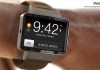
    Apple’s iWatch is the new primary focus of speculation for the company’s unannounced products, and a new article at Bloomberg today detailing its market potential also let slip that the wrist-mounted computer could arrive by the end of this year. Bloomberg’s source, which is one of the same that leaked details about the team within Apple working on the iWatch, said Apple hopes to have the device out to market “as soon as this year.”

    Bloomberg’s report today adds a bit more color about what we might expect to see from an Apple iWatch, too. The still-unconfirmed device would be able to make calls, check caller ID, relay map coordinates and carry a built-in pedometer and health monitoring sensors, according to the news publication’s source. That might mean another partnership with Nike for built-in fitness tracking, as we’ve seen in iPods and iPhones from the company to date.

    The news comes after reports from Apple supply partners and Gorilla Glass manufacturer Corning said that products based on its flexible Willow Glass product wouldn’t come to market for another three years, prompting many to assume that meant an iWatch was also at least three years out. Apple had patented a wrist-mounted computer based on flexible display tech, but that’s far from the company’s only option for producing an iWatch – it could easily take a more traditional form, like the Pebble smart watch.

    Bloomberg also notes that Apple’s chief product designer Jony Ive has also long had an interest in watches, and previously paid a visit with his Apple design team to Nike’s own watchmaking operations. Previously, Bloomberg reported that Apple has an internal team of as many as 100 individuals working on the iWatch project.

    Of course, despite the growing number of reports around the iWatch, Apple keeps its release timelines purposefully close to the chest for a reason: even if it was targeting a 2013 launch for the iWatch, missing that date wouldn’t actually constitute a delay since nothing has been officially announced. Accordingly, it’s always a good idea to treat rumors at this stage in the game with a healthy dose of skepticism, even when sourced from reputable publications. Still, Google wants to launch its own wearable computing product by year’s end, so there’s at least one reason for Apple to target the same time frame.

  • Canon’s New Full-Frame Video Sensor Can Shoot Clear HD Footage In Exceptionally Low Light

    Screen Shot 2013-03-04 at 8.04.24 AM

    Canon today announced the successful creation of a new full-frame CMOS sensor, designed exclusively for shooting video. The new sensor can capture full-HD video with extremely low noise in settings where it has been hard for traditional cameras to even operate at all in the past. The sensor will have immediate benefits for astrophotography and for use in security systems, but the developments here could eventually help improve the quality of professional and consumer cameras, too.

    The new sensor from Canon features large pixels, each of which measure around 7.5x those found on the sensor Canon uses in its EOS-1DX DSLR. The larger pixels are paired with new noise reduction technologies that counteract the added noise effect of using larger pixels, which allows for full HD video shooting in environments as dark as an outdoor setting with just a crescent moon providing illumination. That means it can capture video with fully visible objects even in situations where the human eye would be hard-pressed to make out any definite shapes.

    Canon has already built a prototype device to test out the new sensor, and captured things like footage from a room where only lit incense sticks provided any light, the Geminid meteor shower and other night sky scenes. The prototype would be most useful in the immediate future for astronomical and nature photography, medial research and security implementations, but through “further development,” Canon imagines similar CMOS sensor tech will also be able to greatly improve other more creative pursuits.

    Low light video is already an impressive feature of full-frame DSLR cameras, but a sensor like this that takes things to the extreme could take nighttime video capture to a whole new level. Imagine greatly reducing the cost of filming at night, for instance, or, depending on how things progress, bringing similar improvements to mobile and smartphone shooters. We’re still a long way off from that, but this is a very impressive first step, as you can see from the sample video available on Canon’s own site.

  • The Mophie Juice Pack Air For iPhone 5 Drops iTunes Syncing, But Still Saves You When You Need More Power

    mophie-air-1

    Short Version

    Mophie caused a bit of a double-take by introducing not one but two rechargeable external battery cases for the iPhone 5 within a few days of each other. The Juice Pack Helium offers a sleeker body, but the Juice Pack Air, announced later, offers more stamina. I’ve been testing the latter for nearly a week now, and it lives up to Mophie’s good reputation, with a single trade-off that may or may not influence your buying decision.

    Long Version

    Info

    • Battery size: 1,700 mAh
    • Available colors: black, white, and red
    • MSRP: $99.95
    • Dimensions: 2.60 in x 5.54 in x 0.63 in
    • Weight: 2.68 oz

    The Juice Pack Air for iPhone 5 will look and feel familiar to owners of previous Mophie Juice Packs. It has a rubberized texture that makes the matte back extra grippy, a smooth black plastic band extending around the entire sides of the device, and a button on the back that lights up indicators showing how much battery is remaining. Some of the elements have shifted to make up for the new iPhone’s design: the battery indicator and activation switch are on the back, not the bottom, and the micro USB port is on the bottom surface where the Lightning port would be on an iPhone 5 without a case.


    One of the few unfortunate changes caused by the iPhone 5′s redesign is the shift of the headphone port to the bottom, which is where the business end is on Mophie’s battery pack cases. That means that on this Juice Pack Air, there’s around a half-inch hole any headphones have to go through to get to the iPhone’s 3.5mm stereo port. Mophie includes an extension cable to make sure your headphones will work no matter their design, but it’s an extra bit to keep track of and potentially lose, and that’s never good.

    Overall, the Juice Pack Air feels like a quality accessory, however, and all the pass-through switches and buttons work well. There’s even mesh on the front-facing speaker ports, which do enhance sound to my ear, and an appropriately wide opening on the back to accommodate the camera lens and flash without impeding mobile photography.

    The Juice Pack Air claims to be able to provide around 8 more hours of 3G talk time and Internet use, 8 more hours of LTE browsing, 10 hours of Wi-Fi web, and up to 40 more hours of audio playback or 10 more hours of video. Mophie says that’s up to 100 percent the normal battery life of your iPhone 5. I happened to be able to test charging a dead iPhone 5 from a drained state with a fully-charged Juice Pack Air, however, and it only got the iPhone up to around 80 percent charge. Your mileage may vary, however, and 80 percent from a cold, dead battery that has lain empty for a while is still pretty impressive, and in everyday use I found it was as close to doubling my iPhone 5′s life as made no difference.

    The Juice Pack Air gets warm while charging, but that’s nothing new and I mention it more to make new users aware than to cite it as an issue. New users should also note that the Air features pass-through charging via the supplied micro USB cable: You can plug it in overnight and the iPhone inside will charge first, with the case getting its fill afterwards. One thing missing in this version is pass-through syncing, however. That could be a problem for some, but I can’t remember the last time I’ve done a wired sync of an iOS device, so it doesn’t bother me.

    The Juice Pack Air is a solid performer, which isn’t surprising, given its pedigree. It has the same general downsides as its predecessor (mostly that it adds bulk to the iPhone), and loses a few tricks. But most won’t miss the lack of pass-through syncing now that iPhones are much more autonomous devices than they were in the past. And the Air for iPhone 5 is slightly thinner than the version for iPhone 4/4S. If you need the extra power that a battery case provides, the Juice Pack Air remains the case to beat.

  • Judge Cuts $450M From Apple’s $1B Damages Decision Against Samsung, Orders Second Trial

    apple-samsung

    Apple’s landmark $1 billion damages award over Samsung has been partially vacated by presiding judge Lucy Koh, FOSS Patents reports. The judge has orders just north of $450 million be struck from the $1 billion total, an amount which relates to 14 Samsung products involved in the case, pending a new trial to determine appropriate damages for those specific devices.

    Koh said that a new trial has to be held to determine damages on those products, which include the AT&T Galaxy SII, the Galaxy Tab, Nexus 4G and others, based on the fact that the court isn’t able to make adjustments to the amounts owing based on infringement by those products for legal reasons. In the second trial, which will be decided by an entirely new jury, Apple could wind up being awarded more or less in damages based on their evaluation of the per-product cost of infringement for that group of Android smartphones and tablets.

    Apple is still entitled to an award of $598,908,892 from the part of the damages decision that Koh has determined should stand, though FOSS Patents suggests that no actual money will change hands until the result of this new, second trial is decided. Apple will also be able to exercise its option to pursue additional damages based on post-judgement royalties, and pre-judgement interest, pending the new jury’s decision.