Author: Darrell Etherington

  • Wacom Teases Mobile Tablet With Pro Pressure Sensitivity, Multi-Touch And HD Display Coming This Summer

    surface-pro

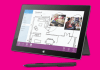
    Wacom, the leading player when it comes to pressure-sensitive input devices aimed at photo and digital art professionals, has teased an upcoming mobile tablet product on its Facebook account. In response to what Wacom characterizes as outspoken customer feedback, the company says it’s working on a a device with “a pressure-sensitive professional pen, smooth multi-touch, an HD display, and other valuable features that you haven’t seen in other tablets.”

    The tablet device is said to be something Wacom is working on “24/7,” with a target launch date of sometime this summer. Wacom provides the underlying technology behind a number of current tablets with pressure-sensitive stylus input, including the Surface Pro and Samsung’s Galaxy Note line, so it’s no stranger to doing pressure sensitivity on mobile devices. The company’s own hardware has generally been limited to peripherals, however, like its Bamboo, Intuos and Cintiq line of USB-powered drawing tablets, all of which require a host computer to operate.

    Now, it looks like Wacom wants to branch out into an own-branded standalone tablet device. The tease shares nothing about what platform the device would be based around, but Android is a good bet. Penny Arcade co-creator Mike “Gabe” Krahulik also recently articulated at length his love for the Surface Pro and its built-in Wacom tech for creating digital art, so a device based on Windows 8 also isn’t outside the realm of possibility.

    The only challenge for Wacom might be keeping a standalone device affordable. The Cintiq line of drawing tablets with built-in screens it currently offers start at $899 for the 12WX, which has a 12.1-inch display, but again requires a connected computer to function. Getting a self-sufficient Wacom tablet to a level where it meets the standards of the company’s demanding pros probably won’t come cheap, but the level of tech and the supply chain associated with the necessary components has also matured considerably since the 12WX was introduced in 2007. The proliferation of tablets and smartphones have helped putting more advanced technology in ever-smaller packages increasingly affordable.

    I reached out to Wacom to see if they could provide more detail on this upcoming product, and will update if they respond with additional information.

  • New Kickstarter Project Lets You Send And Receive ‘Sound Emojis’ On Your iPhone Or Android Device

    c2fc7a9e5982828c138b4e89ed5b0659_large


    Apple’s greatest innovation in recent version of iOS was clearly enabling emoji keyboard support for all iPhone and iPad users, regardless of region. Emojis are fun for everyone, but they could potentially get better thanks to a new Kickstarter project. The TeleSound is an iPhone and Android device accessory that lets users send sound messages, by translating the emojis built into iOS into a corresponding sound and playing it back via a special speaker peripheral.

    The TeleSound uses a dedicated app that lets you message your friends, using the emojis provided in iOS. You can line up a series of icons to play back a number of noises in rapid succession, which is likely exactly as irritating as it sounds. The sounds playback via a small speaker that looks like one end of an old-school rotary phone handset, which connects to the iPhone via Bluetooth 4.0 (so it’ll only work with later model devices, like the iPhone 4S and up).

    The speaker automatically plays back received messages when on and within pairing range (around 30 ft) of your device, and you can simply flip it over to turn it off thanks to an included tilt sensor. Messages received while the speaker isn’t in range or is inactive will be stored for later playback, so you won’t miss a single duck noise or sparkly tinkling sound. Replaying the last received message is as simple as quickly flipping the speaker over and right-side up again in a single gesture.

    Project creators Olivier Mével and Marc Chareyron are the founding team behind a Paris-based hardware startup that previously created reaDIYmates, which are roll-your own kits for building Wi-Fi objects that can provide different responses based on input from web-based applications and sources, as well as smartphones. The duo is interested in helping build the next generation of connected devices to fuel the advent of the so-called “Internet of things.”

    The team sought only $25,000 for their first project, and are now looking for four times that amount — $100,000 — to fund the creation of the TeleSound. Pre-orders start at the $34 level, which is cheap, but then again this is just a peripheral that makes it possible for your friends and colleagues to yell at you by sending emoticons over the Internet. Still, it has a certain charm, especially when I think about the potential for freaking out my cat from across the world.

  • Sony Xperia C670X Specs Leak, Suggesting A New Android Flagship To Take On The HTC One

    xperia-z

    We didn’t see a new phone from Sony at MWC this year, though it did take the opportunity to show off the Xperia Z (pictured) it demoed early this year at CES, but a new rumor suggests we’ll see a mid-year upgrade in a few months time that packs Android 4.2, a Qualcomm Snapdragon 600 chipset with 1.8GHz processor, 2GB of RAM and 32GB of onboard storage.

    The leaked specs come from a tipster providing info to Xperia Blog, and also suggest the C670X will be smaller than the Xperia 7, with a 4.8-inch screen compared to the announced device’s 5-inch display. In most regards, the C670X sounds like a beefed up Xperia 7, however, with a more powerful processor, Adreno 320 graphics and double the on-board storage, while retaining a 13 megapixel rear camera and the same 1920 x 1080 resolution. The device’s pixel density will be higher, however, since those same pixels are fitting in a smaller screen, making for more crisp text and graphics rendering.

    If true, this new handset would be pretty much on par with HTC’s flagship One smartphone, which has a 1.7GHz Snapdragon 600 chipset, and an Adreno 320 GPU. No word on whether the C670X would also inherit the Xperia Z’s impressive water resistance, which could be a tipping point factor for buyers looking to make a decision between the two.

    These leaked specs should be treated with a healthy dollop of skepticism (it was accompanied with a render from the setup guide from the Xperia Z, which admittedly doesn’t depict the Xperia Z itself), but they’re far from extreme, and Sony fielding a phone in 2013 that takes advantage of the latest in mobile processor technology does make sense.

  • Hardware Startup Outex Takes To Kickstarter To Fund Its Go-Anywhere SLR Camera Housing

    outex


    I like to use my SLR, but there are many times when I leave it behind because I’m not sure whether it’ll be able to handle the conditions I plan to be using it in. LA-based hardware startup Outex is trying to make sure that photographers can use their cameras anywhere, without having to fork over north of $1,000 for environmental protection gear, and it’s taking to Kickstater to fund the latest piece in its product puzzle.

    The Outex is a flexible casing for DSLR and other interchangeable lens cameras (it works with mirrorless systems, too) created by founder JR deSouza and his cousin Roberto Miglioli based on their shared love of photography, a hand-me-down from their grandfather, and a lack of good affordable options on the market for protecting cameras during use in harsh conditions. DeSouza told me in an interview that he and his cousin needed something that would work for surfing, kayaking, shooting around the pool, military applications and more, but that didn’t mean sacrificing portability or spending a mint to buy.

    In a little over a year, the company has already managed to rack up some impressive customers, including photographers working for Red Bull, National Geographic, Outside Magazine and Vogue. The Outex is being used by a lot of videographers now, too, and the company wanted to build a solution into its product that better serves that market, while also opening up new possibilities for still photography. That’s what this Kickstarter project is about: funding the creation of the “Big O,” an LCD viewfinder window for the Outex.


    DeSouza says they came up with the window after first toying with the idea of adding some kind of external LCD monitor to the Outex, and then realizing that the simpler, better and more widely compatible solution would be to simply add a glass window to the case (which itself resembles a kind of camera wetsuit) that would allow the built-in monitors on cameras to be used in any circumstances. Being able to see the viewfinder while the camera was in the Outex was one of the most common customer requests, however, according to deSouza, so coming up with some kind of solution was necessary.

    Seeking Kickstarter backing is a first for Outex, and deSouza explained that the reason it went the crowdfunding route this time around was actually the result of a combination of factors.

    “I felt that Kickstarter would be a good opportunity to accelerate our development,” deSouza explained. “The key is to be genuine and to do Kickstarter for what it is, and it becomes a great opportunity to get the word out and discover other things[…] I really do think there’s value to the community and the discovery process that also comes along with Kickstarter.”

    Outex isn’t meant to be hardcore scuba gear like the Ikelite protectors favored by professional photographers, but where those cost around $1,500, a $375 pledge gets you everything you need to outfit your SLR with protection for up to 10 meters of submersion, as well as a host of other environmental perils. With the cost of high-quality photo gear coming down, it’s only fitting that a hardware startup emerges to so challenge the price tag on some of the more expensive accessories, too.

  • HGST’s Nanotechnology Printing Breakthrough Is Great News For Data Center Storage And HDD Capacity

    HGST-1.2Tbit-cropped-2013SPIE[4]

    If you’re at all familiar with mobile processors, you’ve likely heard a lot about 32nm vs. 28nm construction when comparing the current generation of chips from companies like Qualcomm and others. That refers to the size of the processor, where a smaller number is better in terms of power consumption, fitting more transistors in less space for more efficient processing.

    Currently, it’s hard to get past around the 20nm when creating individual patterns for data storage on today’s disk drives, which is another area in addition to processors where Moore’s Law applies. Today though, HGST, a Western Digital Company, announced a breakthrough that allows it to produce patterns as small as 10nm, via a process called “nanolithography,” meaning that it can essentially double the current maximum storage capacity possible in hard disk drives, given the same-sized final product.

    HGST’s process, which was developed in tandem with Austin, Texas-based silicon startup Molecular Imprints, Inc. doesn’t use the current prevailing photolithography tech, which is limited in how small it can go by the size of light wavelengths, which is what allows it to get to the 10nm threshold, and hopefully beyond even that in time, HGST VP of Research Currie Munce told me in an interview.

    The upshot of all this is that HGST hopes to have the process ready for wide-scale commercial production by the end of the current decade, with a process that makes the resulting storage both affordable and dependable enough to be used widely by customers who need ever-increasing amounts of storage. The number of customers who fit that description is increasing rapidly, too: the advent and growth in popularity of cloud services means that big companies like Facebook, Apple and Amazon are continually building and expanding new data centers in search of greater storage capacity. HGST’s nanolithography process could double the storage capacity per square foot at any of those facilities, without having the same effect on power requirements, which is clearly an attractive proposition.

    While the process looks well-suited to disk-based storage, where redundancies and workaround can account for minor imperfections at the microscopic level, Munce says that HGST nanolithography is less well-suited to the task of creating mobile processors for smartphone like those mentioned above.

    “If you don’t connect the circuits properly on a processor it doesn’t work at all,” he explained. “On a hard disk drive, we can always have error connecting codes, we can always use additional signal processing to cover up a few defects in the pattern that’s created.”

    Still, for HDDs and computer memory (RAM), HGST’s breakthrough could have a massive impact on cloud computing, mobile devices and the tech industry as a whole, and all within the next five to six years.

  • Apple Has Sold Over 8M iPads Direct To Education Worldwide, With More Than 1B iTunes U Downloads

    ipad-itunes-u

    Apple announced a new milestone for its iTunes U online digital education outlet, which has just crossed the 1 billion download mark. Alongside the announcement, Apple has also informed us exclusively that the company has so far sold more than 8 million iPads directly into educational institution worldwide. iTunes U became a standalone app, complete with its own course marketplace and catalog in June 2012.

    At the time, iTunes U had served up over 700 million downloads. The additional 300 million downloads mean that the pace of engagement for iTunes U is growing rapidly. iTunes U was introduced in May 2007, meaning that it took the educational product a full five years to rack up just a little over twice that amount. The rapid growth over the last nine months has likely been the result of a combination of factors, including the introduction of the standalone app and an increase in the adoption of iPads in educational settings.

    AllThingsD reported earlier that to date, Apple has sold more than 4.5 million iPads to U.S.-based educational institutions, a figure which Apple confirmed to us as correct. Thanks to some clever calculation on the part of 9to5Mac’s Jordan Kahn based on publicly available information, it looks like the vast majority of that number was sold recently, over the past year in fact. Apple CEO Tim Cook has repeatedly stressed how important the education market is in the context of the iPad, and the fact that it’s doing so well with institutional sales both at home and abroad backs that up.

    Apple also shared some details about school participation in iTunes U today, noting that more than 1,200 universities and colleges, and over 1,200 K-12 schools host over 2,500 public courses on iTunes U, along with thousands more private courses available only to enrolled students. Some big institutions are embracing iTunes U with particular vigor, Apple notes, including Standford and The Open University, both of which have racked up over 60 million content downloads alone. Some of the more popular individual courses have around 250,000 students enrolled, Apple noted.

    Greg noted in a recent article that online education is fast replacing physical colleges, with startups like Coursera reaping many of the benefits. Apple has the advantage of being a very early player in this space, and the ubiquity of its iPad tablet is clearly helping the company add a lot more momentum to its efforts to help institutions embrace online learning.

  • OUYA Android Gaming Console To Start Shipping To Backers March 28

    Ouya_Family_1024x1024

    OUYA, the Kickstarter-funded Android gaming console, has already shipped developer consoles, but had yet to specify an exact date when backers could expect their production devices. Today, the company announced that it will be shipping the first OUYA consoles out to backers beginning March 28, ahead of a June retail launch.

    The gaming hardware startup shipped its first developer consoles starting December 28, in keeping with its anticipated deadlines from the project outset. A March 28 date for final hardware is also in keeping with OUYA’s original timeline, which called for a March 2013 launch window for OUYA consoles and controllers.

    OUYA says to expect it to take “a few weeks” for shipments to be sent out to all backers, who will receive tracking numbers and estimated delivery dates once the consoles begin leaving for their destinations.

    Alongside the shipping announcement, OUYA CEO Julie Uhrman also announced some new information around games coming to the platform. Porta’s Kim Swift and Airtight Games are working on an OUYA exclusive, and Minority Media will provide an adventure puzzle game this upcoming fall that makes full use of the OUYA’s touchpad and button controls, something Uhrman says is a first for the platform. Tripwire Interact’s The Ball is also coming to OUYA in March, and the firm is developing an OUYA exclusive for later release as well.

    Finally, the OUYA update from the company includes the news that Kellee Santiago, co-founder of Journey studio thatgamecompany is joining the startup to head up developer relations. Clearly, OUYA wants to do everything it can to address criticism around its gaming library.

  • YC-Backed MYO Armband Attracts 10,000 Pre-Orders In 2 Days, Which Adds Up To $1.5M In Sales

    jedi

    MYO, the gesture control armband from Y Combinator-backed Waterloo startup Thalmic Labs, has managed to rack up over 10,000 pre-orders over the course of its first two days of pre-order availability. At $149 a pop, that means the young company has already managed to secure around $1.5 million in gross revenue, so long as they actually ship hardware.

    The MYO, as Ryan pointed out on Monday, is a wearable control device for smartphones, PCs and other electronics that uses lower-power Bluetooth 4.0 to connect, which also has a boatload of sensors on board to help it detect electrical activity in arm and hand muscles to detect movements at the earliest possible stage. It’s the latest in a series of devices trying to make sci-fi type interfaces a reality, and could be among the most accurate yet.

    Thalmic Labs co-founder and CEO Stephen Lake explained in an interview that while the team expected some kind of response to its launch, there was no way they could have anticipated quite this level of interest.

    “I think we knew that there was going to be a lot of people interested in the technology, since it’s such a cool technology, and there are so many good potential applications for it,” he said. “We’re not completely surprised, but the amount of attention it’s got is more than anyone could’ve expected.”

    Lake had some ideas about why people are so interested in traditional modes of interaction for computers. He said he believes people are looking around for something different, and that MYO is a case of the “right technology at the right time.”

    “There’s a lot happening right now with the form factor and how we’re connected to technology,” he said. “A lot of the technology that’s coming out, and Google Glass is a perfect example in the realm of wearable technology, is really going to change not just how we input information into the computer, but just how we interact with technology, and make our devices an extension of ourselves instead of an outside thing you’re interacting with.”

    The interest from consumers eager to try out the MYO has likewise attracted a lot of interest from distributors and retail partners, Lake said. His inbox has been flooded with “thousands” of emails from companies wanting to be a distribution partner for MYO all over the world. He wasn’t at liberty to share any details on early stage discussions at this point, but it seems reasonable to expect the MYO will get a splashy launch when it’s ready to come to market.

    Developer interest has also grown by leaps and bounds thanks to the initial response from buyers and media, Lake said. Building out that community is key, just as it is for other innovative input and interaction hardware like the Leap Motion Controller, and Lake says Thalmic will have a dedicated developer website with support forums and more information up and running as soon as possible to help deal with the influx of attention.

  • Apple Patent Would Use The iPad’s Built-In Magnets To Turn The Tablet Into An In-Car Entertainment System

    Screen Shot 2013-02-28 at 9.29.02 AM

    A new patent application by Apple published by the USPTO this week describes a stand for the iPad that uses magnets to hold the Apple tablet in place. iPads already come with fairly powerful magnets built into their frames, something Apple introduced along with the very first model to make the iPad compatible with its smart cover. The patent describes a magnetic stand which would be able to hold the iPad firmly in place in a number of different settings, and perform various functions.

    Some examples provided in the patent include mounting the iPad to a tripod, a treadmill, or a music stand, and even attaching two iPads together via a hinge that would allow iPads to be used together in a book-style configuration. The patent text says that the mounting device would work together with a shielded, in-built magnetic component on the target device (which the iPad already has), thus enabling for a much stronger connection that would normally be possible, since powerful unshielded magnets could have an adverse effect on internal electronic components.

    The mounting system described in the patent does more than just provide for a stand that can grip the iPad firmly: different permutations also include data connections, so that in the book type instance, for example, both tablet devices have a wired connection built in to their portion of the hinge, making communication between the two tablets possible. That would mean things like flipping pages in a book would actually have an effect on both tablet displays simultaneously, instead of each acting independently.


    The patent also goes into a lot more detail about how an in-car mount might work with an iPad. A rotational sensor could be used to activate and deactivate the tablet, for instance, meaning the iPad could have an on and off position (likely portrait and landscape respectively), and there’s also potential to have a tablet-to-vehicle connection initiated when a car detects a specific “magnetic signature.” That, combined with wireless connection direct to a car’s communication system, would effectively render a person’s iPad a unique and personalized in-car entertainment device and control console.

    The patent describes a driver issuing voice-based commands to the iPad, which are passed on to the car to change the car’s “configuration.” The communication would be two-way, too, with the car feeding  ”car status information “ back to the iPad, which would also be able to handle navigation duties and play back music through the connected car’s stereo.

    At first glance, this patent application by Apple is just about using the iPad’s magnetics for more than simply holding onto a cover. But digging in deeper, it’s actually about turning the iPad into pretty much exactly the kind of in-car accessory I recently hoped for aloud in a post bemoaning the current state of in-car entertainment systems. Overall, this patent could do a lot to help expand the iPad’s dominion even further, by turning it into a carry-anywhere intelligent, integrated media console for a variety of different devices and applications that currently have less than impressive built-in versions of the same.

  • This Bluetooth Smart Trigger Turns Your iPhone Into A Canon DSLR Remote And Intervalometer

    bt_smart_trigger_with_iphone_web_1

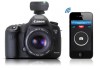
    If you’re into DSLR photography, remotely controlling the thing is a pretty common want for new users and seasoned veterans alike. Satechi’s BT Smart Trigger, which starts shipping today, is a remote that works with a range of Canon DSLRs, connecting to the camera’s hot shoe and giving them full control over their camera’s shutter. It also doubles as an intervalometer, making it possible to get those cool time lapse and extended exposure shots that never fail to draw the appreciation of photography fans.

    The Smart Trigger connects to your camera via USB, and rests in the hot shoe mount normally reserved for flashes and other accessories. It communicates with the iPhone via Bluetooth 4.0, meaning it’s a low power consumption device which can get up to 10 years of battery life, and has a range of 50 feet. The trigger app works with iPhone and iPad, and features both a basic standard shooting mode, as well as Manual Shot, which allows for long exposures (like the ones where you see people writing things in the air with sparklers), or Time Shot, which captures a series of images that are then stitched together to generate time-lapse images (like the lightstream photos you see of nighttime cityscapes with busy thoroughfares).

    The Satechi Bluetooth 4.0 Smart Trigger might not be able to relay a live feed of the camera’s digital viewfinder, as Canon’s official remote app can with the Canon 6D’s built-in Wi-Fi radio, but at $44.99 it’s an excellent option for amateurs and enthusiasts looking for an easier way to take time-lapse and long exposure specialty shots, using the iPhone they already know and love. Satechi also says that Galaxy S III and Galaxy Note 2 compatibility will be coming sometime in March, so owners of two of the most popular Android smartphones will be able to join in on the fun at that time, too.

  • Yota Devices Becomes Qualcomm Licensee, Which Should Help Its Chances Of Going Global

    yotaphones

    Yota Devices, the Russian company that has nerds like me excited with its combo e-ink/LCD display smartphone designs, today announced at MWC that it has entered into a software licensing agreement with Qualcomm to help it bring LTE-capable smartphones, modems and routers to market. Yota becomes the first Qualcomm software licensee in Russia with the deal, and for Qualcomm, it means securing a partner in a key target area in terms of future mobile market growth.

    “Russia is strategically important to us as we expect strong growth in the number of 3G smartphones over the next two years,” Qualcomme Europe President and Senior VP of QTI Enrico Salvatori is quoted as saying in a release announcing the news. As a hardware company, Yota Devices already has a lot of expertise under its belt from building modems and routers, including its own self-branded designs starting in 2010. The arrangement with Qualcomm will help them work directly with QTI at every stage of the design process of new devices, which will help the Russian firm better compete on a global scale with established OEM handset and mobile device manufacturers.

    Yota announced earlier this month that it will begin mass producing its innovative e-ink phone in Signapore, with commercial launch planned first for Russia by the second half of this year, and then expanding to Asian markets. The YotaPhone features an e-ink display on the back of the handset, which can show relatively static and notifications info while sipping power, allowing a user to only turn on the more power-hungry LCD screen on the front when they need to view video, for instance, or browse the web. The YotaPhone is powered by a 28nm Qualcomm Snapdragon S4 processor.

    With Qualcomm’s backing, Yota improves its chances of becoming a global contender in the smartphone market. The firm has made waves with its first smartphone design, but now it has to ship the device before we get a better idea of just how much demand there is out there for a dual-splay handset.

  • Designer Imagines What An iPhone Phablet And iPhone Mini Might Look Like

    0010

    Big screens are the talk of the town at MWC. Got nothing else to announce that makes your handset stand out from the crowd? Throw a huge screen on the sucker. Or just put phone features in a tablet and call it a day. Apple seems to be the only smartphone OEM out there without a giant-screened smartphone, but designer Peter Zigich has created a concept of what a Cupertino phablet could look like, should Apple ever feel the need to big it up.

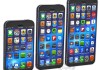
    In a new blog post, Zigich envisions a number of different concepts for a next-generation iPhone, including a design that gains screen real estate simply by shifting the home button to the side of the device, clearing the entire front for display. That adds an extra row of apps, above and beyond the five plus dock available on the iPhone 5. A recessed, side-mounted home button actually makes a lot of sense, especially with one on each side for convenience/ambidextrous use, as Zigich has placed them in his mockup. Would Apple actually add a button to its design in the real world though? Never, say I.


    Zigich’s basic iPhone 6 redesign borrows cues from the iPad mini to reduce the size of the bezel around the display, which is feasible if Apple integrates its accidental screen edge touch filters to the smartphone. The designer also employs the same tricks in developing an iPhone mini concept, and what he calls an “iPhone 6 XL,” or an iOS powered equivalent of a Galaxy Note-style handset with a big ol’ screen.

    With his nearly edge-to-edge screen, Zigich says that his concept is still perfectly usable with one hand, which has been a sticking point for Apple in the past, at least in terms of the public line it has taken regarding bigger displays on smartphones. And the squat iPhone mini uses the same size screen as is found in an iPhone 4/4S, but in a much smaller package thanks to the new placement of the home button(s) and the shrunken bezel elements.

    These concepts are excellent in that they don’t venture too far from Apple’s current design, making them look and feel like something we could actually see out of Cupertino, but despite their merits I doubt we’ll see Apple unveil very similar designs at any upcoming event. Still, with rumors of different screen sizes and new iPhone SKUs flying, it’s interesting to see a material take on how exactly Apple might go about that kind of product differentiation.

  • Leap Motion Controller Ships Pre-Orders May 13, Hits Best Buy Store Shelves May 19 For $79.99

    leap motion

    Leap Motion today announced that its innovative motion controller for PCs will start shipping to pre-order buyers beginning May 13, and will launch in the U.S. at Best Buy locations on May 19. Full retail price for the Leap Motion Controller will be $79.99, the company announced, $10 more than the pre-order asking price.

    If you’re looking for an earlier release date than the official retail launch, Leap Motion continues to accept pre-orders for the controller through its own website, for both international and U.S. customers, and American buyers can now also pre-order Best Buy as of today. Pre-orders direct from Leap will be shipped out to customers based on their spot in line. So far, Leap Motion has had pre-orders in the “hundreds of thousands,” the company tells me, though it isn’t releasing more specific numbers.

    Leap’s controller ships with built-in support for Windows 7 and 8, as well as Mac OS X 10.7 and 10.8. It is bundled with Airspace, Leap Motion’s dedicated app store, where it will offer partner titles that incorporate Leap Motion controls, including games, utilities, art apps and more. Leap is also finally revealing some of those partners, including Autodesk, Corel Painter, Disney games and Double Fine’s music title Dischord. The Weather Channel will also field a Leap Motion compatible app, and ZeptoLabs has made Cut The Rope ready to work with the 3D input device.

    “We’ve talked about our app store as a key way to distribute software that our developers are creating,” Leap Motion VP of Marketing Michael Zagorsek explained in an interview. “We’re not going into it too much right now, because we didn’t want to overshadow the launch date news, but we realize that we really need to shift the narrative of the company more and more to the apps that we’re working to create.”

    The app store is a crucial one for Leap Motion to tell. It has managed to secure immense pre-launch consumer and tech industry attention thanks to some very impressive demos of Minority Report-style interaction with the computers we already know and love, but sustaining the momentum it has built will depend on making sure early adopters feel there’s a strong reason to keep using the Leap Motion Controller, rather than forgetting it in a closet. The Airspace software marketplace, which will be both a standalone downloadable app itself, as well as a web-based storefront, will be a big part of achieving that goal.

    I should be very early in the Leap Motion Controller pre-order queue, and can’t wait to get my hands on (or floating in the air above, as the case may be) this device. For now, this demo of Realmac Software’s Clear for Mac to-do list being controlled by a Leap Motion Controller will have to suffice.


  • BlackBerry Launches BBM Money Pilot In Indonesia

    BBMMoney - three images

    BlackBerry may be launching a new platform in certain markets to try to win back users, but it’s focusing on service additions in other places where the BlackBerry install base remains strong. Today it’s officially launching BBM Money in Indonesia, in partnership with PermataBank and Monitise to bring real-time mobile payments to BlackBerry’s platform-specific social network and messaging service.

    The service (tipped late last year) allows BlackBerry users to create a mobile money account attached to their BBM identity, and use that to transfer money to other BBM contacts, as well as purchase airtime credit for their device, or move money to bank accounts. The mobile payments play will mean that million of Indonesian BBM customers will be able to quickly conduct business transactions right in the service where many of them already communicate on business matters, and allow merchants and others to quickly accept payments with the devices they already own without requiring the involvement of any third-party device or software.

    Market saturation of phones overall in Indonesia is high, and BlackBerry is the number one selling smartphone in the country, which makes it a logical place to launch a mobile money service that requires both parties to have BlackBerries to work. Monitise Group Strategy Director Richard Johnson went into more detail about just why the Indonesian market was such a perfect fit for this launch.

    “BlackBerry Messenger is the dominant short message communication platform in Indonesia, the fourth most populous country in the world with 240 million people,” he said in an interview. “There is also the country’s 90 percent mobile penetration and the fact that BlackBerry is the number one selling mobile smartphone there – more than half of all smartphones sold in Indonesia are BlackBerry devices. At a global level, what is really exciting here with real-time chat evolving through real-time engagement, is that you are effectively taking a social network and turning it into a payment network.”

    Users aren’t charged for sending money between BBM contacts, or topping up their airtime minutes on a prepaid SIM using the service. They do incur normal banking and mobile rates, however, depending on their specific bank’s policies regarding fund transfers, and on their mobile plan. It work with any device running BlackBerry OS 5 or higher, with BBM 6 or higher, though it isn’t available on BB10 (which is of little consequence, since it has yet to launch in Indonesia anyway).

    BBM Money does two key things for BlackBerry: It helps entrench the service in markets where BlackBerry is still the smartphone platform of choice, and it offers yet another opportunity for service differentiation to continue to help evolve BBM into something more than similar offerings from Apple (iMessage) and third parties (Kik, WhatsApp, Facebook Messenger). Should the pilot go well, I’d expect to see further launches in other markets where BlackBerry needs to dig in to help keep its lead, like Nigeria and South Africa.

  • The Ego! Smartmouse Combines Hardware Authentication With A Mouse That Doubles As A Motion Controller

    0ef3c9a38744c8d57563e4d0380707e4_large


    A new Kickstarter project called the Ego! Smartmouse blends together some recent trends in computing, including hardware identity authentication and 3D motion control to come up with a unique input device that wears many hats. The Ego! is a mouse in the traditional sense, allowing you to control your desktop or laptop computer, and it also has on-board file storage, can work as an authentication device for various services, and features built-in acceleration and motion detection to work like a Wiimote for controlling games.

    The Smartmouse packs its own Linux-based OS into its compact design, with a 400 MHz ARM9 processor and up to 8GB of onboard flash storage. It connects via Bluetooth, has a gyroscope, compass and optical mouse sensor in addition to its accelerometer, and also includes a built-in VGA camera, touch-sensitive surface, vibration motor and notification LEDs. It charges via micro USB, and the project creators say it’ll get a decent amount of battery life thanks to the use of low-power tech.


    Created by UK-based design firm Laura Sapiens, the Ego! Smartmouse is the product of a team with strong engineering and interaction design backgrounds. CEO Matteo Modè comes from an industrial and automotive engineering background, and the founding team also includes expertise in embedded security, consumer electronics, computer vision and embedded systems.

    As you can see in the demo, the Ego! looks to be equally at home on the desktop, controlling media center PCs from the couch, or working with gaming applications to provide 3D controls. It can also automate routine tasks like opening a browser and logging into an email account, and be used as a presentation tool in combination with a projector. The on-board camera makes syncing the Ego! as easy as pointing the mouse at a QR code displayed on-screen (eliminating messy discovery and pairing procedures), and in an office setting it can be used to quickly and easily transfer files between workstations.

    The team is looking for £20,000 in funding, with early pre-orders starting at just £70 for a 2GB black or white version of the Ego!, including international shipping. Higher storage is available for £110 (4GB) and £120 (8GB), both of which also offer up new color options as well.

  • Andy Rubin: Google Has ‘No Plans’ To Launch Retail Stores

    google-storefront-closed

    In a roundtable discussion with reporters today, Google’s head of Android Andy Rubin came right out and flatly denied the search giant was considering the launch of retail locations. “Google has no plans and we have nothing to announce,” Rubin was reported as saying by AllThingsD’s Ina Fried. Curiously, Rubin’s explanation for why Google doesn’t need stores was basically the exact opposite of argument from third-party observers about why it does.

    Rubin said that consumers “don’t have to go in the store and feel [products] anymore,” according to ATD. That’s a pretty marked contrast to what a lot of people have been saying about why Google might want to get into the brick-and-mortar biz. Just last week, MG suggested that “average consumers are never going to buy [Google’s] projects online without having tried them first,” in fact. Apple has had success providing experience-based shopping environments, after all, which helped greatly in evangelizing and popularizing the concept of the iPad.

    But Rubin believes that consumers these days are better served by online tools, including review sites and word-of-mouth recommendations from friends and social connections, to the point where a hands-on experience isn’t necessary. He added that he believes Google’s Nexus program is still relatively young, and not “far enough along to think about the necessity of having these things in a retail store.”

    Looking at Google’s hardware efforts in the wake of the Chromebook Pixel announcement last week, it does seem that the company is still in a largely experimental mode when it comes to fielding its own devices. A significant retail investment might not make sense until Google decides more firmly what works and what doesn’t with its hardware lineups in terms of meeting current customer needs.

  • Google Anxiety, Samsung’s Long Shadow And The Motorola Hedge

    android-samsung-crush

    Android got a late start compared to Apple’s iOS in the worldwide smartphone battle, but it eventually grew to attain a larger worldwide market share, and it did so largely on the back of a single champion: Samsung. Samsung’s Galaxy line has become to Android what the iPhone is to iOS, despite hardware and software coming from completely distinct companies. But Google very specifically didn’t sign up to be a one horse kind of cowboy, and as such it makes sense for the search giant to be somewhat fearful of Samsung’s growing influence, as the WSJ reports.

    Google’s top brass is concerned that Samsung is getting too big, according to the WSJ’s sources, giving the South Korean company much more weight behind potential negotiations to alter the terms of their licensing arrangement with Google in order to cut into the search giant’s ad business. Samsung has no near peer when it comes to Android device sales, having shipped 215.8 million smartphones during 2012. It accounted for 40.6 percent of Android smartphone sales during Q4 20112, according to IDC, and 27.9 percent of the Android tablet market, both of which are above any of their closest competitors. The next closest handset maker has less than 10 percent share, meaning that though some recent entrants like ZTE and Huawei show signs of considerable growth, Samsung’s dominance in the near future is pretty much guaranteed.

    The WSJ says Google’s Android chief Andy Rubin has discussed Samsung as a potential threat at an event for executives last year, and notes that he talked about Motorola Mobility acting as a kind of “insurance policy” against its power. But Motorola hasn’t helped so far, and in fact has only been shedding market share since being picked up by Google. Motorola nabbed only 1.9 percent of Android smartphone share in Q4 2012, down from 6.2 percent year-over-year.

    Google’s hardware direction could change completely when Motorola’s current pipeline runs down.

    But Motorola may yet be Google’s sleeping giant: Google’s Patrick Pichette said during the company’s recent conference call in January that Motorola is still working through its existing pipeline, which had plans in place for around a year and a half of device releases before it was bought by Google. The company has been aggressively restructuring Motorola and divesting itself of parts of the organization that it doesn’t need, so we’re likely to see Google take its fresh hardware division in an entirely new direction when all the old plans put in motion previously finally get excised. The rumored X Phone could be the first fruit of Motorola’s Google-directed labors, and might present a much more competitive package, if Google’s recent Nexus launches are a good indicator of the direction it will take with its own in-house hardware.

    The reason Google needs to field a strong competitor, either itself or through one of its OEM partners, boils down to advertising revenue. Samsung has received more than 10 percent of the ad revenue generated through Google services driven by its platform devices, the WSJ’s sources said, and looks to be interested in getting a bigger chunk of that pie as its install base drives more of that action.

    Both Google and Samsung need each other: neither would’ve been able to achieve what they have in terms of competing with Apple’s mobile dominance without the other. But as with Apple and Samsung’s supplier relationship, as well as the maps and YouTube services arrangement between Apple and Google, success can breed contempt between massive companies working together when each is primarily interested in its own bottom line. To really win, Google has to field a legitimate competitor to Samsung that can weaken slightly, but not disarm its ally. A few strong players is better than one dominant one in terms of Google’s aims, but if it can’t elevate other OEMs to get that done, it may just have to go it alone.

  • Apple Patents Situational Awareness And Location Information Sharing For Mobile Devices

    Screen Shot 2013-02-26 at 8.42.40 AM

    Apple was issued a couple of interesting new patents today (spotted by AppleInsider), including one that could make an iPhone aware of changes in a user’s situation, and alter phone settings accordingly. That would make for a mobile phone that might be able to automatically switch to silent mode when in a movie theatre, for instance, or which could wake from sleep upon being pulled out of a pocket.

    The patent was originally designed to apply to iPod devices way back in the days of the click wheel controller, but it has been amended to account for wireless mobile devices like the iPhone. The whole point of the invention is to limit GUI requirements for certain functions, and to instead use a device’s sensors, combined with a “situational awareness module” to trigger changes to things like audio settings, music playback and more.

    It’s a tech that sounds like it could easily go wrong; you obviously wouldn’t want your iPhone screen locking when a set of conditions are met that, while similar to another situation, actually isn’t the same one. But you can also see the advantages: Already, Siri can be set to activate when you bring the iPhone to your head. Imagine if other functions, like composing an email, could be auto-triggered via similar functions, like gripping the phone with two hands horizontally as if to begin typing. And an auto-lock function when you slide your phone into a pocket would actually add a lot of convenience in the aggregate, even if it seems like a small thing at first.

    Another patent issued to Apple today by the USPTO describes a way for iPhones to share their location data with secondary, external devices, or vice versa. The system could be used in tandem with a standalone GPS module to help your Wi-Fi-only iPod touch become a fully functional navigation device when you get into a car, for instance. But the more interesting potential behind this patent lies in how it might be applied to an iWatch.

    The patent describes a method for two-way communication between a handset and an accessory, which is capable of transmitting location data from one to the other. In its most basic iteration, it beams GPS info from an iPhone, for example, to a larger display, which can output the map visuals based on data received. That could allow your iPhone to wirelessly (or via wired connection, as both methods are described) relay navigation info to an in-car entertainment system, for example.

    It could also be very useful in making an iWatch design location-aware even without building internal sensors into such a device. Apple doesn’t make mention of this type of implementation specifically in the patent granted today, which was granted in 2009, but it’s no great leap to imagine its benefit in that context. If an iWatch is already tethering to an iPhone for cellular data and other info, then it just makes sense to add in location information. Wrist-mounted maps for walking navigation sounds like it would be a very useful feature.

    Neither of these patents seem too far-fetched to rule out inclusion in future devices, and in fact I’d say it’s likely we’ll see something along the lines of Apple offering up location data to thin clients in external devices, because that really goes a long way towards unlocking the value of mobile devices and broadening the appeal of an iOS hardware ecosystem.

  • Nvidia Shows Off The Tegra 4i Reference Smartphone On Video, Delivers Impressive Mobile Gaming Performance

    Tegra-4-Family_i500-blog_USE1 (1)


    Nvidia only recently introduced its Tegra 4i processor, which pairs Tegra 4 power with integrated LTE — an Nvidia first for mobile chips — into a single system-on-a-chip. The company is now showing off the processor in action on in-house developed reference smartphone hardware called the Phoenix, which is actually present as a working model at MWC in Spain, as you can see in the video above.

    The Tegra 4i is Nvidia’s attempt to bring the power of its new platform to mainstream devices, and the Phoenix, with its 5-inch, 1080p display, 13-megapixel camera and integrated LTE radio is a look at what OEM partners will be able to achieve building with the Nvidia processor as its powerhouse. The phone is also only 8mm thin thanks to the SoC’s tiny design, but it has a 60-core GPU that bests the Tegra 3 by a factor of two, while also improving battery life and web browsing compared to Nvidia’s previous generation architecture.

    Android game developers and startups looking to make use of enhancements in mobile camera and video tech will probably get the biggest kick out of the Tegra 4i demo, which shows off some of its graphics processing prowess. The camera is now capable of providing instant still HDR that doesn’t have to be turned on and off, as well as HDR video and HDR panorama photos. The demo video shows off photo and video rendering, which really gives a good sense of just how good devs will be able to make media look on devices based on Nvidia’s new mobile platform.

  • One In Four Mobile Users Keep Dirty Pics Or Vids On Their Smartphone, And We All Know It’s You

    smartphone-porn

    A new survey from software security company AVG announced today reveals that a full 25 percent of mobile users keep “intimate photos or videos” on their smartphones or tablet devices, a surprisingly high number given that only 36 percent said they would be comfortable checking their bank balances from a smartphone screen. AVG surveyed 5,107 smartphone users in the U.K., U.S., France, Germany and Brazil to get a broad look at how pervy we all are.

    The number stands in contrast to other results indicating people are generally reluctant to perform sensitive tasks on mobile devices. Only 35 percent use their gadgets for online shopping, for example, and only 38 percent will chance any kind of online banking task, according to the survey results. But take a quick nude selfie in the bathroom to Snapchat to a significant other over lunch hour? No problem, says one in four.

    Though actually, transmitting the pics and video may not be quite as common. The relatively high comfort level with taking and storing smutty pics might be precisely because users aren’t actually doing much transferring of those photos to begin with. A 2012 Pew Internet report found that only 15 percent of adults polled admitted to having received a sexually suggestive “nude or nearly nude” pic on their devices, a number which has remained static since May 2010. That could mean that even if people are taking boudoir pics, they’re still mostly for local, personal use rather than sharing far and wide. If something is just living on your local device, rather than being transmitted over the air, it probably feels a lot more secure to most users, hence the still fairly high hesitation around online banking.

    Despite a quarter of mobile users carrying around potential blackmail boxes loaded with sensitive pics, around 70 percent of users weren’t aware of tech like the mobile data-wiping feature built into every iPhone via iCloud, or the various Android remote data-deletion features and services available.

    Let’s face it: Smartphones are convenient, constantly around and take great pics and high-quality videos. If people weren’t using them for “intimate” portraiture I’d be more shocked. Still, look around at the closest four people and try to figure out which one is the one with dirty pics on their phone right now. Who are we kidding? If you’re here, reading this, it’s you.