Author: Pan-African News Wire

  • Those Military Coup Rumours in Nigeria

    Nigeria: Those military coup rumours

    By Max Siollun
    Nigerian Daily Triumph

    THERE has been no military coup in Nigeria for over 16 years. That is the longest period of time in Nigeria’s history without a military intervention (they used to occur every few years). But some troubling noises have been heard lately.

    Firstly, Africa Confidential (a respected publication in London which usually has its finger on the pulse with issues affecting Nigeria) published an editorial claiming that some military officers are unhappy with several events in the Nigerian polity and are considering staging a coup.

    It claimed that uncertainty over President Yar’adua’s health, the Niger Delta crisis, and the Mutallab Christmas day terror plot is causing disaffection in the military. It suggested the possibility of a limited coup with civilian-military collaboration. The publication named three generals who are unhappy with the current situation.

    At first I dismissed it as rumour mongering with no foundation.

    However, something fishy is going on. Every coup in Nigeria’s history has always been preceded by rumours and press speculation that a coup was imminent. Two weeks ago, the Vice-President Goodluck Jonathan reminded the military that the government will not neglect its welfare.

    The governor of Benue state Gabriel Suswam recently urged the army to ignore those calling for a military coup. He did so shortly after speaking to the General Officer Commanding (GOC) of the army’s 82 Division, Major-General M.D. Isah. Suswam’s caution was very pertinent as he described Benue state as the “home” of the military, with the highest number of ex-servicemen in the country. He made sure to commend the military on their accomplishments.

    His words were probably a calculated attempt to lend a brotherly and authoritative voice to “talk down” adventurous officers that might be tempted to try something dramatic. Benue state is regarded as the Tiv state and the Tivs as is well known, are very well represented in the army’s fighting units. Suswam’s words might be an attempt to speak to Benue tate soldiers, and direct them to resist a coup attempt as they are very influential in the army.

    A few days ago both the Chief of Defence Staff Air Chief Marshal Paul Dike, and the Chief of Army Staff Lt-General Abdulrahman Bello Dambazau, warned soldiers to keep out of politics. This came on the heels of a report that the military had restricted troop movements outside duty posts.

    Dambazau recently conducted a tour of army formations. While this might be regarded as routine, deeper meaning is being read into it. It will be recalled that Major-General Babangida (as he then was) conducted a tour of army formations prior to his coup in 1985. That is not to impute any ill intent to Dambazau.

    Dambazau’s tour (as well as taking care of routine matters) was probably an attempt to tour and speak to unit commanders and remind them to be vigilant and remain loyal to the government. Any coup in Nigeria today would not be supported by Dambazau, the Chief of Defence Staff Paul Dike or by most senior officers. Much of the military upper class are extremely well educated and intelligent men with no proclivities towards coup plotting.

    Dambazau (a PhD holder in Criminology) is a former member of the military police, and the Chief of Defence Intelligence Major-General Babagana Monguno is himself an erudite polyglot too. So if the army’s senior officers would not stage a coup, why all the rumours?

    What is going on?

    It is not the senior officers we should be worried about. While the senior officers can largely be relied on to remain apolitical, they might be concerned about radical junior ranks who might not be so patient. We have seen the game called “coup baiting” before in Nigerian politics.

    Disaffected politicians and opponents of the government often try to get even by inciting military officers to stage a coup to depose the government. Right now the sitting government has many opponents and opportunists who want to exploit President Yar’adua’s absence to create a power vacuum. The pre-emptive cautionary statements of the Vice-President, and senior officers must be contextualised on this basis.

    They will be aware that Machiavellian elements may be trying to whisper dangerous words into the ears of impressionable soldiers.
    However, while we cannot be complacent, there are reasons for optimism.

    Firstly the army of today is a lot more professional and apolitical than it was 10 or 20 years ago. For all his faults, a successful legacy of President Obasanjo is that he weeded out the coup addicts and politicised officers from the Nigerian army. This group had been responsible for most of the previous coups.

    The political dynamic in Nigeria today is very different to that in the 1980s and 1990s. Secondly Nigeria was so coup prone back then that it would have been inconceivable for the President to contemplate leaving the country for two months.

    Lastly, the Nigerian public is utterly sick and tired of military coups and military governments. Decades of military misrule convinced most Nigerians to accept their imperfect democracy rather than go back to authoritarian rule by soldiers.

    saharareporters.com

  • Ibru: EFCC Seals More Properties in Lagos, Abuja

    THURSDAY JANUARY 28, 2010.

    Ibru: EFCC seals more properties in Lagos , Abuja

    Nigerian Daily Triumph

    The Economic and Financial Crimes Commission ( EFCC) on Tuesday said it had sealed-off 17 more properties linked to the former Managing Director of Oceanic Bank Plc, Mrs Cecilia Ibru, in Abuja and Lagos.

    This information is contained in a statement signed by Femi Babafemi, Head, Media and Publicity of EFCC, and made available to the News Agency of Nigeria (NAN) in Abuja.

    The statement said the exercise which began on Monday, followed a freezing order issued by a Federal High Court in Lagos on all assets and property items linked to the former bank chief.

    “The EFCC had applied for a mareva injunction against all the assets of Mrs Ibru who is facing trial on a 25-count charge of money laundering and granting of unsecured loans running into billions of naira among others.

    “When the exercise resumed in Abuja and Lagos on Tuesday, a total of 12 properties were sealed in the Federal Capital City and five in Lagos .

    “Those sealed in the FCT were located on Zakari Maimalari Street, Central Area, as well as Zone 3, 14th and 27th street , Games Village, ’’ the statement said .

    The statement said that in Lagos, operatives sealed-off two houses on Sobo Arobiodu Street , Ikeja GRA, a plaza opposite Lagos State Government Secretariat, Alausa, while one was locked in Dolphin Estate, Ikoyi and another in Marina , Lagos Island.

    “In a related development, the anti-graft agency has filed an amended 25-count charge against Mrs Ibru .

    “The fresh charges have to do with the dollar grant of N170 billion and 51-million unsecured loans to companies linked to her,’’ it said.

    The statement further said when her matter came up before Justice Dan Abutu of the Federal High Court Lagos on Tuesday, the ex-bank chief was absent as her lawyer told the court she was ill.

    It said the lead defence counsel , Prof. Taiwo Osipitan, apologised to the court for the absence of the accused.

    He told the court that the accused was suffering from a heart related
    problem.

    “The lawyer further told the court that his client was on admission in an undisclosed hospital in Lagos since Jan. 24.

    “The trial judge has, however, adjourned further hearing in the matter till Feb. 10,’’ the statement added..

  • Howard Zinn, Historian and Activist Who Challenged Status Quo, Dies at 87

    Howard Zinn, historian who challenged status quo, dies at 87

    January 27, 2010 07:12 PM
    By Mark Feeney and Bryan Marquard, Globe Staff

    Howard Zinn, the Boston University historian and political activist who was an early opponent of US involvement in Vietnam and whose books, such as “A People’s History of the United States,” inspired young and old to rethink the way textbooks present the American experience, died today in Santa Monica, Calif, where he was traveling. He was 87.

    His daughter, Myla Kabat-Zinn of Lexington, said he suffered a heart attack.

    “He’s made an amazing contribution to American intellectual and moral culture,” Noam Chomsky, the left-wing activist and MIT professor, said tonight. “He’s changed the conscience of America in a highly constructive way. I really can’t think of anyone I can compare him to in this respect.”

    Chomsky added that Dr. Zinn’s writings “simply changed perspective and understanding for a whole generation. He opened up approaches to history that were novel and highly significant. Both by his actions, and his writings for 50 years, he played a powerful role in helping and in many ways inspiring the Civil rights movement and the anti-war movement.”

    For Dr. Zinn, activism was a natural extension of the revisionist brand of history he taught. “A People’s History of the United States” (1980), his best-known book, had for its heroes not the Founding Fathers — many of them slaveholders and deeply attached to the status quo, as Dr. Zinn was quick to point out — but rather the farmers of Shays’ Rebellion and union organizers of the 1930s.

    As he wrote in his autobiography, “You Can’t Be Neutral on a Moving Train” (1994), “From the start, my teaching was infused with my own history. I would try to be fair to other points of view, but I wanted more than ‘objectivity’; I wanted students to leave my classes not just better informed, but more prepared to relinquish the safety of silence, more prepared to speak up, to act against injustice wherever they saw it. This, of course, was a recipe for trouble.”

    Certainly, it was a recipe for rancor between Dr. Zinn and John Silber, former president of Boston University. Dr. Zinn, a leading critic of Silber, twice helped lead faculty votes to oust the BU president, who in turn once accused Dr. Zinn of arson (a charge he quickly retracted) and cited him as a prime example of teachers “who poison the well of academe.”

    Dr. Zinn was a cochairman of the strike committee when BU professors walked out in 1979. After the strike was settled, he and four colleagues were charged with violating their contract when they refused to cross a picket line of striking secretaries. The charges against “the BU Five” were soon dropped.

    In 1997, Dr. Zinn slipped into popular culture when his writing made a cameo appearance in the film “Good Will Hunting.” The title character, played by Matt Damon, lauds “A People’s History” and urges Robin Williams’s character to read it. Damon, who co-wrote the script, was a neighbor of the Zinns growing up.

    “Howard had a great mind and was one of the great voices in the American political life,” Ben Affleck, also a family friend growing up and Damon’s co-star in “Good Will Hunting,” said in a statement. “He taught me how valuable — how necessary — dissent was to democracy and to America itself. He taught that history was made by the everyman, not the elites. I was lucky enough to know him personally and I will carry with me what I learned from him — and try to impart it to my own children — in his memory.”

    Damon was later involved in a television version of the book, “The People Speak,” which ran on the History Channel in 2009, and he narrated a 2004 biographical documentary, “Howard Zinn: You Can’t Be Neutral on a Moving Train.”

    “Howard had a genius for the shape of public morality and for articulating the great alternative vision of peace as more than a dream,” said James Carroll a columnist for the Globe’s opinion pages whose friendship with Dr. Zinn dates to when Carroll was a Catholic chaplain at BU. “But above all, he had a genius for the practical meaning of love. That is what drew legions of the young to him and what made the wide circle of his friends so constantly amazed and grateful.”

    Dr. Zinn was born in New York City on Aug. 24, 1922, the son of Jewish immigrants, Edward Zinn, a waiter, and Jennie (Rabinowitz) Zinn, a housewife. He attended New York public schools and was working in the Brooklyn Navy Yard when he met Roslyn Shechter.

    “She was working as a secretary,” Dr. Zinn said in an interview with the Globe nearly two years ago. “We were both working in the same neighborhood, but we didn’t know each other. A mutual friend asked me to deliver something to her. She opened the door, I saw her, and that was it.”

    He joined the Army Air Corps, and they courted through the mail before marrying in October 1944 while he was on his first furlough. She died in 2008.

    During World War II, he served as a bombardier, was awarded the Air Medal, and attained the rank of second lieutenant.

    After the war, Dr. Zinn worked at a series of menial jobs until entering New York University on the GI Bill as a 27-year-old freshman. He worked nights in a warehouse loading trucks to support his studies. He received his bachelor’s degree from NYU, followed by master’s and doctoral degrees in history from Columbia University.

    Dr. Zinn was an instructor at Upsala College and lecturer at Brooklyn College before joining the faculty of Spelman College in Atlanta, in 1956. He served at the historically black women’s institution as chairman of the history department. Among his students were novelist Alice Walker, who called him “the best teacher I ever had,” and Marian Wright Edelman, future head of the Children’s Defense Fund.

    During this time, Dr. Zinn became active in the civil rights movement. He served on the executive committee of the Student Nonviolent Coordinating Committee, the most aggressive civil rights organization of the time, and participated in numerous demonstrations.

    Dr. Zinn became an associate professor of political science at BU in 1964 and was named full professor in 1966.

    The focus of his activism became the Vietnam War. Dr. Zinn spoke at many rallies and teach-ins and drew national attention when he and the Rev. Daniel Berrigan, another leading antiwar activist, went to Hanoi in 1968 to receive three prisoners released by the North Vietnamese.

    Dr. Zinn’s involvement in the antiwar movement led to his publishing two books: “Vietnam: The Logic of Withdrawal” (1967) and “Disobedience and Democracy” (1968). He had previously published “LaGuardia in Congress” (1959), which had won the American Historical Association’s Albert J. Beveridge Prize; “SNCC: The New Abolitionists” (1964); “The Southern Mystique” (1964); and “New Deal Thought” (1966).

    He also was the author of “The Politics of History” (1970); “Postwar America” (1973); “Justice in Everyday Life” (1974); and “Declarations of Independence” (1990).

    In 1988, Dr. Zinn took early retirement to concentrate on speaking and writing. The latter activity included writing for the stage. Dr. Zinn had two plays produced: “Emma,” about the anarchist leader Emma Goldman, and “Daughter of Venus.”

    On his last day at BU, Dr. Zinn ended class 30 minutes early so he could join a picket line and urged the 500 students attending his lecture to come along. A hundred did.

    “Howard was an old and very close friend,” Chomsky said. “He was a person of real courage and integrity, warmth and humor. He was just a remarkable person.”

    Carroll called Dr. Zinn “simply one of the greatest Americans of our time. He will not be replaced — or soon forgotten. How we loved him back.”

    In addition to his daughter, Dr. Zinn leaves a son, Jeff of Wellfleet; three granddaughters; and two grandsons.

    Funeral plans were not available.

  • International Dimensions of the Conflict in the Darfur Region of Sudan

    International Dimensions of the Conflict in Darfur

    Interview with Professor Hasan Makki

    Professor Hasan Makki is an expert on African affairs and chancellor of the International University of Africa in Khartoum, Sudan.

    “Darfur has become part of a global agenda and business” says Sudanese expert, Professor Hasan Makki.

    Seven countries and international organizations have delegated “special envoys” to Sudan to follow-up on the Darfur crisis and efforts to bring peace in the region.

    Grass-roots movements like the Save Darfur Coalition in the United States have pressured governments to take action on Darfur.

    Some believe that a new cold-war is unfolding in Africa, and that Darfur is one point of contention.

    IslamOnline.net’s correspondent in Sudan, Isma’il Kushkush, interviewed Professor Hasan Makki, an expert on African affairs and chancellor of the International University of Africa in Khartoum, Sudan, on the international dimensions of the conflict in Darfur and the interests of some world powers in this volatile part of Sudan.

    IOL: As a response to Darfur crisis, seven countries and international organizations have delegated “special envoys” to Sudan. Why has the international community responded to the Darfur conflict with such great interest?

    Makki: [The reason is] the popular grass-roots campaign in the West, which made the Darfur issue entering into the homes of every family, made it an “election issue,” and non-governmental organizations (NGOs) and civil-society organizations played an active role in this aspect.

    These groups were able to become media pressure groups especially the Save Darfur Coalition [in the United States] which is well connected. Those groups were able to give the impression that Darfur is the most important issue in the world, associating it with issues like genocide, slavery, rape, and child-kidnapping.

    Darfur became a part of the global agenda and a business. For many groups, Darfur has become a source of work after the end of the war in south Sudan in order to receive attention and support. The countries that were behind war in south Sudan are the same countries behind war in Darfur.

    There are also countries that believe that Darfur is important to it such as France because it affects Chad. In Darfur, Arab tribes were able to become powerful and they [the French] fear a repetition of the same scenario in Chad.

    This would lead to the decline of Francophonism, the French language and its institutions [in Chad] and the decline of French influence in the rest of the region, in Niger, Mali and Senegal.

    France, therefore, placed troops in eastern Chad and used troops of EUFOR (European Union Force in Chad/CAR) and NATO (North Atlantic Treaty Organization) and was one of the hardliners on the issue of the International Criminal Court (ICC).

    IOL: There are those who believe that a new “cold war” is taking place in Africa, with the United States (US), France and China as its players and Darfur being one area of contention. What do you think of this analysis?

    Makki: The “cold war” between the US, France and China in Africa is wider than Darfur; it’s about oil. Oil in south Sudan, Cameroon, Nigeria, Angola, Kenya, and Ethiopia. [It is] also about markets; African markets.

    Darfur became a reason for other countries to criticize China and accuse it of ignoring the international community, human rights, and that it supports a “rouge state.” [Darfur] became a way to settle old accounts with China regarding China’s relations in Africa and its’ interest in African oil.

    IOL: What are France’s interests in Sudan generally and Darfur specifically?

    Makki: France’s interests in Sudan are limited [since] Sudan was not part of the Francophone [area]. Its interests in Darfur have to do with Chad. There are 26 tribes that share the border between Darfur and Chad and most are Arabized, including by language only, like the Zaghawa.

    France knows that this area is influential, and that the Chadian revolution, FROLINAT, started from Nyala [in Darfur], and that Francois Tombalbaye and Felix Malloum, the first Christian presidents in Chad, fell to movements that came from Darfur, and brought to power Muslim “Arabized” presidents.

    IOL: Why does France host Abd al-Wahid Nur, leader of the Sudanese Liberation Movement/Army (SLM/A)? Is Nur’s refusal to participate in peace negotiations and his hard-line positions an indirect reflection of France’s position?

    Makki: There are four reasons why France cannot do anything to Abd al-Wahid Nur: France wants Abd al-Wahid as an element against the Arab-Islamic tendency in Darfur.

    Second, [France] wants to have influence among Darfuri movements and to depend on him [Nur] as a pillar among these rebel movements.

    Third, France knows that he has the support of pro-Israel organizations and civil-society groups and cannot do anything but to try to exert pressure on him.

    Fourth, the rule-of-law in France allows for civil-society groups to legally fight to have Nur remain in France even if the government wanted to-and it doesn’t appear it does-have him expelled from France.

    IOL: What is the role of the European Union Force in Chad/CAR (EUFOR) in eastern Chad in which France plays a key role?

    Makki: Its role really is protecting the [Darfuri] rebellion by creating a buffer zone where the Sudanese army cannot follow the rebels [into Chad]. EUFOR also has a surveillance force that includes airplanes that can reveal the Chadian opposition’s movements before it reaches its targets and remove [Chadian] president, Idriss Deby.

    IOL: What are China’s interests in Sudan and Darfur?

    Makki: China has limited presence in Darfur, it was given rights to work on the Inqaz al-Gharbi Highway [from Khartoum to Darfur], to dig several water-wells, and a number of oil exploration rights.

    China enters Darfur from the “door of development” to convince the world of its role and that it is not simply as an ally of the Sudanese government or that it doesn’t care about Darfur.

    China’s interests in Sudan as a whole however are strong. China participates in %50 of the oil projects, it participates in funding roads and bridges projects and trade with China is booming. Sudan has taken China’s interests into Africa, so Sudan has become an important country on the African map for China.

    IOL: China is seen as an ally of the Sudanese government. To what extent has this alliance affected the position of Sudan in the international arena?

    Makki: This alliance has strengthened the position of Sudan. China has threatened to use a “veto” in the UN Security Council even though it has not used it yet. China ensured that [Darfur] negotiations were always done outside the realm of the Security Council except with its agreement. The Chinese position also encouraged the Non-Alignment Movement, African Union (AU) and Arab countries to follow suit in their positions.

    IOL: What is the reality of Chinese military support to the Government of Sudan?

    Makki: I think that China supports the Government of Sudan like it does with any other country, whether it is technologically or by selling [weapons].

    IOL: What are the United States’ interests in Sudan and Darfur?

    Makki: The United States fears any government it perceives to be “fundamentalist.” According to its understandings, the presence of Usama bin Ladin in Afghanistan cost it [tremendously] and therefore the existence of an Islamic movement in Sudan may affect regimes in the area friendly to the United States in the [Persian] Gulf, Egypt, Africa and elsewhere.

    The United States also fears that the existence of a “fundamentalist” government in Sudan may pose a threat to Israel’s security, because it may support Hamas, Islamic Jihad or other groups.

    The United States also wants a “client” state and not an independent one like in Sudan that will open its doors to the United States’ competitors such as China and Russia. The United Sates’ interests in Darfur are an extension of these interests.

    IOL: The US government is the only one that describes the war in Darfur as “genocide.” The issue of Darfur was present in the 2004 US elections. Why does Darfur gain much more attention in the United States compared to other countries?

    Makki: What is important to the United States is the church, the struggle with Israel, countering “fundamentalism,” and the fear of the spread of Islamic influence [in Africa]. The United States is the most powerful country in the world and it has strong pro-Israel and Christian lobbies. All these matters are intertwined, especially when there is a desire to topple a “fundamentalist” government.

    IOL: The Bush administration renewed and added economic sanctions against Sudan and maintained Sudan on the list of terrorist-sponsoring nations. Does the concept of “regime change” play a role in shaping US policy toward Sudan?

    Makki: Certainly.

    IOL: What role does oil play in the American-Sudanese relations especially in Darfur?

    Makki: Oil does not play a great role; Sudanese oil is not in great quantities. It is true that oil in Sudan was discovered by [the oil company] Chevron, but it is not comparable to oil quantities in Saudi Arabia, Kuwait or the United Arab Emirates (U.A.E).

    Oil production [in Sudan] is around 400,000 to 600,000 barrels per day, and that does not affect the United States. Even the oil companies in Sudan are tied to the United States like PETRONAS [of Malaysia], Canadian, Swedish companies and others.

    IOL: What effects does the establishment of the United States Africa Command (AFRICOM) have on Darfur especially with its focus on the African Sahel region?

    Makki: The extension of US political and military influence is a threat to Sudan. Various armed groups in and near Sudan will be connected to these forces [AFRICOM], including rebel groups and the Chadian army.

    IOL: What roles do the United Kingdom and Russia play in Sudan and Darfur?

    Makki: Britain sees that it has a historic role in the area. It was the British army that annexed Darfur to Sudan. Britain is also responsible for the “Darfur file” within the European Union (EU). Russia’s influence is limited but it is trying to establish a foothold in Sudan, but it does not want Sudan to be an issue that would disturb its European-Atlantic relations.

    IOL: The Sudanese government alleges that Israel is playing a role in Darfur, by providing support to the Darfuri rebel groups. What is the reality of Israeli involvement in Darfur? Is there clear evidence of Israeli support to the rebel groups?

    Makki: It is not an allegation; Israel is involved in Darfur. There are Darfuri refugees in Israel; some are trained militarily. According to sources, some are brought via the Central African Republic and smuggled into Sudan. Jewish groups in Washington D.C. created an exhibition for Darfur at the [US] Holocaust Museum.

    The statements made by Israeli officials, the support given to the international campaign “Save Darfur,” the existence of Darfuri refugees in Israel, all show that Israel is involved and present in Darfur.

    IOL: The United Nations (UN) has been heavily involved in Darfur. How do you assess its role?

    Makki: There are positive and negative aspects to it. UN involvement prevented a famine in Darfur, but the [UN] Security Council became used to achieve alternative goals, like the information that was delivered to the International Criminal Court (ICC) about [Sudanese President] al-Bashir, the exaggeration of the [Sudanese] government’s role in the war in Darfur

    IOL: In addition to governments, civil -society and humanitarian groups have played a key role in shaping global public opinion about Darfur, like the “Save Darfur Coalition” in the United States. What do you think of the role of these groups?

    Makki: Many may have humanitarian objectives, but in the end, many are “used” and may not know that they are being manipulated to achieve other non-humanitarian objectives.

  • South African Correctional Services Minister Visits C-Max

    PRETORIA 26 January 2010 Sapa

    MAPISA-NQAKULA VISITS C-MAX

    Awaiting trial inmates at Pretoria’s C-Max prison stared at
    Correctional Services Minister Nosiviwe Mapisa-Nqakula with a mix
    of confusion and interest as she walked through the packed cells on
    Tuesday.

    Greeting as many prisoners and officials as she could on her
    brisk tour of the worn facility, Mapisa-Nqakula spent a few more
    minutes chatting to those housed in the hospital section, and more
    time in the psychiatric cells.

    One man, speaking through the bars of his two-by-two metre cell,
    told Mapisa-Nqakula and Deputy Minister Hlengiwe Mkhize he had been in the hospital since 2006.

    “He would be better in a mental institution,” Mkhize said,
    indicating that care for the mentally disabled was not optimal in
    regular prisons.

    “This is what we are working with,” Mapisa-Nqakula said in
    frustration.

    Before leaving the cell, she asked the dazed-looking man if he
    was not too hot in the tracksuit top he was wearing, but received
    no response.

    After the minister walked away the man returned to his bed where
    he fidgeted, trying to put a woollen jersey over the layers he was
    already wearing.

    The temperature inside the non-airconditioned facility made the
    small corridors muggy and uncomfortably hot. In larger corridors,
    where the air circulated more freely, the smell of body odour and
    human waste clashed with that of food and disinfectant.

    A man, described by a prison guard as “mental”, did not even
    raise his head to look at the procession of government officials
    and journalists. With only a mattress on the floor he sat
    cross-legged and transfixed, reading his bible. Another man in only
    underwear battled to reach through the bars of his cell to close
    the outer steel door for some privacy to use the bathroom.

    These outer doors are always kept open for observation purposes
    and unlike the other cells, the toilets, without a proper seat,
    face the corridor.

    At the far end of the hallway, Mapisa-Nqakula and Mkhize looked
    visibly upset to find a 16-year-old boy.

    Wearing blue shorts and a T-shirt the gentle-looking boy said he
    had been placed in Weskoppies psychiatric hospital by his mother.
    He was moved to the Pretoria prison as Weskoppies no longer had any space for him.

    Asked where his father was, he said he did not have one.

    Mapisa-Nqakula also asked if he had been to school. After a
    barely audible reply that he had, she said to no one in particular:
    “So you had been to school… until you came here.”

    The boy, as it turned out, was extremely violent and facing
    charges in court. Assessors had deemed him fit to stand trial, but
    a guard told Sapa, shaking his head, he did not believe the
    teenager was mentally capable.

    Speaking over the constant sound of bars and doors being locked
    and shackles being dragged, head of the awaiting trial prison Koos
    Gerber said there were approximately 4300 inmates in his facility.

    Walking through the corridors it was evident in some rooms that
    the 40 beds in each of the normal cells accommodated more people
    that.

    Some of them had been in the awaiting trial section for up to 15
    years.

    Leaving the facility Mapisa-Nqakula walked back through the
    corridors, past windows where the glass had been broken and
    yellowing walls from which the plaster was flaking.

  • U.S. State Department Continue Attacks on Nigeria

    WASHINGTON 26 January 2010 Sapa-AP

    CLINTON: NIGERIA FAILING TO CURB EXTREMISM

    Secretary of State Hillary Rodham Clinton criticized Nigeria on
    Tuesday for corruption and poor living standards that she said
    encourage the sort of extremism typified by the attempted bombing
    of an American airliner.

    Speaking at a town hall meeting of State Department employees,
    Clinton said the Nigerian government has failed for years to deal
    with the legitimate needs of its people. She said that has
    contributed to a growing sense of alienation, particularly among
    the young who are then more susceptible to extremist ideologies.

    “The failure of the Nigerian leadership over many years to
    respond to the legitimate needs of their own young people, to have
    a government that promoted a meritocracy, that really understood
    that democracy can’t just be given lip service, it has to be
    delivering services to the people, has meant there is a lot of
    alienation in that country and others,” she said.

    “There has to be a recognition that in the last 10 years a lot
    of the indicators about quality of life in Nigeria have gone in the
    wrong direction,” Clinton said. She said illiteracy was growing,
    health standards were falling and described corruption in the
    country as “unbelievable.”

    She said those conditions meant that “Nigeria faces a threat
    from increasing radicalization” by providing “an opening for
    extremism that offers an alternative world view” as shown by the
    young Nigerian man -Umar Farouk Abdulmutallab – who allegedly tried
    to blow up the Detroit-bound Delta Airlines flight on Christmas
    Day.

    Abdulmutallab, son of a prominent Nigerian banker, did not grow
    up in poverty, but Clinton noted that he identified with the kind
    of ideology often fueled by poverty.

    “The young people in the world today, they see other options,”
    she said. “They are all interconnected through the Internet and the
    information we have on the Christmas Day bomber so far seems to
    suggest that he was disturbed by his father’s wealth and kind of
    living conditions that he viewed as being not Islamic.”

  • Kenya Human Rights Commission to Challenge Britain For Dismissing Torture Claims From War of Independence

    NAIROBI 26 January 2010 Sapa-AFP

    KENYA WATCHDOG TO CHALLENGE UK FOR DISMISSING TORTURE CLAIMS

    The Kenya Human Rights Commission (KHRC) said Tuesday it would challenge a move by the UK government striking out claims of
    torture by the British colonial administration in Kenya.

    KHRC chief Muthoni Wanyeki said the “law of state succession”
    invoked by Britain to dismiss the claims by four elderly Mau Mau
    independence fighters alleging torture and rape was “legally
    challengeable and morally repugnant.”

    “We are afraid that by seeking to invoke a legal technicality in
    its defence as opposed to relying on the substance of the Mau Mau
    suit, the British government is, either knowingly or unknowingly,
    waging a war of attrition on the Mau Mau torture survivors,”
    Wanyeki said.

    “Most of these survivors are now quite advanced in age and
    don’t have a long time to live. In fact, one of the lead
    claimants, Susan Ciongombe Ngondi, passed away. We contend that the Mau Mau torture survivors have waited for too long for justice and the time to get justice is now,” she added.

    The rights activist said MPs, lawyers and human rights groups
    would soon be sending a letter of protest to British Foreign
    Secretary David Miliband while another group was also planning to
    convene a special meeting to review the legal options at London’s
    School of Oriental and African Studies next month.

    The British government had argued that it is not liable for the
    acts of the colonial administration and that the Kenyan government
    was now responsible for whatever happened before independence was obtained in 1963.

    “That is absolutely not acceptable, torture has never been a
    core duty of the state. So it is crazy to imply that it is the core
    duty passed on to our government,” Wanyeki said.

    In June 2009, the veterans of the Mau Mau revolt, which led to a
    series of bloody clashes between Kenyan nationalists and British
    forces throughout the 1950s, left Kenya for the first time in their
    lives to take legal action in person in London.

    The three men and two women claimed they were subjected to
    sexual abuse, forced labour, castration and various forms of
    torture.

  • Uganda Reverses Decision To Block British Oil Bid

    UGANDA REVERSES DECISION TO BLOCK BRITISH OIL BID

    Uganda backed down from a pledge to bar Tullow Oil from
    acquiring more oil fields after the British firm presented the
    president with a choice of Chinese, French and US partners,
    officials said Tuesday.

    State Minister for Investment Aston Kajara told AFP that senior
    Tullow executives met President Yoweri Museveni in his office on
    Monday to discuss the fate of the east African country’s
    much-coveted oil fields.

    “Tullow presented a proposal to his excellency the president
    which revealed they had a number of partners interested in
    developing oil in Uganda,” he said.

    Kajara listed China’s state oil giant CNOOC, France’s Total and
    US company Exxon Mobil as partners it could bring in to develop the
    oil fields, if it was allowed to buy the assets of its Canadian
    partner Heritage Oil.

    Tullow and Heritage control much of Uganda’s confirmed oil
    reserves in a 50-50 partnership. Tullow by itself also owns a
    separate oil field zone.

    When Heritage announced its desire to sell its share, Tullow
    invoked a previously negotiated pre-emptive right to buy out the
    Canadian company and made a bid of 1.35 billion dollars.

    Tullow’s move to swallow up Heritage’s assets had sparked
    Ugandan fears that the British group would secure a virtual
    monopoly over the country’s oil fields and drew a pledge by Kampala
    to support a rival bid by Italian group ENI.

    “We haven’t vetoed yet, but our statement is very clear that we
    shall not allow a process that will promote monopoly and therefore
    we support the Heritage-ENI transaction,” Energy Minister Hillary
    Onek had said last week.

    ENI chief Paolo Scaroni even told Italy’s La Repubblica daily on
    Monday that his group was planning to invest 13 billion dollars
    (9.2 billion euros) to develop hydrocarbons in Uganda after
    acquiring Heritage’s rights.

    But Information Minister Kabakumba Matsiko told AFP Tuesday that
    Uganda had not made a final decision to block Tullow’s bid.

    “The final decision is a process and government has not yet
    reached a final decision,” he said.

    Kajara suggested that Museveni and the Tullow executives ironed
    out their differences during Monday’s meeting at State House.

    “They said they wanted to remain working in this country and
    wanted to involve other partners who have experience in developing,
    refining and pipelines,” he said.

    “The president listened to them and he advised that Onek should
    retract that letter,” he said, referring to a letter the energy
    minister sent to Tullow to inform them that the government
    objections were final.

    The latest estimates suggest that Uganda’s northwestern Lake
    Albert region holds two billion barrels of oil.

    Expectations for Uganda’s embryonic oil sector are for a
    refinery with a capacity of 150,000 barrels per day, with
    production predicted to ramp up to that level between 2014 and
    2016.

    The prospect of seeing a British firm secure a stranglehold on
    the industry has sparked concerns among some commentators and
    officials that their country was being “re-colonised”.

    “Some of these oil companies are behaving as if they own the
    oil. They don’t. These are resources that belong to the
    people of Uganda,” Onek said last week, echoing those concerns.

    But several Ugandan analysts have said that Museveni is anxious
    to reap some benefit from Uganda’s oil reserves before the upcoming general elections, scheduled for early next year.

    They argue the president would be drawn by a bid that offers
    Uganda significant cash upfront, before any oil is pumped.

  • Liberia’s Sirleaf Seeks Second Term As President

    MONROVIA 26 January 2010 Sapa-AFP

    LIBERIA’S SIRLEAF SEEKS SECOND TERM AS PRESIDENT

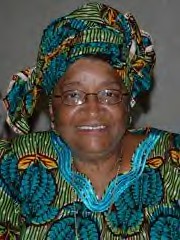
    Liberian President Ellen Johnson Sirleaf, Africa’s first woman
    president, has announced she will run for re-election next year,
    despite previously promising to serve only one term.

    “I now announce to you, and to the thousands of supporters in
    radio land and abroad, that I will be a candidate,” she said during
    her annual address to parliament on Monday, which received sharp
    criticism from opposition parties.

    Government spokesman Cyrus Badio told state radio on Tuesday
    that Sirleaf’s decision was due to her successes as president,
    after her election in 2005 in the wake of a brutal civil war.

    “The president has decided to go for a second round because of
    the numerous successes she has realised over the years in power.
    She has significantly changed the lives of Liberians,” said Badio.

    Sirleaf’s candidature comes despite a report by Liberia’s
    Truth and Reconciliation Commission naming her among some 50 people who it recommended be banned from holding public office for 30 years for supporting warring factions during the civil war.

    In her address to parliament, Sirleaf proposed amendments to the
    national human rights commission act to enable a commission to work alongside the justice ministry to “determine those recommendations that are implementable … under the constitution and laws of our nation.”

    The announcement prompted a storm of criticism from the
    opposition.

    Opposition Liberty Party chairman Israel Icinsiah said Sirleaf’s
    decision was a signal to voters that she would renege on her
    election pledges.

    “This is the clear indication that she does not do what she
    says,” he said.

    Congress for Democratic Change chairperson Geraldine Doe told
    AFP that the annual address to parliament was “was not the right
    forum for such a statement.”

    “You invite diplomats and other dignitaries to such an important
    event, and you bring cheering squads for a political statement that
    has nothing to do with what we came here for. It is wrong,” she
    said.

    In August last year, US Secretary of State Hillary Clinton threw
    her support behind Sirleaf during an official visit, praising her
    post-war transformation of Liberia.

    Founded by freed US slaves in the 19th century, Liberia remains
    friendly with the United States and Sirleaf has generally enjoyed
    strong support overseas.

    Badio, the government spokesman, said Sirleaf could be proud of
    her record as president.

    “She has reinstalled water and electricity in the capital and
    some parts of the rural parts of Liberia. She has rebuilt the
    infrastructure that was destroyed during the war.”

    The west African nation was ravaged by successive civil wars in
    which some 250,000 people died between 1989 and 2003, leaving the infrastructure ruined and the economy in tatters.

    Supplies of water and electricity in the capital are still
    haphazard and unemployment and illiteracy in the west African state
    are high.

    The panel investigating Liberia’s civil wars included Sirleaf’s
    name in a list of people it accused of being “the financiers and
    political leaders of the different warring factions”.

    Sirleaf denied ever being a member of the movement led by rebel
    leader and warlord Charles Taylor.

    She told the truth panel she had met Taylor several times during
    Liberia’s successive conflicts and had also collected funds for him
    in the 1980s.

    Taylor is on trial in The Hague on 11 counts of war crimes and
    crimes against humanity stemming from his support of Revolutionary
    United Front guerrillas in neighbouring Sierra Leone’s 1991-2001
    civil war.

  • Winnie Mandela Threatens Legal Action Over Film

    Winnie Mandela threatens legal action over film

    Nelson Mandela’s ex-wife Winnie is threatening legal action against the makers of a biographical film about her starring Jennifer Hudson.

    By Sebastien Berger in Johannesburg
    Published: 2:36PM GMT 26 Jan 2010

    The film is likely to detail the fraud, kidnapping and murder controversies that have surrounded the anti-apartheid leader’s former wife.

    Mrs Madikizela-Mandela, as she has been known since her divorce from Mr Mandela in 1996, is one of South Africa’s most controversial and divisive figures.

    She is revered in some quarters as the “Mother of the Nation” for her role in the struggle, the harassment she suffered from the white authorities, and her populist rhetoric that still appeals to South Africa’s poor.

    But for others she is reviled. She once notoriously declared that “with our boxes of matches and our necklaces, we shall liberate this country”, referring to the preferred way of killing suspected informers in the townships, setting fire to a petrol-filled tyre around their necks, so ensuring an agonising death.

    Under apartheid she was convicted of kidnapping Stompie Moeketsi, 14, who was later found beaten to death in Soweto, and long after the advent of democracy, she was convicted of more than 40 charges of fraud in 2003 – her prison sentence was replaced with a suspended term on appeal.

    Even so she topped the poll for the ruling African National Congress’ national executive committee at its last congress in 2007, prompting speculation – which proved to be unfounded – that she would be given a cabinet post in Jacob Zuma’s government.

    The South African-made film, titled Winnie, is due to start shooting in May and will star Jennifer Hudson, the Oscar-winning American actress, whose casting in the role provoked protests from South African actors.

    It is based on an independent biography of her, Winnie Mandela: A Life, by Anne Marie du Preez Bezdrob, a former journalist, described by one reviewer as “hard-hitting but not heartless”.

    Nonetheless lawyers for Mrs Madikizela-Mandela, 73, have stepped in to warn the producers that she is reserving her legal rights.

    A letter from Bowman Gilfillan, one of the country’s leading law firms, said she had not been approached for consent to the film, according to Johannesburg’s Star newspaper.

    “It is difficult to understand how a production bearing the name of an individual who has not been consulted at all could ever be appropriate or tell the full story of that individual life,” it quoted the letter as saying.

    “This is certainly the case here where our client has not responded to allegations and comment which have been made about her, precisely because she has sought to protect her sphere of personal privacy as best she can in extremely difficult and turbulent times.”

    A spokesman for Bowman Gilfillan declined to comment on the matter, citing lawyer-client privilege.

    In a statement on Tuesday night, the producers’ spokesman Dezi Rorich said they had met Mrs Madikizela-Mandela’s lawyers, but were “unable to reach an understanding with them”, and made clear they would not back down.

    “The position of the producers is that if a screenplay has to be approved by Ms Madikizela-Mandela, then the film based on that screenplay could possibly be jeopardised as the world may question the credibility of the film,” she said, adding that they were advised that they do not legally need her consent to make the film.

    But in a nod to the potential sensitivity of the issue, she added that they “do not intend any disrespect towards Ms Madikizela-Mandela or the Mandela family by not requesting such consent”.

    The ANC’s spokesman Brian Sokutu said that “out of courtesy and respect” the filmmakers should have discussed the project with her “to see how she feels”, particularly as it was likely to be “highly controversial and personal”.

    Mrs Madikizela-Mandela, he said, was “entitled to take legal action to protect her reputation from any form of character assassination”.

    But he declined to say whether the party would back her in any attempt to stop it being made. “We are a constitutional democracy,” he said.

    Winnie Mandela angry over biopic

    JOHANNESBURG – Winnie Madikizela-Mandela’s lawyers have complained to the makers of a new movie about her life, saying she was never consulted about the film starring Jennifer Hudson, local media said Tuesday.

    Plans for the film “Winnie” were announced late last year by South African film-maker Darrell J. Roodt, whose films include “Cry, The Beloved Country” and “Sarafina.”

    But a letter from her attorney Bowman Gilfillan said Madikizela-Mandela was “extremely concerned” to hear about the film, saying “she has never been approached for consent or at all,” according to The Star newspaper. “It is difficult to understand how a production bearing the name of an individual who has not been consulted at all could ever be appropriate or tell the full story of that individual life as media reports suggest this production is intended to,” the letter said, according to the paper.

    Madikizela-Mandela campaigned tirelessly for her husband’s release during his 27-year imprisonment in the apartheid era.
    She separated from Nelson Mandela in 1992, three years after his release, but she remains a leading South African figure in own her own right. – AFP

  • Guinea News Bulletin: Jean Marie Dore of Forces Vives Appointed Prime Minister

    Wednesday, January 27, 2010
    06:11 Mecca time, 03:11 GMT

    Guinea appoints civilian PM

    Camara signed a pact agreeing for an interim government to hold democratic elections

    Guinea has sworn in a civilian prime minister as a transitional government has taken power in the latest step towards democratic elections in the West African country.

    Jean-Marie Dore, said he wanted to lead the transition administration to “free, transparent and credible elections” and would seek an overhaul of the military, which took power in a coup after the death of the president in 2008.

    “[Democratic elections are] indeed the required path for our country to attain stability,” Dore said at an inauguration ceremony on Tuesday.

    He called on General Sekouba Konate, the president of the transition government, to “reorganise and restructure the military with the support of the international community”.

    Dore’s appointment as prime minister comes less than two months after Moussa Dadis Camara, the Guinean military leader that led the coup, was badly wounded in an assassination attempt.

    Earlier this month, Camara agreed to stay in neighbouring Burkina Faso and not return to Guinea while he recuperates after being shot in the head by a former aide.

    Konate, the defence minister, assumed control of the country after the attempt on Camara’s life.

    Military coup

    Camara’s National Council for Democracy and Development [CNDD] sparked a political crisis when it took power in a military coup.

    He promised to hold elections within the year and address rampant corruption in the desperately poor country.

    However, suggestions that Camara did not intend to step down sparked public protests which culiminated in a brutal crackdown by the presidential guard on one demonstration in the capital Conakry.

    More than 150 people were killed in the massacre for which the UN said Camara was responsible.

    Dore, who helped lead the demonstration, had his skull cracked when he was beaten by soldiers loyal to Camara.

    Source: Agencies

    Interim PM takes office in Guinea

    By Caspar Leighton
    BBC West Africa correspondent

    The new interim prime minister of Guinea, who is charged with organising elections that will see the end of military rule, has taken office.

    Jean Marie Dore was appointed by the general in charge of Guinea, Sekouba Konate, after the military government agreed to step down.

    He made a brief speech setting out some big objectives. Reforming Guinea’s armed forces was top of the list.

    But it is no small order in a country controlled by the military for decades.

    The current government took power in December 2008 after the death of Lansana Conte, himself an army man who staged a coup 24 years earlier.

    Mr Dore said he would organise elections and prioritise the economic revival of Guinea, which is the world’s largest exporter of bauxite and is rich in other minerals.

    Huge task

    Still to be formed is the transitional government that Mr Dore is in charge of.

    It is meant to have 20 members drawn from political parties and civil society and 10 members from the military.

    Mr Dore said he hoped that the transitional authority would be in place by the end of the month.

    The task ahead is huge.

    Guinea has never had a democratically-elected government and the goal is elections in six months.

    The international investors in Guinea’s massive mineral wealth are still in place, even if output has dropped amid the chaos of the past year.

    Convalescing in Burkina Faso is the man technically in charge of the military government, Capt Moussa Dadis Camara.

    He has been incapacitated since an assassination attempt in December.

    Though sidelined by events, he is still an influential figure and is one of a group of soldiers that the United Nations holds responsible for the shooting of more than 150 opposition demonstrators in September last year.

    The new government will have to negotiate a treacherous path between creating a stable present and seeing justice done for crimes in the past.

    Story from BBC NEWS:
    http://news.bbc.co.uk/go/pr/fr/-/2/hi/africa/8481934.stm
    Published: 2010/01/26 20:41:49 GMT

    January 20, 2010

    Guinea Junta Picks Opponent as Premier on Path to Civilian Control

    By ADAM NOSSITER
    New York Times

    DAKAR, Senegal — Guinea’s military leaders appointed a veteran opposition figure as prime minister on Monday, a critical step in the transition to elections and civilian government later in the year, officials and news agencies reported.

    The opposition figure, Jean-Marie Doré, was the choice of both a coalition of opponents of the military government, and the current military junta itself.

    Mr. Doré, in his 70s and the leader of the opposition coalition, which is called the Forces Vives, is from the same ethnic group as the country’s military dictator, Capt. Moussa Dadis Camara. Soldiers from that group are thought to have played a leading role in the massacre, beatings and rapes of regime opponents in a stadium in the capital, Conakry, on Sept. 28. The ethnic group, from Guinea’s remote forest regions, is considered a particularly volatile element in the country’s armed forces, and Mr. Doré’s new role is considered a potentially peacemaking one.

    “It was the Forces Vives that proposed Jean-Marie Doré. We are satisfied,” said Oury Bah, vice president of the political party Union of Democratic Forces in Guinea. Late last week Guinea’s military leaders and the coalition agreed to establish an interim government together, while Captain Camara, wounded in an assassination attempt early in December, announced that he would go into exile.

    The deal caps a period of deep unrest in this West African country of 10 million people, a leading bauxite exporter whose people are among the world’s poorest. Captain Camara took over in a coup 13 months ago and ruled in an increasingly arbitrary way from his army-base headquarters. The September massacre, in which at least 156 people were killed by soldiers, resulted in intense pressure on the junta as both the United Nations and the International Criminal Court spoke of potential crimes against humanity.

    Captain Camara, shot by one of his own guards, flew to Morocco for treatment while power was assumed by his deputy, Gen. Sékouba Konaté. The general, regarded as more flexible than the wounded autocrat, took part in the negotiations that led to last week’s deal.

    But whether the troubled country finds peace in the months leading up to the elections is an open question. Mr. Bah, for one, was sharply critical of the proposed composition of the new government, which will have 10 ministers each from the military junta, the opposition and the different regions of the country.

    That arrangement will effectively handcuff the prime minister, he said. “It’s as if the prime minister has no real power. We can’t accept this in the transition,” he said.

    The army’s future role is also unclear. There is a strong possibility that it will remain “the power behind power,” said Mike McGovern, a Yale anthropologist and an expert on Guinea.

    Mr. Doré has long been on the political scene in Guinea as an unpredictable opponent of the country’s military rulers. He has publicly proclaimed his friendship with the Liberian warlord Charles Taylor, according to Mr. McGovern, but was among those beaten at the stadium in September.

    In an interview shortly after Mr. Doré produced the bloodstained clothes he was wearing at the time, he said, “With violence they forced me to my knees.”

    He was strongly critical of the military government. “The country is in a trap,” he said. “There’s a disjunction between the work that must be done, and the people doing it. The competencies at hand are not up to the job.”

    Mr. McGovern said that Mr. Doré had “oscillated over time from being something of a gadfly in Guinean politics to being over the last year a pretty solid, level-headed spokesman for the Forces Vives.”

  • Somalia News Update: Resistance Forces Hit UPDF Unit

    Somali resistance forces hit UPDF medical unit in Somalia

    By Risdel Kasasira
    The Uganda Daily Monitor
    January 26 2010

    The Defence and army spokesperson, Lt. Col Felix Kulayigye had earlier told Daily Monitor that the mortar missed the target and hit near the medical unit that serves at least 2,000 Somali patients every week.

    Somali insurgents on Monday attacked the African Union Peace keeping Mission base in Halane, Mogadishu killing at least one person and injuring an unspecified number of mainly Somali patients who were receiving treatment at the Amisom clinic. It was not clear by press time whether the man killed was a peacekeeper or Somali civilian.

    Amisom spokesperson Maj. Barigye Ba-Hoku said there was an explosion at the Outpatient department (OPD) but could not tell whether it was a motor attack or suicide bomber. “I have heard an explosion. A number of Somalis died in the OPD (outpatient department) of our base,” Barigye was quoted by news agencies.

    Uganda and Burundi contribute to the at least 5000 peacekeeping troops in Somalia. Uganda alone has at least 3200 soldiers serving in the war torn Horn of Africa country.

    The base has always been targeted by the insurgents of the Al Shabaab. In September last year the insurgents attacked the base using two vehicles with United Nations insignia which they exploded inside the base killing at least 17 peacekeepers including the Burindian deputy head of mission. 11 of those killed were Burundian and the rest Ugandans.

    The Defence and army spokesperson, Lt. Col Felix Kulayigye had earlier told Daily Monitor that the mortar missed the target and hit near the medical unit that serves at least 2,000 Somali patients every week.

    “I’m aware that a mortar that was fired and hit near the medical unit,” Col. Kulayigye said.

    However according to sources in Mogadishu who didn’t want to be quoted, one Ugandan soldier was killed and many Somali patients killed in the attack. The attack is the first assault on the African peacekeepers this year began.

    But Kulayigye denied. “I’m not aware of any deaths of our soldier” he said.

    The Ugandan peacekeepers’ medical unit is open to Somali patients on Monday, Wednesday and Saturday.

    But Maj. Barigye told Daily Monitor recently that Somali militants are against the offering of these medical services to Somalis. “They think treating these people makes us popular among the Somali community,” he said in an interview with Daily Monitor.

    Uganda and Burundi have deployed an estimated 5000 peacekeepers in Mogadishu to back the beleaguered government of president Sharif Ahmed Sharif.

    However the Islamist fundamentalists have consistently attacked the peacekeepers whom they describe as occupational force.

    Source: The Daily Monitor

    It wasn’t us: Somali militants disavow Kenya threat

    Al Shabab, the Somali militant group with ideological links to Al Qaeda, says the threat to attack Kenya – posted on its website this week – is fake.

    By Scott Baldauf Staff writer
    posted January 22, 2010 at 9:49 am EST

    Johannesburg—-By posting on its own website a threat to attack Kenya, and then disavowing that threat as a “fake,” Somali insurgent group Al Shabab may seem a bit confused.

    But that doesn’t make either the threat or the people who made the threat any less dangerous, nor Kenya any less vulnerable, security analysts say. It may indicate a split among the group’s leadership between jihadists and nationalists.

    With hundreds of thousands of Somali refugees residing within its borders, and a sizable indigenous Somali ethnic community as well, Kenya must remain vigilant against potential threats such as the Islamist Al-Shabab militia, which professes close ties to and a shared ideology with Al Qaeda. Kenya’s vulnerability was seen plainly last week, after protests over the planned deportation of a radical Jamaican cleric turned violent in Nairobi’s Somali neighborhood of Eastleigh, and as protesters unfurled the black flag of Al Shabab to show their radical allegiances.

    “If the Mungiki [an ethnic Kikuyu militia] can carry out attacks in Nairobi, anybody can,” says Richard Cornwell, a veteran Africa analyst from Tshwane (Pretoria). “Whether this is really Al Shabab or ordinary criminal elements pretending to act in the defense of Islam – we’re more than just bandits, we’re religious bandits – it doesn’t really matter. They can do bloody well what they want.”

    ‘When we arrive we will hit, hit until we kill’

    This week, after Kenya’s security forces detained hundreds of protesters in the Somali-dominated neighborhood of Eastleigh, Al Shabab’s official website carried an audio recording of a threat to attack Kenya.

    “God willing we will arrive in Nairobi, we will enter Nairobi, God willing we will enter … when we arrive we will hit, hit until we kill, weapons we have, praise be to God, they are enough,” Reuters news agency quoted the seven-minute long chanting message from Swahili.

    On Saturday, Kenya’s Interior Minister George Saitoti accused Al Shabab of infiltrating the demonstrations in Nairobi against the arrest and deportation of Jamaican-born cleric Abdullah Al-Faisal.

    Al Shabab spokesman Sheikh Ali Mohamud Rage later told Reuters that the audio recording was fake.

    “We didn’t threaten Kenya. That story is a false one,” Mr. Rage told a Reuters reporter. “We never posted that on the Internet. … Everything needs to be checked first by the media to make sure they know what they are writing about.”

    Rashid Abdi, a Horn of Africa specialist at the International Crisis Group in Nairobi, says that the threat – even if disavowed by Al Shabab’s leadership – could indicate splits within top Al Shabab leadership.

    “I think you have a nationalist group within Al Shabab, who are fed up with global jihadist agenda, and they saying our plate is already full with fighting the African Union and Western-backed transitional government, so we have no business taking on Kenya,” says Mr. Abdi. “On the other side you have the foreign jihadis, who say, ‘no, no, no, you signed up for global jihad.”

    In any case, the threat against Kenya is likely to prompt Kenya to clamp down on Islamists in particular and the Somali community in general, which will likely push more young Muslims into the arms of Al Shabab. “If the jihadis don’t want peace, then this is good for their agenda. It will radicalize ethnic Somalis in Kenya, and boost their recruitment.”

    ‘Measured response’ is needed

    Al Shabab – a militia that controls most of southern Somalia, including most of the capital of Mogadishu – has threatened to attack other countries before: against Ethiopia for its December 2006 invasion of Somalia, and against Uganda and Burundi for contributing troops for the African Union peacekeeping mission that supports the shaky transitional government in Somalia. As yet, none of its threats have been carried out, although Al Shabab has claimed credit for a series of suicide bombings throughout Somalia itself.

    Security analysts say that the porous nature of Kenya’s borders with Somalia, and the fact that Al-Qaeda influenced supporters have carried out bombing attacks in Nairobi – most notably the 1998 bombing of the US embassy – are reason enough for Kenya to be on its guard. But Mr. Cornwell says that Kenya must be careful to be measured in its response.

    “This called for a measured response and circumspection about one’s foreign policy,” says Cornwell. “When the American government supported Ethiopia in its invasion of Somalia, for the first time the mullahs in Eastleigh were putting politics into their sermons.”

    Strong actions can have unintended consequences and actually fan the flames of radical sentiment, Cornwell says, “but unfortunately, that isn’t the way people’s minds work” in the world where foreign policy is made.

    Egypt: Somali women pay way into country

    Bikya Masa
    Courtesy of Wardheernews.com
    January 26, 2010

    CAIRO–Somali women are resorting to extreme measures to leave their war-ravaged country to find a new beginning by using Egypt as a stepping-stone to Europe and America. After Cairo tightened immigration laws in 2008, women have begun paying Somali diplomats to bring them into Egypt. Women pay up to $1000 to be brought in as members of the diplomat’s family. As a diplomatic passport is used, the women and their children do not need identification when entering the country.

    “I am seeing many cases like this,” says Abdullah Osman, head of the Somali Development Organization (SODO) in Cairo. “She [women] must sell a car or farmland to raise the money [to get to Egypt],” he added. For the women, finding the money to come to Egypt for a single mother in Somalia can be a difficult task.

    Often the women flee with their children after their husband has been kidnapped or killed in fighting. “The women say their husband went out to find food for the children, but they never came back,” adds Osman.

    An effective government has not controlled the whole of Somalia since 1991, when President Barre was forced out of government by clans from the north and south of the country. Somalia has been steeped in civil war, creating instability, and has led many with means to seek a better life elsewhere.

    Current President of Somalia, Sheikh Sharif Sheikh Ahmed, told Germany’s Spiegel Online in 2007 that “Somalia is breaking up into several regions, where local interest groups have grabbed power for themselves and can operate without any kind of control.”

    While the motivation to escape danger in Somalia is powerful, many find life in Egypt far from easy. Once they arrive in Cairo, the women must apply for refugee status with the United Nations High Commission for Refugees (UNHCR). The UNHCR gives them a blue card, and the Egyptian government can then grant a residency permit. This process takes about six months.

    Without a residency permit women cannot send their children to schools, use a hospital or work. Osman identified the refugee’s main problem as being livelihood. “Assistance they receive is very little and does not cover all of the rent and food.” In the first month of arrival, before qualifying for assistance, refugees must survive on their own savings.

    Schooling presents another problem, as refugee children are not allowed to attend government schools, and so mothers are forced to pay high fees for private schools. This is despite the fact that Egypt is a signatory of the 1951 United Nations Convention for the refugees, whereby education cannot be denied to refugees. Egypt is also a signatory of the 1967 UN refugee protocol that further guarantees rights.

    Mothers with large families are often not able to afford the costs of sending all of their children to school. This creates another barrier refugees face, learning Egyptian Arabic, where children attending school would be able to do.

    Egypt is now a transit point for refugees looking to emigrate to Europe or America. “The mothers that come to me say they wanted to escape [Somalia] to give their children a better life, but they say that the life of the children is no better in Egypt,” Osman concluded.

    Source: Bikya Masar

    Bomb kills 4 policemen in breakaway Somaliland

    By Hussein Ali Noor
    Reuters
    January 25, 2010

    HARGEISA – A bomb hidden near a mosque killed four policemen in Somalia’s northern breakaway enclave of Somaliland on Monday in the latest attack on security forces in the region, police sources said.

    Somaliland is proud of its relative stability compared with southern regions of the failed Horn of Africa state, where hardline al Shabaab rebels control large amounts of territory and are fighting a weak Western-backed government.

    Washington accuses al Shabaab of being al Qaeda’s proxy in Somalia, and security experts say the group wants to extend its influence north — aiming to destabilise Somaliland and the neighbouring pro-government, semi-autonomous region of Puntland.

    No group immediately claimed responsibility for Monday’s blast, which came just days after unidentified attackers hurled hand grenades and fired at the main police station in Las Anod near the Puntland border on Jan. 12, wounding three officers.

    The police sources said the device had been hidden among milk cans left near Las Anod’s Grand Mosque, and it detonated as they inspected the cans. Two policemen were severely wounded.

    In two separate violent incidents in the area late on Sunday, gunmen ambushed and killed a senior police operations officer as he returned home from evening prayers, and a woman was killed by an explosion near Las Anod’s hospital.

    Earlier this month, Somaliland’s security forces said they had foiled an attack on a Hargeisa mosque where the imam had spoken out against suicide bombings carried out by al Shabaab insurgents in southern Somalia.

    Al Shabaab hit Somaliland and Puntland with synchronised suicide blasts that killed at least 24 people in October 2008. A court in Hargeisa has sentenced five men to death in absentia for those bombings, and said they were on the run in other parts of Somalia. Somaliland has long sought international recognition as sovereign state. It declared itself independent in 1991.

    Analysts worry a simmering political row between the president of Somaliland and opposition parties over delayed elections could trigger a re-arming among clan militias, further violence and more turmoil for al Shabaab to exploit.

    (Editing by Daniel Wallis and Louise Ireland)

    Source: Reuters

    Somalia, Sudan top agenda of OIC meet in Uganda

    Jan 25, 2010(Xinhua) – The volatile situation in Somalia and Sudan’s Darfur region will top the agenda of the Organization of the Islamic Conference (OIC) meeting that started here on Sunday.

    Hussein Kyanjo, a Ugandan lawmaker and also one of the organizers of the eight-day meeting of the Parliamentary Union of Islamic Conference, an affiliate of OIC, told reporters that the legislators will discuss foreign intervention in Somalia.

    “The Somalia issue is a specific feature the political committee is going to discuss in detail,” he said at Commonwealth Speke Resort Hotel Munyonyo, on the shores of Lake Victoria.

    African Union (AU) has deployed over 4,000 peacekeepers in Somalia where Islamic militants, al Shabaab, are fighting the Somali Transitional Federal Government.

    According to AU, foreign fighters with links to al Qaeda have teamed up with the al Shabaab to fight the government there.

    The over 500 delegates from 51 member states and 13 parliamentary union observer groups around the world will also discuss the situation in Sudan’s Darfur region during the meeting.

    Documents prepared for the meeting show that the delegates will discuss how they can stand by Sudan against what they called all international threats and to affirm its sovereignty and legitimate leadership.

    Sudanese President Omar Hassan al-Bashir was indicted by the International Criminal Court for his alleged responsibility for crimes committed in Darfur in western Sudan.

    Among other topics to be discussed include the Palestine-Israel question, Iraq situation and combating terrorism under the United Nations umbrella among others.

    The conference dubbed the Sixth Session of the Conference of The Parliamentary Union of the OIC member states will be officially opened on Jan. 30 by Ugandan President Yoweri Museveni.

    Source: Xinhua

    FBI got 2,000 phone records with fake terrorism emergencies: report

    The FBI illegally collected 2,000 phone records between 2002 and 2006 invoking nonexistent terrorism emergencies, according to a report in The Washington Post.

    By Tom A. Peter
    Christian Science Monitor
    January 19, 2010

    The Federal Bureau of Investigation used false terrorism emergencies to illegally collect more than 2,000 phone records between 2002 and 2006. A series of e-mails and memos obtained by The Washington Post details how FBI officials violated their own procedures and strained their communication analysis unit with non-urgent requests. In many instances, approval was granted after records had been collected to justify the FBI’s actions.

    Later this month, the Justice Department is expected to issue a report that will find the FBI violated regulations many times with its terrorism-related phone record requests. FBI Director Robert S. Mueller III did not know about the problems until late 2006 or early 2007 when they were brought to light by an inspector general investigation, reports the Associated Press.

    The memos do not reveal whose phone records were collected by the FBI, but Bureau officials say that nearly all instances were related to terrorism cases. They added that agents were working under the stress of trying to stop potential terror attacks and did not intentionally violate the law.

    The FBI, which previously admitted to illegally collecting phone records in 2007, has begun to publicly acknowledge this latest phone record collection abuse. In an interview with The Washington Post, Valerie Caproni, general counsel for the FBI, said that the bureau had violated the Electronic Communications Privacy Act in collecting the 2,000 phone records in question.

    “We should have stopped those requests from being made that way,” she said. The after-the-fact approvals were a “good-hearted but not well-thought-out” solution to put phone carriers at ease, she said. In true emergencies, Caproni said, agents always had the legal right to get phone records, and lawyers have now concluded there was no need for the after-the-fact approval process. “What this turned out to be was a self-inflicted wound,” she said.

    The FBI never obtained the content of telephone conversations through the program. Additionally, the Bureau has already taken steps to ensure that nothing similar will happen again, FBI spokesman Michael Kortan told Reuters. He added that no one in the FBI had used these methods to for “reasons other than a legitimate investigative interest.”

    Previously, FBI agents required a grand jury subpoena or a “national security letter” related to a terrorism or espionage case to collect phone records. However, after Sept. 11, the Patriot Act loosened the restrictions required to obtain phone records. Lower-level FBI officials were given the authority to request phone records, but the Press Trust of India reports that the program soon expanded beyond the intent of the loosened restrictions with phone records possibly unrelated to terrorism cases being collected by the FBI.

    Main Justice, a news agency devoted to covering the Department of Justice, reports that although this is not the first time the FBI’s improper collection of phone records has come to light, the e-mails and memos collected by The Post reveal the internal controversy behind the program.

    Source: The Christian Science Monitor

  • Thousands March for Free Media, Polls in Ivory Coast

    Thousands march for free media, polls in Ivory Coast

    Tue Jan 26, 2010 5:58pm GMT

    ABIDJAN (Reuters) – Thousands of Ivorian opposition supporters marched peacefully through Abidjan on Tuesday to protest against what they said was President Laurent Gbagbo’s stranglehold on the state media and election-delaying tactics.

    Watched by heavily armed riot police, some 3,000 demonstrators marched towards the offices of the state-run Ivorian Radio and Television (RTI) broadcaster. Protestors chanted slogans calling for Gbagbo to give opposition parties equal access to the state media and hurry up with the polls.

    Political tensions are rising in the top cocoa grower as Ivory Coast approaches the campaign period for an election meant to end years of stalemate following a 2002-3 war that split the country in two, leaving the north in the hands of rebels.

    Opposition presidential candidates Henri Konan Bedie and Alassane Ouattara have complained of being marginalised by the national press, saying state broadcasters or pro-Gbagbo private media are giving the incumbent an unfair advantage.

    “Equal access to state media is guaranteed to all by the law,” said a statement read out by opposition youth leader Karamoko Yayoro. “We condemn the stranglehold of the media … (exercised) by the candidate Laurent Gbagbo’s clan.”

    Despite widespread fears of violence and a police roadblock preventing protestors marching onto RTI’s offices, the demonstration remained peaceful throughout.

    The vote has been repeatedly postponed since 2005 but is currently scheduled for around early March. The opposition accuses Gbagbo of deliberately holding back the process to extend his mandate, a charge he denies.

    After years of political instability and limbo, many Ivorians are desperate to draw a line under a crisis that has paralysed the economy and scared off investors in what was once West Africa’s economic powerhouse.

    “We are in a situation of total hopelessness,” said protester Pascal Noe, 28, unemployed. “Gbagbo has brought us war and nothing else. We want out of this crisis.”

  • Pam Africa Interview on the Supreme Court Ruling Against Mumia Abu-Jamal

    Pam Africa on the Supreme Court ruling against Mumia

    by Minister of Information JR

    On Tuesday, Jan. 19, the U.S. Supreme Court ruled against political prisoner Mumia Abu Jamal and granted the Philadelphia DA’s petition for a writ of certiorari. Basically, the Supreme Court went against the lower federal circuit court’s 2001 and 2008 rulings, which granted a new sentencing phase jury trial if the death penalty was to be reinstated in Jamal’s case. Now the case goes back down to the 3rd Circuit Court of Appeals, who will decide whether they will re-impose the death penalty without the jury trial.

    In a recent interview with the Block Report, Mumia spoke about the Spisak case, in which the death penalty has since been reinstated for the white supremacist murderer Frank Spisak. The question is how this will affect Mumia’s case since they both dealt with the Mills issue, which addresses confusing jury instructions.

    We are now at the highest level of Code Red in the case of Mumia Abu Jamal. The people must come to this tireless souljah’s defense.

    I interviewed Pam Africa, the chairwoman of the International Concerned Family and Friends of Mumia Abu Jamal, about the direction of the “Free Mumia” movement at this critical time …

    M.O.I. JR: Now that we have this information on how the Supreme Court wants to move on Mumia’s case, how is the International Concerned Family and Friends of Mumia Abu Jamal moving? And what do they need from the people?

    Pam Africa: One thing that people need to understand is that this is a very crucial time. What we’re doing today, we’re having a press conference in front of the District Attorney’s Office here in Philadelphia.

    This is the first Black DA in the city of Philadelphia. His name is Seth Williams, who ran on the platform that when he became district attorney, he would execute Mumia. That’s why we’re having the demonstration there, because it eventually will end up in the hands of the district attorney.

    The district attorney are the ones that are applying for this death sentence on Mumia. I know that they are battling Mills (the case concerning jury instructions) and everything else, but people must stay focused. The time is very short in dealing with the case of Mumia.

    People must organize around the world. There are two petitions that are happening: One is by a group of people over in Germany with Mumia’s attorney, Robert Bryan, calling on President Obama to get involved in the case and get Mumia a new case, because he never had a trial, really.

    But we’re calling on the attorney general. When I say we, I’m saying there are several groups and organizations that is spearheaded by the New York (Free Mumia Abu-Jamal) Coalition that is calling on the attorney general, because what we’re pointing out is that Mumia cannot get any fairness whatsoever.

    Brewing right here is another example of what it is we’re talking about. Mumia cannot get any fairness in this court system, so we’re calling on the U.S. attorney general to do a civil rights investigation into this case, because Mumia’s civil rights from the beginning to the end, and our civil rights as citizens of this United States who have pointed out the evidence very clearly (are threatened). That nobody can get around: Mumia is innocent. He is factually innocent.

    And what we’re asking people to do is to sign both of the petitions on behalf of Mumia. The one that the attorney is putting out there, because when he petitions and all, Obama, Obama’s next move is that he has to go to the U.S. attorney general. And when he comes to the U.S. attorney general, he will fully know that our last person who signed the petition for the civil rights investigation was Skip Gates, who sat down and had a beer after he was beat up by the police, you know, at the White House. I’m saying, he signed the petition. We have people that are right in the ear of Obama and the attorney general.

    And I want to point out very clearly, we have no hope whatsoever in the system. Our faith, Mumia’s faith, is in the people. Will the people rise up and do what is right? Shaka Sankofa is dead because the people didn’t consistently stay on top of these people when they did wrong.

    Tookie Williams, when they executed him, when they murdered him in cold-blood when the movement was moving, it should’ve continued to move that way. There are magnificent things that are happening in California around the death penalty, but everybody must unite together and move as one up against this government for the sake of Brotha (Troy) Davis, for the sake of all the brothas that’s on death row right now.

    Again there is Academics for Mumia, who are at Princeton University, who is having a meeting pulling academics together, and we’re asking the academics to sign both of these petitions while they educate people. I’m telling you people, we are not without the evidence. If you go to the website at Journalists for Mumia, if you go into the Bay View, you will find all of the evidence that you need to bring the system down to its knees.

    Once again, do not be duped by time; time is running out. And I know that when this next step is made, as I understand, things might be like six months and then it will go to the DA. The time might be a little bit off, but we don’t have much time. It’s time for them people to get into them churches, make them ministers get up, make these politicians get up, you know, make the people rise up, as they did in 1999, when we did Millions for Mumia. The time is now for organizing, organizing with all of the strength that you have.

    And I just want to thank people like the Partisan Defense Committee, Labor for Mumia, the Mobilization for Mumia, Millions for Mumia. These people have stayed steadfast, and if I haven’t mentioned the names of other people, there is a lot of individuals – JR and the Bay View – for keeping this issue up front in the people’s eye.

    The time is now for organizing, organizing with all of the strength that you have. People must pull together to abolish the death penalty. Save this brotha who has been on the front lines, from deathrow, on every issue of social justice that there is.

    And I will be down (in the Bay) on Feb. 18. I’ll be in California, from the 18th to the 23rd. I’m coming down there for the brotha of the San Francisco 8 (Francisco Torres’) hearing. I’m coming down there for Brotha JR’s hearing, and I wish I could be in LA when they bring this murderous cop (who murdered) Oscar Grant there, but I’m going to be pushing for people to get there – everybody who can.

    This death sentence that was handed out to this brotha; we can’t allow it, people. And I’m saying y’all have been an example to all of the people around the world of resistance (of what can be done) when people be consistent at what they do. Y’all have had something done here when y’all had that murderous monster arrested. It must continue. This dude must sit on deathrow. That is where he needs to sit with all of the other people. And let people fight to get his behind off of deathrow.

    You know, it can’t be enough said: People must pull together. You must abolish the death penalty because it is wrong, all the way across the board. We must support JR and all of the brothas and sistas that was arrested. This is what Mumia is pushing for; this is what we’re pushing for.

    When we come to California, we’ll be having more information about Mumia. The movement is moving real fast, so please while you are organizing for everything, tell people that they must get into the streets in order to save this brotha who has been on the front lines, from deathrow, on every issue of social justice that there is.

    Email POCC Minister of Information JR, Bay View associate editor, at [email protected] and visit http://www.blockreportradio.com .

  • US War Update: More Bombings in Kabul; Baghdad Hit in Coordinated Attacks

    Tuesday, January 26, 2010
    16:35 Mecca time, 13:35 GMT

    Suicide attack hits Afghan capital

    A suspected suicide bomber has detonated his explosives outside a foreign military base in Kabul, the Afghan capital.

    At least five civilians were wounded, as well as an unspecified number of foreign troops, in the attack on Tuesday, officials told news agencies.

    “It was a suicide attack on foreign troops. There are casualties among Afghan civilians and foreign forces,” a source told the Reuters news agency.

    An interior ministry official told the AFP news agency said that the suicide bomber was in a car laden with explosives.

    The attack is reported to have occured on a road leading eastwards from the city centre close to several foreign military bases.

    Tuesday, January 26, 2010
    14:07 Mecca time, 11:07 GMT

    Kabul attack ‘linked to Pakistan’

    A shopping centre in the Afghan capital was among the buildings damaged in the attack

    Afghanistan intelligence has said fighters smuggled over the border from Pakistan were responsible for a recent assault on government targets in the Afghan capital.

    Officials in Kabul released video footage on Tuesday of a man arrested in connection with the attacks who said that the Haqqani network, a group of Afghan fighters based in Pakistan, were behind the offensive.

    The man, an Afghan identified as Kamal Uddin, said in his alleged confession that there had been seven suicide bombers in the attack, which took place on January 18.

    “I was in charge of two suicide bombers and took them to a shopping centre near the presidential palace,” he said, noting that he had housed the suicide bombers and their co-ordinators ahead of the attacks.

    Afghan security forces arrested Kamal Uddin just 24 hours after the attack.

    Intelligence officials said that a Pakistani mobile phone chip, also known as SIM card, had been found at his house.

    Co-ordinated attacks

    The attacks, said to be the most co-ordinated offensive on the capital since the US-led invasion in 2001, took place while Hamid Karzai, the Afghan president, was swearing in some of his cabinet minister.

    At least five people were killed and about 38 more wounded in the protracted gun battles that followed.

    The Serena Hotel, which is frequented by foreign journalists, was also targeted.

    In the wake of the attacks, Afghan security forces won some praise from their international counterparts for dealing with the incident.

    The Haqqani network has carried out attacks in Kabul before, and US commanders have identified group as one of the biggest threats to US forces in Afghanistan.

    The network, which was initially nurtured by America’s Central Intelligence Agency, has carried out attacks on foreign forces across the majority of eastern Afghanistan.

    International conference

    David Chater, Al Jazeera’s correspondent in Kabul, said: “The interesting thing about the Haqqani network is that they are one of the most deadly and effective groups fighting alongside the Taliban, with close links to al-Qaeda.”

    The Haqqani network has also been connected to Pakistan’s spy agency, the Inter Services Intelligence, or ISI.

    That makes Tuesday’s announcement potentially embarrassing as Karzai is meeting regional leaders including Asif Ali Zardari, the Pakistani president, in the Turkish city of Istanbul for a conference on Afghanistan.

    The talks, also attended by David Miliband, the British foreign secretary, form part of the build-up to a conference in London where Karzai hopes for Western support for his strategy of encouraging Taliban fighters to lay down their arms with the promise of jobs and money.

    Senior officials from Iran, China, Tajikistan and Turkmenistan are among those attending the conference, as well as observers from the US, Russia and international organisations.

    Source: Al Jazeera and agencies

    Bomber strikes ‘Kabul army base’

    A suspected suicide car bomber has struck near a military base in the Afghan capital Kabul, officials say.

    Afghan and Nato officials said the blast went off outside a US base called Camp Phoenix on the road leading east out of the city centre.

    There are reports that at least six people have been injured.

    Security has been tight in Kabul since a group of gunmen and bombers attacked the highly-fortified centre of the city on 18 January.

    A statement from Nato’s International Security Assistance Force (Isaf) said the explosion was outside the main gate of Camp Phoenix.

    It was most likely an improvised bomb hidden in a vehicle, Isaf said.

    A spokesman for Afghanistan’s interior ministry said five civilians had been injured. There are no reports of any deaths.

    The Taliban claimed to have carried out the attack in a text message sent to the Associated Press news agency.

    The bombing comes a week after a group of gunmen and suicide bombers struck the centre of Kabul, attacking government and commercial buildings.

    Seven of the attackers were killed as well as two civilians and three security personnel and 71 people were injured, officials said.

    Story from BBC NEWS:
    http://news.bbc.co.uk/go/pr/fr/-/2/hi/south_asia/8480942.stm
    Published: 2010/01/26 14:04:18 GMT

    Germany to expand Afghan forces

    Germany plans to increase its military commitment to Afghanistan by sending 500 extra troops, Chancellor Angela Merkel says.

    Germany currently has 4,300 soldiers in the country – the third-largest foreign contingent after the US and UK.

    The extra deployment will need parliamentary approval. German MPs are due to debate the issue on Wednesday.

    The announcement comes two days before an international conference in London on the future of the Afghan mission.

    As well as the 500 extra troops, Germany will prepare a “flexible reserve” of 350 soldiers who could be deployed to Afghanistan for a limited time, Mrs Merkel said.

    The focus of Germany’s effort would be on training Afghan security forces and protecting civilians, she said.

    ‘No shame’

    She said Berlin would also put 50m euros ($70m, £44m) into an international fund to win over more moderate insurgents, and increase its development aid to 430m euros per year – nearly double the current level.

    Germany, along with other Nato countries, has come under intense pressure to increase its commitment to Afghanistan, where the US is launching a “surge” with 30,000 extra troops to combat growing instability.

    Mrs Merkel said: “I think that if Germany plans to train at least one-third of the police forces in Afghanistan, if it doubles what it is doing in terms of civil reconstruction and we make our entire approach more effective and harmonise it with the international community, plus adds 500 troops and a flexible reserve of 350 troops, then we have nothing to be ashamed of.”

    Unpopular mission

    Mrs Merkel did not put a date on the withdrawal of German forces, but said she wanted Afghanistan to handle its own security by 2014.

    Later her Foreign Minister, Guido Westerwelle, said: “We want to start reducing our own contingent in 2011 and we want to complete the handover of security responsibilities to Afghanistan in 2014.”

    Germany’s troops are based mostly in the north of the country. The region was relatively peaceful, but the spread of the Taliban insurgency means they have become involved in more fighting.

    The mission is unpopular with the German public, especially since German forces called in a US air strike in September near Kunduz that left dozens of Afghan civilians dead.

    Afghanistan’s President Hamid Karzai was due to travel to Berlin later on Tuesday, for talks with Mrs Merkel ahead of the London conference on Thursday.

    Story from BBC NEWS:
    http://news.bbc.co.uk/go/pr/fr/-/2/hi/europe/8480399.stm
    Published: 2010/01/26 13:12:12 GMT

    Tuesday, January 26, 2010
    12:38 Mecca time, 09:38 GMT

    Car bomb rocks Iraqi capital

    Three blasts a day earlier targeted well-known hotels in the Iraqi capital

    At least 18 people have been killed and another 80 injured after a car bomb exploded in central Baghdad.

    Police sources told Al Jazeera that the blast, in the Karrada neighbourhood of the Iraqi capital on Tuesday, caused the collapse of a building that belonged to the criminal investigation department of the interior ministry.

    Hospital and police officials said the bomber tried to drive through a police checkpoint and the blast walls protecting the offices, which are in Tahariyat Square.

    Five of the dead and 25 of those injured worked in the interior ministry building.

    The blast comes a day after three huge minibus bombs exploded across the capital killing dozens of people.

    Those blasts targeted well-known hotels and came on the same day that the government announced the execution of “Chemical” Ali Hassan al-Majid, a cousin of Saddam Hussein, the ousted former president.

    Iraqi politicians and US forces have warned of rising violence ahead of the March 7 elections, the second parliamentary ballot since the 2003 US-led invasion that ousted Saddam.

    Source: Al Jazeera and agencies

    Tuesday, January 26, 2010
    00:33 Mecca time, 21:33 GMT

    Triple bomb blasts rock Baghdad

    Critics say Iraq’s security forces are ill-equipped, not organised and may have been infiltrated

    At least 37 people have been killed in three suicide car bombings, which took place within 10 minutes of each other, near hotels in the Iraqi capital, Baghdad, police said.

    At least 71 other people were wounded in the blasts, which came during rush hour on Monday.

    The blasts happened close to the Sheraton and Palestine Hotels in the centre of the city, and the Babil hotel in the south.

    The hotels are located outside the heavily fortified Green Zone, where many government and international agencies are situated.

    Ahmed Rushdi, a journalist in Baghdad, said the hotels appeared to be the targets of the blasts.

    “These hotels were supposed to have major security because it’s open for all the foreign journalists,” he told Al Jazeera.

    “Targeting these major hotels means that everyone here in Baghdad is targeted.”

    Infiltration fears

    Alaa Makki, an Iraqi member of parliament, told Al Jazeera that legislators have called on Iraqi security forces to do more to fortify the capital.

    “We have criticised the security ministry and ministers and the leader of the armed forces in the last session and we were waiting for them to do something about the security situation,” he said.

    “The area indicates that there might have been infiltration in the security forces, because those areas attacked were so secure and isolated. They were in the secure Green Zone where some TV channels and a hotel with VIPs going regularly are.

    “So, there is criticism that there have been infiltrations in the forces, that they are not well-organised and unequipped to control security here.”

    ‘Signature of al-Qaeda’

    There was no immediate claim of responsibility, but Saad al-Mutalabi, an adviser to the Iraqi council of ministers, blamed the blasts on al-Qaeda.

    “We heard three large explosions in central Baghdad, and it became clear that the bombs targeted three of the large hotels in Baghdad,” he told Al Jazeera.

    “It may be a signal that al-Qaeda is trying to say that they are against the economic build-up in Iraq because the Iraqi government is keen on expanding the economy this year.

    “It is a signature of al-Qaeda. I don’t think any of the political forces in Iraq would commit such an atrocity. It would not benefit any of them.”

    While overall violence in Iraq has dropped sharply following years of sectarian conflict that killed tens of thousands of people, bombings and assassinations still occur on a daily basis.

    US and Iraqi officials have said they expect attacks to rise before parliamentary elections scheduled for March 7.

    Al-Majid executed

    The blasts came on the same day that Ali Hassan al-Majid, the cousin of former Iraqi president Saddam Hussein, was executed in Iraq for crimes against humanity.

    Al-Majid, nicknamed “Chemical Ali”, was sentenced to death last week for his role in the 1988 massacre of Kurds in Halabja, in which up to 5,000 people were killed.

    He was executed by hanging on Monday, a government spokesman said.

    Ahmed Chalabi, the former head of Iraq’s de-Baathification Commission and current head of the Iraqi Congress Party, said it was not clear if the execution and the bombings were related.

    “I cannot speculate on this issue,” he told Al Jazeera.

    “I believe that the explosions are connected to al-Qaeda in Iraq and I believe that this calls for extra vigilance to eliminate those from any role in the political life in Iraq.”

    Meanwhile, Ali al-Dabbagh, a government spokesman, said the latest bombings “represent an extension” of the activities of fighters linked to Saddam’s government.

    But he stopped short of calling the blasts a possible revenge attack for the execution, The Associated Press news agency reported.

    Source: Al Jazeera and agencies

  • Reflections of Fidel Castro: We Are Sending Doctors, Not Soldiers

    Havana
    January 25, 2010

    Reflections of Fidel

    We are sending doctors, not soldiers

    IN my “Reflection” of January 14, two days after the disaster in Haiti that destroyed that neighboring sister nation, I wrote: “In the field of healthcare and other areas, Cuba – despite being a poor and blockaded country – has been cooperating with the Haitian people for many years. Around 400 doctors and healthcare experts are offering their services free of charge to the Haitian people. Our doctors are working every day in 227 of the country’s 337 communes. On the other hand, at least 400 young Haitians have trained as doctors in our homeland. They will now be working with the reinforcement brigade which traveled there yesterday to save lives in this critical situation. Thus, without any special effort being made, up to 1,000 doctors and healthcare experts can be mobilized, almost all of whom are already there and willing to cooperate with any other state that wishes to save the lives of the Haitian people and rehabilitate the injured.”

    “The head of our medical brigade reported: “The situation is difficult, but we have already started saving lives.”

    Hour after hour, day and night, Cuban healthcare professionals began working nonstop in the few facilities left standing, in tents, parks or other open spaces, given that the population feared further aftershocks.

    The situation was far more serious than was originally thought. Tens of thousands of injured people were clamoring for help on the streets of Port-au-Prince, and an incalculable number of people lay, dead or alive, beneath the rubble of clay and adobe with which the homes of the vast majority of the population were constructed. Even the most solid buildings collapsed. It was also necessary to locate the Haitian doctors who had graduated from the Latin American School of Medicine in the midst of destroyed neighborhoods, many of whom were affected, either directly or indirectly, by the tragedy.

    United Nations officials were trapped inside their buildings and dozens of lives were lost, including those of several high-ranking officials of MINUSTAH– a United Nations contingent – and the fate of hundreds of other members of its personnel was unknown.

    Haiti’s presidential palace collapsed. Many public buildings, including several hospitals, were left in ruins.

    The disaster has shocked the world. People have been able to follow the situation via footage broadcast by the principal international TV channels. Governments from around the world announced the dispatch of rescue teams, food, medicines, equipment and other resources.

    In accordance with the position publicly stated by Cuba, medical personnel from other nations – including Spain, Mexico and Colombia, among others – worked very hard alongside our doctors in facilities that they themselves had improvised. Organizations such as the PAHO, friendly countries such as Venezuela, and other nations supplied medicines and other resources. A total absence of egotism and chauvinism characterized the impeccable behavior of the Cuban professionals and their leaders.

    As it has done in similar situations – like when Hurricane Katrina caused massive devastation in the city of New Orleans and placed the lives of thousands of U.S. citizens in danger – Cuba offered to send a full medical brigade to cooperate with the people of the United States, a country that, as is well-known, possesses vast resources but, at that moment, needed doctors trained and equipped to save lives. Because of its geographical location, the 1,000-plus doctors from the “Henry Reeve” Brigade were mobilized, with the necessary medicines and equipment, to leave at once for that U.S. city. It never crossed our minds that the president of that nation would reject the offer and allow a number of Americans who could have been saved to lose their lives. The error of that government was perhaps its inability to understand that the people of Cuba do not see the U.S. people as an enemy; nor do they blame them for the aggression our homeland has suffered.

    Neither was that government capable of understanding that our country does not need to beg favors or pardons from those who, for half a century, have tried in vain to bring us to our knees.

    Likewise in the case of Haiti, our country immediately responded to applications from the United States authorities to fly over eastern Cuba and other facilities that they needed to provide assistance as swiftly as possible to U.S. and Haitian citizens affected by the earthquake.

    These practices have characterized the ethical conduct of our people and, together with their equanimity and determination, have been the constant features of our foreign policy. All those who have been our adversaries in the international arena know that only too well.

    Cuba will firmly defend the opinion that the tragedy that has taken place in Haiti, the poorest nation in the Western hemisphere, represents a challenge for the richest and most powerful countries in the international community.

    Haiti is a net product of the colonial, capitalist and imperialist system imposed on the world. Both slavery in Haiti and its subsequent poverty were imposed from abroad. The terrible earthquake came in the wake of the Copenhagen Summit, where the most elemental rights of the 192 member states of the United Nations were trampled over.

    In the aftermath of the tragedy, a competition is underway in Haiti for the precipitate and illegal adoption of boys and girls, which has obliged UNICEF to adopt preventative measures against the uprooting of a large number of children, thus depriving close relatives of such rights.

    The number of fatalities is already in excess of 100,000. An elevated number of citizens have lost arms or legs, or have suffered fractures that will require rehabilitation for tem to work or manage their lives independently.

    Around 80% of the country will have to be rebuilt and a sufficiently-developed economy needs to be created in order to satisfy needs according to its productive capacity. The reconstruction of Europe or Japan on the basis of their productive capacity and the technical level of their populations, was a relatively simple task in comparison to the efforts that will have to be made in Haiti. There, as well as a large part of Africa and other areas of the Third World, it is essential to create the conditions for sustainable development. In only 40 years’ time, humanity will be comprised of more than nine billion inhabitants and will have to confront the challenge of climate change, which scientists accept as an inevitable reality.

    In the midst of the Haitian tragedy, without anyone knowing how and why, thousands of U.S. marines, 82nd Airborne Division troops and other military forces have occupied Haitian territory. Worse still, neither the United Nations nor the U.S. government has offered any explanation to the world regarding this deployment of forces.

    Various governments have complained that their aircraft have not been able to land and deliver the human and technical resources that have been sent to Haiti.

    For their part, a number of countries are announcing the additional dispatch of soldiers and military equipment. From my point of view, such actions would contribute to creating chaos and complicating international cooperation, which, in itself, is complex. It is vital to seriously discuss this issue and entrust the UN with the leading role that corresponds to it in this delicate matter.

    Our country is fulfilling a strictly humanitarian mission. To the extent of its possibilities, it will contribute the human and material resources at its disposal. The will of our people, proud their doctors and cooperative workers on vital services, is great and will rise to the occasion.

    Any significant cooperation offered to our country will not be rejected, but its acceptance will be entirely subordinated to the importance and significance of the assistance required of the human resources of our homeland.

    It is only fair to confirm that, to date, our modest aircraft and the important human resources that Cuba has placed at the disposal of the Haitian people have arrived at their destination without any difficulty whatsoever.

    We are sending doctors, not soldiers!

    Fidel Castro Ruz
    January 23, 2010
    5:30 p.m.

    Translated by Granma International

    Havana
    January 25, 2010

    PAHO describes Cuban cooperation in Haiti as excellent

    Leticia Martínez Hernández

    PORT-AU-PRINCE, Haiti— Mirta Roses, director of the Pan American Heath Organization (PAHO), described Cuban medical cooperation in Haiti yesterday as excellent and marvelous during a visit to La Paix University Hospital, one of three institutions in the Haitian capital where Cuban doctors are working.
    “We left desperate at the beginning because we couldn’t put our team in contact with the Cuban medical brigade that is working here. We wanted them to know that the PAHO ProMed medical center was active.

    “Given that the Cubans were already in Haiti before the earthquake, they have an advantage in terms of response,” she commented.

    Roses assured that PAHO next actions will be directed at continuing to cooperate with Haiti and with the Dominican Republic, above all in the services that the latter is offering on the border, and to coordinate international aid in the healthcare field.

    On aid to Haiti, she observed that many volunteers are arriving spontaneously, without assigned places or infrastructure and so they end up competing for resources such as food, water, and logical aid. “So we are trying to make a selection of those volunteers in order to place them where there is already organization and discipline. I think that the type of persons needed now is not the same as in the initial days.”

    The PAHO director explained that although the priority is to attend those injured in the earthquake, programs against tuberculosis, HIV, and malaria must be reestablished. “We’re beginning to organize the necessary booster vaccinations and, for that reason, I don’t think that we are going to see large-scale epidemic disasters in Haiti,” she concluded.

    Translated by Granma International

  • Obama Seeks Freeze on Many Domestic Programs

    January 26, 2010

    Obama Seeks Freeze on Many Domestic Programs

    By JACKIE CALMES
    New York Times

    WASHINGTON — President Obama will call for a three-year freeze in spending on many domestic programs, and for increases no greater than inflation after that, an initiative intended to signal his seriousness about cutting the budget deficit, administration officials said Monday.

    The officials said the proposal would be a major component both of Mr. Obama’s State of the Union address on Wednesday and of the budget he will send to Congress on Monday for the fiscal year that begins in October.

    The freeze would cover the agencies and programs for which Congress allocates specific budgets each year, including air traffic control, farm subsidies, education, nutrition and national parks.

    But it would exempt security-related budgets for the Pentagon, foreign aid, the Veterans Administration and homeland security, as well as the entitlement programs that make up the biggest and fastest-growing part of the federal budget: Medicare, Medicaid and Social Security.

    The payoff in budget savings would be small relative to the deficit: The estimated $250 billion in savings over 10 years would be less than 3 percent of the roughly $9 trillion in additional deficits the government is expected to accumulate over that time.

    The initiative holds political risks as well as potential benefits. Because Mr. Obama plans to exempt military spending while leaving many popular domestic programs vulnerable, his move is certain to further anger liberals in his party and senior Democrats in Congress, who are already upset by the possible collapse of health care legislation and the troop buildup in Afghanistan, among other things.

    Fiscally conservative Democrats in the House and Senate have urged Mr. Obama to support a freeze, and it would suggest to voters, Wall Street and other nations that the president is willing to make tough decisions at a time when the deficit and the national debt, in the view of many economists, have reached levels that undermine the nation’s long-term prosperity. Perceptions that government spending is out of control have contributed to Mr. Obama’s loss of support among independent voters, and concern about the government’s fiscal health could put upward pressure on the interest rates the United States has to pay to borrow money from investors and nations, especially China, that have been financing Washington’s budget deficit.

    Republicans were quick to mock the freeze proposal. “Given Washington Democrats’ unprecedented spending binge, this is like announcing you’re going on a diet after winning a pie-eating contest,” said Michael Steel, a spokesman for the House Republican leader, Representative John A. Boehner of Ohio.

    The spending reductions that would be required would have to be agreed to by Congress, and it is not clear how much support Mr. Obama will get in an election year when the political appeal of greater fiscal responsibility will be vying with the pressure to provide voters with more and better services. The administration officials said the part of the budget they have singled out — $447 billion in domestic programs — amounts to a relatively small share, about one-eighth, of the overall federal budget.

    But given the raft of agencies and programs within that slice, the reductions will mean painful reductions that will be fought by numerous lobbies and constituent groups. And not all programs will be frozen, the administration officials said; many will be cut well below a freeze or eliminated to provide increases for programs that are higher priorities for the administration in areas like education, energy, the environment and health.

    The balancing act of picking winners and losers was evident on Monday at the White House. Mr. Obama and Vice President Joseph R. Biden Jr. outlined a number of new proposals that will be in the budget to help the middle class. They cover issues including child care, student loans and retirement savings.

    Administration officials also are working with Congress on roughly $150 billion in additional stimulus spending and tax cuts to spur job creation. But much of that spending would be authorized in the current fiscal year, the officials said, so it would not be affected by the proposed freeze that would take effect in the fiscal year beginning Oct. 1.

    It is the growth in the so-called entitlement programs — Medicare, Medicaid and Social Security — that is the major factor behind projections of unsustainably high deficits, because of rapidly rising health costs and an aging population.

    But one administration official said that limiting the much smaller discretionary domestic budget would have symbolic value. That spending includes lawmakers’ earmarks for parochial projects, and only when the public believes such perceived waste is being wrung out will they be willing to consider reductions in popular entitlement programs, the official said.

    “By helping to create a new atmosphere of fiscal discipline, it can actually also feed into debates over other components of the budget,” the official said, briefing reporters on the condition of anonymity.

    The administration officials did not identify which programs Mr. Obama would cut or eliminate, but said that information would be in the budget he submits next week. For the coming fiscal year, the reductions would be $10 billion to $15 billion, they said. Last year Mr. Obama proposed to cut a similar amount — $11.5 billion — and Congress approved about three-fifths of that, the officials said.

    The federal government’s discretionary domestic spending has grown about 5 percent on average since 1993, according to the administration. It spiked to about 27 percent from 2008 to 2009, however, because of the recession. The sudden increase reflected both the first outlays from the $787 billion stimulus package as well as automatic spending for unemployment compensation and food stamps that is triggered during an economic downturn.

    The freeze that Mr. Obama will propose for the fiscal years 2011 through 2013 actually means a cut in real terms, since the affected spending would not keep pace with inflation.

    According to the administration, by 2015 that share of the federal budget will be at its lowest level in a half-century relative to the size of the economy.

    “A lot of our caucus won’t like it but I don’t think we have any choice,” said an adviser to Congressional Democratic leaders, who would only speak on condition of anonymity about internal party deliberations. “After Massachusetts and all the polls about independents’ abandoning us for being fiscally irresponsible, we can’t afford to be spending more than Obama.”

    While the Democrats’ unexpected loss of a Massachusetts Senate seat in a special election last week gave new impetus to administration efforts to tackle the deficit, those efforts actually have been under way since last fall, when officials began early work on the 2011 budget.

    Mr. Obama’s budget director, Peter R. Orszag, initially directed Cabinet secretaries and agency heads to propose alternative budgets — one with a freeze and another that cut spending by 5 percent. Months of internal arguments and appeals followed.

    David M. Herszenhorn contributed reporting from Washington.

  • Zionism’s Destabilizing Force: “Israeli Exceptionalism” Reviewed

    Zionism’s destabilizing force: “Israeli Exceptionalism” reviewed

    Friday, 01.22.2010

    In his new book “Israeli Exceptionalism: The Destabilizing Logic of Zionism,” M. Shahid Alam successfully argues that the moral force behind the Zionist movement is a sense of Jewish, and consequently Israeli, exceptionalism. This claim of exceptionalism underpins what he calls the “destabilizing logic of Zionism.” According to Alam, Zionism “could advance only by creating and promoting conflicts between the West and the Islamicate” (p. 3). He defines the “Islamicate” as consisting of the broader Muslim world, with the Middle East at its heart.

    Alam, a professor of economics at Boston’s Northeastern University, begins his book by detailing the core problem that confronted the nascent Zionist movement: the creation of a Jewish nation from disparate and scattered Jewish communities. Zionists set out to solve this problem by creating a myth of exceptionalism that could be embraced by Jews around the globe. These myths were steeped in a combination of religious mythology and ethnic nationalist exclusivism that presented the Jews as the “chosen people” (p. 9) and Palestine as their sole and God-given birthright.

    These claims were expanded upon during the British mandate of Palestine and after the founding of the State of Israel. Zionists asserted that the Jewish “liberation” movement was different from other liberation movements because “the long history of Jewish suffering, the Jewish ability to outlive their enemies, their signal contributions to human civilization, and their spectacular victories against Arab armies” demonstrated the purity of their cause and their exceptionalism (p. 5). Finally, they argued that Israel was a singular case because it was surrounded and threatened by hostile and murderous Arab states and masses. Through these arguments, Alam asserts, Zionists cultivated an environment that overlooks and in some cases endorses their movement’s human rights abuses and racist policies.

    In the second segment of the book, Alam examines the history of the region, reviewing the violent history of the early Zionist colonists and describing it as a core, rather than incidental, program of Zionism. Violent, racist attitudes towards the Arabs generally and the Palestinians specifically had to be nurtured by those who would make Palestine the Jewish homeland. They acted as intermediaries between the “West” and the “Islamicate” insofar as they were of the former and claimed to understand the latter. To galvanize Western support for Israel, it was vital for Zionists to create a myth of Muslim-Christian antipathy. Alam paraphrases the perceptions caused by the myth: “[I]f the Islamists vent their anger at the United States, it is not because of its policies, but because it is Christian” (p. 42). Naturally then, a Jewish state in Palestine could act both as a buffer against Muslim masses, and a projection of Western power and interests. This is the argument presented by some Zionists.

    It wasn’t enough to argue that the Arabs were uncivil to gain their land. Zionists also had to align themselves with anti-Semitic elements in Europe to advance their goals. Alam writes, “In the 1930s, the Nazis banned all Jewish organizations except those with Zionist aims; they even allowed the Zionists to fly their blue-and-white flag with the Star of David at its center. In violation of the Jewish boycott of the Nazi economy, the Zionists promised cash and trade concessions to Nazi Germany if they directed Jewish emigrants to Palestine” (p. 123). This was necessary to promote Jewish emigration to Palestine. The reality was, and continues to be today, that when Jewish people from Eastern Europe are given the choice, many will choose to emigrate to Western Europe and the U.S. before Israel.

    Through these means, Zionists gained the support of a variety of surrogate mother countries across the decades. Anti-Semitism, anti-Arabism and anti-Islamism, and Jewish influence all came together to persuade the Soviet Union, France, Great Britain and of course, the United States to support Zionism.

    Israeli Exceptionalism also sheds light on British, and later, American evangelical support for Zionism. Evangelical Zionists, broadly termed Christian Zionists, came into being as a result of the Great Reformation. Catholics believe that God nullified his covenant with the Jews when they rejected Jesus Christ. But when Protestants overthrew the authority of the Catholic Church, they sought to differentiate themselves by reinstating God’s covenant with the Jews and recognizing “the Jews as God’s chosen people with eternal rights to Palestine” (p. 130). Although created by Jewish Americans, the American Palestine Committee (APC) was intended to marshal Christian support for the Jewish occupation of Palestine. By 1941, the APC’s membership included “70 U.S. senators, 120 congressmen, the Attorney General, the Secretary of Interior, 21 state governors” and other prominent individuals (p. 134). Reinhold Niebuhr and other leading Christian Zionists later created the Christian Council on Palestine to influence fellow clergymen.

    Alam argues convincingly that Zionism itself is destabilizing, and the force that sustains it — tension between the West and Islamic societies — is a deliberate, not incidental, feature of Zionism. Israeli Exceptionalism manages to provide a fresh view to a vast library of literature on Zionism by dispelling the myth of Jewish disempowerment and highlighting the role of anti-Semitism and anti-Islamic sentiment inherent in Israel’s establishment. His discussion of Reformation theology is also crucial to understanding the long-standing support for a “Jewish Palestine” in American civil life, even before the founding of Israel. Alam’s straightforward and accessible discussion of the world’s last “exclusive settler colony” makes Israeli Exceptionalism an important addition to the scholarship on Israel-Palestine.

    Born in the Rafah refugee camp in the Gaza Strip, Ahmed Moor graduated from university in Philadelphia, after which he spent three years working in finance in New York. He is currently based in Beirut, Lebanon. Reprinted from http://www.electronicintifada.org

  • Israel’s PR Exploitation of Haiti Aid

    Opinion/Editorial

    Israel’s PR exploitation of Haiti aid

    Sarah Irving, The Electronic Intifada, 25 January 2010

    Despite logistical problems, the 12 January earthquake in Haiti has seen much of the “international community” pull together to provide food, doctors and other emergency aid for the already poverty-stricken country.

    But the disaster has also provided apologists for the State of Israel’s human rights abuses an opportunity to try and grab high moral ground. It was a chance remark by anti-Zionist Jewish comedian Ivor Dembina that first alerted me to this. “There’s this whole email campaign going out, saying, ‘Look at what Israel is doing, this is what we mean by a disproportionate response,’” he commented while I was interviewing him on 22 January for an Electronic Intifada article.

    The email that Dembina mentions appears to trace back to Lynn Sharon, an Israeli citizen who writes occasional short pieces on English-language websites in Israel and churns out letters to the country’s newspapers. The claims it makes — that “the Arab and Muslim world” has donated “nothing” — are demonstrably false, as reports of donations and field assistance from Morocco, the United Arab Emirates, Qatar, Egypt, Lebanon, Jordan and Indonesia show. Even Palestinians in Gaza, living under Israeli blockade, have collected donations for Haiti.

    Sharon’s article also opens with the disingenuous statement that “Many countries and world leaders have accused Israel of responding disproportionately to aggression from Hizballah in Lebanon and Hamas in Gaza.” Few “countries and world leaders” have actually had the courage to stand up and say any such thing, although many individuals and organizations have. But the odd thing about this statement is that it was former Israel prime minister Ehud Olmert who made the phrase “disproportionate response” so iconic, in an attempt to appear tough in front of hardline Israeli voters like Sharon herself.

    “Disproportionate response” was, of course, the term Olmert following Israel’s attacks last winter in an attempt to win voter support during last February’s elections. It was a threat to Hamas that any rockets fired would attract a repeat of the 22 days of death and destruction that the Israeli military had just inflicted on Gaza. The phrase “disproportionate response” became a byword for Israel’s insistence that it had a right to choose the scale of its military actions against civilians, and for those actions to be on a completely different scale of death and destruction than anything Palestinian armed groups might inflict.

    But the main thrust of Sharon’s email, which was forwarded around many list-serves and which has since been posted on blogs, news site comment pages and as a “letter” to newspapers around the world, is that “The US has sent supplies and personnel, Britain sent 64 firemen and 8 volunteers, France sent troops for search and rescue. Many large and wealthy nations of the world sent money. The Arab and Muslim world — nothing. Israel, a nation of 7.5 million people has sent a team of 220 people that include medical personnel and has established the largest field hospital in Haiti, treating up to 5,000 people a day, along with an experienced search and rescue team and medical supplies.”

    The email then goes on to lambaste the United Nations, Judge Richard Goldstone and anyone who criticizes Israel while letting other countries accused of “crimes against their [sic] minorities,” such as “Sudan, China [and] Russia,” off the hook.

    According to analysis by foreign correspondent Catherine Philp in The Times of London on 21 January, the paper was “flooded with identical e-mails.” The round-robin was incorporated into an article by Peggy Shapiro on the widely-syndicated AmericanThinker site, which added links to pages intended to support its argument. However, as of 25 January, the Guardian newspaper’s statistics page it cited lists no aid from Israel, but does include donations from the United Arab Emirates and Morocco (Canada comes out way ahead in terms of dollars donated per head of population). The carbon-copy email appears pasted into the “comment” field of innumerable stories about help for Haiti, especially ones reporting aid from Arab countries, such as an extended feature on CNN’s website.

    On some Israeli and Zionist websites, the exploitation of the Haiti tragedy for PR ends goes beyond the false “facts” of Lynn Sharon’s short article. Many cite Israeli Prime Minister Benjamin Netanyahu as he conflates the wider Jewish community with the State of Israel by declaring that “I think that this is in the best tradition of the Jewish People; this is the true covenant of the State of Israel and the Jewish People … despite being a small country, we have responded with a big heart.” Commentators such as Arlene Kushner, a self-proclaimed “expert on Middle East affairs,” revel in the lack of adequate medical care for earthquake survivors. “There apparently are some other hospitals set up, but they are meager facilities,” she says, pleased to be able to claim that Israel had as of 18 January established the only field hospital, despite the implications for the sick and injured.

    Mainstream reporting has also been touched by the Israeli propaganda. Time magazine, Sky and Fox News, amongst others, have run footage or features on the Israeli field hospital’s work. This is, of course, as legitimate a subject as any other part of the relief effort, and the “disproportionate” coverage could be attributed to the fact that the Israelis genuinely were one of the first teams on the ground (although not the earliest: that claim goes to Cuba, the communist state whose medical aid has been routinely written out of much Western coverage).

    The BBC was also notable for its coverage of the massive sums raised from the British public for the Disasters Emergency Committee (DEC), the coalition of UK nongovernmental organizations which pools resources to prevent “competitive fundraising” in the event of a major disaster. This was in marked contrast to the same time last year, when the BBC determinedly refused to broadcast the DEC’s appeal for money to help the victims of Israel’s bombing of Gaza. It was the first time that the BBC had refused to air a DEC appeal since 1963.

    A few media outlets have pointed out the discrepancies in Zionist self-congratulation. The Times, in the same piece which noted the slew of “identical” emails based on Lynn Sharon’s article, also highlighted the fact that at the same time that the Israeli role in Haiti was being glorified, “Israel’s image-burnishing efforts there stand in marked contrast to the barriers it is now throwing up to the same aid organizations it is sweating alongside in the rubble.” Philp was referring to the increasing denial by Israel of visas for aid and development staff working in Palestine. The article was also one of the few beyond news agencies or the pro-Palestinian press to mention comments by Max Gaylard, UN Humanitarian Coordinator in Palestine, who stated that “We are deeply concerned about the current health system in Gaza and in particular its capacity and ability to deliver proper standards of health care to the people of Gaza … This adverse situation is not like Haiti. Haiti has been destroyed by an earthquake. The circumstances [in Gaza] are entirely man-made and can be fixed accordingly.”

    It is perhaps appropriate to give Ivor Dembina the closing comment on this. “It’s so cynical,” he said of the Zionist email campaign. “Zionists have realized that hate campaigns against their critics are becoming ineffective, so they’re going for positive PR, like this whole thing about sending medical aid to Haiti. Obviously any help Haiti is to be lauded, but it’s such a transparent PR exercise — if they’re so interested in helping people in humanitarian crises they can go next door and help the people they’ve dropped bombs on.”

    Sarah Irving is a freelance writer from Manchester, UK. She worked with the International Solidarity Movement in the West Bank in 2001-02 and with Olive Co-op, promoting fair trade Palestinian products and solidarity visits, in 2004-06. She now writes full-time on a range of issues, including Palestine. Here first book, Gaza: Beneath the Bombs, co-authored with Sharyn Lock, was published in January 2010.

  • Africa Mobilizes Assistance for Haiti

    Africa Mobilizes Assistance for Haiti

    Continent expresses sympathy and solidarity with the earthquake victims

    By Abayomi Azikiwe
    Editor, Pan-African News Wire

    Various organizations and governments throughout Africa are working to provide relief to the people of Haiti in the aftermath of the January 12 earthquake and subsequent aftershocks. In South Africa, which is leading the way, churches, mass organizations and the government are encouraging the people to immediately come to the aid of Haiti.

    The general thrust in aid efforts stem from the common history of an African heritage and the shared legacy of slavery, colonialism and neo-colonialism. Some well-known figures in the Haitian relief efforts include former Archbishop Desmond Tutu and Graca Machel. The ANC led government in South Africa has a considerable history of supporting Haiti and its ousted head of state Jean-Bertrand Artistide.

    South Africa was one of the major states to recognize the 200th anniversary of Haitian independence in 2004. President Aritistide was granted asylum there and has spoken out about returning to assist in the relief efforts.

    The South African-based Gift of the Givers rescue team helped to clear out a damaged hospital in Port-au-Prince which had 600 bodies buried underneath the rubble. The hospital is being repaired in order to resume efforts to provide medical treatment to the thousands of people in need of immediate care.

    Dr. Imtiaz Sooliman, the chair of Gift of the Givers, said that “Six of our team members will be deployed here (at the hospital) and will be joined by a seven-member Mexican team. The other four members are going to a Cathedral to start suturing and treating the huge influx of patients arriving there.” (Independent Online, South Africa, January 25)

    A partial list of pledges from African governments include South Africa, which has offered $135,000 along with other material assistance, Chad is donating $500,000, the Democratic Republic of Congo has pledged $2.5 million and Sierra Leone has offered $100,000.

    These aid efforts are called the “Africa for Haiti Campaign”, which over the next six months will collect funds and materials to assist the Caribbean nation where some 3 million people have been impacted by the 7.0 earthquake. This project will draw upon the existing resources of governments and non-governmental organizations.

    According to the Daily Maverick newspaper, “The campaign will spend the next six months raising cash primarily from ordinary Africans all over the continent. Then it will send representatives to Haiti, which should be knee-deep in the business of rebuilding by that point.” (Daily Maverick, January 25, 2010)

    The aid deliveries to Haiti have two main purposes: “one to show the face and voice of African solidarity and second, to fact-find and identify which are the community organizations and NGOs we can work with so we can channel our support to them, and leave them to be the major implementers of the programs that we will agree upon together,” says Graca Machel. (Daily Maverick, January 25)

    The Nelson Mandela Foundation hosted a press conference on January 22 and pledged its support to the relief efforts. The Foundation says that the Africa for Haiti Campaign “will identify, in partnership with Haitian civil society organizations, initiatives in which it can assist. It also hopes to provide Africans from all walks of life an opportunity to demonstrate their collective solidarity and support for the people of Haiti thereby uniting Africans in compassion and giving.” (Episcopal Life Online, January 22)

    In a statement made by former South African Archbishop Desmond Tutu, he says that “We were supported wonderfully by the international community when we struggled against the vicious policy of apartheid. Today the people of Haiti, struck twice by the earthquake, are in a worse predicament than we were. As South Africans, we especially want to do our bit to alleviate the immense suffering of our sisters and brothers in Haiti. I welcome the initiative by Graca Machel and others. It deserves our wholehearted and very generous support.” (Episcopal Life Online, January 22)

    This approach to aid delivery will be based upon the experiences of Africa, which as an undeveloped region, has had many negative interactions with western-based charitable agencies that do not understand and respect the culture and social situation of the people.

    In utilizing a people-based, grassroots approach to Haitian relief, “the African initiative may be more welcome than, say, the far richer offers of help that will come in from the U.S. The assembled group use words like ‘solidarity’ and ‘dignity’ a lot. They want to focus on building long-term relationships.” (Daily Maverick, January 25)

    Senegal Offers Land for Repatriation

    President Abdoulaye Wade of the West African nation of Senegal has recently offered to re-settle displaced Haitians on the continent. Wade says that his proposal will be submitted to the African Union very soon for its approval and assistance.

    Wade says that the history of enslavement of Africans in Haiti entitled the descendants a right to return to the continent of their ancestors. “All we are saying is that the Haitians didn’t take themselves over there. They are there because of slavery, five centuries of slavery.” (Reuters TV, January 25)

    The 83-year-old leader says that “We have to offer them the chance to come to Africa, that is my idea. They have as much a right to Africa as I have. You can’t tell me it’s not possible. It’s all possible if the Haitians seek it.” (Reuters, January 25)

    The president went on to urge that other African states naturalize any person from Haiti who sought a new nationality. In addition, he is encouraging mass adoption programs for orphans who can be transported to various regions of the continent.

    Following this same trend of solidarity with Haiti, the African Union Commission Chair, Jean Ping, revealed on January 25 that the continental organization was setting up an account with the African Development Bank (AfDB) to solicit contributions for ongoing efforts to assist the people of Haiti.

    In an African Press Agency report issued on January 25, it states that “The AU Commission intends, through this initiative, to collect in absolute transparency all financial contributions of member states wishing to express their active solidarity towards Haiti which is considered by the AU as the sixth region of Africa.” Ping described the earthquake as a major disaster and urged African groups and Africans in the Diaspora to move forward with a massive support campaign for Haiti.

    Lessons for East Africa

    Scientists and policymakers are also studying the situation in Haiti in order to prepare for future disasters on the African continent. Chris Hartnady, who formerly worked as an associate professor in the Department of Geologicial Sciences at the University of Cape Town in South Africa, said recently that “Large areas of the African Continent are in an unstable, tectonically active state and, especially in the mountain regions, substantial danger is posed to growing populations.” (The East African, January 25)

    During a period of two decades, between 1980 and 2002, Africa was hit by over 50 earthquakes that resulted in more than 23,000 deaths and injuries. The East African Rift System has some of the most densely populated areas on the continent such as the Virunga Mountains located between Uganda, Rwanda and the Democratic Republic of Congo.

    A workshop held in 2004 in Nairobi, Kenya predicted that if an earthquake occurred with a similar magnitude as the one which took place in 1910 in Rukwa (7.4, Africa’s most severe in the 20th Century), the impact would be devastating. The quake could potentially damage large areas on the East African coastline including Mombasa, Kenya, Dar es Salaam, Tanzania and Beira, Mozambique.

    In an article published in the East African on January 25, the publication emphasized the need for disaster preparedness. The article says that “In the case of earthquakes, disaster-preparedness need not cost the earth. One important prerequisite is to tap into and expand the local knowledge base. According to the report from the 2004 meeting in Nairobi, while particular seismic events cannot be predicted, the general level of seismicity across broad areas can be forecast for up to hundreds of years in the future.” (East African, January 25)

    The efforts of people in Africa and other oppressed regions of the world are important in the struggle to rebuild Haiti in a fashion that will benefit the working and poor people of the country. An upcoming “donors conference” in Canada will bring together representatives of imperialist states whose aim is to lead the reconstruction efforts in the interests of global capitalism.

    Gerald Caplan, the author “The Betrayal of Africa,” says that this same imperialist approach towards Haiti will only benefit the western industrialized states and not the Haitian people. The author says that “What is important to note about most donor countries, including Canada, is that they have always extracted far more from the poor recipient countries than they’ve contributed. Poor countries, in reality, have been net donors to us rich folks.” (Globe and Mail, January 22)