Author: Pan-African News Wire

  • Ensure Gender Balance Says ZANU-PF Women’s League

    Ensure gender balance: Muchinguri

    Herald Reporter

    Zimbabwe must honour its Sadc obligations and ensure gender balance in the composition of key committees in the constitution-making process, the Zanu-PF Women’s League has said.

    Speaking after a Women’s League meeting at the party headquarters in Harare yesterday, secretary for women’s affairs Cde Oppah Muchinguri said thematic and outreach teams should reflect the number of women in the country.

    The Women’s Parliamentary Caucus has already petitioned the Select Committee on constitution-making to ensure fair representation.

    The Select Committee has rejected that appeal saying the political parties should have nominated lists reflecting these concerns.

    “Zimbabwe has signed the Sadc Protocol on Gender which compels member States to ensure 50-50 representation in decision-making. We want the outreach teams that would gather people’s views to have more women.

    “The Select Committee should not hide behind a finger; they should have returned the list to the respective political parties so that it complies with the GPA,” said Cde Muchinguri.

    On the recently elected Zanu-PF Women’s League national executive, Cde Muchinguri said members would go through an induction course in the next two weeks.

    “We will also walk them through the various achievements the League has made since Independence and the effects of sanctions on ordinary persons.

    “It is also in this context that we are urging the MDC-T to tell the West to remove sanctions,” she said.

    Women’s League’s secretary for information and publicity Cde Monica Mutsvangwa said the wing was concerned by the sustenance of illegal sanctions.

    “David Miliband, the British Foreign Secretary has finally owned up to the imposition of illegal sanctions on Zimbabwe. The Zanu-PF Women’s League appeals to Britain, the European Union and the United States to remove the sanctions.

    “We call for a new Chapter in Africa-Europe relations,” said Cde Mutsvangwa.

    She said women had borne the brunt of the embargo.

    “For the first 15 years of Independence, we went through the bliss of hard-won freedom. We saw our country make great progress in all human indices of progress as we filled our granaries.

    “Alas our respite from pain and suffering was short-lived. Soon after we embarked on the land reform programme the West imposed sanctions,” Cde Mutsvangwa said.

  • Autopsy Details Released Involving the Assassination of Detroit Imam Luqman Ameen Abdullah

    From the PANW Editor,

    Autoposy Details Released in the Assassination of Imam Luqman Ameen Abdullah

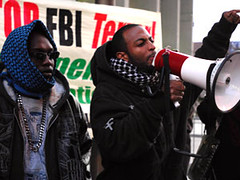
    This news agency immediately denounced the assassination of Imam Luqman Ameen Abdullah in Detroit on October 28, 2009. We helped organize and promote the two demonstrations held in the aftermath of the incident. One demonstration was held outside the McNamara Federal Building and the other in front of the Renaissance Center while Attorney General Eric Holder was speaking at a joint law-enforcement and community group dinner at the Marriot Hotel.

    Both demonstrations were organized by the Michigan Emergency Committee Against War & Injustice (MECAWI). The assassination of Imam Abdullah exposed the continuation of the repressive policies carried out by the previous administration of George W. Bush.

    Check out the Fox 2 Detroit news report on the release of details from the suppressed autoposy

    http://www.myfoxdetroit.com/dpp/news/brads_edge/first-on-fox-2%3A-shocking-details-of-slain-imam%27s-autopsy

    Abayomi Azikiwe, Editor
    Pan-African News Wire

  • U.S. Targets Yemen, Expands ‘War on Terror’

    U.S. targets Yemen, expands ‘war on terror’

    By Joyce Chediac
    Published Jan 30, 2010 6:34 AM

    On Jan. 4, U.S. Secretary of State Hillary Clinton claimed “instability” in Yemen posed “a global threat.” Why is Yemen unstable? Where does the “threat” really come from? Why are U.S. cruise missiles killing civilians in Yemen?

    Brief history of Yemen

    The Republic of Yemen is strategically located in the southwestern tip of the Arabian Peninsula and across from the Horn of Africa. It is bordered in the north by Saudi Arabia and in the east by Oman.

    In modern times, this country’s struggle for sovereignty has drawn fire from the most powerful imperialist countries and their Middle Eastern clients.

    Yemen was taken over by the British and made a colony in 1939. When the Suez Canal opened in 1869, the port of Aden — one of Yemen’s natural resources — became British colonialism’s refueling port.

    When a wave of anti-imperialist struggle gripped the Arab world in the 1950s and 1960s, the Yemeni people threw out the British colonizers and formed the Yemen Arab Republic in 1962. The new state was supported by Egypt, then a leader in the Arab national struggle, which sent in troops to protect it.

    Yemeni independence and self-determination was opposed by Saudi Arabia, a surrogate for Washington and to this day the oppressor regime in the Arabian Peninsula. The heavily armed Saudi regime has regularly interfered in Yemeni affairs and opposed any progressive measures there.

    Yemenis in the southern part of the country took the struggle a step further. After a successful armed struggle, they set up a state which aspired to build socialism. In 1967, the People’s Democratic Republic of Yemen was born in the south. The new state aligned with the Soviet Union, China and Cuba.

    The PDRY contained most of Yemen’s natural resources. The port of Aden and Yemen’s oil deposits are in the south. The PDRY controlled the Bab al Mandeb straits — a strategic oil tanker passageway — which the U.S. government now seeks to control. Despite these resources, relentless pressure from world imperialism and repeated attempts by the Saudis to destabilize the progressive government prevented the PDRY from developing its economy.

    In 1990, after the collapse of the socialist camp, the socialist south and capitalist north reunited in a strained union to form the Republic of Yemen. The new government, headed by Yemen’s current president, Ali Abdullah Saleh, for a short time included a relative balance of representatives between Yemen’s north and south.

    A year later, when the U.S. and its allies invaded Iraq for the first time, the Republic of Yemen opposed this attack on Iraq. The Saudi regime retaliated against Yemen for its progressive and independent stand by expelling a million Yemenis working and living in Saudi Arabia; thereby destabilizing Yemen, which could not absorb them all. A half million desperate people camped outside Sann’a, the capital city. Yemen’s poverty level shot up to 47 percent, and remains in the same range today.

    The message was clear. Imperialism and its surrogates in the region would not tolerate independent positions from Yemen. The Yemeni government became an agent of the Saudis and the U.S. The resource-rich south was virtually annexed, its political leaders forced to flee, and its inhabitants treated like second-class citizens.

    Since then, the Sann’a regime’s pro-imperialist and corrupt policies have isolated ever growing sectors of the population. Yemen oil money was used not to develop the country but to line the Swiss bank accounts of Yemen’s rulers and those they buy off. The drop in oil prices associated with the 2008 capitalist economic crisis struck a body blow to the Yemeni economy. As Yemen’s economy has become more unstable, its rulers have become more corrupt and more repressive.

    U.S., Yemeni and Saudi regimes bombing Yemeni people

    When Clinton raised concern over Yemen’s “instability” she never mentioned the root causes and imperialism’s role. Nor does she mention that right now, under the guise of fighting terror, the U.S., Yemeni and Saudi regimes are bombing and terrorizing the people of Yemen.

    Today there are three distinct insurgencies in Yemeni. Most significant are the Houthi insurrection in the north and especially the secular Southern Movement. Most recently, at the behest of the U.S., Sann’a has begun attacking the small group called al-Qaida in the Arabian Peninsula, not before seen as a threat.

    The U.S. media claim that the Houthi fight with Sann’a is a Sunni-Shiite conflict based on religion. However, Edmund J. Jull, U.S. ambassador to Yemen from 2002 to 2004, calls this a “myth” and explains that “the Houthi and President Saleh are followers of the Zaidi sect of Shiite Islam.” The Houthis are fighting for cultural rights against a repressive regime. The Yemeni government has been destroying their villages since 2004, making tens of thousands refugees. Saudi jets regularly bomb Houthi positions.

    The Southern Movement is a broad-based secular movement whose goal is the secession of the south. Its core is made up of former officials and military officers of the People’s Democratic Republic of Yemen. It also includes Baathists, Nassarites and traditional local leaders.

    Gary Leupp, writing in the Jan. 15-17 issue of Counterpunch, says the Southern Movement has “little in common with al-Qaida” and views Yemeni President Saleh as “a corrupt, nepotistic dictator using U.S. aid and the exaggerated al-Qaida threat to his own advantage.”

    Tiny al-Qaida not seen as a Yemeni “problem”

    As for al-Qaida in the Arabian Gulf, even U.S. intelligence estimates that the group is only loosely affiliated with the Bin Laden group and has no more than 200 people, most of whom do not have weapons. The group, however, is located in the oil-rich and strategic south.

    Gregory Johnson, a Princeton graduate student specializing in Yemen, said, “The Yemeni government is much more concerned with fighting the Houthis in Saada and with the secessionists in the south. Al-Qaida ranks a distant third. The government doesn’t see it as a Yemeni problem. [It sees it as] a foreign problem.”

    That was before government instability in this strategic country sounded alarm bells in Washington. Now, said Leupp, Yemeni President Saleh has “smeared” the Southern Movement “as an al-Qaida offshoot” to “strengthen his grip over the country with U.S. support” because “his government is weak and risks losing control over the oil-rich south without outside help.”

    Washington claims “threats” from Yemen stem from an alleged al-Qaida connection and the aborted attempt to bring down a U.S. airliner on Dec. 25. Yet the Pentagon began air strikes on southern Yemen on Dec. 18, seven days earlier. CBS reports that the 60 victims were mostly civilians, including women and children. Additionally, the Houthis in north Yemen, far from al-Qaida, say that they have been bombed by U.S. drones.

    The U.S. concern in Yemen is not al-Qaida “threats.” It is concern that imperialism remain in control of strategic and oil-rich Yemen and the nearby oil routes. Washington, however, underestimates the determination of the Yemeni people, who are very political, and have a long history of struggle.

    Next: The Pentagon’s war on terror — does it make people in the U.S. safer?

    Based on a talk given at a Workers World forum in New York City on
    Jan. 16.

    Articles copyright 1995-2010 Workers World. Verbatim copying and distribution of this entire article is permitted in any medium without royalty provided this notice is preserved.

    Workers World, 55 W. 17 St., NY, NY 10011
    Email: [email protected]
    Page printed from:
    http://www.workers.org/2010/world/yemen_0204/

  • Dangerous Legal Exception for Mumia Abu-Jamal

    Dangerous legal exception for Mumia

    By Betsey Piette
    Philadelphia
    Published Jan 28, 2010 9:34 PM

    On Jan. 19 the U.S. Supreme Court issued a ruling that has opened the way for the reinstatement of the death sentence for Mumia Abu-Jamal. The federal court’s ruling, which moved away from earlier rulings regarding sentencing phase regulations, was the latest in a long history of state, local and federal courts changing or even reversing their own legal precedents in the case of this world-renowned journalist and political prisoner.

    In fact, throughout over 28 years of legal proceedings in Abu-Jamal’s case, there have been so many instances in which courts reversed earlier decisions made in similar cases in order to rule against the U.S.’s most famous death row prisoner that Linn Washington Jr., a professor of journalism at Temple University, coined the phrase “the Mumia exception” to describe these rulings.

    The Supreme Court’s decision granted the Philadelphia district attorney’s petition for a review of a 2001 ruling by Federal Judge William Yohn which overturned Abu-Jamal’s death penalty but not conviction. The Supreme Court went against this lower federal circuit court’s findings as well as the 2008 Third Circuit ruling which granted a new sentencing phase jury trial if the death penalty was to be reinstated in Abu-Jamal’s case. Now the case goes back to the Third Circuit Court of Appeals to decide whether to reimpose the death penalty without the jury trial.

    In the week before the Jan. 19 decision the Supreme Court ruled on Smith v. Spisak, a case that also involved questionable instructions to the jury during the sentencing phase, although the case differs from Abu-Jamal’s in legal and political aspects.

    Neo-Nazi and white supremacist Frank Spisak killed three people and then bragged about it in court. Abu-Jamal, a former Black Panther organizer, was convicted of killing Philadelphia police officer Daniel Faulkner on Dec. 9, 1981, but has always maintained his innocence, and several prosecution witnesses from his 1982 trial have since recanted their testimony.

    Spisak’s lawyers had appealed based on the 1988 Supreme Court ruling in Mills v. Maryland, which addresses confusing jury instructions. The Sixth Circuit Court of Appeals had overturned Spisak’s sentence based on Mills but the U.S. Supreme Court decided the standard did not apply in his case.

    It would appear that the court, which had had the district attorney’s appeal of Yohn’s decision before them since 2001, was waiting for a case like Spisak’s so they could justify their reversal in Abu-Jamal’s case, even though the two cases and the two defendants differ as night from day. Even though Abu-Jamal’s case met the Mills standard, the Supreme Court refused to apply it, in what was clearly a decision motivated by politics and not law.

    Abu-Jamal’s attorney, Robert R. Bryan, stated, “What occurred in Mumia’s case is different both procedurally and factually from the jury instructions in Spisak.”

    A racist frame-up

    Abu-Jamal’s supporters, including Amnesty International, members of the U.S. Congressional Black Caucus, the NAACP, and government leaders from France, Japan, Germany, South Africa and many others, say he was framed by police, that prosecution witnesses were coerced into false testimony by the police, and that ballistics evidence shows Abu-Jamal did not shoot Faulkner.

    Abu-Jamal has also been the victim of a racist and notoriously pro-prosecution trial judge, now-deceased Albert Sabo, who ruled at the initial trial in 1982 and then was called back from retirement to preside at Abu-Jamal’s 1995 Post Conviction Relief Act hearing. According to a sworn affidavit by court stenographer Terri Maurer-Carter, Sabo was overheard to say, “Yeah, and I’m going to help them fry the n — — r.”

    At a Jan. 20 press conference and rally outside the offices of Seth Williams, Philadelphia’s first Black district attorney, Kevin Price with Friends of MOVE stated, “The U.S. Supreme Court’s decision shows that something is clearly broken in the U.S. justice system.

    “Mumia’s case contains every type of evidence that existed in other cases where death row prisoners were exonerated — tampered evidence, witnesses changing their testimony, and a clearly racially biased judge. If a case as glaringly unjust as Mumia’s is not thrown out, what does this say for thousands of other innocent people on death row and the millions incarcerated across the U.S.?”

    Pam Africa, chairperson of International Concerned Family and Friends of Mumia Abu-Jamal, said: “Mumia cannot get any fairness in this court system. Seth Williams ran on a platform that when he became district attorney, he would execute Mumia.”

    Africa urged people to stay focused and to show their support right now by signing and circulating two petitions calling for civil rights investigations into this case. One petition is directed to U.S. Attorney General Eric Holder and the second to President Barack Obama. Both are available at http://www.freemumia.com and http://www.millions4mumia.org .

    “Time is running out,” Africa stressed. “The time for organizing is now, organizing with all the strength that you have. Tell the people they must get into the streets in order to save this brother who has been on the front lines, from death row, on every issue of social justice that there is.” (San Francisco Bay View, Jan. 20)

    These sentiments were echoed by Berta Joubert-Ceci, of the International Action Center, who told Workers World: “The governor of Pennsylvania signed a death warrant to execute Mumia in 1995, but the people mobilized and forced them to back down. We have the power to stop this.”

    Chants of, “Brick by brick wall by wall, we’re gonna free Mumia Abu-Jamal!” from protesters outside the district attorney’s office Jan. 20 and the sounds of car horns honking in response to “Honk for Mumia” signs demonstrated that people are ready to fight back.

    Articles copyright 1995-2010 Workers World. Verbatim copying and distribution of this entire article is permitted in any medium without royalty provided this notice is preserved.

    Workers World, 55 W. 17 St., NY, NY 10011
    Email: [email protected]
    Page printed from:
    http://www.workers.org/2010/us/mumia_0204/

  • Sudan Like a Powder Keg, Says Africa Union Commission Chair

    Sudan like a powder keg, says AU

    A vote for independence in oil-rich Southern Sudan’s referendum next year could be catastrophic, the African Union’s top diplomat has warned.

    In an interview with French broadcaster RFI, Jean Ping likened Sudan’s situation to “sitting on a powder keg”.

    He suggested the nation could once again face north-south conflict and said other areas like Darfur would try to follow the south to independence.

    Southern Sudanese are due to vote in an independence referendum next year.

    The vote was agreed as part of a 2005 peace deal which ended a 22-year war between north and south.

    The BBC’s James Copnall, in Khartoum, says it is rare for such a senior official to be so outspoken.

    War risk?

    In his RFI interview, AU commission chairman Mr Ping said the AU was “very concerned” about Sudan.

    “We have a feeling that we are sitting on a powder keg,” he said.

    “Is the war between north and south at risk of resuming despite what has been said?

    “Will the independence of Southern Sudan not lead other players in Darfur and in other places, which are currently not asking for independence, to seek independence as Southern Sudan will have done?”

    He described the sequence of events as a “catastrophic scenario”.

    Our correspondent says his outlook is similar to many national leaders, who hate the thought that Southern Sudan becoming independent could set a precedent.

    Meanwhile, the new head of the international peacekeeping mission in Darfur, Unamid, says he wants it to become more involved in mediation.

    In an interview with the BBC, Ibrahim Gambari said he was hopeful a solution to the conflict could be found.

    Although the war between north and south ended officially in 2005, tensions and mistrust continue.

    Some 2,000 people died in ethnic clashes in the south last year – more than in Darfur’s low-level conflict.

    Southern politicians routinely blame northern allies of President Omar al-Bashir for stirring up trouble in an attempt to force the referendum to be abandoned.

    But northern officials deny the allegations and last week Mr Bashir surprised many by saying he would accept the result of the referendum – even if the south opted for independence.

    As well as the referendum, all of Sudan will vote in an election in April – the first multi-party national vote in a generation.

    The civil war between the mainly Muslim north and the Christian and animist south claimed the lives of some 1.5 million people.

    Southern Sudan All Sudan Population: 7.5m to 9.7m Population: 42.2m Area: 640,000 sq km Area: 2.5m sq km Maternal mortality: 1,700 deaths per 100,000 births Maternal mortality: 1,107 deaths per 100,000 births Access to clean water: 50% Access to clean water: 70% Life expectancy: 42 years Life expectancy: 58.92 years

    Story from BBC NEWS:
    http://news.bbc.co.uk/go/pr/fr/-/2/hi/africa/8485890.stm
    Published: 2010/01/28 18:12:59 GMT

  • United Nations Secretary General Appeals for Sudan Unity

    UN chief appeals for Sudan unity

    The UN secretary general has urged African leaders to work for national unity in Sudan to avoid the south of the country seceding from the north.

    Ban Ki-moon’s appeal comes as the African Union is due to hold its summit in the Ethiopian capital Addis Ababa.

    Mr Ban said both the UN and AU had a big responsibility “to maintain peace in Sudan and make unity attractive”.

    A referendum is due next year on whether the oil-rich south should become independent.

    Sudanese President Omar al-Bashir has said he will accept the result of the poll even if the south voted for independence.

    The theme of the three-day AU summit in Addis Ababa is information and technology.

    But heads of states will also be discussing, among other issues, the escalating violence in Somalia and who will take over the AU chairmanship from Libya.

    The position should go to Malawi, the choice of the southern African regional grouping, SADC.

    But Libya wants to extend its one-year term and has Tunisia’s support.

    With eastern and southern African countries apparently solidly behind Malawi, it could be a bruising contest for the AU chairmanship, writes the BBC’s Uduak Amimo.

    High tensions

    “Whatever the result of the [southern Sudan’s] referendum we have to think how to manage the outcome,” Mr Ban said in a joint interview with AFP and RFI radio.

    “It is very important for Sudan but also for the region. We’ll work hard to avoid a possible secession,” he added.

    Sudan’s mainly Muslim north and the Animist and Christian South ended their two-decade war in 2005 and joined a unity government.

    But tensions remain high as in April the country holds its first genuine multi-party national elections since 1986.

    The south, which has a semi-autonomous government, is likely to vote to secede from the north in the 2011 referendum, correspondents say.

    Story from BBC NEWS:
    http://news.bbc.co.uk/go/pr/fr/-/2/hi/africa/8489724.stm
    Published: 2010/01/31 03:35:11 GMT

  • Niger Delta Militants Call Off Truce With Nigeria

    Niger Delta militants call off truce with Nigeria

    AP

    Lagos–The main militant group in the oil-rich Niger Delta called off its ceasefire with the government yesterday morning, dealing a potential death blow to a presidential amnesty programme aimed at ending violence that has crippled production in the West African nation.

    The Movement for the Emancipation of the Niger Delta issued a statement saying it would no longer abide by the unconditional October 25 ceasefire President Umaru Yar’Adua had negotiated with the group.

    The militants warned oil producers with pipelines and personnel working in the creeks and swamps of the Delta that it would wage an “an all-out onslaught” against them. The Mend “warns all oil companies to halt operations as any operational installation attacked will be burnt to the ground”, the statement read.

    “Oil companies are responsible for the safety and welfare of their workers and will bear the guilt should any harm come upon their staff in the event of an attack.

    “Militants in the Niger Delta have attacked pipelines, kidnapped petroleum company employees and fought government troops since January 2006. They demand that the federal government send more oil-industry funds to Nigeria’s southern region, which remains poor despite five decades of oil production. Violence has cut Nigeria’s oil production by about one million barrels a day, allowing Angola to surge ahead as Africa’s top oil producer.

    Still, Nigeria remains the number three crude oil supplier to the US, offering the country nearly a million barrels a day in November, according to US government statistics.

    Mend announced it had brokered an unconditional ceasefire with the Nigerian government on October 25, but later said it broke the agreement to attack a pipeline December 19.

    The group said it attacked the line due to the long absence of Yar’Adua, who remains in Saudi Arabia receiving medical treatment for what his doctor described as a heart condition. Militants have questioned whether the amnesty programme Yar’Adua promised them — which included cash payments to former fighters — has been frozen in his absence.

    Part of the amnesty programme included offering the Niger Delta improvements to its decaying roads and government facilities. The militants’ statement last Saturday claims nothing has been done so far and said states in northern Nigeria would receive benefits for having a pipeline pass through them.

    “This government is hoping it can divide the people of the Delta in order to govern and plunder the Niger Delta,” the statement read.

    “All who have misled the government and oil companies into such inanity will be put to shame.

    “But questions remain about what power the Mend still wields. The amnesty programme pulled away some fighters and weapons. The militants said they sanctioned a recent attack on a pipeline owned by a subsidiary of Chevron Corporation, but didn’t carry it out. They claimed to have no hand in the kidnapping of three Britons and a Colombian working as contractors on a Royal Dutch Shell plc project — the first high-profile ransom grab in months. The Nigerian military also didn’t confirm the pipeline attack the Mend said it carried out December 19. Still, the militant group struck a defiant tone.

    “Acting like a victor over a conquered people, the government rolled out a list of its plans for the Delta which it assumed would end decades of agitation, promising at the same time to deal with all who remained dissatisfied with its lame effort to redress the injustice in the Niger Delta,” their statement read. —

  • Zambia Wants President to Hold University Degree

    Zambia wants president to hold university degree

    AFP

    LUSAKA. Zambia’s new constitution could block anyone without a university degree from running for president, a move that opposition leader Michael Sata said last Friday would violate basic human rights.

    The National Constitutional Conference, which is meant to adopt a new charter before next year’s elections, last week adopted a clause that required a presidential candidate to hold a degree.

    Sata, leader of the main opposition Patriotic Front, does not have a degree. He said the clause would strip voters of their right to support the candidate of their choice.

    “People should participate in the running of their country even without a degree,” Sata told AFP.

    “We fought the white oppressors 45 years ago so that the majority can rule this country, but now it look like this government want the minority to rule,” he added.

    Government spokesman Ronnie Shikapwahsa insisted that demanding a qualification for people seeking a job was not a violation of human rights.

    “If anybody wants a job, the employer asks for a qualification,” he said.

    “It’s the Zambian people that are asking for a degree from the holder of the presidency,” Shikapwahsa told AFP.

    Sata served in government before forming his own party in 2001. He lost the last polls in 2008 by just 35 000 votes to President Rupiah Banda. —

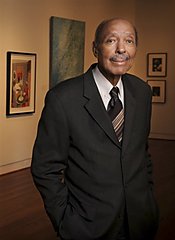
  • Noted African-American Art Collector Dies in Ga.

    Noted African-American Art Collector Dies in Ga.

    Paul R. Jones, noted collector of African-American art, dies at 81 in Georgia

    The Associated Press
    ATLANTA

    Paul R. Jones, a collector of African-American art who donated troves of works to universities in Delaware and Alabama, has died. He was 81.

    Jones died in Atlanta on Tuesday after a brief illness, said University of Alabama spokeswoman Angie Estes. The university established an art collection in Jones’ name after receiving some 1,700 pieces valued at $5 million in 2008.

    Despite humble beginnings in Alabama and never independently wealthy, Jones began buying pieces in the 1960s after noting African-American art was underrepresented in public galleries.

    As the drawings, paintings, photographs, sculptures and other works grew into the hundreds, part of his collection was exhibited at the University of Delaware in 1993. He later made a gift of several hundred works to the school.

    “My goal has been to incorporate African-American art into American art,” he told The Tuscaloosa News in 2008 when he made his donation to the University of Alabama with a plan for it to be part of the curriculum.

    He embraced the school even though he was turned down by the University of Alabama Law School in 1949 after it discovered he was black.

    Born in Bessemer, Ala., in the central part of the state, he was raised in the Muscoda Mining Camp of an iron and steel corporation. Jones attended historically black Alabama State University in Montgomery and finished his education at Howard University in Washington, D.C.

    Described as a civil rights activist, he worked with an interracial community group in Birmingham, Ala., and held jobs with the federal government for 15 years before becoming deputy director of the Peace Corps based in Thailand.

    When his collection grew into the hundreds, he decided it should be used for educational purposes.

    “I knew I could sell the collection at its appreciated price, and get myself a chauffeur, a cook, a maid, and travel the world,” he was quoted on a University of Delaware Web site devoted to his collection. “But, I realized I wanted to do something with my collection that would have a lasting impact, both in my lifetime and beyond.”

    Survivors include his son, P.R. Jones of California, according to the University of Alabama.

    A funeral service will be held at Cascade United Methodist Church in Atlanta at a date to be determined.

  • Fela on Broadway, A Review: Feeling Unsettled at a Feel-Good Show

    January 31, 2010

    Feeling Unsettled at a Feel-Good Show

    By CHARLES ISHERWOOD
    New York Times

    “I KNOW there is nothing a white person can say to a black person about race which is not both incorrect and offensive,” James Spader’s hard-driving lawyer says in the new David Mamet play, “Race.” “I know that. Race is the most incendiary topic in our history. And the moment it comes out, you cannot close the lid on that box. That may change. But not for a long long while.”

    That harsh sentiment, a classic bit of Mametian blunt speak, might earn a particularly sympathetic hearing from the friends of the Senate majority leader, Harry Reid. As much as we would like to think we live in a postracial America, having elected a black president, the potency of race as a topic for generating scandal — however cynical or bogus — suggests otherwise.

    This partly explains why I’ve been finding plenty of reasons to put off airing my conflicted reactions to the new musical “Fela!” Mr. Mamet’s drama, about a legal case that ostensibly turns on perceptions of racism, seems intended to stoke controversy with its forthright title and its boiling arguments about who can say what to whom. But paradoxically the most provocative show in town in this regard may be the feel-good musical about the Nigerian singer and activist Fela Anikulapo-Kuti.

    As much as I enjoyed the show, directed and choreographed by Bill T. Jones, it left me with lingering questions about the depiction of the African milieu it evoked. In short, the emphasis in “Fela!” on the spectacle of African culture tilted the show a little too closely toward minstrelsy. It evoked an unsettling feeling I can’t say I ever had before at the theater.

    Hold the digital brickbats, please, while I make my case. By definition, of course, “Fela!” has nothing to do with literal minstrelsy, an American form of entertainment dating to the years after the Civil War. Minstrel shows were revues including musical numbers, sketches and jokes performed in blackface (by both blacks and whites, for both blacks and whites) that disseminated ugly racial stereotypes. “Fela!” is about the singer who synthesized various musical influences to invent a new sound called Afrobeat, and who became a galvanizing force behind the Nigerians’ fight against an oppressive and corrupt government. It’s vibrant, exciting and fabulously performed.

    But there really are no characters, aside from Fela Kuti himself. True, his mother makes a couple of ghostly appearances and is described lovingly by her son, and during a sojourn in America Fela is shown interacting with a brash woman spouting black-power slogans. (It seems odd that the only character other than Fela Kuti who has any sustained dialogue is an American.) But the rest of the cast members — numbering more than 15 — have no clearly defined roles to play, spending most of the time performing Mr. Jones’s energetic, hip-wiggling riffs on African dance and joining in the songs.

    A recent article in The New York Times revealed that the women who represent Fela’s many wives all have researched the back stories of their characters, but in the context of the show we learn virtually nothing about any of them. (You might not even pick up on the fact that they’re supposed to represent his wives.) In contrast with characters in recent plays like Lynn Nottage’s “Ruined” and Danai Gurira’s “Eclipsed” — both of which explore the hard experience of African women by depicting fully developed lives caught in trying, sometimes terrible circumstances — the women of “Fela!” are largely festive window dressing. Attired in eye-catching, vibrantly colored, flesh-baring ensembles, with their faces painted, they strut around the stage and the theater looking exotic, imperious and sexy. So too do the male members of the ensemble, who also bare a lot of flesh but have little to do other than sing and dance.

    Hence my discomfort. The presentation of African culture as a feast of exotic pageantry has the potential, at least, to reinforce stereotypes of African people as primitive and unsophisticated, albeit endowed with astounding aptitudes for song and dance. Although some of the dancers have individual moments, none are given individual voices; sometimes they simply drape the stage like gaudy décor. And the way the dancers weave in and out of the audience repeatedly seems ingratiating, a sort of seduction that almost sexualizes the performers.

    The fourth wall serves many purposes at the theater, but one is to allow the audience to have some intellectual perspective on the material. In frolicking so exuberantly among the theatergoers, “Fela!” sometimes seems to turn its ostensible characters into flashy sideshow entertainments, to elevate sensation over substance.

    The absence of staged narrative that might allow for more richly developed characters partly derives from the way the show is structured. A more evolved kind of jukebox musical, “Fela!” is conceived as a concert taking place on the final night at the Shrine nightclub, where Fela’s fans gathered to party and to hear his political consciousness-raising patter.

    The man himself does all the talking, providing snippets of his life history in between the songs and ecstatic dance numbers. But the storytelling is scattered and sometimes indistinct. (You learn more about the sociopolitical situation by reading the newspaper headlines in the video projections on the set.) I suspect that if the show struck a greater balance between pure dance and cogent storytelling — or managed to weave the two together a bit more consistently — my sense that the exotic was being overemphasized (even fetishized) would evaporate.

    Context is key here too. Would I feel any discomfort if I were attending an African dance recital at Dance Theater Workshop? Probably not. An air of exuberant commercialism surrounds Broadway productions — you can buy $20 “Fela!” programs and T-shirts at the theater — that can sometimes add a surface layer of crassness to shows that are intrinsically free from it. Fine art can be cheapened by the need to compete in a commercial marketplace. The carnivalesque atmosphere at “Fela!” is more pronounced on Broadway than it was in the show’s earlier run Off Broadway. The theater is bedecked in vibrantly colored panels of corrugated metal and African gewgaws; the intention is to immerse the audience in a sense of being at the Shrine, but it is unintentionally a little like being in a Disneyland version of Africa.

    And this parade of African experience is being staged for Broadway audiences who are still largely white, middle aged and middle class. (At the performances I’ve attended the audience looked to be about 60 percent to 70 percent white, which is nevertheless significantly smaller than at most Broadway shows.) Many will have had little exposure to African culture, and some may come away with the impression that the partying played a larger role in the lives of the people surrounding Fela than the grim political battles and the economic hardship. (For obvious reasons Fela Kuti cannot announce from the stage that he had AIDS and died in 1997.)

    To be sure, the climax of the show describes in grim, harrowing detail the death of his mother and the horrific abuse of his wives during a government raid on his compound. Mr. Jones and Jim Lewis, who together wrote the book, have done their best to include as much pertinent history as the concept for the show can comfortably allow. The signal truth of Fela Kuti’s life is that his music was the vehicle for his political activism; the two cannot be separated. It’s for those in the audience — and I encourage everyone with an interest in new currents in theater to attend — to decide for themselves how effectively “Fela!” strikes a balance between presenting African experience as an audience-seducing entertainment and revealing the turbulent complexities of the culture behind it.

  • Civilians Killed in Somalia Clashes; Djibouti to Deploy 450 Troops

    Friday, January 29, 2010
    11:44 Mecca time, 08:44 GMT

    Civilians killed in Somalia clashes

    Al-Shabab has claimed responsibility for the shelling on Friday

    At least nine people, mainly civilians, have been killed in fresh fighting in the Somali capital, witnesses and medics have said.

    Anti-government fighters clashed with African Union peacekeepers and government troops in southeastern Mogadishu in the early hours of Friday, resulting in the deaths.

    “Around seven civilians died in the clashes, including women and children. Most of them were killed by mortar shells and stray bullets,” Abdi Adan, an eyewitness, told the AFP news agency.

    “Four civilians died in Wardhigley district and three others were killed in Holwadag and Bakara area. It was the worst fighting we have seen recently,” Mohamoud Ahmed, a local resident, said.

    Ali Musa, head of Mogadishu’s ambulance services, said medics had collected around 22 injured from several locations in the city and “several people” had died.

    “I don’t have the full figures but I know that three of the dead are a mother and her two children,” he said.

    Responsibility claim

    The armed group al-Shabab, whose leader late last year proclaimed his allegiance to al-Qaeda’s Osama bin Laden, issued a statement claiming responsibility for Friday’s shelling.

    “Our holy warriors launched a fierce offensive on several locations in Mogadishu where the apostate militias and their Christian backers were stationed,” the group said.

    It referred to government troops, who they accuse of being puppets of the West, and to AU peacekeepers who they routinely describe as crusaders bent on introducing Christianity to Muslim Somalia.

    In the statement, al-Shabab said two of its fighters had died in the clashes.

    Somali government officials were not able to provide more details on the casualties.

    “The violent elements attacked government positions overnight, firing mortar rounds and machine guns. The government forces defeated them,” Abdullahi Hassan Barisse, a police spokesman, told reporters.

    The densely-populated neighbourhoods where the fighting took place, halfway between the airport and the port, is on the edge of an area controlled by the African Union peacekeeping mission (Amisom).

    Civilians there are often caught in the crossfire between Amisom troops and al-Shabab.

    The clashes marred plans to celebrate the first anniversary of the election of Sharif Ahmed, the Somali president.

    Officials had been preparing for celebrations in the presidential compound’s theatre on Friday.

    Source: Agencies

    Friday, January 29, 2010

    Djibouti to boost AU peace mission in Somalia

    Nigerian Guardian

    AUTHORITIES in Djibouti have planned to send 450 soldiers to Somalia possibly next month to boost the African Union (AU) peace mission that is protecting the fragile Western-backed government.

    The move came as Somali gunmen yesterday hijacked a Cambodian cargo ship, the MV Layla-S, off Berbera after it unloaded at the port in the breakaway northern enclave of Somaliland.

    Uganda and Burundi each have 2,500 peacekeepers in Mogadishu with the AU’s AMISOM force in Mogadishu.

    Its soldiers come under near-daily attacks from roadside bombs and rebel artillery. The force is struggling to raise its numbers beyond the 5,000 troops already present in the anarchic nation that has had no functional central government since 1991.

    “We are preparing our troops. We are training them so that they can carry out their mission in a very efficient way,” Djibouti’s Foreign Minister Mahmoud Ali Youssouf told Reuters on the sidelines of an African Union foreign ministers’ meeting.

    Youssouf said he hoped his country’s contribution would inspire others to do the same.

    “Somalia is a neighbouring country. We have a very close relationship. We can see what is going on there and we have to contribute as Africans,” he said.

    Since the beginning of 2007, fighting between pro-government militia and the Islamist al Shabaab group – which Washington terms as al Qaeda’s proxy in the region – has killed more than 21,000 Somalis and driven 1.5 million from their homes.

    Separately, AU Commission Chairman Jean Ping said in a speech that Somalia’s best hope was its transitional government and urged the international community to implement their pledges for aid.

    International donors pledged $213 million at a conference in Belgium about a year ago, but Somalia’s government complains that only a small proportion has so far been delivered.

    Meanwhile, Ahmed Mohamed Mohamoud, the eight-year-old boy whose bullet-shattered face personified the brutal conflict in Somalia and drew offers of aid from around the world, has died in Kenya days after a reconstructive surgery.

    Dr. Peter Nthumba said Ahmed died late Wednesday of intestinal bleeding that may have been caused by an ulcer or stress. Nthumba operated on the boy, whose face was almost entirely blown off in September when a bullet hit him in the Somali capital, Mogadishu.

    Relatives and well-wishers said they were shocked by the sudden death of Ahmed, a cheerful child who liked playing with a toy helicopter and spent time reading the Quran in his hospital bed. Doctors said he had not show any sign of ailment before the operation, which had gone well.

    His heartbroken mother, Safi Mohamed Shidane, said that she had not expected her son’s life would end.

    The UN Security Council voted yesterday unanimously to authorise the AU peacekeeping force in Somalia to stay for another year and urged it to boost its strength to 8,000 troops.

    Deployed in March 2007, the force known as AMISOM fields 5,300 Ugandan and Burundian soldiers and is currently charged with protecting strategic sites in the seaside capital such as the presidency, the port and the airport.

    The 15-member council empowered AMISOM to stay until January 31, 2011 and asked it “to increase its force strength with a view to achieving (its) originally mandated strength of 8,000 troops, thereby enhancing its ability to carry out its mandate in full.”

    The mandate expires on Sunday.

    The council resolution also directed the force to continue assisting Somalia’s transitional government in developing the Somali Police Force and the National Security Force, and to help integrate Somali units trained by other UN member states or organizations inside and outside Somalia.

    Earlier this month, the 53-member African Union renewed AMISOM’s mandate for six months.

    Somalia’s internationally-backed transitional government has been boxed into a tiny perimeter in its capital Mogadishu by an insurgency launched in May 2009 by the Al-Qaeda-inspired Shebab group and its more political Hezb al-Islam allies.

    It has owed its survival largely to AMISOM.

    The force’s top civilian official reassured the wobbly government of its total support in the fight against insurgent groups.

    Insurgents accuse AMISOM of being an occupying force bent on introducing Christianity to Moslem Somalia. The force has also been criticised for killing scores of civilians during retaliatory shelling.

    Somalia has had no effective government since President Mohamed Siad Barre was forced out of power in the early 1990s.

  • Nigerian High Court Backs President Yar’Adua: He Does Not Have to Leave Office Due to Illness

    Friday, January 29, 2010
    18:47 Mecca time, 15:47 GMT

    Nigeria court backs sick president

    More than 50 prominent Nigerians urged the president to resign and hand over power to vice-president

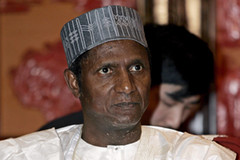
    A Nigerian court has dismissed calls for a temporary head of state be appointed until Umaru Yar’Adua, Nigeria’s president, returns from Saudi Arabia where he is undergoing hospital treatment.

    The Nigerian Bar Association had demanded the vice-president’s powers be extended, accusing Yar’Adua of acting unconstitutionally in failing to inform parliament of his absence.

    But Dan Abutu, the federal court judge, ruled on Friday there was nothing illegal about Yar’Adua’s failure to write to parliament about his absence when he left for treatment on November 23.

    “The failure to transmit a written declaration to the national assembly before proceeding on vacation is not unconstitutional,” he said.

    Abutu also ruled that Goodluck Jonathan, the vice-president, could not assume the role of acting president without Yar’Adua making such a written declaration.

    The senate, former heads of state, ex-ministers, the bar association and the opposition have all called on Yar’Adua, who is being treated for a heart condition, to formally notify parliament of his absence and allow Jonathan to become acting president.

    Abutu ruled two weeks ago that Jonathan could perform executive duties but not be acting president.

    ‘Crucial ruling’

    Andrew Simmons, Al Jazeera’s correspondent in Nigeria, said the decision has helped to clarify the confusing political situation there.

    “It has clarified one of the areas – it means the vice-president can act with executive powers of the president but would not be termed formally as the acting-president.

    “It might sound like a small point but it is a crucial one, particularly for the ruling party.

    “There is an election next year and many people feel there is a lot of power play going on, they feel it is important that the power is not formally handed over as it would allow Goodluck Jonathan to be his own man and make his own changes.

    “It also points out that the constitution is slightly ambiguous, but it’s not for the judge here to rewrite it. There is still a lot of concern because the president hasn’t made it clear what he wants done here.”

    Only the cabinet, which consists of Yar’Adua’s own appointees, has the power to force the president to hand over powers.

    It has twice passed resolutions saying it believes he remains fit to govern.

    Yar’Adua is receiving treatment for a serious heart condition in Jeddah and his absence has raised fears of a constitutional and political crisis in Africa’s most populous country.

    Source: Al Jazeera and agencies

    Nigeria court backs ill president

    A Nigerian court has dismissed a call for an interim leader to be appointed while President Umaru Yar’Adua is in hospital in Saudi Arabia.

    The high court said there was no constitutional requirement for him to write formally to parliament, informing them he is on “medical vacation”.

    This would automatically lead to his deputy becoming acting president.

    President Yar’Adua has been away for two months, raising fears of a power vacuum and calls for him to step down.

    “The failure to transmit a written declaration to the national assembly before proceeding on vacation is not unconstitutional,” said federal high court judge Dan Abutu, dismissing the case brought by the Nigerian Bar Association (NBA).

    The judge also said that Vice-President Goodluck Jonathan could continue to act on the president’s behalf, without needing to be formally appointed as interim leader – upholding a similar ruling in a previous case.

    Nigeria’s Justice Minister Michael Aondoakaa said the question of whether Mr Yar’Adua should hand over power was now “settled”.

    But the BBC’s Ahmed Idris in the capital, Abuja, says there is a general feeling among Nigerians that the constitution needs a thorough, and immediate, review to avoid similar problems in the future.

    ‘Not incapable’

    On Wednesday, the Senate passed a resolution calling on the president to provide a formal letter informing parliament of his absence.

    At the same, the cabinet issued a statement that President Yar’Adua was “not incapable” of running the country.
    ————————————————————————————–
    YAR’ADUA ILLNESS TIMELINE

    23 November 2009: Goes to hospital in Saudi Arabia
    26 November 2009: Presidential doctors say he has pericarditis – inflammation of the heart lining
    23 December 2009: First court case filed called him to step down
    30 December 2009: Chief justice sworn in. Lawyers say this is illegal in president’s absence
    5 January 2010: Two more court cases filed and a human rights group wants president declared “missing”
    12 January 2010: President gives first interview since going to Saudi Arabia
    27 January: Cabinet declares president fit
    ———————————————————————————–

    Court says no need for formal transfer of power

    This followed a previous court ruling giving ministers two weeks to make such a declaration.

    The president flew to Saudi Arabia in late November for medical treatment and has not been seen in public since.

    In his only broadcast interview since he left the country, he told the BBC’s Hausa Service on 12 January that he would return to resume his duties as soon as his doctors would allow.

    As well as the flurry of court cases brought by his opponents, crowds of demonstrators have sporadically taken to the streets in Abuja and Lagos demanding power be handed to Vice-President Jonathan.

    Correspondents say it is unlikely Wednesday’s ruling will do much to stop the intensifying pressure for something to be done about the perceived power vacuum.

    The most recent move has come from powerful quarters: A group known as the Eminent Elders, including three former heads of state – civilian and military – asked Mr Yar’Adua to send a letter allowing Mr Jonathan to formally become acting president.

    The group said Mr Yar’Adu’s absence was causing concern not only to Nigerians but to anyone doing business with the country.

    On Thursday, the United States and European Union expressed their concern about the political crisis for the first time.

    In an open letter, they said they welcomed constitutional efforts to “resolve the question of governing authority in the president’s prolonged absence”.

    Correspondents say one reason for Mr Yar’Adua’s reluctance to allow Mr Jonathan to act on his behalf is the ruling People’s Democratic Party’s tradition of alternating power between north and south.

    Mr Yar’Adua is a northerner, while the vice-president is from the south. So if Mr Jonathan took over, that would shorten the north’s stay in power.

    The president is suffering from an inflammation of the lining around the heart and has long suffered from kidney problems.

    Story from BBC NEWS:
    http://news.bbc.co.uk/go/pr/fr/-/2/hi/africa/8487474.stm
    Published: 2010/01/29 16:41:56 GMT

  • In Defence Of AbdulMutallab Of Nigeria–A Response To MEND

    Thu Jan, 28 2010

    In Defence Of AbdulMutallab Of Nigeria – A Response To MEND

    Yushau Shuaib of the University of Westminister’s Harrow Campus thinks the nation should defend the integrity of its citizens, even when they are suspects awaiting trial. He accuses the Movement for the Emancipation of the Niger Delta of opportunism and double standards…

    I envy and admire the American and British governments and people for defending their citizens around the world, even when they are accused of criminal actions. They maintain the innocence of their citizens to ensure justice is done until decided otherwise by a court of law.

    Recently there was the case of Meredith Kercher, a British girl schooling in Rome who was killed by Amanda Knox, her American roommate over a drug-induced sex game. The case was decided in Italy where the crime was committed. The American and British press actively engaged one another in campaigns to support their respective citizens in the case. At the end the American lady Amanda Knox who is 22, was sentenced to 26 years in an Italian prison for killing Meredith. The debate still goes on.

    The latest incident that gives us food for thought is that of Akmal Shaikh, a 53 years old British citizen, of Asian origin who was executed by the Chinese government for drug trafficking. Not only did ordinary Britons and their press campaign for leniency in favour of the suspect, the Prime Minister, Gordon Brown personally mounted a campaign that persuaded the European Union to strongly condemn the execution of British citizen who was put to death by lethal injection for trafficking four kilograms of heroin. Gordon Brown, as the leader, spoke, wrote and pleaded with his counterpart in China before the execution, claiming that the convict suffered from bipolar disorder and was lured into carrying the drugs by the promise of a pop music career in China. There was also a statement by the EU deeply regretting that China did not heed repeated calls by Britain and the EU for clemency.

    The essence for the above scenarios is to point out that there is pride in defending the integrity of a country and its citizens, even as suspects pending the determination of cases against them in competent Courts of jurisdiction.

    The embarrassing attempted suicide bombing of a Detroit-bound flight from Amsterdam on Christmas Day by a young Nigerian; Umar Farouk Abdul Mutallab, caught the global community in unbelievable frenzy, because, Nigerians’ notoriety has never reached the level of suicide bombing. It is worthy to note that the father of the suspect is a respected banker and retired top public functionary in Nigeria who had alerted the relevant security agencies of his son’s untoward behaviour before the incident. This is exemplary conduct which demonstrates that Nigerians and other Abdulmutallabs are not all fanatical and insane.

    It is unfortunate that immediately the news broke that the bomb suspect was a Muslim from Northern Nigeria, many self-styled bloggers and commentators with hidden agendas used the incident to attack a section of the country and adherents of the Islamic faith. So painful was their insinuation that they poured out balderdash to call for the break up of the country and rained insults on the family of young Abdulmutallab. In law, a suspect is presumed innocent until proven otherwise by a competent court, yet some Nigerians continued to sensationalise the incident with sectional and religious sentiments which exemplified our backwardness in public discourse. To one’s bewilderment, foreign media and analysts exhibit more restraint in associating the conduct of the child to the character of Nigeria just as President Barak Obama of USA, pointed out that the boy was trained and armed in a foreign land, Yemen.

    One of the organisations that shamelessly colored the incident with sectional and religious undertone was the Movement for the Emancipation of the Niger Delta (MEND), whose official statement on the suspect was to urge governments around the world to pay more attention to northern Nigeria, claiming that the region is a threat to world peace and “fertile ground” for international terrorism. They also fan the embers of hatred by insinuating that “for decades, Christians have been murdered and raped in northern Nigeria with impunity.” In essence, they are appealing to foreign forces to invade the North as if there are no Christians in Northern Nigeria.

    Won’t it sound unbecoming to associate social vices peculiar to some sections of the country to its people, because of the action of few who engage in international prostitution, drug trafficking, 419 fraudsters, armed robbery, kidnapping and the recruitment of young girls as baby-manufacturers in addition to ritual killings.

    The cowardly Niger Delta militants who have similar attributes of Somalian Sea pirates who are notorious in kidnapping the rich for ransom, oil bunkering, piracy, gun running, killing and destruction of the environment, their victims are foreigners and local people alike.

    The international community should realise that the MEND and their collaborators are the only criminally-inspired armed group in West Africa today that have attacked the interests of American, British and other nations exploring oil in Nigeria by kidnapping and killing their workers and destroying their investment such as infrastructures of Shell and Chevron among other oil companies operating in Nigeria.

    Since 2006 when they started their armed struggle claiming to be fighting for a greater share of oil wealth for local communities, but unfortunately their members pocket ransom money and live ostentatious lives to the amazement of their kinsmen. They are so cowardly that they go with pseudo names while destroying their environment and damaging the reputation of the peace-loving people of Niger Delta, a region that is now a most scary and risky district for investment and tourism. Yet their states receive the highest allocations in the country, only for them to blackmail their leadership to share such resources with them or risk kidnapping and killing of innocent citizens.

    The antic of MEND and their likes to create confusion in Nigeria make it compelling to explore likely conspiracy theories on Umar Farouk Abdulmutallab’s unfortunate attempt. Covert operations and hidden agendas may not be discounted as local and external undesirable elements might have manipulated the incidence to put Nigeria in the spotlight for clandestine assault. We may recall the 1954 ‘Lavon Affairs’ known as operation Susannah in which Israeli military intelligence planted bombs in Egyptian, American and British-owned targets in Egypt in the summer of 1954 in the hopes that Egyptians and Muslim Brotherhood would be blamed for the attack before the plot was exposed. We should also recall the lies of former President Bush and Tony Blair that Iraq possessed Weapons of Mass Destruction (WMD) to sway the international community to endorse an invasion of the Arab country so that the two countries can control vast oil resources and facilitate increased heavy military spending in the Middle East.

    While we must all condemn the insane and unfathomable attempted suicidal mission that would have resulted in the death of 250 passengers from the action of the young bomber whose visage looks innocent and with humble mien, we need to critically examine and study tendencies and likely influence that could have manipulated the Nigerian child for the action. The unfolding revelations about the suspected suicide bomber from the foreign media, his schoolmates, teachers and friends indicate a sorry state of his loneliness, introvertedness and detachment from his family. They all disclose his worthy lifestyle in schools as teetotaller, pious, religious, and humble and a fan of Arsenal and Liverpool football clubs. He would rather donate his pocket money to the orphanage than buy souvenirs for himself. Likewise, he does not brag about his family’s wealth as he rejects a flamboyant lifestyle..

    We also need to explore the possibility of excessive depression and some element of insanity as a result of loneliness which the un-die bomber claimed in some of his postings in the social media. Such investigations become necessary, based on reports that his aggressive and violent tendency emerged abruptly after his graduation from Department of Mechanical Engineering of the University College London. He had all his adulthood outside the shores of Nigeria.

    What I have attempted to do as a Nigerian with this piece is to point out that as Nigerians condemn in unequivocal terms the action of the young bomber, an isolated case indeed, the international community should unearth those who manipulated this innocent and lonely young man to become vulnerable for exploitation. We are aware that innocent souls are easily misled and drugged to take actions unconsciously.

    It is gratifying to note that the Father of the suspect, Abdulmutallab, a true and patriotic Nigerian had forewarned security agencies of his child emerging radicalisation which unfortunately was not heeded. The exemplary conducts of the father is a further demonstration that not all Nigerians are crooks who will overlook or endorse negative tendencies in their wards like the Niger delta militants do.

    The lesson to be learnt from the predicaments of AbdulMutallab family is that parents should closely monitor and relate affectionately with their children to check and control tendencies that may lead them to devilish paths.

  • Resistance Fighters Attack Afghan Cities

    Friday, January 29, 2010
    16:08 Mecca time, 13:08 GMT

    Taliban fighters attack Afghan city

    Nato said its troops and Afghan soldiers had contained the fighters in a vacant building

    Afghan troops, backed by Nato helicopters, have clashed with Taliban fighters after they attacked United Nations and government buildings in Helmand province, witnesses and officials said.

    The Taliban fighters launched the assault in Lashkar Gah, the provincial capital of the southern region, early on Friday.

    Provincial officials said two attackers blew themselves up and one Afghan soldier had been slightly injured in the fighting.

    Qari Yousef Ahmadi, a Taliban spokesman, said seven fighters, armed with suicide vests and machine guns, had been sent to carry out the attack.

    He said that 20 foreign and Afghan soldiers were killed or wounded, but Nato said no casualties had been reported on the pro-government side.

    Kamal Uddin, the deputy provincial police chief, said no civilian casualties had been reported.

    Fighters disguised

    Al Jazeera’s David Chater, reporting from the capital, Kabul, said fighters had stormed various points in the city.

    “Apparently they were dressed in either Afghan national army uniforms or police uniforms. Several explosions have been heard,” he said.

    “It appears that gunmen have taken over a hotel that was being built about 300 yards [275 metre] away from the governor’s offices.”

    Nato said its troops and Afghan soldiers had contained the Taliban in a vacant building.

    “The main group of attackers was contained in a vacant building to the south of Sharwali Barracks,” an International Security Assistance Forces (Isaf) statement said.

    “Attack helicopters are over the city and have fired upon insurgents.”

    Sporadic fighting continued as Afghan troops searched for the other fighters. Police officials said they believed five or six of them were holed up inside the building.

    Taliban assaults

    Daoud Ahmadi, a spokesman for the provincial government, said officials had received tips in recent days that the Taliban planned an attack on government buildings in Lashkar Gah.

    The Taliban have attempted similar attacks in Kabul, most recently on January 18 when seven attackers were killed after a five-hour assault.

    Five Afghan civilians and security forces also died in that fighting.

    The Helmand assault comes a day after a new fund aimed at reducing the Taliban threat was announced in an international conference on the future of Afghanistan held in London.

    The fund sets aside $140m for the first year of a programme to “reintegrate” moderate Taliban into the Afghan society.

    The Taliban released a statement dismissing the initiative as “futile”, but a UN official revealed that “active members of the insurgency” had met an envoy from the international body early this month at their request.

    Source: Al Jazeera and agencies

  • Protests Outside Iraq War Inquiry in London

    Friday, January 29, 2010
    17:09 Mecca time, 14:09 GMT

    Protests outside Iraq war inquiry

    Protesters outside the inquiry read aloud the names of civilians and military personnel killed in Iraq

    Protesters chanting “Tony Blair, war criminal” gathered outside the inquiry into the Iraq war as the former British prime minister gave evidence.

    Families of some of the 179 British soldiers killed in Iraq joined about 200 anti-war demonstrators shouting and waving placards outside the building hosting the inquiry in central London.

    The decision to send 45,000 British troops to Iraq was the most controversial of Blair’s 10-year premiership, provoking huge protests, divisions within his Labour party and accusations he had deceived the public about the justification for war.

    Seven years after the invasion that toppled Saddam Hussein, the then Iraqi leader, and almost three years after Blair handed over to Gordon Brown, the issue still provokes deep anger.

    ‘Military adventure’

    Blair arrived early for the inquiry and entered by a back door amid heavy security and large numbers of police on standby.

    Barbara Serra, Al Jazeera’s correspondent in London, said: “A lot of people here are disappointed as they wanted to confront Blair when he came in, but he entered through a back entrance.”

    Speaking to Al Jazeera, Sabah Jawad, an Iraqi activist, said: “We are hoping at best for Tony Blair to admit that he made a mistake, that he regrets the action.

    “The action he took in 2003 with president Bush had a devastating impact on the people of Iraq, and Iraq as a country.

    “A million people died as a result of this military adventure and the Iraqi people are still suffering daily.

    “All the opinion polls still indicate that the British people are very much bitter about what happened to them because they think they have been deceived by Tony Blair.

    “By his lies about the weapons of mass destruction, about the link to terrorism and so on.”

    ‘Accomplished actor’

    As Blair testified, demonstrators outside the Queen Elizabeth II conference centre read aloud the names of civilians and military personnel killed in Iraq.

  • Senate, Weakly, Backs New Term for Bernanke; Health Care Bill Put on Hold

    January 29, 2010

    Senate, Weakly, Backs New Term for Bernanke

    By SEWELL CHAN
    New York Times

    WASHINGTON — The Senate gave Ben S. Bernanke a second four-year term as the head of the Federal Reserve on Thursday after critics excoriated the central bank’s conduct in the years leading up to the financial crisis.

    The 70-to-30 vote was the weakest endorsement ever extended to a chairman in the Fed’s 96-year history.

    The confirmation was a victory for President Obama, who had called Mr. Bernanke an architect of the recovery, but also signaled the extent to which the Fed, once little known to the public, has become the object of outrage over high unemployment and bank bailouts.

    In several hours of debate, senators said that the Fed had abetted, then ignored, the housing and credit bubbles and allowed banks to keep dangerously low capital reserves and to make reckless lending decisions that ruined consumers. Some even blamed Mr. Bernanke for the falling dollar and questioned his commitment to free enterprise.

    In contrast, Mr. Bernanke’s supporters were muted. They reiterated that the Fed had made mistakes but said that Mr. Bernanke had helped save the economy from a far worse recession.

    After a week in which top White House officials and Mr. Bernanke met with Democratic leaders in the Senate to secure support, the Senate first voted 77 to 23 to end debate, with more than the 60 votes needed to overcome the threat of a filibuster.

    On a second vote, to confirm, the 30 dissents came from 18 Republicans, 11 Democrats and one independent, Bernard Sanders of Vermont.

    On Thursday evening, Mr. Obama congratulated Mr. Bernanke in a statement. “As the nation continues to face the consequences of the worst recession in a generation, Ben Bernanke has provided wisdom and steady leadership in the midst of the financial and economic crisis,” he said.

    While an arm-twisting campaign by the administration limited the opposition, the outcry against the Fed will most likely continue rippling through economic policy generally, and Mr. Bernanke’s leadership of the Fed in particular. The effects could be felt first in the debate over how to reform financial regulations. The Obama administration has proposed consolidating risk regulation under the Fed, while some in Congress want to strip away its oversight authority.

    “The institutional prestige of the Fed, even apart from this vote, had taken a hit, and it started back around the disaster of September 2008,” said Stephen H. Axilrod, who worked at the Fed for 34 years and wrote a history of its monetary policies. “I don’t think it has recovered. This is a low point in the Fed’s recent history, that’s for sure.”

    The vote also made clear Congress’s insistence on transparency from a historically secretive institution that has made extraordinary interventions in the market since 2008.

    “The Fed is going to have to work hard, for a long period, to regain the public confidence of the sort it enjoyed during the halcyon days when everything was going so swimmingly,” said Barry Eichengreen, professor of economics and political science at the University of California, Berkeley.

    Senators from opposite ends of the spectrum formed unlikely alliances. After Mr. Sanders, who calls himself a socialist, finished denouncing Mr. Bernanke, Jeff Sessions, a conservative Republican from Alabama, rose to do the same.

    Another Alabaman, Richard C. Shelby, the top Republican on the banking committee, which approved the nomination last month by a 16-to-7 vote, laid out a bill of particulars, saying Mr. Bernanke’s handling of the financial crisis did not make up for his failings before that time.

    “Considerable economic devastation occurred as a result of Chairman Bernanke’s loose monetary policy and weak regulatory oversight,” Mr. Shelby said. “If we don’t hold Chairman Bernanke accountable, what precedent are we setting for future regulators?”

    To an extent, the rhetoric against Mr. Bernanke reflected a spilling-over of frustration at two of his collaborators: the former Treasury secretary, Henry M. Paulson Jr., and the current one, Timothy F. Geithner.

    And looming over it all was the role of Mr. Bernanke’s predecessor, Alan Greenspan, whose once-sterling reputation has been diminished as his decisions to keep interest rates low after the 2001 recession have been brought into question.

    Mr. Bernanke, 56, was a member of the Fed’s board for part of that period, from 2002 to 2005, when President George W. Bush named him to lead his Council of Economic Advisers. He rejoined the Fed, as chairman, in 2006, and Mr. Obama renominated him last year. Mr. Bernanke is a Republican economist and an authority on the Depression.

    “I knew that he would continue the legacy of Alan Greenspan, and I was right,” said Senator Jim Bunning, Republican of Kentucky, who was the lone vote against Mr. Bernanke in 2005.

    Mr. Bunning cited a half-dozen statements from 2007 to 2009 in which Mr. Bernanke expressed optimism about the housing market, bank capital ratios, the capitalization of Fannie Mae and Freddie Mac and the unemployment rate. Saying that Mr. Bernanke had been repeatedly wrong, he declared, “We shouldn’t be paying the Fed chairman to learn on the job.”

    Senator Sheldon Whitehouse, Democrat of Rhode Island, echoed that, saying Mr. Bernanke had shown “a troubling pattern of false confidence.” Senator Jeff Merkley, Democrat of Oregon, went further, saying the Fed had “helped set the fire that destroyed our economy.”

    While less passionate, supporters of Mr. Bernanke said he had acted deftly and decisively, at least since the collapse of Lehman Brothers in September 2008.

    “He basically allowed the Fed to become the lender of the nation,” said Senator Judd Gregg, Republican of New Hampshire. “Nobody had ever done that. The way he did it was extraordinary in its creativity, and the results were that the country’s financial system did not collapse.”

    The last time any nominee for chairman faced such opposition was 1983, when the Senate confirmed Paul A. Volcker to a second term on an 84-to-16 vote. Mr. Volcker, too, had served under presidents of opposing parties and had navigated the Fed through a difficult recession.

    But while Mr. Volcker sharply raised interest rates to tame runaway inflation — actions that were initially unpopular but were later praised — Mr. Bernanke faces a different challenge. The Fed has held short-term interest rates near zero since December 2008, a policy reaffirmed on Wednesday. And while analysts expect rates to start rising later this year, the scale and timing of that rise will be a challenge. So, too, will be the unwinding of the Fed’s emergency lending programs and its purchase of $1.25 trillion in mortgage-backed securities.

    Many politicians will not want the Fed to put the brakes on recovery by raising rates. Indeed, the Senate majority leader, Harry Reid of Nevada, offered only a lukewarm endorsement last week after telling Mr. Bernanke that the Fed must do more to ease lending to households and small businesses. While the Fed says Mr. Bernanke gave Mr. Reid no specific commitments, the central bank will continue to face close scrutiny.

    “Their independence from political pressures has been tarnished,” Mr. Axilrod said. “And if the market believes the Fed will not control inflation, there will be more inflation.”

    Barclay Walsh contributed research.

    January 29, 2010

    Health Bill Stalled, Obama Juggles an Altered Agenda

    By CARL HULSE and SHERYL GAY STOLBERG
    New York Times

    WASHINGTON — The White House on Thursday signaled the outlines of its strategy for breaking the partisan logjam holding up President Obama’s agenda, saying Democrats would move quickly to underline their commitment to fixing the broken economy and to build an election-year case against Republicans if they do not cooperate.

    With Mr. Obama’s health care overhaul stalled on Capitol Hill, Rahm Emanuel, the White House chief of staff, said in an interview that Democrats would try to act first on job creation, reducing the deficit and imposing tighter regulation on banks before returning to the health measure, the president’s top priority from last year.

    But Mr. Obama quickly got a taste of how difficult it would be to bring the opposition party on board.

    One day after the president upbraided Congress in his State of the Union address for excessive partisanship, Senate Republicans voted en masse against a plan to require that new spending not add to the deficit (it passed anyway as all 60 members of the Democratic caucus hung together). And some Republicans peremptorily dismissed Mr. Obama’s main job-creating proposal, expressing no interest in using $30 billion in bank bailout money for business tax credits.

    “I think there is a right way and a wrong way to do it, and that is not the right way,” said Senator John Cornyn, the Texas Republican heading the effort to elect more Republicans to the Senate.

    On Friday, Mr. Obama will travel to Baltimore to announce specifics of his jobs plan, including a proposed $5,000 tax credit for small businesses for each new employee they hire in 2010. While there, he will address House Republicans at a retreat they are holding.

    The instant Republican resistance to the jobs plan — coupled with a vote this week to kill a deficit-reduction panel that had been initiated with high bipartisan hopes — illustrated the chasm between the two parties and the difficulties Mr. Obama faces if he is serious about trying to work with an energized opposition.

    Increasingly confident of their prospects after the Massachusetts Senate victory, Republicans are disinclined to give ground in policy debates and appear willing to stick with their near-unanimous opposition to major initiatives unless Democrats offer significant concessions.

    “House Republicans will seize the opportunity in respectful terms, but candid and frank terms, and make it clear to the president that we have better solutions,” said Representative Mike Pence of Indiana, the chairman of the House Republican Conference.

    The administration showed no signs of capitulating either, with officials saying the White House will pursue a strategy of trying to shame Republicans whenever they stand in lock-step against Mr. Obama. In an interview Thursday, Mr. Emanuel warned that Republicans would suffer politically for their opposition to the pay-as-you-go plan.

    “One party was for fiscal discipline, the other party wasn’t,” he said, previewing a message that Democrats could use in this year’s midterm elections.

    Officials said they were pressing ahead with one of the more controversial items Mr. Obama laid out Wednesday night: repealing the policy barring gay men and lesbians from serving openly in the military.

    Senior Pentagon officials said Defense Secretary Robert M. Gates and Adm. Mike Mullen, the chairman of the Joint Chiefs of Staff, had been in close discussions with Mr. Obama on the issue and would present the Pentagon’s initial plans for carrying out the new policy at a hearing before the Senate Armed Services Committee on Tuesday.

    Changing the policy requires an act of Congress, and the officials signaled that Mr. Gates would go slowly, and that repeal of the ban was not imminent. And it could be a hard sell for the president, even among Democrats; Representative Ike Skelton of Missouri, chairman of the House Armed Services Committee, on Thursday restated his opposition to repealing the ban.

    Mr. Emanuel, the chief of staff, said he hoped Congressional Democrats would take up the jobs bill next week. Then, in his view, Congress would move to the president’s plan to impose a fee on banks to help offset losses to the Troubled Asset Relief Program, the fund used to bail out banks and automakers.

    Lawmakers would next deal with a financial regulatory overhaul, and then pick up where they left off on health care. “All these things start and lead to one place: J-O-B-S,” Mr. Emanuel said.

    The execution, of course, will be much easier said than done. Democrats are about to lose their 60-vote supermajority in the Senate, after the recent Republican victory by Scott Brown in a special election to fill the seat held by the late Edward M. Kennedy of Massachusetts. In the Senate, Republicans have come under intense pressure from their colleagues to stay in the fold.

    Even some of Mr. Obama’s allies said that given united Republican opposition, the goal of more cooperation might be out of reach. “In order to dance, you need a dance partner and there ain’t no partner out there,” Senator Bernard Sanders, a Vermont independent, noted.

    A vote this week on a proposal to create a bipartisan commission to recommend ways to attack rising federal deficits was seen as illustrative of the Republican strategy to thwart Democrats. Though the idea attracted 53 votes — 36 Democrats, one independent and 16 Republicans — it failed because it did not cross the 60-vote threshold.

    At least six Republicans who had previously supported the plan voted against it, as did others who have backed the idea in concept. Some of those who voted against the plan suggested they did so because they did not want to give Democrats political cover by joining with them in a deficit reduction effort.

    “It was stacked,” Senator John McCain, Republican of Arizona, told reporters in explaining his rationale for switching from a supporter to an opponent of the commission.

    Some leading Republicans say they believe there is still an opportunity for the administration, Congressional Democrats and Republicans to find ways to work together. But they say it would require a concerted outreach effort and the White House abandoning the idea of wooing a few individual Republican senators.

    “I am astonished that the White House’s idea of working in a bipartisan way is this shooting gallery method, going around and seeing if you can pick off one or two or three,” said Senator Lamar Alexander of Tennessee, a member of the Republican leadership.

    Other Republicans say Mr. Obama should convene a summit of Congressional Republican leaders.

    “If the president reaches out to the Republican leadership in a genuine way, the spotlight shifts from his overreaching to whether we can meet him in the middle,” said Senator Lindsey Graham, Republican of South Carolina.

    Congressional Democrats say they are pessimistic about cooperation. Using their power of 60 for one of the final times, Democrats did secure approval of the antideficit legislation Thursday on a straight 60-40 party-line vote but interpreted the united Republican opposition as a sign that Republicans were not moved by the president’s appeal.

    Elisabeth Bumiller contributed reporting.

  • Chad Calls For United Nations Troop Withdrawal

    Thursday, January 28, 2010
    23:29 Mecca time, 20:29 GMT

    Chad calls for UN troop withdrawal

    Deby is thought to view the presence of the UN force as an encroachment on sovereign territory

    Chad has told the UN peacekeeping mission to its country to withdraw its soldiers and civilians, and wants a timetable for ending a deployment which the government has never fully accepted.

    Idriss Deby, Chad’s president, is thought to view the presence of the international force, which has yet to achieve its full strength, as an encroachment on sovereign territory, and an unwelcome form of international attention.

    The UN is currently tasked with protecting civilians and aid workers caught up in a conflict zone in eastern Chad and northern Central African Republic (CAR).

    A high-level UN team is in Chad for talks, but the diplomats said there was no scope for re-negotiating the mission’s mandate, which runs out in March.

    There are concerns that aid agencies will no longer be able to operate in the region if the withdrawal takes place.

    Mandate expiry

    It was not immediately clear how long any withdrawal, which for practical reasons would also end the force’s presence in the neighbouring CAR, would take.

    “There is a [Chadian] political imperative for a withdrawal. It doesn’t matter how long it takes, it will be a withdrawal,” one diplomat following the situation closely told the Reuters news agency.

    “The UN can’t operate in a country that doesn’t want them. But it also means a withdrawal from CAR.”

    Chad said earlier this month that it had written to the UN asking it not to renew the mandate, which expires on March 15.

    Some diplomats had interpreted this as an effort by Chad to secure a weaker mandate for the force.

    “There is no question of that [changing the mandate],” said another diplomat, who also asked not to be named.

    “The Chadians are demanding a calendar for the retreat. It will not be long.”

    Proxy war

    The UN, which took over the peacekeeping role from the European Union last year, is mandated to have about 5,000 soldiers in the country.

    The UN took over the peacekeeping role from the European Union last year [AFP]
    However, the force is still deploying and there are just over 3,000 personnel in the country.

    The UN team currently in N’djamena, the country’s capital, is discussing with the authorities whether the withdrawal of troops will be immediate or gradual.

    Estimates for a withdrawal range from three months to as long as a year.

    An estimated 200,000 refugees from Sudan’s Darfur region are in eastern Chad, where they have faced attacks and rape by fighters, according to human rights groups.

    Civilians in CAR’s north have also been caught up in simmering local rebellions, as well as the broader regional conflict, in which analysts say Chad and Sudan have used each other’s fighters in a proxy war.

    Source: Agencies

  • Zimbabwe and China Sign Economic Agreement

    Zisco gets debt relief

    By Paidamoyo Chipunza
    Zimbabwe Herald

    CHINA will reschedule Ziscosteel’s US$54,684 million debt to 2013, as Beijing and Harare yesterday signed agreements that will see the former investing in improving Harare’s water supply among other projects.

    The deals signed yesterday also pave the way for greater Chinese investment in fertilizer and pharmaceutical drugs production in Zimbabwe, as ties between the two countries continue to strengthen.

    The officials signed a Memorandum of Understanding for financing projects between Zimbabwe and China.

    Government has already paid US$5 million as a sign of its commitment to paying the Ziscosteel debt that dates back to 2007.

    Zisco is one of the companies on the West’s illegal sanctions list, a development that has constrained its operations.

    Officials from the Ministry of Finance, representatives from China’s Eximbank and Sinosure — a Chinese State enterprise — signed the deals in Harare yesterday.

    The debt rescheduling places Zimbabwe in a better position to bargain for further financing of 10 projects of national priority.

    Sinosure will provide insurance cover for loans for the projects that will be supported by Eximbank.

    The first phase of the programme will see Eximbank financing fertilizer supply, medicines and water chemicals for the City of Harare.

    The team paid a courtesy call on Acting President Joice Mujuru after the deals were sealed.

    Acting President Mujuru said she was pleased that discussions between the bank and Government had yielded positive results.

    “Your visit is most welcome because of the results brought about by this meeting. Zimbabwe is happy with the readiness by your Government to appreciate the difficulties we have been encountering, particularly in the past 10 years.
    “I am glad that you have agreed to reschedule the debt. This will enable us to solve some of the problems that we have been facing regarding the loan repayment,” she said. The Acting President added: “I am glad with the first three projects. These are critical areas in planning the economic turnaround programme.”

    She said she was excited that China had decided to pick water supply as one of the first three projects.

    “As Government, we will continue to urge our officials to speed up the documentation to enable the projects to start.”

    The head of the Chinese delegation, Sinosure executive vice president Mr Zhang Weidong, said the agreements were a result of a lot of hard work.

    “Through hard work from colleagues in Zimbabwe, especially from the Finance Ministry, we have finally borne positive results. The debt arrangement and initiation of phase one projects have opened a broader way of co-operation in the future,” Mr Zhang said.

    China has already assisted in the refurbishment of Blast Furnace Number Four at Ziscosteel.

  • Kenya’s Prime Minister Role ‘to Be Scrapped’

    Kenya’s PM role ‘to be scrapped’

    Kenyan MPs have agreed to scrap the position of prime minister in a draft constitution being drawn up as part of a power-sharing deal.

    The role was created following post-election riots in 2007 to allow coalition partners to share power.

    But analysts say the hybrid system – with a president and prime minister at the helm – has proved unwieldy.

    Instead a parliamentary committee has opted for parliamentary checks on the president and to devolve government.

    Following Kenya’s general elections in December 2007 there were bloody riots across Kenya between supporters of President Mwai Kibaki and his rival, the current Prime Minister Raila Odinga. The violence left 1,300 people dead and 300,000 homeless.

    As part of of a power-sharing deal they signed to end the riots, the pair agreed to come up with a new constitution.

    Imperial presidents

    The latest process to come up with a draft was concluded by a parliamentary committee representing all political parties after two weeks of talks in a retreat outside the capital, Nairobi.
    “ We think we have really crossed a major threshold ”
    Mohamed Abdi Kadir Parliamentary committee chairman

    “We had to work towards a consensus and we did that, and we are confident that we have really crossed the largest hurdles so far,” said Mohamed Abdi Kadir, the chairman of the parliamentary committee.

    The draft constitution will be submitted to parliament for debate before being put to a national referendum.

    The BBC’s Peter Greste, in Nairobi, says Kenya has been bruised by a series of imperial presidents, which is why the new constitution creates parliamentary checks to the president’s authority.

    The draft document also recommends:

    • Power be devolved to a senate and a network of local counties

    • The president should no longer be able to appoint judges

    • MPs appointed to a cabinet position would have to give up their parliamentary seat.

    There is still a long way to go before the draft becomes law, but Mr Kadir believes it is a major step forward.

    “We think we have really crossed a major threshold,” he said.

    Story from BBC NEWS:
    http://news.bbc.co.uk/go/pr/fr/-/2/hi/africa/8486238.stm
    Published: 2010/01/28 20:00:18 GMT

  • Sudan to Sign Deal With China to Expand Oil Refinery in 2010

    Sudan to sign deal to expand oil refinery in 2010

    Thu Jan 28, 2010 1:00pm GMT

    KHARTOUM (Reuters) – Sudan expects to sign a final deal with China’s CNPC in 2010 to expand its Khartoum oil refinery by 50,000 barrels per day within three years to meet growing local demand, a senior official said on Thursday.

    A further 50,000 bpd expansion would then be considered to double the refinery’s current 100,000 bpd capacity. Plans to build a refinery for exports in Port Sudan are frozen after Malaysia’s Petronas withdrew its financing, said Omer Mohamed Kheir, secretary-general of Sudan’s energy ministry.

    “We need this (expansion) for consumption which is growing,” Kheir told Reuters on the sidelines of a conference in Khartoum.

    He added Sudan expected to finalise details with state-owned China National Petroleum Corporation (CNPC) including costs before signing a final deal this year.

    Kheir said Cairo had given an initial okay to export gas to Sudan, but they were waiting to see how much its northern neighbour could spare because of Egypt’s booming domestic needs.

    “We have not sat down and worked on the details yet.”

    Kheir said drilling was continuing for natural gas in the Red Sea off Sudan’s coast and he expected significant finds once drilling broke through the pre-salt layer.

    “Gas was discovered there in the 1970s,” he said.

    Sudan produces just under 500,000 bpd of crude but hopes to rapidly increase output in the next few years with new discoveries and better technologies to extract the oil

    Sudan’s Nile Blend is a sweet crude, easily refined but the other Dar Blend is heavier, difficult to move and sells at a discount.

    Much of Sudan’s oil lies along its still disputed north-south border. A 2005 peace deal ended 22 years of civil war, but gave the south a vote on secession in January 2011. Most analysts believe the south will separate, reducing the crude available to the north.

    But with oil infrastructure entirely in the north and the semi-autonomous southern government deriving more than 95 percent of its revenue from oil, some believe any separation would have to be amicable.

    Kheir said Sudan was hoping to develop nuclear energy for civilian use, and was working closely with the International Atomic Energy Agency (IAEA) to achieve this goal.

    “This is an international right of any country now,” he said. “We are still at the beginning.”

    He said it would take any nation at least 10 years to be able to produce atomic energy.

    President Omar Hassan al-Bashir has previously said Sudan was hoping to build a nuclear plant to help meet booming electricity needs in the country of 40 million, devastated by decades of multiple civil wars.