Author: Pan-African News Wire

  • Israel Hits Gaza After Announcing Plans to Build More Settlements

    Friday, March 19, 2010
    06:07 Mecca time, 03:07 GMT

    Israel hits Gaza after rocket death

    Israel had threatened a “strong” response to the earlier rocket strike from Gaza

    Israeli aircraft have launched a series of strikes on Gaza, striking multiple targets in the strip.

    The raids came after Israel threatened a “strong” response following the firing of a rocket from Gaza earlier on Thursday.

    The rocket attack killed a Thai man working on a farm near Ashkhelon.

    It was the first death caused by a missile launched from the strip since the end of Israel’s war on Gaza in January 2009.

    Al Jazeera producer Ashraf Amritti, reporting from Gaza, said there had been at least 10 Israeli strikes, with Israeli F-16 aicraft and Apache attack helicopters continuing to fly above the area.

    An Israeli statement released after the air raid said that six sites had been targeted.

    ‘Continued aggression’

    The targets in the Israeli raids included smuggling tunnels along the Gaza-Egypt border, two open areas in Khan Younis and a metal foundry near Gaza City.

    A previously unknown Gaza group, Ansar al-Sunna, as well as the al-Aqsa Martrys Brigades, a wing of the mainstream Fatah movement, both claimed responsibility for the rocket attack from Gaza that preceded the air raids.

    “The jihadist mission came in response to the Zionist assaults against the Ibrahimi and al-Aqsa mosques and the continued Zionist aggression against our people in Jerusalem,” Ansar al-Sunna said in a statement.

    Matan Vilnai, the Israeli deputy defence minister, said that regardless of any claims of responsibility, Israel blamed the rocket strike on Hamas, the Islamic movement which rules the Gaza Strip.

    If Hamas did not prevent such attacks, Israel would act, he warned.

    “Israel is not interested in a military confrontation but it will not allow its citizens to be fired upon,” Vilnai told defence officials at a planning meeting.

    Silvan Shalom, the Israeli vice prime minister, described the attacks “a crossing of the red line, which Israel cannot accept. The Israeli response will be appropriate. It will be strong”.

    Hamas in return, blamed Israel’s behaviour for the escalation.

    “The government of the Zionist enemy, which has launched a war against the Palestinian people and against holy sites and al-Aqsa mosque, bears the responsibility for all the escalation,” Fawzi Barhoum, a Hamas spokesman, said.

    Ashton’s visit

    The rocket attack occurred as Catherine Ashton, the European Union’s foreign affairs chief, was visiting the enclave.

    Ashton, who earlier visited a UN-run girls’ school in the Jabalya refugee camp, said she condemned “any kind of violence”.

    “We need to move forward to get the peace process moving toward a successful resolution,” she said.

    The attacks also come a day before the international Quartet of Middle East mediators is to meet in Moscow to discuss ways to revive peace talks frozen since December 2008.

    Ashton later flew to Moscow to attend the Quartet meeting along with Hillary Clinton, the US secretary of state, Sergei Lavrov, the Russian foreign minister, and the UN chief.

    Ban Ki-moon, the UN secretary general, is to visit the Middle East, including Gaza, over the weekend amid mounting tension in the region as well as between Israel and the United States.

    George Mitchell, the US Middle East envoy, who brokered a now troubled deal for indirect talks between Israel and the Palestinians on a previous visit, is due back in the region on Sunday, a senior Palestinian official said.

    Since the beginning of 2010, at least 30 projectiles, including rockets and mortars, fired from Gaza have landed in Israeli territory.

    Source: Al Jazeera and agencies

  • Zimbabwe Principals to the Global Political Agreement Set Deadline

    Principals agree on deadline

    By Takunda Maodza and Farirai Machivenyika
    Zimbabwe Herald

    Principals to the Global Political Agreement have given party negotiators up to the end of this month to conclude all discussions as it emerged yesterday that they had agreed on how to proceed on three key implementation issues.

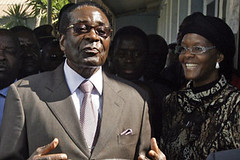
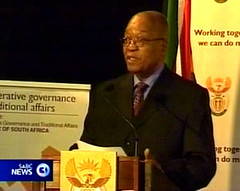
    Addressing journalists after a meeting with President Mugabe, Prime Minister Morgan Tsvangirai and Deputy Prime Minister Arthur Mutambara, South African President Zuma said he was happy with the co-operation in the leadership.

    “The parties have agreed to a package of measures to be implemented concurrently as per the decision of the Sadc Troika in Maputo,” he said.

    This was in reference to the meeting of the Sadc Organ on Politics, Defence and Security in Mozambi-que late last year.

    President Zuma added: “The leaders have instructed their negotiating teams to attend to all outstanding issues during their deliberations on 25, 26 and 29 March and report back to the facilitator by the 31st of March.”

    The South African leader will then present a comprehensive report to Troika chair, Mozambique’s President Armando Guebuza.

    Though he would not say what had been agreed, reliable sources said these pertained to sanctions; the appointments of provincial governors; and the status of Reserve Bank Governor Dr Gideon Gono, Attorney-General Mr Johannes Tomana, and MDC-T’s preferred Deputy Agriculture Minister Roy Bennett.

    It also emerged yesterday that President Zuma on Wednesday night met Dr Gono, Mr Tomana and Mr Bennett separately as he had never met them.

    His spokesperson, Mr Vincent Magwenya, said President Zuma felt it important to “engage directly with other key players in Zimbabwe to create understanding on how to move matters forward”.

    Zanu-PF negotiator Cde Patrick Chinamasa said President Zuma had requested the meeting and the principals had agreed.

    Of the meeting, Mr Tomana said: “The President wanted to meet me. It went on very, very well, I would say.”

    Dr Gono described the meeting as “excellent”, while Mr Bennett said it was “very helpful to the people of Zimbabwe”.

    Sources yesterday said: “MDC-T has committed to denounce sanctions. On Roy Bennett there are two issues; that is, his suitability for the agriculture ministry, and if that is resolved at what point he can be appointed.”

    Zanu-PF expressed reservations on Mr Bennett’s suitability considering his links with Rhodesian elements bent on reversing Zimbabwe’s land reform programme.

    The party also says Mr Bennett can only be appointed when and if he is cleared of terror-related charges he is facing in the High Court.

    The Herald is also reliably informed that the passage of the RBZ Bill in Senate last week addressed most issues MDC-T had raised about Dr Gono’s powers.

    The parties are reportedly agreed on sharing of gubernatorial posts and will discuss the appointment formulae.

    The two proposals on the table are; either to use the number of votes garnered in each province by the parties or the number of seats they have in Parliament.

    Sources also disclosed that the principals might take up the implementation issues if negotiators failed to agree by the time of the deadline’s expiry on March 31.

    “Negotiators are in agreement that the issues are administrative and if there are any disagreements then the principals can bring finality to them.”

    MDC-T’s commitment to denounce the illegal sanctions imposed on Zimbabwe came amid reports that re-engagement talks with the European Union will resume next month.

    A senior Government official yesterday said althou-gh Zimbabwe had proposed to visit most capitals in the bloc, some nations were not forthcoming.

    “The re-engagement team will go to Brussels, Belgium, on April 21 after the EU finally agreed that the team should engage them.

    “The inclusive Government resolved that the team visit EU capitals but Britain, Germany and Holland rejected the idea and they will now meet in Belgium,” an insider revealed.

    The team comprises ministers Simbarashe Mumbe-ngegwi (Foreign Affairs), Patrick Chinamasa (Justice), Tendai Biti (Finance) and Priscilla Misihaira-bwi-Mushonga (Regional Integration).

    Others are Welshman Ncube (Industry) and Elton Mangoma (Economic Planning).

    President Zuma left Harare yesterday evening.

  • Nigeria News Update: Acting President Goodluck Jonathan Sacks Cabinet

    24 former ministers may return to new cabinet

    Thursday, 18 March 2010 01:27

    Nigeria Business Day

    Nominees may get accelerated screening

    The process of screening the new ministers to be nominated by Acting President Goodluck Jonathan may be fast tracked by the National Assembly following an understanding reached with the leadership of federal lawmakers. And as the National Assembly awaits Jonathan’s list of nominees, BusinessDay has gathered that up to 24 people in the dissolved cabinet may return to the new team. In deciding on those that will be nominated, sources said performance or lack of it may count more than any other factor.

    Also, the apparent dubious loyalty displayed by some in the drama that characterised the ailment of President Umaru Yar’Adua and the aftermath of his return to Nigeria from a Saudi hospital may be factored in. Invariably, those that doggedly sought prevent the then vice president from exercising executive powers, thereby precipitating the power vacuum may have had their last day at the council.

    Among former ministers that may be nominated by Jonathan, BusinessDay learnt, are Odein Ajumogobia, former minister of state for petroleum; Remi Babalola, former minister of state for finance; Adetokunbo Kayode, then attorney general and Ojo Maduekwe of foreign affairs. Others that may return are Sam Egwu and Dora Akunyili.

    One of the two Kano ministers – Shamsudeen Usman and Mansur Muhtar – may have to go as the administration may not be inclined towards having two ministers from the same state.

    For reasons of poor performance or dubious loyalty, Abba Ruma, former minister of agriculture; Rilwan Lukman who was away for OPEC meeting when the cabinet was dissolved, Michael Aondoakaa, the first casualty of the shift in power when he lost his justice portfolio; Adamu Aliero, erstwhile minister of Federal Capital Territory and Hassan Lawal of works ministry may not make it back.

    Similarly, Grace Ekpiwhere is believed to be unlikely to make the new list.

    Global security agencies on alert as Jonathan dissolves cabinet

    Thursday, 18 March 2010 01:29

    Horatius Egua
    Nigeria Business Day

    Security in key countries trail ex-ministers’ wealth

    Security agencies and operatives around the world may have been placed on the alert following suspicions that some members of the Executive Council of the Federation which Acting President Goodluck Jonathan dissolved yesterday may have stashed huge sums of money off-shore.

    According to highly placed sources, security agencies and financial watchdogs in the US, Britain and other major financial centres have been apprised of the development and are cooperating with the Federal Government. Already, a security ring is believed to have been thrown around the former ministers as intense investigations have been launched into the management of funds in the past six months.

    Briefing State House correspondents shortly after the dissolution of the council, Dora Akunyili, former minister of information and communications, said Jonathan thanked members of the former executive council for their services to the nation.

    In a one paragraph statement, Akunyili said: “Today, the acting president of the Federal Republic of Nigeria Dr. Goodluck Ebele Jonathan dissolved the Federal Executive Council”. She however said “Jonathan did not give any reason for the dissolution of the council”. The former ministers, according to her, will formerly hand over to the permanent secretaries of their respective ministries today as they would take charge pending the constitution of a new cabinet. The dissolution brings to an end months of speculations of cabinet change by Jonathan since taking over as acting president on February 9.

    John Odey, minister of environment, has already handed over to the permanent secretary Shortly after the meeting ended, all the ministers departed the council chambers in a sombre mood. Those who had the privilege of driving their vehicles into the Presidential Villa rode quietly out without the usual fanfare. The sack of the ministers, according to some of them, came as a surprise as they claimed they were not expecting it since there had been reassured by the acting president that no major change will be made immediately.

    However, there had been pressure from political party leaders, governors and other prominent Nigerians urging Jonathan to carry out a sweeping change in order to inject fresh blood into the system. A top presidency source told BusinessDay Wednesday night that the dissolution of the cabinet got input from the Theophilus Danjuma-led Presidential Advisory Council (PAC) which was inaugurated two weeks ago by the acting president.

    Ironically, the sacked Akunyili was the one mandated by the dissolved council to brief State House correspondents on the development. Her deputy, Ikra Bilbis, refused to join her at the briefing.

    News Analysis: Jonathan finally strikes

    Cover Stories Mar 18, 2010

    By Ikeddy Isiguzo, Chairman, Editorial Board
    Nigeria Vanguard

    HOW much power does an Acting President have? Acting President Goodluck Jonathan answered that question,
    yesterday, amid speculations that he could not perform the duties of the President, for reasons power mongers have conjured outside the Constitution.

    The political logjam began last November 23, when the President slipped out of the country in the dead of night for medical attention in Saudi Arabia and lasted until Wednesday, February 24, when again another operation in darkness delivered President Umaru Musa Yar’Adua back to the country. That he is yet to make a public appearance, or issue a statement made many believe that Dr. Jonathan counted for little.

    All types of calculations had been made. There was an immediate crisis with the President’ arrival stalling that day’s Federal Executive Council, FEC, meeting where some thought that Section 144 of the Constitution would be effected.

    That Section gives FEC the powers to pronounce the President incapacitated, a preliminary step to the National Assembly impeaching him if the report of a medical panel confirmed his state.

    Two other FEC meetings had been put off for reasons that were either related to the inability of the Acting President to see the President or the Acting President’s engagements, as was the case last week.

    Division along lines of loyalty

    Finally, Dr. Jonathan did what some had been asking him to do – dissolve the FEC – which had been divided along lines of loyalty to either the President or the Acting President since he assumed that office on February 9. Some members of the cabinet have been outrightly rebellious. There had been speculations that some had resigned, but their letters were rejected.

    When the Acting President moved Michael Kaase Aondoakaa, the former Minister of Justice to Minister of Special Duties, and followed that up with the replacement of the National Security Adviser, he was becoming visible and picking his strides.

    A major argument of those who wanted the cabinet, shaken or taken out was that with the Acting President, coming from the South South zone, some of the political mathematics that resulted in some portfolios going to certain parts of the country with Yar’Adua in the saddle, had changed. It made political sense too that the portfolios were reviewed.

    More importantly, loyalty is an issue on several platforms. There are some who had led Dr. Jonathan through the tricky paths of the Presidency. They think it is their turn to be “carried along.” Others also believe that some of the Ministers in the past cabinet were lethargic, and deserved to have been thrown out long ago.

    A combination of these factors resulted in yesterday’s decision that borrowed again from the speech of the Chairman of the Presidential Advisory Council, Lt.Gen Theophilus Yakubu Danjuma who demanded action from the Acting President.

    Danjuma at the inauguration of the Council, a collection of elderly people, with high net worth political accounts, asked the Acting President to act decisively.

    “Now that you have been invested with the needed authority, the nation expects you to proceed quickly to effect the needed transformation. This is the right time for you to act – now when you can act quickly and aggressively, now when society can be trusted to be as generous as to credit you with your successes and to excuse your errors,” Gen Danjuma said at the Council’s inauguration.

    “Because the times are extra-ordinary, the measures that need to be taken are not only urgent but extra-ordinary. Unless you take those measures quickly, the goodwill which you now enjoy may be lost. Fortunately, you have the required courage and vision. What you did not have in the past was the authority.

    “This is a decisive moment in our history. At such moments, God always ensures that a nation possesses significant personalities who are to act as His agents for change. You, Mr. Acting President, are the significant personality that God has chosen at this time to take your place at the front in the struggle to save our country,” Gen Danjuma said.

    Dr. Jonathan has done the easiest part. The harder aspect is getting replacements that would make a difference for good in the way the country runs. It is unexpected that he would sweep everyone away, for this would be politically incorrect, but he has a great opportunity to ignore most of the political jobbers who would want to replace this cast with one worse than the departing lot.

    There is a lot that the Acting President can do, if he puts his politics to it. Anyone in doubt should ask the sacked Ministers.

    Nigeria leads in crude oil production in Africa

    Thursday, 18 March 2010 01:26

    Olusola Bello

    …output reaches 1.959m bpd in February

    Nigeria came top in crude oil production in Africa for the month of February with Angola that was several times, last year, the leader of the continent coming second. Nigeria produced 1.959 million bpd. Nigeria’s production peaked 1.959 million barrels per day even as output against January production level was put at 1.991 million barrels per day and December witnessed the highest production level of 2.008 million barrels per day.

    These production figures indicate the relative peace enjoyed in the Niger Delta. At the peak of the crisis, especially between June and July, last year, the nation’s production level went down to as low as 1.6 million barrels per day. It was during this period that Angola came up as the leader of crude oil production in the continent. For instance, her production level increased to a multi-year high of 1.946 million bpd, from 1.889 million bpd and 1.853 million bpd, respectively.

    Nigeria’s output declined 1.6 percent Month-on-Month (MoM), but rose 9.1 percent Year-on-Year (YoY), while Angola’s production edged up 3.0 percent MoM and 18.2 percent YoY.

    Relative stability in Nigeria’s oil-rich states following the offer of amnesty to militants operating in the region appears to have contributed to a turnaround in output since late 3Q09. Accordingly, the sustainability of the peace process will be a critical issue in the medium term to ensure the production levels discussed above are sustained.

    According to Renaissance Capital, the oil growth in Nigeria will probably be in positive territory in 2010, given the likelihood of higher annual oil prices and output, offsetting relatively sluggish non-oil metrics (with the exception of agriculture). In an optimistic scenario, the oil production target included in the 2010 budget (2.088 million bpd) could still be outperformed, supporting the anticipated fiscal expansionary stance and mitigating the actual budget deficit.

    Furthermore, this could incrementally boost the Central Bank of Nigeria’s (CBN) level of non-excess crude account foreign reserves and help maintain exchange-rate stability (NGN150/$1).

    This would also allow the National Bank of Angola to contain the exchange rate at about AOA90/$1 as the foreign reserve position eventually improves, in addition to the current tight monetary stance which should ultimately curb excess demand for dollars and as market confidence picks up somewhat.

    ‘Dividing Nigeria not a solution’

    Written by Abdulkadir Badsha Mukhtar
    Nigeria Daily Trust
    Wednesday, 17 March 2010 23:32

    Splitting Nigeria into two between Muslims and Christians is not the solution to the country’s religious and ethnic crises, a scholar in Art and Culture Michael M. Gujiya has said.

    Gujiya who is the author of a book on Nigerian unity, titled “The Ascension of a General” said the suggestion made by the Libyan leader Muammar Gaddafi that Nigeria should be divided into two nations, citing the examples of India and Pakistan was unfortunate.

    “Anybody who calls for the split of Nigeria into two does not know what he is doing. For example, I am a Christian my brother is Muslim and the other one is even traditional. We are from the same father and mother, by dividing the country you are dividing the families,” he said.

    He said even though his book is about the biography of the Emir of Zuru retired General Sani Sami “It is more to do with the unity of the country at large.”

    He said to arrest the situation of both ethnic and religious unrest in the country, “particularly in Jos,” leaders must sit down and iron out whatever problem.

    “We had similar problems in Zuru but we are living together because the emir focuses on uniting the area,” he added.

    Some of the Zuru political representatives, he said, are not originally from Zuru “they are from Katsina. Our concern is who is developing Zuru irrespective of where he comes from, and that what it should be anywhere.”

  • Sudanese Government and Rebel Group Sign Cease-Fire

    Sudan and Darfur rebel group sign cease-fire

    The Associated Press

    Sudan’s government and a collection of Darfur rebel groups have signed a cease-fire, opening the way for political negotiations ahead of a full peace agreement.

    Government representative Ghazi Salah Eddin Atabani and rebel leader Al-Tijani Al-Sissi signed the truce Thursday in Doha, Qatar.

    Al-Sissi’s Liberation and Justice Movement is an umbrella organization that includes several small Darfur rebel groups that recently united to negotiate with the government.

    Last month, Sudan’s government signed a similar truce in Doha with Darfur’s most powerful rebel group, the Justice and Equality Movement.

    The government refused JEM’s demand that other rebel groups join the reconciliation process under its umbrella.

    DOHA, Qatar (AP) – Sundan’s government and a collection of Darfur rebel groups have signed a cease-fire, opening the way for political negotiations ahead of a full peace agreement.

    Government representative Ghazi Salah Eddin Atabani and rebel leader Al-Tijani Al-Sissi signed the truce Thursday in Doha, Qatar.

    Al-Sissi’s Liberation and Justice Movement is an umbrella organization that includes several small Darfur rebel groups that recently united to negotiate with the government.

    Last month, Sudan’s government signed a similar truce in Doha with Darfur’s most powerful rebel group, the Justice and Equality Movement.

    The government refused JEM’s demand that other rebel groups join the reconciliation process under its umbrella.

  • African Union Acts Against Madagascar Coup Leader

    AU acts against Madagascar leader

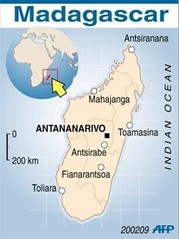
    The African Union has put sanctions on Madagascar’s leader Andry Rajoelina, after he failed to meet a deadline to set up a unity government.

    Mr Rajoelina and 108 of his backers will face travel restrictions and have any foreign assets frozen, the AU said.

    The organisation wants to force Mr Rajoelina, a former DJ who seized power a year ago, back into negotiations.

    For the past year, the country has been in turmoil with street protests by Mr Rajoelina’s opponents and supporters.

    “We believe that the sanctions are the way that will help the authorities to come back to the virtues of dialogue and negotiation,” said AU security commissioner Ramtane Lamamra.

    2009: A YEAR OF TURMOIL
    –January Dozens killed in protests sparked after President Ravalomanana shuts opposition media groups
    — February Opposition figurehead Andry Rajoelina sacked as mayor of Antananarivo
    — March Army mutiny, Mr Ravalomanana resigns and flees country; Mr Rajoelina takes over, African Union suspends Madagascar
    — August Power-sharing deal signed, later breached by Mr Rajoelina
    — October New power-sharing deal, breached by Mr Rajoelina in December

    “I hope they will have the effect of nurturing wisdom. No unilateral party is capable of solving the crisis by itself.”

    Former President Marc Ravalomanana, who was overthrown after weeks of violent protests last year, urged his successor to resume talks.

    “I hope that these targeted sanctions will spur Andry Rajoelina into cooperating with the international community and that they serve as a wake-up call,” said Mr Ravalomanana, who is in exile in South Africa.

    But a member of Mr Rajoelina’s government, Evariste Marson, told the AFP news agency that the sanctions would have “no effect”.

    In December, Mr Rajoelina abandoned a peace deal he had signed up to by unilaterally appointing a military prime minister.

    The decision sparked violent protests outside the national assembly in the capital, Antanarivo.

    Story from BBC NEWS:
    http://news.bbc.co.uk/go/pr/fr/-/2/hi/africa/8574051.stm
    Published: 2010/03/18 09:55:01 GMT

  • Zimbabwe Ruling Party Rebuffs Western Criticism of China’s Involvement With Africa

    Mugabe’s Zanu-PF rebuffs Western criticism of China’s involvement in Africa

    08:42, March 18, 2010

    Zimbabwean President Robert Mugabe’ s Zanu-PF party has rebuffed Western media’s assertions that China is not a true friend of Africa but one that is bent on exploiting its vast natural resources.

    Party national chairman Simon Khaya-Moyo told Xinhua on Wednesday that China’s relations with Africa were founded on mutual trust, equality and a win-win situation.

    “Those Western countries criticizing the relations know that China is a powerful nation which is about to overtake the United States as the world’s economic power,” he said.

    “The West is going to China more often than other countries so China is a giant and that’s why they want to castigate it.”

    As Zimbabwe and Africa develop their relations with China, there has been Western criticism of China’s sincerity — that its growing economic interest in Africa is based on a search for raw materials to power its economy.

    But Khaya-Moyo said Sino-Africa ties started many years ago and had continued to develop and blossom over the years. “We are obviously working together as free nations,” he said.

    China had not imposed sanctions on Zimbabwe and Zimbabwe was reaping more rewards from its “Look East” policy adopted in 2003, he said.

    The Zanu-PF party chairman expressed confidence in the future of China-Africa and China-Zimbabwe relations, saying these will continue to be excellent, cordial and friendly.

    “We shall do more and more together. We want more investment to pour in from China and for Zimbabweans to do more business with China,” he said.

    Describing the relations as cordial, Khaya-Moyo said Zimbabwe was happy and proud of its growing relations with China.

    Zanu-PF legislator and Agriculture and Irrigation Development Minister Joseph Made said Zimbabwe was a sovereign nation which was free to choose its friends.

    He said it was not proper for Zimbabwe and Africa’s erstwhile colonizers to dictate to them who to associate with.

    “I think the choice for friendship is free. You want us to forget those who assisted us to have the right to self determination? Can the Western colonizers choose our friends? No,” said Made.

    He said the Western media claims were false accusations against the Asian country which was now helping African economies to grow.

    “If this is true they should leave that to our own devices. We are adults and we will make our own choices.”

    Made said Zimbabwe was in need of sincere friends and not those who “punish us for nothing to the extent of punishing 13 million people” through sanctions.

    He said the Western sanctions had resulted in Zimbabwe’s researchers and planners operating in isolation to the detriment of agricultural development in the country.

    Zimbabwe had therefore chosen to collaborate with China and other Asian countries to enhance the expertise of its agricultural experts, he said.

    The West imposed sanctions on Zimbabwe at the turn of the century following the expropriation of white owned land by government to resettle indigenous people.

    Source:Xinhua

  • People’s Republic of China Publishes Report on Human Rights Violations in the United States

    Full Text of Human Rights Record of the United States in 2009

    BEIJING, March 12 (Xinhua) — China’s Information Office of the State Council published a report titled “The Human Rights Record of the United States in 2009” here Friday. Following is the full text:

    The State Department of the United States released its Country Reports on Human Rights Practices for 2009 on March 11, 2010, posing as “the world judge of human rights” again. As in previous years, the reports are full of accusations of the human rights situation in more than 190 countries and regions including China, but turn a blind eye to, or dodge and even cover up rampant human rights abuses on its own territory.

    The Human Rights Record of the United States in 2009 is prepared to help people around the world understand the real situation of human rights in the United States.

    I. On Life, Property and Personal Security

    Widespread violent crimes in the United States posed threats to the lives, properties and personal security of its people.

    In 2008, U.S. residents experienced 4.9 million violent crimes, 16.3 million property crimes and 137,000 personal thefts, and the violent crime rate was 19.3 victimizations per 1,000 persons aged 12 or over, according to a report published by the U.S. Department of Justice in September 2009 (Criminal Victimization 2008, U.S. Department of Justice, http://www.ojp.usdoj.gov).

    In 2008, over 14 million arrests occurred for all offenses (except traffic violations) in the country, and the arrest rate for violent crime was 198.2 per 100,000 inhabitants (Crime in the United States, 2008, http://www.fbi.gov). In 2009, a total of 35 domestic homicides occurred in Philadelphia, a 67 percent increase from 2008 (The New York Times, December 30, 2009).

    In New York City, 461 murders were reported in 2009, and the crime rate was 1,151 cases per 100,000 people. San Antonio in Texas was deemed as the most dangerous among 25 U.S. large cities with 2,538 crimes recorded per 100,000 people (The China Press, December 30, 2009). The murder rate rose 5.5 percent in towns with a population of 10,000 or fewer in 2008 (http://www.usatoday.com, June 1, 2009). Most of the United States’ 15,000 annual murders occur in cities where they are concentrated in poorer neighborhoods (http://www.reuters.com, October 7, 2009).

    The United States ranks first in the world in terms of the number of privately-owned guns. According to the data from the FBI and the Bureau of Alcohol, Tobacco, Firearms and Explosives (ATF), American gun owners, out of 309 million in total population, have more than 250 million guns, while a substantial proportion of U.S. gun owners had more than one weapon.

    Americans usually buy 7 billion rounds of ammunition a year, but in 2008 the figure jumped to about 9 billion (The China Press, September 25, 2009). In the United States, airline passengers are allowed to take unloaded weapons after declaration.

    In the United States, about 30,000 people die from gun-related incidents each year (The China Press, April 6, 2009). According to a FBI report, there had been 14,180 murder victims in 2008 (USA Today, September 15, 2009). Firearms were used in 66.9 percent of murders, 43.5 percent of robberies and 21.4 percent of aggravated assaults (http://www.thefreelibrary.com).

    USA Today reported that a man named Michael McLendon killed 10 people in two rural towns of Alabama before turning a gun on himself on March 11, 2009. On March 29, a man named Robert Stewart shot and killed eight people and injured three others in a nursing home in North Carolina (USA Today, March 11, 2009).

    On April 3, an immigrant called Jiverly Wong shot 13 people dead and wounded four others in an immigration services center in downtown Binghamton, New York (The New York Times, April 4, 2009).

    In the year 2009, a string of attacks on police shocked the country. On March 21, a 26-year-old jobless man shot and killed four police officers in Oakland, California, before he was killed by police gunfire (http://cbs5.com).

    On April 4, a man called Richard Poplawski shot three police officers to death in Pittsburgh, Pennsylvania. On November 29, an ex-convict named Maurice Clemmons shot four police officers to death inside a coffee shop in Parkland, Washington (The New York Times, December 1, 2 and 3, 2009).

    Campuses became an area worst hit by violent crimes as shootings spread there and kept escalating. The U.S. Heritage Foundation reported that 11.3 percent of high school students in Washington D.C. reported being “threatened or injured” with a weapon while on school property during the 2007-2008 school year.

    In the same period, police responded to more than 900 calls to 911 reporting violent incidents at the addresses of Washington D.C. public schools (A Report of The Heritage Center for Data Analysis, School Safety in Washington, D.C.: New Data for the 2007-2008 School Year, http://www.heritage.org). In New Jersey public schools, a total of 17,666 violent incidents were reported in 2007-2008 (Annual Report on Violence, Vandalism and Substance Abuse in New Jersey Public Schools by New Jersey Department of Education, October 2009, http://www.state.nj.us).

    In the City University of New York, a total of 107 major crimes occurred in five of its campuses during 2006 and 2007(The New York Post, September 22, 2009).

    II. On Civil and Political Rights

    In the United States, civil and political rights of citizens are severely restricted and violated by the government.

    The country’s police frequently impose violence on the people. Chicago Defender reported on July 8, 2009 that a total of 315 police officers in New York were subject to internal supervision due to unrestrained use of violence during law enforcement. The figure was only 210 in 2007.

    Over the past two years, the number of New York police officers under review for garnering too many complaints was up 50 percent (http://www.chicagodefender.com). According to a New York Police Department firearms discharge report released on Nov. 17, 2009, the city’ s police fired 588 bullets in 2007, killing 10 people, and 354 bullets in 2008, killing 13 people (http://gothamist.com, November 17, 2009).

    On September 3, 2009, a student of the San Jose State University was hit repeatedly by four San Jose police officers with batons and a Taser gun for more than ten times (http://www.mercurynews.com, October 27, 2009). On September 22, 2009, a Chinese student in Eugene, Oregon was beaten by a local police officer for no reason (The Oregonian, October 23, 2009, http://blog.oregonlive.com).

    According to the Amnesty International, in the first ten months of 2009, police officers in the U.S. killed 45 people due to unrestrained use of Taser guns. The youngest of the victims was only 15. From 2001 to October, 2009, 389 people died of Taser guns used by police officers (http://theduckshoot.com).

    Abuse of power is common among U.S. law enforcers. In July 2009, the Federal Bureau of Investigation put four police officers in the Washington area under investigation for taking money to protect a gambling ring frequented by some of the region’s most powerful drug dealers over the past two years (The Washington Post, July, 19, 2009).

    In September 2009, an off-duty police officer in Chicago attacked a bus driver for “cutting him off in traffic” as he rode a bicycle (Chicago Tribune, September 2009,
    http://www.chicagobreakingnews.com).

    In the same month, four former police officers in Chicago were charged with extorting close to 500,000 U.S. dollars from a Hispanic driving an expensive car with out-of-state plates and suspected drug dealers in the name of law enforcement, and offering bribes to their superiors (Chicago Tribune, September 19, 2009).

    In November 2009, a former police chief of the Prince George’s County’s town of Morningside was charged with selling a stolen gun to a civilian (The Washington Post, November 18, 2009). In major U.S. cities, police stop, question and frisk more than a million people each year – a sharply higher number than just a few years ago (http://huffingtonpost.com, October 8, 2009).

    Prisons in the United State are packed with inmates. According to a report released by the U.S. Justice Department on Dec. 8, 2009, more than 7.3 million people were under the authority of the U.S. corrections system at the end of 2008. The correctional system population increased by 0.5 percent in 2008 compared with the previous year (http://www.wsws.org).

    About 2.3 million were held in custody of prisons and jails, the equivalent of about one in every 198 persons in the country. From 2000 to 2008, the U.S. prison population increased an average of 1.8 percent annually (http://mensnewsdaily.com, January 18, 2010). The California government even suggested sending tens of thousands of illegal immigrants held in the state to Mexico, in order to ease its overcrowded prison system (http://news.yahoo.com, January 26, 2010).

    The basic rights of prisoners in the United States are not well-protected. Raping cases of inmates by prison staff members are widely reported. According to the U.S. Justice Department, reports of sexual misconduct by prison staff members with inmates in the country’s 93 federal prison sites doubled over the past eight years.

    Of the 90 staff members prosecuted for sexual abuse of inmates, nearly 40 percent were also convicted of other crimes (The Washington Post, September11, 2009). The New York Times reported on June 24, 2009 that according to a federal survey of more than 63,000 federal and state inmates, 4.5 percent reported being sexually abused at least once during the previous 12 months. It was estimated that there were at least 60,000 rapes of prisoners across the United States during the same period (The New York Times, June 24, 2009).

    Chaotic management of prisons in the United State also led to wide spread of diseases among the inmates. According to a report from the U.S. Justice Department, a total of 20,231 male inmates and 1,913 female inmates had been confirmed as HIV carriers in the U.S. federal and state prisons at yearend 2008.

    The percentage of male and female inmates with HIV/AIDS amounted to 1.5 and 1.9 percent respectively (http://www.news-medical.net, December 2, 2009). From 2007 to 2008, the number of HIV/AIDS cases in prisons in California, Missouri and Florida increased by 246, 169, and 166 respectively. More than 130 federal and state inmates in the U.S. died of AIDS-related causes in 2007 (http://thecrimereport.org, December 2, 2009).

    A report by the Human Rights Watch released in March 2009 said although the New York State prison registered the highest number of prisoners living with HIV in the country, it did not provide the inmates with adequate access to treatment, and even locked the inmates up separately, refusing to provide them with treatment of any kind. (www.hrw.org, March 24, 2009).

    While advocating “freedom of speech,” “freedom of the press” and “Internet freedom,” the U.S. government unscrupulously monitors and restricts the citizens’ rights to freedom when it comes to its own interests and needs.

    The U.S. citizens’ freedom to access and distribute information is under strict supervision. According to media reports, the U.S. National Security Agency (NSA) started installing specialized eavesdropping equipment around the country to wiretap calls, faxes, and emails and collect domestic communications as early as 2001.

    The wiretapping programs was originally targeted at Arab-Americans, but soon grew to include other Americans. The NSA installed over 25 eavesdropping facilities in San Jose, San Diego, Seattle, Los Angeles, and Chicago among other cities.

    The NSA also announced recently it was building a huge one million square feet data warehouse at a cost of 1.5 billion U.S. dollars at Camp Williams in Utah, as well as another massive data warehouse in San Antonio, as part of the NSA’s new Cyber Command responsibilities.

    The report said a man named Nacchio was convicted on 19 counts of insider trading and sentenced to six years in prison after he refused to participate in NSA’s surveillance program (http://www.onelinejournal.com, November 23, 2009).

    After the September 11 attack, the U.S. government, in the name of anti-terrorism, authorized its intelligence authorities to hack into its citizens’ mail communications, and to monitor and erase any information that might threaten the U.S. national interests on the Internet through technical means.

    The country’s Patriot Act allowed law enforcement agencies to search telephone, email communications, medical, financial and other records, and broadened the discretion of law enforcement and immigration authorities in detaining and deporting foreign persons suspected of terrorism-related acts. The Act expanded the definition of terrorism, thus enlarging the number of activities to which law enforcement powers could be applied.

    On July 9, 2008, the U.S. Senate passed the Foreign Intelligence Surveillance Act Amendments Act of 2008, granting legal immunity to telecommunication companies that take part in wiretapping programs and authorizing the government to wiretap international communications between the United States and people overseas for anti-terrorism purposes without court approval (The New York Times, July 10, 2008).

    Statistic showed that from 2002 to 2006, the FBI collected thousands of phones records of U.S. citizens through mails, notes and phone calls. In September 2009, the country set up an Internet security supervision body, further worrying U.S. citizens that the U.S. government might use Internet security as an excuse to monitor and interfere with personal systems.

    A U.S. government official told the New York Times in an interview in April 2009 that NSA had intercepted private email messages and phone calls of Americans in recent months on a scale that went beyond the broad legal limits established by U.S. Congress the year before. In addition, the NSA was also eavesdropping on phones of foreign political figures, officials of international organizations and renowned journalists (The New York Times, April, 15, 2009). The U.S. military also participated in the eavesdropping programs.

    According to CNN reports, a Virginia-based U.S. military Internet risk evaluation organization was in charge of monitoring official and unofficial private blogs, official documents, personal contact information, photos of weapons, entrances of military camps, as well as other websites that “might threaten its national security.”

    The so-called “freedom of the press” of the United States was in fact completely subordinate to its national interests, and was manipulated by the U.S. government. According to media reports, the U.S. government and the Pentagon had recruited a number of former military officers to become TV and radio news commentators to give “positive comments” and analysis as “military experts” for the U.S. war in Iraq and Afghanistan, in order to guide public opinions, glorify the wars, and gain public support of its anti-terrorism ideology (The New York Times, April 20, 2009).

    At yearend 2009, the U.S. Congress passed a bill which imposed sanctions on several Arab satellite channels for broadcasting contents hostile to the U.S. and instigating violence (http://blogs.rnw.nl).

    In September 2009, protesters using the social-networking site Twitter and text messages to coordinate demonstrations clashed with the police several times in Pittsburgh, where the Group of 20 summit was held.

    Elliot Madison, 41, was later charged with hindering apprehension of the protesters through the Internet. The police also searched his home (http://www.nytimes.com, October 5, 2009). Vic Walczak, legal director of the American Civil Liberties Union of Pennsylvania, said the same conduct in other countries would be called human rights violations whereas in the United States it was called necessary crime control.

    III. On Economic, Social and Cultural Rights

    Poverty, unemployment and the homeless are serious problems in the United States, where workers’ economic, social and cultural rights cannot be guaranteed.

    Unemployment rate in the U.S. in 2009 was the highest in 26 years. The number of bankrupt businesses and individuals kept rising due to the financial crisis. The Associated Press reported in April 2009 that nearly 1.2 million businesses and individuals filed for bankruptcy in the previous 12 months – about four in every 1,000 people, a rate twice as high as that in 2006 (http://www.floridabankruptcyblog.com).

    By December 4, 2009, a total of 130 U.S. banks had been forced to close in the year due to the financial crisis (Chicago Tribune, December 4, 2009). Statistics released by the U.S. Labor Department on Nov. 6, 2009 showed unemployment rate in October 2009 reached 10.2 percent, the highest since 1983 (The New York Times, November 7, 2009).

    Nearly 16 million people were jobless, with 5.6 million, or 35.6 percent of the unemployed, being out of work for more than half a year (The New York Times, November 13, 2009). In September, about 1.6 million young workers, or 25 percent of the total, were jobless, the highest since 1948 when records were kept (The Washington Post, September 7, 2009).

    In the week ending on March 7, 2009, the continuing jobless claims in the U.S. were 5.47 million, higher than the previous week’s 5.29 million (http://247wallst.com, March 19, 2009).

    The population in poverty was the largest in 11 years. The Washington Post reported on September 10, 2009, that altogether 39.8 million Americans were living in poverty by the end of 2008, an increase of 2.6 million from that in 2007. The poverty rate in 2008 was 13.2 percent, the highest since 1998.

    The number of people aged between 18 to 64 living in poverty in 2008 had risen to 22.1 million, 170,000 more than in 2007. Up to 8.1 million families were under poverty, accounting for 10.3 percent of the total families (The Washington Post, September 11, 2009).

    According to a report of the New York Times on Sept. 29, 2009, the poverty rate in New York City in 2008 was 18.2 percent and nearly 28 percent of the Bronx borough’s residents were living in poverty (The New York Times, September 29, 2009). From August 2008 to August 2009, more than 90,000 poor households in California suffered power and gas cuts.

    A 93-year-old man was frozen to death at his home (http://www.msnbc.msn.com). Poverty led to a sharp rise in the number of suicides in the United States. It is reported that there are roughly 32,000 suicides in the U.S. every year, nearly double the cases of murder, which numbered 18,000 (http://www.time.com).

    The Los Angeles County coroner’s office said the poor economy was taking a toll even on the dead as more bodies in the county went unclaimed by families who could not afford funeral expenses. A total of 712 bodies in Los Angles County were cremated with taxpayers’ money in 2008, an increase of 36 percent over the previous year (The Los Angeles Times, July 21, 2009).

    The population in hunger was the highest in 14 years. The U.S. Department of Agriculture reported on Nov. 16, 2009, that 49.1 million Americans living in 17 million households, or 14.6 percent of all American families, lacked consistent access to adequate food in 2008, up 31 percent from the 13 million households, or 11.1 percent of all American families, that lacked stable and adequate supply of food in 2007, which was the highest since the government began tracking “food insecurity” in 1995 (The New York Times, November 17, 2009; 14.6% of Americans Could Not Afford Enough Food in 2008, http://business.theatlantic.com).

    The number of people who lacked “food security,” rose from 4.7 million in 2007 to 6.7 million in 2008 (http://www.livescience.com, November 26, 2009). About 15 percent of families were still working for adequate food and clothing (The Associated Press, November 27, 2009).

    Statistics showed 36.5 million Americans, or about one eighth of the U.S. total population, took part in the food stamp program in August 2009, up 7.1 million from that of 2008. However, only two thirds of those eligible for food stamps actually received them (http://www.associatedcontent.com).

    Workers’ rights were seriously violated. The New York Times reported on Sept. 2, 2009 that 68 percent of the 4,387 low-wage workers in a survey said they had experienced reduction of wages.

    And 76 percent of those who had worked overtime were not paid accordingly, and 57 percent of those interviewed had not received pay documents to make sure pay was legal and accurate. Only eight percent of those who suffered serious injuries on the job filed for compensation.

    Up to 26 percent of those surveyed were paid less than the national minimum wage. Among those who complained about wages or treatment, 43 percent had experienced retaliation or dismissal (The New York Times, September 2, 2009). According to a report by the USA Today on July 20, 2009, a total of 5,657 people died at workplaces across the U.S. in 2007, about 17 deaths each day.
    About 200,000 workers in New York State were injured or sickened at workplaces each year (USA Today, July 20, 2009).

    The number of people without medical insurance has kept rising for eight consecutive years. Data released by the U.S. Census Bureau on Sept. 10, 2009, showed 46.3 million people were without medical insurance in 2008, accounting for 15.4 percent of the total population, comparing 45.7 million people who were without medical insurance in 2007, which was a rise for the eighth year in a row.

    About 20.3 percent of Americans between 18 to 64 years old were not covered by medical insurance in 2008, higher than the 19.6 percent in 2007 (http://www.census.gov). A study released by the Commonwealth Fund showed health insurance coverage of adults aged 18 to 64 declined in 31 U.S. states from 2007 to 2009 (Reuters, October 8, 2009). The number of states with extremely high number of adults who were not covered by medical insurance increased from two in 1999 to nine in 2009.

    More than one in every four people in Texas were uninsured, the highest percentage among all states (http://www.ncpa.org). Houston had 40.1 percent of its residents uninsured (http://www.msnbc.msn.com).

    In 2008, altogether 2,266 U.S. veterans under the age of 65 died for lack of health insurance coverage or medical care, 14 times higher than the U.S. military death toll in Afghanistan that year (AFP, November 11, 2009).

    A report by the Consumer International showed 34 percent of U.S. families with annual income below 50,000 U.S. dollars and 21 percent of homes with annual income exceeding 100,000 U.S. dollars lost medical insurance or suffered reduction in medical insurance in 2009. In addition, two thirds of households with annual income below 50,000 U.S. dollars and one third of homes earning more than 100,000 U.S. dollars a year cut their medical expenses last year.

    About 28 percent Americans chose not to see a doctor when they fell ill; a quarter of them could not afford medical bills; 22 percent postponed medical treatment; a fifth of them did not buy medicine prescribed by doctors or undergo medical checkups; 15 percent took expired drugs or did not follow medical instructions to take medicine on time in order to save money (http://www.oregonlive.com).

    According to a report of the Organization for Economic Cooperation and Development (OECD) on December 8, 2009, average life expectancy of Americans was 78.1 years in 2007, ranking the fourth from bottom among all member states of OECD. The average life expectancy of OECD member states was 79.1 that year (http://www.msnbc.msn.com).

    The number of homeless has been on the rise. Statistics show that by September 2008, an upward of 1.6 million homeless people in the U.S. had been receiving shelter, and the number of those in families rose from 473,000 in 2007 to 517,000 in 2008 (USA Today, July 9, 2009). Since 2009, homeless enrollments in the six counties of Chicago area had climbed, with McHenry County seeing the biggest hike – an increase of 125 percent over the previous year (Chicago Tribune, November 28, 2009).

    These families could only live in shabby places such as wagons. In March 2009, a sprawling tent city was seen in Sacramento of California where hundreds of homeless gathered. Police in Santa Monica of southern California even regularly used force to drive the homeless out of the city (www.truthalyzer.com). In October, several thousand homeless in Detroit got into a fight, worrying they might not receive the government’s housing subsidies (USA Today, October 8, 2009).

    In December, there were 6,975 homeless single adults in shelters in New York City, not including military veterans, chronically homeless people, and the 30,698 people living in short-term housing for homeless families (The New York Times, December 10, 2009). The Houston Chronicle reported on March 16, 2009 that large numbers of houses in Galveston were destroyed by Hurricane Ike in September 2008, leaving thousands homeless. About 1,700 households did not receive any aid and most of them do not have fixed residences (Houston Chronicle, March 16, 2009).

    IV. On Racial Discrimination

    Racial discrimination is still a chronic problem of the United States.

    Black people and other minorities are the most impoverished groups in the United States. According to a report issued by the U.S. Bureau of Census, the real median income for American households in 2008 was 50,303 U.S. dollars. That of the non-Hispanic white households was 55,530 U.S. dollars, Hispanic households 37,913 U.S. dollars, black households only 34,218 U.S. dollars.

    The median incomes of Hispanic and black households were roughly 68 percent and 61.6 percent of that of the non-Hispanic white households. Median income of minority groups was about 60 to 80 percent of that of majority groups under the same conditions of education and skill background (The Wall Street Journal, September 11, 2009; USA Today, September 11, 2009).

    According to the U.S. Bureau of Census, the poverty proportion of the non-Hispanic white was 8.6 percent in 2008, those of African-Americans and Hispanic were 24.7 percent and 23.2 percent respectively, almost three times of that of the white (The New York Times, September 29, 2009). About one quarter of American Indians lived below the poverty line.

    In 2008, 30.7 percent of Hispanic, 19.1 percent of African-Americans and 14.5 percent of non-Hispanic white lived without health insurance (Income, Poverty, and Health Insurance Coverage in the United States: 2008, www.census.gov). According to a report issued by the U.S. Department of Housing and Urban Development, a record 10,552 fair housing discrimination complaints were filed in fiscal 2008, 35 percent of which were alleged race discrimination (The Washington Post, June 10, 2009).

    The U.S. Centers for Disease Control and Prevention reported that while African-Americans make up 12 percent of the US population, they represent nearly half of new HIV infections and AIDS deaths every year (The Wall Street Journal, April 8, 2009; revised statistics released by the Centers for Disease Control and Prevention).

    Employment and occupational discrimination against minority groups is very serious. Minority groups bear the brunt of the U.S. unemployment. According to news reports, the U.S. unemployment rate in October 2009 was 10.2 percent. The jobless rate of the U.S. African-Americans jumped to 15.7 percent, that of the Hispanic rose to 13.1 percent and that of the white was 9.5 percent (USA Today, November 6, 2009).

    Unemployment rate of the black aged between 16 and 24 saw a record high of 34.5 percent, more than three times the average rate. Unemployment rates for the black in cities such as Detroit and Milwaukee had reached 20 percent (The Washington Post, December 10, 2009). In some American Indians communities, unemployment rate was as high as 80 percent (The China Press, November 6, 2009).

    According to the U.S. Bureau of Labor Statistics, the unemployment rate for black male college graduates aged 25 and older in 2009 has been twice that of white male college graduates, 8.4 percent compared with 4.4 percent (The New York Times, December 1, 2009).

    In 2008, a record number of workers filed federal job discrimination complaints, with allegations of race discrimination making up the greatest portion at more than one-third of the 95,000 total claims (AP, April 27, 2009). According to an investigation by the U.S. Equal Employment Opportunity Commission, a Houston-based oil and gas drilling company faced five complaints of racial harassment and discrimination (AP, November 18, 2009).

    According to a news report, by the end of May 2009, the black and Hispanic groups each accounted for roughly 27 percent of New York City’s population, but only 3 percent of the 11,529 firefighters were black, and about 6 percent were Hispanic since the city’s fire department unfairly excluded hundreds of qualified people of color from the opportunity to serve (The New York Times, July 23, 2009). The U.S. minority groups face discriminations in education.

    According to a report issued by the U.S. Bureau of Census, 33 percent of the non-Hispanic white has college degrees, proportion of the black was only 20 percent and Hispanic was 13 percent (US Bureau of Census, April 27, 2009, www.census.gov). According to a report, from 2003 to 2008, 61 percent of black applicants and 46 percent of Mexican-American applicants were denied acceptance at all of the law schools to which they applied, compared with 34 percent of white applicants (The New York Times, January 7, 2010).

    African-American children accounted for only 17 percent of the U.S. public school students, but accounted for 32 percent of the total number which were expelled from the schools. According to a research by the University of North Carolina and Michigan State University, most of the black juvenile believed that they were victims of racial discrimination (Science Daily, April 29, 2009).

    According to another study conducted among 5,000 children in Birmingham, Ala., Houston and Los Angeles, prejudice was reported by 20 percent of blacks and 15 percent of Hispanics.

    The study showed that racial discrimination was an important cause to mental health problems for children of varied races. Hispanic children who reported racism were more than three times as likely as other children to have symptoms of depression, blacks were more than twice as likely (USA Today, May 5, 2009).

    Racial discrimination in law enforcement and judicial system is very distinct. According to the U.S. Department of Justice, by the end of 2008, 3,161 men and 149 women per 100,000 persons in the U.S. black population were under imprisonment (www.ojp.usdoj.gov).

    The number of life imprisonment without parole given to African-American young people was ten times of that given to white young people in 25 states. The figure in California was 18 times. In major U.S. cities, there are more than one million people who were stopped and questioned by police in streets, nearly 90 percent of them were minority males.

    Among those questioned, 50 percent were African-Americans and 30 percent were Hispanics. Only 10 percent were white people (The China Press, October 9, 2009). A report released by New York City Police Department, of the people involved in police shootings whose ethnicity could be determined in 2008, 75 percent were black, 22 percent were Hispanic; and 3 percent were white (The New York Times, November 17, 2009).

    According to a report by Human Rights Watch, from 1980 to 2007, the ratio of the African-Americans being arrested for dealing drugs across the U.S. was 2.8 to 5.5 times of that of the white (www.hrw.org, March 2, 2009).

    Since the Sept. 11 event, discrimination against Muslims is increasing. Nearly 58 percent of Americans think Muslims are subject to “a lot” of discrimination, according to two combined surveys released by the Pew Research Center. About 73 percent of young people aged 18 to 29 are more likely to say Muslims are the most discriminated against (http://www.washingtontimes.com, September 10, 2009).

    Immigrants live in misery. According to a report by the U.S. branch of Amnesty International, more than 300,000 illegal immigrants were detained by U.S. immigration authorities each year, and the illegal immigrants under custody exceeded 30,000 for each single day (World Journal, March 26, 2009).

    At the same time, hundreds of legal immigrants were put under arrest, denied entry or even sent back under escort every year (Sing Tao Daily, April 13, 2009). A report released by the Constitution Project and Human Rights Watch revealed that from 1999 to 2008, about 1.4 million detained immigrants were transferred. Tens of thousands of longtime residents of cities like Los Angeles and Philadelphia were sent, by force, to remote immigrant jails in Texas or Louisiana (The New York Times, November 2, 2009).

    The New York City Bar Association received a startling petition in October 2008 which was signed by 100 men, all locked up without criminal charges in the Varick Street Detention Facility in the middle of Manhattan. The letter described their cramped, filthy quarters where dire medical needs were ignored and hungry prisoners were put to work for 1 dollar a day (The New York Times, November 2, 2009).

    Some detained women who were still in lactation period were denied breast pumps in the facilities, resulting in fever, pain, mastitis, and the inability to continue breastfeeding upon release (www.hrw.org, March 16, 2009). A total of 104 people have died while in custody of the Immigration and Customs Enforcement agency since October, 2003 (The Wall Street Journal, August 18, 2009).

    Ethnic hatred crimes are frequent. According to statistics released by the U.S. Federal Investigation Bureau on November 23, 2009, a total of 7,783 hate crimes occurred in 2008 in the United States, 51.3 percent of which were originated by racial discrimination and 19.5 percent were for religious bias and 11.5 percent were for national origins (www.fbi.gov).

    Among those hate crimes, more than 70 percent were against black people. In 2008, anti-black offenses accounted for 26 persons per 1,000 people, and anti-white crimes accounted for 18 persons per 1,000 people (victim characteristics, October 21, 2009, www.fbi.gov).

    On June 10, 2009, a white supremacist gunned down a black guard of the U.S. Holocaust Memorial Museum with another two wounded (The Washington Post, June 11, 2009, The Wall Street Journal, June 11, 2009).

    According to a report issued by the Southern Poverty Law Center, an environment of racial intolerance and ethnic hatred, fostered by anti-immigrant groups and some public officials, has helped fuel dozens of attacks on Latinos in Suffolk County of New York State during the past decade (The New York Times, September 3, 2009).

    V. On the Rights of Women and Children

    The living conditions of women and children in the United States are deteriorating and their rights are not properly guaranteed. Women do not enjoy equal social and political status as men.

    Women account for 51 percent of the U.S. population, but only 92 women, or 17 percent of the seats, serve in the current 111th U.S. Congress. Seventeen women serve in the Senate and 75 women serve in the House (Members of the 111th United States Congress, http://en.wikipedia.org). A study shows minorities and women are unlikely to hold top positions at big U.S. charities and nonprofits.

    The study reveals that women make up 18.8 percent of nonprofit CEOs compared to just 3 percent at Fortune 500 companies. Among the 400 biggest charities in the U.S., no cultural organization, hospital, public affairs group, Jewish federation or other religious organization is headed by a woman (The Washington Times, September 20, 2009).

    Women have difficulties in finding a job and suffer from low income and poor financial situations. According to statistics from the U.S. Equal Employment Opportunity Commission (EEOC), workplace discrimination charge filings with the federal agency nationwide rose to 95,402 during Fiscal Year 2008, a 15 percent increase from the previous fiscal year.

    Charge of workplace discrimination because of a job applicant’s sex maintained a high proportion (www.eeoc.gov, November 3, 2009). According to statistics released by the U.S. Census Bureau in September 2009, the median incomes of full-time female workers in 2008 were 35,745 U.S. dollars, 77 percent of those of corresponding men whose median earnings were 46,367 U.S. dollars, which is lower than the 78 percent in 2007 (The Wall Street Journal, September 11, 2009; www.census.gov, September 10, 2009).

    According to the Associated Press, a female pharmacist who had been working for Walmart for ten years was fired in 2004 for demanding the same income as her male counterparts (The Associated Press, October 5, 2009). By the end of 2008, 4.2 million, or 28.7 percent of families with a female householder where no husband is present were poor (www.census.gov, September 10, 2009). About 64 million, or 70 percent of working-age American women have no health insurance coverage, or have inadequate coverage, high medical bills or debt problems, or problems in accessing care because of cost (The China Press, May 12, 2009).

    Women are frequent victims of violence and sexual assault. It is reported that the United States has the highest rape rate among countries which report such statistics. It is 13 times higher than that of England and 20 times higher than that of Japan (Occurrence of rape, http://www.sa.rochester.edu).

    In San Diego, a string of similar attacks happened to five women who have been sexually assaulted by a home invader in March 2009 (Sing Tao Daily, March 14, 2009).

    According to a report released by the Pentagon, more than 2,900 sexual assaults in the military were reported in 2008, up nearly 9 percent from the year before. And of those, only 292 cases resulted in a military trial.

    The report said the actual numbers of such cases could be five to ten times of the reported figure (The evening news of the Columbia Broadcasting System, March 17, 2009). Reuters reported that based on in-depth interviews on 40 servicewomen, 10 said they had been raped, five said they were sexually assaulted including attempted rape, and 13 reported sexual harassment (Reuters, April 16, 2009).

    American children suffer from hunger and cold. A report from the U.S. Department of Agriculture showed that 16.7 million children, or one fourth of the U.S. total, had not enough food in 2008 (The Washington Post, USA Today, November 17, 2009). The food relief institution Feeding America said in a report that more than 3.5 million children under the age of five face hunger or malnutrition.

    This figure accounts for 17 percent of American children aged five and under. In 11 states, more than 20 percent of young children were at risk for hunger. Louisiana, with 24.2 percent, had the highest rate of child food insecurity (www.feedingamerica.org, May 7, 2009).

    Children at or below 18 account for more than one third of the U.S. people in poverty. Figures from the U.S. Census Bureau showed that the number of children younger than 18 who live in poverty increased from 13.3 million in 2007 to 14.1 million in 2008 (http://www.census.gov, The Washington Post, September 11, 2009).

    According to statistics from the U.S-based National Center on Family Homelessness, from 2005 to 2006, more than 1.5 million children, or one in every 50 children, were homeless in the U.S. every year. Among the homeless children, 42 percent were younger than 6 and the majority were African-Americans and Indians (CNN.com, MSNBUC.com, March 10, 2009).

    In 2008, nearly one tenth of the children in the United States were not covered by health insurance. It was reported that about 7.3 million children, or 9.9 percent of the American total, were without health insurance in 2008.

    In Nevada, 20.2 percent of the children were uncovered by insurance (http://www.census.gov, the Washington Post, September 21). On August 13, 2009, a state board voted that California will begin terminating health insurance for more than 60,000 children on October 1. The program could ultimately drop nearly 670,000 children by the end of June 2010 (The Los Angeles Times, The China Press, August 14, 2009).

    A research led by the Johns Hopkins Children’s Center showed that lack of health insurance might have led or contributed to nearly 17,000 deaths among hospitalized children in the U.S. in the span of less than two decades (Journal of Public Health, October 30, 2009).

    The A/H1N1 flu has infected about 8 million children under 18 from April to October 2009, killing 540 of them, according to the Centers for Disease Control and Prevention of the United States (USA Today, The Wall Street Journal, November 13, 2009).

    Children are exposed to violence and living in fear. It is reported that 1,494 children younger than 18 nationwide were murdered in 2008 (USA Today, October 8, 2009). A report released by the Health Department of the New York City on June 16, 2009 showed that between 2001 and 2007, the national average rate of child deaths was 20 per 100,000 children aged 1 to 12 years. Homicide rates were 1.3 deaths per 100,000 among the group (http://www.nyc.gov).

    A survey conducted by the U.S. Justice Department on 4,549 kids and adolescents aged 17 and younger between January and May of 2008 showed, more than 60 percent of children surveyed were exposed to violence within the past year, either directly or indirectly.

    Nearly half of all children surveyed were assaulted at least once in the past year, about 6 percent were victimized sexually, and 13 percent reported having been physically bullied in the past year (The Associated Press, October 7, 2009). There have been at least 1,227 children died from abuse or neglect in Texas since 2002 (The Houston Chronicle, October 22, 2009).

    According to research of U.S.-based institution and public health media reports, in the U.S., one third of children who run away or were expelled from home performed sexual acts in exchange for food, drugs and a place to stay every year. The justice system no longer considers them as young victims, but as juvenile offenders (The China Press, October 28, 2009).

    Child farmworkers are prevalent. An organization devoted to protecting children’s rights disclosed that as many as 400,000 children are estimated to work on U.S. farms. Davis Strauss, executive director of the Association of Farmworker Opportunity Programs, noted that for decades, children, some as young as eight years old, have labored in the fields using sharp tools and toiling amongst dangerous pesticides.

    The association’s president Ernie Flores said children account for about 20 percent of all farm fatalities in the United States (Spain’s Uprising newspaper, October 14, 2009). A labor standards act permits a child beyond 13 to work in heat for long time in a farm, but does not permit that child to work in an air-conditioned office and even forbids them working in a fast food restaurant.

    The U.S. is the only country in the world that does not apply parole system to minors. Detentions of juveniles have increased 44 percent from 1985 to 2002. Many children only committed only minor crimes but could not get assistance from lawyers. Many procurators and judges turned a blind eye on abuse in juvenile prisons.

    VI. On U.S. Violations of Human Rights against Other Nations

    The United States with its strong military power has pursued hegemony in the world, trampling upon the sovereignty of other countries and trespassing their human rights.

    As the world’s biggest arms seller, its deals have greatly fueled instability across the world. The United States also expanded its military spending, already the largest in the world, by 10 percent in 2008 to 607 billion U.S. dollars, accounting for 42 percent of the world total (The AP, June 9, 2009).

    According to a report by the U.S. Congress, the U.S. foreign arms sales in 2008 soared to 37.8 billion U.S. dollars from 25.4 billion a year earlier, up by nearly 50 percent, accounting for 68.4 percent of the global arms sales that were at its four-year low (Reuters, September 6, 2009). At the beginning of 2010, the U.S. government announced a 6.4-billion-U.S. dollar arms sales package to Taiwan despite strong protest from the Chinese government and people, which seriously damaged China’s national security interests and aroused strong indignation among the Chinese people.

    The wars of Iraq and Afghanistan have placed heavy burden on American people and brought tremendous casualties and property losses to the people of Iraq and Afghanistan. The war in Iraq has led to the death of more than 1million Iraqi civilians, rendered an equal number of people homeless and incurred huge economic losses.

    In Afghanistan, incidents of the U.S. army killing innocent people still keep occurring. Five Afghan farmers were killed in a U.S. air strike when they were loading cucumbers into a van on August 5, 2009 (http://www.rawa.org). On June 8, the U.S. Department of Defense admitted that the U.S. raid on Taliban on May 5 caused death of Afghan civilians as the military failed to abide by due procedures.

    The Afghan authorities have identified 147 civilian victims, including women and children, while a U.S. officer put the death toll under 30 (The Philadelphia Inquirer, June 9, 2009).

    Prisoner abuse is one of the biggest human rights scandals of the United States. A report presented to the 10th meeting of Human Rights Council of the United Nations in 2009 by its Special Rapporteur on the promotion and protection of human rights and fundamental freedoms while countering terrorism showed that the United States has pursued a comprehensive set of practices including special deportation, long-term and secret detentions and acts violating the United Nations Convention against Torture.

    The rapporteur also said, in a report submitted to the 64th General Assembly of the United Nations, that the United States and its private contractors tortured male Muslims detained in Iraq and other places by stacking the naked prisoners in pyramid formation, coercing the homosexual sexual behaviors and stripping them in stark nakedness (The Washington Post, April 7, 2009).

    The U.S. Central Intelligence Agency (CIA) has begun interrogation by torture since 2002. The U.S. government lawyers disclosed that since 2001, CIA has destroyed 92 videotapes relating to the interrogation to suspected terrorists, 12 of them including the use of torture (The Washington Post, March 3, 2009). The CIA interrogators used a handgun and an electric drill to frighten a captured al-Qaeda commander into giving up information (The Washington Post, August 22, 2009).

    The U.S. Justice Department memos revealed the CIA kept prisoners shackled in a standing position for as long as 180 hours, more than a dozen of them deprived of sleep for at least 48 hours, three for more than 96 hours, and one for the nearly eight-day maximum.

    Another seemed to endorse sleep deprivation for 11 days, stated on one memo (http://www.chron.com). The CIA interrogators used waterboarding 183 times against the accused 9/11 major plotter Khalid Sheikh Mohammed, and 83 times against suspected Al-Qaeda leader Abu Zubaydah (The New York Times, April 20, 2009).

    A freed Guantanamo prisoner said he experienced the “medieval” torture at Guantanamo Bay and in a secret CIA prison in Kabul (AFP, London, March 7, 2009). In June 2006, three Guantanamo Bay inmates could have been suffocated to death during interrogation on the same evening and their deaths passed off as suicides by hanging, revealed by a six-month joint investigation for Harpers Magazine and NBC News in 2009 (www.guardian.co.uk, January 18, 2010).

    A Somali named Mohamed Saleban Bare, jailed at Guantanamo Bay for eight years, told AFP the prison was “hell on earth” and some of his colleagues lost sight and limbs and others ended up mentally disturbed (AFP, Hargisa, Somali, December 21, 2009). A 31-year-old Yemeni detainee at Guantanamo Bay who had been on a long hunger strike apparently committed suicide in 2009 after four prior suicide deaths beginning at 2002 (The New York Times, June 3, 2009).

    The U.S. government held more than 600 prisoners at Bagram Air Base, Afghanistan. A United Nations report singled out the Bagram detention facility for criticism, saying some ex-detainees allege being subjected to severe torture, even sexual abuse, and some prisoners put under detention for as long as five years. It also reported that some were held in cages containing 15 to 20 men and that two detainees died in questionable circumstances while in custody (IPS, New York, February 25, 2009).

    An investigation by U.S. Justice Department showed 2,000 Taliban surrendered combatants were suffocated to death by the U.S. army-controlled Afghan armed forces (http://www.yourpolicicsusa.com, July 16, 2009).
  • The Urgency of Lifting US-EU Sanctions on Zimbabwe: An Appeal to the White House, Senate and Congress

    The Urgency of Lifting US-EU Sanctions on Zimbabwe

    An Appeal to the White House, US Senate and Congress

    At the behest of the African Union, the three political parties which
    make up Zimbabwe’s parliament agreed to form an inclusive Government; this decision was embraced throughout Africa, Asia and Latin America.

    Because of the political makeup of Zimbabwe’s Global Political
    Agreement, the most vital aspect of the mediation between ZANU-PF and both factions of MDC, rested solely on the shoulders of the Southern African Development Community (SADC).

    The turning points in finalizing the Global Political Agreement
    between ZANU-PF and both factions of MDC came when South African President, Thabo Mbeki was chosen as the mediator by SADC collectively, and Tanzania’s President, Kikwete was chairing the African Union. This demonstrated to the international community that SADC collectively was equally committed to resolving the political
    conflict in Zimbabwe, as well as maintaining peace and stability
    throughout the Southern region of Africa.

    While the world majority was pleased to see Zimbabwe’s political
    parties iron out their differences diplomatically, as opposed to
    resorting to military means, both the British and US Governments have expressed an extreme level of skepticism when addressing this matter.

    The Obama and Brown administrations as well as their EU allies
    responded to the establishment of Zimbabwe’s inclusive government, by extending sanctions against the country for at least one more year, due to their inability to influence the outcome of the direction Zimbabwe’s leadership has chosen for its country and people.

    The decision to extend sanctions against Zimbabwe also demonstrates a blatant disregard for the collective wishes of SADC, the African Union, and the Non Aligned Movement. The purpose of this appeal is to raise the following issues:

    1. The organization and individuals who endorsed this appeal are
    granted the opportunity to meet face to face with US President Barack
    Obama and members of the CBC to discuss the repeal of the Zimbabwe Democracy and Economic Recovery Act of December 2001.

    2. US. President Barack Obama abandons the policy of exclusively
    financing the office of Zimbabwe’s Prime Minister Morgan Tsvangirai
    which is causing friction among the three parties that make up the
    Global Political Agreement.

    3. US. President Barack Obama should either invite Zimbabwe’s
    President Robert Mugabe to Washington for a face to face meeting, or make plans to travel to Zimbabwe to discuss the lifting of ZDERA along with modalities for the finding of compensation in the land reform program, as was agreed to in the Lancaster House Negotiations of 1979-1980.

    4. US. President Barack Obama calls for the National Endowment for
    Democracy (NED) to cease financing civil society groups in Zimbabwe, which include disgruntled elements of the opposition who were not in favor of the establishment of Zimbabwe’s inclusive government.

    5. US. President Barack Obama issue a formal apology to the Government and people of Zimbabwe concerning the 1,000 US mercenaries who fought along side the Rhodesian army during the second chimurenga (Zimbabwe’s liberation war).

    6. US. President Barack Obama and the Congressional Black Caucus who voted in favor of ZDERA in 2001 spearhead repealing ZDERA which the US Senate and Congress passed in retaliation for the launching of Zimbabwe’s land reclamation program.

    7. US. Secretary Of State Hillary Clinton and the US Ambassador to the UN, Susan Rice, work to establish a system to carefully monitor the activities of the US Embassy in Zimbabwe to ensure their behavior is in accordance with international law as it relates to diplomatic protocol.

    8. US. Religious, Academic, Cultural and Business Institutions should be encouraged to establish and maintain people to people exchanges with Zimbabwe.

    9. The First Lady, Michelle Obama, travel to Zimbabwe to see the
    impact ZDERA has on Women and Children along with the Education and Health infrastructures. 10. US. President Barack Obama should discontinue the cycle of renewing the President’s Executive Order as it pertains to sanctions on Zimbabwe, which he renewed in March of 2009 and this year.

    Submitted By Mr. Obi Egbuna
    US Correspondent to the Herald (Zimbabwe’s National Newspaper) Washington, DC
    Distinguished SNCC Alum, Mr. Mukasa Dada (formerly known as Willie
    Ricks) Atlanta, Georgia
    The American Indian Movement, Minneapolis, Minnesota
    Initiated and Endorsed by:
    The Shrine of the Black Madonna, Detroit, Michigan
    The National Conference of Black Lawyers
    Attorney Chokwe Lumumba, Chairman: New African Peoples Organization
    Prince Asiel Ben Israel, President: A Better World Inc. Chicago, Illinois
    Mr. Dhoruba Bin Wahad, Director: Institute for Development of Pan
    African Policy Ghana Former US African American Political Prisoner
    Dr. Molefi Asante, Professor: Department of African American Studies
    Temple University Philadelphia, Pennsylvania
    Ms. Cynthia McKinney, Former US Congresswoman/Green Party 2008
    Presidential Candidate, Atlanta, Georgia
    Ms. Belinda Sheppard, International Project Coordinator:
    All Around The African World Museum, Lansing, Michigan
    Mr. Curtis Mullin, Executive Officer: African American Council, Tulsa, Oklahoma
    Mrs. Rashieda Weaver, All African Peoples Revolutionary Party, Guinee, Conakry
    Attorney Mary Cox, Boston, Massachusetts
    Attorney Michael Warren, NYC, New York
    Dr. Lucille Norville Perez, Washington, DC
    Distinguished SNCC Alum, Dr. El Senzengakulu Zulu, Founder of Ujamaa
    Shule, Washington, DC
    Mr. George Grace, Mayor of St Gabriel
    President Emeritus National Conference of Black Mayors, Louisiana.
    Ms. Shirley Rivens Smith, President: US-Africa Sister Cities
    Foundation, Washington, DC
    Mr. Omali Yeshitela, Chairman: African Socialist International,
    Petersburg, Florida
    Attorney Malik Shabazz, Chairman: New Black Panther Party, Washington, DC
    US citizens residing in Zimbabwe against ZDERA
    (Mr. Ramzu Yunus, Mr. Thomas Howie, Mr. Bruce Smith Jr, Mr. Ahmad
    Smith, Ms. Velma Gwishiri)
    Mr. Everesto Mabhuro, Zimbabwean National Residing In the UK Opposed To ZDERA
    M1 (also known as Mutulu Olugbala of Hip Hop Group Dead Prez) Houston, Texas
    Mr. Gerald Horne, Moores Professor of History African American
    Studies: University of Houston, Texas
    Dr. Ronald Zeigler, Director: Nyumburu Cultural Center, University of
    Maryland College Park
    Mr. Solomon Comissong, Assistant Director: Nyumburu Cultural Center,
    University of Maryland College Park
    Mr. Lathan Hodge, California
    Dr. Norma Jackson, Director of International Program: Benedict College
    Columbia, South Carolina
    Dr. Peter Jackson, Professor: Benedict College Columbia, South Carolina
    Mr. Hodari Abdul Ali, Give Peace a Chance Foundation, Washington, DC
    Pastor Willie Wilson, Founder Union Temple Baptist Church, Washington, DC
    Reverend Mmoja Ajabu, Minister of Social Concerns Light Of the World
    Christian Church, Indianapolis, Indiana
    Mr. Reason Wafawarova, Australian Correspondent to The Herald
    (Zimbabwe’s National Newspaper)
    Mr. Lorenzo Martin, Publisher: Chicago Standard Newspapers
    Mr. William Reed, Black Press Foundation, Washington, DC
    Mr. Abayomi Azikwe, Editor: Pan African News Wire, Detroit, Michigan
    Mr. I.K. Cush, International Correspondent: New African Magazine, New York
    Dr. Wilmer Leon, Political Scientist Info Wave Communications:
    LLC/Executive Producer “On With Leon” Talk Show, Washington, DC.
    Mr. Dedon Kamathi, Freedom Now WPFK, Los Angeles, California
    National Black United Front Lansing, Michigan Chapter
    Mr. Norman Richmond, Radio Producer/Host and Journalist Uhuru
    Radio/Share/Our World Today Toronto, Canada
    Mr. Netfa Freeman, (IPA) Social Action and Leadership School for
    Activists, Washington, DC.
    Ms. Joan Cambridge Guyana
    Exodus Program (Mr. Taz Shabazz, Mr. Charles Lester, Ms. Janet Lewis,
    Mr. James Stanback, Mr. Andrew Harris)
    Mr. Omowale Adewale, President: Grass Roots Artists Movement, New York
    City, New York
    Mr. Louis Wolf co-founder Director of Research Covert Action Quarterly (1978-2005)
    Mr. Gregory Elich, Author of Strange Liberators
    Dr. Dorothy Blake Fardan, Department Of Behavioral Sciences, Bowie
    State University Bowie, Maryland
    Ms. Kimberly Howard, President: CIMARRONES, Howard University
    Mr. Desta Aniywo, African Students Progressive Action Committee,
    University of Maryland College Park
    Black Nation in Germany
    Pan African Liberation and Reparations Network In Germany
    Zimbabwe Solidarity Network in Germany
    African Refugees Association in Germany
    SOS (Struggles of Students) in Germany
    Mr. Jim Goodnow: Yellow Rose of Texas Bus for Peace
    Dr. Anthony Browder, Director: IKG Cultural Recourse Centre, Washington, DC

  • Alicia Keys, John Legend Headline World Cup Gig in Johannesburg

    Alicia Keys, John Legend headline World Cup gig in Johannesburg

    Mar 17, 2010, 9:36 GMT

    Johannesburg – US soul stars Alicia Keys and John Legend and Colombian pop diva Shakira are among the headline performers at a World Cup kick-off concert in Johannesburg on June 10, organizers said Wednesday.

    US hip hop outfit Black Eyed Peas, Malian rock duo Amadou & Mariam and Beninese singer Angélique Kidjo will also take to the stage at Orlando Stadium in Soweto township, along with a number of other top South African and African acts, the world football body FIFA and the concert producer, Control Room, announced.

    The concert is the first of its kind at the World Cup, which is being staged in Africa for the first time this year.

    Around 30,000 people are expected at the gig, which will be broadcast to hundreds of millions of TV viewers worldwide, the organizers said.

    Orlando Stadium is not one of the 10 World Cup stadiums but has been upgraded for use as a training venue during the June 11-July 11 tournament.

    ‘We are thrilled to have a concert of such magnitude and performing talent raise the curtain on the first FIFA World Cup in Africa, FIFA Secretary General Jerome Valcke said in a statement.

    Control Room was the main organizer of the global Live Earth 2007 concerts.

    Proceeds from the concert will be donated to FIFA’s 20 Centres for 2010 campaign, which aims to build 20 centres for football training and social services in disadvantaged communities across Africa.

    Read more: http://www.monstersandcritics.com/news/africa/news/article_1541629.php/Alicia-Keys-John-Legend-headline-World-Cup-gig-in-Johannesburg#ixzz0iSH4L66x

  • African-American Farmers Update: Lawsuit Endorsement Letter to the U.S. Congress

    Update on Black Lawsuit letter – endorsements

    Wednesday, March 17, 2010 12:14 PM

    From: “Heather Gray”

    On behalf of the “Network of Black Farm Groups and Advocates” we thank all of you and your organizations for so kindly supporting and endorsing the effort to address the Black farmer settlement in Congress. Attached please find the edited letter with the present list of endorsements.

    We will update you shortly on the efforts in Congress and what additional advocacy is needed. We will also continue seeking additional endorsements and thank you again so much for responding so quickly to our request.

    Cooperatively yours,

    Ralph Paige
    Executive Director
    Federation of Southern Cooperatives/Land Assistance Fund

    NETWORK OF BLACK FARM ORGANIZATIONS AND ADVOCATES
    Arkansas Land and Farm Development Corporation – Calvin King (870-734-1140)
    Black Farmers and Agriculturalists Association – Gary Grant (252-826-3017)
    Federation of Southern Cooperatives/Land Assistance Fund – Ralph Paige (404-765-0991)
    Land Loss Prevention Project – Savi Horne (800-672-5839)
    Mississippi Family Farmer’s Association – Eddie Carthan (662-458-0983)
    Oklahoma Black Historical Research Product, Inc. – Willard Tillman (405) 201-6624
    Rural Advancement Fund – Georgia Good (803 378 9450)
    United Farmers USA – Hezakeiah Gibson (803 410 2055)

    NETWORK OF BLACK FARM GROUPS AND ADVOCATES

    March 2010

    The Honorable Nancy Pelosi The Honorable Harry Reid

    Speaker, U.S. House of Representatives Majority Leader, U.S. Senate

    Dear Madam Speaker and Mr. Majority Leader:

    On February 12, 2010 President Obama sent to Congress an emergency proposal to amend the fiscal year 2010 budget to appropriate funding to settle claims for prior discrimination brought by Black farmers against the Department of Agriculture. The President’s submission included both the necessary legislative language and the OMB analysis of the proposal recommending that the President submit it to Congress.

    This proposal was included with two other FY2010 supplemental appropriation proposals.

    The proposal needs immediate action. In fact, Secretary of Agriculture Vilsack has stated that the deadline funding for the historic settlement of these claims, on which the proposal is based, is March 31. As you know, this settlement and the need for the funding are well documented and the legislation is in its final form. All Congress needs to do is schedule it for a floor debate and vote on it.

    Please keep in mind that the deadline has a human face to it. Most of the late filers in the lawsuit against the USDA, for whom the settlement is to assist, are now older, many have retired and some are deceased. These Black farmers or their families have been waiting for close to ten years for a settlement of their case. Justice for these farmers simply cannot be delayed any longer.

    Therefore, this letter is to urge you to do everything in your power to pass this emergency legislation by March 31.

    cc:
    President Barack Obama
    Secretary of Agriculture Thomas Vilsack

    Network of Black Farm Groups and Advocates – Pigford Settlement

    Representative James Clyburn (D-SC), House Majority Whip
    Representative David Obey (D-WI), Chair, House Appropriations Committee
    Senator Daniel K. Inouye (D-HI), Chair, Senate Appropriations Committee
    Senator Thad Cochran (R-MS), Ranking Minority Member, Senate Appropriations Committee
    Representative Charles J. Lewis (R-CA), Ranking Minority Member, House Appropriations
    Committee
    Senator Blanche Lincoln (D-AR), Chair, Senate Agriculture Committee
    Senator Saxby Chamblis (R-GA), Ranking Minority Member, Senate Agriculture Committee
    Representative Collin Peterson (D-MN), Chair, House Agriculture Committee
    Representative Frank D. Lucas (R-OK), Ranking Minority Member, House Agriculture
    Committee
    Representative Barbara Lee (D-CA), Chair, Congressional Black Caucus
    Senator Chuck Grassley (R-IA), Senate Agriculture Committee
    Representative Artur Davis (D-AL)
    Representative Sanford Bishop (D-GA)
    Representative G. K. Butterfield (D-NC)
    Representative Bennie Thompson (D-MS)

    NETWORK OF BLACK FARM ORGANIZATIONS AND ADVOCATES

    Arkansas Land and Farm Development Corporation – Calvin King (870-734-1140)
    Black Farmers and Agriculturalists Association – Gary Grant (252-826-3017)
    Federation of Southern Cooperatives/Land Assistance Fund – Ralph Paige (404-765-0991)
    Land Loss Prevention Project – Savi Horne (800-672-5839)
    Mississippi Family Farmer’s Association – Eddie Carthan (662-458-0983)
    Oklahoma Black Historical Research Product, Inc. – Willard Tillman (405) 201-6624
    Rural Advancement Fund – Georgia Good (803 378 9450)
    United Farmers USA – Hezakeiah Gibson (803 410 2055)

    Endorsing Organizations

    Alabama State Association of Cooperatives
    Alabama Sustainable Agriculture Network
    Alabama Appleseed
    American Federation of Government Employees (AFL-CIO)
    American Corn Growers Assosication
    BK Farmyards
    Black Men’s Health Initiative (North Carolina)
    Border Agricultural Workers Project (Texas)
    California Farmers Union (CFU)
    California Black Farmers and Agriculturalists Association
    CASA del Llano, INC (Texas)
    Center for Rural Affairs (Nebraska)
    Community Vision Council
    Concerned Citizens of Tillery (North Carolina)
    Cooperative Network (Minnesota)
    FARM AID
    Farmworker Association of Florida, (Florida)
    Food First/Institute for Food and Development Policy
    Free all Political Prisoners & Prisoners of War
    Greene/Sumter Enterprise Community, Inc. (Alabama)
    Grassroots Economics Organizing (GEO) (Maryland)
    Highlander Research and Education Center
    Iowa Farmers Union
    Institute for Agriculture and Trade Policy
    INTACT Community Development Corporation (New York)
    League of Rural Voters
    Malcolm X Commemoration Committee
    Moratorium NOW! Coalition to Stop Foreclosures, Evictions & Utility Shut-offs
    Missouri Rural Crisis Center
    M.O.M.I.E’s TLC
    National Farmers Union
    National Grange
    National Hmong American Farmers, Inc. (California)
    National Latino Farmer and Rancher Trade Association (Washington, DC)
    National Lawyers Guild
    National Sustainable Agriculture Coalition
    Nebraska Farmers Union
    New England Farmers Union
    North Carolina Environmental Justice Network
    Northeast Organic Farming Association (NOFA)
    Pan-African News Wire
    Peace Train Coalition (New York)
    Pennsylvania Farmer Union
    Page Four – Network of Black Farm Groups and Advocates – Pigford Settlement
    Renewing the Countryside (Minnesota)
    Revelation of Hope Ranch, ministries (Michigan)
    Rural Coalicion/Coalición Rural
    Rural Development Leadership Network (New York)
    Oklahoma Black Historical Research Product, Inc.
    Pennsylvania Farmer Union
    Sevananda Natural Foods Market
    Sustainable Rural Regenerative Enterprises for Families (SURREF)
    South Dakota Farmers Union
    Southern Partners Fund
    Southern Sustainable Agriculture Working Group
    Texas Landowners Association
    The Archile Webber Sr. Family of Oklahoma
    The Area Wide Health Committee (North Carolina)
    The Praxis Project
    The Transformation Ministry
    Truly Living Well Natural Urban Farms (Georgia)
    The Rural Library Project Inc.
    Veterans of the Mississippi Civil Rights Movement
    WESPAC Foundation
    WhyHunger? (New York)

  • Uganda News Bulletin: Protesters Killed After Burning of Tombs of Buganda Kings

    Protesters killed at Uganda tombs

    At least two protesters have been shot dead by Ugandan police after they tried to stop the president from visiting the site of a fire at a royal mausoleum.

    The protesters booed President Yoweri Museveni and set up a barricade to stop him from reaching the tombs at Kasubi.

    The fire destroyed the tombs – a Unesco heritage site built in the 19th Century for kings of the Buganda region.

    Supporters of Mr Museveni and Buganda’s King Ronald Mutebi have been at loggerheads since riots last year.

    They fell out after the king – whose role is largely ceremonial – accused the government of blocking him from visiting a part of his kingdom.

    At least 20 people died in riots linked with that incident.

    And angry protesters and royal advisers have said they believe the tomb fire might have been arson.

    Police say they are investigating what caused the blaze.

    Buganda official Medard Ssegona Lubega described the fire as the “second biggest tragedy” in the kingdom’s history.

    “There are many men of our fallen kings lie in this house, which is now down to ashes,” he told the BBC’s Network Africa.

    “It is something that we have built and kept and maintained for our children and grandchildren and many generations unborn.”

    Buganda is the largest of Uganda’s four ancient kingdoms.

    They were abolished in 1966 but reinstated by Mr Museveni’s government in 1993.

    However, he restored them only as cultural institutions with no political power.

    Supporters of King Ronald believe he should have more power and influence than Mr Museveni allows.

    Story from BBC NEWS:
    http://news.bbc.co.uk/go/pr/fr/-/2/hi/africa/8572588.stm
    Published: 2010/03/17 13:35:03 GMT

    Buganda’s royal tombs in Kasubi burnt

    Publication date: Tuesday, 16th March, 2010

    The world famous Kasubi Tombs burning last night

    By vision reporters

    KASUBI Tombs were last night burnt by fire, whose origin was not immediately established. The Police Fire Brigade rushed to the scene but its efforts to put out the raging fire at the traditional burial grounds of Buganda kings were disrupted by a crowd.

    Eyewitnesses said the fire started from behind the huts. The main hut was completely destroyed as the surging crowd wailed in disbelief, hampering further the Police efforts to stop the inferno from spreading.

    The Police said they could not tell the extent of the damage to the world famous heritage site since they were unable to access it, but it was clear that the huts were reduced to ash.

    Situated on a hill within Kampala, the site is an active religious place in Buganda Kingdom.

    As a burial ground for four kings, it is a religious centre for the royal family, a place where the Kabaka and his representatives frequently carry out important rituals.

    It is also an outstanding example of traditional Ganda architecture and an exceptional testimony of the living Ganda traditions.

    For Uganda, the site represents an important symbol of its history and culture. The tombs were listed as a UNESCO world heritage site in 2001.

    The Baganda date their political civilisation back to the 13th Century AD. Their first Kabaka was Kintu. He is said to have come with his wife Nambi, whose hand he won by performing heroic deeds at the command of her father Gulu.

    The first Kabaka to be buried at Kasubi tombs was Muteesa I, the 35th king.

    Buganda’s kings built their palaces on strategic hills to control the major roads to the palace and find easy ways to escape in case of an invasion or rebellion.

    Each Kabaka was buried at a separate site in a royal shrine to house his jaw bone, which was believed to contain his spirit.

    Muteesa 1 was born around 1835 and was crowned in 1856. He established his palace at Kasubi in 1882, as did his father, Kabaka Suuna 11.

    His son Daudi Chwa succeeded him in 1897. Chwa died in 1939 and he was also buried at Kasubi Tombs with his two predecessors.

    Chwa was succeeded by his son Edward Muteesa 11. When Uganda attained independence from the British on October 9, 1962, Muteesa II became the constitutional president of Uganda.

    However, Apollo Milton Obote stormed his palaces in May 1966 and forced him into exile in England. He died in 1969 in London and his remains were brought back and buried at Kasubi in 1971.

    It is not known how the tombs will be rebuilt following the fire last night.

    The Police were alerted about the fire at 8:50pm. However, attempts by the fire brigade to reach the site were hampered by a riotous crowd.

    “We could not access the scene because of the rioters, so we could not save the tombs,” Simon Musoke, the chief fire officer, explained. Musoke said three fire trucks were damaged and a fire fighter injured by the rioters.

    Details about the cause of the fire and the extent of the damage were scanty. Last evening, at least two military mambas were seen heading to the site.

    Reported by Caroline Batenga, Steven Candia and Raymond Baguma

    Kasubi Tombs Burnt To The Ground, Day Of Mourning

    Posted on 17 March 2010

    March 16, 2010 will be a day to remember for all future generations of Buganda; it will be a day of mourning. The much revered Kasubi tombs were burnt to the ground by unknown arsonists around 8:30 PM. According to eyewitness reports, the grand structure which housed the remains of four Buganda kings (Bassekabaka) and other members of the royal family, was set alight by people who intended to finish it. Interestingly, the two NRM government fire trucks which responded to the fire, turned out not to have any water , making them useless. This, combined with the fact that Uganda government security men tried to disperse the crowd of Baganda who tried to bring water in buckets, has left many of Kabaka’s subjects bitter.

    Four Kabakas (Bassekabaka) are buried at Kasubi tombs, namely:

    1. Muteesa I (1835-1884)

    2. Basamula Mwanga II (1867-1903)

    3. Daudi Chwa II (1896-1939)

    4. Fredrick Walugembe Muteesa II (1924-1969)

    Although there is no word yet on who set the sacred Baganda royal cemetery to fire a vast majority of Baganda lay the blame squarely on Uganda’s president Yoweri Museveni. Many point out that Mr. Museveni has laid siege on Buganda since 2009, putting travelling restrictions on Kabaka Mutebi, shooting dead over 30 Baganda who protested when the Kabaka was stopped from visiting Kayunga (Bugerere), closing Radio Buganda and persecuting many of the Kabaka’s officials.

    Fatal shooting sparks riots at Makerere

    Publication date: Tuesday, 16th March, 2010

    Makerere students perched on a Police patrol truck carrying an empty coffin on Sir Apollo Kaggwa Road yesterday during a march against the killing of two colleagues

    By Francis Kagolo, Andante
    Okanya and B. Asiimwe
    New Vision

    MAKERERE University students, mainly from Kenya, yesterday rioted after their two colleagues were shot dead at a hostel on the main campus.

    The shooting on Monday night took place amid disagreements between supporters of a Kenyan guild presidential candidate, John Kamau, and the NRM candidate, John Teira.

    Ignatius Nyongesa, 24, and Brian Amoga, 21, both Kenyans, died when a security guard shot them in the chest.

    Amoga was in his first year studying law, while Nyongesa was a third-year student of commerce with only two months to complete his course.

    The incident occurred at 10:30pm at God is Able Hostel, situated in Makerere Kikoni, just on the edge of the main university campus.

    Eyewitnesses said Richard Hafasha, a private security guard, fired one bullet which passed through Nyongesa’s chest and hit Amoga who was behind him. The bullet also hit a Ugandan student, Amon Mugezi, and got lodged in his neck. Mugezi is a third-year law student.

    The bodies lay in a pool of blood for about an hour until other students in the hostel mobilised funds and hired a car that took them to Mulago Hospital. By press time, Mugezi was still in critical condition at the hospital’s intensive care unit.

    Before the tragic incident, the nine guild presidential contenders had campaigned at a rally at Nsibirwa Hall in the university’s main campus. When the rally ended at 7:00pm, the contestants walked through various hostels seeking votes.

    John Teira, the NRM candidate, camped in God is Able Hostel with dozens of his campaigning agents. They spent hours in the hostel, witnesses said.

    As the group prepared to leave, they were confronted in the compound by Nyongesa, who is believed to belong to the camp of John Kamau, one of the two Kenyans in the guild race.

    He reportedly tried to hit Teira with a bench when the group rejected his calls to leave the hostel.

    A brief commotion ensued, which, according to eyewitnesses, compelled the guard to fire the bullet that hit the three students.

    After the shooting, the security guard surrendered himself at Old Kampala Police station. He was later transferred to Wandegeya Police Station as investigations continue, according to Police spokesperson Judith Nabakooba.

    Residents at the hostel said although the guard was not a regular drunkard, he was “very violent and harsh to students”.

    “He used to lock the gate at 9:00pm. Whenever you returned beyond that, he would not open. He would instead abuse and threaten to shoot you,” a student said.

    She added that whenever lectures ended late, they were forced to climb the gate. The shooting sparked a demonstration, dominated mostly by Kenyan students. The students smashed the hostel’s glass windows and by mid-day the place, that was under tight guard, had been vacated.

    Carrying placards that urged the Government to probe the killings, the students marched from Kikoni through Sir Apollo Kaggwa Road to the main campus.

    Julius Caesar Tusingwire, the officer in charge of Makerere Police Station, had earlier convinced the demonstrators not to turn violent. However, after an hour, more students joined in and the march became rowdy.

    The protesters tore books of fellow students who were reluctant to join the demonstration.

    Reports said about 10 male students entered the faculty of social sciences and pulled down a woman’s trousers, threatening to rape her for not taking part in the protest. She cried inconsolably and vanished after pulling up her trousers.

    The rioters also broke pay-phone booths in front of the same faculty and went off with dozens of air time cards. They attempted to enter the main administration building where the vice-chancellor sits but Tusingwire ordered his Police officers to keep them at bay.

    They burnt some trunks near Nkrumah Hall from where they invaded the university main library and ordered its closure.

    At around 10:00am, a group attacked the carpenters at Wandegeya Kubbiri roundabout and took off with a coffin, claiming they wanted to bury their colleagues in the university’s Freedom Square.

    However, the Police overpowered them and took the coffin back. Running battles then ensued between the Police and the students, with the rioters pelting Police officers with stones. Anti-riot Police, however, came in later and fired teargas, dispersing the crowd.

    At around midday, some regrouped on Sir Apollo Kaggwa Road and the marram road leading to Kikoni, the scene of the murder.

    They blocked both roads with stones and tree branches, forcing drivers from Bwaise to go back as business around Kikoni came to a standstill. Bodaboda riders had to pay money to pass at the roadsblocks.

    They blocked the road for about an hour, until the anti-riot Police came in and fired teargas. By press time, the situation was normalising, although offices at the university remained closed.

    Anti-riot and regular Police constables stood alert in all corners of the campus while plain-clothes detectives monitored the hostels.

    An anti-terrorism Police squad monitored Wandegeya and the university. Top Police officers camped at the university to calm down the students. They included the deputy Police director in charge of operations, Grace Turyagumanawe, political commissar Asan Kasingye and Kampala south Police chief Moses Kafeero.

    Prof. Tickodri Togboa, the university deputy vice-chancellor, said they were considering disarming all guards at the hostels and start engaging the Police to ensure security.

    John Nzuve, the education attaché to the Kenyan embassy, also visited the university.

    He said the embassy would co-operate with the bereaved families to transport the bodies to Kenya for burial.

    The incident happened barely a week after a Kenyan student at Kampala International University stabbed to death her lover, also from Kenya.

    A bloody trail over the years

    By Chris Kiwawulo
    Uganda New Vision  

    The Monday shooting brings to five the number of students killed in politically-related circumstances since 2000.

    On February 4, 2001, Alex Adigaremo, 20, was shot dead at the university by unknown assailants, days to the presidential elections. The murder sparked off violent protests.

    In April 2005, several students were injured when guild elections degenerated into a fight between the supporters of the main candidates Jet Tumwebaze (NRM) and Maurice Kibalya (DP), turned the race into a fight. Tumwebaze’s supporters rejected Kibalya’s win. Tumwebaze’s group was accused of having guns. The dean of students, John Ekudu, blamed external forces. The anti-riot Police quelled the chaos.

    In November 2005, Ibrahim Ssengendo, a 23-year-old first-year student of computer science, was shot dead and many injured when students rioted at the university over increased fees.

    On April 2, 2007, students fought at the university’s Freedom Square during a rally. Supporters of the FDC candidate, Remi Mugagga, fought those of DP candidate Susan Abbo. Several students were injured. The Police and the university electoral commission called off the rally.

    On April 4, 2007, a rally at Nkrumah Hall turned rowdy when supporters of the four leading contestants for the guild race fought each other. They were Susan Abbo (DP), Remi Mugagga (FDC), Andrew Tayebwa (independent) and Violet Acumo (NRM). Student Michael Asila was beaten into coma for allegedly attempting to disrupt the rally.

    Simon Omoit, a second-year student of social sciences, was gun-butted in the abdomen after he allegedly provoked PGB soldiers as President Museveni visited Makerere to address a rally in 2006. Omoit and others were said to have flashed the FDC V-sign and hurled insults at the soldiers. Omoit died a year after later at Mulago due to multiple organ failure.

    Past guild presidents
    Robert Okware 2009/10 (DP)
    Robert Rutaro 2008/9 (NRM)
    Susan Abbo 2007/8 (DP)
    Gerald Karuhanga 2006/7 (FDC)
    Maurice Kibalya 2005/6 (DP)
    Ronnie Mukasa 2004/5 (DP)
    Yusuf Kiranda 2003/4 (JEEMA)
    Dennis Okema 2002/3 (UPC)
    Mukasa Mbidde 2001/2 (DP)
    Asuman Basaalirwa 2000/1 (JEEMA)

    Government to help restore Kasubi tombs

    Ugandan Media Centre

    Government will assist in the restoration of the vandalized Buganda Kingdom tombs at Kasubi in Kampala. The structure that houses some tombs of Buganda’s Kings was set ablaze last night by yet unknown people.

    The announcement was made by President Yoweri Museveni this afternoon during an impromptu visit to the site where he directed for immediate investigations into the cause of the fire to establish whether it was deliberate arson or an act of God. He expressed disappointed that the scene had been interfered with.

    “I am suspicious but I don’t know whether it was a deliberate act or an accident. Unfortunately these people have interfered with the scene of the crime because we would have been able to ascertain if it was intended arson. Government will see how it can assist in undoing the damage caused”, the President confirmed

    Present were Presidential Adviser, Mr. Robert Sebunya, Buganda Transport Minister Mr. Kabuuza Mukasa and Rubaga LC3 Chairperson, Pastor Peter Ssematimba.

  • CAIR-MI Welcomes Democratic Party 14th District Resolution Regarding the Shooting Death of Imam Luqman Ameen Abdullah

    CAIR-MI Welcomes Democractic Party Resolution Regarding Imam Shooting

    (SOUTHFIELD, MI, 3/17/10) – The Michigan chapter of the Council on American-Islamic Relations (CAIR-MI) today welcomes a recent resolution from the 14th Congressional Democratic Party calling for “objective scrutinty and resolution to the fatal shooting of the Cleric Imam Luqman Ameen Abdullah,” which took place on October 28 of last year in Dearborn.

    The 14th Congressional Democratic Party on March 13 joined House Judiciary Committee Chairman John Conyers (D-MI), the Detroit Board of Police Commissioners and several advocacy organizations in voicing concerns about a series of events, including the sting operation, which led to Abdullah’s fatal shooting and a warrantless entry into a mosque by the Detroit Police Department.

    Advocates and community members continue to voice concerns regarding the lack of transparency in this case regarding unshared information requested through Freedom of Information Act (FOIA) requests and results of the investigation by the Dearborn Police Department relating to the shooting scene.

    “We welcome the 14th Congressional Democractic Party resolution calling for objective scrutiny into the protocols and conduct of the multi-jurisdictional law enforcement task force on the day of the cleric’s death,” said CAIR-MI Executive Director Dawud Walid. “Until there is complete transparency regarding the events surrounding Abdullah’s death, community concerns will remain unsatisfied.”

    CAIR is America’s largest Muslim civil liberties and advocacy organization. Its mission is to enhance the understanding of Islam, encourage dialogue, protect civil liberties, empower American Muslims, and build coalitions that promote justice and mutual understanding.

    CONTACT: CAIR-MI Executive Director Dawud Walid, 248-842-1418, E-mail: [email protected]; CAIR-MI Staff Attorney Lena Masri, 248-390-1203, E-Mail: [email protected]

  • Business Unity South Africa ‘Pleased’ With President Zuma’s Policies

    Business Unity SA ‘pleased’ with Zuma’s policies

    JOHANNESBURG, SOUTH AFRICA Mar 16 2010 14:47

    Business Unity South Africa (Busa) is “pleased” with the economic policies adopted by President Jacob Zuma’s administration, it said on Tuesday.

    Before Zuma took office as president, there had been concerns he would adopt left-wing policies, which had not happened, Busa’s CEO, Jerry Vilakazi, told a press briefing in Johannesburg.

    He also referred to Zuma’s response to nationalisation during the president’s recent official visit to the United Kingdom.

    “The president gave an excellent response to the question of nationalisation, saying that South Africa is a democratic country and people are free to debate this issue. Busa shares that position.”

    He said at present, nationalisation was not government policy.

    “The ruling party has pulled itself away from nationalisation, but there is a question we need to answer, and that is why after 15 years of democracy, this question of nationalisation is coming up again?”

    Busa would talk with the African National Congress to seek clarity on the issue.

    Turning to SA’s energy problems, Vilakazi said Busa reiterated its support for the World Bank loan to parastatal Eskom.

    “Busa is convinced that it is a necessary additional source of funding which South Africa cannot afford to forego. Failure to borrow sensibly for Eskom’s needs will either mean yet higher electricity tariffs or the risk of load-shedding if the Medupi power station is not completed in time.”

    Turning to the forthcoming Soccer World Cup, he stressed Busa had warned its members not to be tempted to charge inflated prices to profiteer unduly during the event. He was worried that if prices rose during the event, they might not come down afterwards.

    Profiteering would be “self-defeating action” that would not serve the national interest. — Sapa

    Source: Mail & Guardian Online
    Web Address: http://www.mg.co.za/article/2010-03-16-business-unity-sa-pleased-with-zumas-policies

  • Nigeria’s Oil Bill May Cause Irreparable Damage

    Nigeria’s oil bill may cause irreparable damage

    3/16/2010 1:50:00 PM | Fawzia Sheikh, Oilprice.com

    Western money may seek out markets like Angola

    Nigeria’s controversial oil industry bill is expected to eventually pass but the government may find it tough to later shift gears as international oil firms targeted under the legislation scale back their investments.

    The Nigerian parliament is debating the Petroleum Industry Bill, an attempt at oil-sector reform in which Abuja can negotiate “downward” a foreign firm’s share of profits and impose higher royalties and taxes, said Peter Pham, director of the Africa Project at the New York-based National Committee on American Foreign Policy and an associate professor at James Madison University in Harrisonburg, Virginia.

    Despite potentially spending billions of dollars, a firm not seen as “fully exploiting” an oil block may risk having it turned over to a Nigerian upstart instead, Pham added.

    While it is theoretically possible to alter the oil law in the future, “as a matter of practical politics” it will be tough, he argued. Even if the bill passes in the coming days, it will be at least 18 months before a new parliament revisits the law, “assuming it wants to,” he noted.

    By that time, international oil companies will have been “scared off,” as blocks are revoked and given to Nigerians “loath” to surrender them, he said.

    “In short, undoing damage would be difficult because there will be new entrenched interests with a stake in the new status quo.”

    Others are not so sure.

    Backers of the hotly-debated bill will eventually see production and investment fall, perhaps by $3 billion annually, which might prompt them to “change the laws a bit and bring more people in,” argued Sebastian Spio-Garbrah, a New York-based analyst covering Africa at the Eurasia Group, a research and consulting firm.

    At the moment, the country is “just not in the mood for being reasonable” and wants to “own” the industry, which has been dominated by names like Chevron and Total, Spio-Garbrah told OilPrice.com. While local firms may lack the “technology of the Exxons,” he noted, the “Pollyannish” government believes Nigerian firms can perhaps later hire oil-services companies to help out.

    The country’s oil industry needs to be deregulated because the Nigerian National Petroleum Corp. is “clearly inefficient,” Pham said. But gaining political support for restructuring the state monopoly has meant adding other financial measures to the bill targeting international petroleum giants that will jeopardize future foreign investment, he cautioned.

    The country was already hurting, as militant activity in the Niger Delta forced production off shore. The government instituted an amnesty program last year for fighters willing to change their ways that brought some normality to the region.

    President Umaru Yar’Adua’s illness, however, kept him out of the country for months, a situation prompting Vice President Good Luck Jonathan to become the interim leader. In part due to the crisis created by this “political vacuum,” the promised social development and funding under the amnesty have not come about, Pham noted.

    For now there is an “uneasy quiet in the Delta,” he added, and oil companies are reluctant to return in case violence sparks again.

    Nigeria’s share of global production, moreover, has been “off a third” in the last half-decade alone, he said, adding that last year about $8 billion was invested in Angola’s deep-water resources — “more than twice as much” as in nearby Nigeria.

    Now the oil leader in sub-Saharan Africa, Angola will have achieved double its neighbour’s production by 2020, he said, quoting industry estimates.

    Western oil companies are still interested in the country despite the uproar over the petroleum bill. The Nigerian division of U.S. energy company Chevron announced plans to invest $3 billion in several gas projects in the country, according to media reports last month. Reports also signaled that Total wants to invest $20 billion in oil and gas exploration.

    Pham, however, would “really question whether Total would put $20 billion into Nigeria.”

    To a certain extent, operating in Nigeria under the new law will mean the oil majors will have to “grin and bear it,” he added. It’s likely they will adopt a business model not as traditionally “forward-thinking” as in the past and “try to extract what they can while they can,” he said. It’s doubtful, he added, that firms will pour money into exploration if their position in five or 10 years is uncertain.

    Western oil money may seek out a market like Angola, which can offer a “business model that’s fairly reliable,” Pham told OilPrice.com. China may then figure more prominently in Nigeria, while local firms, many politically connected, will step up, he said.

    Vice President Jonathan has been the “real mover” on the bill in recent months, and as a result, the bill’s been “bogged down in that ambiguity,” with no indication of what Yar’Adua may think, he said.

    “Yar’Adua could die tomorrow, Jonathan could be assassinated the next day, and these reforms would come in some fashion,” Spio-Garbrah of the Eurasia Group stressed. The bill will pass because structural forces, irrespective of whether Jonathan becomes president, are pushing for this change, he argued.

    In the end, claiming a “bigger slice for the nation” will be politically popular among the political class, which stands to gain in the short term from revamping the oil sector, Pham said. The “average Nigerian on the street,” by comparison, will feel greater pain, as fewer oil revenues trickle down in future years.

    http://www.oilprice.com/

  • What the European Parliament Should Be Worried About: 23 Million Jobless on Continent

    What the European Parliament should be worried about

    23 million jobless in Europe

    BRUSSELS, Belgium.— Unemployment in the European Union has continued to rise in the first part of 2010, with 9.6% of the economically active population — the equivalent of 23 million people — now jobless, the highest level since 2000, according to the European Community’s statistics office Eurostat.

    Of that total, 15,763,000 were in the Eurozone, where unemployment grew by one percentage point compared to November, for a total of 10% of the economically active population, the worst figure since August 1998.

    Spain is leading the jobless rate in the Eurozone, with 19.5%, almost twice the average of its 15 partners, with Spaniards under 25 years old particularly affected: 44.5% of them are unemployed.

    Eurostat estimates that unemployment in the Eurozone remained at 9.9% in January, unchanging since December. This shows that unemployment continues to be one of the major challenges to reactivation in Europe.

    Meanwhile, the European Confederation of Trade Unions reported that in Eastern Europe countries, problems with employment emerged after the so-called democratic opening and the economic shifts toward neoliberalism.

    According to that labor federation, the factors that have influenced the increased poverty in that zone stem from the fact that even holding a job does not mean being able to satisfy all needs.

    Many trade unions and social organizations are concerned about the current situation, which shows a growing tendency, and are questioning whether the political will exists to deal with the serious economic and social situations that are affecting Europe’s poorest people, a condition that constitutes a violation of human rights and dignity.

    Translation by Granma International

  • Statement From the Cuban National Assembly of People’s Power

    C U B A
    Havana
    March 12, 2010

    Statement from the National Assembly of People’s Power

    IN the wake of a media campaign mounted by powerful corporations, fundamentally in Europe, which have ferociously attacked Cuba, and after a dirty debate, the European Parliament has just passed a resolution of condemnation against our country that manipulates sentiments, brandishes lies and conceals realities.

    The pretext utilized was the death of a prisoner, initially sentenced for a common crime and subsequently manipulated by U.S. interests and mercenaries at its service, who, of his own free will, refused to eat, despite warnings from and intervention by Cuban medical specialists.

    This lamentable event cannot be utilized to condemn Cuba by adducing that a death could have been avoided. If there is one field in which our country does not have to defend itself in words, given that the reality is irrefutable, it is in that of the fight for the lives of human beings, whether born in Cuba or in other countries. Just one example is the presence of Cuban doctors in Haiti for more than 11 years prior to the earthquake in January of this year, a fact silenced by the hegemonic press.

    Behind that condemnation lies profound cynicism. How many children’s lives have been lost in poor nations because of the decision by rich countries represented in the European Parliament not to meet their commitments to development aid? All of them knew it was a mass death sentence, but they opted to preserve the levels of waste and the continuation of consumerism to suicide in the long term.

    We Cubans are also offended by that attempt to teach us a lesson at a time when immigrants and the unemployed are being repressed in Europe, but while here, in neighborhood meetings, people are proposing their candidates for municipal elections, freely and without intermediaries.

    Those countries which participated in or allowed the clandestine air transport of detainees, the establishment of illegal prisons, and the practice of torture, lack the ethical authority to pass moral judgments on a people under attack and brutally blockaded.

    Such a discriminatory and selective condemnation can only be explained by the failure of a policy incapable of bringing a heroic people to their knees. Neither the Helms Burton Act, nor the European common position, which emerged in the same year in the same circumstances and with the same purpose, both of them damaging to our national sovereignty and dignity, have the most minimal future, because we Cubans reject imposition, intolerance and pressure as a norm within international relations.

    National Assembly of People’s Power of the Republic of Cuba

    March 11, 2010
    Translated by Granma International

  • The Insanity of the African American Racial ‘Critique’ of Cuba

    The Insanity of the African American Racial ‘Critique’ of Cuba

    By Glen Ford
    Created 03/09/2010 – 21:00
    A Black Agenda Radio commentary by Glen Ford

    The 60 signatories to a letter denouncing racism in Cuba seem to consider themselves extensions of Barack Obama’s State Department. The logic of their action, as articulated by Dr. Ron Walters, is to encourage the United States to “make the Black condition in Cuba ‘part of any negotiations on the normalization of relations between the U.S. and Cuba.’” Then maybe the Cubans can negotiate with the U.S. on behalf of African Americans.

    “They have allowed themselves to become tools of U.S. foreign policy, in the age of Obama.”

    Late last year, a group of 60 prominent African Americans circulated a letter [2] denouncing racism in, of all places, Cuba. I say, of all places, because almost any other country on the planet would be a better target than Cuba for a scathing and very public racial critique by African Americans. The letter claims that Cuba treats its Black population with “callous disregard.”

    It is true that lines of color continue to exist in Cuba 50 years after Fidel Castro proclaimed the triumph of the revolution. Cuba had once been described as the most racist country in Latin America, a Spanish slave colony later subjected to 60 years of U.S. occupation and domination. It would be idiotic to think that such deep layers of racial oppression could be easily peeled away, or made to disappear by decree.

    But Cuba has made miraculous progress, helped in great measure by the fact that so many of its most racist citizens moved to Miami.Cuba’s solidarity with African liberation is unequaled among nations, both militarily and in support of African civil society. Cuba has offered its life-saving medical services to people of all nations, including the United States.

    And Cuba has been a haven, a home in exile, for Black American freedom fighters since the early days of the revolution.

    So why would a celebrity list of Black Americans single out Cuba for special criticism? They have allowed themselves to become tools of U.S. foreign policy, in the age of Obama.

    The signatories include Dr. Ron Walters, a veteran activist and distinguished political scientist at the University of Maryland. In an article [3] explaining his actions, Dr. Walters himself noted that there is only a one-year gap in life expectancy between Cuban whites and Blacks and mulattoes, and Cubans live slightly longer than the average for the United States.

    In the U.S., whites live more than six years longer than Blacks. Black Cubans live five years longer than African Americans. Dr. Walters also notes that Black and mulatto Cubans graduate at higher rates than white Cubans. These kinds of data are clear indications that the Cuban racial divide is far less pronounced than in the United States.

    “Black Cubans live five years longer than African Americans.”

    The signatories cite figures that purport to show that people of African descent are more likely to be incarcerated than whites. But those same figures show a much lower rate of Black incarceration in Cuba than in the United States, and a far lower percentage of Blacks among Cuban political prisoners.

    Still, Dr. Walters wants to make the Black condition in Cuba “part of any negotiations on the normalization of relations between the U.S. and Cuba.” In that statement, Walters is saying that the United States – of all nations – should negotiate with Cuba on the status of Cuba’s Black citizens, before the U.S. lifts its illegal embargo and otherwise starts behaving like a civilized neighbor.

    I must assume that means the Cubans will have the same right to negotiate the treatment of Black Americans: an end to mass Black American incarceration, freedom for Black American political prisoners, a lowering of Black unemployment – and all the rest of our problems. But of course, Dr. Walters and the other signatories aren’t suggesting that. They’re just making themselves useful to the Empire, and saying to Hell with solidarity.

    For Black Agenda Radio, I’m Glen Ford. On the web, go to www.BlackAgendaRepo rt.com [4].
    BAR executive editor Glen Ford can be contacted at Glen.Ford@BlackAgen daReport. com.

    Powered by Drupal, an open source content management system
    Source URL: http://www.blackage ndareport. com/?q=content/ insanity- african-american -racial-% E2%80%98critique %E2%80%99- cuba

  • Violence Flares in East Jerusalem

    Wednesday, March 17, 2010
    05:08 Mecca time, 02:08 GMT

    Violence flares in East Jerusalem

    The reopening of the Hurva synagogue after 62 years sparked violence in East Jerusalem

    Palestinians have clashed with Israeli police in two areas of occupied East Jerusalem after Palestinian groups called for a “day of rage” over the reopening of a synagogue in the Old City.

    Palestinians threw stones at Israeli police who responded with stun grenades in the Shuafat and Essawiyya neighbourhoods early on Tuesday.

    At least 90 people were wounded in the clashes, the Palestinian Red Crescent said, with around 15 people seriously hurt by rubber-coated steel bullets, teargas inhalation and at the hands of Israeli police.

    Israel security forces said about eight police officers were lightly injured in clashes that ended with up to 60 arrests.

    About 3,000 police officers had been deployed in East Jerusalem and nearby villages after Hamas and other Palestinian groups called for action in response to the reopening of the Hurva synagogue.

    The Hurva, considered by some people to to be one of Judaism’s most sacred sites, reopened for the first time in 62 years on Monday in the Jewish quarter of Jerusalem’s Old City.

    The walled Old City is at the heart of the Israeli-Palestinian conflict, which makes the reopening of the synagogue controversial.

    ‘Extremely tense’

    Moreover, al-Aqsa, Islam’s third holiest site, and the Hurva are about just 700 metres apart.

    Al Jazeera’s Sherine Tadros, reporting from Essawiyya, said Palestinian protesters hurled stones at the Israeli border guards, who responded using stun grenades.

    Earlier, Adnan al-Husseini, the governor of East Jerusalem, told Al Jazeera from al-Aqsa mosque that only a few people had been able to attend prayers because of restrictions placed on movement by Israeli authorities.

    “Also, many police are at the entrance of the Old City and the mosque and on the streets of the Old City. So movement is very difficult and very tense.

    “People are trying to come to the mosque, the shops, their houses. And unfortunately the Israeli police are stopping them.”

    Israeli officials have limited access to al-Aqsa since Friday for security reasons.

    Palestinian men under the age of 50 have not been allowed to enter the mosque.

    Micky Rosenfeld, the Israeli police spokesperson, told Al Jazeera: “Throughout the morning we have been dealing with local disturbances. A group of 50 to 60 Palestinians who are causing riots.

    “The rest of Jerusalem itself is absolutely quiet. The Temple Mount is closed to visitors and tourists.

    “Our units are responding to small incidents in and around East Jerusalem.”

    Hamas warning

    The previous day, Khaled Meshaal, Hamas’ political chief who is exiled in Syria, strongly condemned the ceremony.

    He urged Palestinians in Jerusalem to “take serious measures to protect al-Aqsa mosque from destruction and Judaisation”.

    Meshaal also said that Palestinians in the Gaza Strip and the West Bank should “launch a campaign to protect Jerusalem and Islamic and Christian holy sites there”.

    An Israeli government decision to include two West Bank religious sites in a Jewish national heritage plan has already angered Palestinians and raised tensions in recent weeks.

    The announcement last week of Israeli plans for new settler homes near East Jerusalem has further contributed to the unrest.

    The US state department announced on Tuesday that George Mitchell, the US envoy to the region, who had been due to visit Israel, would not now do so before a meeting of the Middle East diplomatic Quartet in Moscow on Thursday.

    Hillary Clinton, the secretary of state, said that Israel must prove it is committed to the peace process with actions.

    But she brushed aside suggestions that US relations with Israel are in crisis over the settlement announcement, made in the middle of a visit by Joe Biden, the US vice-president.

    “We have an absolute commitment to Israel’s security. We have a close, unshakable bond between the United States and Israel,” she said.

    Clinton also said she remained confident Mitchell would return soon and begin shuttling between the Israelis and Palestinians.

    Message from Abbas

    Meanwhile, Saeb Erekat, the chief Palestinian negotiator, left for Moscow on Tuesday to present the Quartet – which includes the US, Russia, the EU and the UN – with Palestinian conditions for starting peace negotiations with Israel.

    Al Jazeera has gained exclusive access to the content of letters that Mahmoud Abbas, the Palestinian president, despatched with Erekat, in which he accuses Israel of exploiting Palestinian and Arab goodwill.

    Abbas says Israel’s stepped-up settlement activity, especially in East Jerusalem, threatens to “permanently derail peace talks”.

    In the letter, he also calls on the Quartet to take “effective” steps against Israel.

    Source: Al Jazeera and agencies

  • Seizing, Shrinking and Privatizing Detroit Public Schools and Government

    Seizing, Shrinking and Privatizing Detroit Public Schools and Government

    Corporate interests and government operatives unveil plans to “rightsize” city

    By Abayomi Azikiwe
    Editor, Pan-African News Wire

    Over the last several weeks the spokespersons for corporate Detroit have issued plans to both take total control of the public school system as well as “shrink” the city over the next decade. These efforts come amid the worse economic crisis in Detroit since the Great Depression where the city leads all other major urban centers in joblessness with an official unemployment rate of 28 percent.

    A plan to turn over control of the Detroit Public Schools to Mayor Dave Bing has sparked outrage throughout the city from community organizations, unions and the elected Board of Education. One year ago Gov. Jennifer Granholm appointed an Emergency Financial Manager (EFM) Robert Bobb to purportedly balance the budget of the beleaguered school district and improve its fiscal operations.

    Yet since the appointment of Bobb, the deficit for the Detroit Public Schools has increased by $100 million and the controversial gubernatorial appointee has recently been awarded an annual pay raise of $81 thousand. A series of lawsuits have been filed against Bobb by both the elected Detroit Board of Education, the Detroit Federation of Teachers and independent groups of teachers and parents.

    In addition to the attacks on the elected school board, the teachers’ union and community organizations, the EFM has also announced the cancellation of the existing bus contract which is held by Safeway and is switching to First Student Transportation Co. The plan will leave over 300 bus drivers out of work, many of whom have in excess of 25 years of service with DPS.

    Although Bobb has stated that the change will save the DPS approximately $50 million, there is no evidence that this will actually occur. In fact the record of First Student has been questioned by the drivers for Safeway, a company which has been providing transportation for DPS students for the last 34 years.

    On March 10-11 several dozen bus drivers and their supporters traveled to the state capital in Lansing to protest the actions of the EFM demanding that their contract be reinstated and that Bobb be terminated from his position. The drivers met with a number of African-American state legislators from Detroit who pledged support, however, Gov. Granholm refused to see the transportation employees.

    Protest actions and public hearings in opposition to these decisions involving public education has prompted the backers of privatization to accelerate the process of a takeover of the schools. On March 11, the EFM and 15 other groups announced a sweeping plan to seize control of the district and place it under the ostensible control of the corporate-oriented Mayor Bing and to hire private management companies to administer its operations.

    At a press conference on March 11 the school takeover plan was announced by Skillman Foundation CEO Carol Goss who was flanked by a number of other groups including New Detroit, Inc., the University Preparatory Academy Charter School and the Detroit Parent Network which is financed heavily by the Kresge Foundation.

    “It’s a sad day,” said Ruby Newbold, who is president of the Detroit Association of Educational Office Employees. We are saddened by what is going on in the city of Detroit. How dare you dismantle our school district!”

    Newbold also stated that “This community is not going to take it anymore,” which sparked a standing ovation from the audience.

    A mass demonstration took place on March 15 in opposition to Robert Bobb and the Governor’s plans to take over control of the school district. The protest was held outside Renaissance High School where Bobb delivered his “state of education” report seeking public support for the plan to eliminate the Detroit School Board and place total control under Mayor Bing and private management firms.

    According to the corporate media, it will take only 4,000 signatures of registered voters to place such a referendum on the ballot in November. The same private interests that pay a substantial portion of Robert Bobb’s salary are undoubtedly willing to bankroll an electoral campaign to sway voters to allow this seizure of the public schools to take place.

    Plans Launched to “Rightsize” City

    Meanwhile attacks on Detroit residents continue through the proposals to restructure the city by razing neighborhoods and commercial districts to create what is touted as a more efficient system of municipal governance. In speeches and articles in the corporate dailies and Crain’s Detroit business weekly, corporate interests and foundations are promoting the notion that large sections of the city should be bulldozed, fenced off and sold to the highest bidder.

    In a recent interview with WJR Radio in Detroit, Bing stated that “If we don’t do it, you know this whole city is going to go down. I’m hopeful people will understand that. If we can incentivize some of those folks that are in those desolate areas, they can get a better situation.”

    Bing continued by stating “You can’t support every neighborhood. You can’t support every community across this city. Those communities that are stable, we can’t allow them to go down the tubes. That’s not a good business decision from my vantage point.” (Detroit News, Feb. 25, 2010)

    One of the principal architects of this downsizing plan is the Kresge Foundation based in the Detroit suburb of Troy. An article published in Crain’s Detroit in January stated that “That the city must shrink is beyond debate, said Rip Rapson, president of the Troy-based Kresge Foundation, which has offered to fund the plan. And a land use plan is crucial to developing viable long-term strategies.” (Crain’s, Jan. 30, 2010)

    Nonetheless, opposition to these plans is widespread throughout the city. Detroit Coalition Against Police Brutality spokesperson Ron Scott stated that he was adamantly opposed to such a plan.

    “Sounds like a reservation to me, it sounds like telling people to move. The citizens of the city of Detroit who built this city, the working class, didn’t create this situation. You are diminishing the constitutional options people have by contending you have a crisis.” (Detroit News, Feb. 25)

    The Moratorium NOW! Coalition to Stop Foreclosures, Evictions and Utility Shutoffs has called for two major activities in response to the burgeoning crisis in Detroit. On March 23, Moratorium NOW! will sponsor a demonstration outside Mayor Bing’s “State of the City” address where unions, community organizations and other opposition forces are encouraged to voice their displeasure with the administration and its corporate backers.

    In addition, on March 27, a Town Hall meeting will be held at the Central United Methodist Church downtown in honor of the 75th anniversary of the Works Progress Administration (WPA) under the Roosevelt administration. The WPA put 8 million people back to work during the 1930s at the height of the Great Depression.

    According to Moratorium NOW! “Today, with tens of millions of workers—especially youth—unemployed, we need a real, public jobs program, NOW! We can’t wait for some imaginary future jobs from the banks and corporations who have already been bailed out with trillions of our tax dollars.”

    The community organization continues by pointing out that “There is plenty that needs doing immediately in Detroit—repairing roads and bridges, cleaning parks, insulating and fixing up thousands of vacant homes so no one is homeless or without heat.”

  • Despite State Department Denials, Pentagon Continues Military Presence in Horn of Africa

    Despite State Department Denials, Pentagon Continues Military Presence in Horn of Africa

    Somalia, Djibouti and throughout continent U.S. escalates intervention

    By Abayomi Azikiwe
    Editor, Pan-African News Wire
    News Analysis

    In an interview on March 12, United States Assistant Secretary of State for African Affairs Johnnie Carson, attempted to place the current Obama administration policy toward Somalia and the Horn of Africa in a non-military context. However, Carson did admit that support from both the previous administration of George Bush and the current one was approximately $185 million over the last 19 months. (U.S. Department of State, March 15)

    “We have provided limited military support to the Transitional Federal Government through the African Union Mission in Somalia (AMISOM),” Carson noted in a recent State Department interview. He continued “We have supported the acquisition of nonlethal equipment to the governments of Burundi and to Uganda in particular as well as Djibouti, ranging from communications equipment and uniforms to transportation and support for Ugandan military training of TFG forces.”

    Carson was responding to a New York Times report on March 5 which quoted Pentagon sources that the U.S. planned to launch aerial bombardments of Somalia in an effort to retake large sections of the capital of Mogadishu and the country as a whole from the control of the Al-Shabaab and Hizbul Islam resistance groups.

    Carson said that “The United States does not plan, does not direct, and it does not coordinate the military operations of the TFG, and we have not and will not be providing direct support for any potential military offensives. Further, we are not providing nor paying for military advisers for the TFG. There is no desire to Americanize the conflict in Somalia.”

    Nonetheless, Gen. William Ward, who heads the U.S. Africa Command, told a Senate Armed Services Committee hearing that any effort by the TFG to retake Mogadishu would be “something that we would look to do in support, to the degree the transitional federal government can in fact re-exert control over Mogadishu, with the help of AMISOM and others.” (Xinhua News Agency, March 9)

    Ward said that the current offensive by the “transition government to reclaim parts of Mogadishu, I think it’s something that we would look to do and support. Michigan Senator Carl Levin, the Chair of the Armed Services Committee, along with Ward, identified other countries on the continent where so-called “counter-terrorism” operations are taking place.

    According to journalist Rick Rozoff “The U.S. military has already been involved in counterinsurgency operations in Mali and Niger against ethnic Tuareg rebels, who have no conceivable ties to al-Qaeda, not that one would know that from Levin’s comments.”

    A former U.S. diplomat Daniel Simpson was quoted recently in regard to the Pentagon’s involvement in Somalia that the operation was designed to “test out AFRICOM ground and air forces in Djibouti for direct military action on the continent.” (Rozoff, scoop.co.nz, March 12)

    Ward also told the Senate Armed Services Committee that the Africa Partnership Station, which is a U.S.-led effort designed to supposedly respond to requests by African states for assistance with security issues, was now conducting its fifth deployment on the continent. He continued by stating that the Africa Partnership Station “has expanded from its initial focus on the Gulf of Guinea to other African coastal nations.” (John Kruzel, Office of the Secretary of Defense Public Affairs)

    Consequently, the articles written in the New York Times and other sources provide proof that the U.S. is escalating its military involvement in Africa. The domination of the global oil industry could be one of the strong motivating factors in the current U.S. policy since greater amounts of this resource in being imported into the country.

    Moreover, the U.S. imperialists do not want to see a government come to power in Somalia which has the capacity to stabilize the political and military situation inside the country and is also independent of the foreign policy imperatives of the state department and the Pentagon.

    U.S. military intervention in Somalia during the 1992-94 period resulted in a tremendous defeat at the hands of the resistance forces which forced a withdrawal of the marines and a political humiliation for the previous Clinton administration.

    The Bush administration’s engineered invasion by Ethiopia in December 2006–as well as several aerial bombings–were also defeated by the Somali people resulting in the withdrawal of the U.S.-backed forces in January 2009. The TFG and AMISOM hold out the only present hope for the imperialists to dominate this area of the Horn of Africa.