
Category: Mobile
-
HTC One may arrive at T-Mobile stores on April 24th
-
Firefox OS smartphones to debut in June in emerging markets

-
Spring iPhone sales could be further ‘depressed’ by later-than-usual iPad launch

-
Verizon reportedly offering $1.5 billion to lease Clearwire’s spectrum

-
Apple Partner Foxconn Reportedly Ramps Up Hiring To Prep For Next iPhone Launch This Summer
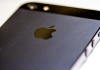
Apple’s primary manufacturing partner Foxconn is said to be increasing its staff, shortly after a freeze on new hires following the holiday season, in order to get ready for a big push come summer when Apple debuts its next iPhone. That’s the latest from the Wall Street Journal, which reported today that Foxconn is adding around 10,000 new assembly line workers a week to its iPhone production facility, with unnamed executives at the company confirming that it’s in preparation for a new iPhone launch.
The Apple partner will begin mass production of the iPhone “very soon,” according to the Wall Street Journal’s sources, which fits perfectly with the anticipated early summer launch of an iPhone 5 successor. We’ve heard previously that manufacturers are preparing for a June 2013 launch, which suggests that we’ll see the device introduced at or around WWDC 2013. Apple has introduced new iPhones at its annual developer’s conference in the past, with the exception of the last two iPhones, which were revealed and put on sale in fall instead.
The Wall Street Journal’s report doesn’t specifically mention a launch window for the iPhone, only that it will begin mass production shortly. We know from watching Apple’s production cycles in the past, however that the company typically starts large-scale production for a launch somewhere between 3 and 4 months ahead of a product going on sale. This time around, Apple is expected to introduce an iPhone 5S-type device according to most early reports, retaining design elements of the iPhone 5 but with under the hood improvements.
Also accompanying a new flagship phone will be a lower-cost offering, which sources including the WSJ suggest could be introduced around the same time as this next-gen model. This would use plastic in its construction, and also come in a variety of different colors, early leaks suggest.
Apple recently launched the iPhone 5 on T-Mobile, which early indications suggest has spurred ample renewed interest in the device. A mid-year upgrade for their flagship smartphone could make this the most successful year yet in terms of iPhone device sales, depending on how attractive any new features introduced are to prospective buyers, especially given the impact a low-cost device might have on pre-paid and emerging markets.
-
Samsung Galaxy Note III may ditch plastic for better build

-
Verizon backs up BlackBerry, says Z10 returns aren’t high at all

BlackBerry executives were furious last week when they accused Detwiler Fenton analyst Jeff Johnston of making “materially false and misleading” claims about returns of the BlackBerry Z10 outnumbering total sales. Barron’s points out that BlackBerry got some key help late last week when Verizon issued a statement affirming that “after 14 days, quality performance [of the BlackBerry Z10] has been in line with other smartphone launches.” This backs up a statement made by BlackBerry CEO Thorsten Heins, who said that “sales of the BlackBerry Z10 are meeting expectations and the data we have collected from our retail and carrier partners demonstrates that customers are satisfied with their devices.”
-
T-Mobile says early iPhone 5 sales have been ‘gangbusters’

-
Samsung Galaxy S4 said to launch on April 26th at AT&T, May 30th at Verizon

-
Here comes the iPhone 5S: Foxconn resumes hiring ahead of next iPhone launch

-
Jomi’s Smart Water Bottle Sleeve-Plus-App Wants To Track & Chart Your Liquid Intake To Make You Drink More
Move over HAPIfork. Estonian startup Jomi Interactive is cooking up a pair of smart devices that will remind people to drink more water. Or at least whatever liquid/poison of choice you put in your water bottle. The aim, says the startup, is to encourage healthy behaviour and counteract the mild dehydration we are all apparently afflicted with. No, not just hungover folk; everyone who fails to glug down the requisite 2.5-3 litres of water per day.
Jomi is prototyping a device — or rather two devices — that aim to fix the problem of having plentiful water on tap but never remembering to drink enough of it (perhaps the ultimate #firstworldproblem). So far, Jomi has created design prototypes and 10 milled PCBs for developers to play around with but no final product. It’s bootstrapping development but will be launching a crowdfunding campaign to fund a production run once it has finalised hardware design and testing.
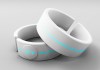
The two devices it’s planning are the Jomi Band, which will be the more basic of the pair (pictured above in an early design concept render, and below right in prototype form). This will attach around a water bottle and remind the user at pre-set intervals to take a sip (presumably by flashing/beeping). The second more pro product — the Jomi Sleeve — will attach to the bottom of the bottle and, in addition to reminders, will periodically weigh the bottle, to figure out how much water is being consumed. The data will then be sent via Bluetooth to a mobile/tablet app so that pro users can geek out over graphs and charts showing their beverage consumption data (and share their relative ‘liquidity’ with friends).
What specifically does the device hardware consist of? “PCB is custom built, it features an accelerometer, MCU, LEDs, and a few other bits and pieces,” Jomi founder and CEO Andre Eistre tells TechCrunch. Although he stresses they are still at an early stage, with the hardware set to shrink — and the design to be reworked. The software will be open to other developers to hack around with it — so perhaps another app could be made to warn alcoholic beverage drinkers when they have reached a daily safe unit intake level. (Or track soft drink guzzlers’ sugar intake and chart their rising risk of Type 2 diabetes.)
“Designers (from Estonian Arts Academy) are working on the next version of the design model and the design is expected to change drastically over the next few weeks,” he says. “Right now we are focusing on hardware (revision 3) and embedded software of the device… The hardware isn’t final either — it will be a lot smaller than that. Software will be open source — we want people to have fun with the device.”
Eistre says Jomi will 3D-print new silicone molds for the first test batch — due to be handed out to a test group by the end of this month. After that it will be turning to Kickstarter to get the funding ball rolling for a first production run, as it continues product development.
The target market for the devices are 20- to 40-year-old health conscious U.S. consumers who have a penchant for gadgets — the sort of folk who likely own a Fitbit or Fuelband.
Jomi is partnering for testing the market in Europe with bottle maker KOR water, and is hoping to get similar companies in the U.S. interested. ”Our intended target market is the U.S., where we would like to secure deals with a few larger water vessel producers, like Sigg, Gobble, CleanKanteen, CamelBak, etc,” Eistre says.
It’s also making the most of Estonia’s startup-friendly environment, securing help and small bits of funding (totalling around €8,000/$10,500 to date) from a variety of domestic companies to keep development costs down.
For instance, Eistre says the hardware development costs have been completely funded by local electronic design firm Hedgehog. Other Estonian companies and organisations that have kicked in free services/grants include Trinidad Consulting, 7Blaze, Velvet Creative Alliance and — quelle surprise — local water company Tallinna Vesi.
Jomi is also down to the last eight (out of a starter pool of 100 original “best business ideas”) in Estonia’s “largest entrepreneurial competition” — Ajujaht (aka “brain hunt”) – which has a €50,000 prize for the winner.
Jomi’s water-measuring gizmos can be put into a category (connected objects/the Internet of things) that looks set to explode over the coming years, as more everyday objects are augmented with data-generating sensors, and that data is in turn funnelled into the Internet’s matrix via smartphones and home routers.
-
Here’s How To Get Facebook Home Running On Nearly Any Android Device
In case you happened to miss the furor earlier today (or yesterday, depending on your timezone), Facebook officially pushed its Facebook Home launcher into the Google Play Store for owners of a select few devices to muck around with. Early impressions seem to run the gamut, but unless you had the right hardware you were plumb out of luck if you wanted to take Home for a spin.
Well, let me rephrase that: you were plumb out of luck. MoDaCo founder Paul O’Brien worked up a dead-simple way to get Facebook Home up and running on just about any Android device. Long story short, he patched a version of the Home app to keep it from figuring out what device you’ve just loaded it onto and showing you the customary it’s-not-your-turn screen.
All you really need to do is pop into your Android device’s settings and make sure it’s set to install applications from unknown sources (it’s in the “Security” section). From there, you just have to download and install his patched versions of the Facebook Home app, as well as his patched Facebook and Facebook Messenger apps too. Already have those latter two apps installed? You’ll have to uninstall both of them and load up O’Brien’s cooked versions in order for Home to work properly.
That could pose an issue for some of the more curious among you — certain devices that have the Facebook app baked into it by the manufacturer (like the HTC One, for example) won’t play nice with this version of the Home app unless you root the device and remove the Facebook app yourself. Thankfully, rooting most popular devices is way easier than it used to be, but be sure to do your homework if you think you may take the plunge.
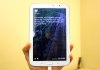
To test out O’Brien’s handiwork, I tried installing Facebook Home on something two devices it wasn’t supposed to wind up on yet: Motorola’s Droid RAZR HD and Samsung’s Galaxy Note 8.0 tablet. After an installation process that was completed in under two minutes for each device, Facebook Home was working mostly the way it should — it took a moment for messages to come through but Facebook’s novel chatheads appeared on both devices, and I was easily able to see what my friends were doing on a Friday night while I stayed home to play with phones. That said, not every one of my friend’s news feed updates wound up in Home’s swipe-able stream, but that seems to be the case even you’re running Home on some supported hardware.
The only major missing feature I noticed was that neither device would let me send SMS messages from the Messenger app, an omission that seemed to plague most people that tried O’Brien’s builds. Granted, that means you don’t get the exact Home experience, but all things considered this’ll provide you a solid peek before Facebook officially brings Home to all the other Android devices of the world. As for whether or not you’ll find it to be worth keeping — well, that’s another story altogether.
-
Dish Network said to be interested in merger with T-Mobile

-
NVIDIA CEO promises next-gen mobile graphics will topple iPad’s ‘vintage 1999′ games [video]

-
Verizon may follow T-Mobile’s lead with creative smartphone payment plans

-
The Desktop Twitter User Will Soon Be A Thing Of The Past
Twitter is all about gut reactions and snappy statements. The very nature of the social network requires that people have access to it all times. This is leading to an increasing number of people using Twitter on mobile devices.
In a new survey conducted by Strategy Analytics, the firm discovered that Twitter users are migrating from the desktop to mobile devices at an ever increasing pace. The latest report – “Social Network Profile: Who Uses Twitter?” – surveyed 6,500 people from the U.S. and Europe. The survey found that the number of people sending out tweets from a desktop computer decreased from 77 percent to 64 percent in just eight months. During the same period, the number of people tweeting from mobile devices increased from 56 percent to 71 percent.
“The immediacy of Twitter communications requires devices which are close to hand at every waking moment,” notes David Mercer , VP, Digital Consumer Practice. “By definition this suggests mobile phones and tablets should be preferred devices for Tweeting and the survey evidence points clearly in this direction.”
Interestingly enough, the survey found that mobile Twitter use is highest in the UK with the U.S. coming in second. Italy, France and Germany round out the top five respectively. As for demographics, the survey found that Twitter is most popular among the affluent, as well as teenagers and students.
The demographic findings could explain why Facebook is losing popularity among teenagers while Twitter’s own popularity is only increasing. It could also explain why celebrities like Justin Bieber are so popular on the service.
-
Pebble Watchface SDK Now Available, Let’s See What This Smart Watch Can Do
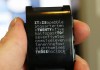
Pebble has officially released its SDK, after promising to deliver it during the second week of April. This qualifies, if only just, and arrives alongside firmware update version 1.1 for PebbleOS. The new software update for the hardware brings support for custom watch faces built using the SDK, as well as new options for disabling backlighting and vibrations, as well as fixes for iOS bugs.
The SDK itself is currently just for creating watch faces, not for building apps with other functionality, although we could see some creative software made even with those restrictions. Pebble says its Sports app SDK is coming soon, which should help developers mirror the sorts of functions introduced by RunKeeper.
This is the first time third-party developers have had public access to developer tools for the Pebble platform, so it should give us a hint of what’s to come. And the firmware update fixes for iOS include one that makes the “Allow Pebble to communicate…” dialog appear far less often, which is great news since that’s a majorly annoying bug for people using iPhones with the device.
Thanks Terrance!
-
Facebook Home now available for select Android smartphones

-
Verizon to abandon early upgrades

-
Android phones are helping New York City cops fight crime
