
Category: Mobile
-
Fingerprint identification technology may be next-gen iPhone’s Siri
-
T-Mobile Begins $99 iPhone 5 Sales, Sees Lines At Retail Stores

T-Mobile is kicking off its official sales of the iPhone 5 today, marking the first time the U.S.’ fourth largest carrier has offered an Apple smartphone. Thanks to T-Mo’s new Uncarrier plans, the iPhone 5 can be had starting at just $99, with two years of $20 monthly payments to cover the balance, or for free if you’re switching from another carrier and bring a device in for trade. So far, so good, according to reports of lines forming at retail stores for a phone that’s now over six months old.
BTIG analyst Walter Piecyk tweeted the photo above of a line at a location this morning, and reports on Twitter suggest that small lines are forming at various locations around the U.S. Our own intern Michael Seo said there was a small one outside the T-Mobile store near our New York offices when he came into work this morning.
The appetite for the T-Mobile iPhone is good news for both Apple and the small carrier. T-Mobile’s existing potential reach only represents around 26.1 million total additional subscribers for Apple (a smaller percentage of which are realistically potential iPhone 5 buyers). That’s not a huge number in global subscriber terms, but it does give Apple room to expand its smartphone dominance in the U.S., and could provide it a late-stage bump for the iPhone 5, which is going to face increasing pressure from new competing flagship devices like the Samsung Galaxy S4.
T-Mobile has consistently been left out of launch day hype surrounding the release of Apple’s iPhone, with the carrier relegated to watching from the sidelines as AT&T, Sprint and Verizon locations saw customers queue for the iPhone 5 back in September, so it’s probably very happy to see lines form with this launch. Combined, the iPhone 5 and the carrier’s new model could lure away quite a few switchers, but we’ll have to wait and see if that impacts the overall distribution of U.S. wireless customers in any significant way.
-
This Isn’t How You Win The Marketing War For The One, HTC, All James Van Der Beek Aside

HTC promised it would be spending more on marketing efforts to ditch the “quietly brilliant” tagline and come up with something with more pop, but it couldn’t have gone much worse than the video above. Kudos to signing on Dawson’s Creek and Internet meme star James Van Der Beek, but -1,000 for making such little use of his comedic talents in this dismal Bachelor parody.
To his credit, Van Der Beek gets the only almost funny moments in the whole embarrassing affair (around the 1:50 mark) but even the under-appreciated lead from The Rules of Attraction can’t make up for what is really a desperately unfunny script based on an exceedingly painful premise.
Matt recently wrote that making the perfect smartphone with The One isn’t enough for HTC – it has to nail the marketing game, which rival Samsung has actually gotten pretty good at. The One with James Van Der Beek at least indicates HTC is stepping up to the plate, but this is a big, big whiff and we’re down to the bottom of the last inning. I may actually have preferred HTC “quietly brilliant” than “loudly unfunny.”
-
T-Mobile finally debuts iPhone 5: $99 down, or free up front for defectors

-
Salesforce.com Launches Mobile Services Platform
Targeting the mobile application developer, Salesforce.com, HP and Rackspace all have announcements catering to their needs.
Salesforce.com launches mobile services platform. Salesforce.com (CRM) announced new Salesforce Platform Mobile Services, the latest in a series of innovations to empower customer companies to transform for the mobile era. The platform includes a Mobile SDK 2.0 to assist in securely connecting enterprise data to any mobile app, and enabling native, hybrid, or HTML5 on any iOS or Android device. It also includes Developer Mobile Packs to enable any web developer to build highly responsive HTML5 or hybrid mobile apps on any platform and access real-time Salesforce data. Salesforce.com has also added a partner accelerator program and mobile developer week – launching across 39 cities worldwide the week of April 21. “With these new mobile services, CIOs can immediately accelerate every mobile app dev project in their backlog,” said Mike Rosenbaum, EVP of Salesforce Platform, salesforce.com, “By combining the world’s leading customer platform with the mobile tools and frameworks developers love, we have made it possible for CIOs and web developers to deliver the mobile apps their customers, partners and employees are screaming for.”
HP Enterprise cloud services – Mobility. HP (HPQ) announced a cloud-based management solution that delivers secure anytime, anywhere access to applications and data from any mobile device. As a part of the HP Converged Cloud portfolio, Enterprise Cloud Services – Mobility will give enterprises the essential foundation of technologies and services to confidently build, operate and consume IT services. The solution also allows users to download approved enterprise applications from a secure storefront, upload files to support collaboration and synchronize files between the HP cloud infrastructure and any mobile device. Mobile data is encrypted in transit and at rest, covering the device as well as the cloud infrastructure. The solution also provides the ability to configure cloud file storage that can scale up and down, and offers local storage options that address data sovereignty and compliance requirements. “Mobility in the workplace continues to be a key focus and concern for IT executives,” said Pete Karolczak, senior vice president, HP Enterprise Services. “HP Enterprise Cloud Services – Mobility leverages HP’s strong cloud portfolio by providing clients with a mobility service that provides the highest level of user experience and productivity while minimizing risk for IT.”
Rackspace launches mobile cloud stacks. Rackspace (RAX) announced the release of its new mobile cloud stacks for developers. These stacks are purpose built to help developers design, build, test, deploy and scale mobile apps in the hybrid cloud. Hoping to provide a frictionless environment for developing mobile apps the stacks minimize upfront configuration time for developers and allow them to focus more on designing applications while Rackspace manages the backend operations. Rackspace is also launching a new ecosystem of industry leading partners that will give developers access to robust software developer kits (SDK), push services, mobile backend-as-a-service, testing and monitoring capabilities from industry leaders such as FeedHenry, New Relic, Sencha, SOASTA, StackMob, and Trigger.io. “Mobile technology is disrupting all industries. Businesses, from startups to enterprises, are aggressively building out their mobile presence. By launching a powerful new ecosystem, we are enabling mobile developers to innovate faster,” said John Engates, CTO of Rackspace. “Our pre-configured mobile stacks were developed based on our experience with hosting thousands of complex applications. These stacks are reducing complexity for mobile developers who no longer have to reinvent the wheel every time they build and deploy mobile apps. By wrapping Fanatical Support around these new mobile tools and capabilities, we’ve created a unique developer experience that’s unmatched in the market.”
-
LG adds Galaxy S4 features to Optimus G Pro [video]

-
Google Play, Apple’s App Store Might Face “Legal Undertakings” In OFT’s Investigation Of Freemium Games For Kids

The freemium kids’ app party that has seen some parents left with hefty bills because of their kids’ use of games could be heading for a sticky end — at least in the U.K. The Office of Fair Trading has announced a six-month investigation into whether children are being “unfairly pressured or encouraged to pay for additional content in ‘free’ web and app-based games”.
The OFT says in a press release that it cannot identify the companies that are subject to investigation but a spokesman confirmed to TechCrunch it is contacting Apple and Google as part of this process — being the proprietors of the two largest app stores: the iTunes App Store and Google Play.
Once the investigation has concluded — and if the OFT is unhappy with what it learns and the discussions it’s had — the spokesman said it “can seek legal undertakings from court”. Companies subsequently ignoring any court directions could face “an unlimited fine”, he added.
The OFT is concerned that developers are designing children’s content to deliberately encourage kids to make payments after the initial free download/access. It’s not citing any examples or naming any problematic apps at this point but it’s not hard to find instances that are likely to have triggered the investigation — such as the five-year-old British boy who accidentally made in-app purchases totalling £1,700 in 15 minutes playing Zombies vs Ninja. Or the British six-year-old girl who amassed a £900 bill in half an hour on the My Little Pony app.
The OFT points out that “direct exhortations” (ie strong encouragement) to children to make purchases themselves, or ask another adult to do something that results in a purchase, are unlawful under the Consumer Protection (from Unfair Trading) Regulations 2008. The sort of in-app purchases that might fall foul of the regulation could include membership, virtual currency/rewards, additional levels, faster gameplay and additional game features, it added.
The OFT said it has written to companies that are offering free web or app-based games asking for information on in-game marketing to children. It is also asking for parents and consumer groups to contact it with information about “potentially misleading or commercially aggressive practices they are aware of in relation to these games”.
The spokesman said the aim of the investigation is to get more “clarity” about the digital market for kids’ games, and the sorts of behaviours/mechanics apps are utilising, by talking to games developers, app stores, parents and consumer groups.
The investigation will also specifically consider whether the full cost of games aimed at children is being made clear when they are downloaded/accessed. ”The information [gathered during the investigation] will be used to understand business practices used in this sector, to establish whether consumer protection regulations are being breached and if so what the consumer harm is,” the OFT said today, adding that it “expects to publish its next steps by October 2013″.
Commenting in a statement, Cavendish Elithorn, OFT Senior Director for Goods and Consumer, added: “The OFT is not seeking to ban in-game purchases, but the games industry must ensure it is complying with the relevant regulations so that children are protected. We are speaking to the industry and will take enforcement action if necessary.”
The spokesman stressed that the OFT hopes to be able to solve any issues uncovered through “conversations” with the various companies involved — including Apple and Google — rather than taking the court route . ”We hope this is going to be resolved by talking to the big companies,” he added.
Google declined to comment on the investigation when contacted by TechCrunch.
At the time of writing Apple had not responded to a request for comment.
Both Google’s and Apple’s app stores require developers to sign developer agreements in order to successfully submit apps, and both have been known to remove content that violates these developer guidelines — so app stores are already in the app policing business.
Google’s Play Store developer guidelines include the following (vague) stipulation, for instance, that could potentially be used to boot freemium kids’ apps that are misleading about the potential costs:
Developers must not mislead users about the applications they are selling nor about any in-app services, goods, content or functionality they are selling.
Apple does more policing of its store than Google, with iOS developers required to submit apps for approval prior to publication on the store. “We review all apps to ensure they are reliable, perform as expected, and are free of offensive material”, Apple notes on its developer site, warning app makers to: “Before submitting your new or updated apps for review, check out the latest App Store Review Guidelines and Mac App Store Review Guidelines.”
There are also signs that Cupertino has been looking more closely at some of the problems posed by having kids interact with apps. Earlier this month it relocated age ratings from the bottom of app listings on its store, to the top near the title where they are easier for parents to spot.
This change is likely to have been triggered by concerns about apps powered by user-generated content that can contain adult material appearing in the app store where children could find them — such as Twitter’s Vine video app — rather than specifically helping parents prevent kids making in-app purchases.
Here’s the OFT’s summary of the investigation:
Many children’s web- and app-based games are free to sign up to or download. Some of those games give players the opportunity to ‘upgrade’ their free accounts through paid-for membership, providing access to parts of the game not available to non-paying players. Others encourage in-game purchases to speed up gameplay or to give access to extra game features.
The OFT will look into whether those children’s games are in line with the Consumer Protection (from Unfair Trading) Regulations 2008 to ensure that any commercial practices they include are not misleading or aggressive. In particular, the OFT will consider whether children’s web- and app-based games directly encourage children to buy something or to pester their parents or other adults to buy something for them. [see note 1]
The OFT will gather information on this issue for the next six months and is interested to hear from businesses operating in the market and mobile app platform operators. The OFT will also consult with relevant UK and international regulators.
The OFT is also keen to hear about potentially misleading or commercially aggressive practices experienced by parents whose children play these games, and also from consumer groups with an interest in this area.
note 1: The Regulations, under Annex Practice 28, prohibit advertisements from including direct exhortations to children to buy something or to ask their parents or other adults to buy something for them.
-
Verizon CEO takes credit for LTE-enabled iPhone, says 50% of mobile traffic is now video

-
Samsung unleashes new Galaxy Mega line with monstrous 5.8-inch and 6.3-inch displays

-
How a single Android smartphone can crash an airplane

-
U.S. BlackBerry Z10 sales said to have ‘started poorly’ with ‘returns now exceeding sales’

-
BlackBerry’s first major BB10 update detailed in leak

-
Survey: 71% of consumers say ‘nothing’ could get them to buy a BlackBerry

-
Facebook Acquires Mobile Startup Osmeta
Facebook has quietly acquired mobile software startup Osmeta, according to TechCrunch, which claims to have confirmation from the company.
Facebook isn’t talking about its plans for the acquisition, and Osmeta doesn’t actually have a product that’s available. Apparently it’s been working on some “really, really interesting software” though, according the startup’s website. I’m intrigued by that second “really”.
Apparently it’s something for the following devices, which are listed on Osmeta’s Devices page: Velocity Micro Cruz, Barnes & Noble NOOK, Nexus S, Acer Iconia Tab A700, HP TouchPad, Ematic eGlide Prism, Motorola Xoom, Nexus 7, Kindle Fire, Samsung Series 5 550 Chromebook, WeTab, Galaxy Nexus, Some ThinkPad, iPod Touch, Ainol Novo, Paladin, Asus Transformer Infinity, Nexus One, Samsung Series 5 Chromebook, PandaBoard, iPad, Samsung Slate 7 Windows Tablet, iPhone 4, Some x86 PC, HP Mini 210 Netbook and MacBook Air.
On the “About Us” page, Osmeta says the following about is team (which may be the main point of the acquisition):
We have the most formidable programming talent density imaginable under a startup’s roof, or any other roof for that matter.
Our 19-person engineering team consists of world-renowned hackers and highly accomplished researchers capable of herculean software engineering. The breadth and depth of computer science knowledge contained within the brains of our team is remarkable. Most of us have had illustrious careers at places such as Google, IBM Research, Yahoo Research, and VMware.
Our programming experience is even more impressive—both quantitatively and qualitatively. Between us, over the years, we have done pretty much “everything” in terms of software creation, including several first-in-the-world type of magical things. (Examples: Android, Chrome for Android, Chrome OS, Google Crawling, AdWords, ZooKeeper, BookKeeper, Pig (Hadoop), OSGi, Linux kernel control groups, network and other device drivers, cognitive computing, massive storage systems, unusual file systems, various types of virtualization, video game console emulation, and many, many others.)
And yet, what we are doing at osmeta is the coolest, most fun-to-work-on, and most ambitious endeavor any of us has ever been involved in. It’s the significance and meaningfulness of this endeavor that brought us together at osmeta.
We believe that with discipline and focus, a small group of talented people can change the world.
-
Photo of purported entry-level iPhone part leaks for first time

-
Samsung Launches New Phablet Brand – Galaxy Mega – Confirms Two Devices: 6.3″ HD, 1.7GHz Dual-Core & 5.8″ QHD, 1.4GHz Dual-Core

Samsung has confirmed the arrival of a new sub-brand within its Galaxy range of mobile devices: the Galaxy Mega expands its mini-tablet-sized-phone (aka phablet) portfolio by firing two new devices into the category, building on the momentum generated by its extant Galaxy Note line.
Samsung said the Mega will be available globally — “beginning May from Europe and Russia”, adding that product availability will vary by market and roll outs will be gradual. There’s no official word on Mega pricing yet but since both devices pack dual-core chips (vs the Galaxy Note II’s quad-core chipset) it’s possible they will be a slightly more affordable than Samsung’s other phablets.
Here’s how Samsung describes Mega:
The newest addition to the GALAXY family balances an optimal viewing experience on a 6.3-inch HD screen, yet is ultra-thin and portable enough to put into a pocket or hold in one hand. The GALAXY Mega offers a mix of popular smartphone and tablet features such as an effortless user experience, a split screen, multitasking between video and other apps and more.
JK Shin, CEO of Samsung’s mobile business, added in a statement that Mega is about bringing more choice to buyers who want a portable device with a big screen. “We are aware of a great potential in the bigger screen for extensive viewing multimedia, web browsing, and more. We are excited to provide another choice to meet our consumers’ varying lifestyles, all while maintaining the high-quality features of the award-winning GALAXY series,” he said.
Samsung has climbed to a position of dominance in the smartphone market by offering a hugely diverse portfolio of devices, hitting price points from low end budget to high end flagship and everything in between — so little surprise that it’s beefing up its phablet line with Mega.
The company has also fuelled an industry wide trend for smartphone screen size inflation, following the introduction of the original Galaxy Note in 2011. That device had a 5.3 inch screen — which seemed massive at the time. But Samsung’s latest pair of phablets push out even more, adding a full extra inch in the case of the full HD device.
Design wise, Mega does not push the boat out — sharing the same look as fellow Galaxy devices, such as Samsung’s new flagship Galaxy S4 (which packs in a 5 inch pane).
Here’s the 6.3 inch Galaxy Mega:
And here’s the 5.8 inch Galaxy Mega:
On the specs side, the 6.3 inch Mega is the clear flagship of the pair — packing in a full HD screen, 4G/LTE connectivity and a 1.7GHz dual-core chip while the 5.8 inch Mega has a QHD display, HSPA+ and a 1.4GHz dual-core chip. There’s also a 1mm difference in thickness, with the flagship being 8mm thick vs 9mm for the Mega 5.8.
Full dimensions for the two devices are 167.6 x 88 x 8.0 mm and 162.6 x 82.4 x 9.0 mm. Weight is 199g and 182g respectively. Both devices have 1.5GB RAM. Memory is 8GB/16GB options for the flagship Mega, and 8GB on board the other. Both support microSD card memory expansion up to 64GB. Battery capacity is 3,200 mAh and 2,600 mAh respectively.
Each device has an 8 megapixel rear camera and a 1.9 megapixel front-facing lens. They also both run Android 4.2 Jelly Bean, skinned with Samsung’s TouchWiz UI.
Also on board is a full contingent of Samsung software services — including the likes of Sound & Shot and Drama Shot, introduced at the launch of the Galaxy S4 — plus even more new features, including:
- ‘S Travel’: Provides trip information, local guides and resources and more
- ‘Story Album’: Allows customers to create albums of daily events, keep special moments in one place using a timeline, geo-tag information and publish digital albums in hard copy
- ‘Group Play’: Enables easy content sharing for up to 8 devices on the same Wi-Fi network.
- Samsung WatchON’: Transforms into an IR remote controller for a richer TV experience. Connect the device to your home entertainment system, and it will provide program recommendations, schedules, and even remotely control your TV.
- ‘Samsung Link’: Easily streams photos, videos, notes, or music to your television, tablet or computer.
- ‘S Translator’: Say or text what you need translated into the GALAXY Mega, and it will provide instant translation, using text or voice translation on applications including email, and ChatON.
- ‘ChatON’: Share what’s on your screen with friends to stay more connected.
Samsung was criticised for larding the S4 with too many software add ons, but it’s clearly not rowing back from this strategy of differentiating its Android devices with scores of its own software extras.
As with the Galaxy Note II, the new Mega devices support split screen viewing for applications including email, messages, ‘MyFiles,’ ‘S Memo’ and ‘S Planner’ — which, beyond their larger screen size, is one way Samsung differentiates its phablets from its flagship smartphones.
Back in January, analyst house IHS iSuppli predicted smartphones with 5 inch+ screens would more than double in number this year — rising from 25.6 million in 2012, to 60.4 million in 2013, up “a notable” 136 per cent year on year.
Last fall, Samsung said channel shipments of its Galaxy Note II had pushed past five million two months after the device launched. Samsung does not break out actual sales of the Note.
-
Microsoft Reportedly Working On 7″ Surface Tablet As PC Market Slumps To Four-Year Low
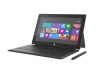
According to a report in the WSJ, Microsoft is working on a new line-up of its Windows 8-powered Surface tablets that includes a seven inch version of the slate. This small form factor size would enable Microsoft to compete with the likes of the Android-powered Google Nexus 7, Amazon Kindle Fire and Samsung Galaxy Tab 2, as well as Apple’s iOS-based iPad Mini.
The paper quotes a person familiar with the situation saying that while 7-inch tablets were not part of Microsoft’s product plans last year company executives have realised they need to respond to the growth and popularity of small slates. Which boils down to Redmond is having to play catch up yet again.
Microsoft has previously been tipped to release three new and distinct generations of Surface this year — albeit, none of those prior rumours had pointed to a seven inch device. And perhaps with good reason, as Gartner analyst Michael Gartenberg noted via Twitter today the small tablet form factor poses some usability challenges for Microsoft’s full-fat Windows OS. Rival small slates are powered by lighter weight mobile OSes, and while Microsoft has now unified its smartphone (Windows Phone) and desktop OSes on a shared kernel it’s still using ‘desktop’ Windows for tablets.
But it’s not just that computing devices are getting smaller. Shrinkage appears inextricably linked with the market in another way. Gartner put out its figures for worldwide PC shipments for Q1 late yesterday — which show shipments declining to their lowest level since Q2 2009. The analyst says alternative smart connected devices — aka those small smartphones and tablets running lighter weight smartphone OSes — are eroding the traditional PC market.
Global PC shipments totalled 79.2 million units in Q1 2013, which Gartner said was an 11.2% year-on-year decline. All global regions showed a decrease in shipments, with the EMEA region experiencing the steepest decline.
“Consumers are migrating content consumption from PCs to other connected devices, such as tablets and smartphones. Even emerging markets, where PC penetration is low, are not expected to be a strong growth area for PC vendors,” said Mikako Kitagawa, principal analyst at Gartner in a statement.
Microsoft’s Surface tablet straddles the gap between a tablet and a laptop, having a touchscreen and a keyboard cover add-on. But Gartner said touchscreen-based Windows 8 PCs took only a small percentage share of consumer PC shipments in Q1 — owing to their relatively high price.
“Touchscreen-based Ultramobiles [such as Surface Pro] offer PC manufacturers an opportunity to recover market share from media tablets, but Windows 8 PCs with touchscreens accounted for only a small percentage of consumer PC shipments in the first quarter of 2013,” noted Isabelle Durand, principal research analyst at Gartner in a statement. “The majority of consumers remain unwilling to pay the price premium for touchscreen capabilities on PCs at this stage.”
Android tablet sellers including Google and Amazon have been driving down the cost of seven inch slates — with the Nexus 7 and the Kindle Fire currently costing from as little $199 and $159 respectively — and that price erosion is likely helping to accelerate the consumer migration away from the traditional PC category. Microsoft’s Surface RT tablet was priced from $499 at launch, while Surface Pro was from $899.
How Microsoft chooses to price any ‘Surface Mini’ will be key to driving sales — and with the iPad mini starting at $329, there is not much scope for Redmond to be able to undercut the small slate competition. Yet it can’t afford for Surface to fail.
As Gartner analyst Carolina Milanesi told TechCrunch last week, discussing its smart devices forecast: “You need to own consumers in terms of mobile and tablet in order to remain relevant in this market… Consumers have options and consumers are choosing and Microsoft can not take that for granted that they’ll be the one to be chosen.”
-
Google’s Babel messaging service rumored to ‘eventually’ support Google Voice

-
LG looking to ship its first flexible display this year

-
AT&T rumored to launch LG Optimus G Pro on May 10th
