Author: Kate Torgovnick

  • TED Radio Hour asks the question: Why are some people violent while others aren’t?

    Radio-Hour-Violence

    Photo: Sascha Burkard/iStockphoto.

    Are people born violent, or is violence something learned? And what can be done to keep human beings from harming one another? These are questions on our minds as Congress debates gun control measures. Today’s episode of TED Radio dives into this dark end of human nature.

    In this episode – the fifth in season two —  psychologist Philip Zimbardo tells us the story of his classic Stanford Prison Experiment and how easy it is for people to turn violent. Neuroscientist Jim Fallon uncovers the wiring of a psychopathic killer. Writer Leslie Morgan Steiner tells her personal story of being in an abusive relationship and shares why victims of domestic violence don’t leave. And finally, linguist Steven Pinker charts the whole of human history and says that, believe it or not, we are living in the most peaceful time in our species’ existence.

    Check out your local NPR schedule to find out when the show airs today, or listen to it via NPR’s website »

    Or head to iTunes, where the podcast is available now »

  • 7 writer/artist/thinker groups whose members made a tremendous impact on their time … as well as ours

    Photo: James Duncan Davidson

    Photo: James Duncan Davidson

    In 1812, four men met for a “philosophical breakfast” at Cambridge University: Charles Babbage, John Herschel, Richard Jones and William Whewell. Over food and drinks, they debated the state of knowledge –- imagining a world in which thinkers drew conclusions based on data, where research was done for the good of humanity rather than for financial gain, where researchers questioned each other in the name of moving each other forward and where research received outside funding rather than requiring an individual to pay for it themselves.
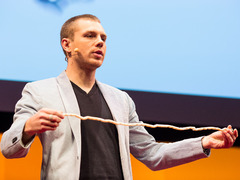
    Laura Snyder: The Philosophical Breakfast ClubLaura Snyder: The Philosophical Breakfast Club In today’s talk, historian Laura Snyder gives us an introduction to the discussions of these four men, who eventually became known as The Philosophical Breakfast Club. While their ideas form the basis of scientific inquiry now, their concepts were radical at the time, says Snyder in this talk from TEDGlobal 2012. It would be another 20 years before the term “scientist” would be coined — by Whewell. To hear about the word’s dramatic unveiling, watch this talk.

    The Philsophical Breakfast Club members went on to great things. Babbage invented the first mechanical calculator, and the first prototype of a computer. Herschel was an astronomer who mapped the stars – and also invented photography. Jones was an economist who inspired Marx. And Whewell – who also originated the words cathode and ion — spearheaded global research with his work on tides.

    Interestingly, groundbreaking work often seems to happen in groups. Throughout history, clubs of writers, philosophers and artists have formed, with thinkers in the same area gathering for discussion and collaboration. For some of these groups, multiple members went on to renown. It begs the question: Can collectivity push talented individuals to greater things than they could achieve on their own?

    Below, a few clubs notable for their influence on modern thought.

    The Socrates School
    Notable members: philosophers Socrates, Aristophanes, Xenophon, and Plato, who in turn taught Aristotle
    Time frame: Approximately 400 years BC
    Not at all a school with desks and a blackboard, this group was known for asking big questions about politics, human nature, life and reality, and debating the answers in riveting discussions, many of which were captured on paper in texts like Plato’s Dialogues. Socrates devoted his life to teaching the youth of Athens and, together, this group set the foundations for Western philosophy.

    The Bloomsbury Group
    Notable members: writers Virginia Woolf and E.M. Forster, economist John Maynard Keynes, critic Clive Bell and painters Vanessa Bell and Duncan Grant
    Time frame: 1907 through the 1930s
    While it’s clear that they had meetings, often at the home of Clive and Vanessa Bell in the Bloomsbury district of Central London, this circle of thinkers is hard to pin down as they denied being a formal group at all. The network included husbands, wives, siblings, friends and rivals, all exploring concepts of modernity in literature, criticism, economics and art.

    Stratford-on-Odeon
    Notable members: writers Ernest Hemingway, James Joyce, F. Scott Fitzgerald and Gertrude Stein, poet Ezra Pound, composer George Antheil, artist Man Ray
    Time frame: 1920s
    “Stratford-on-Odeon” was James Joyce’s nickname for the bookstore Shakespeare and Company, in Paris’ Left Bank on the Rue de l’Odéon. The store became a hub for British and American modernists, and store owner Sylvia Beach published James Joyce’s Ulysses in 1922. The store was closed during the German occupation of Paris in WWII — despite Hemingway’s fabled effort to liberate it himself. (A second bookstore, popular with the Beat Generation, continues to exist at 37 rue de la Bûcherie.)

    The Algonquin Round Table
    Notable members: writers Robert Benchley, Dorothy Parker, Alexander Woollcott, George S. Kauffman, Franklin Pierce Adams, Marc Connolly, Edna Ferber
    Time frame: 1920s
    This New York City writers group formed as a lark, convened to share wisecracks and snide remarks among a group of humor writers, critics, columnists and playwrights, many associated with the young New Yorker magazine. The group ended up meeting almost daily for lunch at the Algonquin Hotel.

    The Inklings
    Notable members: writers J.R.R Tolkien, C.S. Lewis, Owen Barfield, Charles Williams, Roger Lancelyn Green, Adam Fox, Nevil Coghilland
    Time frame: 1930s and 1940s
    A literary discussion group at Oxford, the Inklings would read and discuss each others’ work — most famously helping Tolkien shape The Lord of the Rings. While meetings were generally held in C.S. Lewis’ room, some were held at an Oxford pub called The Eagle and the Child.

    The Factory
    Notable members: artists Andy Warhol and his stars Edie Sedgwick and Gerard Malanga, artist Salvador Dali, writers Allen Ginsburg and Truman Capote, musicians Lou Reed, Bob Dylan and Mick Jagger, designer Betsey Johnson
    Time frame: The 1960s
    The Factory was the name of Andy Warhol’s 1960s studio in New York City. The aluminum-foil-covered space became a gathering spot for artists, filmmakers and musicians, many who were pioneering experimental art. The Factory was also famous for wild parties and sexual exploration – and for being the place where many of our modern ideas of fame were formed.

  • 7 covetable toys that blurred the line between robot, pet and friend

    Romo-at-TED

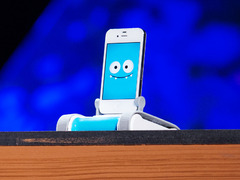
    Romo takes a bow on the TED2013 stage. Photo: James Duncan Davidson

    Childhood pals Keller Rinaudo, Phu Nguyen and Peter Seid had a simple motivation for creating the smartphone toy robot Romo. As Rinaudo told CNET, it was because most personal robots on the market are simply “sucky.”

    Keller Rinaudo: A mini robot -- powered by your phoneKeller Rinaudo: A mini robot — powered by your phoneRinaudo, Nguyen and Seid — who founded the company Romotive — set out to build a personal robot that harnesses the powerful processor available in every smartphone. They aimed to make their bot highly programmable. And they wanted it to have a lot of personality.

    “We think if you’re going to have a robot in your home, that robot should be a manifestation of your imagination,” says Rinaudo in yesterday’s talk, filmed at TED2013. “We don’t know where the future of robots will go. But what we do know that it isn’t 10 years or $10  billion away … The future of personal robotics is happening today.”

    So how does Romo work? Your iPhone docks into a robotic base that looks a bit like a white and blue tank. When you download the Romo app, the bot springs to life, giving you facial expressions and responding to your movements. Romo can be driven, and thus can perform simple tasks for you. He can even be a roaming photographer or videographer.

    Romo starts shipping in June. Meanwhile, online ads for the bot proclaim, “I’m Romo the Robot, your pet and friend.” Naturally, this reminds us of a few prior inventions that also attempted to blur these lines.

    Here, a look…

    Giga Pets
    Often credited as the “first virtual pet,” Giga Pets were released in 1997 by Tiger Toys. While the 2-bit graphic keychain critters seem quaint now, they were much-loved at the time for their ability to tell their owners when they were hungry. (Yes, they grew with proper care.) Above, a vintage commercial.

    Furby

    The Furby
    For anyone who scoured toystores and braved unthinkable lines during the holiday season of 1998 — in hopes of getting their hands on a Furby  – the concept of an electronic pet will sound familiar. The owl-like robotic toys started out speaking “Furbish.” But over time – with human interaction – they learned bits of English and developed personalities. According to Wikipedia, more than 40 million were sold in their first three years on the market. Hasbro revived Furbies in 2012 – this time with an app that allows people to translate Furbish as well as feed the little guys.

    AIBO

    AIBO
    A year after the Furby, Businessweek ran an article about a new offering from Sony – the robotic puppy AIBO. The article opened, “Toshi T. Doi, Sony Corp.’s leading computer engineer, is obsessed with robots. His small, third-floor lab is a breeding ground for robotic pups taking their first wobbly steps, chasing balls, and barking for attention. ‘We’re getting ready for the age of digital creatures,’ says Doi.” These cute pups, which cost more than $2000, lasted through 2005.

    i-CYBIE

    i-Cybie
    AIBO inspired many a robotic dog—the cutest of which was i-Cybie, from Silverlit Toys. I-Cybie could respond to voice commands, a la “wag your tail,” and exhibited what seemed like real emotions. The adorable metal dog could even pick itself up if it fell down. Read this New York Times piece on how this virtual pet arrived in the U.S.

    PARO
    PARO, the “healing robotic seal,” comes to life when you say his name. Thanks to tactile sensors, writes Mashable, he responds to petting and coos excitedly when you rub his forehead. Why was he designed? Japanese company AIST explains on their website that he was created to provide the benefits of animal therapy – reduced stress, emotional stimulation – to people in hospitals and other environments where a real-life pet wouldn’t be allowed. He’s been covered in The New York Times … and tested by Barack Obama.

    Pleo

    Pleo
    Who wouldn’t want a miniature dinosaur? In the TED Talk “Caleb Chung plays with Pleo,” the famed toy designer introduces us to Pleo, a robotic dinosaur that acts like a pet. Pleo is curious about the world around it and explores, plays and even learns. The bot responds to touch and, of course, cuddles. Reborn in 2010 as Pleo rb, these bots now have born-in personality traits — think courage and obedience — and go through a four-stage life cycle.

  • Bill and TED’s Excellent Initiative? A great suggestion from Stephen Colbert

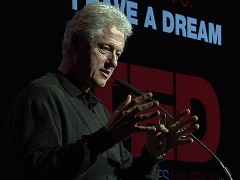
    Clinton-on-ColbertThe description of last night’s episode of The Colbert Report reads: “At the Clinton Global Initiative University Meeting, President Bill Clinton discusses foreign aid, poverty, TED Talks, Twitter and the Colbert Galactic Initiative.”

    Bill Clinton on rebuilding RwandaBill Clinton on rebuilding RwandaSo how did TED enter the conversation? Colbert suggested that Clinton, who accepted the TED Prize in 2007 with the talk “On rebuilding Rwanda,” team up with us for “Bill and TED’s Excellent Initiative.”

    The moment came right after Colbert asked Clinton why he helps people.

    “It’s totally selfish,” Clinton admitted. “I do it because I’m good at it and I’m not good enough to play golf on the senior tour, and I don’t play my saxophone as much as I used to … I [help people] because, I think after the life I’ve been given by the American people, I’d be kind of a slug if I didn’t do it.”

    “Have you done TED Talks?” Colbert asked, trying to figure out the difference between TED, the Clinton Global Initiative and Burning Man.

    “I have, and I like them,” Clinton said.

    “Have you ever thought of having the Clinton Global Initiative and TED Talks team up to make Bill and Ted’s Excellent Initiative?” asked Colbert, to big applause.

    “That’s a wonderful idea,” replied Clinton.

    Special thanks to QuickMeme.com for capturing the moment:

    Bill-and-TED-meme

    And another TED-related Comedy Central bonus from yesterday’s The Daily Show: Kees Moeliker was a guest in a segment about pubic lice. Last week, we posted his talk “How a dead duck changed my life.”

  • LittleBits beep and blip from MoMA Design Store window displays

    Kids marvel at a moving shark, powered by littleBits. Photo: courtesy of Ayah Bdeir

    Kids marvel at a moving shark, powered by littleBits, in the MoMA Design Store window. Photo: courtesy of Ayah Bdeir

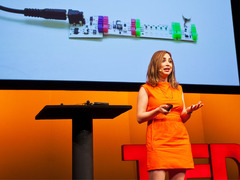
    If you pass a MoMA Design Store in New York City today, you’ll notice a slew of entrancing kinetic sculptures in their windows – a giant shark swimming after a lure and a cyclist powering a cardboard ferris wheel. Ayah Bdeir: Building blocks that blink, beep and teachAyah Bdeir: Building blocks that blink, beep and teachEach of these sculptures is powered by littleBits, the Lego-like electronic toys created by TED Fellow Ayah Bdeir. LittleBits snap together with magnets to beep, light up and power motors. MoMA Stores have been carrying the educational toys since January.

    Bdeir tells the TED Blog that her collaboration with MoMA actually began two years ago, when littleBits were featured in the MoMA exhibit, “Talk to Me: Design and the Communication between People and Objects.” When she heard the toys would be carried in the store, she quickly thought about fantastical window displays.

    “We are huge fans of MoMA and the MoMA store,” she explains. “So we decided to pitch them an even bigger idea: what if we designed our own window display, entirely made with littleBits … Every single piece of the installation is made with littleBits — not a single external motor, or robotics platform, or programming whatsoever. The largest wheel and the smallest ‘lil guy are all animated with littleBits. It’s so mesmerizing.”

    Watch a video of the making of these window displays »

    LittleBits featured in the windows of the MoMA Design Store. Photo: courtesy of Ayah Bdeir

    LittleBits featured in the windows of the MoMA Design Store. Photo: courtesy of Ayah Bdeir

  • 5 powerful talks about the quest for equality in the United States

    Freeman-at-TED2013

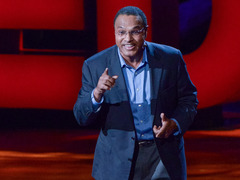
    Photo: James Duncan Davidson

    Freeman Hrabowski was a 9th grader in Birmingham, Alabama, when he heard a dynamic, impassioned speaker at church — Dr. Martin Luther King, Jr. At the time, King was organizing a march for children, and Hrabowski begged his parents to let him be a part of it.

    Freeman Hrabowski: 4 pillars of college success in scienceFreeman Hrabowski: 4 pillars of college success in scienceHrabowski won their blessing to march in the Children’s Crusade, a pivotal moment in the American Civil Rights Movement in 1963. He was taken to jail for participating, even though he was just 12-years-old. In today’s talk, Hrabowski shares the words that King said to him and the others inside the jailhouse: “What you children do this day will have an impact on children who have not been born.”

    Today, Hrabowski is the president of the University of Maryland, Baltimore County (UMBC), a college that serves students of all backgrounds and that is known for supporting students of color in two areas of study where they are severely underrepresented — science and engineering. The school currently leads the country in graduating African-Americans who go on complete Ph.Ds and MD/Ph.Ds in these fields.

    In today’s talk, Hrabowski notes that only 20% of Black and Latino students who start out as pre-med or pre-engineering stick with these demanding majors. That said, the numbers are low in other groups, too — only 32% of white students and 42% of Asian-American students who start rigorous science and engineering majors complete them. “It’s not just minorities who don’t do well in science and engineering,” says Hrabowski. “Students in general are not making it.”

    To hear Hrabowski’s four pillars for setting students up to succeed in science and engineering, watch this talk. As Hrabowski says, these guidelines were designed at UMBC to “help minorities students,” but they can also “help students in general.”

    It’s been 50 years since Hrabowski went to jail for marching for equality. Much has changed since then and, yet, so any inequalities persist in the United States. Here, four more talks about heartbreaking imbalances still in play today.

    Bryan Stevenson: We need to talk about an injusticeBryan Stevenson: We need to talk about an injusticeBryan Stevenson: We need to talk about an injustice
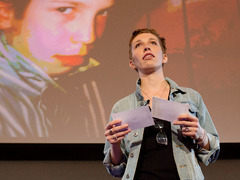
    In the eyes of the American judicial system, we are not one and the same, says public-interest lawyer Bryan Stevenson. A third of the country’s black male population has been incarcerated at some point in their lives – a statistic that should give us all pause. In this powerful talk from TED2012, Stevenson gives a rousing critique of a judicial system that “treats you much better if you’re rich and guilty than if you’re poor and innocent.”
    iO Tillett Wright: Fifty shades of gayiO Tillett Wright: Fifty shades of gayiO Tillett Wright: Fifty shades of gay
    Photographer iO Tillett Wright has been in love with men, and she’s been in love with women. Though marriage was far from her mind in 2008, when California’s Proposition 8 sparked a national debate over gay marriage, the conversation still struck her like a punch. She embarked on a fascinating photo project to document the LGBTQ spectrum and the many, many different shades that exist along it.
    Aaron Huey: America's native prisoners of warAaron Huey: America's native prisoners of warAaron Huey: America’s native prisoners of war
    Photographer Aaron Huey headed to the Pine Ridge Indian Reservation in South Dakota to record images of people living in poverty. There, a shocking 90% of residents live below the poverty line and life expectancy for men is just 47 years. As Huey says in his powerful TEDx Talk, the photo project soon became much more — an effort to understand the history of the native Lakota people, “a time-line of treaties made, treaties broken.”
    Lawrence Lessig: We the People, and the Republic we must reclaimLawrence Lessig: We the People, and the Republic we must reclaimLarry Lessig: We the People, and the Republic we must reclaim
    In this bold talk from TED2013, legal activist Larry Lessig addresses a central corruption at the heart of our electoral system – that in order to do well in a general election, a politician must first win the blessing of funders. And yet,  this second group represents a scant 150,000 people out of 311 million. While, yes, politicians are responsible to the people, they’re also responsible to their funders—giving this small group far too much influence.

  • Remembering Margaret Thatcher

    Margaret-Thatcher-redo
    Margaret Thatcher, the Prime Minister of the United Kingdom from 1979 to 1990, passed away today after suffering from a stroke. The longest-serving Prime Minister of the 20th century, Thatcher also holds the distinction of being the only woman to hold the post. She has died at 87-years-old.

    Below, some TED Talks that examine Thatcher’s legacy — in politics, social policy, even science funding.

    David Cameron: The next age of governmentDavid Cameron: The next age of governmentDavid Cameron: The next age of government
    “We have lost a great leader, a great prime minister and a great Briton,” current Prime Minister David Cameron said of Thatcher today, upon returning to the UK from a European tour to pay tribute to the so-called “Iron Lady.” In this talk given at TED2010, Cameron shares his thoughts on how governments will need to adapt as global power dynamics shift toward individuals.
    Lemn Sissay: A child of the stateLemn Sissay: A child of the stateLemn Sissay: A child of the state
    In this talk from TEDxHousesofParliament, British poet and playwright Lemn Sissay talks about growing up as a “ward of the state,” without parents to care for him. As he says, “Margaret Thatcher was my mother.” A moving talk about why so many people who grew up this way feel the need to hide their pasts.
    Elizabeth Pisani: Sex, drugs and HIV -- let's get rationalElizabeth Pisani: Sex, drugs and HIV — let's get rationalElizabeth Pisani: Sex, drugs and HIV – let’s get rational
    At TED2010, public health expert Elizabeth Pisani shares a counter-intuitive policy that Margaret Thatcher was the first to put into practice – the creation of a national needle exchange program for intravenous drug users to prevent the transmission of HIV.
    Gordon Brown on global ethic vs. national interestGordon Brown on global ethic vs. national interestGordon Brown on global ethic vs. national interest
    Gordon Brown, Prime Minister from 2007 to 2010, has revealed himself to be a great admirer of Thatcher because she was a “conviction politician.” In this Q&A that followed Brown’s talk on wiring the web for global good at TEDGlobal 209, TED Curator Chris Anderson asks Brown how he balances the needs of his own citizens with the needs of the world.
    Brian Cox: CERN's supercolliderBrian Cox: CERN's supercolliderBrian Cox: CERN’s supercollider
    At TED2008, physicist Brian Cox shares a funny anecdote about getting funding for the Large Hadron Collider at CERN from Margaret Thatcher. Apparently, Thatcher said to him, “ If you guys can explain, in language a politician can understand … what this Higgs particle does … you can have the money.”

  • How did supercomputer Watson beat Jeopardy champion Ken Jennings? Experts discuss.

    Ken Jennings (left) faces off against supercomputer Watson (center) and his fellow Jeopardy champion, Brad Rutter (right).

    Ken Jennings (left) faces off against supercomputer Watson (center) and his fellow Jeopardy champion, Brad Rutter (right).

    Perhaps you know Ken Jennings by name, perhaps you simply know him as “that guy with the winning streak on Jeopardy.”  In 2004, this trivia enthusiast won an incredible 74 consecutive times on Jeopardy, setting the record as the classic game show’s most winning contestant and securing the Guinness World Record at the time for “most cash won on a game show.”

    Ken Jennings: Watson, Jeopardy and me, the obsolete know-it-allKen Jennings: Watson, Jeopardy and me, the obsolete know-it-allIn today’s talk, he shares how he became obsessed with trivia as a young child.

    “I remember being able to play Trivial Pursuit against my parents and hold my own,” says Jennings in this talk, given at TEDxSeattleU. “There’s a weird sense of mastery you get when you know some …. Beattles factoid that dad didn’t know. You think, ‘Aha. Knowledge really is power.’”

    In 2011, however, Jenning’s legacy changed when he accepted a match against the IBM supercomputer, Watson.

    “I was pretty confident that I was going to win,” says Jennings of how he felt going into the match. “I had taken some Artificial Intelligence classes and I knew there were no computers that could do what you need to do to win on Jeopardy. People don’t realize how tough it is to write that kind of program that can read a clue in a natural language like English — to understand the puns, the red herrings, to unpack just the meaning of the clue …  I thought, ‘Yes I will come destroy the computer.’”

    But that’s not exactly what happened. To hear how the match what down (interestingly, Jennings said it had an energy far more like a basketball game than a game show) and the profound lessons Jennings learned from it about the state of knowledge, watch this hilarious talk.

    Shortly after the Jennings-Watson showdown in 2011, TED hosted a panel of IBM experts and insiders about the supercomputer and its Jeopardy victory. Below, see the discussion between Final Jeopardy: Man vs. Machine author Stephen Baker, Watson’s principal investigator Dr. David Ferrucci, IBM Fellow Kerrie Holley and Columbia professor Herbert Chase.

    So how did it feel to lose to Watson? Jennings shares in this talk.

    “I felt obsolete,” he reveals. “I felt like a Detroit factory worker in the ‘80s seeing a robot that could now do his job on the assembly line. I felt like ‘Quiz Show Contestant’ was now the first job that had become obsolete under this new regime of thinking computers.”

  • Roger Ebert, beloved film critic, dies

    Roger Ebert, the film critic who guided American movie selections for decades, has died, a family friend revealed to newspapers today. He was 70 years old. This sad news comes just days after Ebert wrote a column in the Chicago Sun-Times, celebrating the 46th anniversary of his column and announcing a “leave of presence.”

    “On April 3, 1967, I became the film critic for the Chicago Sun-Times. Some of you have read my reviews and columns and even written to me since that time. Others were introduced to my film criticism through the television show, my books, the website, the film festival, or the Ebert Club and newsletter. However you came to know me, I’m glad you did and thank you for being the best readers any film critic could ask for,” he wrote. “I must slow down now, which is why I’m taking what I like to call ‘a leave of presence.’ What in the world is a leave of presence? It means I am not going away. My intent is to continue to write selected reviews but to leave the rest to a talented team of writers handpicked and greatly admired by me.”

    The reason: he once again had cancer.

    “It really stinks that the cancer has returned and that I have spent too many days in the hospital,” he wrote in this post. “At this point in my life, in addition to writing about movies, I may write about what it’s like to cope with health challenges and the limitations they can force upon you.”

    Over the past decade, Ebert had battled both cancer of the thyroid and cancer of the salivary gland. In 2006, he had part of his jaw removed — which left him unable to talk or eat. He told the incredible story of learning to speak again at TED2011. Watch his beautiful talk, “Remaking my voice,” above.

    Ebert’s written reviews were syndicated in more than 200 newspapers nationally, and he appeared on television in the shows Sneak Preview, At the Movies with Gene Siskel and Roger Ebert, and Ebert & Roeper & the Movies. The first film critic to get his name on the Hollywood Walk of Fame, Ebert will be greatly missed.

    Below, some of our favorite photos of this tremendous writer and person.

    Ebert-3

    Photo: James Duncan Davidson

    Ebert-2

    Photo: James Duncan Davidson

    Ebert-4

    Photo: James Duncan Davidson

    Ebert-5

    Photo: James Duncan Davidson

    Ebert-1

    Photo: James Duncan Davidson


  • See self-assembly and 4D printing in action

    A part on the outside of a spaceship that morphs, rather than requiring an astronaut to perform a risky maneuver. Plumbing pipes able to bend and flex based on the needs of the water flowing through them. Furniture that assembles itself, no screwdriver required. Buildings with the ability to repair themselves when something goes awry.

    Skylar Tibbits: The emergence of "4D printing"Skylar Tibbits: The emergence of "4D printing"These are just some potential applications of research being done at TED Fellow Skylar Tibbits’ Self Assembly Lab at MIT. In this lab, designers, scientists and engineers come together to work on new ways to make disordered parts become ordered — on their own, since the programming is part of the object itself.

    In today’s talk, give at TED University at TED2013, Tibbits introduces us to one of his most fascinating nascent ideas — what he calls “4D printing.” A collaboration between the Self-Assembly Lab and 3D printing giant Stratasys, 4D printing allows for the printing of objects that — when they have an energy force (say, touch or submersion in water) applied — transform themselves. Watch this intriguing talk to see exactly what this means.

    And below, see some very cool projects from Tibbits and his teams.

    This black strand was 3D-printed to lie flat. But when submerged in water, it folds itself into a square. Directly off the printer bed, this object has transformation embedded into it.

    This 3D-printed object looks like a black necklace. But when tugged, it folds to form the letters MIT.

    This flat, white matrix looks like it could be a potholder. But at a touch of its corners, it folds inward, as if it were alive.

    In this giant tumbler, the bent hexagonal pieces of a stool find each other and assemble themselves. A very cool demo from TED2012, using a model demonstrated on the microscale by the polio virus.

    Skylar Tibbits shows off his Biomolecular Self-Assembly kit. Revealed at TEDGlobal 2012, these flasks contain mock molecules, broken into components. As the flask is shaken, magnets allow the pieces to find their mates and become one molecule.

    In this demo, a pliable black substance is made to harden—then brought back to its original state.

    Protein strands have the ability to fold themselves. This object mimics that process.  When kinetic force is applied — i.e. when it’s thrown in the air — it folds in much the same way.

    Watch as this MacroBot transforms before your eyes.

    And here, the DeciBot.

  • 9 transportation devices that could make your commute far more fun

    Boosted-Board-2

    A TED2013 attendee takes a ride on a Boosted Board. Photo: Michael Brands

    When engineering grad students Sanjay Dastoor, John Ulmen and Matthew Tran met at Stanford University, they lamented the fact that there was no good way to get around campus. And so, they invented one: a longboard skateboard fashioned with an electric motor.

    Sanjay Dastoor: A skateboard, with a boostSanjay Dastoor: A skateboard, with a boostIn today’s talk, given at TED2013, the three give demo their Boosted Boards — which charge off a wall outlet, run for 1,000 kilometers on a dollar’s worth of electricity and are powerful enough to go up the famous hills of San Francisco at 10 miles per hour. They are small enough to be carried in hand and have a battery range of six miles.

    “That covers half of the car trips in U.S. alone,” explains Dastoor.

    It’s a fascinating concept — one that would make any skateboard-enthusiast a happy commuter. To see the boards in action, watch this high-energy talk. And below, see several more unusual vehicles that could someday greatly improve the morning commute.

    HirikoA car that folds
    Mentioned in Kent Larson’s TEDx Talk “Brilliant designs to fit more people in every city,” the Hiriko is a tiny two-person vehicle that folds in order to minimize its parking footprint. Three of these small vehicles can fit into one traditional parking space — which would greatly alleviate one of the biggest hassles of car ownership. As the Hiriko website explains, these vehicles are 100% electric and maneuver by spinning — which is just really cool.

    NCycleAn electric bike with handlebars that become a lock
    Several electric bicycles are already on the market, even though they aren’t legal in every city. However, the nCycle is a particularly stylish and smart approach to the concept, which design blog Core77 brought to our attention. Designed with its battery inside a space-age frame, it’s meant to be both sturdy and lightweight. It’s handlebars morph into a lock and it has speakers in the back headlights.

    UnicyclesA motorcycle meets a unicycle
    Another design created for urban commuters, the RYNO (left) is a singe-wheel scooter that looks like something a gang in a sci-fi film would ride. Expected to go into production this year, this vehicle runs on a battery that takes an hour and a half to charge, and lets riders go, go, go for about 20 miles, according to Discovery.com. This vehicle self-balances, but if you want the security of a second wheel — the BMW Halbo (right) may be the vehicle for you.

    A swing for the subway
    A group of Washington D.C. Metro riders caused quite a stir when they posted this video of their “Metro Swing” on Vimeo in 2011. The swing attaches to the metal bars of the Metro, and allows anyone to make their own seat and — if there’s room — to channel their inner 5-year-old by swinging. Though it appears to be farce, they should consider manufacturing it.

    Wheel-RiderA gyroscopic wheel for one
    The Yamaha Wheel Rider looks like it could be a flying saucer. Only instead of moving through the air on its flat face, it rolls along the road on its edge, a la a tire. As The New Ecologist shares, this concept vehicle was designed by Yuji Fujimura and the fin in the back contains its turn signals. An even more beautiful version of a similar idea — Sanu K R’s personal transport system, which the designer tells Gizmag drives via a joystick and stays upright thanks to gyroscopic sensors.

    JetLevThe personal jetpack
    It’s not at all a cheap option — it costs a reported $100,000. But in September of 2012, The Daily Mail told the tale of a British businessman who used a jetpack to travel 40 miles up the Thames to work. This man imported his jetpack from manufacturer JetLev. And this futuristic turn reminds us of Yves Rossy’s TED Talk, “Flying with the Jetman.”

    Boosted-Board-1

    And a Boosted Boards bonus shot: Jim Carrey tests out the board at TED2013. This shot was snapped by Tony Hawk who wrote on Instagram, “Came to #TED2013 for @amandapalmer, stayed to see Jim Carrey ride an electric skateboard (aka@boostedboards). My life is [still] weird.”

  • Video: Haptic-feedback shoes guide blind walkers

    The footage in this video — which shows a man, a woman and a teenager walking down paths, around curves, up stairs and across streets — may not at first viewing seem remarkable. But the people in this video are blind — and walking without a cane or guide dog. Instead, they are being guided by their shoes.

    These shoes, which TED Senior Fellow Anthony Vipin Das introduced us to at TED2013, use haptic feedback and GPS technology to guide the blind. Each pair contains electronic circuitry, sensors and small actuators that give the wearer feedback on their movement as they walk, vibrating to tell them when to turn or lift their feet. (See Katherine Kuchenbecker’s great TED-Ed lesson to the field of haptic technology, which debuted on TED.com just last week.) They use a voice-programmed app that reads local GPS maps and plan routes. They have sensors that note obstacles and tell the wearer to stop. The shoes can also read gestures from the walker — for example, two taps means “take me home.”

    These shoes are called Le Chal, which means “take me there” in Hindi. And as Vipin Das shared in this Q&A with the TED Blog, they are being tested in their first clinical study at LV Prasad Eye Institute in Hyderabad, India. Expected to be available this year, the shoes can be pre-ordered at Ducere Technology’s website.

    “It’s very encouraging to see the kind of response we’ve had from wearers,” Vipin Das tells the TED Blog. “They were so moved because it was probably the very first time that they had the sense of independence to move confidently — that the shoe was talking to them, telling them where to go and what to do.”

  • Angela Patton holds second father-daughter dance in prison, sets sights on a documentary

    Twelve girls enter the Richmond City Jail for a father-daughter dance. Photo: Marvin Joseph/The Washington Post

    Twelve girls enter the Richmond City Jail for a father-daughter dance, called “A Dance of Their Own.” Photo: Marvin Joseph/The Washington Post

    It’s not the norm to see pink balloons, brightly colored dresses and sequined shoes in the halls of the Richmond City Jail. But on March 16, a dozen girls ranging in age from 6 to 16 entered the facility to bring cheer to their incarcerated fathers. The occasion: the second father-daughter dance at the jail, thrown by Camp Diva.

    Angela Patton: A father-daughter dance ... in prisonAngela Patton: A father-daughter dance … in prisonAt TEDxWomen, Camp Diva founder Angela Patton told the heart-warming story of how she came to throw a father-daughter dance in prison. The idea began with a group of girls brainstorming ways to help their fathers better understand them. Solution: a father-daughter dance! After a few years of dances, a Camp Diva girl revealed a hesitation: Her father wouldn’t be able to attend because he was in prison. So Patton asked Richmond City Sheriff C.T. Woody. He agreed to try holding the dance in his jail, because he felt, as Patton says, “when fathers are connected to their children, it is less likely that they will return.” In Patton’s talk, you can see images from the first father-daughter dance ever held at Richmond City Jail.

    The Washington Post was on hand for the second father-daughter dance, titled “A Dance of Their Own,” with photographer Marvin Joseph capturing a beautiful series of images of the event. Sheriff Woody also shared with the paper his rationale for greenlighting the very unusual dance.

    “People may think it’s crazy to have this in a jail,” he said. “But it builds respect. You wouldn’t believe what it does for these men’s confidence to dress them up. This dance can have a ripple effect.”

    Dance-of-Their-Own-2

    Pairing up for the dance. Photo: Marvin Joseph/The Washington Post

    Now, Patton tells the TED Blog that she would like to continue the tradition — and to encourage it in jails around the country.

    “The questions I get asked most are, ‘How did you do this?’ ‘Why did the sheriff say ‘yes?’ and ‘How did you get inside the bars?’” says Patton, who didn’t have time to talk much about process given the time limit of her TEDx Talk. “It wasn’t just the letter that made it possible, it was the relationship that we built. We put a curriculum in place …  These fathers have to participate [in a class] so that they will be prepared for this visit and this opportunity with their daughters.”

    Patton also hopes to share the stories of fathers and daughters who’ve participated in the dances — both the two held in City Jail and the six held so far in communities around Richmond, Virginia. To that end, she has created a Kickstarter campaign to fund a documentary, Locked In NOT Locked Out. To be directed by Patrick Gregory, Patton is crowdfunding an initial $10,000 to fund the film. So far, she’s raised $5,000 with 25 days to go.

    “We’re going to follow four fathers, two inside the bars and two outside,” Patton tells the TED Blog. “We’re going to show the common thread between four different types of fathers that have the same need and desire to have good relationships with their daughters.”

    Dance-of-Their-Own-3

    The dance, in full swing. Photo: Marvin Joseph/The Washington Post

  • How a dead duck changed the TED audience’s life

    Kees Moeliker proudly displays a dead mallard at TED. Photo: James Duncan Davidson

    Kees Moeliker proudly displays a dead mallard at TED. Photo: James Duncan Davidson

    Kees Moeliker: How a dead duck changed my lifeKees Moeliker: How a dead duck changed my lifeIn the days leading up to TED2013, we at the TED Blog revealed the best props at TEDs past and showed you the speakers who’d brought animals on stage with them. Little did we know that, on the day two of the conference, we’d meet a speaker who’d combine both.

    In today’s talk, given at TED2013, Kees Moeliker illuminates how finding a dead duck one summer day changed the course of his professional life. It’s an incredible, hilarious and unexpected story. And to highlight the importance of said duck, Moeliker physically brought it on stage with him. Dead for nearly eighteen years (Moeliker found this duck outside of the Natural History Museum Rotterdam, where he works, in 1995 and had him stuffed for posterity), Moeliker took the taxidermied duck out of a plastic bag and passed it to a brave audience member.

    Below, see the hilarity that ensued as this odd artifact made the rounds.

    Kees-Moeliker-at-TED2013-2

    An audience member cradles the dead duck. While some in the audience appear disturbed, others glow. Photo: James Duncan Davidson

    Richard Turere, who gave the talk "My invention that made peace with lions," cracks up at this surprising talk.

    Richard Turere, who gave the talk “My invention that made peace with lions,” cracks up at this surprising talk.

  • Bryan Stevenson to appear on “Moyers & Company”

    Bryan Stevenson, who gave the powerhouse talk “We need to talk about an injustice” at TED2012, will appear on Moyers & Company this weekend. Bryan Stevenson: We need to talk about an injusticeBryan Stevenson: We need to talk about an injustice In the episode, titled “And Justice For Some,” Moyers will take a hard look at systematic biases in the American legal system. The occasion for this episode — the 50th anniversary of the Supreme Court’s decision in the case Gideon v. Wainwright, which established the right to legal representation for defendants unable to pay for it. The decision highlighted the ideal that the judicial system should function the same regardless of the defendant’s bank account.

    Bryan Stevenson, a public-interest lawyer who represents the young, poor and incarcerated, knows that this sadly just isn’t the case. As he says in the preview above, “We still have a system that treats you better if you’re rich and guilty than if you’re poor and innocent.”

    Check BillMoyers.com for when this episode will air in your area »

  • Grey’s Anatomy has a TED moment

    Grey's-Anatomy

    Photo courtesy of: ABC

    Has a TED Talk ever happened live from a hospital? Well, not in real life — but yes on television. Last night on Grey’s Anatomy, TED became a part of the surgical action when Dr. Callie Torres was prepping to give a talk on the wonders of cartilage. But when a leaking tanker led to extensive injuries and burns, she’s was unable to leave the Grey Sloan Memorial Hospital ER to get to the conference. In the emotional peak of the episode, she delivers her talk via livestream from the hospital conference room.

    Watch the full episode on ABC.com. And fast forward to 35:50 to see Callie Torre’s TED Talk. It begins, “I had a pretty bad year…”

  • TED Radio Hour explores what happens when we make mistakes

    Making-MistakesIt happens to the best of us: as hard as we try to be perfect, on occasion, we mess up. Today’s TED Radio Hour explores how we deal with mistakes and the simple fact that, sometimes, we are wrong. It asks: what does it take to face mistakes head-on and use them as a learning experience?

    In this episode — the fourth in season two – Brian Goldman shares what happens when it’s a doctor who makes the mistake, Brené Brown reveals what we can hear when we listen to shame, Stefon Harris looks to jazz where there are no mistakes and Margaret Heffernan illuminates why conflict is simply a part of progress.

    Check out your local NPR schedule to find out when the show airs today, or listen to it via NPR’s website »

    Or head to iTunes, where the podcast is available now »

  • George Takei on “Star Trek,” musicals and Japanese American internment

    George Takei, best known as Captain Sulu of Star Trek, says it’s been his “lifelong dream” to make it to Broadway. He came close in 1960 when he was invited to audition for a show. But he did not get the part.

    “It was a body blow,” says Takei. “Suddenly, New York turned into a cold, heartless city.”

    But now, at age 75, Takei is ready to try again. At TEDxBroadway, Takei tells us why he wrote a musical called Allegiance with composer Jay Kuo and writer Lorenzo Thione. The play speaks to an often-forgotten part of American history: Japanese American internment during World War II. It’s a story Takei knows very well.

    “I was 5 years old when my parents got us up early one morning and hurriedly dressed us,” says Takei in this heartfelt talk. “My brother and I were in the living room, looking out the front window. I saw two soldiers with bayonets on their rifles come marching up the driveway. They stomped up the front porch and they banged on the door … We were ordered out of our home.”

    Takei’s family spent four years in a prison camp in Arkansas. “Our only crime was looking like the people who bombed Pearl Harbor,” he says. “I remember the sentry tower with machine guns pointed down at us. I remember the searchlight that followed me when I made night runs to the latrine. As a 5-year-old kid, I thought it was kind of nice that they lit the way for me to pee.”

    In this talk, Takei shares the profound impact the experience had on his family with humor and tenderness. And he talks about how he built interest in an unlikely musical about a subject he calls a “dark and shameful chapter of American history.” When Allegiance opened at the Globe Theater in San Diego in late 2012, it broke all box office records for the theater.

    Maybe he’ll get that chance on Broadway soon.

    George-Takei-slides

    George-Takei

  • Further readings in game theory: How it applies to marriage, kidney donation chains and government gridlock

    How do we negotiate when to sell a stock, whether to rat out a partner in crime, how to play a poker hand, or what to ask for when negotiating a job offer? In each of these situations, the actions of others will greatly affect our outcomes — and yet, we have no idea what they are thinking. These are the kinds of situations that game theory has helped mathematicians and economists parse for decades.

    In today’s talk, given at TEDxCalTech, behavioral economist Colin Camerer surveys new research that is taking game theory to the next level — by taking fMRI and EEG scans of people’s brains as they engage in bargaining games. The idea is to see what brain circuitry is used as people make decisions, and to map out what agreement and disagreement look like in the brains of humans … and in chimpanzees, who appear to be better at these negotiations than we are.

    While the seeds of game theory were planted as early as Plato, the field gained prominence in the 1940s and 1950s, thanks to the work of John von Neumann (who wrote Theory of Games and Economic Behavior) and John Nash (of A Beautiful Mind fame). Since then, eight game theorists have won the Nobel Prize in Economics. To hear about new neuroscience approaches to this classic area of study, watch Camerer’s talk. And below, read some recent several articles about how game theory can apply to our everyday lives.

    1. What makes a person decide to donate a kidney? As Stanford economist Alvin Roth has shown, it is largely a question of game theory and market economics. According to the October 2012 Reuters story, “Alvin Roth Transformed Kidney Donation System,” in 2004, Roth created the New England Program for Kidney Exchange, a method that used computers — and an algorithm designed by UCLA mathematician Lloyd Shapley — to pair groups of donors and create the types of kidney donation chains depicted on Grey’s Anatomy. Before this system, says Reuters, there were just 19 kidney transplants from live donors in the United States. In 2011, that number rose to 443. In total, about 2000 people have received kidneys through Roth’s system. And in October of 2012, both Roth and Shapley were awarded the Nobel Prize in Economics for their work in taking “stable allocations” from an abstract concept to a reality.
      .
    2. Another real-life problem that Roth has tackled: in extremely large school systems, how can students be matched with the right school? In the Forbes magazine story, “What Al Roth Did to Win the Nobel Prize in Economics,” journalist Susan Adams takes a look at how Roth leveraged the tools of game theory to tame the high school matching system in New York City, where 80,000 8th graders must be dispersed to 700 schools every year. She writes, “Before Roth got involved, the matching system was so screwed up that a third of the city’s eighth graders didn’t even participate.”
      .
    3. In their book, It’s Not You, It’s the Dishes, journalists Paula Szuchman and Jenny Anderson wonder if the daily negotiations of marriage are more like playing a game of poker than most people realize. In the article “Marriage and the Art of Game Theory,” which ran on the Daily Beast in July of 2012, Szuchman writes, “Game theory is the study of how we make decisions in strategic situations. Classic examples: the Cuban missile crisissoccer penalty kicks, and the first scene of The Dark Knight. When you find yourself debating whether to wait for the bus another minute or give up and walk, you’re facing a game-theory dilemma … To cooperate or not to cooperate? To budge or stand your ground? To say ‘OK, fine’ or ‘not a chance’? These are questions married people find themselves asking with surprising frequency.”
      .
    4. Could game theory explain why so much head-butting happens in the United States Congress, especially as they approached the fiscal cliff in late 2012? (Watch Adam Davidson’s talk explaining the fiscal cliff.) In The Atlantic op-ed “How Game Theory Explains Washington’s Horrible Gridlock,” Mohamed A. El-Erian applies the principles of game theory to Congress’ negotiation over the budget. He writes, “Here is the typical cycle: Responding to the ‘national call,’ the two parties’ initial narratives trend towards ‘grand bargains’ aimed at removing headwinds to growth, jobs, and prosperity. As differences prevail, this gets replaced by a ‘mini bargain,’ or one that would deliver some progress together with momentum for future success. As this also proves elusive, negotiations get quite acrimonious. If and when an 11th-hour compromise emerges, it lacks both content and momentum: The majority of meaningful decisions are postponed, and both Democrats and Republicans emerge from the experience more bitter — at each other, and also within their respective parties.” (Also see: “Game Theory Expert Analyzes Fiscal Cliff.”)
      .
    5. Of course, the economic standoff of late 2012 wasn’t fully resolved — it was in large part delayed, leading to the more recent “sequester.” In the article “The Strange Game Theory of the Sequester,” Pacific Standard writer David Dayen wonders if Barack Obama is using game theory tactics in moving forward on sharp budget cuts. He writes, “Making clear the impact of forced austerity may offer the best hope for discrediting and reversing it. When faced with closures of national parks, shutdowns of government offices, delays in needed services like the disposition of federal benefits, and long lines at the airport due to a reduction in TSA personnel and air traffic controllers, the thinking goes, perhaps Congress will get moving on a less painful solution.”

  • TED2013 speakers win Peabody Awards

    Peabody-Awards
    Congratulations to the winners of the 72nd annual Peabody Awards! All of you have created incredible work that adds so much to the landscape of radio, television and electronic media. But TED would like to raise our glasses to toast two winners in particular.

    At TED2013, multimedia producer Jacky Myint shared the storytelling process that went into creating  “Snow Fall: The Avalanche at Tunnel Creek,” which combines traditional reportage with beautiful and eerie video. Now, The New York Times has been awarded a Peabody for the feature, with the organization applauding the unusual package for being, “A spectacular example of the potential of digital-age storytelling.”

    The day after Myint spoke at TED, Ben Affleck introduced the Orchestre Symphonique Kimbanguiste, who’d flown all the way from the Congo to perform the composition “Luba.” Now 60 Minutes has been awarded a Peabody for their segment “Joy in the Congo,” about this incredible group that sounds “a note of hope for a war-ravaged nation.”