 Richard Turere, 13, grew up hating lions. In Nairobi National Park, where he lives, lions roam freely and often targeted his family’s livestock at night. And yet Turere also hated the only solution his community had come up with to stop lion attacks on cows — killing the majestic creatures.
 Richard Turere: My invention that made peace with lions“I had to find a way of solving this problem,” says Turere in today’s talk, filmed at TED2013.
First, Turere tried using fire and scarecrows, but both failed to scare off lions for the long-haul. So electronics-tinkerer Turere had another idea.
“I discovered that lions are afraid of a moving light,” he says. “So I got an old car battery and an indicator box, a small device found in a motorcycle that tells motorists when they want to turn right or left. It blinks.”
He combined these items with a light switch, a torch from a broken flashlight and solar powering. Together, they made a blinking device that flashes in unpredictable patterns, emulating a person walking with a flashlight. The device works wonders for keeping lions away.
“I set this up in my home two years ago and since then we have never experienced any problem with the lions,” says Turere, adding that he has now made devices for seven families in his community and taught friends to build them too.
Turere boarded his very first airplane to come to TED2013. And on stage he shared with Chris Anderson the next device he’d like to build to keep lions away — his version of an electric fence. Young Turere may be on to something. In an article in today’s The New York Times, the director of the Lion Research Center at the University of Minnesota says that, after 35 years of research, he sees fences as the most promising way to save the dwindling lion population, keeping them away from both livestock and people.
Turere’s device has helped him make peace with lions. Here, watch three more TED Talks that give unexpected looks at these oversized cats.
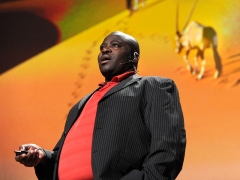 John Kasaona: How poachers became caretakers John Kasaona: How poachers became caretakersJohn Kasaona: How poachers became caretakers In this talk from TED2010, conservationist John Kasaona shares a wild idea his community had for conserving their local lion population: pay poachers, who know the bush and animal behavior incredibly well, to look out for the beautiful cats. And this approach is working. In 1995, there were 20 lions in Northwest Namibia. Today, there are more than 130. |
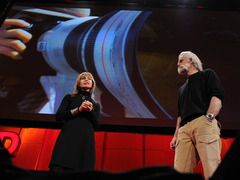 Beverly + Dereck Joubert: Life lessons from big cats Beverly + Dereck Joubert: Life lessons from big catsBeverly + Dereck Joubert: Life lessons from big cats “Our lives have basically been like a super-long episode of ‘CSI,’” says documentary filmmaker Dereck Joubert, who has spent 28 years following leopards and lions along with his partner, Beverly Joubert. And while, yes, these cats are killers — they also have incredible personalities. In this talk from TEDWomen, the pair shares amazing footage that humanizes lions. |
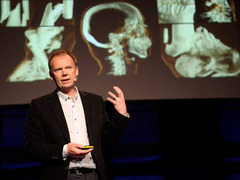 Anders Ynnerman: Visualizing the medical data explosion Anders Ynnerman: Visualizing the medical data explosionAnders Ynnerman: Visualizing the medical data explosion What do lions have to do with medical data visualization? In this talk from TEDxGöteborg, Anders Ynnerman shares how scientists parse the reams of data that medical scans produce for each patient. In it, he reveals how and why they took CAT scans of a lion from a local zoo. “I think this is a great application for the future of this technology because there’s very little known about the animal anatomy,” he explains. |
Richard Turere was just 12 when he came up with his lion-scaring device. Watch 8 more TED Talks from impressive kids, from a preteen app developer to an elementary school class that wrote a scientific research paper in crayon »


 Joshua Foer thought he might have set out on a fool’s errand when he started training to compete in the U.S. Memory Championship. Only, he ended up winning it in 2006.
 Joshua Foer: Feats of memory anyone can do


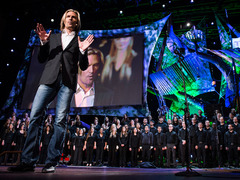 Eric Whitacre: Virtual Choir Live


 Today’s talk, “
 Francis Collins: We need better drugs — now

 Brené Brown: The power of vulnerability
 Brené Brown: Listening to shame

 TEDGlobal has been held in Oxford, England; Arusha, Tanzania; Mysore, India; and Edinburgh, Scotland — with speakers from a wide range of other countries. In other words, it’s a global affair. As we prepare for
  George Ayittey on Cheetahs vs. Hippos
 Lee Hotz: Inside an Antarctic time machine
 Leslie T. Chang: The voices of China's workers
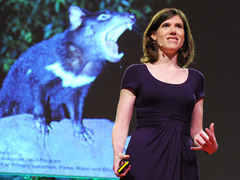 Elizabeth Murchison: Fighting a contagious cancer
 Mark Pagel: How language transformed humanity
 Sheena Iyengar: The art of choosing
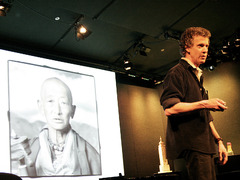 Phil Borges on endangered cultures


 Hyeonseo Lee: My escape from North Korea

 “You ain’t gangsta unless you have a garden,” says Ron Finley of
  Ron Finley: A guerilla gardener in South Central LA

 Elon Musk: The mind behind Tesla, SpaceX, SolarCity …


 Danny Hillis: The Internet could crash. We need a Plan B


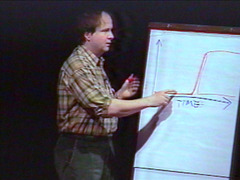 Danny Hillis: Back to the future (of 1994)

 “We may not yet have the flying car that science fiction promised us,” says Catarina Mota in
 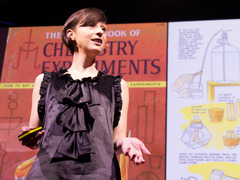 Catarina Mota: Play with smart materials


 Today, TED Radio Hour asks two questions many of us are scared to pose: will human beings have a purpose as robots become more adept at performing tasks and projecting emotions? And as technology gets more advanced, how does interaction between human beings change?
 Sherry Turkle: Connected, but alone?


 The
The 

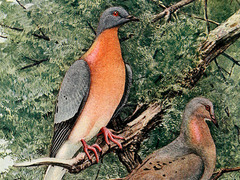 Stewart Brand: The dawn of de-extinction. Are you ready?
 Stewart Brand on the Long Now
 Stewart Brand: 4 environmental 'heresies'

 Last night at SXSW, William and the Windmill was awarded one of the festival’s top two honors, taking home Grand Jury Award for Documentary Feature.
 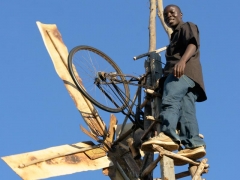 William Kamkwamba: How I harnessed the wind


 “Raise your hand if you think that basic research on fruit flies has anything to do with understanding mental illness in humans,” David Anderson begins
 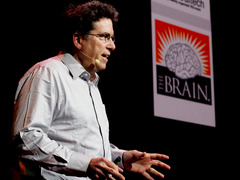 David Anderson: Your brain is more than a bag of chemicals
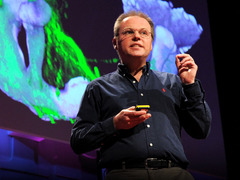 Gero Miesenboeck reengineers a brain
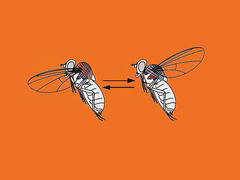 Michael Dickinson: How a fly flies
 Eva Vertes looks to the future of medicine
 Read Montague: What we're learning from 5,000 brains


