Author: Kate Torgovnick

  • How to pick the charity that’s right for you

    Dan-Pallotta-new
    In 1994, Dan Pallotta founded AIDSRide — a series of fundraising bike tours that raised $108 million for HIV/AIDS research and services within the space of eight years. Later, his Breast Cancer 3-Day walks raised $194 million in an even shorter period of time. Both had their best years ever in 2002. But then, after a spate of bad press criticizing the management of the organization, both were shuttered.

    Dan Pallotta: The way we think about charity is dead wrongDan Pallotta: The way we think about charity is dead wrong“350 employees lost their jobs because they were labeled overhead,” says Palotta in today’s talk, given at TED2013. “This is what happens when we confuse morality with frugality.”

    This wasn’t just a problem for the newly unemployed or Pallotta’s wounded sense of pride. As he explains in this talk, the real issue is that everything we have been taught to think about charity is wrong. In particular, the single yardstick generally used to measure the worthiness of a charity – how much money goes directly toward the people it seeks to help and how much is used to cover overhead — is dangerously unhelpful. According to this thinking, the “best” charities are the ones with the lowest overhead. In fact, that focus may actually be preventing charities from making a real impact.

    “The things we’ve been taught to think about giving and charity and the non-profit sector are actually undermining the causes we love … Our social problems are massive in scale, our organizations are tiny up against them — and we have a belief system that keeps them tiny,” says Pallotta, the author of the book Uncharitable. “We have two rulebooks—one for the non-profit sector and one for the rest of the economic world. It’s an apartheid.”

    It’s time to change the way we think about giving to charity, says Pallotta. “Don’t ask about the size of their overhead,” he urges. “Ask about the size of their dreams.”

    Curious to hear more on this new way of evaluating nonprofits, we asked Pallotta to share his thoughts on how to find a charity to support and what questions to ask along the way. Here’s what he had to say:

    I want people to consider themselves a philanthropist no matter how much or how little they are giving. Even if you are giving $25, you are still a philanthropist. I advise people to figure out what cause they want to have an impact on, and take time doing research to find out the organization they feel is doing the best work on that problem. Then, make them your charitable partner for life. Continue to follow their progress, continue to learn about them, and continue to invest in them. You make a lot of inquiries before you buy a car or before you cast your vote for president – do the same thing before you cast your vote for a charity with your contribution.

    1) How do I find the right charity for me?

    Start with a broad search and narrow it from there. You can use websites like GreatNonprofits.org, Philanthropedia and GiveWell.org. They each have flaws. I say—use them, but don’t rely on them.

    Then, do in-person interviews with your top two or three. Call the charity and ask for a tour or overview meeting. That’s why charities have development departments — to nurture and build relationships with donors. If you are going to make a long-term commitment to an organization, even if the money isn’t huge, you owe it to yourself to do this kind of research in the same way you would go to a dealership to test-drive a car.

    I also recommend looking at a charity’s annual report. Does it inspire you? Does it seem to have a sense of mission, bravery, boldness — or is it cautious and formulaic? Check out Invisible Children, Share our Strength, and Charity Water to see examples of organizations that are inspiring, right down to their materials. Though in general, don’t just rely on a website.

    2) Ask: what progress is the charity making toward its goals—and what metrics does it use to measure that?

    Ask the charity to provide you with program data that tracks their activities — and ask how they measure their own progress. This question may be the most important of all — it really gets at what data they collect, how serious they are about that data collection, and how they shift behavior or strategy based on what the data is telling them.

    But note, it doesn’t necessarily matter if the organization is effective. Some problems can be extremely difficult to solve, and you don’t want to punish the charities working on those problems — otherwise we’ll only get charities working on easy problems. Think about if you had asked Jonas Salk how effective he was one year before he found the cure for polio. He would not have been very effective at that point, but that doesn’t mean you would not have wanted to invest in him.

    Bringing cold, hard business sense to running charities can help transform the philanthropic landscape for all and for the better, says Pallotta. “Overall, for each charity I give to, I ask myself if I believe in their business model and if I feel they have a bold future ahead of them,” he says.

  • “Peering into Space”: TED Radio Hour takes you beyond the void

    Peering-Into-SpaceHuddle around the radio, all. TED Radio Hour’s second season is under way and episode two, “Peering into Space” premieres today. Host Guy Raz says that this episode may even be his favorite created so far. In an interview with the TED Blog, he said, “It totally changed my world … I think people who haven’t taken the time to look at the stars recently are going to be amazed by what they hear. You look out at the brightest star in the sky — and you are looking at the past in real time. That idea to me is so beautiful.”

    Gazing up at the night sky is always both humbling and thrilling. In this episode of TED Radio Hour, you’ll hear from speakers who share a sense of wonder and curiosity about our place in the universe. Phil Plait breaks down how we can defend Earth from an asteroid. Jill Tarter of the SETI Institute explains why it’s crucial for humans here on earth to continue searching for sentient beings in the cosmos. And Cosmologist Brian Greene unravels the strange tale of dark matter and why our universe may be one of the many in the “multiverse.”

    Check your local NPR schedule to find out when the show airs today, or listen via NPR’s website »

    Or head to iTunes where the podcast is available now »

  • 8 beautiful and heartbreaking poems from Shane Koyczan

    Shane-KoyczanShane Koyczan has a way with words.

    Shane Koyczan: "To This Day" ... for the bullied and beautifulShane Koyczan: "To This Day" … for the bullied and beautiful “I’ve been shot down so many times I get altitude sickness just from standing up for myself,” he says, beginning today’s talk. “That’s what we were told—stand up for yourself. But that’s hard to do if you don’t know who you are.”

    Koyczan appeared on the TED2013 stage just a week after his spoken-word poem, “To This Day,” went viral as a crowd-animated video. Live onstage, mixing poetry and prose, Koyczan explains to the audience what prompted to him to write the poem, an ode to anyone who felt bullied or left out as a child, and have it animated by people around the world. Koyczan says it wasn’t just overt bullying he was reacting to — but the subtle discouragement kids receive along the path to adulthood, as they’re required to define themselves in narrower and narrower ways.

    “At the same time as we were being told who we were, we were being asked, ‘What do you want to be when you grow up?’” Koyczan’s answers were: a writer, then a professional wrestler. Both ideas were shot down.

    “What made my dreams so easy to dismiss?” he asks. “Granted my dreams are shy, because they’re Canadian. My dreams are self-conscious and overly apologetic—they’re standing alone at the high school dance and they’ve never been kissed. See, my dreams got called names too — silly, foolish, impossible.”

    To hear more of Koyczan’s motivation, and to hear a beautiful live rendition of “To This Day,” watch this talk. For more of Koyczan’s poems, read on.

    A proud Canuck, Koyczan wrote the poem “We Are More” for the Canadian Tourism Commission. He even performed it at the opening ceremonies of the Vancouver 2010 Winter Olympics, for a television audience of more than 1 billion people. “We’re more than hockey and fishing lines/ off the rocky coast of the Maritimes/ some say what defines us/ is something as simple as please and thank you,” spits Koyczan in this poem. “But we are more than genteel or civilized/ we are an idea in the process of being realized.” See a version of the poem with visuals.

    Koyczan got some help in sharing these “Instructions for a Bad Day” from a group of students at G.P. Vanier secondary school in British Columbia. They wrote the storyboard for the video, handled the cameras, did the acting and collected the props. The piece was created for Pink Shirt Day — a national day devoted to the discussion of bullying.

    Here, Koyczan performs “The Crickets Have Arthritis” at Words Aloud in 2007. A heartbreaking love letter to his 9-year-old hospital roommate, Louis, the poem begins, “It doesn’t matter why I was there, where the air is sterile and the sheets sting. It doesn’t matter that I was hooked up to this thing that buzzed and beeped every time my heart leaped like a man whose faith tells him God’s hands are big enough to catch an airplane, or a world.”

    Yes, Koyczan does on occasion write love poems. Here is “More Often Than Sometimes,” in a new video produced by Amazing Factory Productions and posted just two weeks ago as part of the Giants of the Forest series. “I think of her more often than sometimes/ If she ever hears this/ I want her to know that/ Our first kiss tasted like pepper,” he says. “We loved like two games of solitaire/ Waiting to be played by one another.”

    In January, during an event to mark the closing of the Waldorf Hotel in Vancouver after 63 years, Koyczan performs the poem “Remember How We Forgot.” His words are beautifully backed, as they were on the TED stage, by violinist Hannah Epperson. “Once upon a time we were young/ our dreams hung like apples waiting to be picked and peeled,” flows Koyczan.

    The words that begin the poem “Atlantis,” performed here at Words Aloud in 2007, may just get you: “Your entire body shakes when you laugh/ as if your sense was built on a fault line/ and the coast of your heart falls into the ocean of yourself/ and you’re left looking for Atlantis.”

    Here, Koyczan’s poem “Educate the Heart,” created for the Dalai Lama Center. In a video about writing the poem, Koyczan stops reciting and talks boldly about how our culture values the wrong things. “Somewhere along the way we got very invested in things that don’t care about us,” says Koyczan. “Money doesn’t love you. Your car isn’t going to sit down and hold your hand if your kid is sick.”

    Want more from this poet? Subscribe to get a new poem from Koyczan every week »

  • New documentary at SXSW traces William Kamkwamba’s journey from rural Malawi to the TED Stage

    William Kamkwamba built a windmill out of spare parts to provide electricity for his family in rural Malawi, after seeing a similar design in a library book. It’s an incredible story — one that set TEDGlobal 2007 ablaze. William Kamkwamba: How I built a windmillWilliam Kamkwamba: How I built a windmill Now, Kamkwamba is the subject of a new documentary, William and the Windmill, which makes its world premiere at the SXSW film festival on Sunday, March 10. It is up for the festival’s Documentary Competition.

    Directed by Ben Nabors, William and the Windmill begins with Kamkwamba’s incredible feat of engineering but focuses on what happened after — as Kamkwamba becomes one young man straddling two cultures. It follows him as he travels to TEDGlobal, meets with renewable energy experts in the United States, enrolls in a pan-African high school, publishes a book and founds the nonprofit, Moving Windmills, which aims to bring schools, clean water, solar power and scholarship programs to his area. The film even follows Kamkwamba on a media tour, as he films segments on The Daily Show with Jon Stewart and Good Morning America.

    William and the Windmill is an exploration of how ingenuity ripples out through the world, and the intense pressure that builds as this happens. As Kamkwamba says in the trailer, “My pressure comes when I’m thinking about, ‘Yeah, I did this and I did this. So, now what next?’ Maybe people out there, they’re waiting. Expecting a lot of things from me.”

    When Nabor and TED’s own Tom Rielly took to Kickstarter in 2011 to raise the funds to edit this film, pledgers donated more than $111K. So if you’re at SXSW, make sure to see it. And stay tuned to the TED Blog for a Q&A with Kamkwamba and information on when you can see this doc.

  • Meet Kakenya Ntaiya, who worked with her elders to found a school for girls in her Maasai village

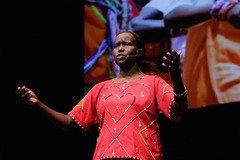
    Kakenya-NtaiyaKakenya Ntaiya was engaged at 5-years-old, her family members regularly whispering in her ear, “Your husband just passed by.” This was the traditional path that unfolded before girls in the Maasai village in Kenya where Ntaiya grew up.

    Kakenya Ntaiya: A girl who demanded schoolKakenya Ntaiya: A girl who demanded school “In Maasai culture, the boys are brought up to be warriors, the girls are brought up to be mothers,” says Ntaiya in today’s incredible talk, given at TEDxMidAtlantic. “Everything I had to do from that moment was to prepare me to be the perfect woman by age 12.”

    But Ntaiya had a different dream — to be a teacher. And so she offered her father a trade: she would go through with the traditional ceremony that marked her rite of passage into womanhood — which included clitoral circumcision — if he allowed her to go back to school and continue her education.

    “The day before the ceremony, we were dancing, having excitement — we did not sleep,” says Ntaiya, remembering the week-long lead-up. But she also recalls the painful circumcision itself and the long healing process. “Three weeks later, I was healed and was back in high school. I was more determined to be a teacher now so that I could make a difference.”

    Eventually, Ntaiya she got a scholarship to study at Randolph Macon College in the United States and convinced her village elders to allow her to go.

    “My father is not the only father I have.  Everybody who is my dad’s age in the community is my father, by default, and they dictate what my future is,” she explains. “When the men heard that a woman had gotten an opportunity to go to school, they said, ‘This should have gone to a boy. We can’t do this.’”

    Ntaiya has great reverence for her Masaai culture — she opens her talk saying, “You know what’s cool? I’m one of them.” To hear how she used her culture’s traditions to get the men of her village to support her education and how — upon returning to the village after graduate school — she was able to gain their support for founding a school for girls, listen to this powerful talk.

    As she says, “I learned that ceremony I went through is called female genital mutilation. I learned that it was against the law in Kenya. I learned that I did not have to trade part of my body to get an education … As we speak right now, 125 girls will never be mutilated. 125 girls will not be married when they are 12-years-old. 125 girls are creating and achieving their dreams.”

    Below, get to know more about Kakenya Ntaiya.


    In addition to her work with The Kakenya Center for Excellence, Ntaiya is an emerging explorer with National Geographic. Here, a video she made explaining more about her motivation in founding her school for girls.

    “When I started learning about the things I was in school, it really taught me that this should not be happening to young girls. These girls needed a place where they could be nurtured and a place where they could be told that marriage is not the end,” explains Ntaiya. “I have girls in my school right now — they have dreams of wanting to be pilots, they want to be doctors. They want to explore the world.”

    Here, an essay Ntaiya wrote upon returning to Enoosaen, Kenya, to visit her family in 2008:

    “I was so glad to be home after a two-year absence but my sense of relaxation was almost immediately replaced by a sense of desperation. The needs of the community are plainly overwhelming; lack of basic needs such as water, power, proper roads, proper education facilities, health care facilities—these are the first things you notice as you near my village. As I drove home on a dusty road, I could not help but wonder how strong my people are and how spoiled I have become living in America. Why did I even complain that there was dust on my nine-month-old son who was having fun watching the open road?” Read the full journal entry »

    Here, Ntaiya’s journal entry, written after the groundbreaking event for The Kakenya Center for Excellence in 2008:

    “I was very excited but also nervous. I was not sure if the community would turnout in big numbers for the event or if the only attendees would be from supporting women’s groups—Empiris group, the Kakenya Center for Excellence Committee and my friends from Vital Voices.

    In preparation for the event, women from the village spent the whole night cooking: a bull was slaughtered and coupled with all of the other wonderful food that we have in Kenya. A film crew from America was busy shooting footage and other guests were beginning to arrive, traveling on rough roads for four hours to reach Enoosaen. I felt truly blessed to have such a group of supporters and friends. “Why worry about the ones who don’t want to come?” I consoled myself.

    As you may have guessed, the turn out was unbelievable.” Read the full journal entry »

    In 2010, here’s what Ntaiya wrote while raising money for a dormitory for the school:

    “I remember my own first experience as a boarder at age fourteen when the doors of education were opened to me. For the first time, I had my own bed with a mattress, bed sheets and a blanket. I even owned my very own towel! As is the case with our girls, I had always shared a bed with my sisters and we used a cow skin as a mattress. We shared the blanket and we never had bed sheets. So, I was completely thrilled to have my own little bed and sheets and towels. You can imagine that our girls will be just that happy to have their own belongings too!” Read the full journal entry »

    And here is what she wrote after receiving a grant to help finish the dormitory in 2010:

    “When I received the call from Aaron that ‘Kakenya’ had won an award, I could not believe it. I was stunned speechless. When he went on to tell me that the award came with $25,000 that Vital Voices was going to donate to the school, I was overjoyed. The money would make a huge impact on our girls.

    We had started building the dormitory, but we were $40,000 short, and Phase 1 must be completed by the first week in January. If construction was not finished, I worried that we would need to choose between not admitting the next group of girls and admitting them without housing. Just as bad would be having to send the 63 girls we currently house in an unused classroom—the one we need for the new students in January—back to their homes at the end of every day. We would no longer be a boarding school in a safe, sheltering environment. Most girls would need to walk long distances—up to 5 miles each way—and would be subjected to the dangers of animal and human predators, And for the 63 girls, the necessity of moving off campus would demoralize them. Although they have been sleeping two to a bed, they have been happy, self-confident girls with a growing sense of academic excellence and a higher self-esteem. Walking would necessitate lengthy chores at home and greatly diminished time for homework, along with the complete loss of extra-curricular activities on which our school prides itself.

    The award has renewed hope.”  Read this full journal entry »

    And here, watch 7 more inspiring TED Talks from people who went to great lengths to get, and give, an education »

  • Can limitations make you more creative? A Q&A with artist Phil Hansen

    Phil-Hansen-at-TED2013Phil Hansen has tattooed bananas, drawn a portrait on stacked Starbucks cups and created a Jimi Hendrix portrait out of matches, which he then burned. In other words, he isn’t the kind of artist who feels bound to paint on canvas.

    So how did Hansen happen upon such fascinating methods? By embracing a major limitation — a hand tremor that made it impossible for him to do the pointillist drawings he loved.

    The theme of transcending constraints and roadblocks was a major theme at TED2013. While Hansen said in his talk, “Embracing the limitation can actually drive creativity … We need to first be limited in order to become limitless,” filmmaker Martin Villeneuve echoed the sentiment in his talk about making a sci-fi movie for $2 million. He said, “If you treat the problems as possibilities, life will start to dance with you in the most amazing ways.” And TED’s own Lisa Bu shared how she found her true calling when her dream of being an opera singer died. In a powerful moment of her talk, she said, “‘Coming true’ is not the only purpose of a dream. Its most important purpose is to get us in touch with where dreams come from, where passion comes from, where happiness comes from. Even a shattered dream can do that for you.”

    Fascinated by this message, I asked Hansen a few questions at TED2013.

    The power of limitations has been a real theme so far this conference. Why do you think this hasn’t traditionally been a part of the conversation about creativity?

    I think due to the economy, we’ve been running into a spike of constraints while at the same time being more culturally fascinated with creativity than ever. One of the speakers, Danny Hillis, said “It’s hard to get people to focus on plan B when plan A is working so well.” Now we are in a place where lots of “plans As” are no longer working. Being forced to reevaluate is allowing us to see this connection between limitations and creativity that has always been right in front of us. Within this process, we are bringing curiosity back — curiosity about new possibilities that we hadn’t explored when plan A was working so well. And we are discovering better alternatives, as I’ve witnessed here from a lot of speakers so far at TED.

    I’m curious — have you had any ideas for works since being at TED?

    There’s really not an off button — I’m always running ideas in my head. A lot of ideas have surfaced in conversations with other attendees about possible collaborations that I’m really excited about.

    I’ve been contemplating a text art project where I ask people to share their stories about limitations with me. I’ve had so many people come up to me and share their stories that I feel inspired to take this project on a bigger scale. I want everyone who looks at this piece to be able to find a story that they can relate to in looking at their own limitations.

    So let’s say you’re a writer/artist/musician and you’re feeling a bit blocked. What are some things you can do to get the juice flowing again?

    Creativity is simply connecting information, so we have to be in a relaxed mental state that is open to seeing these connections, but aware enough to capture them. Getting to this mental state is different for everyone, so I always suggest people experiment and find what works for them. Whenever I feel creatively stumped, my first instinct is to do something to get myself relaxed. I usually go on a long walk, like two hours long, because it takes at least 45 minutes for me to get out of my head and into the ether.

    In order to be in the creative flow, it’s really important to be process driven and hold the results loosely. Sometimes it’s better to keep pushing through it. If you’re a writer, keep writing — even if it’s gibberish — and eventually it will flow again. Sometimes it’s better to destroy and start over. Or, if what you’re working on is too broad, impose a limitation to spark your creativity.

  • 9 talks on creatures from the deep

    Edith-WidderImagine a squid so big that, when sprawled out, it is the size of a two-story house. Edith Widder has now seen this enormous ocean creature, once the stuff of nautical legend, six times.
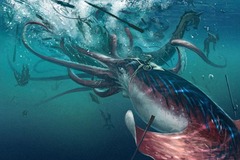
    Edith Widder: How we found the giant squidEdith Widder: How we found the giant squidIn today’s talk, Widder shares how we now have filmed proof of the giant squid’s existence, thanks to a mission conducted by herself, Tsunemi Kubodera and Steve O’Shea and financed by the Japanese Broadcasting Corporation, NHK. While many previous missions failed to capture evidence of the giant squid, Widder and her fellow scientists used novel approaches — a camera platform that moves silently through the ocean, a bioluminescent electronic jellyfish to attract large sea creatures and a submersible able to take high definition footage from afar — to give us a glimpse of this mythical creature. In fact, they filmed it in action multiple times.

    “How could something so big live in our ocean and remain unfilmed until now?” asks Widder on the TED2013 stage. “We’ve only explored about 5% of our ocean. There are great discoveries yet to be made down there — fantastic creatures representing millions of years of evolution and possibly bioactive compounds that could benefit us in ways we can’t even imagine. Yet, we’ve spent only a tiny fraction of the money on ocean exploration that we’ve spent on space exploration.“

    To see the giant squid for yourself, and to watch footage of the crew as they caught their first glimpses of it, watch this talk — a behind-the-scenes look at the making of the Discovery Channel documentary, Monster Squid: The Giant Is Real. And here, more talks on incredible oceanic creatures:

  • 8 talks about learning from failure

    Allan SavoryAllan Savory isn’t afraid to own up to the “greatest blunder” of his life. In his incredible talk from TED2013, Savory shares his life’s work managing grasslands in Africa, weaving a gripping tale out of what seems like an unlikely topic. Allan Savory: How to green the world's deserts and reverse climate changeAllan Savory: How to green the world's deserts and reverse climate change In the 1950s, Savory helped create large national parks in Africa. But as people left this land to make way for animal reserves, Savory and his team noticed the land deteriorating and quickly turning into desert. After careful analysis, they determined that the problem was an over-abundance of elephants. And so in a politically heated move, they shot 40,000 elephants in order to save the grasslands.
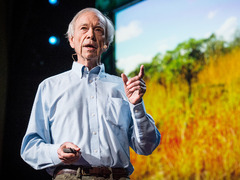
    Only, it didn’t work. Even with all these elephants killed, the grassland deterioration only got worse. In a powerful moment in the talk, Savory expresses his dismay.

    “That was the saddest and greatest blunder of my life,” he said. “I will carry that to my grave.”

    To hear how Savory, over the next few decades, found real solutions to the problem of desertification — one that involves livestock — watch his talk. Here, other bold speakers who’ve owned up to mistakes or expressed what they’ve learned from failure.

  • A new way to judge nonprofits: Dan Pallotta at TED2013


    Photos: James Duncan Davidson

    Photos: James Duncan Davidson

    Dan Pallotta created two huge charity initiatives – AIDS Rides bicycle journeys and Breast Cancer 3-Day events. These initiatives raised $108 million for HIV/AIDS and $194 million for breast cancer. Both had their best years in 2002 … and then Pallotta’s nonprofit went out of business.

    In the final session of TED2013, Pallotta shares why that happened: Major sponsors pulled out following a slew of bad press over the idea that his organization was investing 40% of their gross into recruitment and customer service. The backlash came from our basic — and wrong — cultural understanding of charity.

    “What we know about charity and the nonprofit sector is undermining the causes we believe in and our desire to change the world,” says Pallotta. We expect businesses and nonprofits to use “two separate rulebooks,” he suggests.

    “Business will move the mass of humanity forward, but will always leave behind that 10% of the most disadvantaged and unlucky,” he says — which is why we need philanthropy and nonprofits. But couldn’t the nonprofit sector use the same strategies as the business world to grow their profits and give more money to the needy? After all, says Pallotta, “How do you monetize the prevention of violence against women?”

    The nonprofit sector as we know it isn’t working. In the United States, poverty has been stuck at 12% for the last 40 years. Homelessness has not been solved in any major city, and we have no cure for cancer.

    “Our social problems are gigantic in scale, our organizations are tiny up against them — and we have beliefs that keep them tiny,” says Pallotta, the president of Advertising for Humanity and author of Charity Case.

    Pallotta outlines five ways in which nonprofits are handicapped in their mission to help people.

    1. Compensation

    “We have a visceral reaction to the idea of people making a lot of money helping others. Interestingly, we don’t have a visceral reaction to the idea that people should make a lot of money not helping other people,” says Pallotta. “It gives a stark, mutually exclusive choice between doing well for yourself and your family and doing well for world.”

    For example, the average salary for a CEO of a hunger charity is $80K. Meanwhile the average salary for someone with an MBA, after ten years of school, is $400K.

    “We send people marching from the nonprofit sector into the for-profit sector, because they’re not willing to make that kind of compromise,” says Pallotta. “Not a lot of people with $400K talent will make a $316K sacrifice every year.” And actually, it turns out it’s more financially advantageous for these talented business minds to take the big paycheck, give $100K to a hunger charity each year, reap the tax benefits and get the label of “philanthropist.”

    2. Adveritsing and marketing

    “We tell for-profits to spend, spend, spend on advertising,” says Pallotta, but nonprofits are expected not to advertise — unless the advertising space and airtime is donated. People want to see their money spent directly on the needy.

    But Pallotta points out that money invested in advertising can be returned dramatically amplified. He uses his own initiatives as an example. Over nine years, more than 182,000 people participated in Pallotta’s AIDS Rides and Breast Cancer 3-Day events, raising a cummulative $581 million.

    “We got that many people to participate because we bought full-page ads,” says Pallotta. “Do you know how many people we would have gotten if we advertised with fliers in the laundromat?”

    Pallotta stresses that nonprofits need to be able to communicate with the public the incredible work that they are doing — and to ask for bold commitments in return. “People are yearning to be asked to use the full measure of their potential for somthing they care about,” he says.

    3.  Taking risks on new revenue ideas

    Nonprofits are not allowed to try new things, says Pallotta, because public outcry sounds so quickly at a failure. As Pallotta found by using a different model of spending — experimentation is a big no-no for nonprofits.

    “Nonprofits are reluctant to attempt any brave, daring new fundraising endeavors, because they’re because scared their reputations will be dragged through the mud,” he says.

    This fear kills innovation. And if nonprofits can’t try new things and grow — how can they possibly tackle problems of the size that our world has?

    4. Time

    On the same note, Pallotta points out that it took Amazon took four years to turn a profit. While businesses are given time to build the infrastructure they need, non-profits are not afforded this luxury.

    “If a non-profit had a dream of building at a magnificent scale, but it would require six years for the money to go to the needy, we would expect a crucifixtion,” says Pallotta.

    TED2013_0072108_DSC_95355. Profit to attract risk capital

    This point is a simple one: nonprofits can’t go after capital, because they can’t be on stock market. And how do you build scale without capital?

    Pallotta stresses that the nonprofit sector is at an extreme disadvantage when compared with the for-profit sector. The difference is dramatic. Since 1970, 144 nonprofits have crossed the $50 million annual revenue barrier. In the same amount of the time, an astounding 46,136 for-profit businesses have surpassed that mark.

    So how did this happen? Pallotta looks to American history for the answer. He shares how the Puritanical spirit saw self-interest as a ticket to hell. But charity was seen as the antidote, a way to do penance. “Financial interest was exiled from the realm of charity,” he says.

    Today, Pallotta is horrified that only one question is used to evaluate a charity: What percentage of my donation goes to the cause versus overhead?

    “It makes us think that overhead is a negative, that it is somehow not a part of ‘the cause,’” he says. “This forces organizations to forego what they need for growth.”

    Pallotta shares how his organization used a more-business like model — taking $50K in initial funding for AIDS Rides and multiplying it to $108 million, and taking an $350K initial investment in Breast Cancer 3-Day walks and multiplying it to $194 million. Pallotta says that his organization could have gone the route of just giving the initial funding to research, but by investing in growth, they were able to give so much more.

    “[And yet] 350 employees lost their jobs because they were labeled overhead,” says Palotta. “This is what happens when we confuse morality with frugality.”

    Pallotta notes that charitable giving in the United States has remained stuck at 2% of the gross domestic product for the past four decades. What if, instead of requiring charities to tighten their belts, we let them grow and try to increase their marketshare?

    Pallotta shows an interesting pie graph. Two percent of the US GDP equals $300 billion, with about $60 billion going to health and human services charities. But what if charitable giving could be boosted just 1%? That would be an extra $150 billion a year — just for health and human services charities.

    “Our generation does not want its epithet to read, ‘We kept charity overhead low,’” concludes Pallotta. “We want it to read that we changed the world.”

    And so next time you’re investigating at charity, he pleads: “Don’t ask about the size of their overhead — ask about the size of their dreams.”

  • “The Unquiet Mind”: TED Radio Hour season 2 premieres today

    Unquiet-Mind-for-pageTurn up the radio! TED Radio Hour’s second season begins today. Hosted by NPR’s Guy Raz, the first episode is “The Unquiet Mind,” a beautifully soundscaped hour of inspiration that will make you think differently about, well, thinking.

    We’ve all had that moment when you see or hear something and wonder: am I going crazy? In this episode, TED speakers share their experiences straddling the line between madness and sanity. Neurologist Oliver Sacks explains a peculiar condition called Charles Bonnet syndrome — when people of sound mind experience lucid hallucinations. Law professor Elyn Saks shares stories about her schizophrenic episodes and how she was able to rise above her grave diagnosis. Plus, author Jon Ronson goes psychopath spotting, and wonders who among us is truly completely sane.

    Check your local NPR schedule to find out when the show premieres today. Or head to iTunes where the podcast is available now »

  • Escape from North Korea: Hyeonseo Lee at TED2013

    Photo: James Duncan Davidson

    Photos: James Duncan Davidson

    Hyeonseo Lee saw her first public execution at age 7. A child growing up in North Korea, the moment affected her, but she didn’t have the frame of reference to understand the government repression going on around her.

    “When I was little, I thought my country was the best on the planet,” she says in Session 10 of TED2012. “I was very proud … I often wondered about the outside world, but I thought I would spend my life in North Korea.”

    In the 1990s, a famine struck North Korea, killing an estimated million people. And while Lee’s family was able to eat, in 1995, her mom brought home a girl. With the girl was a letter that read, “When you read this, our family members will not exist in this world because we have not eaten.”

    “I was so shocked,” says Lee. “This was the first time that I heard people in my country were suffering.”

    She began to hear of people surviving by eating grass and tree bark. While she lived only across a river from the Chinese border — close enough to see their lights, and wonder why her side was so dark — the bodies floating in the river of drowned escapees was enough to deter escape.

    Lee can’t share a lot of details of how she left North Korea — she can only say that at some point, she was sent to stay with distant relatives. She thought she’d see her immediate family again soon. That wouldn’t happen for another 14 years.

    Lee lived in China, essentially on her own, posing as if she were Chinese so that she wouldn’t be sent back to North Korea.

    “One day, my worst nightmare came true,” says Lee. She was caught by the Chinese police. Someone had accused her of being North Korean, and she was subjected to brutal tests of her ability to speak Chinese. “I was so scared, I thought my heart would explode.”

    Luckily, she passed the test and felt a surge of relief when the officers said: “She isn’t North Korean.”

    TED2013_0065604_DSC_8972“Every year, countless North Koreans are caught in China, sent back, tortured, imprisoned, publicly executed … It was a miracle,” says Lee. “It’s tragic that North Koreans have to hide their identity just to survive. Even after getting out, their whole world can be turned upside down.”

    Ten years later, Lee started life over again in South Korea, learning a new culture and going to university. But soon, she received another panic in the form of a telephone call. North Korean officials had intercepted money sent to her family. She needed to help them escape, and quick.

    On the stage, Lee narrates the incredible journey to get her family out. When they were caught by Chinese police, Lee managed to convince them that her family was “these deaf and dumb people that I am shepherding.” It worked, and Lee’s family made it through China and into southeast Asia. But then they were arrested for border crossing.

    “This was one of the lowest points in my life,” says Lee. “I did everything to help my family to get to freedom and we came so close. But they were thrown in jail just a short distance from the South Korean embassy.”

    It was the kindess of a stranger that saved them. A random man asked Lee what was wrong. He took her to an ATM and gave her money to pay her family’s way out of jail. When she asked him why, he said: “I’m not helping you, I’m helping North Korean people.”

    Lee’s story is powerful and a good reminder that getting to freedom is only half the battle.

  • The interspecies internet: Diana Reiss, Peter Gabriel, Neil Gershenfeld and Vint Cerf at TED2013

    Photos: James Duncan Davidson

    Photos: James Duncan Davidson

    The internet connects people all over the world. But could the internet also connect us with dolphins, apes, elephants and other highly intelligent species?

    In a bold talk in Session 10 of TED2013, four incredible thinkers come together to launch the idea of the interspecies internet. Each takes four minutes to talk, then passes the metaphorical baton, building the narrative in parts.

    The talk begins with Diana Reiss, a cognitive psychologist who studies intelligence in animals. She shows us a video of an adorable dolphin twirling in the water. But the dolphin isn’t spinning playfully for the camera — the dolphin is watching itself in a two-way mirror.

    “A dolphin has self-awareness,” says Reiss. “We used to think this was a uniquely human quality, but dolphins aren’t the only non-human animals to show self-recognition in a mirror. Great apes, our closest relatives, also show this ability.” Ditto for elephants and even magpies.

    Reiss shares her work with dolphins — she’s been teaching them to communicate through an underwater keyboard of symbols that correspond to whistles and playful activities. Through this keyboard, the dolphins learned to perform activities on demand, and also to express their desire for them. (For more on how a similar dolphin keyboard works, read up on Denise Herzing’s talk from earlier today.)

    TED2013_0065235_D41_2938“You can’t get more alien than the dolphin. We’re separated by 95 million years of divergent evolution. These are true non-terrestrials,” says Reiss. “This self-organized learning, the same thing we heard from TED Prize winner Sugata Mitra. I’m suggesting this is our Hole in the Water.”

    Reiss was conducting this work on her own. And then she got a call from iconic musician Peter Gabriel.

    “I make noises for a living, and on a good day it’s music,” says Gabriel. He has always looked into the eyes of animals and wondered what is going on inside their heads, he says, soe excitedly read about research, like Reiss’, examining communication with animals.

    “What was amazing to me was that [the animals] seemed a lot more adept at getting a handle on our language than we were at getting a handle on theirs,” says Gabriel. “I work with a lot of musicians from around the world. Often we don’t have any common language at all. We sit behind our instruments and it’s a way to connect.”

    TED2013_0064754_DSC_8824So Gabriel started cold-calling scientists to see if he could be a part of this work. His goal: To try writing music with an animal. And he got his chance.

    In a video clip that raises oohs and ahhs from audience, Gabriel shares a video of a bonobo with a keyboard. While bonobos had been introduced to percussion instruments before, and bashed them with their fists, this was the first time this bonobo had ever seen a keyboard. And with accompaniment, she played truly amazing music.

    “She discovers a note she likes. She finds the octave,” says Gabriel, narrating the beautiful melody in the video. “We began to dream … What would happen if we could somehow find new interfaces – visual, audio — to allow us to communicate with the remarkable beings we share the planet with.”

    Gabriel brought the video of this unusual jam session to Neil Gershenfeld, the Director of MIT’s Center for Bits and Atoms.

    TED2013_0064789_DSC_8859“I lost it when I saw that clip,” says Gershenfeld, stepping up to the stage. “I was struck by the history of the internet, because it started as the internet of middle-aged white men … I realized that we humans had missed something — the rest of the planet.”

    At this point, Gershenfeld video-conferenced in animals live — including orangutans in Waco, Texas, dolphins at the National Aquarium in Baltimore, and elephants in Thailand.

    Gershenfeld is known for his work in the internet of things. And he thinks animals can be a part of it, too. ”We’re starting to think about how you integrate the rest of the biomass of the planet into the internet,” he says.

    Which brings us to Vint Cerf, who helped lay the foundations for the internet as we know it and is now vice president and Chief Internet Evangelist for  Google.

    TED2013_0065415_D41_3118“Forty years ago we wrote the script of the internet. Thirty years ago we turned it on,” says Cerf. “We thought we were building a system to connect computers together. But we quickly learned that it’s a system for connecting people.”

    “You know where this is going,” Cerf continues, to a laugh, bringing it back to research in communicating with animals. ”What’s important about what these people are doing: They’re beginning to learn how to communicate with species that are not us, but share a sensory environment. [They’re figuring out] what it means to communicate with something that’s not a person. I can’t wait to see these experiments unfold.”

    So what’s next? The internet of things, yes, and the ability for us to communicate with computers without keyboards and mice. And in addition to the internet of species, he even imagines an interplanetary internet.

    “These interactions with other animals will teach us, ultimately, how we might interact with an alien from another world,” says Cerf. “I can hardly wait.”

  • The Congo is not hopeless: Ben Affleck at TED2013

    Photo: James Duncan Davidson

    Photo: James Duncan Davidson

    On Sunday night, Ben Affleck accepted the Academy Award on behalf of his film, Argo, as it was named the Best Picture of 2012. And today, he appeared on the TED2013 stage kicking off Session 10, “Secret Voices.”

    “This is not a TED Talk. I will not be interesting or funny. This will not be exciting in any way,” he said. “Though I fee a little bit like Al Gore in the TED headset. He’s not here, is he?”

    And then he gets serious. “At the Academy Awards, I mentioned my wife, and I said: The people we love, we have to work on those relationships,” said Affleck. “The other thing that I work on is Eastern Congo.”

    “I felt like I wasn’t doing enough to give back to the world. So I found one of the most damaged, suffering places in the world, where 1 in 5 children die before the age of 5. It’s a place where a million people are displaced, regularly, inside the country. Where there’s the worst gender-based violence in the world … There are a lot of things to lament, particularly in the last 15 years when 5.5 million people died from conflict-related violence.”

    TED2013. Long Beach, CA. February 25 - March 1, 2013. Photo: Ryan Lash

    Photo: Ryan Lash

    As Affleck says, many people object to this number. So he asks us to imagine that the number were 3 million people. Per capita, that would be roughly the equivalent of 12 million people in the United States. “That’s the population of Chicago, Boston and Philadelphia,” he says. ”If they had every single person who lived there die, we would probably take some steps. There would be a reaction.”

    So why haven’t we responded?

    “I think we are a naturally good people. We care about one another. When our neighbor has cancer, we go over with meatloaf and take care of their kid,” says Affleck. “I think what happens [when we think about the Congo] is that we feel it’s too big, it’s too difficult to look at … I can understand my aunt who passed away, but 3 million deaths I can’t understand. I don’t want to understand – it’s just too painful, so I disengage.”

    Too many people say that the situation in the Congo can’t be changed and that corruption runs too deep.

    “I don’t believe that’s true,” says Affleck. “I’ve seen and met people doing incredible things, mending the fabric of their lives – their family’s lives — brick by brick, stitch by stitch. It’s changed my views on what’s possible.”

    Photo: James Duncan Davidson

    Photo: James Duncan Davidson

    Tonight, Affleck is here to show us just a scratch off the surface of the amazing things happening in the Congo. And with that, he introduced the Kinshasa Symphony, from the Congo, playing a composition called “Luba.”

    In crisp suits, the musicians made beautiful music — their strings diving and soaring with beauty. And hope.

  • How to spy on hackers: James Lyne at TED2013

    Photos: James Duncan Davidson

    Photos: James Duncan Davidson

    Cybersecurity specialist James Lyne takes the TED2013 stage to show us some of the newest and nastiest creations that cybercriminals have designed to steal data, make off with billions of dollars, watch people through their webcams and target power and utility companies. Every day, he says, about 250,000 new pieces of malware are created and 30,000 websites infected.

    “People think that, if you get a computer virus, you’ve been on a porn site,” says Lyne, of the security firm Sophos. “Actually, statistically speaking, if you only visit porn sites you’re safer.” Shockingly, 80% of infecting sites are actually small businesses or other legitimate enterprises that have themselves been infected.

    The world of malware is becoming commercialized. Cybercriminals now advertise online, offering their services for $10 to $50 per hour. Lyne shows this video as an example.

    There are sites where you can test a virus to make sure it works before unleashing on the world, and sophisticated services for tracking your malware. Some of these services even offer customer support.

    So what are some ways to infect a computer with malware? In addition to the old “Hello, I’m a Nigerian banker,” you could, perhaps, walk into a corporate lobby with a copy of your resume soaked in coffee, and make a sad face and ask the receptionist to plug in a USB key and print you a new copy. Or perhaps you can target a website that has an insecure comments section; anyone who visits the page will then be infected. And there’s a new tactic that Lyne has noticed — creating a virus that pops open a fake anti-virus protection software window on a person’s screen. By clicking the button, not only does a person give a hacker access to their computer, but might even pay for the .

    So many stories about cybercrime are terrifying. But Lyne has a success story to share — a time he was able to track the group of cybercriminals behind the Koobface malware. This group didn’t protect their malicious code, which was written to send each of them a text message daily to show them how much money they’d accumulated. In other words, Lyne’s team had their phone numbers. From there, he could tell they were located in Russia.

    Because many smartphones embed GPS data about where photo is taken, Lyne was able to find the hackers’ exact location through photos they uploaded to Flickr. From there, Lyne’s team generated a 27-page report filled with information about this group — including an ad one of them had posted for the sale of kittens, shots from a fishing trip, a photo of their office on the third floor of a building and images from the office Christmas party. He eventually even found their bank accounts.

    Sadly, Lyne reveals that this report wasn’t enough to bring these hackers to justice. Most laws pertaining to cybercrime are national, and because there is no common definition between countries, this group is still at large.

    Lyne stresses that, for the time being, the onus is on individuals to protect themselves by creating different passwords for different websites and using basic internet safety protocols. For example, don’t upload smartphone photos to an online dating site – Lyne has found that 60% of photos there contain location data. But vulnerabilites can be even more subtle than that. As you move through the world, using your phone to connect to wireless networks Lyne warns that you are “beaming a list of the wireless networks you’ve previously connected to.”

    TED2013_0063217_D41_2030Lyne collected data on the TED2013 audience by tracing these signals:

    • 23% had been to Starbucks recently
    • 46% could be linked to a specific business
    • 761 could be traced to a specific hotel
    • And 234 could be traced to coordinates of their homes

    “As we play with these shiny new toys, how much are we trading off convenience over privacy and security?” asks Lyne. ”The internet is a fantastic resource for business, art and learning. Help me and the security community make life much more difficult for cybercriminals.”

  • How a dead duck changed my life: Kees Moeliker at TED2013

    In 1995, the Natural History Museum Rotterdam got a new wing made of glass. It was beautiful for humans — but not so much for birds. Many of them lost their lives flying into the invisible walls.

    Photo: James Duncan Davidson

    Photo: James Duncan Davidson

    “I developed an ear for identifying birds just by the sound of the bang they made on the glass,” says Kees Moeliker in Session 9 of TED2013. “It was on June 5, 1995, that I heard a loud bang that changed my life and ended that of a duck.”

    When Moeliker rounded the building, he saw two male ducks, one living and one dead. He watched confused as the live one mounted the dead one and started to copulate with it. As far as he knew, this was the first observed case of homosexual necrophilia in ducks. But Moeliker, a researcher who didn’t want to kill his career, was worried about sharing this finding. ”It was a nice thing to discuss at birthday parties,” he says, “but not a nice thing to discuss with your peers.”

    It took him 6 years to decide to publish, but eventually he submitted the paper. At first, nothing much happened. But then he got a call from a prestigious committee: The Ig Nobel Prize committee. He’d won. Soon, his email was flooded with duck paraphernalia and images of other animals’ strange sexual habits — a moose trying to copulate with a statue, a frog trying to copulate with a goldfish, and necrophiliac pigeons.

    “If there’s an animal misbehaving on this planet, I know about it,” says Moeliker. He notes one pattern about these images: ”Missionary position is very uncommon in the animal kingdom.”

    Moeliker wonders if we might be somehow to blame for this strange animal behavior. He gives the example of a bird called Mad Max that continually flew into a glass windowpane over and over again, from 2004 to 2008, because it sees its own reflection and tries to fight it. Could it be that our morphing of their environments is changing animal behavior?

    Every year on June 5, Moeliker now holds Dead Duck day, a holiday dedicated to finding new ways to keep birds from colliding with windows. He invites us to celebrate with him, and walks offstage.

  • TED Weekends asks: What is at the heart of education?

    ted2013_0035945_d41_4606Where does education go from here?

    Sugata Mitra: Build a School in the CloudSugata Mitra: Build a School in the CloudOn Tuesday, Sugata Mitra accepted the 2013 TED Prize and offered a bold wish for the world: that we encourage children to explore questions about our world in self-organized learning environments. He proposed the founding of a School in the Cloud based in India, and encouraged TED community members, wherever they may be, to foster education by encouraging a sense of wonder in kids.

    This week’s TED Weekends, posted a few days earlier than usual, features essays from great thinkers on the ideas advanced in Mitra’s talk. Here, a selection of these essays, for your reading pleasure. 

    Sugata Mitra: We Need Schools … Not Factories

    From Plato to Aurobindo, from Vygotsky to Montessori, centuries of educational thinking have vigorously debated a central pedagogical question: How do we spark creativity, curiosity, and wonder in children? But those who philosophized pre-Google were prevented from wondering just how the Internet might influence the contemporary answer to this age-old question.

    Today, we can and must; a generation that has not known a world without vast global and online connectivity demands it of us. Read the full essay  »

    Courtney E. Martin: The Most Powerful Technology of All … Questions

    Many will see Sugata Mitra’s wish — to build a “School in the Clouds” — as a TED-style, uber futuristic, and potentially impractical, solution for a very real problem across the globe. But the innovation at the very heart of his wish, truth be told, is not about computers or Skype or even Google. The most critical technology is a really good question.

    I think a lot about the power of questions, because I’m a journalist. Well, that, and a nosy person. I’m the kind of person that you sit down next to at a dinner party and ten minutes later you realize that I’ve pulled your life story right out of you. In many ways, it’s not a conscious process, even for me. One minute I’m learning someone’s name and the next I’m asking them, “And then what happened?!” Read the full essay »

    Jackie Bezos: A Cloud of Human Potential

    In every town in every nation, young people are moments away from inheriting complex problems. At the same time, disparities in educational opportunity and achievement are widening and threatening to undermine the vast potential of our youngest generations. As a global community, it is unconscionable that we leave so much promise unrealized among our youth.

    In places where the greatest inequity exists, Dr. Sugata Mitra’s “School in the Cloud” holds enormous promise for leveling the playing field. But his methodology, which taps into a child’s innate sense of wonder and curiosity through Self-organized Learning Environments (or SOLES), is relevant for communities and classrooms everywhere. In essence, it’s about putting the power to learn, create and collaborate into the hands of our children. Read the full essay »

    Vanessa Lafaye: If We Turn the Internet Into the World’s Memory, What Becomes of Our Own?

    It is interesting to note that Mitra’s TEDTalk is titled, “The Future of Learning” rather than “Education.” This distinction seems like the heart of the issue, not only for SOLE (self-organized learning environment), but more widely. It’s the difference between absorbing information, and developing faculties for creative thought and analytical problem-solving.

    He traces today’s education system back to the Victorian-era hunger for literate bureaucrats, needed to keep the wheels of the British Empire running smoothly. As it happens, my employer Wiley was established even before this time. Also as it happens, publishing is undergoing a dramatic reinvention today, in search of new models in response to the urgent imperative to prepare our young for the creative economy of tomorrow. This got me thinking about evolution, of knowledge and ourselves. Read the full essay »

    John McWhorter: Back to the Future

    Sugata Mitra’s inspiration offers promise in returning learning to what humans are programmed for.

    And that is not what we today think of as “school.” The books-and-blackboards model of education will always be most productively engaged by students of two sorts.

    One is the middle-class child from a quiet, book-lined home, in which concentration in solitude is drunk in from toddlerhood.

    The other is the child of driven immigrant families, uniquely dedicated to their children’s making the most of the new circumstances. Read the full essay »

  • Skyscrapers of wood: Michael Green at TED2013

    Photos: James Duncan Davidson

    Photos: James Duncan Davidson

    Architect Michael Green presents an interesting riddle: why are buildings made of wood only a few stories high when trees found in nature are remarkable for their height?

    Speaking in session 7 of TED2013, Green shares his deep love of wood — which he first discovered from his grandfather, a woodworker who taught him to “honor a tree’s life by making it as beautiful as you possibly can.” Now, Green designs buildings made of wood and he notices that people have an usual relationship to wooden walls, columns and ceilings.

    “They hug it. They touch it,” he says. ”Just like snowflakes, no two pieces of wood can be the same anywhere on earth. I’d like to think that wood gives mother nature fingerprints in our buildings.”

    However, building codes currently limit wood buildings to four stories high. And this needs to change, says Green. He proposes that we build skyscrapers out of wood. For the last century, tall buildings have been crafted of steel and concrete — but the green house gas emissions of these materials are huge. As Green notes, 3% of world’s energy goes into the making of steel and 5% goes into the making of concrete. While most people think of transportation as the main villain when it comes to CO2 emissions, building is actually the true top offender — accounting for 47% of CO2 emissions.

    Wood, on the other hand, grows by the power of sun, giving off oxygen and storing carbon dioxide. That carbon dioxide is released when the tree falls and decomposes. By building with wood, we could sequester carbon dioxide. Green says that building with 1 cubic meter of wood stores 1 ton of CO2.

    “We have an ethic that the earth grows our food,” says Green. “We should move toward an ethic that the earth should grow our homes.”

    Green is not talking about building 20- and 30-story buildings with 2x4s. He explains the technology that has been created to form rapid growth trees into mass timber panels. There is a flexible system to build with these huge panels.

    Now, on to the obvious question: what about fires?

    Green points out that mass timber panels are extremely dense and, thus, don’t catch fire easily — it’s the same principle that makes a log hard to burn. And when a fire does catch, it moves slowly and behaves predictably, allowing for uniform fire safety measures to be put in place.

    Another question that people often ask of his system: what about deforestation?

    Green introduces us to sustainable forestry, and shares that enough wood grown in North America every 13 minutes for a 20 story building.

    “This is the first new way to build a skyscraper in 100 years or more,” says Green. He notes that people were terrified to walk under the first skyscraper, but that the perception of these buildings as unsafe began to change with the building of the Eiffel Tower.

    TED2013_0053077_D41_0207“I’m looking for an Eiffel Tower moment,” says Green. ”The engineering of this is the easy part. It’s about changing the scale of imagination … Mother nature holds the patent.”

  • Mouth music: Wang Li at TED2013

    Photos: James Duncan Davidson

    Photos: James Duncan Davidson

    It sounds like music that could be pumping from the sound system of a packed nightclub. But these electronic-tinged sounds actually come from the mouth of one man, Wang Li, a master mouth harp musician, as he plays the kouxiang.

    In session 7 of TED2013, Li gives the audience a taste of his sonic stylings. Raised in Northeastern China, Wang Li played the electric bass before heading to a French monastery after college. There, in the solitude of the monastery, he mastered these unusual instruments and the breath control required to play them. And took away a mystical mindset as well …

    “Sometimes I feel I have already died,” says Li on the TED stage, “so I would like to know if you are my illusion or if you are mine.”

    TED2013_0052285_D41_9663He picks up the calabash flute, a haunting instrument that seems to tap into another plane. He creates a mesmerizing songscape with a hint of sadness, yes — but also filled with hope.

  • Good energy comes in small packages: Taylor Wilson at TED2013


    Photos: James Duncan Davidson

    Photos: James Duncan Davidson

    Taylor Wilson graduated from high school in May. And Popular Science has already dubbed him “The Boy who Played with Fusion” and Forbes has suggested that he may just be “The Bill Gates of Energy.”

    Taylor Wilson: Yup, I built a nuclear fusion reactorTaylor Wilson: Yup, I built a nuclear fusion reactorWilson first received attention at the age of 14, after building a nuclear fusion reactor he’d dreamed up in his parents’ garage. He spoke at TED2012 about that experience, and he’s back this year at TED2013 to talk about a new project.

    “I realized that the biggest problem we face — what all these other problems come down to — is energy,” says Wilson. “This is a talk about fission — about taking something old and bringing it into the 21st century.”

    Wilson has invented Small Modular Fission Reactors. These reactors are small, meaning that they can be built in factories and shipped wherever they need to go. They are installed three meters underground — making them far safer from a counterterrorism standpoint than something aboveground. And these are molten salt reactors, which means that they have the potential to run on the waste from old nuclear weapons — making the wide distribution of this technology a potential way to secure the material from weapon stockpiles.

    As Wilson explains, one of the problems with traditional nuclear power plants is that they only run for 18 months before needing refueling. Small Modular Fission Reactors, on the other hand, will run for about 30 years before they run out of juice. This means that they will be a closed system while they are in use, making them safer. And after the 30-year mark, these reactors can be sealed up and discarded.

    “Everybody after Fukushima had to reasses the safety of nuclear,” says Wilson. “When I set out to design a reactor, I knew it had to be passive and intrisically safe.”

    TED2013_0044135_D31_2268As Wilson explains, because the material in Small Modular Fission Reactors is already molten, meltdowns won’t be a factor. And in the case of a disaster, the core can be drained to a tank underneath, stopping the reaction.

    Wilson is excited about the potential of Small Modular Fission Reactors because they could provide carbon-free electricity for homes and businesses, helping to combat climate change. And because they are produced in factories, for cheap, they may be a way to bring power to the developing world. Wilson excitedly tells TED curator Chris Anderson that he hopes to have Small Modular Fission Reactors to market in five years.

    But Wilson sees other potential for these reactors — to fuel scientific exploration in other areas, perhaps even space.

    “Imagine having a compact reactor in a rocket that produces 50-100 megawatts. That’s the rocket designer’s dream,” says Wilson. And it isn’t inconceivable, considering that plutonium batteries have been sent into space aboard rockets. ”I think there’s something poetic about using nuclear power to propel us to the stars. Because the stars are giant nuclear power reactors themselves.”

  • The yo-yo master: BLACK at TED2013

    TED2013_0039495_D31_0877

    “When I was 14 years old, I had low self-esteem,” yo-yo champion BLACK begins his talk during session 4 of TED2013. “Then one day, I bought a yo-yo.” The first trick he tried — well, it didn’t work. But after a week of practice, he started to get somewhere. He remembers, “I thought, ‘The yo-yo is something for me to be good at. For the first time in my life, I found my passion.’”

    But practicing for hours a day and winning the World Yo-Yo Contest four years later in 2001 didn’t take him on the path he hoped. “I thought I’d become a hero! I will get many sponsors. Money. Many interviews! I will be on the TV,” says Black. But fame and fortune never came. Instead, BLACK went back to school and became a systems engineer.

    Eventually, though, he had to return to his passion. “I wanted to show how spectacular the yo-yo could be. I wanted to change the public image of the yo-yo,” says BLACK. “So I quit my company and started a career as a professional performer.” He won the World Yo-Yo Contest again in 2007, and even passed an audition for Cirque du Soleil.

    On the TED stage, BLACK gives a performance set to dramatic music, a yo-yo spinning quickly and maseterfully around him like a ribbon around a rhythmic gymnast. Soon, he picked up a second yo-yo, spinning them wildly, as if juggling. Bending backwards to the floor, he keeps the yo-yos orbiting just millimeters from his face. The performance is both graceful and thrilling.

    TED2013_0040215_D41_5934

    TED2013_0039869_D41_5588

    TED2013_0039449_D31_0831

    TED2013_0040058_D41_5777

    See BLACK in action for yourself, below.