Author: Pan-African News Wire

  • Africa Spends $20 Billion Yearly to Import Food

    Africa spends $20bn yearly to import food — Sanusi
    National News Mar 9, 2010

    By Henry Umoru
    Nigeria Vanguard

    ABUJA—GOVERNOR, Central Bank of Nigeria , CBN, Mallam Sanusi Lamido Sanusi disclosed yesterday that the total projected demand for agri-business financing required in Africa from now till 2050 stands at $620.4 billion, just as the annual demand is put at $6.5 billion.

    According to him, funding globally from various sources had been declining over the years, just as he said Official Development Assistant, ODA, to sub Sahara Africa’s agriculture dropped from $1.450billion in 1998 to $713million in 2002.

    Sanusi who noted that Africa’s food import bills stand between US$2billion and 20 billion per annum in addition to the continent’s US$2billion annual food aid, stressed that these huge financial resources being expended could be used internally to develop Africa’s agricultural potential.

    Speaking yesterday at the ongoing a three-day conference on the development of Agri-Business and Agro-Industries in Africa in Abuja, warned that if the continent fails to address the problem associated with agriculture, there could be impending food crisis in the African continent.

    The Apex Bank boss who noted that the proportion of people living below the poverty line of less than US$1 a day increased from 47. 6 per cent in 1985 to 59 per cent in 2000 and still growing, stressed that a large proportion of people in Africa had limited access to food, clothing and shelter, adding that more than 200million people, particularly women and children were still undernourished.

  • Haiti Frees U.S. Missionary Held Over Kidnapping

    Haiti frees U.S. missionary held over kidnapping

    Mon, Mar 8 2010
    By Joseph Guyler Delva

    PORT-AU-PRINCE (Reuters) – A court in Haiti on Monday freed a U.S. missionary jailed for weeks on charges of kidnapping children in the chaos that followed the country’s devastating January 12 earthquake, witnesses said.

    Charisa Coulter was due to fly out of Haiti for the United States. Haiti authorities arrested 10 missionaries in January but eight were released in February and only the group’s leader, Laura Silsby, remains in jail.

    Asked by Reuters how she felt on her release, Coulter said: “Bittersweet. I am glad to go back home but the experience has been very difficult.”

    She then climbed into a U.S. embassy car and left the central police station.

    The case threw a spotlight on fears that child traffickers could prey on vulnerable children after the quake and also on the merits of rapid international adoptions for earthquake orphans, a practice the government later banned.

    Critics say the case has diverted attention from the hardships faced by more than 1 million Haitians displaced by the quake including thousands of orphaned children.

    Silsby, Coulter and eight other Americans, most of whom are members of a Baptist church in Idaho, were arrested on January 29 on charges that they tried to take 33 Haitian children out of the country without proper documents.

    All have protested their innocence and a judge found no evidence of criminal intent on their part of the eight who were released earlier.

    Silsby went to court on Monday but was due to return to jail as an investigating judge looks into a new charge that she was trying to organize travel from Haiti for others without proper papers, a lesser crime under Haitian law.

    A Haitian judge on Friday signed an order to free Coulter, but delayed her release until Monday because court officials could not find a stamp used to validate the release document.

    (Writing by Matthew Bigg, editing by Jane Sutton.)

  • African Alibi: What We Learn From Anglo-Saxon Fear of Lumumba

    African alibi: What we learn from Anglo-Saxon fear of Lumumba, President

    AFRICAN FOCUS By Tafataona Mahoso
    Courtesy of the Zimbabwe Herald

    Despite the nominal co-optation and ascendancy of an African-American, Barrack Obama, to the presidency of the leading Anglo-Saxon power on earth, the intensity of Anglo-Saxon fear of an African revolution in 2010 is at the same level if not worse than it was in 1961 during the Congo crisis.

    This is the context in which renewals of illegal US and EU sanctions against Zimbabwe must be viewed.

    One indicator of that fear is the frantic search for African masks and alibis to cover up the white man even so many centuries after the slave holocaust. For instance, Anglo-Saxon crimes against the Congo (DRC) in 1960 and Zimbabwe in 2010 are comparable:

    –Both have for a long time been considered too rich to be left alone; and Zimbabwe can use the Congo experience in 1960 to defend itself better in 2010.

    –Both have been subjected to multiple, well-documented Anglo-Saxon crimes which require and deserve massive reparations as well as prosecutions of the living criminals for war crimes and crimes against humanity. It is these well-documented crimes together with the natural riches of the two countries which make the Anglo-Saxon powers scared and yet unable to let go. For DRC some of the crimes are as follows:

    Between the end of the Berlin Conference (1884-1885) and 1908, the people of the Congo were subjected to a holocaust and to modern slavery where they were forced to produce certain quotas of rubber on pain of having their fingers, toes and arms chopped off if they failed to meet those quotas.

    During the Hitler wars, Belgium was over-run by the Nazis and the Belgian state wiped out. Belgians established a government in exile in London which subsisted on looted Congolese natural resources and minerals. Re-establishment of the Belgian state after 1945 was made possible through Congolese resources.

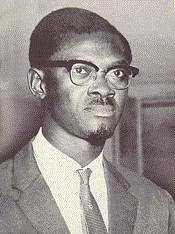
    Between 1960 and 1998, the people of the Congo were subjected to successive stooge regimes sponsored by the same Western powers and intelligence agencies which destroyed the first Congolese government and revolution and murdered Congo’s popular and first prime minister Patrice Lumumba on January 17 1961.

    Between 1998 and 2003 the same Western powers interfered in the internal affairs of the DRC by opposing Sadc’s intervention against their proxies and Zimbabwe was particularly singled out for punishment for leading the Sadc intervention and stopping genocide against the Congolese people.

    In the Zimbabwe case, British settlers and companies dispossessed the people of their land and minerals for a hundred years; and when the people reclaimed that land between 1992 and 2002 they were put under illegal Anglo-Saxon sanctions which Europe and the US renewed in February and March 2010 respectively.

    For the people of Zimbabwe to be able to reclaim their land between 1992 and 2002, they had to wage a protracted guerilla war from 1965 to 1980 in which Europe, the US and white South Africa supported the white Rhodesian settler side. In 1973 the Convention for the Suppression and Punishment of the Crime of Apartheid made it clear that the punishable crimes of apartheid were committed not only in South Africa but throughout the Southern African region and against most of the indigenous people and nations of the region by white Rhodesia, white South Africa and their Anglo-Saxon supporters who provided arms, mercenaries, trade and finance to all the white settler regimes and to their puppet regimes in the then Zaire (DRC) and to Jonas Savimbi’s Unita in Angola.

    Therefore in both Zimbabwe and Congo (DRC), because of the historical realities of racism, war crimes, crimes against humanity and crimes of mass dispossession and looting — the Anglo-Saxon powers have always been eager to use African masks and alibis.

    Before Jonas Savimbi of Angola, the biggest mask for white racist interests and the biggest provider of alibis for Anglo-Saxon imperialism was Moise Tshombe, the puppet African prime minister of the white corporate breakaway province of Katanga. With the agreement of all the key Western powers, the Belgians arranged a system where Tshombe himself and all the ministers of his puppet government were controlled and run by white Belgian private secretaries.

    The police and military structures were also managed by white officers in the same way. The Western powers figured that all the crimes and atrocities required to destroy Lumumba’s government and reverse the small gains of the Congo National Movement (MNC) could be blamed on Tshombe and his stooge ministers, or on the African population itself, while maintaining the image of the white powers and their looting corporations as civilised, humane and well-meaning.

    Coming to Zimbabwe, on Tuesday March 2 2010, the media reported that Prime Minister Morgan Tsvangirai had finally stated bluntly that all illegal Anglo-Saxon sanctions against Zimbabwe must be lifted.

    This was followed by passage of a double motion in the House of Assembly praising the Prime Minister for his decision to call the illegal sanctions by their real name and asking him and Deputy Prime Minister Arthur Mutambara to proceed to lobby the Anglo-Saxon powers for the complete removal of the same sanctions.

    These events mark a new stage in the struggle to unite the people against the illegal and racist sanctions in order to strip the Anglo-Saxon powers of the criminal mask and alibi which they have enjoyed through the MDC formations for the last 10 years. This is the moment to unite all people for Zimbabwe.

    Mr Tsvangirai and MDC-T had reached a new stage indeed:

    -First, President Jacob Zuma of South Africa was going to the UK to deliver two messages: that South Africa under the ANC government will never play for imperialism in Zimbabwe the same role which South Africa under apartheid played for imperialism in Rhodesia; and that it makes no sense for the Anglo-Saxon powers to retain illegal sanctions against Zimbabwe in the hope that sanctions will motivate the liberation movement in the inclusive Government to implement the so-called GPA to its fullest, since the GPA document itself requires the very same illegal sanctions to be condemned and defeated or lifted before the GPA can be considered complete. How can the same evil sanctions condemned in the GPA be considered an incentive to encourage completion of the GPA?

    -Second, the demonstration against sanctions by the Zanu-PF Youth League which was followed by the music gala celebrating President Mugabe’s 86th birthday in Bulawayo on February 26 2010 helped spread the anti-sanctions campaign from the realm of political commentary and party politics to the realm of popular Pan-African culture. Having Jamaican reggae musician Sizzla Kalonji as the focus of the gala and having him condemn the sanctions on behalf of both Rastafarians and Pan-Africanists was indeed the stroke of genius which crowned all the communiqués of Sadc, AU, ACP and NAM, which had condemned the same sanctions in the last seven years!

    Linked to Bob Marley’s performance of “Zimbabwe” and “Africa Unite” on April 18 1980, Kalonji’s performance against white racist sanctions in Bulawayo truly globalised the struggle to defend
    Zimbabwe’s sovereign independence and economic empowerment.
    Popularising the defence of Zimbabwe’s sovereign independence and economic empowerment at the same level as Bob Marley’s 1980 visit increased pressure for the Anglo-Saxon powers to look for cover or for an alibi.

    Mr Tsvangirai, too, had to take cover because on January 19 2010, UK Foreign and Commonwealth Secretary David Miliband sought to reinforce imperialism’s criminal mask by claiming a false alibi. He claimed that the sanctions were not hurting ordinary Zimbabweans because they had no impact on the economy.

    That was the alibi. But Miliband went further to say that the same illegal and racist sanctions, which supposedly did not hurt anyone, would, however, be lifted only when Tsvangirai’s MDC-T (who originally begged for them to be imposed) came out and asked the same sanctions to be lifted.

    The Standard, through its UK-based writer Alex Magaisa, correctly sensed danger for Mr Tsvangirai in David Miliband’s alibi and mask. In fact, he felt that Miliband should not have revealed that for the last 10 years the Anglo-Saxon powers had been using the MDC formations to create an alibi for their intrusive and illegal intervention in the internal affairs of Zimbabwe.

    Magaisa felt that the MDC-T as a British mask in Zimbabwe would no longer be able to perform its function once Miliband pointed to it and identified it as a British-EU mask. Magaisa’s Standard article was entitled “A case of the embarrassing uncle”.

    Magaisa is worth quoting at length to demonstrate the importance of the present moment for patriots in Zimbabwe.

    “It doesn’t matter that Sekuru Rameki’s (David Miliband’s) speeches may contain a grain of truth. Often he says it as it is. The trouble (for whom?) is that he knows neither the location nor the time to make his utterances . . . I was reminded of the likes of Sekuru Rameki last week when the furore broke over the statements made by British Foreign Secretary David Miliband in relation to the contentions issue of sanctions in Zimbabwe.”

    It is obvious that Magaisa has painted a picture of the relationship between MDC-T and the white racist Anglo-Saxon powers which is meant to flatter MDC-T and dismiss Miliband as a drunken uncle. Yet it is significant that even Magaisa recognises or imagines that a family relationship does exist. Where in 2000 Mr Tsvangirai called the Rhodies “cousins” of the MDC formations, Magaisa says the Anglo-Saxons, represented by Miliband, are the same family as MDC-T, Miliband is the uncle of MDC-T who mis-spoke!

    History shows otherwise. The issue involved is more serious than a slip of the tongue. First it shows that the sanctions are illegal and racist. Therefore the people of Zimbabwe have the right to be compensated for the economic terror and damage caused.

    Tsvangirai cannot end by calling only for all the sanctions to go. Why must the sanctions be lifted immediately? Because they are evil and destructive. Why were they imposed in the first place? Well, to restore white Rhodesian property in land and minerals which the British stole from the African majority in 1890 and gave to their Rhodie children. So, how has the African nation been injured? Well, it has been doubly injured because it lost the use of its land and minerals for 100 years and then got 10 years of illegal and racist sanctions for reclaiming and redeeming that same stolen land!

    Such serious crimes have always required alibis. When the slave holocaust against Africa came under moral attack, the Anglo-Saxon powers said they were not responsible because some African chiefs sold their people to white slave-catchers. What that was meant to hide was the fact that whites waged wars to capture African slaves.

  • New Constitution: Give Women a Bigger Say

    New constitution: Give women a bigger say

    By Biata Beatrice Nyamupinga
    Zimbabwe Herald

    Zimbabwe is in the process of formulating a new constitution, following the signing of the Global Political Agreement (GPA) in September 2008, and the formation of the inclusive Government in February 2009.

    Part of the management structure of the constitution-making process includes organising public hearings, consultation with, and the gathering of views of the people, and the drafting of the new constitution.

    The question is, do women out there know what to say?

    On political and governance issues, the inclusive Government, through the Short-Term Emergency Recovery Programme I document, Articles 25 and 27 recognised and expressed its commitment to the making of a new and people-driven constitution.

    Indeed, the surest guarantee for a good constitution is to ensure that all persons and interested groups participate in its formulation.

    For Zimbabwe, with 52 percent of its population being women, it is paramount and legitimate that women participate in this process as respected and equal citizens.

    The most reliable means women can participate fully is through the 50-50 representation, which is in line with the Sadc Protocol on Gender and Development, which was ratified by the Parliament of Zimbabwe on October 23, 2009.

    The Zimbabwe Women Parliamentary Caucus recognises the significant progress that has been achieved in enacting laws that promote the status of women in this country.

    Further to that, Article VI of the GPA acknowledges the fundamental right and duty of the Zimbabwean people to make a constitution by themselves and for themselves; and to make the constitution inclusive, democratically owned and driven by the people.

    The same article provides that the new constitution needs to deepen the national democratic values and principles of equality of all citizens particularly the enhancement of full citizenship and the equality of women.

    Below are excerpts from Article VI (Constitution) of the GPA, which reads in part:

    Acknowledging that it is the fundamental right and duty of the Zimbabwean people to make a constitution by themselves and for themselves;

    –Aware that the process of making this constitution must be owned and driven by the people and must be inclusive and democratic;

    –Recognising that the current constitution of Zimbabwe made at Lancaster House Conference, London (1979) was primarily to transfer power from the colonial authority to the people of Zimbabwe;

    –Acknowledging the draft constitution that the parties signed and agreed to in Kariba on the 30th of September 2007;

    –Determined to create conditions for our people to write a constitution for themselves;

    –And mindful of the need to ensure that the new constitution deepens our democratic values and principles and the protection of the equality of all citizens, particularly the enhancement of full citizenship and equality of women.

    More importantly Article XI of the GPA bestows special duty to and recognises political parties as critical role players in the constitution making process.

    Consistent with the GPA, Article 42 of the STERP document refers to the need to avail resources to ensure women’s effective and equal participation in the process and outcome of the constitution-making process.

    However, as women have already argued, it is quite evident that they are under-represented in the management structures of the constitution-making process. Below are examples to demonstrate that:

    –The Management Committee comprises seven members who include three co-chairpersons, three negotiators, and the Minister of Constitutional and Parliamentary Affairs. However, out of the seven, only one of the members is a woman. This translates to 14 percent women representation in the Management Committee.

    –The Steering Committee comprises six members who include three co-chairpersons; the Minister of Constitutional and Parliamentary Affairs, and two co-chairpersons from the first Stakeholders’ Conference. Again, from the six-member group, there is only one woman. This translates to 16 percent women representation in the Steering Committee.

    –The Select Committee has 25 members, and there are only nine women members. This also translates to 36 percent women representation in the Select Committee. Only two women hold positions of deputy chairperson.

    Thus, the average representation of women in the management structure of the constitution-making process’s management structure is only 16 percent.

    In addition, women chair only four of the 17 thematic areas. This translates to 22 percent female representation.

    The above statistics fall far short of the 50-50 gender and women representation as provided for in the Sadc Protocol on Gender and Development.

    The Zimbabwe Women Parliamentary Caucus has called for urgent rectification of this anomaly in order to ensure that the constitution-making process is as credible and as legitimate as possible, in accordance with provisions of Article VI of the GPA.

    The three major political parties are mandated with the responsibility of ensuring that there is gender balance through the nomination of women representatives who should be put into the restructured constitutional management committee.

    The Zimbabwe Women Parliamentary Caucus expresses gratitude to Vice President Joice Mujuru and Deputy Prime Minister Thokozani Khupe for coming out forcefully to seeing to it that women representation is effected within the constitution-making process management structures.

    As the Zimbabwe Women Parliamentary Caucus, we hope to come up with a strategic plan and budget to enable us to go and carry out the constitution-making exercise; to educate people, women in particular, at grassroots level so that they are ready for the constitution-making process.

    However, our problem is funding. At the moment, no one is coming up to help us with funding, and we are frustrated.

    Thus the Zimbabwe Women Parliamentary Caucus is calling upon co-operating partners, development agencies, women support groups and UN agencies to come on board and assist with the funding required.

    –Biata Beatrice Nyamupinga is the chairperson of the Zimbabwe Women Parliamentary Caucus, and also Zanu-PF Member of Parliament for Goromonzi constituency.

  • Togo Opposition Rejects Poll Results

    Sunday, March 07, 2010
    20:56 Mecca time, 17:56 GMT

    Togo opposition rejects poll result

    Fabre has vowed the opposition will stage protests over the election result

    Togo’s political opposition has said it will contest the results of the country’s election, which returned Faure Gnassingbe, the incumbent president, as leader of the West African state.

    The opposition’s complaint came on Sunday, a day after Togo’s election commission said Gnassingbe had won 1.2 million of the two million votes cast, over 60 per cent of the vote.

    “I do not recognise the so-called victory of Faure Gnassingbe,” Jean-Pierre Fabre, who heads the opposition Union of Forces for Change (UFC), told hundreds of supporters at his party the headquarters in Lome, Togo’s capital.

    “I have never wanted to use violence, but if I am stolen from, I will not give up the fight … We are going to stage protests, we are not going to take this lying down.”

    The electoral commission’s figures showed that Fabre scored about 692,000 votes, or almost 34 per cent of the vote.

    Election dispute

    Fabre said his party has proof the ruling party rigged the election in several ways, including intimidating opposition supporters and buying off other voters.

    “The ruling party told our supporters that when they put their fingerprint on the ballot, they’re going to be able to come and find them,” he said.

    “They gave money to buy people’s consciences, there is fraud on a massive scale, we have the proof in our possession.”

    He vowed to present evidence of his claim in court.

    In the immediate wake of the election, held on Thursday, both sides had claimed victory.

    Then on Saturday police fired tear gas on some 200 protesters angry that the opposition party was trailing, Abalo Assih, a police spokesman, said.

    The vote was seen as a key test of democracy in a region that in recent weeks has seen a coup in Niger and street riots over delayed elections in Ivory Coast.

    Possible protests

    International observers said the poll had gone smoothly, despite some procedural flaws. More than 3,000 local and nearly 500 European and West African observers monitored the election.

    Gnassingbe, first took the presidency in 2002, after 38 years of authoritarian rule under Gnassingbe Eyadema, his father.

    Tensions have risen in Lome as the president’s supporters have warned they are willing to fight back.

    “They accuse us each time that we stole their votes, threatening to pour on the streets,” said Evariste Adoul, a pro-Gnassingbe activists.

    “We shall show them that we also can take to the streets.”

    Election officials have been trying to prevent a situation similar to Togo’s presidential election in 2005 when hundreds of people died in post-election violence.

    The violence that followed that disputed vote left up to 800 dead according to various sources, but the UN put the toll at 400 to 500 deaths.

    Yet parliamentary elections two years later were peaceful, raising hopes of an end to Togo’s long history of political violence and leading to the restoration of foreign aid.

    Source: Agencies

  • Togo Opposition Claims Fraud in Presidential Vote

    Togo opposition claims fraud in presidential vote

    By RUKMINI CALLIMACHI
    Associated Press

    Togo’s top opposition party said Sunday they have proof that the ruling party committed fraud to win the country’s contentious presidential election and that they will show their evidence in court.

    Opposition leader Jean-Pierre Fabre said his party has proof the ruling party rigged the election in several ways, including intimidating opposition supporters and buying off other voters. He also said opposition voters were too afraid to go to the polls after being told that the inked fingerprint they are required to leave on the ballot will be used to trace them.

    “The ruling party told our supporters that when they put their fingerprint on the ballot, they’re going to be able to come and find them,” said Fabre. “They gave money to buy people’s consciences, there is fraud on a massive scale, we have the proof in our possession.”

    He said the party will present its findings to the constitutional court, which will formalize the election results next week.

    Togo’s ruling party has repeatedly denied claims that they had tried to buy the vote. President Faure Gnassingbe’s spokesman Pascal Bodjona on Saturday called the opposition “bad losers” after the results were announced. A report released Saturday by the European Union observation mission said that their observers had been present when the ruling party handed out rice – nicknamed “Faure rice” – to potential voters.

    Fabre led several hundred supporters on a protest march Sunday, which police dispersed with tear gas. Several canisters exploded next to Fabre, directly spraying his chest and face. His group took cover inside opposition party headquarters, where the boom of the exploding canisters could still be heard. At one point, tear gas streamed in through the windows of Fabre’s office.

    “I am ready to die,” Fabre said.

    Saturday’s provisional results indicate Gnassingbe won 1.2 million votes, representing 60.9 percent of the roughly 2 million votes cast in the tiny West African country, said Issifou Tabiou, the head of the election body.

    Fabre, who had earlier accused the ruling party of rigging the election, received 692,584 votes, or 33.9 percent.

    The contentious election is only the second since the death of Eyadema Gnassingbe, Faure’s father, who grabbed power in a 1967 coup and ruled for 43 years, only for his son to seize power upon the dictator’s death in 2005. The younger Gnassinge went on to win elections that same year that were widely viewed as rigged.

  • China Warns Again Against Pro-Western Efforts to Destabilize

    China warns again against Hong Kong democracy push

    By MIN LEE
    The Associated Press
    Sunday, March 7, 2010; 11:24 AM

    HONG KONG — China has warned that a plan by pro-democracy activists in Hong Kong to use a special election as a de facto referendum on democratic reform is a threat to stability in the former British colony.

    While Hong Kong returned to Chinese rule in 1997, it maintains a separate political system and enjoys Western-style civil liberties typically denied on the mainland. But Beijing has continued to deny full democracy. Hong Kong’s leader is chosen by an 800-member committee stacked with pro-China figures and its legislature is half elected, half picked by special interest groups.

    Pro-democracy activists have argued for years that the wealthy financial hub of 7 million people is mature enough to choose its own leaders. In their latest campaign, five opposition legislators – one from each of Hong Kong’s five major electoral districts – resigned in January, triggering a special election. Opposition parties plan to field candidates in the by-election, hoping to turn the territory-wide contests into a de facto referendum on democratic reform.

    “There are political groups that have launched the so-called ‘five district referendum campaign,’ even proposing sensational and extreme slogans like ‘civic uprising’ and ‘liberating Hong Kong,’” Peng Qinghua, the head of China’s liaison office in Hong Kong, said when he met with Hong Kong delegates on the sidelines of the annual meeting of China’s parliament in Beijing on Saturday.

    “This is a total violation of mainstream public opinion that wants stability, harmony and development,” Peng said. His comments were broadcast on Hong Kong television.

    In a more veiled criticism, speaking to the Hong Kong delegates on Sunday, Chinese Vice President Xi Jinping urged locals to “promote the gradual development of Hong Kong’s political system together by communicating rationally and discussing the matter with a practical mindset,” according to Peng. The meeting was closed to the media.

    China first lashed out at the referendum campaign in a statement in January, calling it a challenge to its authority. Hong Kong’s pro-Beijing parties have said they will boycott the May 16 elections.

    Former Hong Kong legislator Rita Fan, now a member of the National People’s Congress Standing Committee, told reporters Saturday that the campaign was a “farce” and a waste of taxpayer dollars. The Hong Kong government estimates the election will cost 159 million Hong Kong dollars ($20.5 million).

    The main spokeswoman for the referendum campaign said democratic reform isn’t a radical idea.

    “This moderate issue is the desire of most Hong Kongers. If the central government is sincere about implementing genuine universal suffrage in Hong Kong, what does it have to fear in public opinion?” pro-democracy legislator Audrey Eu said in a statement.

  • Rhode Island School Firings Are Embraced by the Obama Administration

    March 6, 2010

    School’s Shake-Up Is Embraced by the President

    By STEVEN GREENHOUSE and SAM DILLON

    A Rhode Island school board’s decision to fire the entire faculty of a poorly performing school, and President Obama’s endorsement of the action, has stirred a storm of reaction nationwide, with teachers condemning it as an insult and conservatives hailing it as a watershed moment of school accountability.

    The decision by school authorities in Central Falls to fire the 93 teachers and staff members has assumed special significance because hundreds of other school districts across the nation could face similarly hard choices in coming weeks, as a $3.5 billion federal school turnaround program kicks into gear.

    While there is fierce disagreement over whether the firings were good or bad, there is widespread agreement that the decision would have lasting ripples on the nation’s education debate — especially because Mr. Obama seized on the move to show his eagerness to take bold action to improve failing schools filled with poor students.

    “This is the first example of tough love under the Obama regime, and that’s what makes it significant,” said Michael J. Petrilli, a vice president at the Thomas B. Fordham Institute in Washington, an educational research and advocacy organization.

    “I think it’s going to give some cover to other school boards and school superintendents around the country that want to do something similar,” Mr. Petrilli said. “They can say the president of the United States, Barack Obama, someone the teachers voted for, supports us here to take some radical actions to shake up our schools.”

    In Boston on Thursday, another city moving to carry out the administration’s school-turnaround policy, officials announced that staff members at six underperforming schools would have to reapply for their jobs. Carol R. Johnson, the schools superintendent, said staff members were not being fired, but were being asked to “recommit” themselves. This move angered the teachers’ union, which said it was exploring legal action.

    Mr. Obama’s endorsement of the Rhode Island board’s tough action infuriated many of the four million members of the two national teachers’ unions, thousands of whom campaigned vigorously for him in 2008.

    “I ripped the Obama sticker off of my truck,” said Zeph Capo, a midlevel official at the Houston Federation of Teachers who trains classroom teachers. “We worked hard for this man, we talked to our neighbors and our fellow teachers about why we should support him, and we’re having to dig the knife out of our back.”

    Officials at the two unions, the National Education Association and the American Federation of Teachers, were so angry in the hours after Mr. Obama first endorsed the firings that an irreconcilable break with the administration seemed possible, perhaps bruising Democrats’ electoral chances in November. Recognizing how a permanent breach could hurt everyone, however, both sides sought to lower tensions, partly by encouraging a negotiated settlement in Central Falls, administration and union officials said in interviews.

    But neither the president nor Education Secretary Arne Duncan backed off his support for tough action, including dismissing teachers en masse, to improve learning conditions in chronically failing schools. At the high school in Central Falls, a poor community with a large immigrant population, only 7 percent of 11th graders passed state math tests last fall. And if the administration’s posture was undermining its support among teachers, it was earning unusual praise from conservatives, as well as from supporters of an overhaul of the nation’s schools.

    “The administration is putting down a real marker here,” said Alex Johnston, chief executive of the Connecticut Coalition for Achievement Now, a business-backed education advocacy group.

    The decision by the Central Falls school board came under the terms of a new Obama administration policy intended to spur interventions in thousands of failing schools nationwide.

    To get a share of the $3.5 billion in what are known as School Improvement Grants, school officials can choose to transform the learning environments in failing schools by extending instructional hours and making other changes, converting them to charter schools, closing them entirely or replacing the principal and at least half the staff.

    The Central Falls superintendent, Frances Gallo, initially chose the first option this year, but after a dispute arose with the union over extra pay for adding 25 minutes to the school day, she broke off negotiations. Backed by the local school board, she announced the firings on Feb. 23. Last Monday, Mr. Obama supported the board’s action in a speech to a dropout prevention group.

    “If a school continues to fail its students year after year after year, if it doesn’t show signs of improvement, then there’s got to be a sense of accountability,” Mr. Obama said. “And that’s what happened in Rhode Island last week.”

    National union officials were shocked.

    “Teachers were taken aback — and profoundly disappointed,” said Randi Weingarten, president of the American Federation of Teachers. “Teachers will watch carefully whether Washington, the states and local districts will be partners that help us do our job or whether they’ll be scapegoating and demonizing.”

    In Central Falls, community protests erupted against the firings. Marcia Reback, president of the Rhode Island Federation of Teachers, said members of the state’s Congressional delegation had urged the parties in Central Falls to return to the negotiating table.

    On Wednesday, Dr. Gallo agreed to resume contract talks, raising the possibility that at least some of the firings would be rescinded. Nonetheless, at week’s end, the two sides said animosity remained strong and negotiations were unlikely over the next few days.

    Dr. Gallo said she had invited the union to participate in a meeting of parents, district officials and other parties on Thursday to help plan the school’s future.

    Meanwhile in Washington, the Obama administration was bracing for similar controversies in other communities as more states identify failing schools.

    “This is not a political strategy; this is about reforming the lowest-performing schools,” said Tommy Vietor, a White
    House spokesman. “It’s not always painless, it’s not easy. But what’s critical is taking action in these places.”

    Union officials said the administration’s stance on the Rhode Island firings seemed to put it on the side of management in what unions see as basically a labor dispute.

    Mr. Obama’s position “set us back in how we work together,” said Dennis Van Roekel, president of the National Education Association. “I think the worst thing that can happen would be for President Obama to be seen as antiteacher. I think that would harm him.”

    Teachers nationwide, including many who had once campaigned for Mr. Obama, said the events in Rhode Island had left a bitter taste.

    Anthony J. Mullen, an instructor at the Arch School in Greenwich, Conn., who is the national teacher of the year, said he supported the notion of establishing more accountability in schools. “But what kind of accountability are we talking about?”

    “This ‘off with their heads’ mentality,” he said, “it’s a bloodthirsty mentality.”

    Katie Zezima and Liz Robbins contributed reporting.

  • Zimbabwe News Update: No Going Back on Indigenisation, Says Govt.

    No going back on indigenisation: Govt

    Herald Reporter

    INDIGENISATION regulations that took effect at the beginning of this month are meant to ensure sustainable development of the economy and fight poverty among the majority of the people, Youth, Indigenisa-tion and Empowerment Minister Saviour Kasukuwere has said.

    Speaking to journalists at a reception in Harare last Friday, Minister Kasukuwere said the regulations would not be reversed, adding that his ministry was open to any suggestions that strengthened the empowerment agenda.

    “This is not a very small decision, it’s a fundamental and far-reaching decision.

    “We are not looking for votes and we are not playing to the gallery, we want sustainable development.

    “Fifty-one percent of this economy must be controlled by the majority and what is wrong with that?

    “We are not against foreigners, but we are saying our people must come first,” he said.

    Minister Kasukuwere said the Council of Ministers had agreed that any amendments to the regulations would be done through him.

    “I am the Minister of Indigenisation and I publish those regulations.

    “Every minister has his area and you won’t hear me talking of other ministries. We have said in the Council of Ministers that every change on the regulations will come through me,” said Minister Kasukuwere.

    His remarks follow statements by the Minister of Industry and Commerce Professor Welshman Ncube last week that the regulations were published unprocedurally and would be revised.

    The indigenisation regulations require companies to — within the next three months — explain how they intend to fulfil the requirements of the law on empowerment and to have 51 percent ownership by blacks in the next five years.

    Minister Kasukuwere said Government had concentrated on social issues such as health and education since independence, but had done little to ensure participation by the black majority in the mainstream economy.

    He said the illegal sanctions imposed on the country were working because the economy was foreign-owned and controlled.

    “We are under sanctions and these sanctions work because the economy is in the hands of foreigners,” he said.

    Under the indigenisation programme, workers are also set to benefit under employee share ownership schemes.

    Minister Kasukuwere urged local journalists to protect their nation from negative publicity by Western countries that sought to undermine Zimbabwe’s sovereignty.

    He said that some Western countries were using journalists to destroy the country.

    “Journalists are being asked to write hate stories about their country and surprisingly they write as many stories as they can falsifying some facts in a bid to find negative stories about their country,” he said.

    Responding to a question on the empowerment of journalists who were the window to the world yet they die unnoticed, the minister said that if journalists wrote positively about indigenous and empowerment, they were also going to be empowered.

    He said there was no way the journalists could expect to get empowered after demonising the empowerment programme on Internet websites and local private media.

    “Some of you sleep on the floor and hope of being businesspeople in the future, but surprisingly the same person writes a story that says locals cannot manage businesses on their own,” he said.

    Tsvangirai slams corruption

    Herald Reporter

    MDC-T leader Morgan Tsvangirai has publicly admitted that his party is riddled with corruption that is threatening its integrity and vowed to fire all members found guilty.

    Addressing party supporters in Chitungwiza yesterday, Mr Tsvangirai said corruption had become a deep-rooted cancer in the party structures.

    “What is happening now is a manifestation of a party yapindwa napongwe. This is a reflection of a party eroding as a result of corruption. This is a serious matter and recently we fired the Chitungwiza executive because of corruption.

    “We again fired the Chitungwiza council that was also mired in corruption. As president of the party, I have an obligation to protect the integrity of the party and in pursuit of this obligation, I prefer to become the most unpopular leader for a very popular reason,” he said.

    He maintained that the Chitungwiza councillors that were dismissed by the party for corruption did not have legitimacy to continue serving in the local authority.

    Mr Tsvangirai said he would meet the responsible minister over the issue soon.

    However, Local Government, Urban and Rural Development Minister Ignatius Chombo has already indicated that he will not fire the council over party squabbles.

    Mr Tsvangirai said some of the party officials who secured Government positions were abusing them for self-enrichment.

    “Vamwe venyu manga musina kana nebhutsu chaidzo asi mave kufamba nemota six-six. We are very serious about this issue. Some of you are already building white houses, saka chii ichocho?” he asked.

    Mr Tsvangirai’s remarks on corruption come at a time when there are reports of corruption and maladministration in Chegutu, Bindura and Kadoma.

    Sources close to the party said a report that was tabled before the party’s national council last week had shown alarming levels of corruption, with councillors being accused of enriching themselves.

    Turning to the ongoing talks over the implementation of Global Political Agreement issues, Mr Tsvangirai said the negotiations should come to an end to allow the inclusive Government time to rebuild the economy.

    He said people were waiting for the Government to deliver, hence the need to conclude the dialogue.

    Before addressing the rally, Mr Tsvangirai planted a palm tree at his Strathaven home in the morning in memory of his late wife Susan who died in a car accident on March 6 last year.

    He was assisted by his son Edwin.

  • South Africans Ask: Why Do The British Hate Us So Much?

    South Africans ask: Why do the Brits hate us so much?

    DAVID SMITH | JOHANNESBURG, SOUTH AFRICA – Mar 07 2010 06:47

    Why do they hate us? That was the question dominating South African headlines and radio phone-ins last week after British press coverage of both President Jacob Zuma’s state visit and the imminent football World Cup.

    Pomp and ceremony
    President Jacob Zuma kicked off his first state visit to the United Kingdom on Wednesday 3rd March. His visit includes discussions on Zimbabwe sanctions, reassuring investors on the nationalisation issue, visits to Buckingham Palace, Westminster Abbey, 10 Downing Street and more.

    Leading the charge, like Michael Caine in red tunic and white pith helmet in the film Zulu, was journalist Stephen Robinson, whose critique of South Africa’s Zulu leader in the Daily Mail bore the headline: “Jacob Zuma is a sex-obsessed bigot with four wives and 35 children. So why is Britain fawning over this vile buffoon?”

    Robinson was not alone in interrogating Zuma’s polygamous lifestyle and recent love child, past brushes with corruption charges and the rest of what the Guardian delicately described as a “colourful CV”.

    The stinging reports came with South Africans already sensitive about the way their country is being portrayed in Britain as it prepares to host the Soccer World Cup in June.

    When the Sun and several other British papers recently reported on the state of England’s training camp in Rustenburg, the Times of South Africa ran a headline: “English hacks raining on World Cup parade again.” It said: “The English media have again been accused of sabotaging the World Cup with negative reporting — this time by slagging off their national team’s training base.”

    Radio talk shows in South Africa have speculated on the reasons for what they see as relentlessly negative coverage bordering on “Afro-pessimism”. Butana Komphela, chairperson of the national assembly’s sport committee, said: “There are racist writings by journalists who are very malicious.”

    Could such reporting really be an overhang of colonialism propagated by modern-day Henry Morton Stanleys? Zuma suggested so when, in a departure from diplomatic protocol, he said: “When the British came to our country, they said everything we are doing was barbaric, was wrong, inferior in whatever way.”

    The African National Congress Youth League put it more baldly: “British media seem to have developed a habit of rubbishing our president and constantly portray him as barbaric and of inferior belonging. It is quite apparent that the British media is the one that is characterised and defined by the worst form of barbarism, backwardness and racism.

    “These British racists continue to live in a dreamland and sadly believe that Africans are still their colonial subjects, with no values and principles.They believe that the only acceptable values and principles in the world are British values of whiteness and subjugation of Africans.”

    Such a critique might carry more weight if the British press did not also regularly eviscerate its own political leaders and organisers of its own forthcoming Olympic Games.

    Nor is Zuma the target of British journalists alone. He has plenty of acidic domestic critics, including the satirical cartoonist Zapiro, who has depicted him unbuckling his belt and poised to rape the blindfolded figure of lady justice.

    The Daily Mail seems timid by comparison. – guardian.co.uk © Guardian News and Media 2010
    Source: Mail & Guardian Online
    Web Address: http://www.mg.co.za/article/2010-03-07-south-africans-ask-why-do-the-brits-hate-us-so-much

  • Ghana Celebrates 53 Years of Independence

    China congratulates Ghana on Independence

    March 05, 2010

    Accra, March 5, GNA – President Hu Jintao has on behalf of the Government and People of the People’s Republic of China extended warm congratulations and best wishes to the President, Government and People of Ghana on the occasion of the 53rd anniversary of their independence.

    President Hu in a release from the Embassy of the People’s Republic of China in Accra on Friday said, over the years Ghana has made remarkable achievements in various fields in pursuit of her national development agenda; enjoyed political stability; sustainable economic development for many years and played a positive role in safeguarding peace in Africa.

    He commended Ghana for properly addressing the challenges of the international financial crisis last year and achieving positive results in stabilizing the economy, maintaining social stability and improving the livelihood of the people.

    It said China cherished its traditional friendship with Ghana, which “is currently in good momentum”, adding that this year also marked the 50th anniversary of the diplomatic relations between the two countries, and “China is willing, in joint effort with Ghana to vigorously put new impetus to the China-Ghana friendship”.

    The Independence of Ghana Is Still Meaningless Unless…

    On the eve of independence, some 53 years ago, Dr. Nkrumah made one of the most inspirational speeches known in African and World politics. The speech is usually remembered for ‘the often referred to’ statement, “the independence of Ghana is meaningless unless it is linked up to the total liberation of Africa”.

    This statement was true and relevant at the time it was made and is even more relevant in modern times albeit in a different context. Nkrumah had a blueprint for a united Africa and took steps to ensure that the foregoing statement became a reality.

    Although some of the steps he took towards achieving a united Africa were criticised, the man went to the extent of getting married to a non Ghanaian to demonstrate his commitment to this cause. I strongly believe when Nkrumah made that statement he was referring to the political and economic independence of Africa.

    All African countries are now rid of their respective colonial masters with Africans controlling and governing the affairs of African countries. This was only a step in Nkrumah’s blueprint. The man wanted more than that.

    Political instability continues to trouble African countries. And it is understandable why that is so (at least in some cases). Tribalism plays a critical and very sensitive role in African politics. There are all sorts of power sharing agreements across the continent for various reasons. I am sure this was not the political independence Nkrumah visualised.

    However, all has not been lost. Some African countries have been able to build a political system that actually works. Botswana is a very good example but Ghana is a better example. Of course it is. If it was not, Obama would not have visited and praised Ghana’s good governance.

    However, I am almost certain Nkrumah’s vision will not be realised any time soon because many African countries – if not all – are not economically independent. We depend on foreign aid and loans from developed countries and international financial institutions.

    More often than not, we are not in a position to negotiate the terms of these loan agreements and sign these agreements with absolute disregard for the long term effects on our development. Ghana is no exception.

    In the past year, I have come across many ambitious young men who have expressed an interest in running for the office of president of Ghana. First of all, it is a good thing to know the youth is interested in the politics of their country.

    Secondly, it is an even better thing to know they all have development of the Ghana as an agenda. As I spoke with these ambitious young men, I realised they all had brilliant policies and ideas; that when implemented accordingly, will definitely move the country forward economically and politically.

    My only problem with the policies and ideas these ambitious young men spoke of was that the policies and ideas were only with concerned the development of Ghana. This brings me back to the title of this short note – the independence of Ghana is still meaningless unless… Personally, I do not think a united Africa can be achieved. The continent is too large to make that a reality.

    Nonetheless, a strongly integrated region is not farfetched. If Ghana manages to become economically independent leaving its neighbours and fellow members of ECOWAS behind, a situation will be created whereby citizens of other ECOWAS countries will end up in Ghana seeking greener pastures. A burden will then be placed on the Ghanaian economy to the detriment of Ghanaians.

    Moreover, if any of the ECOWAS countries encounter severe political instability; their citizens will seek refuge in a politically stable Ghana – again, placing a burden on the Ghanaian economy.

    I am not saying we should focus on integrating the region and concentrate less on our own development. Instead, the development of the region should be incidental to the development of Ghana. After all, we have nothing to lose if that happens. A strong regional body – similar to the EU – puts both the region and countries within the region at par when negotiating trade agreements and economic policies with the rest of the world.

    The concerns of the members of the region and the region as a whole will not only be heard but also taken into account. So on this 53rd Independence Day of Ghana, I reiterate Dr. Nkrumah’s statement with a slight modification – “the independence of Ghana is meaningless unless it is linked up to the total economic liberation of West Africa”.

    Happy Independence!!!

    Written and Edited by:
    Kow A. Essuman Esq.
    LL.B. Hons (Westminster), PgDip (BPP), LL.M. (Cornell)
    Barrister-at-Law (Lincoln’s Inn)
    Attorney and Counselor-at-Law (New York)

    Parade of School Children Marks Independence Anniversary

    Saturday, 06 March 2010 12:21

    A parade of school children, made-up of basic and second cycle schools, and gymnastic display climaxed Ghana’s 53rd Independence Anniversary celebrations at the Independence Square in Accra today. The President and Commander of the Ghana Armed Forces, Professor John Evans Atta Mills reviewed the parade.

    As early as 6:30am, the contingents and the security personnel started arriving at the parade grounds.

    They were followed by the Service Commanders, Inspector General of Police, and the Chief of the Defence Staff. Members of the Diplomatic Corps, Members of Parliament, Ministers of Parliament, Ministers of State and members of the Council of State.

    Former President Kufuor, former Vice President Aliu Mahama, and their spouses, the chairman of the Council of State, Chief Justice and Speaker of Parliament followed in order.

    After the arrival of the Vice President, Mr. John Mahama to the parade ground, the contingent 1,860 pupils and 65 teachers immaculately dressed and under the command of Mr. Frank Larnyo, marched briskly on the parade ground.

    The arrival of President Mills’ Presidential convoy, led by the Police Mounted Squadron, smartly dressed in blue ceremonial uniform, at the parade ground was greeted with a Fanfare by the Police Band located at the Independence Arch.

    The President took the national salute, which was followed by Christian and Muslim prayers offered by pupils from Calvary Methodist Junior High School and Khariya Islamic Schools all from Adabraka. The President, in the company of the Minister for Education, and the Parade Commander, inspected the contingents and lit the perpetual flame. He was assisted by Master Adu Poku, last year’s overall best student of the West African Secondary School Certificate Examination.

    The Contingents then briefly marched off the parade ground to make way for the gymnastic group. The group, dressed in white and traditional wear, some of them carrying fruits performed different art forms to the admiration of the audience.

    Their performance was followed by three traditional choreograph dances. They were the Kete dance, a traditional dance of the Akans performed during state functions, durbars and installations of chiefs which was performed by Ablekuma South Metro Schools.

    The Labone Senior High School performed the Bamaya Dance, which is also a festive dance among the Dagombas and performed during state functions. The Adjewaa dance, a practically female dance is performed during weddings and child naming among Fantes and was performed by the O’Reilly Senior high school.

    The Mass band, made up of the Boys Brigade, Great Lamptey Mills School, Providence, and Mary Mother of God Council, then took their place in front of the presidential dais and played the national anthem amidst 21 gun salute. The Ghana Air force Jets flew over the ground.

    All the contingents led by their teachers then smartly marched past the Presidential dais, while Prof John Evan Atta Mills took the salute. The President’s welcomed address was heralded by drum appellation by Mater Victor Nii Amoo and Miss Mavis Nyarko.

    President Mills then addressed the large audiences gathered at the parade grounds with his Government’s commitment not to renege on their pledge to give depth, verve, and modern day meaning to Ghana’s educational system which will create opportunities the youth.

    He advised the youth to take advantage of the opportunities available, since there is no short cut to success.

    Source: ISD (Elorm Ametepe)
    Photo: Nana Kwesi Appiah

  • Ghana’s 53rd Independence Anniversary And The Need To Reflect

    Ghana’s 53rd Independence Anniversary And The Need To Reflect …

    …..ON THE SELFLESSNESS AND DEVELOPENT IDEALS OF THE FOUNDING FATHERS OF THE NATION

    BY MANASSEH AZURE AWUNI, STUDENT JOURNALIST

    Some people have argued that the march past to mark our independence has outlived its uniqueness. To them, we either have to find a new way of celebrating our independence or we stop it altogether since at fifty-three there is nothing significant worth celebrating.

    Unknown to these unpatriotic pessimists, the school children who take part in the Independence Day parade at all levels take much pride in being part of the day. For those privileged enough to mark the day at the Independence Square, it is an experience of a life time.

    Fifty-three years ago, it was this same pride and patriotism which impelled the founding fathers of this nation to forgo their personal comfort to fight for independence. Despites threats to their lives and imprisonment, Dr. Kwame Nkrumah and his compatriots chose courage over fear, toil over comfort and democracy over colonialism.

    Indeed, it was the likes of Kwame Nkrumah, Nelson Mandela and Robert Gabriel Mugabe who introduced democracy to Africa. In the words of Mahatma Gandhi, the architect of India’s independence, “the only way to find yourself is to lose yourself in the service to mankind.” Indeed Nkrumah lost himself in his selfless service to humankind and like a lamp set on a mountain; the light of his exploits could not and can still not be dimmed by his sworn enemies and detractors.

    As we pay tribute to our freedom fighters, the question every Ghanaian needs to pause ponder over is whether this is the nation the founding fathers were prepared to die for. We have lagged behind if we compare our progress to countries like Singapore, Malaysia and India who were not better than us at independence. Both Ghana and Malaysia gained independence in 1957.

    At independence, Ghana’s per capita income was 390 US dollars while that of Malaysia was 270 US dollars. After fifty years, Malaysia has a per capita income of over 5000 US dollars while Ghana’s goal of becoming a middle-income country with a per capita income of 1000 US dollars by 2015 still remains a mirage. Ask any Ghanaian the source of our woes, and like well-rehearsed chorus, they are most likely to heap the blame on coup makers and military regimes.

    Our collective failure as a nation to make long term economic policies and take advantage of the very resources that have buoyed the economies of many nations is the real cause of our stagnation if not retrogression. One of such resources is oil palm, which was first taken to Malaysia as an ornamental plant, which we are yet to realize its commercial importance and take any meaningful initiative.

    It is true that the numerous political detractions are partly responsible for our development woes but much of stagnation stems from our collective actions and inactions. It is not only the coup makers who are to blame for the corruption which is endemic in every sphere of our national life. The coup makers are not responsible for the millions of Ghana Cedis that is spent annually on managing waste.

    The coup makers are certainly not responsible for the gross indiscipline on our roads, the growing irresponsibility of public and civil servants and the incurable indiscipline of the youth in whose hands lies the destiny of our dear nation.

    In fact, we are all guilty of the broken walls of our dear nation and are therefore all involved in building our mother land. Ghana is the only country we can call our own. It is only in this land that we are all entitled to unfettered freedom.

    This is the land of our birth and its progress must be the collective responsibility of all who bear the Ghanaian identity. Happy Independence Anniversary to all, especially the youth, who stand for this cause; and may the good God bless our homeland Ghana.

  • China Plans Industrial System of Low-Carbon Emissions

    China plans industrial system of low-carbon emissions: premier

    Xinhua

    BEIJING–CHINA will build an “industrial system” and “consumption pattern” with low carbon emissions, Premier Wen Jiabao said in the government work report delivered at the parliament’s annual session yesterday.

    The country will work hard to develop low-carbon technologies as well as new and renewable energy resources to actively respond to climate change, Wen said at the session of the National People’s Congress, adding that the development of smart power grids should be intensified.

    Other measures to combat climate change include increasing forest carbon sinks and expanding China’s forests by at least 5.92 million hectares in 2010.

    He promised that China will participate in international cooperation to address climate change and work for further progress in the global cause.

    Premier Wen also addressed energy conservation, environmental protection and the development of a circular economy.

    “We will increase our energy-saving capacity by an equivalent of 80 million tonnes of standard coal,” he said.

    The daily sewage treatment capacity will increase by 15 million cubic metres and the daily garbage disposal capacity will grow by 60 000 tonnes.

    For developing a circular economy, Wen said China will utilise mineral resources, recycle industrial waste, use by-product heat and pressure to generate electricity, and transform household solid waste into resources.

    A draft plan for China’s national economic and social development submitted to the NPC yesterday also pledged that the country would formulate and implement policies to meet its action targets for limits on greenhouse gas emissions by 2020, and to promote international talks on countering climate change.

    “Both Wen’s work report and the draft plan showcased China’s strong determination to improve energy conservation and reduce greenhouse gas emission,” said Chen Ying, a researcher at the Research Center for Sustainable Development under the Chinese Academy of Social Sciences.

    Noticing Wen spoke at length of China’s economic restructuring and the transformation of economic growth pattern in his work report, Chen said the two issues were both of “decisive importance” to China’s goals of energy conservation and low carbon emission.

    “Technological advancement alone cannot achieve these goals. Not without changes to the economic growth pattern,” she said.

    Energy conservation and greenhouse gas emission reduction have become issues of wide public concern in China in the past few years.

    In November last year, the Chinese government announced a “voluntary action” before the Copenhagen Conference, to reduce the intensity of carbon dioxide emissions per unit of GDP in 2020 by 40 to 45 percent compared with 2005 levels, in order to address global climate change.

    On March 1, the National Development and Reform Commission also confirmed the government would take concrete actions to develop a low-carbon economy. The country would include the low-carbon targets in the 12th five year plan for national economic development (2011-2015) to build an energy-saving, ecologically friendly society, the commission said.

    It would launch a series of technological and fiscal support policies to promote the use of non-fossil, renewable energies including wind, solar, biomass, geothermal and nuclear power, aiming to increase its proportion of primary energy consumption to about 15 percent by 2020 from 9.9 percent at yearend 2009.

    But Chen admitted it was too early to rest assured.

    “According to the 11th five year plan (2006-2010), China’s per unit GDP energy consumption should be reduced by 20 percent at yearend 2010 compared with 2005 levels,” she said.

    However, according to Premier Wen’s work report, from 2006 to 2009, energy consumption per unit of GDP fell only 14.38 percent, she said.

    “China’s goal in cutting carbon dioxide emissions by 2020 is very challenging,” Chen said, “We do indeed need step up efforts.” — Xinhua.

  • Detroit International Women’s Day Forum Today at 5:00pm; Hear Deirdre Griswold, Editor of Workers World Newspaper

    Celebrate Working Women’s History Month with Workers World Party

    Lessons of the past and struggle for the future

    Featuring: Deirdre Griswold, editor of Workers World newspaper, founding member Workers World Party

    Saturday, March 6
    5 pm
    5920 Second Ave, Detroit
    (just north of Wayne State University)

    Meet and exchange with women of all generations actively organizing to overcome today’s challenges of cutbacks, racism and war and the effects on our environment, communities, lives and futures.

    FOOD—DISCUSSION—PHOTOS—VIDEOS
    $5.00 donation/$1 unemployed, youth, fixed income
    No one turned away for lack of funds

  • March 4 Day of Action to Defend Education Mobilizes Hundreds of Thousands

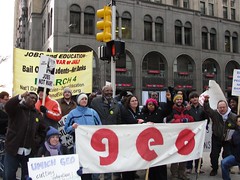
    Students Rally Against Education Cuts Across the Country

    By Sherrie Gulmahamad on March 5th, 2010

    Students, professors and other concerned citizens took to the streets today across the country in protest of cuts to state education budgets as part of the March 4th National Day of Action for Public Education. Disappointment and rage erupted into violence in only two instances. Punches were thrown and gates were blocked at the University of Wisconsin-Milwaukee, and in California, where cuts are especially severe, a windshield was smashed at the entrance to UC Santa Cruz.

    A few sobering facts:

    California is one of 10 states that saw double-digit increases in average public university tuition between the 2008-2009 and 2009-2010 school years, with more coming this year. Tuition at the University of Arizona could rise 31 percent, at Florida colleges by 15 percent and in Washington state by 14 percent.

    While students decry rising tuition costs and teachers face an uncertain professional future, others bemoan what could await America on the national stage. John Aubrey Douglass, has written a research paper for Berkeley’s Center for Studies in Higher Education on this topic:

    “One might postulate that the decisions made today and in reaction to the Great Recession … will likely accelerate global shifts in the race to develop human capital, with the U.S. losing ground.”

    In other words, it will be harder to chant U! S! A! at the drop of a hat as other countries like China, Taiwan, South Korea, Germany, France and Brazil outpace us in technological and economic development. These countries are currently spending more on education despite the economic downturn.

    The March 4th organizers ask a plaintive question, “But if there’s money for wars, bank bailouts, and prisons, why is there no money for public education?

    Twirlites, line up. Do you know anyone affected by these budget cuts? Did you participate in any of the March 4 rallies? Share your story with us.

    Photo via Chronicle/Lea Suzuki

    College students speak out against education cuts

    Universities hear grumbling locally, in state, across country

    The Monterey County Herald
    Staff and wire reports
    03/05/2010 08:53:09 AM PST

    Students staged raucous rallies on college campuses in California and around the country Thursday in protests against deep education cuts.

    Dozens of campuses were hit with marches, strikes, teach-ins and walkouts in what was billed as the March 4th National Day of Action for Public Education. Organizers said hundreds of thousands of students, teachers and parents were expected to participate in the demonstrations.

    Related: Rallies draw big turnout in county | State shut out of feds’ stimulus for schools

    The steep economic downturn has forced states to slash funding to K-12 schools, community colleges and universities to cope with plummeting tax revenue while implementing tuition increases. Schools and colleges could face more severe financial trouble over the next few years as they drain federal stimulus money that temporarily prevented widespread layoffs and classroom cuts.

    At CSU-Monterey Bay, students gathered for the protest at noon in the university’s main quad.

    With a band playing in front of the library, about 100 people, many carrying signs, marched in from the dorms. The rally grew to about 400 people as other students trickled in.

    Some professors took students from their classrooms to the rally, where a lineup of students and faculty members spoke against the fee hikes and their possible impacts.

    Jake White, 20, a sophomore, said he attended the rally in support of “all the kids that won’t be able to get into school next year.”

    The CSU system is losing its purpose of providing a low-cost, higher education, he said.

    “Any time there’s a raise in cost, it’ll be hard on you and your family,” White said. “I went to a CSU because of the (low) cost. Now it doesn’t make any sense.”

    Students at University of California-Santa Cruz held a daylong strike, shutting off access to campus at multiple points and rallying at the foot of the hill.

    Angry over fee increases totaling 41 percent in the past year and half, upset that popular programs, such as languages and community studies have reduced class offerings, and concerned over the rights of hourly workers who feed and clean up after them, they began blocking intersections at 5 a.m., refusing to let most cars pass.

    At 6 p.m., there were still hundreds of protesters at the base of campus sitting in a circle at the main entrance. The phrases “Destroy the University” and “Destroy Capitalism” were spray painted on a nearby wall.

    No arrests were made.

    At the University of California-Berkeley, a small group of protesters formed a human chain blocking a main gate to the campus. Later in the day, hundreds gathered for a peaceful rally.

    “We’re one of the largest economies in the world, and we can’t fund the basics,” said Mike Scullin, 29, a graduate student in education who plans to become a high school teacher. “We’re throwing away a generation of students by defunding education.”

    Some university officials said they supported the protests as long as they remained peaceful.

    “My heart and my support are with everybody and anybody who wants to stand up for public education,” University of California President Mark Yudof said in a statement. “Public education drives a society’s ability to progress and to prosper.”

    More than 150 people who were blocking a major San Francisco Bay Area freeway during a protest were arrested, authorities said.

    Oakland police and California Highway Patrol officers clambered up onto Interstate 880 to clear the demonstrators from an off-ramp, handcuffing them before putting them on buses to a nearby city jail, said Oakland police spokeswoman Holly Joshi.

    The protesters, who had split off from a large rally in downtown Oakland, brought cars to a standstill on the busy freeway for about an hour during the evening commute, backing up traffic for miles.

    Joshi said one man was seriously injured when he jumped from the elevated freeway as police moved in.

    Herald Staff Writer Laith Agha contributed to this report. He can be reached at 646-4358 or [email protected].

    The Santa Cruz Sentinel and Associated Press also contributed to this report.

    Local “Day of Action” Protests Rally Against Education Cuts

    Published 5 Mar 2010, 11:09 am

    Filed under Feature Stories
    Education Rally

    Students, teachers, parents, and faculty members took to the streets all across the state of California and the nation yesterday to protest cuts to K-12 schools, colleges and universities. More than 100 events took place in over 30 states in what organizers dubbed the “March 4th Day of Action to Defend Public Education.”

    Massive state budget shortfalls and subsequent cuts to funding for schools have resulted in teacher layoffs, larger class sizes, fee increases and eliminated programs. The effects of such slashes have been particularly acute in California.

    In response, demonstrators took to the streets for various actions up and down the state from San Diego to Berkeley. Massive arrests were made in Oakland after student demonstrators marched on Interstate 880 and shut it down during rush hour traffic.

    Locally in Los Angeles, five hundred students and professors walked out of classes on the campus of UCLA for a midday gathering in Bruin plaza to denounce the reduction of funding for education.

    Elsewhere in the city, an estimated 2,000 people, some bused in from neighboring communities, turned out to rally in downtown’s Pershing Square before marching on a nearby state office building.

    Uprising correspondent Chris Bennett was at the rally yesterday and filed a report.

  • Two Leading Nigerian Firms to Invest in Ghana’s Oil Industry

    Two leading oil companies to invest in Ghana’s oil industry

    March 05, 2010

    Accra, March 5, GNA – Two leading Nigerian oil companies-Orwell International (Oil & Gas) Nigeria Limited and Africa Oilfields Service Limited (AOS), have expressed interest to invest in the fledging Ghanaian oil industry.

    In order to establish their presence in Ghana, the two companies will participate in the 14th Offshore Oil and Gas West Africa Exhibition, scheduled for March 9 to March 11 in Accra.

    Mr. Femi Omatayo, Managing Director of Orwell International said in Accra on Friday that the exhibition would provide a premier technical platform for the exhibitors to exchange ideas to facilitate their business development.

    His AOS Counterpart, Mr. Andy Jones said the exhibition would host a conference to provide a unique networking opportunity for the exhibitors to gain understanding about the changes taking place around them.

    The exhibition will also offer the oil companies, their partners and suppliers in the offshore industry an opportunity to showcase their products and services.

    AOS provides multiple product lines to the industry such as well intervention fishing, drilling tools rental and directional drilling services.

    It also undertakes electric wire line, pipe recovery, machine shop manufacturing and repairs, production logging, pressure control/testing, production enhancement solutions and specialised welding services.

    AOS also operates a joint venture and partnership with international Blue-chip manufacturers of oilfield equipment thus extending its portfolio and scope.

    Orwell International is a drilling tools and well services company with product lines spanning downhole tools rentals, assorted range of crossovers and handling equipment, fishing, milling and one-trip whipstock solutions, geological hydrosurvey, casing and tubular running, Non-destructive testing and tubular management, pigging and sales of cutting-edge new technology agency products.

    The tools have been designed and field proven to deliver maximum performance.

    Orwell was a member of the Orwell Group Aberdeen one of the largest independent equipment companies in Europe.

    It is now a privately owned indigenous conglomerate serving the West Africa Oil and Gas market from the company’s operational base in Trans Amadi, Port Harcourt, Nigeria.

    GNA

  • South African Minister of Arts and Culture Denies Bias For Walkout At Last Year’s Photo Exhibition

    Xingwana: Homophobic claims ‘baseless, insulting’

    LISA VAN WYK | JOHANNESBURG, SOUTH AFRICA
    Mar 05 2010 08:57

    Female artists snubbed by Arts and Culture Minister Lulu Xingwana at an exhibition last year have called her response homophobic and unconstitutional, despite the minister’s protests to the contrary, the Mail & Guardian heard on Thursday.

    The incident occurred in August last year at the debut of the Innovative Women exhibition in Johannesburg, but only came to light in the media this week. Xingwana stormed out of the exhibition before making a scheduled speech, apparently after seeing the work of artist and activist Zanele Muholi, depicting women together.

    Muholi told the M&G that the move was a step backwards for the country. “In South Africa we fought racism,” she said. “Now we are fighting ongoing hate crimes.

    “In South Africa, where we have corrective rapes and violence against lesbians happening in the townships, we have to be careful. When a minister, or someone in a position of power, makes homophobic comments, it could perpetuate hate crimes. You might be putting people at risk. This issue goes beyond art”.

    Homophobic claims ‘baseless, insulting’

    Xingwana denied any homophobic tendencies when contacted by the M&G saying she “would not, for any reason, be part of any tendencies that undermine the rights of people. I accept and respect the rights of people of different sexual orientation. The claims that I am homophobic are baseless and insulting to me.”

    In August 2009, the exhibition, a show that coincided with Women’s Day and aimed to give a platform to young black female artists, opened at Constitution Hill. The department of arts and culture had provided funding of R300 000 for the show. The minister left, calling the works immoral, and later said: “Our mandate is to promote social cohesion and nation building. I left the exhibition because it expressed the very opposite of this.”

    Critics have slammed the terming of the works as “immoral”, saying that Xingwana is displaying a prejudice that is entirely out of line with the Constitution, as well as a lack of understanding of what constitutes contemporary art. Muholi was concerned about what this could mean for the freedom of artists in the future, and how the opinions of the person in charge could affect funding.

    “I am speaking for those who come after me,” she said.

    But Xingwana insisted that her department was not prejudiced. “I have not imposed censorship on any artists and the funding polices of my ministry and department are very clear,” she said.

    However she went on to say it was time for “a long overdue debate on what is art and where do we draw the line between art and pornography”.

    The uproar follows on a larger backlash against gays and lesbians across Africa, with Uganda making moves to criminalise homesexuality, making it an offence punishable by death in some instances. The issue is sensitive in South Africa, following statements made by President Jacob Zuma before he was elected, said that “When I was growing up, unqingili [homosexuals] could not stand in front of me. I would knock him out.” He later apologised for the remark.

    Bongi Bhengu, the young artist who curated Innovative Women said that in conceptualising the exhibition, she aimed to give young black female artists “a voice and a platform” and that Muholi was chosen to take part as an artist “who speaks about her world”.

    “Everyone has a different perspective of the world, and hers is equally valid”.

    The controversy caused by the art works came as a complete surprise to Bhengu, but she said it highlighted the need for female voices to be expressed freely. Ironically the incident made the exhibition even more valuable, and the images are getting airplay in major media outlets.

    Celebrating lives of black lesbians

    In her artist’s statement, that appears in the catalogue for the exhibition, Muholi states “As an insider within the black lesbian community and a visual activist, I want to ensure that my community, especially those lesbian women who come from the marginalised townships, are included in the women’s ‘canon’.

    “The overall aim to my project is to commemorate and celebrate the lives of black lesbians in South Africa from an insider’s perspective, regardless of the harsh realities and oppressions (which includes rife murders and ‘curative rapes’ of black lesbians) that we are still facing in the post-apartheid, democratic South Africa.”

    She spoke the M&G from Melbourne, where she is artist-in residence at Monash University.

    Muholi, who considers herself “an activist first, and an artist second”, reiterated the importance of documenting the experience of young black lesbians, in an environment that was often surprisingly hostile, given the rights laid out in the Constitution. She said “there is a lack of material”, material that highlights the “many issues” faced by lesbians in this country.

    She said: “People forget that issues such as prejudice, HIV, rape and hate crimes affect the lesbian community. My photographs are the starting points for dialogue about these issues”.

    Asked about her response to the minister’s statements, she said “It’s paralysing. I expected people to think before they act, and to ask questions. I wanted to create dialogue”.

    Muholi emphasised that her disappointment with Xingwana’s statements went beyond Xingwana’s close-minded approach to her artworks. She said “I don’t need someone to tell me my work is nice. But such callousness from someone who happens to hold a position of power is a violation of human rights. Where is the recognition of the issues?”

    The “issues” Muholi wishes to address are far reaching, and relate to the failure of the Constitution to protect vulnerable groups, as well as the seeming lack of interest from those in a position to influence ideas and policy. She said “People from outside of South Africa envy us for our Constitution. But in South Africa there is so much homophobia. We are given the platform to speak, but there is no action to match the words. It is a betrayal”.

    Retraction?

    Muholi was one of the co-founders of the Foundation for the Empowerment of Women (Few), an organisation that aims to highlight issues around gender, as well as monitor gender violence. The M&G spoke to director Busisiwe Kheswa, who agreed with Muholi’s concerns. She said “This is bad news. It tells us that the ANC is regressing. It’s not the first time homophobic remarks have been made. When people criticised Jon Qwelane’s remarks, they asked for ‘proof’ that he was homophobic. It’s just not acceptable”.

    She added “Will there be a retraction, or a public apology? It makes it look like the government is supportive of homophobia, when in fact they are supposed to be custodians of the Constitution”.

    She added that there is a lack of political will when it comes to addressing these issues.

    “When parties were electioneering last year, not one of them had any plan to deal with hate crimes. It’s like the issue doesn’t exist. We have made this Constitution on paper, but in reality, what is the point, when it is not safe for a young black lesbian to walk down the street in a township?”

    She added “Failing to speak about this is a failure to address many issues. Young black lesbians suffer from triple-stigmatisation, where they are prejudiced against for being black, for being women, and for being gay. And it a class issue too, and that cannot be ignored. These crimes are not happening in Sandton. They happen in the townships. And when they happen, those women, because they are poor, are unable to do anything about it. They cannot afford adequate representation. They cannot access justice.”

    The use of the word “immoral” to describe the artworks was, to Kheswa, an irony. “They say that this is immoral, but they never argued the immorality of Jacob Zuma’s actions. Their notion of ‘morality’ is selective. If the ministers and those in power can make such judgements, and not live by the principles of the Constitution, what can be expected from the rest of us?”

    Source: Mail & Guardian Online
    Web Address: http://www.mg.co.za/article/2010-03-05-xingwana-homophobic-claims-baseless-insulting

    South Africa: Xingwana Denies Homophobia Prompted Exhibition Walkout

    Chantelle Benjamin
    5 March 2010

    Johannesburg — ARTS and Culture Minister Lulu Xingwana yesterday defended her walkout at the opening of a Constitutional Hill exhibition by young, black, women artists last August, saying it had nothing to do with the depiction of lesbians.

    Her statement came amid condemnation by civil groups and political parties of what they called Xingwana’s “homophobic” response to photographs by prominent artist and lesbian activist Zanele Muholi of naked black women embracing.

    The Freedom of Expression Institute said yesterday it was disappointed by her reaction as she had an “obligation to protect and promote the rights upheld in the constitution”, which included the homosexual community.

    Xingwana said the furore suggested the time was ripe for a debate on how to draw a line between art and pornography in the context of “moral regeneration, social cohesion and nation building”.

    She reportedly called Muholi’s photographs “immoral, offensive and against nation building”, and left without giving her speech, although her department gave R300 000 to the Innovative Women exhibition.

    The speech was read by her assistant.

    The incident, which took months to surface in the media, sparked anger in many quarters. It was said Xingwana’s reaction and comments suggested intolerance of homosexuals, which was intolerable in an arts and culture minister.

    Xingwana said yesterday she found the depiction of “naked bodies presumably involved in sexual acts offensive. I was particularly revolted by an image called Self-rape, depicting a sexual act. The notion of self-rape trivialises the scourge of rape in this country,” she said.

    “Contrary to media reports, I was not even aware as to whether the ‘bodies’ in the images were men or women, or both for that matter. My reaction was guided by the view that these ‘artworks’ were not suitable for a family audience. “

    Her reaction “was not based on anti-gay sentiments as implied by the media. In my mind, these were not works of art, but crude misrepresentations of women masquerading as artworks rather than engaged in questioning or interrogating, which is what I believe art is about. Those particular works of art stereotyped black women,” she said.

    She had reacted as one who fought hard for women’s rights, but denied she would consider any censorship. “The funding policies of my ministry and department are clear… we support the arts in this country in general since we embrace and promote the policy of arts for all.”

    The Democratic Alliance called on her to resign, saying her attitude was “bigoted and regressive”.

  • Racism Thrives on US Campuses: Univerisity of California at San Diego Students Protest Threats

    Following String of Racist Incidents, UC San Diego Students Occupy Chancellor’s Office

    Crowds of students stormed and occupied the office of a University of California, San Diego chancellor for six hours Friday after a noose was found hanging from a bookcase in the main library. The noose is only the latest in a string of incidents over the past few weeks.

    Protests were initially sparked by an off-campus party last month they called “Compton Cookout” that mocked Black History Month and denigrated African American women. UC San Diego has the smallest percentage of African American students in the nine-campus UC system. The Black Student Union at UC San Diego has declared the campus climate for racial minorities to be in a “state of emergency.”

    Guests:
    Daniel Widener, associate professor of history and faculty director of the African American Studies minor at UC San Diego

    Fnann Keflezighi, co-chair of the UC San Diego Black Student Union

    AMY GOODMAN: We go now to California, where crowds of students stormed and occupied the office of a University of California, San Diego chancellor for six hours Friday after a noose was found hanging from a bookcase in the main library. The incident prompted angry protests from students across the UC-wide system and denunciations from UC President Mark Yudof and California Governor Arnold Schwarzenegger. The unidentified student who admitted to hanging the noose was suspended.

    But racial tensions still run deep at UC San Diego, where the noose is only the latest in a string of incidents over the past few weeks. Protests were initially sparked by an off-campus party last month they called “Compton Cookout” that mocked Black History Month and denigrated African American women.

    UC San Diego has the smallest percentage of African American students in the nine-campus UC system. The Black Student Union at UC San Diego has declared the campus climate for racial minorities to be in a, quote, “state of emergency.” The students called on the university to increase its stated commitment to diversity by recruiting more students of color and providing greater support for ethnic studies departments and resource centers for underrepresented students.

    For more, I’m joined now in San Diego by the co-chair of the Black Student Union from the University of California, San Diego, Fnann Keflezighi, and Daniel Widener, associate professor of history and faculty director of the African American Studies minor at UC San Diego. He co-authored a letter from the African American faculty expressing their, quote, “disgust at the racist and misogynist events” and calling on the university administration to provide the necessary resources to improve the climate on campus.

    We’re going to start with Daniel Widener, director of the African American Studies minor at UC San Diego. Just further explain these events, please.

    DANIEL WIDENER: Well, good morning, Amy.

    I think the most important thing for viewers and listeners to understand is that the students are battling not only a campus climate of intense hostility, that Fnann will also detail, but a tremendous amount of history. California voters have passed a series of racist initiatives, really over the last forty years, opposing fair housing, dismantling affirmative action, criminalizing youth, attempting to criminalize undocumented immigrant populations. So there’s really a social basis for an intense racism that aims to maintain black people as a surplus population to be jailed and Latino people as a disposable population to be kept as a semi-permanent socioeconomic underclass. So, education is a critical part of that. And on a campus where our numbers are almost a statistical anomaly, we face just a tremendous amount of both neglect and active hostility.

    AMY GOODMAN: Fnann Keflezighi, co-chair of the UC San Diego Black Student Union, these most recent events—can you start off by explaining what the so-called Compton Cookout was?

    FNANN KEFLEZIGHI: So, the Compton Cookout, which was hosted and organized by different UCSD students, was in honor of Black History Month, and it was basically making a mockery of everything that we were celebrating for Black History Month on our campus and allowing students to experience the ghetto and different aspects of the ghetto by dressing a certain way and eating certain food and listening to certain music. But they definitely described what students should wear in a very detailed and dehumanizing and demoralizing way. We were all very shocked to read the description, as well as very—a lot of other students and faculty and staff. A lot of folks thought it was a joke at first, but the party did happen that Monday.

    AMY GOODMAN: I’m just amazed as I look at this Facebook invitation that urged women to dress as “ghetto chicks” who, quote, “usually have gold teeth, start fights and drama, and wear cheap clothes.” It said the menu would include chicken and watermelon?

    FNANN KEFLEZIGHI: Mm-hmm.

    AMY GOODMAN: And then you have—

    DANIEL WIDENER: Yeah, that’s right.

    AMY GOODMAN: Professor Widener?

    DANIEL WIDENER: No, no, no. I just wanted to say that that was really only the first of a string of subsequent incidents, and it’s important for people to understand that those incidents continue and that new ones are coming to light.

    We had a student who had trash thrown on her in the residence hall. We’ve had students intimidated in large lecture courses, where you may have four or five hundred students and may have one or two African Americans, at most. We had, of course, the incident that people have heard about of the noose being hung in the library. And we’ve had some off-campus incidents in restaurants and other public spaces.

    So, our position, our feeling, is that the climate is worsening for students and that students are expressing tremendous concern about their safety, a fear of attending classes, a fear of being on the campus. And we get word now of the beginnings of a really racist counter-mobilization aimed at repudiating the suggestions, the demands that the students have made for how to implement a better campus climate. So the situation really is polarizing between the people who see these outbreaks of racist hostility as a problem or an embarrassment and people who are prepared to defend them.

    AMY GOODMAN: And the fact that UC San Diego has the smallest percentage of African American students in the nine-campus UC system, Fnann, do you think that this has anything to do with what’s going on right now?

    FNANN KEFLEZIGHI: Most definitely. The UC president, Mark Yudof, addressed to the chancellor in June that she needed to fix the situation for African American students on the campus, because although the incidents are coming to light now, a lot of incidents like this have happened in the past, and it’s just a very hostile environment for African American students and underrepresented students on an everyday basis in the previous years. So I think that her lack of action to Mark Yudof telling her to take action in June is why we are in the state we are in now, as well as—the Black Student Union wrote a report called the “Do UC Us?” report in September and talked about—there was testimonies talking about how bad the climate was for African American students and made recommendations on how to fix that back in September.

    AMY GOODMAN: And Professor Widener, what do you think of the administration’s response and what needs to be done right now?

    DANIEL WIDENER: Initially, when asked, I called the administration’s response tepid. And I’d like to stand by that statement. I think that the university has recognized that there’s a problem, but it has yet to commit itself fully to implementing the kinds of solutions that have been laid out, not simply by the students in their “Do UC Us?” document, which does have testimony, which does have suggestions, but also a history of reports initiated by Latino faculty, by African American faculty, by multi-ethnic groups of faculty. There was a 2007 yield report aimed at democratizing and diversifying the campus.

    So this has been a subject of study, but it’s never been a situation where the university would commit itself to allocating resources, funding students, scholarships for students, outreach and yield, and the kinds of things that would produce a student body, a population, reflective of our state, reflective of the diversity of our state, and where the students would not feel outnumbered. We should not have a situation where every student knows every other student by name. This is not a small liberal arts college. We have 24,000 undergraduates. So I think that the research has been done. The question is whether or not the university has the will to make the choices that will prevent these kinds of incidents in the future and in the present.

    AMY GOODMAN: And the significance of, well, this being a decade after a California ballot proposition barred the use of race and ethnicity in admissions decisions, University of California continues to struggle to diversify its campuses. Black and Latino enrollment has plummeted.

    DANIEL WIDENER: Yes, I think that it has to be said that the students have launched a battle against the resegregation of higher education. It’s a battle that’s tied to the privatization of higher education, the idea that only those who can afford a top-grade education should receive one, and that those should be the people who are the doctors, the attorneys, the chemists, and the other professional class for the future. And what the students have put on the line is the idea that a sixty- or seventy-year-old African American man could have a doctor who looks like him to talk about prostate cancer with, that a Latino who is accused of a crime could have an attorney who could communicate with her in her defense, that these students are fighting not just for the UC campuses, not just for UC San Diego, but for the future of people of color in this state.

    And I think that it’s very important that people throughout the country try to do what they can to mobilize to help us, whether that’s emailing our chancellor, chancellor(at)ucsd.edu, calling her office at (858) 534-3135, or looking at a website that the students have put out called stopracismucsd.wordpress.com. These are all things that people can do immediately now to help us build pressure for change.

    AMY GOODMAN: And Fnann, finally, there are major protests planned, is this right, for Thursday?

    FNANN KEFLEZIGHI: Thursday is March 4th, which is actually a statewide day of action for educational justice and educational equality. It’s been planned for months now. And so, we definitely think that the situation that’s at hand right now with the campus climate at UCSD ties into March 4th and what March 4th is standing for and what it’s fighting for.

    AMY GOODMAN: Well, I want to thank you both for joining us. Professor Widener, Daniel Widener, associate professor of history and faculty director of the African American Studies minor at UC San Diego, and Fnann Keflezighi, co-chair of the UC San Diego Black Student Union, thank you for joining us.

    UCSD students, allies mobilize against racist attacks

    By Bob McCubbin
    San Diego, Calif.
    Published Mar 4, 2010 9:18 PM

    Racist students on the San Diego campus of the University of California recently organized and publicized a sickening social event. Emboldened by increasingly common racist rants on the part of corporate media talking-heads, the coded racist outbursts of right-wing politicians, and the historic policies of discrimination and repression directed against communities of color and immigrant workers all across the U.S., they made no effort to disguise the racially offensive character of their “Compton Cookout” party, which took place on Feb. 15.

    Compounding the offense, and clearly demonstrating that it was in no way “an isolated event,” several days later the student-run television station aired a defense of the racist social event that included a racial slur. Additionally, the student who took public responsibility for the original event defiantly announced a second “cookout.” And then on Feb. 25, a noose was found hanging on the seventh floor of the campus’s main library.

    As word of the original event spread locally and nationally, the initial official and unofficial apologetics (it was “off campus,” “protected speech” and even “a harmless spoof”) gave way to promises by the school administration to work for a better climate of “respect for diversity” and the announcement of an administration-sponsored, campus-wide teach-in on Feb. 24. The outraged campus community, however, wasn’t waiting for belated band-aids at a school whose African-American student enrollment constitutes only 1.3 percent of the total school undergraduate enrollment of 23,143.

    Students marched and gathered the day following the offensive campus TV program to confront UCSD Chancellor Marye Anne Fox and other school administrators. Earlier that morning, while searching for a tape or digital file of the offensive TV program in the station studio, they had found a piece of cardboard with the words “Compton lynching” written on it.

    Black students at the meeting with the chancellor stated that they feel neither safe nor welcome at UCSD. Their leaders issued a list of 32 demands.

    Titled “State of Emergency: The UCSD Black Student Union Address,” the preface to the demands states, “Students in general feel isolated and unsupported, which contributes to the continuous cycle that prevents underrepresented communities from entering the university. For students of color, queer-identified students, and students from low socio-economic backgrounds, this has been a continuous struggle to validate our own presence at the university academically and socially.”

    The preface also expresses support for the struggle of Latino/a students to have a Chicano mural placed on campus and for the struggle of Native American students to repatriate ancestral remains found on campus.

    Prominent among the students’ demands is the insistence that serious attention be paid to and funds found for recruitment and retention programs that focus on students of color, the disadvantaged, first generation students and, in general, historically underrepresented populations. There must also be, the students continue, “strong institutional support for academic programs that contribute to an improved campus climate.”

    The statement concludes, “We demand that the administration respond to these demands on March 4th. … We expect all of administration to be out on Library Walk on that Thursday to state their message on these demands while allowing the students to respond back.”

    Almost daily protests on campus and statements of support for and solidarity with African Americans have come from many student groups, including the Chicano campus organization MEChA, medical, fine arts and lesbian, gay, bi, trans, queer students, and campus staff and professors.

    At a student rally Feb. 24 preceding the teach-in organized by the school administration, David Richerson, the Black Student Union chairperson at UCSD, announced a state of emergency “to address the hostile and toxic environment on campus.”

    Following that rally, an overflow crowd estimated at more than 2,000, and including students from other area schools and from as far away as Los Angeles, gathered at the site of the administration-organized teach-in. It turned out to be basically a long-winded, academic discussion of institutional racism and how to combat it. Midway through the program, an angry walkout led by Black students and their supporters left only a few hundred in the hall.

    Fnann Keflezighi, vice chairwoman of the Black Student Union, spoke at a student rally following the walkout and denounced the teach-in as an attempt by the administration to silence the students. She expressed disbelief that the school administration really intended to do anything significant to rid the campus of racism and pointed out that there has been a long history of racial tension on the campus.

    Two days later, following the discovery of the noose hanging in the campus library, there was another student rally and a takeover of the chancellor’s office. Several professors have called for the campus to be shut down until the safety of students of color can be guaranteed. As of March 1, students plan to continue meeting with the school administration to pressure for full implementation of their demands.
    ——————————————————————————–
    Articles copyright 1995-2010 Workers World. Verbatim copying and distribution of this entire article is permitted in any medium without royalty provided this notice is preserved.

    Workers World, 55 W. 17 St., NY, NY 10011
    Email: [email protected]
    Page printed from:
    http://www.workers.org/2010/us/ucsd_0311

  • Greek Workers Say: ‘Let the Rich Pay’

    Euro crisis: Greek workers say: ‘Let the rich pay’

    By John Catalinotto
    Published Mar 3, 2010 8:49 PM

    A second general strike in two weeks shows that Greek workers are standing up to the bosses’ and bankers’ attempt to force them to pay the costs of a problem the workers had no responsibility for creating: the capitalist economic crisis. This determined resistance is what’s behind the headlines on the financial pages about the euro’s stability and European Union negotiations with the Greek regime.

    Two million Greek workers stayed away from their jobs on Feb. 24. Factories, offices, large retail stores, seaports and airports were closed. Workers and youths took to the streets in 70 cities throughout Greece. “Reject the government plan, the rich should pay for the crisis,” read the banner leading the demonstration in Athens.

    The militant mood on the street contrasted with the discussions among bank boards of directors, government officials and the capitalist-controlled media throughout the European Union. The EU itself is an instrument of big business, a coalition of capitalists arrayed against the European working class and the nations in the former colonial world. Its ruling-class media try to portray the Greek people in general, especially the workers, as unwilling to work hard and make the necessary sacrifices — to save the capitalist economy.

    Europe’s financial bosses are insisting that before they will “bail out” the Greek government with loans, it must impose an even harsher austerity on the workers than the taxes, wage cuts, hiring freezes, and increase in retirement age and social-service cutbacks already proposed. They aim to force the government to crack down on the workers — using the excuse that this is needed to overcome the financial crisis. They then want to impose cutbacks on workers throughout the EU, even in countries where the debt problems are less critical.

    U.S. bankers are also part of the mix. Goldman Sachs arranged large parts of the Greek debt and expects the Greek government to squeeze its debt payments from the Greek workers.

    Greece has a social democratic government led by Prime Minister George Papandreou of the PASOK party. Many workers voted for it precisely to avoid this vicious attack, but PASOK has instead led the offensive against them. Unlike its capitalist overlords in Berlin and Brussels, PASOK has to directly confront the Greek workers’ growing anger.

    A half-million workers had struck on Feb. 10, called out by the PAME union federation, which is close to the Communist Party of Greece (KKE). This time the GSEE union federation and other unions closer to the social democrats joined the strike, many walking out for the first time, and some joined the PAME-led marches. (inter.kke.gr)

    Their placards read: “Here is the money: the deposits of the enterprises in 2004 were 36 billion euros; in 2009, 136 billion euros. 250,000 workers receive a salary of 740 euros [approximately $1,000 per month]. At the same time, 700 billion euros are in the pockets of the big enterprises.” (inter.kke.gr)

    A refreshing aspect of the Greek protests is that the speakers and slogans reject the ruling-class argument that “joint sacrifice” is needed from the population. By “joint sacrifice,” the bankers mean that workers must give up pay, benefits and often their jobs, in order to rescue the profits and debt payments to the rulers.

    They argue that these sacrifices will restore the capitalist economy. But, just as in the U.S., official unemployment in the EU has grown to just under 10 percent, and whatever capitalist recovery has taken place has also been jobless. The Greek workers say that if sacrifices are needed to save capitalism, then “Let the rich pay!”

    This attitude is spreading. In Spain, where official unemployment is 19 percent, two of the union federations, the CCOO and the UGT, protested in Madrid on Feb. 23 against the government’s austerity plans. In Portugal a one-day general strike of the public sector rejecting an extension of the wage freeze is planned for March 4. Both countries have Socialist Party governments, but these social democrats are carrying out severe attacks on the workers.

    French and German working-class resistance has been more sporadic, but it’s there. Lufthansa’s 4,500 pilots held a short strike in February. In France, workers at six French oil refineries and then air traffic controllers walked out.

    In the U.S. the relative passivity of the unions has allowed the bosses to take the offensive, laying off, outsourcing and cutting benefits while paralyzing even the minimal efforts of the Barack Obama administration to pass modest reforms to health care or extend unemployment payments. Part of fighting back is realizing, as the Greek workers are saying, that the bosses created the crisis and should pay for it.

    At a mass rally at Omonia Square, in Athens city center, union leader Yiannis Tolis said: “The forces of capital and its political representatives understand that the more they blackmail and intimidate the workers, the more they try to mislead them and place new burdens upon them, the more anger and indignation they cause. They dread the perspective of the general uprising of the workers. …

    “They are mistaken if they believe that they can manipulate the peoples’ will, once it is on the path of the class struggle. History has proved that when the river flows it cannot retrace its path.” (inter.kke.gr)
    ——————————————————————————–
    Articles copyright 1995-2010 Workers World. Verbatim copying and distribution of this entire article is permitted in any medium without royalty provided this notice is preserved.

    Workers World, 55 W. 17 St., NY, NY 10011
    Email: [email protected]

  • Greece News Update: Thousands Protest As Parliament Debates Economic Crisis

    MARCH 5, 2010, 8:47 A.M. ET

    Greece Debates Budget Cuts As Thousands Protest

    By Alkman Granitsas
    Of DOW JONES NEWSWIRES

    ATHENS (Dow Jones)–The Greek parliament Friday continued to debate the government’s recently announced austerity package as workers around the country walked off the job in a series of hastily announced strikes to protest the measures.

    Outside parliament, a tense protest of several thousand people was
    marred by violence when youths attacked and injured the head of
    Greece’s largest union, private-sector GSEE, as he was delivering a
    speech at a rally.

    There were also clashes in two separate, small-scale incidents in
    which several dozen protesters scuffled with police, hurling
    projectiles while police responded with teargas.

    In a nod to the protests and strike actions taking place around the
    country, Greece’s finance minister acknowledged that public discontent was understandable.

    “Will we have to take other measures? No. These measures are enough if we implement them and we will,” Papaconstantinou said in parliament ahead of a vote on the package, which is expected later Friday.

    Although recent public opinion polls show general support for the
    government, one poll released by privately owned SKAI television
    Friday, shows that 62% of Greeks expect social unrest in the country
    to rise. But the same poll shows that 78% of respondents think the
    austerity measures will be implemented nonetheless.

    Around the country, services were disrupted by a 24-hour strike
    affecting public transport in the country’s two major cities that
    snarled traffic in parts of central Athens.

    Rail workers, teachers, journalists at the state-owned television
    station and news agency, as well as hospital doctors, utility workers
    and some local government staff have also declared a day of protest.

    Coinciding with their rally, GSEE and its public sector counterpart,
    ADEDY, have also called a three-hour work stoppage for Friday, which has affected some banks and the national phone company, while more than a dozen flights have been canceled by Greece’s two airlines, Olympic Airlines and Aegean Airlines SA (AEGN.AT), because of a walkout by air traffic controllers.

    Speaking to reporters at the rallies, the heads of the two unions
    announced plans for a 24-hour general strike as soon as next week.

    “We have decided to hold a joint 24-hour general strike on March 11,”
    Spyros Papaspyros, the head of the civil servants union ADEDY, told
    Dow Jones Newswires. But a previously announced March 16 strike by ADEDY alone has been called off.

    The protest comes two days after Greece’s socialist government–under pressure from the European Union and financial markets–announced an EUR4.8 billion austerity package as it aims to cut its budget deficit to 8.7% of gross domestic product this year, from an estimated 12.7% last year.

    The latest austerity measures, part of a series of packages aimed at
    slashing Greece’s deficit, are also widely seen as a precondition for
    any possible European Union aid for the country.

    On Friday, Greek Prime Minister George Papandreou met in Luxembourg Jean-Claude Juncker, head of the Eurogroup forum of euro-zone finance ministers, before meeting German Chancellor Angela Merkel in Berlin later Friday.

    The visits are part of a five-day, whistle-stop tour of foreign
    capitals by Papandreou that comes as the Greek government struggles to fix its public finances amid talk of a possible rescue plan for the country.

    Apart from the meeting with Merkel, which will be closely watched for
    signs of an aid package, Papandreou is also scheduled to meet Sunday French President Nicolas Sarkozy in Paris, and Tuesday with U.S. President Barack Obama in Washington.

    In his remarks to parliament, Papaconstantinou called on Greece’s
    European partners to live up to their obligations.

    “Obviously, the European Union must live up to its responsibilities
    and it is not doing it,” he said, adding that no specifics of the
    rescue plan have been forthcoming even though the Greek government has pressed ahead with ever-tougher deficit cuts.

    In a further sign of protest against the measures, Greece’s Communist Party withdrew from the parliamentary debate Friday as its 21 parliamentarians walked out of parliament.
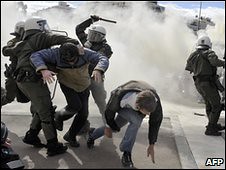
    “There is nothing to debate about these measures,” said Communist
    Party head Aleka Papariga. “We are withdrawing from the debate. The issue will be judged on the streets.”

    -By Alkman Granitsas, Dow Jones Newswires; +30 210 331 2881;
    [email protected]

    Merkel pledges to stand by Greece

    German Chancellor Angela Merkel has pledged to “stand helpfully by
    Greece’s side” but her economy minister said Germany would not offer a cash bailout.

    Mrs Merkel was speaking ahead of a meeting in Berlin with Greek Prime Minister George Papandreou.

    He is facing increased pressure at home as Greece’s two main unions have called a new general strike.

    The strike, on 11 March, is to protest against austerity cuts the
    unions say are “anti-popular” and “barbaric”.

    Public sector workers are currently striking, and rock-throwing
    protestors outside parliament have clashed with police, who used tear gas to disperse them.

    BBC correspondent Malcolm Brabant said the mood on the streets in
    Athens had degenerated after three months of relatively mild protests.

    TV pictures showed officers spraying gas into the face of veteran
    left-winger Manolis Glezos, who is in his mid-80s. Mr Glezos climbed
    the wall of the Acropolis to tear down the Swastika during the Nazi
    occupation.

    On Wednesday, Mr Papandreou revealed further tax rises and spending cuts that have gone down very badly with public sector workers, but could reduce the risk of Greece needing help.

    Members of the Socialist-led Greek parliament are set to approve the
    austerity measures on Friday.

    ‘Not a cent’

    Despite mounting speculation about an EU bail-out, most Germans oppose giving aid to a country that has misreported budget figures for years to hide its mountain of debt.

    Chancellor Merkel has warned that the euro is in the most difficult
    phase since its creation.

    Few doubt that Mrs Merkel will eventually take action if she sees the
    stability – or credibility – of the euro under threat.

    But with support for her centre-right coalition slipping, Mrs Merkel
    has reassured voters that she will not use taxpayers’ money, nor
    breach the “no bail-out clause” in the EU’s Maastricht Treaty.

    A recent poll shows that 71% of Germans think the EU should not help Greece at all. You could call it a culture clash. Germans are big
    savers, not big spenders.

    Mr Papandreou hopes the talks with Mrs Merkel will lead to a German
    commitment to provide support if Greece cannot raise money from the markets.

    However, reports of potential support for Greece are proving unpopular in Germany as many people do not support their taxes being used for bailouts.

    Economy Minister Rainer Bruederle said earlier that his government
    “does not intend to give a cent” to Greece in financial aid.

    There are also fears that rescuing one country could encourage others to expect the same.

    Meanwhile, Germany passed its budget for 2010, with borrowing set to soar this year.

    New borrowing is expected to reach 80.2bn euros ($109bn; £72.5bn) – double the previous highest debt record, set in 1996. However this is less than the 85.8bn euros initially proposed by the government.

    Raising funds

    On Thursday, the Greek government went to the financial markets to
    borrow money and saw its 5bn euro ($6.8bn; £4.5bn) bond issue
    oversubscribed.

    Mrs Merkel welcomed the uptake. “The placement of the bond yesterday went very well and that is of course a good signal for the markets,” she said.

    But Greece will need to borrow more in the coming months – more than $70bn for the year as a whole.

    Mr Papandreou has suggested that Greece might go to the International Monetary Fund (IMF) for help.

    But the other countries in the eurozone would not welcome what would be seen as a sign that they could not fix their own problems.

    The president of the European Central Bank, Jean-Claude Trichet, has dismissed the idea of the IMF providing financial aid for Greece.

    “I do not trust that it would be appropriate to have the introduction
    of the IMF as a supplier of help through standby or through any kind
    of such help,” he told reporters in Frankfurt on Thursday.

    Mr Papandreou will also meet French President Nicolas Sarkozy in Paris on Sunday before travelling to Washington to meet US President Barack Obama on Tuesday.

    Story from BBC NEWS:
    http://news.bbc.co.uk/go/pr/fr/-/2/hi/business/8551227.stm
    Published: 2010/03/05 13:27:30 GMT

    March 5, 2010
    Editorial

    A.I.G., Greece, and Who’s Next?

    As Greece has tottered on the brink of fiscal chaos, threatening to
    drag much of Europe down with it, Wall Street’s role in the fiasco has
    drawn well-deserved scorn.

    First came the news that Greece had entered into derivatives
    transactions with Goldman Sachs and other banks to hide its public
    debt. Then came reports that some of those same banks and various hedge funds were using credit default swaps — the type of derivative that kneecapped the American International Group — to bet on the likelihood of a Greek default and using derivatives to wager on a drop in the euro.

    European leaders have called for an inquiry into the Greek crisis. Ben
    Bernanke, the Federal Reserve chairman, has told Congress that the Fed is “looking into” Wall Street’s deals with Greece, and the Justice Department is investigating the euro bets. That is better than turning a blind eye, but it is not nearly enough.

    The bigger problem is in America, where markets are supposed to be fair and transparent. These particular — and particularly complicated — instruments are traded privately among banks, their clients and other investors with virtually no regulation or oversight.

    The Obama administration and Congress have been talking for a year about fixing the derivatives market. Big banks have been lobbying to block change. And the longer it takes, the weaker the proposed new rules become.

    Here are some of the problems that must be fixed:

    NO TRANSPARENCY

    Derivatives are supposed to reduce and spread risk. In a credit
    default swap, for instance, a bond investor pays a fee to a
    counterparty, usually a bank, that agrees to pay the investor if the
    bond defaults. But because the markets in which they trade are largely unregulated, derivatives can too easily become tools for dangerous risk-taking, vast speculation and dodgy accounting.

    A big part of the problem is that derivatives are traded as private
    one-on-one contracts. That means big profits for banks since clients
    can’t compare offerings. Private markets also lack the rules that
    prevail in regulated markets — like capital requirements, record
    keeping and disclosure — that are essential for regulators and
    investors to monitor and control risk.

    That is why it is so essential to move derivative trades onto fully
    transparent exchanges. The administration originally embraced that
    idea, with exceptions only for occasional, unique contracts. But when
    the Treasury proposed legislation in August, it included huge
    loopholes, and a derivative reform bill that passed the House in
    December has many of the same problems. (The Senate has yet to
    introduce a reform bill.)

    Both the administration and the House would exclude from exchange
    trading the estimated $50 trillion market in foreign exchange swaps —similar to the derivatives Greece used to hide its debt. The rationale for the exclusion never has been clearly explained.

    The Treasury proposal and House bill also would exclude transactions that occur between big banks and many of their corporate clients from the exchange trading requirement, ostensibly because those deals are only for minimizing business risks, not for speculation or for window-dressing the books. That’s debatable. But even if true, other derivatives users would almost inevitably find ways to exploit such a broad exemption.

    What is clear about the exemptions is that they would help to preserve banks’ profits. What is also clear is that they would defeat the goals of reform: to lower risk, increase transparency and foster efficiency.

    LIMITED POWER TO STOP ABUSES

    When the House put out a draft of new rules in October, it sensibly
    gave regulators the power to ban abusive derivatives — ones that are
    not necessarily fraudulent, but potentially damaging to the system.
    Derivatives investors who stand to make huge profits if a company or
    country defaults, for example, might try to provoke default — a
    situation that regulators should be able to prevent. In the final
    House bill, however, the ban was replaced with a requirement that
    regulators simply report to Congress if they believe abuses are
    occurring.

    NO STATE REGULATION, EITHER

    Current law also exempts unregulated derivatives from state
    antigambling laws. That means that states have no power to police
    their use for excessive speculation. Treasury and House reform
    proposals have called for maintaining the federal pre-emption of state antigambling laws. Pre-emption could be tolerable if derivatives were traded on fully regulated exchanges. But as long as many derivative products and transactions are exempted from fully regulated exchange trading, pre-emption of state antigambling laws is a license for, well, gambling.

    The big banks claim that derivatives are used to hedge risk, not for
    excessive speculation. The best way to monitor that claim is to
    execute the transactions on fully regulated exchanges, pass rules and laws to ensure stability, and appoint and empower regulators with independence and good judgment to enforce compliance.

    Without effective reform, the derivative-driven financial crisis in
    the United States that exploded in 2008, and the Greek debt crisis,
    circa 2010, will be mere way stations on the road to greater
    calamities.