Author: Pan-African News Wire

  • Marley Family to Grace Zimbabwe 30th Anniversary Independence Concert

    Marley Family to Grace Zimbabwe Indepedence 30th Anniversary Concert

    By Jairos Saunyama
    Zimbabwe Herald

    The family of the late reggae legend Bob Marley is expected to grace a concert to commemorate Zimbabwe’s 30th Independence anniversary at the Glamis Stadium in Harare on April 17.

    The family, which includes the talented Ziggy, Damian, Sharon, Steve, Julian and Cedella, has confirmed the trip.

    Show organiser Patrick Hundu of Studio City said the Marleys were coming to perform at this year’s Independence celebrations in the same manner their father was part of the festivities at the birth of an independent Zimbabwe in 1980.

    “We were blessed as a nation when reggae icon Robert Nesta Marley came to perform in Zimbabwe at Rufaro Stadium on the 18th of April 1980.

    “Now 30 years later, we continue to smile and reaffirm that we will never be a colony again.

    “And we want the whole world to know as we call on our comrades and friends in the Diaspora to come and celebrate with us and the Marley Family, as they have already indicated strong interest in coming to perform in Zimbabwe,” he said.

    The celebrations, to be held under the theme “Together As One”, will also see a Chinese Army Band performing to symbolise the good relations between China and Zimbabwe.

    Zimbabwe and China are this year celebrating the 30th anniversary of their diplomatic ties.

    The Marley Family will perform alongside Zimbabwe’s man of the moment Stunner, Leonard Mapfumo and Sulumani Chimbetu, among others.

    Their visit will follow that of another Jamaican musician, Sizzla Kalonji, who performed at the 21st February Movement gala in Bulawayo and held a number of other shows in Harare.

    Another Jamaican, dub poet and reggae star John Sinclair aka Yasus Afari, is billed to perform at this year’s Harare International Festival of the Arts.

    The Chinese-Zimbabwean ties will also be celebrated with an exhibition where the two countries will showcase their cultures, including the traditional foods.

    A soccer match between Zimbabwe’s Warriors and the Chinese national team is part of the entertainment programme.

    The Ministry of Youth Development, Indigenisation and Empowerment is co-ordinating the event.

  • Jobs Program Needed: 30 Million Seek Work in the United States

    Jobs program needed: 30 million seek work

    Gallup Poll shows gov’t hides real figures

    By Fred Goldstein
    Published Mar 3, 2010 9:29 PM

    A Gallup Poll released on Feb. 23 revealed that in January 30 million workers in the U.S. were either on forced part-time or out of work altogether. This number, based on a poll of over 20,000 adults over the age of 18 and conducted from Jan. 2 to Jan. 31, amounts to 20 percent of the workforce.

    Conducted by one of the most prestigious and conservative polling institutions in the capitalist world, the poll used samples taken from all regions of the country and all age groups.

    No wonder this poll was barely mentioned in the big-business press. It shows that the government is undercounting millions of workers who suffer from the unemployment/underemployment crisis. It documents, at a minimum, that the statisticians in the Bureau of Labor Statistics and the National Bureau of Economic Research have been dishonest about the true level of unemployment.

    This Gallup Poll also shows the racist disparities that have been made worse by the economic crisis. It reveals African-American and Latino/a underemployment to be 27 percent and 29 percent respectively, compared to white underemployment at 17 percent. There was nothing revealed about immigrant workers, but other studies have shown a drastic increase in underemployment among undocumented workers in particular, especially those in the construction industry.

    According to government agencies, the level of what is called “total unemployment,” a measurement called U-6, is only 16.5 percent, not the 20 percent revealed in the Gallup Poll.

    To make things worse, it is important to know that the official government number for “total unemployment” includes not only workers who are unemployed plus those who are forced to work part time when they need a full-time job, but also those who have dropped out of the workforce because they have given up looking.

    According to AOL News online, “What’s striking about the Gallup numbers is that the polls didn’t even include people out of work so long they are no longer counted in the workforce.” In the month of January, according to the government, 1.1 million workers were officially classified as “discouraged workers.”

    Thus the Gallup Poll itself is an undercount if the official government number of 1.1 million workers who have given up looking for a job is added to the 30 million compiled by Gallup.

    4.4 million workers drop out

    Yet the government coverup is even wider than would appear from the Gallup Poll. The Economic Policy Institute, whose former head, Jared Bernstein, is the chief economist and economic policy adviser to Vice President Joseph Biden, says: “Since the recession started in December 2007, the labor force — people who are either working or seeking work — has declined by 700,000 workers, even though the working-age population has increased by 3.7 million. The shrinking labor force is largely a reflection of discouragement with the labor market; as jobs have become scarce, many job seekers have given up looking for work.”

    Thus, according to the EPI, almost 4.5 million workers have dropped out of the work force, not the 1.1 million counted by the government. And among those who have dropped out, a drastically high proportion are youth. The labor force participation rate for workers age 16-24 has decreased from 59.1 percent to 54.7 percent in the 25 months since the recession started, representing a loss of 1.3 million young workers. In the Gallup Poll, people ages 18 to 29 had the highest level of underemployment, at 31 percent.

    On the other end of the age scale, people over 55 have increased their workforce participation because they cannot afford to retire. In their senior years they wind up working, often forced to compete with youth for low-paying jobs.

    Under “normal” conditions of capitalist exploitation — i.e., in between boom-and-bust crises, when jobs are more available — youth, and especially Black, Latino/a, Asian and Native youth, have the highest unemployment and the lowest wages. Now that there is a capitalist crisis, the crisis for youth has become massive.

    The talk of “recovery” for workers of all ages is a myth. The only recovery is for the bosses, and for the biggest and richest ones at that.

    The talk of a decline in layoffs was contradicted at the end of February by the announcement of a rise in first-time claims for unemployment insurance.

    Unemployment claims rise, home sales drop

    In its report on jobless claims on Feb. 25, the Labor Department said first-time claims for unemployment benefits rose 22,000 to a seasonally adjusted 496,000. Wall Street analysts had expected a drop to 455,000.

    The four-week average of jobless claims rose 6,000 to 473,750. The average had fallen sharply over the summer and fall from its peak last spring of about 650,000. This year, the improvement has stalled. The four-week average has risen about 30,000 in the past month. It’s now well above the 425,000 level that many economists said would signal net hiring. It is a commentary on U.S. capitalism that the layoff of 425,000 workers in one week would be considered a “positive” signal of net hiring.

    Furthermore, new-home sales dropped 11.2 percent in January, the largest drop in more than 50 years. A drop in new home sales spells further layoffs for construction workers.

    One of the causes for the drop is the massive number of foreclosures as speculators and even some individual home buyers try to get bargain-basement prices by picking from the millions of foreclosed homes. But even with that, existing home sales dropped 7.2 percent in January.

    More foreclosures are coming by the hundreds of thousands as unemployed workers cannot afford to keep up their mortgages, and even those who are employed are “underwater” — i.e., they owe far more than their homes are worth on the market.

    The banks and lenders will not adjust loans, will not suspend payments for the unemployed, and are ruthlessly trying to squeeze every last nickel out of homeowners. Millions more foreclosures are in the offing unless the masses of people unite and demand an end to foreclosures and evictions.

    To the 30-million-plus workers with no jobs or part-time jobs, with no health care plan, no pensions, no benefits, no vacations and the unbearable economic pressure of trying to stay afloat, the very idea that the economy has been “recovering” for six months must sound like a cruel joke.

    Who will buy the goods?

    One question that needs to be asked is what prompted the Gallup organization to undertake such an extensive poll? The contradictory numbers coming out of government offices and from the Obama administration have probably made sections of the ruling class nervous. Investment advisers, corporate economic forecasters, even economic policy advisers, have a large stake in getting reliable information about the economy. The ruling class cannot rely on the government agencies alone, which are bound to understate the seriousness of the situation for political reasons.

    One of the few details made public in the recent Gallup Poll was how much less money was being spent in the market by underemployed workers, compared to those employed. The discrepancy between a supposed spending average of $75 a day for the employed compared to $48 a day for the underemployed, even if exaggerated, is a hard fact for those authorities to contemplate when considering the prospects for a capitalist “recovery.”

    The public heard little of the poll and most of the information gathered was kept private, undoubtedly for the eyes of the ruling class and their advisers.

    But the ruling class is teetering between recovery and renewed capitalist crisis. Everyone knows that the stabilization of the capitalist economy, the temporary halt to the downward spiral of the economic and financial crisis, was predicated upon the massive bailout of the banks and the stimulus to the economy.

    The conventional calculations are that anywhere between 1.5 million and 2 million jobs were created or saved by the stimulus package of $787 billion. The stimulus money is supposed to run out in the middle of 2010. Credit for first-time home buyers has now been extended to those who have previously purchased homes.

    The government and bosses and bankers are waiting to see what happens when the stimulus money and the incentives run their course. Everyone is holding their breath hoping that the limited capitalist expansion now underway will keep going.

    But the ruling class has a fundamental contradiction in the present crisis. It is making a profit recovery based on layoffs and intensifying the exploitation of the remaining workers. No recovery can be sustained on that basis. Only renewed crisis can be the outcome of this course.

    The working class, the oppressed, the communities, the students and youth, and all who are being victimized by this capitalist crisis must not hold their breath and wait for salvation to come from an economic recovery.

    The only way out of this crisis for them is to organize and struggle with a fighting program. At the top of the agenda must be a demand for a government program that guarantees a job at a living wage with full benefits and the unhampered right to union representation for every worker who needs one.

    The trillions of dollars being given to the banks, the corporations and the military can support such a program as well as guarantee a free quality education for all youth, from grade school to college.

    Articles copyright 1995-2010 Workers World. Verbatim copying and distribution of this entire article is permitted in any medium without royalty provided this notice is preserved.

    Workers World, 55 W. 17 St., NY, NY 10011
    Email: [email protected]
    Page printed from:
    http://www.workers.org/2010/us/jobless_0311/

  • Indian Maoists Demand Release of Political Prisoners As Precondition For Talks

    Maoists demand release of leaders

    India’s Maoist rebels have again demanded the release of their senior leaders as a precondition for beginning talks with the government.

    Maoist military wing head Koteswara Rao’s demand comes a day after the arrest of Venkateswar Reddy, alias Telegu Deepak, in Calcutta.

    Mr Deepak is is believed to have masterminded numerous attacks and is a close associate of Mr Rao.

    He is the latest of several senior Maoists to be arrested.

    In September another senior Maoist, Kobad Ghandy, was arrested in Delhi.

    In October police also arrested a husband and wife – who they said were senior Maoist leaders – in the state of Jharkhand.

    Last month, Mr Rao offered a ceasefire ahead of possible talks with the government – but only if it called off an offensive against the rebels.

    The government asked the rebels to give the offer in “writing”. The rebels responded by giving out a telephone number to the government to call so that negotiations could begin.

    A spokesman for Mr Rao said that the rebels would now launch an offensive if the government did not free its leaders.

    “If the government does not inform us in the next three days about how they want to proceed on our offer, we will abandon all peace efforts and unleash a full scale offensive,” Maoist spokesman Comrade Raju told the BBC over the telephone from an undisclosed hideout.

    Home Minister P Chidambaram in December that said he was ready for “serious negotiations” with the rebels.

    He said that they were not “terrorists” and had raised “serious issues” about the lack of development.

    ‘Biggest catches’

    Police say that Mr Deepak planned last month’s attack on a camp of the Eastern Frontier Rifles, in which 24 paramilitary soldiers died.

    They say that he was a member of the Central Military Commission of the Communist Party of India (Maoist).

    The BBC’s Subir Bhaumik in Calcutta says that he is easily one of the biggest catches in the anti-Maoist offensive – Operation Green Hunt – currently under way in several states.

    Our correspondent says that the arrest comes against the backdrop of the apparent failure to get negotiations started between the Indian government and Maoist rebels after both sides put forward their conditions for talks.

    More than 6,000 people have died during the rebels’ 20-year fight for communist rule in many Indian states.

    Prime Minister Manmohan Singh has described the Maoist insurgency as India’s “greatest internal security challenge”.

    The rebels now have a presence in 223 of India’s 600-odd districts.

    Story from BBC NEWS:
    http://news.bbc.co.uk/go/pr/fr/-/2/hi/south_asia/8548809.stm
    Published: 2010/03/04 06:41:28 GMT

  • China Backs Diplomacy, Not Sanctions on Iran

    March 4, 2010

    China Backs Diplomacy, Not Sanctions, on Iran

    By THE ASSOCIATED PRESS
    Filed at 4:04 p.m. ET

    UNITED NATIONS (AP) — Western powers pressed for new sanctions against Iran on Thursday but China and Russia called for diplomatic negotiations as the best way to achieve a peaceful settlement of the dispute over Tehran’s nuclear program.

    China and Russia also urged Iran to resolve a standoff with the U.N. nuclear watchdog agency and key powers on how to supply nuclear fuel for Tehran’s research reactor, saying this is key to easing current tensions.

    Neither China’s deputy U.N. ambassador Liu Zhenmin nor Russia’s U.N. Ambassador Vitaly Churkin responded directly to a proposal for a fourth round of sanctions against Iran, backed by the U.S., Britain, France and Germany, which was sent to their governments in recent days.

    It would target Iran’s powerful Revolutionary Guard and toughen existing measures against its shipping, banking and insurance sectors, according to well-informed U.N. diplomats, speaking on condition of anonymity because the discussions are taking place among capitals.

    China, which relies on Iran for much of its energy, traditionally opposes sanctions, but it went along with the first three sanctions resolutions. It has been skeptical of the need for a fourth round of sanctions, which Western powers are seeking to pressure Iran to suspend its uranium enrichment program, especially following a recent report by the International Atomic Energy Agency that said Tehran may be making nuclear bombs.

    But Liu said Beijing remains in favor of addressing the Iranian nuclear issue through ”the dual-track strategy” of diplomatic engagement and pressure through sanctions — a comment which U.S. Ambassador Susan Rice called ”important.”

    She said discussions were continuing among capitals on ”concrete and specific ways” to increase pressure on Iran.

    ”The choice that Iran faces (is) quite clear: it can engage seriously in diplomacy and resolve our collective concern about its nuclear program … or it can face greater pressure and isolation,” Rice said.

    Liu said Beijing has ”strictly observed” its obligations to enforce the three rounds of U.N. sanctions imposed on Iran since 2006, but he stressed that Beijing does not believe that sanctions can resolve the dispute over Iran’s nuclear ambitions, which Tehran insists are purely peaceful and aimed solely at producing nuclear energy.

    ”We believe that sanctions are not an end in themselves,” Liu said. ”In no way can they provide a solution to this issue. Therefore, diplomatic negotiations and the peaceful settlement still remain the best approach.”

    Even though restarting negotiations with Iran on its nuclear program ”has encountered some difficulties, the door to contact and dialogue has not closed,” he stressed.

    Russia’s Churkin agreed, saying ”We do believe that there is still a horizon for negotiations.”

    He said finding a mutually acceptable plan to provide fuel for Tehran’s research reactor and implementing it ”would be a credible step in restoring trust in the solely peaceful orientation of the Iranian nuclear program and would best meet the humanitarian needs of the Iranian people.”

    Iran has already amassed about 2 tons of low-enriched uranium — more than enough for further enrichment into material for one warhead.

    The IAEA-endorsed plan would take 70 percent of that material to Russia for 20-percent enrichment and then to France for processing into fuel rods for Tehran’s research reactor. It was endorsed by world powers because it would ensure a continued supply of medical isotopes from the reactor for Iranian cancer patients while delaying Iran’s ability to further enrich uranium to weapons grade by stripping it of most of its low-enriched stockpile.

    Despite initial signals that it might accept the IAEA-backed plan, Iran recently rejected it and has started its own program to enrich uranium to close to 20 percent.

    Liu and Churkin called for a quick solution to the nuclear fuel issue and a prompt resumption of the broad dialogue between Iran and the five powers that have been seeking a negotiated agreement on Tehran’s nuclear program — China, Russia, the U.S., Britain and France — all veto-wielding Security Council members — and Germany. Liu also urged Iran to respond to all outstanding questions from the IAEA.

    All five permanent council members spoke at an open council meeting after the chair of the committee monitoring sanctions against Iran, Japan’s U.N. Ambassador Yukio Takasu, presented a 90-day report on violations focusing on the seizure of arms from Iran being shipped illegally, reportedly to Syria. He said Syria responded but Iran did not.

    Both Takasu and Rice noted that the committee has the authority to impose additional targeted sanctions on entities that facilitate sanctions violations or evasion.

  • United States Wants More African Governments to Prosecute Pirates

    US wants more African states to prosecute pirates

    Posted: 3/4/2010 12:22:00 PM
    Shabelle

    DAR ES SALAAM (Sh. M. Network) – The U.S. envoy to Tanzania urged African nations on Wednesday to prosecute Somali pirates apprehended in the Indian Ocean as a way of tackling the continent’s growing piracy problem.

    “Right now, Kenya and Seychelles are the only two countries in Africa that are prosecuting pirates,” said U.S. Ambassador Alfonso Lenhardt. “More countries need to come forward. That’s how to stop it.”

    The coast off Somalia is among the world’s most dangerous for merchant shipping. The number of attacks worldwide jumped by 40 percent last year, with gunmen from the failed Horn of Africa state accounting for more than half the 406 reported incidents.

    The issue of jurisdiction to prosecute cropped up after a U.S. Navy warship prevented an attack on a ship flying the Tanzanian flag last month and apprehended eight suspects.

    He said the ship saved by U.S. forces was actually a North Korean vessel flying the flag of the east African nation and the United States now was deciding who might prosecute the suspects.

    “The law allows some prosecution only when Tanzanian citizens or Tanzanian ships are attacked,” Lenhardt told a news conference. “The Tanzanian government has to decide what it wants to do and how it is going to deal with this problem.”

    “The international threat of piracy puts everyone at risk. By the fact that pirates are out there, goods and services cost more because ships have to skirt around them and insurance costs go up,” he said.

    “It is to everyone’s benefit to keep those sea lanes opened.”

    Source: Reuters

  • Women Refuse Airport Body Scans

    Women refuse airport body scans

    Two women were stopped from boarding a plane at Manchester Airport after refusing to undergo a full body scan.

    The passengers were due to fly to Islamabad on 19 February when they were selected at random to go through the new scanning machine.

    One, who is believed to be a Muslim, refused on religious reasons and the other cited health grounds.

    They are thought to be the first people to refuse to use the scanners since they became compulsory in February.

    The machines were introduced as a trial at the airport in October 2009.

    The women were warned they were legally required to go through the scanner, after being chosen at random, or they would not be allowed to fly, an airport spokesman said.

    ‘Strict procedures’

    It is not clear whether the women were travelling together.

    Security staff use the X-ray machine to check for any concealed weapons or explosives but they have been criticised as an invasion of privacy.

    A Manchester Airport spokesman said: “Two female passengers who were booked to fly out of Terminal 2 refused to be scanned for medical and religious reasons.

    “In accordance with the government directive on scanners, they were not permitted to fly.

    “Body scanning is a big change for customers who are selected under the new rules and we are aware that privacy concerns are on our customers’ minds, which is why we have put strict procedures to reassure them that their privacy will be protected.”

    The women forfeited their flight and left the airport.

    In US airports where scanners are installed passengers have the option of a undergoing a body search.

    Story from BBC NEWS:
    http://news.bbc.co.uk/go/pr/fr/-/2/hi/uk_news/england/manchester/8547416.stm
    Published: 2010/03/03 15:58:06 GMT

  • Mideast Women Win More Rights, Hurdles Remain

    Wednesday March 3, 2010

    Mideast women win more rights, hurdles remain – study

    By Shaimaa Fayed

    CAIRO (Reuters) – Women in the Middle East have broken down some educational barriers, secured a bigger economic role and won other rights in the past five years but still suffer great inequalities, a study showed.

    Fifteen of 18 countries in the poll recorded gains in women’s rights in the period, notably in Kuwait, Algeria and Jordan, United States-based group Freedom House said.

    Only in Yemen, Iraq and the Palestinian areas — as a result of either internal conflict or what the study described as rising religious extremism — did women’s rights decline over the past five years, the study “Women’s Rights in the Middle East and North Africa: Progress and Resistance” said.

    Among the milestones, it cited Kuwait’s 2005 decision to give women the right to vote and run for parliament and the same year Algeria banned proxy marriages and recognized the parental authority of custodial mothers.

    It said women’s literacy rates continued to rise in the region and, in some countries, women were now more likely than men to attend university.

    “There are more women entrepreneurs, more women doctors, more women PhDs and more women in universities, than ever before,” said Freedom House executive director Jennifer Windsor in a statement commenting on the study.

    Windsor noted that women’s career path in the region was complicated still by their legal status. For example, in Saudi Arabia women were allowed to earn law degrees but not to appear in court on behalf of their clients, she said.

    “These same women are subject to abuse at home, lack child guardianship rights, and are legally compelled to obey their husbands,” she said of the situation in Saudi Arabia.

    Violence against women and impunity in spousal abuse remained widespread, the study said. No country covered explicitly prohibited spousal rape and only Tunisia and Jordan offer specific protections against domestic violence, it said.

    “When courts are incapable of upholding basic legal rights in the face of political and societal pressures, those guilty of spousal abuse, gender-based discrimination, or even murder, often walk free,” said Sanja Kelly, who directed the study.

    (Editing by Louise Ireland)

  • South African President Zuma Visits UK: ‘Thanks For the Show, Cultural Imperialists!’

    Zuma visit: ‘Thanks for the show, cultural imperialists!’

    South African President accuses Britain of anti-Zulu ‘snobbery’

    Thursday, 4 March 2010

    It was all polite smiles and meticulous protocol as Jacob Zuma met the Queen yesterday afternoon. But just hours before he left for his state visit to Britain, South Africa’s flamboyant President revealed what he really thought of his hosts.

    In an astonishing interview given shortly before he boarded his flight to London, Mr Zuma launched a scathing attack on the British, accusing them of being cultural imperialists with colonial attitudes who still viewed Africans as “barbaric”.

    “When the British came to our country they said everything we did was barbaric, was wrong, inferior in whatever way,” he told The Independent’s sister group of newspapers in South Africa. “Bear in mind that I’m a freedom fighter and I fought to free myself, and also for my culture to be respected. And I don’t know why they are continuing thinking that their culture is more superior than others, those who might have said so.”

    The catalyst for Mr Zuma’s remarkable outburst was criticism from a number of British columnists who questioned the President’s polygamy, a common and accepted practice among South Africa’s Zulus.

    Many visiting heads of state might have chosen to ignore the stinging barbs of tabloid journalism, but Mr Zuma – who has married five times and currently has three wives – is a political bruiser who enjoys taking on his detractors in public.

    Rather than stick to the protocols of a state visit (pomp, splendour and no criticism of either the host or visiting nation) the South African President clearly felt compelled to speak out against what he perceived to be British cultural snobbery.

    “I am very clear on these issues,” he said. “I’ve not looked down upon any culture of anyone, and no one has been given an authority to judge others. The British have done that before, as they colonised us, and they continue to do this, and it’s an unfortunate thing.”

    However, at a state banquet last night, Mr Zuma praised the help Britain had given South Africa in its transition to a new democratic government. “We cannot forget the extraordinary role they [the British people] played at the forefront of a global movement for a free South Africa, as the global anti-apartheid movement has its roots in this country.”

    His comments in the interview threatened to overshadow what was supposed to be a three-day visit to strengthen ties between Britain and South Africa. Gordon Brown stood alongside the Queen to greet Mr Zuma and the two leaders will hold talks today.

    Downing Street was at pains yesterday to avoid being drawn into a diplomatic clash with South Africa following the President’s comments. It made clear that the visit could hold lucrative financial rewards for Britain, as well as cementing cultural ties between the two countries.

    Mr Brown’s spokesman described his stay as a “very welcome visit by a very important member of the international community”. Whitehall sources also stressed that Mr Zuma’s comments were aimed at the British press rather than the Government.

    Mr Brown missed Prime Minister’s Questions, which took place as he greeted dignitaries at the welcoming ceremony half a mile away. Tory sources accused Mr Brown, for whom Harriet Harman deputised, of “ducking out” of his weekly Commons appearance.

    Mr Brown’s spokesman refused to be drawn on suggestions that the Prime Minister had used the time he would usually have spent preparing for PMQs to ready himself for his appearance at the Iraq Inquiry tomorrow.

    For his opening meeting with the Queen and Prince Philip on Horse Guards Parade, Mr Zuma wore a long coat and black suit to protect him from the March chill. In South Africa, the 67-year-old often greets dignitaries wearing the traditional Zulu dress of leopard skin loincloth and shield. Mr Zuma’s Zulu heritage may also have provided the impetus behind the Queen’s gift to him of a mounted bronze stag and a book entitled Hunting And Stalking Deer. A representative from Mr Zuma’s office, however, admitted he had no knowledge of the President being interested in hunting.

    Mr Zuma’s gift to the Queen was a sculpted chess set depicting traditional Zulu warriors – although he soon discovered that a similar present had been given to the Duke of Edinburgh by his predecessor Nelson Mandela years earlier. Noticing the hand-painted ceramic set on display in the Palace Picture Gallery, a slightly crestfallen Mr Zuma remarked: “Oh, that’s another set.”

  • Marley Family to Grace Zimbabwe Indepence 30th Anniversary Concert

    Marley Family to grace Independence concert

    By Jairos Saunyama
    Zimbabwe Herald

    The family of the late reggae legend Bob Marley is expected to grace a concert to commemorate Zimbabwe’s 30th Independence anniversary at the Glamis Stadium in Harare on April 17.

    The family, which includes the talented Ziggy, Damian, Sharon, Steve, Julian and Cedella, has confirmed the trip.

    Show organiser Patrick Hundu of Studio City said the Marleys were coming to perform at this year’s Independence celebrations in the same manner their father was part of the festivities at the birth of an independent Zimbabwe in 1980.

    “We were blessed as a nation when reggae icon Robert Nesta Marley came to perform in Zimbabwe at Rufaro Stadium on the 18th of April 1980.

    “Now 30 years later, we continue to smile and reaffirm that we will never be a colony again.

    “And we want the whole world to know as we call on our comrades and friends in the Diaspora to come and celebrate with us and the Marley Family, as they have already indicated strong interest in coming to perform in Zimbabwe,” he said.

    The celebrations, to be held under the theme “Together As One”, will also see a Chinese Army Band performing to symbolise the good relations between China and Zimbabwe.

    Zimbabwe and China are this year celebrating the 30th anniversary of their diplomatic ties.

    The Marley Family will perform alongside Zimbabwe’s man of the moment Stunner, Leonard Mapfumo and Sulumani Chimbetu, among others.

    Their visit will follow that of another Jamaican musician, Sizzla Kalonji, who performed at the 21st February Movement gala in Bulawayo and held a number of other shows in Harare.

    Another Jamaican, dub poet and reggae star John Sinclair aka Yasus Afari, is billed to perform at this year’s Harare International Festival of the Arts.

    The Chinese-Zimbabwean ties will also be celebrated with an exhibition where the two countries will showcase their cultures, including the traditional foods.

    A soccer match between Zimbabwe’s Warriors and the Chinese national team is part of the entertainment programme.

    The Ministry of Youth Development, Indigenisation and Empowerment is co-ordinating the event.

  • Concern Mounts Over Fresh Fighting in Darfur Region of Sudan

    Wednesday, March 03, 2010
    06:23 Mecca time, 03:23 GMT

    Concern over fresh Darfur fighting

    The reported fighting comes a week after Khartoum signed a peace deal with main rebel group Jem

    The United States has expressed concern over reports that the Sudanese army launched offensives against rebels in Darfur after signing a peace deal with the main rebel group there last week.

    PJ Crowley, a spokesman for the US state department, said on Tuesday that Washington was “extremely concerned” over reports of fighting that “have reportedly caused significant civilian casualties, displacement, and the evacuation of humanitarian organisations”.

    He urged Sudan’s government and the Sudan Liberation Army (SLA) Abdel Wahid faction “to refrain from further violence and to allow the Joint African Union-United Nations Mission in Darfur access to Jebel Marra to assess the humanitarian situation and restore stability”.

    Abdel Wahid Mohamed al-Nur is the leader of an SLA faction which has a stronghold in the area.

    ‘Civilians killed’

    Hundreds of civilians are feared dead in the fighting, a UN source told the Reuters news agency on Monday.

    “We think that we have a mounting number of casualties … The lower estimate is around 140, the higher estimate is closer to 400,” said the source of civilian deaths.

    Speaking on condition of anonymity, the source said as many as 40,000 civilians had fled the fighting, most recently around the market town of Deribat.

    “For us the important thing now is to get access to the area,” said the source, who said aid workers and UN agencies had been blocked from entering Jabel Marra by the ongoing fighting and the threat of bandit attacks on their staff.

    SLA field commander Suleiman Marajan told Reuters that government bombing raids had killed at least 170 civilians around Deribat over the past 10 days and more had died in other areas.

    But a Sudan army spokesman denied any fighting in the mountainous Jabel Marra region and accused rebels of attacking local residents.

    “There are no clashes between the Sudanese army and the forces of Abdel Wahid’s movement,” he told Reuters.

    The reported clashes throughout last week have marred Khartoum’s announcement of an end to war in the region and comes just over a month before national elections.

    Omar Hassan al-Bashir, Sudan’s president, declared the seven-year war in Darfur over last Wednesday after signing an initial deal with the Justice and Equality Movement (Jem), Darfur’s main rebel force.

    The deal signed in Qatari capital Doha on February 23 commits Khartoum to reaching a final peace deal with Jem by March 15.

    State department spokesman Crowley said the peace deal offered a chance to reduce violence in Darfur but needed to be broadened to include other rebel groups, but Abdel Wahid’s SLA and other rebels have rejected the deal, demanding security on the ground before talks.

    Source: Agencies

  • U.S. Occupation Behind Iraq’s Turmoil

    Wednesday, March 03, 2010
    18:53 Mecca time, 15:53 GMT

    Suicide bombers target Iraq city

    The blasts follow a threat by al-Qaeda’s leader in Iraq that he will disrupt the upcoming elections

    At least 29 people have been killed and 42 more wounded in three powerful co-ordinated suicide attacks in the central Iraqi city of Baquba.

    Just days before parliamentary elections are due to be held, attackers targeted a government building, a nearby traffic intersection and, later, the hospital where the wounded were being treated.

    Reporting that the toll is likely to rise, Al Jazeera’s Anita MacNaught said the explosions on Wednesday were a “carefully co-ordinated series of attacks”.

    “This is far from unprecedented. If what we’re hearing is true, the local police chief was the target of the third suicide bomb,” she said.

    “The bomber followed crowds of the wounded into the hospital and detonated himself in an effort to get the police chief as well,” our correspondent said.

    Major General Abdul Hussein al-Shimmari, the police chief, escaped unharmed but a number of his personal security team were wounded.

    The attacks, coming despite heightened security across the country ahead of Sunday’s vote, were the deadliest to hit Iraq in nearly a month.

    Al-Qaeda threat

    “Diyala [Baquba is the capital of the Diyala province] has been quiet in the lead up to the election. It was, of course, one of the most violence-stricken provinces back in 2007, but this is a dramatic escalation of violence there,” MacNaught added.

    The bombings follow a threat by Abu Omar al-Baghdadi, al-Qaeda’s leader in Iraq, that he would disrupt elections by “military means”.

    Before hitting Baquba’s main hospital, bombers in explosives-laden vehicles targeted the city’s provincial housing department’s offices and a nearby intersection at around 9:30am (06:30 GMT).

    The first vehicle crashed through the entrance to the provincial housing department’s compound, which sits next to a police station, before exploding.

    Moments later, at a nearby traffic intersection, a suicide bomber detonated explosives packed into his vehicle, triggering a powerful blast.

    The hospital bombing occurred a short time later.

    Election security

    Iraqis go to the polls on March 7, the second such vote since Saddam Hussein, the former president, was ousted in 2003.

    Al Jazeera’s Mike Hanna, reporting from Baghdad, said there had been a spike in violence across the country in the lead-up to the election.

    He said a number of measures have been taken to ensure security.

    “There will be 48-hour period of calm before the voting takes place during which no campaigning can happen. There are also indications that there will be a curfew in major areas throughout the country.

    “The safeguards are in place but there have been security safeguards in place for a period of time … Bombings such as [in Baquba] today and bombings in Baghdad in recent weeks indicate that no matter how tight the security, bombers seeking to disrupt the election process could find a way.”

    Last Sunday, Iraq’s national security adviser told the AFP news agency that security forces had found and prevented at least 10 vehicle bombs in the past month as al-Qaeda and other rebel groups sought to target the election.

    Safa Hussein said most of those bombs, which would have caused “very major damage”, would have targeted Baghdad.

    The parliamentary elections are seen by Washington as a crucial precursor to a complete US military withdrawal from Iraq by the end of 2011.

    The UN’s envoy to Iraq has said that while he was concerned by the level of violence, it had not affected preparations for the elections.

    Source: Al Jazeera and agencies

    U.S. occupation behind Iraq’s turmoil

    By John Catalinotto
    Published Feb 28, 2010 9:01 PM

    As the March 7 national election approaches in Iraq, the number of U.S. troops occupying the country has slipped below 100,000 for the first time since the U.S.-led invasion seven years ago. The Pentagon plans to change the name of its Iraq effort on Sept. 1, from “Operation Iraqi Freedom” to “Operation New Dawn” when 50,000 troops remain.

    The play with words and numbers hasn’t changed the basic reality in Iraq. There are still 98,000 U.S. troops there. They still have the leverage on power. A sovereign election can’t be held in an occupied country.

    If and when the last U.S. troops are ushered out, the best name for that effort would be “Operation End the Nightmare.” Seven years of invasion and occupation have brought neither freedom nor the promise of a fresh start, but have brought Iraq to the brink of destruction as a country.

    A report from the BRussells Tribunal, resulting from an attempt last October to raise a legal case against U.S./U.K. aggression and occupation, gives a bleak picture of where life is at today in Iraq:

    “From the start of the implementation of a U.S.-instigated and dominantly administered sanctions regime [August 1990] up to the present day, an approximate total of 2.7 million Iraqis have died as a direct result of sanctions followed by the U.S.-U.K. led war of aggression on, and occupation of, Iraq beginning in 2003. Among those killed during the sanctions period were 560,000 children.

    “From 2003 onwards, having weakened Iraq’s civil and military infrastructure to the degree that its people were rendered near totally defenseless, Iraq was subject to a level of aggression of near unprecedented scale and nature in international history.”

    This took place along with “funding of sectarian groups and militias that would play a key role in fragmenting the country under occupation, … the collapse of all public services and state protection for the Iraqi people, the further destruction of the health and education systems of Iraq, and the creation of waves of internal and external displacement totaling nearly 5 million Iraqis;” overall there are “5 million orphans” and “3 million widows.” (brusselstribunal.org)

    Those are the numbers that should be kept in mind when the Pentagon and war criminals like former Vice President Dick Cheney and former British Prime Minister Tony Blair boast of the achievements of the Iraq occupation. What the U.S. and Britain have achieved is fomenting an internecine battle among different groupings inside Iraq. This has prevented the Iraqis from waging a united struggle to liberate their country from the occupation.

    The imperialists have left Iraq in shambles. And they have not yet left Iraq.

    An electoral sham

    The March 7 election — should it take place as scheduled — will be as much a farce as the one held in Afghanistan last summer. A complete client state, which was only able to take power with the force of the occupation behind it, is organizing the elections. It is organizing them in order to consolidate power for the groupings that support Prime Minister Nuri al-Maliki.

    These are parties that opposed the Ba’athist government led by Saddam Hussein. Al-Maliki signed the papers hurrying the execution of the Iraqi leader on Dec. 30, 2006. At that time Saddam Hussein was a symbol of struggle for a significant section of the Iraqi resistance to the U.S.-led occupation.

    During the electoral campaign, al-Maliki’s government outlawed the candidacy of 454 people who were running for national office, claiming that these individuals were too close to the Ba’ath Party. Some 171 of these candidates appealed the decision disqualifying them. In February a panel of judges appointed for the purpose rejected the appeals of all but 26 candidates.

    Following this decision barring the most secular of the candidates, the Iraqi National Movement coalition led by former Prime Minister Iyad Allawi announced it would temporarily suspend its campaign and demanded that the bans be reversed. On Feb 21, one of the parties in this coalition, the mostly Sunni National Dialog Front, announced that it would boycott the election.

    There is still a chance the election will fall apart. Even if the vote takes place, as in Afghanistan, it will be a fraud having nothing to do with democracy. U.S. troops — even if they are not engaged in daily battles in Iraq — still remain the final arbiters of Iraqi politics.

    Washington may prefer a stable puppet regime in Iraq so it can move most of its troops to Afghanistan. But the U.S. forces will continue to try to play off one sector of Iraqi society against another — whatever the consequences for the Iraqis — if the U.S. dominates the region.

    E-mail: [email protected]
    ——————————————————————————–
    Articles copyright 1995-2010 Workers World. Verbatim copying and distribution of this entire article is permitted in any medium without royalty provided this notice is preserved.

    Workers World, 55 W. 17 St., NY, NY 10011
    Email: [email protected]
    Page printed from:
    http://www.workers.org/2010/world/iraq_0304/

  • Mossad Gangsters in Dubai

    EDITORIAL

    Mossad gangsters in Dubai

    Published Feb 28, 2010 8:38 PM

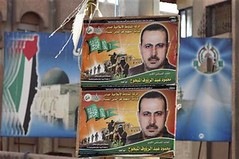
    Mahmoud al-Mabhouh, credited with organizing the fighting force of the Palestinian liberation group Hamas, was assassinated in Dubai by Israeli Mossad agents, perhaps working together with other professional killers. That, at least, is what everyone believes and is the most reasonable explanation of his murder.

    A myth has grown about the Mossad — a Hebrew word meaning Institute, short for Institute for Intelligence and Special Operations. Its professional killers are supposed to work flawlessly, expertly, with dedication and ruthlessness. The ruthless part is true and obvious. The rest is a myth useful to the Israeli rulers. The Israeli army created this myth before its 2006 defeat in Lebanon and last year’s failure in Gaza.

    Like its counterparts in the “dirty-tricks” departments of imperialist spy agencies like the CIA, Britain’s MI6 and France’s General Directorate, the Mossad carries out murders. It operates much like killers trained or hired by organized crime gangs to rub out someone refusing to pay protection money.

    The Mossad operates under the Israeli flag, a flag tied up completely with the brutal suppression of an entire people. Thus these gangsters have become specialists in suppression and repression of popular rebellion. Mossad agents are sent all over the globe, providing advice and training to repressive states, for example, to Colombia and other pro-U.S. countries in Latin America where a large U.S. presence in this role might awaken mass anger.

    The Israelis offer this training as part of their contribution to maintaining imperialist domination over the world and in return for other support. The imperialists and their Israeli clients stick together in jointly suppressing liberation struggles.

    While carrying out the murder of Al-Mabhouh, the Mossad agents were recorded on closed-circuit videos that abound in Dubai. The local police publicized this on YouTube. They also revealed that the suspect Mossad agents used passports from Britain, Canada and Ireland. These countries, also part of the imperialist world, lodged diplomatic complaints, which the Israelis discount as public relations.

    But for the Israelis it is bad public relations. With each blatant murder and war crime the Israeli state commits, the propaganda attempting to support its legitimacy loses the little force it retains. Israeli war crimes in Gaza a year ago propelled a movement demanding boycott, divestment and sanctions against the Zionist state. The Dubai assassination, which once more exposes Israel’s criminal character, is sure to push that BDS movement another step forward.
    ——————————————————————————–
    Articles copyright 1995-2010 Workers World. Verbatim copying and distribution of this entire article is permitted in any medium without royalty provided this notice is preserved.

    Workers World, 55 W. 17 St., NY, NY 10011
    Email: [email protected]
    Page printed from:
    http://www.workers.org/2010/editorials/dubai_0304/

  • U.S. Mass Unemployment is Here to Stay

    Big business media finally admit

    Mass unemployment is here to stay

    Workers, students and you must fight for jobs, education

    By Fred Goldstein
    Published Feb 28, 2010 9:03 PM

    The jobless recovery has been declared official by the New York Times, the newspaper of record for the U.S. ruling class. Its edition of Feb. 21 — the Sunday paper that is read in every capital, finance ministry, embassy, consulate, department of state, etc., in the capitalist world — carried the following two-column banner headline in bold: “Despite Signs of Recovery, Chronic Joblessness Rises — The Unemployed Face Years Without Jobs, Exhausting Savings and Benefits.”

    The article that followed was a thinly veiled warning to Washington, to policy makers, and to pundits alike not to pay any heed to false optimism. The economy is in a new stage of crisis — economic recovery is rising alongside growing long-term unemployment. There is little to no prospect that the many millions of unemployed, many of whom are rapidly running out of unemployment benefits, will be rehired. Excerpts from the article give the sense of alarm intended.

    It says there are “6.3 million Americans who have been unemployed for six months or longer, the largest number since the government began keeping track in 1948. That is more than double the toll in the next-worst period, in the early 1980s.”

    A Times chart shows the racism of the long-term unemployment. Black men are 5.5 percent of the workforce but almost 13 percent of the unemployed. Latinos/as are also disproportionately represented among the long-term unemployed.

    “Roughly 2.7 million jobless people will lose their unemployment check before the end of April unless Congress approves the Obama administration’s proposal to extend the payments, according to the Labor Department. …

    “Labor experts say the economy needs 100,000 new jobs a month just to absorb entrants to the labor force. With more than 15 million people officially jobless, even a vigorous recovery is likely to leave an enormous number out of work for years.

    “Some labor experts note that severe economic downturns are generally followed by powerful expansions, suggesting that aggressive hiring will soon resume. But doubts remain about whether such hiring can last long enough to absorb anywhere close to the millions of unemployed.”

    Of course, the Times minimizes unemployment. It does not refer to the millions of workers who, having dropped out of the labor force, are not considered part of the officially unemployed. Nor does it count the number of undocumented workers who were forced into the underground economy and are now laid off.

    Youth suffer most from “jobless recovery” stage of capitalism

    Above all, there has been no calculation of how many millions of youth cannot get into the labor force in the first place. Among those 16 to 24 years old who are counted, unemployment is in the 20 percent range. For African-American youth it is officially above 40 percent, but in reality is probably even higher.

    For every available job, six people are looking for work. The connection between the economic crisis, the reduction in skills by technology and the loss of jobs in general falls hardest on youth, especially those who cannot afford to graduate from college because of unaffordable tuition and lack of financial support.

    The Times knows that this jobless recovery did not come out of the blue.

    “Large companies are increasingly owned by institutional investors who crave swift profits, a feat often achieved by cutting payroll. The declining influence of unions has made it easier for employers to shift work to part-time and temporary employees. Factory work and even white-collar jobs have moved in recent years to low-cost countries in Asia and Latin America. Automation has helped manufacturing cut 5.6 million jobs since 2000. …

    “‘American business is about maximizing shareholder value,’ said Allen Sinai, chief global economist at the research firm Decision Economics. ‘You basically don’t want workers. You hire less, and you try to find capital equipment to replace them.’

    “During periods of American economic expansion in the 1950s, ‘60s and ‘70s, the number of private-sector jobs increased about 3.5 percent a year, according to an analysis of Labor Department data by Lakshman Achuthan, managing director of the Economic Cycle Research Institute, a research firm. During expansions in the 1980s and ‘90s, jobs grew just 2.4 percent annually. And during the last decade, job growth fell to 0.9 percent annually.

    “‘The pace of job growth has been getting weaker in each expansion,’ Mr. Achuthan said. ‘There is no indication that this pattern is about to change.’

    “Before 1990, it took an average of 21 months for the economy to regain the jobs shed during a recession, according to an analysis of Labor Department data by the National Employment Law Project and the Economic Policy Institute, a labor-oriented research group in Washington.

    “After the recessions in 1990 and in 2001, 31 and 46 months passed before employment returned to its previous peaks. The economy was growing, but companies remained conservative in their hiring.”

    In other words, the present jobless recovery, which is far worse than the last two, represents a sharp deepening of a profound trend in U.S. capitalism. But the Times and other “experts” can never admit that.

    Marxists understand that this crisis is a natural outgrowth of the drive for profits. Profits are derived by the exploitation of workers. The use of technology is a fundamental way the bosses have of intensifying that exploitation. Technology takes the skills out of jobs, lowers wages, and makes workers produce more and more in less and less time.

    For the last 30 years the bosses have engaged in a global restructuring of the capitalist system based upon the introduction of more and more modern technology. This leads to overproduction, because goods are produced faster and faster and workers are paid less and less.

    In the present crisis, heads of the automobile industry and related industries claim they had to shrink their capacity and lay off hundreds of thousands of workers in order to stay profitable. The same is true of the housing industry, the aircraft industry and many others.

    Thus there is a permanent reduction in the need to rehire the millions of workers who have been laid off — that is, so long as capitalist profits come before the needs of workers and the communities.

    The basic contradictions of capitalism are at the bottom of this new stage of the jobless recovery. The capitalist system is not going to make some big comeback and rehire the workers. The only way the workers will get rehired is if they organize, mobilize and fight to override the profit motive and put workers’ needs first.

    Someone reading the New York Times headline alone, and not knowing that the Times is the mouthpiece of big business, might think at first that the article was written out of concern and sympathy for the workers. Indeed, there is a long lead-in about a 57-year-old woman worker in southern California who has been unemployed for two years and whose husband is disabled. She is running out of unemployment benefits and the family is on the edge of homelessness.

    But genuine concern for the working class is hardly the motive of the New York Times or its news editors, and certainly not of its owners. Millions have been suffering this fate for years now, but their trials have not made the lead story of the Sunday Times. The suffering of the workers, particularly in this crisis, is hardly late-breaking news.

    The workers have been suffering throughout the last period while the government has handed over trillions of dollars to the banks, insurance companies, auto companies, etc. In all this time the capitalist class has been slashing jobs and wages, putting people out of their homes and bankrupting communities.

    So why it this being raised now? It is to sound the alarm that two things are staring the capitalists in the face if the jobless recovery goes on. First, they will have to shell out more money to keep the workers from starving en masse. And second, they could face a social explosion, a working-class rebellion.

    Yet in spite of all the warnings, neither the Times nor any other of the big business “experts” have any advice on how to solve their own contradictions. They have no way of resolving this crisis within the framework of capitalism and its profit-driven economy.

    Only the workers can find the way out. As a first step, it is time to demand that the trillions of dollars held by the Treasury Department and the Federal Reserve Board, plus the bloated profits of the banks and the hundreds of billions of dollars handed over to the Pentagon for war and war preparation, be used to create a massive government jobs program.

    This program must include reopening closed factories and stores, as well as creating new jobs so that every worker who needs a job gets one at a living wage. The money is there. But it will only be made available through the struggle of the mass of people in the streets.

    The long-term solution is to get rid of the capitalist profit system itself and establish a system where the economy is socially owned and run on a planned basis for human need and not for profit — that is, on a socialist basis.

    The writer is author of “Low-Wage Capitalism,” a Marxist analysis of the effect of globalization on the U.S. working class, which highlighted the jobless recovery in 2008 as the present crisis was first unfolding.
    ——————————————————————————–
    Articles copyright 1995-2010 Workers World. Verbatim copying and distribution of this entire article is permitted in any medium without royalty provided this notice is preserved.

    Workers World, 55 W. 17 St., NY, NY 10011
    Email: [email protected]
    Page printed from:
    http://www.workers.org/2010/us/unemployment_0304/

  • Shell Nigeria Facility Hit in Apparent Militant Raid

    Shell Nigeria facility hit in apparent militant raid

    Wed Mar 3, 2010 2:48pm GMT
    By Joe Brock

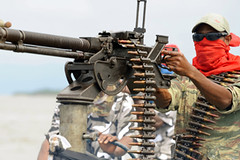
    ABUJA (Reuters) – Royal Dutch Shell said on Wednesday an oil flowstation in Nigeria’s restive Niger Delta had been damaged by an explosion, in what appeared to have been an attack by a militant splinter group.

    The damage to the Kokori flowstation had no impact on Shell’s oil production but is potentially politically damaging for Nigeria because it would mark the first militant strike in more than six months following an amnesty last year.

    “We confirmed explosive damage to a part of Kokori flowstation, but the facility was unmanned and has not been producing,” a Shell spokesman said in an e-mail to Reuters.

    A militant group based in the Niger Delta, which identified itself as People’s Patriotic Revolutionary Force of the Joint Revolutionary Council, Western Division, said it was responsible for the attack, according to Nigerian press reports.

    The Joint Revolutionary Council did not immediately respond to an email asking for comment.

    The Movement for the Emancipation of the Niger Delta (MEND), Nigeria’s main militant group behind years of attacks on the oil industry, said Wednesday it was not involved.

    “We know those behind the attack but they do not have the backing of MEND,” it said in an email to Reuters.

    Attacks on Africa’s biggest energy industry in recent years, many of them by MEND, have stopped Nigeria producing more than two-thirds of its potential 3 million barrel per day capacity, costing it an estimated $1 billion (663 million pounds) a month in lost revenues.

    The explosion is the first significant attack on an oil or gas facility in the Niger Delta for more than six months, after a presidential amnesty last year saw thousands of gunmen lay down weapons.

    But promises of stipends and training have been slow coming and the absence of President Umaru Yar’Adua, who returned from three months in a Saudi hospital last week but remains too sick to govern, has increased uncertainty.

    Acting President Goodluck Jonathan, who is from the Niger Delta, has pledged to push ahead with getting the amnesty program back on track and Monday set up a committee to monitor progress in the volatile region.

    (Editing by Nick Tattersall)

  • South Africa Ready For the World Cup, Says FIFA

    SA is ready for the World Cup, says Fifa

    MARINE VEITH | DURBAN, SOUTH AFRICA – Mar 02 2010 12:59

    World soccer governing body Fifa on Tuesday brushed aside lingering doubts about South Africa’s readiness for the World Cup, as cities across the nation staged dance parties and celebrations to launch the 100-day countdown.

    Fifa president Sepp Blatter insisted the country was ready to host Africa’s first World Cup, which kicks off on June 11, and said he was bothered by naysayers who worry South Africa won’t pull it off.

    “It’s not so much that there’s pessimism, but that it’s always being thrown into doubt. It’s bad, because when there’s doubt, there’s no confidence. For me and Fifa, that bothers us sometimes,” Blatter told a news conference in Durban.

    “There is no doubt, no doubt,” he said. “Let’s go now, let’s have this World Cup, and then we will discuss it at the end of July.”

    He spoke after a tour of South Africa’s 10 stadiums that will host the month-long tournament. Construction is complete at all the stadiums, and only two have yet to host games to try out the new facilities.

    “We are on track, we are ready to make this World Cup and this is the main message following this inspection tour,” Fifa secretary general Jerome Valcke said.

    The 100-day countdown dominated South African media on Tuesday, with celebrations planned in all the country’s main cities.

    Schoolchildren were invited to ditch their uniforms for football jerseys, while Johannesburg planned a street party in the Sandton business district to teach people the “diski” — a dance inspired by football moves that is the centrepiece of the country’s marketing campaign.

    Durban was deploying teams to taxi ranks and train stations across the city to pass out 100-day badges, while in front of City Hall a pile of 100 footballs was set out, with one to be given away each day until June 11.

    Optimistic

    South Africa has poured R33-billion into preparations for the tournament.

    In addition to the stadiums, major upgrades to airports in Johannesburg, Cape Town and Bloemfontein are complete, while Durban’s new airport is set to open on May 1.

    Fifa says that 2,2-million of the 2,9-million tickets have already been sold, even though fewer foreign fans are expected to attend.

    South Africa is banking on 450 000 foreign visitors, though the actual number could be lower, with many fans overseas still recovering from the shock of the global recession.

    The country is seizing the publicity around the 100-day mark to try to reassure fans about visiting South Africa, especially about security in a nation with one of the highest crime rates in the world, averaging 50 murders each day.

    South Africa has spent more than R2,4-billion on security.

    Overall, South Africans are increasingly optimistic about the World Cup. A survey out on Monday found that 85% believe the nation will ready for the games.

    The public was less rosy about the chances about the hot-and-cold fortunes of Bafana Bafana — only 55% said they thought the team was ready to compete. — AFP

    Source: Mail & Guardian Online
    Web Address: http://www.mg.co.za/article/2010-03-02-sa-is-ready-for-the-world-cup-says-fifa

  • Spain Jails Basque Party Leader; Threatens Venezuela

    Spain jails Basque party leader

    A Spanish court has sentenced the former leader of the banned Basque separatist party Batasuna to two years in jail for “glorifying terrorism”.

    Arnaldo Otegi was charged over a speech he gave in 2005 in which he compared a jailed Eta member to South African Nobel laureate Nelson Mandela.

    Batasuna is the political wing of the militant Basque separatist group Eta.

    Eta is blamed for more than 820 deaths in its campaign for an independent Basque state.

    Arnaldo Otegi has also been banned from holding public office for 16 years.

    He is already in jail on charges of trying to re-form Batasuna. He also faces another case related to Batasuna’s alleged financing of Eta and its activities.

    Story from BBC NEWS:

    Spanish court says Venezuela helped ETA, FARC

    Mon, Mar 1 2010
    By Jason Webb and Nigel Davies

    MADRID (Reuters) – Spain demanded Venezuela explain itself after a judge accused the South American government on Monday of helping Basque ETA rebels and Colombian FARC guerrillas plot possible attacks on Spanish soil.

    A ruling by Spain’s High Court said the Venezuelan government facilitated contacts between the armed groups which led to FARC asking ETA for logistical help in case it tried to assassinate Colombian officials visiting Spain, including President Alvaro Uribe.

    High Court Judge Eloy Velasco issued arrest warrants for 13 FARC and ETA suspects, including one Spanish-born employee of the Venezuelan government.

    Spain’s Socialist government, which at one stage had relatively good relations with Venezuela’s left-wing firebrand President Hugo Chavez, demanded an explanation from Caracas.

    “The Spanish government will act in accordance with that explanation,” Prime Minister Jose Luis Rodriguez Zapatero told a news conference in Hanover, Germany, after meeting German Chancellor Angela Merkel.

    Venezuela reacted strongly to the case.

    “The Venezuelan government found out by way of the press of the Spanish ruling in which it makes unacceptable, politically motivated allusions about the Venezuelan government,” a statement read.

    The statement said the ruling made several disrespectful references to Chavez and made unfounded and tendentious allusions about the Venezuelan government.

    Speaking on radio in Uruguay Colombian President Uribe would not be drawn into making a statement.

    “We have to react with prudence and find out what is happening through the diplomatic channels,” he said.

    The spat comes as tensions run high between Venezuela and its neighbor Colombia, over Caracas’ alleged support for FARC, or the Revolutionary Armed Forces of Colombia.

    Spain’s relations with Venezuela have suffered in recent years, with King Juan Carlos telling Chavez to “shut up” at a summit in Chile in 2007 after the Venezuelan repeatedly interrupted Zapatero.

    Spanish oil company Repsol has significant investments in Venezuela. Spain’s second-largest bank BBVA also has interests there.

    ETA SUSPECT “LIVED IN VENEZUELA”

    The court ruling came one day after Spanish and French police dealt a heavy blow to ETA by capturing its leader Ibon Gogeaskoetxea in northern France.

    One of the two ETA suspects captured with Gogeaskoetxea had recently returned from Venezuela, where he had lived for several years, Spanish counter-terrorism sources said.

    According to Monday’s detailed court ruling, in 2007 ETA rebels were given a Venezuelan military escort to a site in the jungle where they gave a course on handling explosives to visiting FARC guerrillas.

    “This shows Venezuelan government cooperation in the illicit collaboration between FARC and ETA,” Judge Velasco said in the document, adding that one of those wanted is Arturo Cubillas, who has worked for Venezuela’s government since Chavez won elections in 1999.

    Venezuelan legislator Hayden Pirela, who heads the parliament’s subcommission for border affairs and integration, said the fact Cabillas had worked in the government did not mean Venezuela supported ETA.

    FARC has killed thousands of people in a decades-old war to set up a Socialist state in Colombia. ETA has killed more than 850, fighting for independence for the Basque Country. FARC is also believed to have had training from suspected members of the Irish Republican Army (IRA) on bomb-making techniques.

    (Additional reporting by Inmaculada Sanz and Emma Pinedo in Madrid; Patrick Markey in Bogota, Frank Jack Daniel in Caracas; editing by Robin Pomeroy)

  • US Senator Relents, Allowing Jobless Bill Vote to Extend Unemployment Benefits

    March 2, 2010

    Senator Relents, Allowing Jobless Bill Vote

    By CARL HULSE
    New York Times

    WASHINGTON — The Senate headed toward resolution of an impasse over unemployment pay on Tuesday night after Senator Jim Bunning, Republican of Kentucky, dropped his objection to extending jobless benefits in exchange for a largely symbolic vote on paying for the aid.

    Mr. Bunning’s agreement to relent essentially short-circuited an intensifying political battle that had already resulted in 2,000 workers at the Department of Transportation being furloughed without pay and in the temporary cutoff of benefits to thousands of Americans who are out of work.

    It came after Mr. Bunning’s fellow Republicans began to air their own concerns about how the Senate blockade had the potential to damage their political brand while also having a direct impact on their constituents.

    While Democrats hailed the progress, they also said Mr. Bunning’s decision to delay the aid had caused serious disruptions in federal programs and could create bureaucratic problems as people try to reclaim their federal aid.

    “Sometimes just because we have the power to do things, we ought to think twice before we use that power,” said Senator Richard J. Durbin of Illinois, the No.2 Democrat in the Senate.

    With Mr. Bunning’s battle quickly becoming a national cause célèbre, Senator Mitch McConnell of Kentucky, the Republican leader and Mr. Bunning’s home-state colleague, made clear that Republicans were trying to end the stalemate.

    And Senator Susan Collins of Maine, a moderate Republican colleague of the conservative Mr. Bunning, joined Democrats in trying to force the measure through, calculating that perhaps a plea from a fellow Republican would get him to change his position.
    Senator Jim Bunning, who had been stubbornly blocking a stopgap measure to extend help for the jobless, budged on Tuesday under pressure from Democrats and growing concern within his own party.

    The objections of Mr. Bunning, of Kentucky, to the $10 billion measure were causing federal furloughs and threatening the unemployment benefits of hundreds of thousands of people. But the backlash on Republicans was becoming more intense, causing them to seek a compromise.

    “When I was home this weekend, I talked to constituents who expressed their utter bafflement that Congress could not proceed on something that has widespread support,” Ms. Collins said.

    With the impasse apparently broken, the bill was expectwed to come to a vote Tuesday night, The Associated Press reported.

    While trying to blame Democrats for mishandling the entire matter, other Republicans distanced themselves from Mr. Bunning, who Democrats were trying to make into the poster child for what they say had been a maddening and persistent pattern of Republican obstruction in the Senate.

    “This is one senator,” said Senator John Cornyn of Texas, a chief political strategist for Senate Republicans. “This does not represent the position of the caucus.”

    Republicans were not just unhappy that the fight was allowing Democrats, editorial writers and activists around the country to portray them as heartless, denying jobless aid to struggling Americans while Mr. Bunning complained that late-night debate was preventing him from watching a college basketball game.

    The attention to the impasse was also cutting into Republican efforts to focus on the Democratic strategy on the health care overhaul, which Republicans were trying to portray as an end-run around Senate rules. Complicating the situation was the fact that Mr. McConnell and Mr. Bunning have had a tortured relationship since Mr. McConnell was instrumental last year in discouraging Mr. Bunning from seeking another term.

    Not all Republicans were busily engaged in Bunning-bashing. “Jim Bunning is my hero,” said Senator Jim DeMint, the conservative Republican from South Carolina.

    The White House, meanwhile, called Mr. Bunning’s actions “irrational.”

    “I don’t know how you negotiate with the irrational,” Robert Gibbs, the White House press secretary, told reporters at an informal morning briefing. “I don’t know how you prevent one person who decides they hold in the palm of their hand the livelihood of hundreds of thousands who have lost their jobs.”

    Mr. Gibbs’s criticism was couched in unusually strong language at a time when the administration was trying to be seen as searching for bipartisan comity.

    Mr. Gibbs also defended not applying the pay-as-you-go rules — the Congressional rules that usually require spending to be offset by revenue or cuts elsewhere — to the extension of benefits, saying “this is an emergency situation.”

    Ms. Collins, who took the floor shortly after the Senate convened, said her effort was being made on “behalf of numerous members of the Republican caucus who have expressed concerns to me.”

    “There are 500 Mainers whose benefits expired on Sunday,” Ms. Collins said. But Mr. Bunning, her colleague, continued to lodge his objection.

    Senator Harry Reid of Nevada, the majority leader, again urged Mr. Bunning to reconsider, saying his push to pay for the $10 billion costs of the added coverage out of stimulus money had been heard.

    “His point has been made,” Mr. Reid said.

    Peter Baker and Robert Pear contributed reporting.

  • Naomi Campbell Wanted Over Slapping Driver

    Naomi Campbell ‘wanted over slap’

    Police in New York want to question Naomi Campbell after her driver accused the supermodel of slapping and punching him as he drove her through the city.

    After the alleged incident, the driver pulled over and Ms Campbell left the scene before police arrived.

    A spokesman for Ms Campbell said “there shouldn’t be a rush to judgement” and said she would co-operate voluntarily.

    The 39-year-old model has been sentenced to community service over previous incidents of assault.

    “There is more to the story than meets the eye,” spokesman Jeff Raymond said.

    Outbursts

    Ms Campbell’s driver told police that he pulled his black Cadillac Escalade over to the side of the road in central Manhattan after she struck him from behind, propelling his head forward on to the steering wheel.

    The 27-year-old driver told police that he had picked up the model from a Manhattan hotel and was taking her to the Astoria Studios in the borough of Queens.

    Police said they were still waiting to speak to Ms Campbell.

    In 2000, Ms Campbell pleaded guilty in Toronto to assaulting an assistant who said that the model hit her on the head with her mobile phone.

    She served a five-day community service order in New York in 2007 after admitting reckless assault, having thrown a mobile phone at her housekeeper.

    In 2008, she was sentenced to 200 hours’ community service in the UK after she pleaded guilty to assaulting two police officers on board a plane at London’s Heathrow airport.

    Several of her former aides and maids have also sued her, accusing her of violent outbursts.

    Story from BBC NEWS:
    http://news.bbc.co.uk/go/pr/fr/-/2/hi/americas/8546657.stm
    Published: 2010/03/03 00:40:47 GMT

  • Obama Backs Privatization of Schools; Mass Firing of Teachers

    March 1, 2010

    Obama Backs Rewarding Districts That Police Failing Schools

    By JEFF ZELENY
    New York Times

    WASHINGTON — President Obama said Monday that he favored federal rewards for local school districts that fire underperforming teachers and close failing schools, saying educators needed to be held accountable when they failed to fix chronically troubled classrooms and curb the student dropout rate.

    The president outlined his proposal to offer $900 million in federal grants, which would be made available to states and school districts willing to take aggressive steps to turn around struggling institutions or close them.

    The president’s proposal, which was included in his 2011 budget request to Congress, is his latest criticism of America’s failing public schools. In a speech at the U.S. Chamber of Commerce, Mr. Obama said federal aid would be available for the districts that are home to the 2,000 schools that produce more than half of the nation’s dropouts.

    He spoke alongside former Secretary of State Colin Powell and his wife, Alma, who lead America’s Promise Alliance, an advocacy group dedicated to combating the school dropout rate.

    “We know that the success of every American will be tied more closely than ever before to the level of education that they achieve,” Mr. Obama said. “The jobs will go to the people with the knowledge and the skills to do them. It’s that simple.”

    He singled out Central Falls High School in Rhode Island, where last week the school board voted to dismiss the entire faculty as part of a turnaround plan for the school, which has a 48 percent graduation rate.

    At Central Falls High, he said, just 7 percent of 11th graders passed state math tests. Mr. Obama said he supported the school board’s decision to dismiss the faculty and staff members. “Our kids get only one chance at an education and we need to get it right,” he said.

    The president’s comments incensed the leadership of the American Federation of Teachers, which criticized Mr. Obama for “condoning the mass firing” of teachers at the Rhode Island school.

    “We know it is tempting for people in Washington to score political points by scapegoating teachers, but it does nothing to give our students and teachers the tools they need to succeed,” the president of the union, Randi Weingarten, said in a statement.

    In their efforts to overhaul failing public schools, Mr. Obama and his education secretary, Arne Duncan, have frequently drawn the ire of teachers’ unions.

    In his speech on Monday, Mr. Obama said states would be asked to identify schools that perform at persistently low levels, with graduation rates of 60 percent or less.

    To qualify for the federal money, known as School Turnaround Grants, he said, the school districts must agree to take at least one of the steps: firing the principal and at least half the staff of a troubled school; reopening it as a charter school; or closing the school altogether and transferring students to better schools in the district.

    “If a school continues to fail its students year after year after year,” Mr. Obama said, “if it doesn’t show signs of improvement, then there’s got to be a sense of accountability.”

    The $900 million grant program, which would be subject to Congressional approval, follows $3.5 billion included in last year’s economic stimulus plan that also was aimed at improving school performance and lowering the dropout rate. The program would support interventions at 5,000 of the nation’s lowest-performing schools over the next five years.

    Mr. Obama is seeking to use federal money as an incentive for local schools to improve their standards. The initiatives his administration is pursuing are similar to those of the Bush administration. At the event on Monday, Mr. Obama recognized Margaret Spellings, a secretary of education under President George W. Bush, who was seated in the front row.

    Mr. Obama said he was particularly troubled by the dropout rate. He said 1.2 million students left school each year before graduating from high school, at a cost to the nation of $319 billion annually in potential earning losses.

    “Now it’s true that not long ago you could drop out of high school and reasonably expect to find a blue-collar job that would pay the bills and help support your family,” Mr. Obama said. “That’s just not the case anymore.”

    The Powells, who founded America’s Promise Alliance in 1997, announced on Monday a 10-year campaign called

    “Grad Nation” directed at the lowest performing high schools in the country and focusing on improving graduation rates and preparations for college.

    “We’ve got to catch our kids long before they drop out,” Mr. Powell said.

  • African Decade of Women (2010-2020): Focus on Gender Equality Key to Development Programs

    African Decade of Women (2010-2020): Focus on Gender Equality Key to Development Programs

    Women in Africa will be celebrating achievements and mobilizing for the future

    By Abayomi Azikiwe
    Editor, Pan-African News Wire

    A major initiative aimed at achieving gender equality in Africa is underway. The African Women’s Decade (2010-2020) has been adopted by the African Union (AU), the continental organization that encompasses 53-member states.

    This decade of struggle has been initiated by the Women and Gender Development Directorate of the AU. A series of declarations, protocols and conventions have been adopted over the last several years aimed at achieving the full representation of women in the politics and national economies on the continent.

    One such resolution called the Solemn Declaration, urges member states in the AU to carry out programs to end violence against women. On January 30 the AU began the Africa Unite Campaign to end Violence Against Women.

    In preparation for the official launching of the African Women’s Decade on October 15, which is also World Rural Women’s Day, the AU’s Women Gender and Development Directorate offered courses from February 8 through 19 at the Commission Headquarters in Addis Ababa, Ethiopia. The two weeks of courses were offered in both English and French.

    These courses involved 25 delegates from Ministries of Gender, Finance and Economic Development of various member states. A skillfully selected set of course materials advanced theoretical and practical tools designed to fully integrate gender issues into the overall economic policies on the African continent.

    According to a document released by the Women, Gender and Development Directorate on the rationale and general objectives of the Decade of Women, it states that “To date the women of Africa, like women elsewhere, have not been included as full, equal and effective stakeholders in processes that determine their lives. For example, women continue to have less access to education than men; they continue to have less employment and advancement opportunities; their role and contribution to national and continental development processes are neither recognized nor rewarded; they continue to be absent from decision-making; and, although they bear the brunt of conflicts, women are generally not included in peace negotiations or other initiatives in this regard.” (African Union, March 1, 2010)

    Current Status of Women in Africa

    Even though the legacies of slavery, colonialism and neo-colonialism created extreme social inequalities for women on the African continent and throughout the Diaspora, significant progress has been made over the last two decades. One observer from afar made the following statement in regard to the status of women in Africa that “When you look at women’s involvement in government it seems like they are ahead of even the United States in terms of power sharing between the sexes.” (Feminists for Choice, Dec. 3, 2009, Comment from Andrea)

    This observer continued by pointing out that “Liberia inaugurated Africa’s first female president in 2006. Her Excellency Ellen Johnson Sirleaf was a leader in her country’s peace movement. She defeated a soccer star with nearly 60% of the vote.”

    This writer goes on to illustrate that “In other African nations, women make up a significant part of their governments. Rwanda leads all nations in this regard with 48.8% of its parliament being women. Other African nations with high percentages of women in government include Mozambique at 34.8%, South Africa at 32.8% and Tanzania at 30.4%. It makes our government (U.S.) seem quite inadequate on the gender equity frontlines. In the U.S. Congress women only hold 17% of the seats.” (Feminists for Choice, 2010 Declared African Women Decade)

    These gains stem from the policy initiatives proposed by various women’s organizations on the African continent that have been adopted by governments and the AU. National mechanisms have been established designed to mainstream women’s issues into the policies, plans and programs of government.

    Nonetheless, these mechanisms for the full integration of women into government and national economic decision-making processes have been stalled as a result of the lack of funding as well as continuing resistance by male-dominated state structures that are reinforced by the world imperialist system. The current global economic crisis has disproportionately affected Africa and consequently the status of women.

    The rise in food prices, the decline in export earnings for commodities and the impact of climate change has impacted African women severely. In sub-Saharan African states, the production of agricultural commodities make up 21 percent of the Gross Domestic Product (GDP) and women are responsible for 60-80 percent of the food supply. Yet the income generated by this economic activity is not equitably distributed to women.

    Mary Wandia said in a recent article that “While states have failed to fulfill their commitments, they are undermining regional and international standards by introducing anti-human rights bills. Several governments have adopted or are in the process of adopting discriminatory legislation reversing fundamental women’s rights including, but not limited to, bills on criminalization of HIV, indecent dressing laws and anti-homosexuality bills. These bills violate various rights: The right to privacy and confidentiality, the right to sexual integrity and autonomy, the right to bodily integrity, freedom from discrimination, the right to health, the right to equal protection before the law, freedom of association, sexual and reproductive rights, freedom of choice, the right to life, etc.” (Pambazuka News, Nov. 19, 2009)

    In regard to land redistribution policy, the contradiction between the stated aims of gender equality and the continuing role of customary law has hampered the efforts to improve the status of women. A recent thesis submitted at the University of Gothenburg, Sweden studied the impact of land reform in post-apartheid South Africa and ownership rights under traditional cultural norms within the society.

    Annika Rudman in her study of South African land policy stated that “Taking as my starting point the new constitution, which came into force in 1997, I have examined the function and status of customary law in South African land reform, and have attempted to highlight the legal problems many black South African women have to deal with when they try to gain access to land through the new system.” (The Namibian, Feb. 26, 2010)

    According to Rudman, traditional leaders have an important role to play in the land redistribution process by ensuring that customary law does not conflict with national governmental policy. The racist apartheid system allocated 87 percent of the productive land to the European settlers and relegated the most arid remaining land to the African population which constituted the overwhelming majority of people within the society.

    The legal analyses emanating from Rudman’s work point to the relationship between land reform and the elimination of poverty among women. Her thesis places land redistribution within the context of national development. She asserts that traditional leaders must develop laws which mandate gender equality in line with the post-apartheid constitution adopted in 1997.

    In neighboring Namibia, which was under the control of apartheid South Africa prior to 1990, the government will soon ratify the international convention on equal wages for men and women. A resolution passed by the cabinet on February 9 states that “Convention 100 (of the International Labor Organization) on Equal Remuneration of 1951 is the only ILO core convention that Namibia has not yet ratified.” ( Namibian Ministry of Information statement, Feb. 9)

    This convention has been ratified by all of the member states of the regional organization, the Southern African Development Community (SADC), as well as 44 other African states and 167 nations around the world.

    African Women and Reconstruction of the Continent

    Africa cannot effectively challenge and overcome centuries of exploitation and oppression without the liberation of women being a central aspect of the struggle for genuine political freedom and economic independence. In a recent gathering of the Socialist Forum of Ghana, this notion was emphasized in light of the ongoing challenges posed by neo-colonialism, where western imperialism continues to dominate the economic and political life on the continent.

    In a talk delivered by Dr. Dzodi Tsikata, a Lecturer at the University of Ghana, Legon, on February 25, she stated that “The African woman will spearhead the march towards the New African that Dr. Nkrumah had evoked on the eve of Ghana’s political independence in 1957, the ‘New African’ who is conscious of the African personality. This concept is not associated with a particular state, language, religion, political system, or color of skin. It takes account of our diversity, the influence of Christianity, Islam and our African Traditions in our societies today.” (Ghana News Agency, Feb. 26, 2010)

    Dr. Tsikata was addressing the Socialist Forum in commemoration of the Centenary celebrations marking the birth of former President Kwame Nkrumah and the 44th anniversary of the right-wing U.S.-engineered coup in 1966 against the socialist first Republic headed by Nkrumah’s Convention People’s Party (CPP).

    According to Dr. Tsikata, “The call for economic self-reliance, social justice, national cohesion, and greater continental integration is relevant now because sustainable economic development that impact on us with special economic development is still out of reach. This re-awakening, therefore, cannot happen without the active participation of African women in policy decisions.”