Author: Pan-African News Wire

  • Zimbabwe Vice-President Mujuru Meets Jamaican Reggae Artist Sizzla

    VP Mujuru meets Sizzla

    Herald Reporter

    ZIMBABWE is a peace loving country willing to maintain cordial relations with all friendly nations, Vice President Joice Mujuru said yesterday.

    Speaking at a meeting with visiting Jamaican reggae star Miguel Collin, popularly known as Sizzla, at her Munhumutapa offices yesterday, VP Mujuru said: “We are a people who love peace and togetherness. We want you to tell your country the true Zimbabwean story without the influence from CNN.

    “We feel greatly honoured to have visitors of your calibre and we hope this is going to open roads for more visitors to come,” she said.

    VP Mujuru said Sizzla’s revolutionary music should not only serve entertainment purposes, but also help educate the youths.

    “Many people don’t understand why you sing about the revolution. People, especially the youths, have a lot to learn from your music,” VP Mujuru said.

    She said Zimbabwe would invite Sizzla to visit solely to experience the peaceful environment.

    VP Mujuru said arrangements would be made to invite the reggae star to other national occasions such as Indepe-ndence and Heroes Day commemorations.

    Sizzla said he enjoyed his stay in Zimbabwe and was impressed by the warm reception from Zimbabweans.

    “Zimbabwe is a peace loving country and I am very grateful with the pleasant environment presented to me by the people of Zimbabwe,” he said.

    He said that with Government’s support, he was keen to establish a Sizzla Youth African Foundation.

    He said the foundation would promote music and Rastafarianism among other things.

    Sizzla said the foundation was already functional in Jamaica and if Government pledged assistance, he would establish a chapter here. After meeting VP Mujuru, Sizzla met businessman Mr Phillip Chiyangwa.

    Sizzla performed at the 21st February Movement gala in Bulawayo last Friday. He held another show in Harare on Sunday and was billed to stage one more gig last night.

    Sizzla leaves for Ghana today where he is expected to hold two shows before proceeding to Jamaica.

  • Gender Rights Critical in New Zimbabwe Constitution, Says Nyamupinga

    Gender rights critical in new constitution, says Nyamupinga

    By Farirai Machivenyika recently in Kadoma
    Courtesy of the Zimbabwe Herald

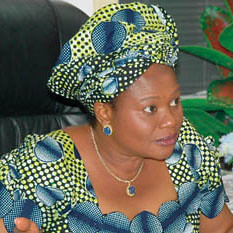
    Chairperson of the Zimbabwe Women’s Parliamentary Caucus and Goromonzi West legislator Cde Biata Nyamupinga has called for the inclusion of gender rights in the new constitution, including equal representation of women in positions of authority.

    Speaking at a two-day workshop for female parlia-mentarians on the constitution-making process last week, Cde Nyamupinga said it was time to address gender disparities in the Lancaster House Constitution.

    “The new constitution should include all the critical gender issues that are important for the empowerment of women and achievement of 50-50 women representation.

    “The task that is facing us as women representatives at the moment is whether or not we are going to live up to the occasion and ensure that main gender provisions are inculcated into the new constitution,” she said.

    Cde Nyamupinga urged female legislators to ensure that women fully participated in the gathering of views informing the new supreme national law.

    “Our effectiveness in our participation depends largely on the strategy that we use during the process of making a new constitution. Thus the concept of sound strategic planning lies at the very core of the need to successfully participate in this event,” she said.

    The women parliamentarians are lobbying for the enactment of a law that guarantees equal representation of men and women in all leadership positions.

    The director of the Women in Politics Support Unit, Ms Fanny Chirisa, said it was important for women to actively participate in Parliamentary debates.

    “You should know why you are in that House and that you have a constituency that is watching.

    “You should participate and be involved in debates,” she said.

    Ms Chirisa said it was important for women leaders to balance their private and public lives given the multiple roles they played.

    The workshop was held by the Women’s Caucus in conjunction with WiPSU.

  • US Sen. Jim Bunning Defiant As Unemployment Aid, Highway Fund Languish

    Sen. Jim Bunning Defiant As Unemployment Aid, Highway Fund Languish

    Majority Leader Reid Seeks Longer-Term Unemployment Aid Package This Week

    By JONATHAN KARL, Z. BYRON WOLF and DEVIN DWYER
    March 1, 2010—

    Sen. Jim Bunning has left dozens of infrastructure projects on hold and put thousands of federal transportation workers temporarily out of work, but he is sticking to his guns, despite withering criticism from the White House and his Democratic opponents.

    Bunning, the Kentucky Repulcan, decided last week to block a bill that would extend government funding of highway and transit programs and unemployment benefits for 400,000 Americans, among other programs. He has been critical of the bill’s $10 billion price tag and its potential to add to the national debt.

    Earlier today, Bunning refused to answer questions from ABC News, thundering “Excuse me! This is a Senators-only elevator!” as he boarded an elevator in the Hart Senate Office Building. “I’m not talking to anybody,” he said.

    Later, in a speech on the Senate floor, Bunning, who is not up for reelection, outlined his rationale for blocking the bill.

    “I support extending unemployment benefits, COBRA [health] benefits, flood insurance, highway bill fix, doc fix, small business loans, distant network television for satellite viewers,” he said. “But if we can’t find $10 billion to pay for something that we all support, we will never pay for anything on the floor of this U.S. Senate.”

    Bunning has received support from fellow Republicans but none has joined him in blocking the bill. Sen. Lamar Alexander, R-Tenn., said he understands Bunning’s objection.

    “Two weeks ago, the Democrats pushed through a toothless Swiss-cheese proposal they were bragging about, saying, ‘We’re going to pay as we go.’ And then the next thing you know, they turn around and offer $10 billion at the last minute to do what you just described without paying for it,” Alexander said on ABC News’ “Top Line.”

    Bunning has proposed funding the extension of government programs with as-yet-unused stimulus funds, a move Senate Majority Leader Harry Reid opposes. Reid has favored a temporary extension of unemployment benefits as lawmakers negotiate a longer-term, bipartisan extension.

    Democrats have criticized Bunning and the Republicans for blocking the measure.

    “As American families are struggling in tough economic times, I am keenly disappointed that political games are putting a stop to important construction projects around the country,” said Transportation Secretary Ray LaHood. “This means that construction workers will be sent home from job sites because federal inspectors must be furloughed.”

    The Department of Transportation, which furloughed 2,000 federal workers and halted 41 construction projects this morning, says those numbers could climb if the stalemate over funding drags on.

    Without the highway trust fund dollars, the federal government also cannot reimburse states for any ongoing construction projects. States were scheduled to get some $768 million dollars from the feds this week, but they’ll have to figure out how to make do without, for now.

    Edward Wytkind of the Transportation Trades Department, a labor union, called Bunning’s move “irresponsible” and “downright dangerous.”

    “In this economy, to purposefully put people out of work is cold-hearted,” he said. “It’s even worse that these workers perform essential functions to expand and build our nation’s transportation system and ensure it is safe for all its users.”

    “He’s preventing the Senate from moving forward,” said Vice President Joe Biden today. “400,000 people will be kicked off the rolls this month if he has his way.”

    Senators will take up a more long-term version of the bill to extend unemployment benefits on the Senate floor today, but it’s not likely to pass until later this week or next week.

    As for the highway trust fund, money for that program is likely to pass the House this week as part of a jobs bill already passed through the Senate, meaning furloughed workers could soon be back to work.

    Bunning, who has served in the Senate for over a decade, has a history of saying inflammatory things. During his 2004 reelection campaign, Bunning described his Democratic challenger as looking “like one of Saddam Hussein’s sons.” After Justice Ruth Bader Ginsburg announced she had pancreatic cancer, Bunning said she would “likely be dead in nine months.” He later apologized. More recently, Bunning threatened to sue the National Republican Senatorial Committee if it fielded a challenger to him in the primary.

    ABC News’ Lisa Stark and Matt Loffman contributed to this report.

  • Somalia News Update: NATO Sinks Mothership; Clashes Between Al Shabaab and Hizbul Islam

    NATO sinks Somali pirate monthership

    Monday, March 1 05:42 pm

    The Absalon, flagship of NATO’s counter-piracy efforts off the Horn of
    Africa, “disrupted a piracy attack in the Somali basin on Sunday and
    then scuttled a mothership,” the spokesman said.

    The ‘mother-ships’ are used to move attack teams into an area from
    which they can launch raids on passing ships.

    “This was a very well executed operation,” said Commodore Christian Rune, commander of NATO’s anti-piracy mission.

    “Disrupting the pirates capability just off their main pirate camps
    sends a strong signal to the pirates that NATO and the international
    community do not tolerate their actions” he added in a statement from the operation’s British base.

    “Disposing of their vessels before they can head to sea hits the
    pirates before they can present a threat to merchant shipping,” he
    added.

    Somali pirates, targeting one of the world’s busiest maritime trade
    routes, raked in an estimated 60 million dollars in ransoms last year.

    Somalia: Hizbul Islam commander vows more war with Al Shabaab

    1 Mar 1, 2010 – 11:32:12 AM

    A high ranking official of Somalia’s Hizbul Islam has vowed to
    intensify the fight against the rival Al-Shabaab group across war-torn
    Somalia.

    Sheikh Ahmed Madobe said the group is his number one enemy, vowing to wipe it out of the country.

    “Al-Shabaab is an enemy and we will fight them everywhere including
    Mogadishu. They want to obliterate our religion,” he said.

    “We will target Al-Shabaab officials with explosions and bullets to
    wipe them out of the country,” he adds.

    Commenting about the defection of Sheikh Hassan Abdulahi Al-Turki, a notorious Islamist guerrilla leader to Al-Shabaab early this year, Sheikh Madobe said he has no communication with him.

    “Sheikh Hassan Turki has not communicated with us since he joined
    Al-Shabaab, and also he had spoken about our fight against Al-Shabaab. So, it seems he took a personal decision.”

    Early this month Sheikh Madobe vowed to fight ‘whoever joins
    Al-Shabaab, we will also fight him’, in reference to Al-Turki’s
    decision.

    Al-Shabaab has all along being insisting that Madobe is an
    Ethiopian-backed individual has is out there to wreak chaos amongst
    the Islamists.

    However, top Hizbul Islam officials have maintained that the official
    is still in their ranks.

    The two groups broke ranks after engaging in bloody war over the
    control of southern Somali regions.

    GAROWE ONLINE

    Somalia: Al Shabaab court sentences fighters accused of robbery

    1 Mar 1, 2010 – 11:31:08 AM

    A court operated by Somalia’s hardline insurgent Al-Shabaab group has on Sunday handed jail sentences to five of the group’s fighters who were accused of stealing money from a local money bureau in the restive capital Mogadishu, Radio Garowe reports.

    The “ad-hoc” Islamic Court at Mogadishu’s Bakara Market found the five men guilty of making off with some USD $9,260 and sentenced then one year each, according to one of Al-Shabaab’s Judges called Sheikh Abdulxaq.

    The court also delivered sentences to six other robbers who went away with $$33,400 before disappearing to government-controlled areas, he adds.

    Al-Shabaab, which controls much of southern and central Somalia, has previously carried out public executions, amputations and floggings in various parts of the war-torn nation.

    However, today’s judgment was different because it involved the
    group’s fighters who were tasked to ‘keep and implement’ the Sharia
    law in the country.

    The most memorable event happened Last year October when a Somali teenage girl Aisha Ibrahim Duhulow was stoned to death on by dozens of Al-Shabaab militiamen in a stadium packed with 1,000 spectators in the southern port city of Kismayo sparking international condemnation.

    The group, which is in the list of Washington’s most wanted foreign
    terrorist group is fighting the UN-backed government in a bid to
    overrun the Horn of African nation and subject it to strict version of
    Sharia Law.

    GAROWE ONLINE

    Somalia: Top Al Shabaab leaders in Kismayo meeting

    28 Feb 28, 2010 – 11:12:47 AM

    Informed sources say more than 10 top officials including among others Sheikh Hassan Abdullahi Al-Turki, who recently joined ditched Hizbul Islam and Sheikh Mukhtar Robow Abu Mansur held town close door meetings, which the local media was barred from covering.

    Sources, who requested not to be named, told Garowe Online that the officials were deliberating on how to counter possible government offensives on the group’s positions in the war-torn country.

    Meanwhile, Sheikh Abu Mansur says his group is not planning to carry out attacks on its neighbor Kenya but requested Nairobi to stop
    military maneuvering along the border.

    “We are not planning to wage war against Kenya, we are more focused on ensuring security in our areas. But if we come under attack, then we must defend ourselves,” he told crowd in Kismayo.

    Kenya, which officially closed its borders with Somalia in late 2006,
    has strengthened its border patrol after previously receiving threats
    from the Somalia-based Islamist groups.

    GAROWE ONLINE

    Somalia: New row emerges between top TFG officials

    27 Feb 27, 2010 – 12:25:26 AM

    New row has emerged between Somali president Sheikh Sharif Sheikh Ahmed and parliament speaker Sheikh Aden Mohammed Nur Madobe over speaker’s tenure.

    The two met on Thursday at Villa Somalia but failed to come to a
    census over the issue, a well informed lawmaker told Garowe Online on condition of anonymity.

    The source further states that the speaker rebuffed president’s plans
    to replace him, a plan that is supported by many of Sheikh Sharif’s
    close associates.

    The speaker is said to be adamant to bow to the pressure of stepping down, arguing that his mandate goes hand in hand with the formation of the transition government.

    In retaliation, some lawmakers allied to the speaker have also put
    Prime Minister Omar Abdirashid Sharmarke on the spot over what they termed his failure to implement pledges he made when appointed to the post.

    The internal wrangles have also spread to the military and police,
    whose commandants are said to have divided their loyalties across the two leaders.

    The political dispute between top TFG officials comes at a time when
    the fragile UN-backed government is preparing to launch attacks on the powerful insurgents who are determined to run the war-torn nation.

    GAROWE ONLINE

    Somali lawmaker urges gov’t to face parliament

    26 Feb 26, 2010 – 2:07:19 AM

    A Somali lawmaker has censured the embattled transition government for failing to fulfill pledges, calling on it to ask the parliament for vote of confidence.

    Mohammed Sheikh Yussuf lawmaker told reporters in the restive capital Mogadishu that the government of President Sharif Sheikh Sheikh Ahmed, which recently celebrated the first anniversary since its inception, has failed to implement the federal chartered across the country.

    “The government failed to execute the federal system across the
    country in the one year of its existence, which was mandated to do so. Now it must ask for a vote of confidence from the parliament,”

    He adds, “A motion on accountability is before the floor of the house
    and this motion entails the incapability of the government to
    implement the federalism in the country,”

    He argues that the current government is constitutionally illegitimate
    and has to seek the parliament approval to continue its work.

    His sentiments come at a time when the transition government, which is a product of UN-backed peace and power sharing process held in neighboring last years, deliberates on changing the federal chartered.

    The fragile government only control pocketful of Mogadishu with the
    rest including southern Somalia under the hands of Al-Shabaab and
    Hizbul Islam, the two main insurgent groups.

    GAROWE ONLINE

    Somalia/Kenya: Wetang’ula wants Maalim’s conduct investigated

    28 Feb 28, 2010 – 11:09:44 AM
    By David Ochami

    For the first time in the country’s history, Parliament will
    investigate a Deputy Speaker for his activities while on official duty
    abroad.

    Foreign Affairs Minister Moses Wetang’ula has written to Parliament’s Defence and Foreign Relations Committee to investigate Deputy Speaker Farah Maalim’s activities on a tour of Somaliland in December last
    year.

    The cause is key speeches he is alleged to have made that reportedly promoted separatism in Somalia and fostered ethnic disharmony between Somaliland and Puntland.

    Committee chairman Adan Keynan admitted at the weekend that the
    minister wrote a letter seeking investigation, but declined to provide
    details citing Parliament’s Standing Orders.

    “It is true we have received the complaint and we are going to work on it,” said Mr Keynan, who added Maalim “will be summoned soon”.

    According to sources, Wetang’ula wants the Lagdera MP probed for
    speeches he made at various functions when he visited Somaliland
    between December 22 and December 29, which allegedly caused tension in the two regions of Somaliland.

    But the TFG’s Ambassador to Kenya Muhamed Ali Nur denied any knowledge of a protest by his Government, although he was aware of Maalim’s visit. He also denied knowledge of any controversy stirred by Maalim. The Deputy Speaker could not be reached for comment.

    Source: Standard

    Somalia: Insurgent groups at loggerheads over recent bombings

    24 Feb 24, 2010 – 10:59:03 AM

    Somalia’s militant groups are at loggerheads over explosions that
    targeted their positions in the restive capital Mogadishu.

    Al-Shabaab’s spokesman Sheikh Ali Mohammued Raghe aka Ali Dhere pointed the accusing fingers on Hizbul Islam over recent explosions in their strongholds including the capital’s main market Bakara.

    “We have discovered that the people behind the blast at Bakara’s
    medical stores, fuel centre and recently at the Baar Ubax intersection
    were affiliated to Hizbul Islam,” he told reporters.

    However, his claims were quickly denied by Hizbul Islam spokesman
    Mohammed Ma’alin Ali who said they have no links whatsoever with the blasts.

    “Our group is not behind the blasts that rocked Mogadishu. We view
    these sentiments as fabrications, because we can’t attack our own
    positions,” he said, adding that his group is still committed in the
    unification of the Islamist fighters in the fight against the
    government and African Union troops.

    Al-Shabaab cried foul over recent blasts that target their
    strongholds, which according to sources were assassination plots
    against the group’s top officials.

    The two armed groups, which are involved in military struggle against
    the weak transition government, are also engaged in tough tussle over the control of southern Somali regions.

    GAROWE ONLINE

    Somalia can handle more funds directly: AU

    25 Feb 25, 2010 – 9:05:28 AM
    By Abdiaziz Hassan

    NAIROBI (Reuters) – Somalia has made progress restoring state
    institutions and accountability and its administration can now handle
    more funds directly, the African Union’s deputy head of mission to
    Somalia said.

    For nearly two decades, the Horn of Africa nation has had no
    functional central government and its transitional administration
    controls only sections of the capital Mogadishu.

    Wafula Wamunyinyi, the deputy special representative for the AU
    Commission for Somalia, said the government received inadequate direct funding, and that there were still some impediments to them getting more aid.

    “They were working hard in re-establishing state institutions,
    coordination and implementation of the plans; they are making progress … and taking care of the accountability system,” he told Reuters in an interview on Wednesday.

    “They are now making progress, working some specific budgets for the first time, and that kind of thing shows there is a direction …
    Then, donors will release the funds to them eventually.”

    Wamunyinyi said the mission had received more than half the $213
    million donors have pledged to help restore Somalia’s security and
    public services.

    International donors agreed last April to provide the money to help
    Somalia’s transitional government and the 5,000 AU troops providing
    security to the government.

    “I think over $120 million … has been directed to trust funds, and
    some progress has been made on that,” Wamunyinyi said, speaking in his office in the Kenyan capital.

    “The pledges have been flowing until now, I am sure we have received most of the funds.”

    Rebels fighting the transitional government frequently attack the AU
    troops, who have been able to do little more than protect the city’s
    air and sea ports, its presidential palace and a few strategic blocks
    in between.

    Wamunyinyi said more troops from Uganda and Burundi were waiting to be airlifted to bolster their numbers.

    “These two countries will send an additional battalion each. As soon
    as the logistical arrangements are done, they will move in,” he said.

    He said the AU’s rules of engagement were adequate, and the mission could help the government hold the capital if it decided to push away the rebels.

    “We are not there to fight on behalf of Somalis. If they keep away the
    insurgents, that would be very good idea, a good step in the right
    direction.”

    Source: Reuters

  • It Is Time For Obama to Meet Ahmadinejad

    It is time for Obama to meet Ahmadinejad

    By Marwan Bishara in Imperium on February 27th, 2010

    The US needs to drop the false dichotomy of sanctions or war and embrace direct talks, says Marwan Bishara.

    The two-day visit by Mahmoud Ahmadinejad, the Iranian president, to Syria and his warm meetings with his Syrian counterpart as well as with the leaders of the Lebanese Hezbollah and Palestinian Hamas have ruffled many feathers in the US, Europe and Israel.

    Although they said much about the future of the region, including the end of the ‘Zionist regime’, the anti-Israeli gathering has sent a primarily strategic not polemical message: We stand united – an attack on one of us is an attack on all.

    A deterrent message to both Israel and the US, it comes against the backdrop of increased war speculation in Israel and mounting pressures to pass a new round of tougher sanctions against Iran.

    It is also a wake up call for US diplomats who reckoned that Washington’s rapprochement with Damascus, including the reopening of its embassy, should lead to a severing, or at least cooling, of Syrian relations with Tehran.

    But while such public posturing has not deterred Israel or worried Washington in the past, it does complicate attempts to isolate Iran or its allies.

    Diplomatic assault, military preparations

    Since the White House shifted its Iran strategy from accommodation to confrontation, Washington’s coercive diplomacy has been going at full speed.

    The Obama administration has been lobbying the Middle East and the world’s influential capitals in the hope of isolating Iran and passing another UN Security Council resolution that would include biting sanctions against Tehran.

    Hillary Clinton, the US secretary of state, escalated US rhetoric against the Iranian regime during a visit to the Gulf where she warned of a Revolutionary Guards takeover and the militarisation of the Iranian government.

    General Petraeus made a similar visit to the Gulf and Admiral Mike Mullen, the chairman of the joint chiefs of staff, travelled to Russia, followed by Binyamin Netanyahu, the Israeli prime minister, to convince Moscow to abandon Iran.

    However, Washington seems frustrated by either the lack of positive response or the slow pace of international reaction to Tehran’s persistence in enriching uranium and expanding its nuclear and missile programme.

    Russian hesitance, Chinese objection

    Russia seems to have softened its rejection of the US strategy of sanctions, but has not agreed to them either. Moscow thinks it is too early to carry out such escalatory actions when the issue is still being discussed at the International Atomic Energy Agency (IAEA).

    If and when such sanctions come to be voted on at the UN Security Council, Russia insists that they should be focused solely on the nuclear programme, not the country or its regime which Moscow does not consider to be a dictatorship.

    Beijing is as sceptical of Washington’s motives and more reluctant than Moscow to slap Iran with tough new sanctions.

    Moscow’s approach is defined primarily by security considerations, especially the loss of whatever strategic leverage it has with Tehran and the probable escalation on its southern borders. China’s thinking, however, is molded on geo-economics grounds, particularly the prospect of losing Iran as an important energy supplier and economic partner.

    The Chinese and Russian leadership are both uneasy with the new American escalation in the Islamic world after US entanglements in Afghanistan and Iraq.

    They worry that the political and security overspill from widening the landscape of confrontation in the Muslim world could end up affecting their substantial Muslim minorities and eventually their internal stability.

    Washington’s attempt to make up for the loss of Iran’s energy supply (through Saudi Arabia?), and its persistent warning to Russia about the alternative to sanctions (war!) do not seem to have, yet, convinced the two key veto carrying members of the UN Security Council to come on board.

    Neither side believes sanctions will bring a solution to the impasse with Iran and both consider protracted geopolitical tensions with Iran to be terribly destabilising.

    Anxious Saudi, aggressive Israel

    Regionally, the two relevant powers, Saudi Arabia (to a far less extent, Egypt) and Israel are keen to stop Iran’s nuclear programme and to curtail Tehran’s influence.

    However, as Israel nudges its US patron to move speedily towards imposing new tough sanctions and to prepare for war, Riyadh is worried about a new protracted American strategy and insists on a speedier end to the tensions with Tehran.

    The Gulf states are the first to be affected by long-term tensions or military escalation between the US and Iran.

    Recent US naval deployments in the Gulf and its sales of sophisticated weapons to Gulf countries have not calmed their fears that an escalation of those tensions could bring down their economies and affect their security.

    The same could apply to other parts of the ‘Greater Middle East’ such as Afghanistan, Iraq, Lebanon and Palestine which could be affected by an escalation between the US and Iran.

    US bold, Iran confident

    Who will blink first is the whole point of this dangerous diplomatic exercise.

    Iran reckons that China and Russia will not sacrifice their relations with Iran and will object to another American escalation in the Middle East. They also realise that new punitive measures will not suffice to curtail Tehran’s programme.

    For its part, the Obama administration calculates that Chinese/Russian cooperation is indispensable, but that it will take substantial political capital and major quid pro quo for them to come on board.

    If Iran continues to defy Washington publicly and successfully, the political price demanded by Russia and China could only increase, all of which puts extra pressure on Washington to act promptly.

    But what can the Obama administration offer its fellow UN Security Council members that is worthy of isolating Iran, aside from threatening the alternative – war?

    And there is no doubt that war will be either horribly destructive or terribly protracted. Either way, Washington has the most to lose, not Moscow or Beijing.

    All of which should send the Obama administration back to the drawing board. Has President Obama truly exhausted the diplomatic track before the US attends to sanctions or war?

    In other words, has the Obama administration truly extended a hand or unclenched its fist for the sake of a peaceful resolution to the Iranian Middle East impasse?

    The answer is an unequivocal NO.

    It is time to remind Barack Obama of his willingness as a candidate to meet with his Iranian counterpart as president if that can protect US interests, and remind President Ahmadinejad of his welcoming of the extended US hand for peace last spring.

    Well Mr Presidents, it is time.

    I shall discuss the context, nature and implications for such a breakthrough next … as promised.

    To be continued …

  • Karadzic Addresses Court in The Hague, Says Serbian War in the 1990s Was ‘Just and Holy’

    Monday, March 01, 2010
    19:21 Mecca time, 16:21 GMT

    Karadzic calls war ‘just and holy’

    Karadzic denies any wrongdoing but has refused to enter a formal plea

    Radovan Karadzic, the former Bosnian Serb leader, has told judges presiding over his genocide trial that the Bosnian wars during the 1990s were “just and holy”.

    Karadzic addressed the International Criminal Tribunal for the former Yugoslavia in the Hague on Monday, ending his months-long boycott of the proceedings.

    He told that court that the Bosnian Serbs had defended themselves against Islamic fundamentalists who had started the war in Bosnia to lay claim to the entire country.

    “I will defend that nation of ours and their cause that is just and holy. We have a good case. We have good evidence and proof,” he said.

    ‘Reluctant’ Serbs

    Karadzic, dressed in a dark suit and tie, traced the origins of the 1992-95 war to the rejection by Bosnia’s Muslim leadership of any power-sharing proposal.

    He argued that conflicts resulting from the break-up of Yugoslavia were a natural consequence of the struggle for land.

    Barnaby Phillips, Al Jazeera’s correspondent in The Hague, said that Karadzic had appeared as “unapologetic, proud, at times even veering to sarcasm”.

    “Overall the tone of Mr Karadzic is proud, defiant, what he’s saying is that there was certainly no plot on the part of the Bosnian Serbs to exterminate the Muslim, or Croat community,” said Phillips.

    “Certainly not to ethically cleanse them out of any part of Bosnia.

    “Rather the Serbs very reluctantly acquiesced in Bosnia’s secession from Serbia, from Yugoslavia at that time, they didn’t want that secession to happen.

    “And even then it was Muslim desire for domination in Bosnia, and the nefarious interference of Western powers, perhaps in particular Germany, which took Bosnia into civil war, and not the acts of the Serbs themselves.

    “It’s an interesting defence, and it’s a defence which I think will surprise many people in Western Europe and indeed in the Muslim world.”

    ‘Greater Serbia’

    Addressing the court, Karadzic said: “I stand here before you not to defend the mere mortal that I am, but to defend the greatness of a small nation in Bosnia Herzegovina.

    “Which for 500 years has had to suffer and has demonstrated a great deal of modesty and perseverance to survive in freedom.”

    The wartime Bosnian Serb leader is accused of having colluded with Slobodan Milosevic, the late Yugoslav leader, with the aim of creating a “Greater Serbia” that was to include 60 per cent of Bosnian territory.

    Karadzic stands charged as the “supreme commander” of an ethnic cleansing campaign of Croats and Muslims in the Bosnian war in which 100,000 people were killed and 2.2 million displaced.

    He is facing 11 counts of genocide, war crimes and crimes against humanity, but though he denies any wrongdoing, he has refused to enter a formal plea.

    Among the charges against Karadzic are the 1995 Srebrenica massacre of more than 7,000 captured Muslim men and boys, and the 44-month siege of the capital Sarajevo that ended in November 1995, leaving about 10,000 people dead.

    Hasan Nuhanovic, a survivor of the Srebrenica massacre who lost his parents and brother there, spoke to Al Jazeera from Sarajevo, the Bosnian capital.

    Nuhanovic said: “Radovan Karadzic is being tried in The Hague, it’s very important.

    “But, it’s even more important, in my opinion, that the shooters, the people who killed my family, who still live in my neighbourhood, not really far from where I live, they are still free. And they have not been prosecuted.

    “So while their leader is being tried in the The Hague, I expect the authorities of this country to try the war criminals who still live here in our neighbourhood, that’s very important as well for this community.”

    Trial boycott

    Karadzic had refused to attend the opening of his trial last October, insisting on more time to prepare his case and causing a four-month delay.

    He had sought a new delay of the trial until June 17 after his two-day opening statement concludes on Tuesday, to study an additional 400,000 pages of prosecution evidence he claims have been filed since October.

    His request was refused by the court which ruled last Friday that the first prosecution witness, whose identity is being withheld, will testify on Wednesday.

    Under these circumstances, Karadzic was likely to resume his boycott, said Marko Sladojevic, his legal adviser.

    In November, the court appointed Richard Harvey, a British lawyer, to take over the defence if Karadzic opted to continue his boycott of the court.

    Nato manhunt

    First indicted in 1995, Karadzic eluded a Nato manhunt for more than a decade before being caught in July 2008 in Belgrade, where he had been living as a new-age philosopher.

    Karadzic faces possible life imprisonment if convicted in what is one of the last and largest cases brought to the UN war crimes tribunal for the former Yugoslavia.

    The UN Security Council, which set up the tribunal in 1993, has ordered it not to open new cases.

    The tribunal has indicted 161 political and military officials, of which 40 cases are still continuing.

    Two fugitives, Karadzic’s former top general, Ratko Mladic, and Croatian Serb leader Goran Hadzic, could still be brought to trial at The Hague.

    Karadzic is scheduled to return to the courtroom on Tuesday to present the rest of his opening statement.

    Source: Al Jazeera and agencies

  • Detroit Coalition Against Police Brutality Reissues Call for Resolution of Citizen Complaints

    Detroit Coalition Against Police Brutality

    PRESS RELEASE
    FOR IMMEDIATE RELEASE
    CONTACT: Ron Scott, 313.399.7345

    Coalition Reissues Call for Resolution of Citizen Complaints

    Victims to be in Attendance at Federal Court Show Cause Hearing

    2/23/10–The Detroit Coalition Against Police Brutality will be in attendance at Federal Judge Julian Cook’s hearing of an order to show cause initiated by the U.S. Attorney on behalf of the Federal Monitor in the ongoing Detroit Police Department Consent Decrees.

    The hearing will be held:

    Monday, March 1, 2010
    9:00 a.m.
    Court of Federal Judge Julian Cook
    231 W. Lafayette Blvd.
    Detroit, MI 48226

    “From the beginning of this agreement between the City of Detroit and the Justice Department, we have contended that the missing parties have been those citizens who were victims of use of force and confinement violations, many of whom have died as a result,” said Coalition spokesperson Ron Scott. Now the Federal Monitor has found that efforts to resolve the complaints of 1,100 cases have been miserably handled and still await resolution. The Monitor has also noted that the Management Awareness System which was supposed to track “bad” officers is literally non-existent. We said this several years ago, when we filed a Motion to Intervene on behalf of the aggrieved citizens. At that point, Judge Cook’s decision to deny that motion left citizens out in the cold, hurt, bleeding and begging for justice. We can only hope that this new effort on the Court’s part will give a modicum of resolution to the ongoing physical pains of the victims, and the monetary pains of Detroit’s citizens. The Coalition will bring many of those victims to this Court hearing.”

    Scott added that the Coalition believes that a special Master should be appointed to oversee the Consent Judgment. “It is not enough,” he said, “to monitor what the police department does not do and report back to the Court. It is necessary to have someone who has the legal authority, on a daily basis, to initiate sanctions and make rectifications while the people are in need.”

    During the past year, the Coalition has had more than 300 complaints directly submitted to its offices, and has referred an additional 150 to the Detroit Police Department’s Office of the Chief Investigator and Internal Affairs.

    “The lives of families have been disrupted, communities have been adversely impacted, and lawsuits are in progress as the Detroit Police Department ramps up its targeting of ‘hot spots’ with the use of Strike Forces, the Gang Squad, and Multijurisdictional Task Forces,” said Scott. If the Court does not act now, things can only get worse. While we welcome this Show Cause hearing, we feel that Judge Cook has to attach much, much more urgency to the real-life conditions that brought this Consent Judgment into being.”

  • Detroit’s Own Queen of Soul Aretha Franklin Launching New CD

    Aretha Franklin says new CD has ‘a lot of love in it’

    By CASSANDRA SPRATLING
    FREE PRESS STAFF WRITER

    Friends and family of Aretha Franklin, The Queen of Soul, got an early taste of her upcoming CD during a listening party Friday at The Detroit Fish Market. The 12-track CD, titled “A Woman Falling Out of Love,” is expected to drop the last weekend in March.

    On Friday, Franklin said her newest work had a “lot of love in it.

    “You fall in love, you fall out of love. These are some of the things that women go though,” she said. “You think you want something you get it, and then you decide it is not what you wanted after all.”

    Franklin said her upcoming CD will feature a range of styles from funky blues to jazz to a sizzling recitation by actor Billy Dee Williams.

    At the Fish Market, as pianist Darryl Houston played show tunes and standards softly, Franklin’s guests soaked in the ambience which resembled and early spring, English garden. The tables were draped with pink cloths, and each was adorned by a vessel of pink tulips and blue hydrangeas.

    Executive chef Jerry Nottage said that for the menu, Franklin requested an English buffet of classic tea sandwiches. He obliged with sandwiches of fresh cucumber, smoked salmon and capers, curried chicken with mango sauce and toasted almonds, and traditional egg salad with prosciutto. The spread also includes fresh fruit, an assortment of desserts, and scones with Devonshire cream.

    In addition to the Queen herself, notable guests at the listening party included Detroit City Councilwoman JoAnn Watson, Southfield Mayor Brenda Lawrence, radio personality John Mason, Judge Damon Keith and singer Orthea Barnes and Millie Scott, who sings background for Franklin.

    February 27, 2010
    http://detnews.com/article/20100227/METRO/2270350

    Aretha’s in charge on new CD

    The Queen of Soul hosts event to preview latest album

    SUSAN WHITALL
    The Detroit News

    Aretha Franklin hosted a high tea on Friday at the Detroit Fish Market, where she previewed six songs from her forthcoming album, “A Woman Falling out of Love,” due out in late March.

    “I love the entire album, all of it,” a relaxed Queen of Soul said of the mixed bag of blues, gospel and pop. Some of the songs were inspired by her own relationships.

    “Part of it started with the relationship I was in at the time, one thing just led to another and before you knew it, it became ‘Aretha, a woman falling out of love,’ ” she said, smiling. “You don’t always want what you think you want.”

    Dressed in a black top over a silvery skirt and matching silver bag, Franklin greeted guests including Detroit City Council President Charles Pugh, former Temptation Ali “Ollie” Woodson, Councilwoman JoAnn Watson and U.S. Court of Appeals Judge Damon Keith.

    “I’ve never heard her voice sound better,” said WGPR-FM (107.5) air personality John Mason. “This isn’t a Christmas album; this is the real deal.”

    Several family members were there, including two of Franklin’s sons who worked on the album: Eddie Franklin, who sings the gospel song “His Eye is On The Sparrow,” and her youngest son Kecalf, 39, who wrote the song “New Day,” and, with his production company Eradescent, produced it.

    It was “an honor” to have his mother sing his song, Kecalf said. “It’s inspirational, about a new day, a new start.”

    Another notable cut is her bluesy cover version of an old B.B. King song, “Sweet 16.”

    “I’m in charge for the first time,” said Franklin. The album, on Aretha’s Records, will be carried by the QVC shopping network.

    It is her first studio album since 2003’s “So Damn Happy,” and she wrote several of the songs.

    One she didn’t write, “A Summer Place,” is from the 1959 Troy Donahue/Sandra Dee movie she loved. She sings the vocal version, recorded at the time by Andy Williams and the Lettermen, and Billy Dee Williams does a recitation she calls “sizzling, it’s about to jump off the record he’s so hot. Women are going to love this! I don’t know who he’s speaking to but I was saying ‘Right! Come on with it!’ ”

    Franklin doesn’t begrudge that young artists today have “American Idol.”

    “That’s where things are today. When I got into the business they didn’t have videos, and I felt that was kind of unfair to artists of my generation, but that’s the way it was. Now you have ‘American Idol.’ You can be an overnight sensation, for real.”

    [email protected]”>[email protected] (313) 222-2156

  • China’s Stocks Rise to Five-Week High, Copper Shares Advance

    China’s Stocks Rise to Five-Week High; Copper Shares Advance

    By Bloomberg News

    March 1 (Bloomberg) — China’s stocks rose to a five-week high as copper producers surged on concern that supplies may be disrupted after an earthquake in Chile, the world’s largest producer of the metal.

    Jiangxi Copper Co. and Tongling Nonferrous Metals Group Co., China’s top two producers of the metal, climbed at least 6.6 percent. China Life Insurance Co. paced gains for insurers after Goldman Sachs Group Inc. recommended the industry. Poly Real Estate Group Co. led developers lower after Premier Wen Jiabao said the government will use “economic and legal measures” to rein in speculative home purchases and Chinese manufacturing expanded by the least in a year in February.

    The Shanghai Composite Index rose 10.11, or 0.3 percent, to 3,062.05 as of 10:30 a.m. local time, set for the highest since Jan. 25. The CSI 300 Index, measuring exchanges in Shanghai and Shenzhen, gained 0.4 percent to 3,062.43.

    “The earthquake will offer some trading opportunities for copper stocks,” said Zhang Gang, a strategist at Central China Securities Holdings Co. in Shanghai. “During the NPC and CPPCC sessions, the market performance is likely to rise by a small margin as the government wants keep everything stable for these meetings.”

    The annual legislative meetings of the National People’s Congress, and the Chinese People’s Political Consultative Conference National Committee will start March 5 and March 3. The CPPCC advises the NPC, the legislature.

    The Shanghai gauge added 2.1 percent in February as easing inflation delayed prospects for higher interest rates. Concern the government will raise borrowing costs and curb lending to cool the economy have dragged the Shanghai index down 6.6 percent this year.

    Copper Rally

    Jiangxi Copper, China’s biggest producer of the metal, jumped 7.1 percent to 37.51 yuan, set for the biggest gain since Oct. 19. Tongling Nonferrous Metals, the second largest, advanced 6.6 percent to 19.83 yuan. Yunnan Copper Industry Co., the third-biggest, gained 7 percent to 27.28 yuan.

    Copper for three-month delivery on the London Metal Exchange surged as much as 5.6 percent to $7,600 a metric ton, the highest price since Jan. 20. The June-delivery contract on the Shanghai Futures Exchange climbed 5 percent from the previous settlement price to 61,150 yuan ($8,958) a ton. The quake which hit central Chile on the morning of Feb. 27 forced Codelco and Anglo American Plc to halt mine operations.

    China Life paced gains for insurers, rising 1.5 percent to 27.38 yuan. Besides insurers, Goldman Sachs recommended China’s automobile, health-care, personal computer and Internet stocks, predicting gains from consumption growth.

    Property Stocks Drop

    Poly Real Estate, China’s second-largest developer by market value lost 1.3 percent to 19.65 yuan. Gemdale Corp., the fourth largest, dropped 1.3 percent to 12.54 yuan.

    Premier Wen said he’s “confident” he can manage the nation’s soaring property market and keep home prices at a reasonable level during his tenure. The government aims to boost the supply of affordable housing, he said during a Webcast over the week-end.

    China will continue to control the pace of lending based on demand from the real economy and prudent supervision requirements, Liu Mingkang, chairman of the China Banking Regulatory Commission, said in a speech posted on the regulator’s Web site over the week-end.

    China’s manufacturing expanded by the least in a year in February, reducing the risk of overheating in the fastest- growing major economy.

    The Purchasing Managers’ Index fell to a seasonally adjusted 52, according to Li & Fung Ltd., a Hong Kong-based company that releases data for the Federation of Logistics and Purchasing. That was less than 55.8 in January and the median 55.2 estimate in a Bloomberg survey of 15 economists. A reading over 50 indicates an expansion.

    The following companies were among the most active in China’s markets. Stock symbols are in brackets after companies’ names.

    Ping An Insurance (Group) Co. (601318 CH), China’s second- biggest insurer, rose 1.2 percent to 45.55 yuan. Ping An received approval from the nation’s cabinet for its planned acquisition of Shenzhen Development Bank Co., the Economic Observer reported on Feb. 27, citing the insurer’s vice chairman, Sun Jianyi.

    Suning Appliance Co. (002024 CH), China’s biggest home appliance retailer by market value, gained 2.2 percent to 18.87 yuan after saying profit gained 33 percent last year to 2.88 billion yuan.

    –Zhang Shidong. Editor: Allen Wan

    To contact Bloomberg News staff for this story: Zhang Shidong in Shanghai at +86-21-6104-7014 or [email protected]
    Last Updated: February 28, 2010 22:19 EST

  • Brazil President Says There Is No Reason For the Economic Blockade Against Cuba

    Lula: there is no reason for the economic blockade against Cuba

    Juan Diego Nusa Peñalver

    LUIZ Inácio Lula da Silva, president of the Federative Republic of Brazil, this Thursday called on President Barack Obama to lift the economic, commercial, and financial blockade of Cuba because there is no reason for this measure to be in place.

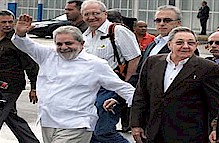
    Lula: there is no reason for the economic blockade against Cuba”Like the Cubans, I do not think that there is any reason for the embargo (blockade); there is no political or economic reason; the Cold War is over, and that is enough for (the United States) to make a decision,” affirmed the South American president, speaking to the press at the José Martí International Airport moments before concluding his visit. Cuban President Raúl Castro Ruz was at the airport to bid farewell to the Brazilian president.

    In this context, he called on Obama to use the same courage that the American people used to elect him president of the United States to “solve the problem of the embargo (blockade) of Cuba.”

    After expressing his pleasure with this, his third, visit to the island as president of Brazil, he emphasized that the meeting he had with Fidel Castro Ruz was very important.

    He commented that he was very satisfied, very happy to find the leader of the Cuban Revolution in good health and said that Fidel was discussing economics as if he were a young man, thinking of the future of Cuba and Latin American and the Caribbean, and, as might be expected, thinking of the future of the world.

    Likewise, he signaled the importance of his meeting with Cuban President Raúl Castro and the bilateral agreements signed on this occasion, which will contribute to Cuba’s development.

    At another point, he said that his visit was very significant “for examining in detail the policy of solidarity toward Haiti adopted by Cuba, Brazil, and other Latin American countries.”

    He explained that he is taking with him a Cuban proposal for both countries to help the Haitians build a healthcare system.

    Lula stated that Cubans are probably the best solidarity specialists in the world. “They are the most prepared and therefore we want to work together to return hope to Haitians.”

    Lastly, the Brazilian president assured that his country will work with unfailing conviction Cuba’s central ally in terms of the island’s investment and development policy.

    He praised the island’s potential and added that Brazil today has better conditions than 10 year ago, and so “we are not going to fail at the point of discussing the most important projects for Cuba.”

    Translated by Granma International

    Fidel and Lula hold fraternal meeting

    ON Wednesday afternoon, February 24, a meeting took place between the leader of the Cuban Revolution, Fidel Castro Ruz, and the president of the Federative Republic of Brazil, Luiz Inácio Lula da Silva, who is currently on a working visit to our country.

    Fidel and Lula hold fraternal meetingPresident Raúl Castro Ruz was present, along with Franklin Martins, chief minister of the Brazilian Secretariat of Social Communication.

    Fidel and Lula talked at length about diverse and important issues, particularly the 15th International Conference on Climate Change, held in Copenhagen last December, and the positive outcome of the recently-concluded Summit for Latin American and Caribbean Unity.

    During their extensive conversation, the Commander in Chief congratulated the Brazilian president for his brilliant work leading the Federative Republic of Brazil, and who has elevated support for the population to levels never previously reached by a leader in his country.

    Da Silva’s mandate ends in late 2010, and he enjoys international prestige.

    During their friendly dialogue, Fidel thanked the Brazilian people and president for their gestures of solidarity toward and cooperation with Cuba.

    The moving encounter was an expression of the friendship between the two leaders and the fraternity that unites the two peoples.

    Translated by Granma International

    Fruitful exchange between Raúl and Lula

    CUBAN president Raúl Castro Ruz and Luis Inácio Lula da Silva, president of the Federative Republic of Brazil, held productive talks on Wednesday afternoon in the Palace of the Revolution, as part of the Brazilian president’s working visit to Cuba.

    Raúl and LulaThe meeting was in keeping with the excellent state of bilateral relations and solid friendship that unites the Cuban and Brazilian peoples. The presidents discussed the challenges facing their respective countries. They expressed satisfaction with the development of cooperation between Brazil and Cuba in numerous fields, especially in the economic sector, and their disposition to continue strengthening it.

    Raúl emphasized the decisive role of Brazil in the present and future of the region. Lula, for his part, expressed his happiness with this, his fourth visit to Cuba, since he was elected president.

    Also present at the meeting were Ricardo Cabrisas Ruiz, vice president of the Council of Ministers; Bruno Rodríguez Parrilla, minister of foreign affairs; Rodrigo Malmierca Díaz, minister of foreign trade and investment, and Carlos Zamora Rodríguez, the Cuban ambassador to Brazil.

    Attending the meeting on the Brazilian side were Nelson Jobim, minister of defense; Miguel Jorge, minister of industry and foreign trade; Guilherme Cassel, minister of agrarian development; Franklin Martins, head of the Department of Social Communication; Aurelio García, special advisor to the president; and Bernardo Pericás Neto, the Brazilian ambassador to Cuba.

    Translated by Granma International

    Several new agreements between Cuba and Brazil

    Miguel Maury Guerrero

    CUBAN President Raúl Castro Ruz and Brazilian President Luis Inácio Lula da Silva led the signing ceremony for legal instruments of cooperation between the two nations.

    The Palace of the Revolution was the venue for the signing of a memorandum of understanding for cooperation between the two countries in the area of information and communications, and a protocol of complementation in the health sector.

    Likewise, complementation agreements were signed for scientific, technical and technological cooperation, for the implementation of another six aimed at encouraging soy production in Cuba, the institutional strengthening of health monitoring, and laboratories for that activity in Brazil and Cuba.

    The transfer of methodologies for genetic control of different diseases that affect tomato and pepper crops, and the development of technical capacities in the biological control of agricultural plagues are also included in the agreements signed.

    In addition, the official record was signed for the second meeting of the Cuba-Brazil working group on economic and commercial matters.

    An international economic association contract was adopted between Quality Cuba S.A. and the Brazilian state company of works and infrastructure, covering construction projects to be carried out in the Port of Mariel in La Habana province.

    IN MARIEL

    Precisely in the morning, the two heads of state visited the Port of Mariel development zone, a comprehensive project to build a container terminal capable of receiving large freighters.

    The Brazilian company is now working on a strategy for building and restoring roads and railroads, and dredging of the entry canal for the future terminal, which will have a capacity for moving one million containers annually. (AIN)

    Translated by Granma International

  • Security Concerns Spread as Chile Quake Death Toll Rises

    Security concerns spread as Chile quake death toll rises

    March 1, 2010 — Updated 0222 GMT (1022 HKT)

    Press Conference of President Michelle Bachelet
    http://edition.cnn.com/2010/WORLD/americas/02/28/chile.quake/?hpt=Sbin

    Santiago, Chile (CNN) — Heavily populated parts of Chile still were without water service and electricity Sunday night because of Saturday’s 8.8-magnitude earthquake, and reports of looting raised fears about security in some areas.

    The nation’s hardest-hit major city, Concepcion, declared an overnight curfew. The death count from the earthquake doubled on Sunday from a day earlier, to 708 deaths.

    Calling Saturday morning’s quake an “unthinkable disaster,” Chilean President Michelle Bachelet said a state of catastrophe in the hardest-hit regions would continue, allowing for the restoration of order and speedy distribution of aid.

    Looting broke out in parts of the country, including in Concepcion in central coastal Chile, about 70 miles (112 kilometers) from the earthquake’s epicenter.

    Desperate residents scrounged for water and supplies inside empty and damaged supermarkets. On Sunday morning, authorities used tear gas and water cannons to disperse looters in some areas.

    The quake struck before dawn Saturday, toppling thousands of houses and dealing a serious blow to one of Latin America’s most stable economies. The Chilean Red Cross reported that about 500,000 homes had considerable damage as a result of the quake.

    Did you feel the quake? Share photos, videos, info with CNN

    Chilean President-elect Sebastian Piñera, scheduled to take office in March, warned Sunday that looting could grow worse with nightfall. He called for more government help in restoring order.

    “Tonight we will experience a very, very difficult situation with public order, particularly in the area of Concepcion,” Piñera told Radio Bio Bio.

    Concepcion, the capital of the Bio Bio region, didn’t have enough police to control all those seeking food and supplies from stores. Some became desperate as supermarkets closed and gasoline was unavailable, CNN Chile reported.

    On Sunday afternoon, people were seen entering a mill looking for ingredients for bread. In the evening, a CNN team passed a dozen gas stations that were being looted, with people siphoning gas. Military officers were guarding a few gas stations, but few other signs of a government response could be seen.

    Looting was being done not just by desperate residents, but by others who were merely opportunistic, said Concepcion mayor Van Rysselberghe.

    “They are robbing everything,” she said, asking for a stronger military response to restore calm.

    In addition to food, gas and emergency supplies, looters were targeting appliance and electronics stores, Van Rysselberghe said.

    Some small business owners resorted to protecting their shops with rifles and shotguns, said Rysselberghe, who also considered the current police force inadequate.

    Concepcion is under curfew from 9 p.m. Sunday to 6 a.m. Monday because of the looting. The city government is distributing water from the central plaza.

    Video from the city showed collapsed walls of buildings exposing twisted rebar. Whole sides of buildings were sheared off, and at least two structures were on fire.

    People in their homes lacked electricity. Hundreds faced sleeping in tents on Sunday night.

    Bachelet said her government reached an agreement with the country’s major supermarkets that would allow them to give away basic foodstuffs to those affected by the quake.

    The armed forces were available to help with security and the distribution of food, she said.

    In Concepcion on Sunday, a long line of people waited for foodstuffs as military personnel stood watch. “I have nothing,” one woman told CNN Chile. “I have no bread. I am a widow. I am 81 years old.”

    Of the 708 reported dead as of Sunday afternoon, 541 had died in Chile’s Maule region, and 64 in the Bio Bio region, both in south-central Chile.

    “I am certain that these are numbers that will continue to grow,” Bachelet said.

    Bachelet said Saturday that some 2 million people had been affected in one way or another, but she did not elaborate.

    More than 90 aftershocks had been recorded, ranging from 4.9 to 6.9 in magnitude.

    Chile has received many offers of international aid and will accept the help that it needs, Bachelet said. The U.S. military and the U.S. Agency for International Development were working to provide satellite phones, the State Department said Sunday.

    “The Chilean government has not yet accepted additional offers of assistance, pending the completion of an assessment of specific needs,” State Department spokeswoman Megan Mattson said, noting the airport in Santiago, Chile, was closed to foreign aid.

    “As soon as the Chilean government establishes additional needs, the United States stands ready to assist in disaster response efforts,” she said.

    Bachelet said she hoped that the airport in Santiago, the capital, would reopen soon to private, public and commercial air traffic. The country’s Department of Emergency Management said Sunday that repairs at the airport would take 48 hours.

    The airline LAN Chile said that three flights left from Peru to Chile on Sunday, one of them landing in Santiago. These flights were not commercial, but were transporting Chileans stranded in Peru back to their country, LAN Chile spokesman Roberto Davila told CNN en Español.

    Piñera sought to rally spirits in his Radio Bio Bio interview Sunday afternoon.

    “Chile is a country that has been hit many times by adversity in its history, and we have known in the past how to face adversity,” he said. “And I hope today our character is stronger than ever.”

    Saturday’s quake was 700 to 800 times stronger than the 7.0-magnitude quake that struck Haiti in January, which left about 212,000 people dead and more than 1 million homeless.

    Chile’s quake also occurred at a greater depth — 21.7 miles — than the 8.1-mile depth of the Haiti quake, which contributed to much of the damage there.

    Coastal Chile has a history of deadly earthquakes, with 13 temblors of magnitude 7.0 or higher since 1973, the U.S. Geological Survey said. As a result, experts said that newer buildings are constructed to help withstand the shocks.

    CNN’s Rolando Santos, Brian Byrnes, Karen Smith, Saeed Ahmed, Patricio Martinez and Patty Lane contributed to this report.

  • Hamas Commander Was Drugged Before Assassination, Says Dubai Police

    Hamas man was drugged before murder – Dubai police

    Sun Feb 28, 2010 2:46pm GMT

    DUBAI (Reuters) – The killers of a Hamas commander drugged him before suffocating him, Dubai police said Sunday.

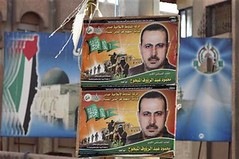
    Hamas military commander Mahmoud al-Mabhouh was killed last month in his hotel room in what Dubai police say they are almost certain was a hit by Israel’s Mossad spy agency.

    The killers used a muscle relaxant to tranquillise Mabhouh before suffocating him, said deputy police chief Khamis al-Mazeina, quoted by the Dubai police website.

    “The assassins used this method so that it would seem that his death was natural as there were no signs of resistance shown by the victim,” he said.

    Dubai authorities have named 26 alleged members of the team that tracked and killed the Palestinian and said they operated in disguise and used fraudulent British, Irish, French, German and Australian passports.

    People with the same names as many of the suspects live in Israel and say their identities were stolen. The passport abuse has drawn criticism from the European Union, and some of the governments involved have summoned the Israeli ambassadors to their countries to protest.

    Israel has not denied or confirmed it played any role but its foreign minister said there was nothing to link it to the killing.

    (Editing by Mark Trevelyan)

  • Chile News Update: Quake Death Toll Rises As Rescuers Dig Through Rubble Amid Aftershocks

    From The Times
    March 1, 2010

    Quake death toll rises as rescuers dig though rubble amid more aftershocks

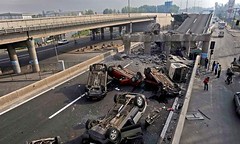
    Cars lie overturned after the highway they were travelling on was destroyed by the earthquake

    (Marco Fredes/Reuters)

    The death toll in Chile’s earthquake rose to more than 700 last night as rescue workers battled to find survivors trapped in the wreckage and powerful aftershocks battered the country. President Bachelet said that 708 people were known to have died in “a catastrophe of such unthinkable magnitude that it will require a giant effort for Chile to recover”.

    She said that the Army would be brought in to aid the police against looters and would take control of Chile’s second city, Concepción.

    Tens of thousands of Chileans were camped in tents and makeshift shelters, fearing that aftershocks would bring down more buildings after the 8.8-magnitude earthquake on Saturday destroyed airports, highways and buildings, and sent a tsunami across the Pacific.

    About 400 deaths were in the seaside resort of Constitución, which was struck by the tsunami as well as the earthquake, according to the first reports to emerge from the coastal towns.

    Concepción, which was 70 miles (110 kilometres) from the epicentre, was strewn with overturned cars, concrete blocks and lamp-posts, while the Bio Bio bridge collapsed. The city of 670,000 became the scene of the country’s biggest rescue operation. Last night rescue workers were picking through the debris of a collapsed 15-storey apartment building in the hope of finding survivors among more than 60 people trapped inside.

    Rescue operations were complicated by the aftershocks, with more than 90 registered across the country in the 24 hours after the earthquake. The strongest reached 6.9 on the Richter scale.

    Carmen Fernández, the director of the Interior Ministry’s National Emergency Office, warned residents to brace themselves, saying that the shocks could last “even months”.

    The agency said that the earthquake had an impact from the desert region of Antofagasta, in the far north, to the Lakes region at the country’s southern tip. Few parts were untouched, with an estimated 2 million people affected and 1.5 million homes and buildings destroyed or badly damaged.

    The death toll was likely to rise as rescue operations progressed, officials said. Power supplies remained widely disrupted.

    In Concepción thousands of people spent Saturday and Sunday nights sleeping in temporary shelters made from bed sheets or cardboard boxes. Residents were still without water, electricity or phone lines, while fuel supplies were dwindling rapidly.

    Police fought with looters who were raiding supermarkets for food. “People have gone days without eating,” one looter, Orlando Salazar, said. “The only option is to come here and get stuff for ourselves.” A bank was robbed in the city and electronics stores were emptied of plasma televisions and washing machines. Television images showed police pushing looters to the floor, while water cannons and teargas were deployed. A curfew was imposed in Concepción and Maule.

    In the nearby city of Chillán more than 200 inmates escaped after the earthquake brought down a wall of their prison.

    President Bachelet — who has only ten days left in office — said that she found it difficult to spell out the magnitude of the disaster, which she said would take several days to assess. “The power of Nature has again struck our country,” she said, declaring six of Chile’s 15 regions “catastrophe zones”.

    The capital, Santiago, about 200 miles northwest of the epicentre, was plunged into near darkness as power lines were snapped and roofs came down. Santiago airport and the city subway remained closed yesterday and communications had failed, leaving residents struggling to locate friends and relatives.

    Ninety per cent of buildings were destroyed in the 18th-century town of Curicó, 122 miles south of Santiago, according to a local radio station which set up a generator-powered newsroom in the main square.

    The earthquake was felt as far away as São Paolo in Brazil, 1,800 miles to the northeast. Experts said that it was hundreds of times more powerful than that which hit Haiti in January.

    Chile is one of Latin America’s wealthiest nations and is well prepared for earthquakes, with modern buildings designed to withstand the regular seismic activity in the region. In May 1960 Chile was devastated by the worst earthquake on record, which reached a magnitude of 9.5 and killed up to 6,000 people. It triggered a tsunami that reached as far as New Zealand.

    The disaster raises a daunting challenge for the incoming President, Sebastián Piñera, the billionaire businessman who takes office on March 11. He swept to victory on a promise to revive the Chilean economy, but that task has become significantly greater with the damage suffered by the industrial and agricultural sectors.

    Offers of aid poured in from the international community. Hillary Clinton, the US Secretary of State, is to visit on Monday as part of a scheduled regional tour.

    Britain, one of Chile’s biggest trade partners, said that it was ready to help. Gordon Brown said: “We will do whatever we can.”

    Chile earthquake: Death toll rises, authorities race to assess damage

    As the death toll from the Chile earthquake rises, relief organizations from around the world are set to help the South American nation pick up the pieces. But Chile’s authorities say it will take them more time to assess the needs.

    By Benjamin Witte Contributor
    Christian Science Monitor
    posted February 28, 2010 at 5:42 pm EST

    Santiago, Chile —As the death toll from Saturday’s monster 8.8 Chile earthquake continues to rise, authorities in Chile are focusing relief efforts on the hardest-hit southern Bio Bio and Maule regions. So far some 2,000 police and military personnel have been deployed not only in rescue and recovery efforts but also to maintain order in what has become an increasingly chaotic disaster zone.

    On Sunday afternoon, President Michelle Bachelet announced that the official death toll – previously 300 – now stands at 708. “We’re facing an emergency unlike anything else in Chile’s history,” she said.

    Ms. Bachelet also declared an official “State of Emergency,” promising to deploy more soldiers to the area. But Chile’s National Office of Emergencies and Information said international assistance will not be required until Chilean authorities can properly assess the overall damage. President Bachelet said in a nationalized television address Saturday night that authorities will not have a clear picture of the devastation for 48 to 72 hours.

    Rescues and looting near epicenter

    Local news outlets reported that 18 people were rescued Sunday from a collapsed apartment building in the Bio Bio capital of Concepcion, Chile’s second largest city after Santiago. Dozens in the downed, 15-story structure are still missing.

    Recovery efforts were complicated Sunday by looting in Concepcion supermarkets and pharmacies.

    Isolated incidents of looting have also taken place in Santiago, where supermarkets are receiving a flood of panicked shoppers.

    Concepcion’s mayor, Jacqueline van Rysselberghe, called the situation “Dante-esque” and told Radio Cooperativa things are “getting out of control.”

    “This is so complicated because we don’t know how many dead people there are. I think it’s more than they’ve announced,” she said.
    Access to epicenter a problem

    The magnitude 8.8 earthquake – the largest to hit Chile in a half century – struck at 3:34 a.m. Saturday morning and lasted more than two minutes. The epicenter is believed to be near Cauquenes, a small Bio Bio community close to the Maule border. Government officials admitted Sunday they still have no idea what the situation is like in Caquenes.

    Access has been a major obstacle and has so far prevented aid organizations from reaching the disaster zone. The massive quake downed bridges throughout the country, including several along Chile’s vital north-south artery, Ruta 5. Santiago’s international airport also sustained damage but opened late Sunday to a limited traffic, Air Force Gen. Ricardo Ortega said.

    International offers for help

    The United Nations Office for the Coordination of Humanitarian Affairs, OCHA, has offered to coordinate an international aid effort, and it reports that the European Commission and Red Cross have together pledged some US$3.5 million.

    “The UN made an offer but we have not received a reply from the government,” said OCHA spokesperson Stephanie Bunker. “The [Chilean] government has, as we know, good capacity and we’re waiting to see if they need any help.”

    Andrea Cordoba of World Vision expects that with the airport finally open, aid groups will be able to begin delivering supplies – perhaps as early as Monday.

    “The government is concentrating on just part of the response, setting up field hospitals. But the people that are still in the streets or in the hills looking for a safe place to stay need tents, sleeping bags, blankets, food, and, fundamentally, water,” says Ms. Cordoba. “People are desperate. Part of the reason they’re stealing is just the general chaos, but it’s also because they simply don’t have water to drink.”

    Christian Science Monitor

    Chile earthquake much stronger than Haiti’s but far less damage. Why?

    The Chile earthquake — at a magnitude of 8.8 — was much stronger than the one that hit Haiti, but casualties and damages appear to be far less. Why?

    By Benjamin Witte and Sara Miller Llana Correspondent and Staff writer
    posted February 27, 2010 at 7:36 pm EST
    Santiago, Chile and Mexico City —

    The earthquake that struck Chile was far stronger than the one that struck Haiti in January.

    But, initial reports show that damage was much more contained. While the death toll of 214 is only preliminary and is expected to grow, it’s still a thousand times lower than that of Haiti’s.

    One emergency official quoted by Reuters said the number of deaths was unlikely to increase dramatically.

    Because of its long history with earthquakes, which has contributed to an earthquake “consciousness” in Chile, and infrastructure that is built to higher standards, many hope that Chile will be spared the vast destruction that struck Haiti, even as it deals with one of its worst natural disasters in decades.

    “Chile has a long story of earthquakes, but I think this was the worst ever,” says Paula Saez, an aid worker at World Vision in Chile.

    The 8.8-magnitude quake that struck about 200 miles south of Santiago, is being billed as one of the world’s largest in a century, but it will most likely not go down as one of the deadliest. In part, that’s because Chile sits in the “ring of fire” earthquake zone and is accustomed to massive temblors, including the largest on record, which hit in 1960 and registered 9.5.

    A few more days until full damage is known

    The government says that it might be another 72 hours before the real extent of the damage is known, as telecommunications are down in Concepcion, the city closest to the epicenter of the quake. Also, the earthquake impacted many rural areas, where the population is dispersed and hard to account for.

    In downtown Santiago, a sense of calm prevailed, after initial panic. Residents began collecting debris that had fallen on the streets and attempted to reopen businesses by midday.

    Chileans are well versed in what to do during earthquakes, with drills part of every child’s schooling. “Just in case” attitudes, which might seem obsessive in other parts of the world, are the norm here. One woman says she turns off the gas valve every time she leaves the house, just in case a quake strikes when she is out.

    The Chilean National Emergency Office, which coordinates emergency responses, stresses that Chile is among the world’s most seismic. On its website the agency spells out how to prepare in the event of an earthquake.

    That, as well as previous experience, helped many through this quake.

    Leonel Araya, a doorman in Santiago who lost a child in a 1982 earthquake, says that he has learned from past experiences. “I’ve been through three big earthquakes, including a maremoto (tsunami) in the north. You learn from them, to be more humanitarian. To think about things better.”

    He says he ran to open the door, to get his family under the frame to protect them.

    “Everything else can fall,” he says. “I just tried to control the family, because you know, the family, the children, my wife, are really nervous. That’s one thing I learned. You need to keep them right next to you, because once, in an earthquake in 82, a son who’s no longer with me got away from me. And when I tried to grab him, he slipped out and was crushed by a wall.”

    Silvia Vidalia, an elderly woman in a neighborhood in Santiago, also stressed the need to stay calm.

    “The first thing you need to do is calm each other down. My husband, for example, who is 80-something, is very nervous. So the first thing I did was calm him down. And then, after that hellish shaking ended, we went downstairs because we live on the second floor. You have to find a safe place.”

    Population less dense than Haiti

    Chile will undoubtedly also be helped by the fact that the earthquake did not happen in as dense an area as Port-au-Prince, Haiti, where parts of the city and several government buildings were literally flattened. It will also be helped by better-enforced building codes, one of the most significant challenges in Haiti. A US Geological Survey researcher told Reuters that a low death toll could be attributed to strong building standards.

    Maria Cristina Sepulveda, a pharmacist in Santiago, says she believes she survived because of the sturdiness of the buildings around her.

    “It seems like where I live is very well built, because nothing happened to it. I’ve been there for 15 years. The old buildings are well built,” she says.

    One of the challenges in the hours ahead will be the damage to infrastructure. Bridges have fallen and airports closed. Some areas are only reachable by helicopter, says Ms. Saez. She says the government is reporting that up to 400,000 people could be affected. The death toll could be higher since in many rural towns there are no hospitals to report figures.

    It will also be a blow to the economy, especially given damage to the copper industry, the world’s largest.

    “It’s the most difficult emergency that Chile has faced in a long time,” Saez says.

    And the quake has, for now, left many in the nation stunned. After all, says Ms. Vidalia, no one can ever really be prepared. “We know this is a seismic country, but one’s never prepared.”

    Factbox: Chile quake hits copper mines, ports and refineries

    6:10pm EST

    (Reuters) – Up to one-fifth of Chile’s copper mine capacity was shut after the world’s biggest producer was rocked by a huge earthquake on Saturday, but at least two mines in the quake-affected area resumed operations within 48 hours of the quake.

    However, industry analysts still expect copper prices to rise because of potential disruption in power and transportation links to the mines.

    The nation’s oil refineries appeared to be at greater risk, with its largest plant located near the epicenter; two were forced to shut down for further investigation.

    Following are details on the impact to energy and mining operations after the temblor that struck 70 miles northeast of Concepcion and about 200 miles south of Santiago.

    OIL REFINERIES

    State energy firm ENAP shut down both its 116,000 barrels per day (bpd) Bio oil refinery, which is located just north of the city of Concepcion, as well as its roughly 100,000 bpd Aconcagua refinery near the capital.

    Mining Minister Santiago Gonzalez told Reuters officials were trying to assess structural damage to Bio Bio. ENAP said it was increasing diesel imports to meet demand. It said it had sufficient gasoline stocks to last two weeks and diesel stocks for 10 days.

    MAJOR COPPER MINES AND SMELTERS

    With almost all major copper producers confirming their status after the quake, operations at mines producing more than 1 million metric tones a year — near a fifth of the country’s total 5.4 million metric tones last year — were initially suspended by the quake, but they appeared undamaged.

    Officials confirmed that the two biggest mines in the far north — Escondida and Chuquicamata — were unaffected, and a union leader said transport between Escondida and port facilities had not been disrupted.

    State-run Codelco said its El Teniente complex was operating again on Sunday and that the Andina mine should also start, although sufficient power had not yet been restored late on Sunday. A company official said the pace of output recovery at El Teniente would depend on power supply.

    El Teniente is the world’s biggest underground copper mine with output of 404,000 metric tones in 2009.

    Codelco’s 435,000 metric tone per year Caletones smelter was also set to resume operations on Sunday, a spokesman said.

    Anglo-American shut its Los Bronces and El Soldado mines, which together produce around 280,000 tonnes of copper annually, after the quake cut energy supplies, but a union leader said Los Bronces had resumed activity late on Saturday. He did not know if El Soldado was operating.

    A company spokesman could not be reached on Sunday. Anglo-American has been planning to expand the 238,400 metric tones per year Los Bronces deposit.

    No one could be reached at the company to clarify the situation at the mines on Sunday.

    Freeport McMoRan Copper & Gold Inc said the quake did not damage its two mines, but said a power outage at its Candelaria mine had caused a temporary shutdown.

    Xstrata and BHP Billiton said all their operations were running normally.

    SMALLER MINERS REPORT NO DAMAGE

    Smaller miners reported little impact. Barrick Gold Corp, Kinross Gold Corp and Breakwater said their mines had not been affected. Teck Resources Ltd said the quake had not impacted its Andacollo and Quebrada mines, though they could still be hit by power supply restrictions.

    SMALLER PORTS SHUT

    The Chilean copper-exporting port of San Antonio was closed, but Codelco officials said roads leading to the port were in good condition. The port of Valparaiso, which is not used for metals exports, was also closed.

    The key copper-exporting ports of Antofagasta and Mejillones were operating normally.

    Here is an overview of major mines and smelters in Chile:

    Mine Location Operator Output Status KM Dist from

    Concepcion

    El Teniente 75km S of Santiago Codelco 404,000 ops resumed 240

    Andina 50km NE of Santiago Codelco 210,000 ops suspend 320

    Los Bronces 65km NE of Santiago Anglo-American 235,000 ops resumed 335

    El Soldado 132km N of Santiago Anglo-American 50,000 ops suspend 400

    Los Pelambres 200km NE of SantiagoAntofagasta 310,000 n/a 480

    Candelaria FreeportMcMoRan185,000 power outage 650

    Escondida far north BHP Billiton 780,000 ops normal 750

    Collahuasi far north Xstrata/Anglo 435,000 ops normal 1,000

    Chuquicamata far north Codelco 565,000 ops normal 1,140

    Top smelters Near Operator Capacity Status KM Dist from

    Concepcion

    Caletones El Teniente Codelco 435,000 ops suspend 250

    Potrerillos Codelco 195,000 ops normal 750

    Altonorte Antofagasta Port Xstrata 268,014 n/a 926

    (Reporting by Alonso Soto in Santiago and Euan Rocha in Toronto)

  • Japan Gets First Tsunami Waves From Chile Quake

    Japan gets first tsunami waves from Chile quake

    (CNN) — Tsunami waves from the deadly 8.8-magnitude earthquake in Chile rippled across the Japanese coast on Sunday, but the initial ones did not appear large enough to cause damage.

    Authorities urged residents to stay away because a second and third round of waves could gain strength. The first one, a 4-inch wave, hit Minami Torishima, according to the Japanese meteorological agency.

    Minami Torishima is a small island in the Pacific Ocean.

    An 11-inch wave was later recorded in the port of Nemuro, Hokkaido. It hit the port at 1:57 p.m. local time. Another 8-inch wave hit Hamanaka-cho, Hokkaido, at 2:05 p.m. local time.

    Tens of thousands of residents evacuated Sunday morning from coastal Japan in anticipation of a possible tsunami after the earthquake.

    The northern part of the main island could be hit by a tsunami at least 9 feet high, according to the meteorological agency.

    Sunday’s alert was Japan’s first major tsunami warning in more than 15 years, the agency reported. In 1960, a tsunami spawned by Chile’s 1960 earthquake killed 140 people in Japan.

    The Pacific Tsunami Warning Center on Saturday canceled warnings that initially covered the entire Pacific region.

    Only Russia and Japan were under a widespread tsunami warning, the center said Sunday.

    In the U.S. state of Hawaii, the cancellation occurred nearly two hours after the first waves came ashore. Coast Guard crews said they had found no significant damage to ports or waterways as a result of the tsunami.

    But the tsunami center said some coastal areas may see small sea-level changes or unusual currents for the next few hours.

    The cancellation “does not mean it is now safe to resume normal activities or re-enter evacuated shoreline areas,” the tsunami center said. It said that county’s civil defense agencies and local police departments would make those determinations.

    “There was no assessment of any damage in any county, which is quite remarkable,” said Gov. Linda Lingle. “It’s just a wonderful day that nothing happened and no one was hurt or injured.”

    The warning was issued early Saturday after an 8.8-magnitude earthquake struck Chile, killing more than 300 people. Government officials are expected to announce an updated death toll Sunday at 12 p.m. local time (10 a.m. ET).

    In Chile, tsunami waves came ashore along the coast shortly after the earthquake, U.S. Geological Survey geophysicist Victor Sardina said.

    The largest was 9 feet near the quake’s epicenter, Sardina said.

    Another 7.7-foot wave hit the Chilean town of Talcahuano, according to Eric Lau of the tsunami center.

    On the island of Juan Fernandez — 400 miles (643 km) off Chile’s coast — a large wave killed three people, Provincial Governor Ivan De La Maza said. At least 10 people are missing.

    Navigational buoys in Ventura County, California, got minor damage as a result of a 2-foot surge and waves, according to the Alaska Tsunami Warning Center. The Ventura County Fire Department had a report of damage to a resident’s dock from the surge.

    Find this article at:
    http://www.cnn.com/2010/WORLD/asiapcf/02/28/japan.tsunami/?hpt=T1

  • Chile Earthquake Update: Millions Affected as Death Toll Rises to 300

    From Times Online
    February 28, 2010

    Chile earthquake: Millions affected as toll rises to 300

    Rescue teams have begun to search for survivors after one of the largest earthquakes on record killed at least 300 people in Chile and sent giant waves roaring across the Pacific Ocean.

    In an address to the nation, President Michelle Bachelet said two million Chileans had been affected by the 8.8-magnitude earthquake, however after touring the worst-hit areas by plane, she found it hard to spell out the magnitude of the disaster.

    “The power of nature has again struck our country,” Ms Bachelet said, declaring six of Chile’s 15 regions “catastrophe zones” in the aftermath of the quake, which was one of the world’s most powerful earthquakes in a century.

    An estimated 1.5 million homes were damaged, highways were sliced to pieces, bridges imploded and buildings collapsed as the earthquake struck the South American nation of 16 million people just before dawn on Saturday about 200 miles southwest of the capital Santiago.

    “This is a catastrophe of immense proportions, so it will be very difficult to give precise figures,” Interior Minister Edmundo Perez Yoma said.

    Waves well over seven feet high crashed into the Chilean coast after the quake struck at 3:34 am (0634 GMT) and tore out into the Pacific, killing at least five people in the remote Robinson Crusoe islands.

    In the Chilean port of Talcahuano, trawlers were sent shooting inland to the town square where they lay oddly marooned next to abandoned cars.

    About 50 countries and territories along an arc stretching from New Zealand to Russia braced for giant waves, five years after the Indian Ocean tsunami disaster that killed more than 220,000 people.

    More than 70,000 people fled vulnerable coastal areas of Japan as a tsunami slammed into the country’s long Pacific coastline. The first tsunami wave, approximately one foot high, hit Nemuro on the northern island of Hokkaido in the early afternoon. Tsunami alerts in Australia and Russia were later downgraded as the threat passed.

    The earthquake has raised a daunting first challenge for billionaire Sebastian Pinera, who was elected Chile’s president in January in a shift to the political right and who takes office in two weeks.

    “We’re preparing ourselves for an additional task, a task that wasn’t part of our governing plan: assuming responsibility for rebuilding our country,” he said yesterday. “It’s going to be a very big task and we’re going to need resources.”

    The US Geological Survey said it had recorded more than 51 aftershocks ranging from 4.9 to 6.9 since the quake.

    In Concepcion, a city of 670,000 people 70 miles southwest of the quake’s epicentre, hundreds of people spent the night outside in tents and make-shift shelters, fearful of the aftershocks.

    The city’s old houses made of adobe appeared to have borne the brunt of the damage, but a 15-storey apartment block also collapsed, likely killing or trapping many people inside.

    The city was mostly blanketed in darkness, with the only light coming from bonfires and occasional police cars. Crushed cars, downed power lines and shattered glass littered the streets.

    The European Union said it would provide three million euros in immediate assistance. Unlike Haiti, struck by a devastating earthquake last month, Chile is one of Latin America’s wealthiest countries.

    US President Barack Obama said America “will be there” if Chile asks for rescue and recovery help, however Ms Bachelet said her government has not asked for assistance from other countries.

  • Nigeria Interview: “I Am Fed Up With the Lies of Yar’Adua’s Aides,” Says Information Minister Akunyili

    I am fed up with the lies of Yar‘Adua’s aides — Akunyili

    Cover Stories Feb 28, 2010

    Prof. Dora Nkem Akunyili caught the nation’s attention with her unrelenting campaign against fake and adulterated drugs in the country in her immediate past employment as Director General of the National Agency for Foods, Drugs Administration and Control (NAFDAC). Where many before her dreaded to dare, she simply plainly overwhelmed as her anti-counterfeit campaign literally uprooted the merchants of death from their fortresses.

    Her campaign came at a great cost including a miraculous escape from an assassination attempt. Her promotion as a Minister was generally applauded as a befitting reward for diligence in public service. Her efforts as Minister of Information and Communication have, however, not been the success many expected. Controversies with some subordinates and a determination to repaint the negative perception of Nigerians in the global community have been some of her major challenges.

    Buried in this imaginative campaign to re-brand the standing of Nigeria and Nigerians nothing exceptional was heard from Mrs. Akunyili until the controversy over the ill-health of President Umaru Yar‘Adua enraptured the polity. Her memo to the Federal Executive Council (FEC) seeking to empower Dr. Goodluck Jonathan as Acting President caused a tremor that shook the consciousness of many Nigerians. The National Assembly resolutions and the coherence of elder-statesmen for the empowerment of Dr. Jonathan as Acting President soon followed.

    Following reports of the sneaky return of President Yar‘Adua to the country in the wee hours of last Wednesday, the emotions were again stirred in the Information Minister who was compelled to now inform a trio of inquisitive newsmen the truth of how a few have turned the ill-health of the President into a desperate game for political merchandise.

    By Emmanuel Aziken

    How would you describe the state of affairs of the country with the President’s return to the country?

    The President’s return in the early hours of Wednesday, February 24, 2010 has actually exaggerated uncertainty, confusion, anxiety, fear and concern, not just by Nigerians but by the international community. These are the very sentiments Nigeria cannot actually afford, if we really want to build a modern nation. We have had uncertainty, confusion, anxiety, fear and concern reverberating across the country and even beyond.

    Why do you think this uncertainty is there?

    Well, it is there because things have not been properly managed by some people around our dear President. We were not told officially that our president was coming back. It was even Al-Jazeera that broke the news, but I didn’t hear it because I had slept. They broke the news that he was leaving Saudi Arabia for Nigeria. They also broke the news of the arrival. But I heard it on CNN. For the fact that it was not officially announced that our dear President was coming back and the Acting President was not even aware, from his interaction with Ministers yesterday (Wednesday), we knew that he was not aware.

    That created a lot of concern among the populace and the tension is so high that even United States of America made a comment today (Thursday), which I don’t need to repeat of how afraid they are about the situation in Nigeria. Our Council did not hold yesterday (Wednesday). We were there at 10.00 am and waited till 12 noon, and as we were waiting, there was tension.

    Whatever the council members feared was exposed when we got the Press Release from the Presidency, referring to the Acting President twice as Vice President.

    That heightened the tension in the system because what it actually means by referring to him as Vice President is that whatever he has done in the past few weeks to stabilize the sinking ship of the nation did not mean anything to the people around the President. Otherwise, why would they even release that kind of press statement? We have gone through a lot in the past few weeks, which actually culminated in the legislative resolution that pronounced Dr Goodluck Jonathan as the Acting President and Commander-in-Chief of the Nigerian Armed Forces. So, it was very inappropriate for the presidency, on return of our dear President, to refer to Dr Ebele Goodluck Jonathan as Vice President. Dr Jonathan should be addressed as Acting President. There was no need for that tension. It was unnecessarily generated.

    After the National Assembly resolution the Federal Executive Council supported the resolution and this was widely publicized. Across the world, this was praised. Our ship was stabilized and was stopped from sinking. The ship of the nation was stopped from sinking.

    We are not yet stable because we are still working towards stabilizing the system. And since President Yar’Adua came back, we were expecting that he would, in one way or the other – knowing the type of person he is because the President Yar’Adua I know is very peace loving. He preached the rule of law and I believe he preached it from his heart. I never saw him as somebody that will come back to bring instability.

    So, it is not President Yar’Adua. I believe that it is people around him that are gaining from the confusion; people around him that are doing to him today what 100 million political enemies cannot do to him. If President Yar’Adua were to be my father or my brother, I would not allow anybody to do to him what they are doing to him today. This is the President of a country. This is a man so loved by Nigerians. At least, he is humble. He is from a rich family, but his humility is disarming. He is sincere. Look at what he did with Niger Delta. He has done a lot for this country and suddenly, a few people are rubbishing it. They stole him into this country in the night.

    This is the President of the Federal Republic of Nigeria. I think it’s something that is unnecessary and uncalled for and should be decried by all who sincerely love the President. When people now claim that they love President Yar’Adua, I laugh because very few of them actually love him and his family as much as I do. I remember when I worked for him with all my heart and I’m still working for him. He’s still our President. We have a President and we have an Acting President.

    About four months or thereabout before he travelled, I went to the Publisher and Chief Executive of Leadership. After meeting him and his staff, he didn’t really know why I came. He thought it was just a courtesy visit because he’s my professional colleague. I said my brother, I beg you, the way you are bashing our President in your paper is too much.

    How can we be re-branding when we are literally saying our President died or is a criminal. We cannot go on this way and I beg you in the name of God. I can’t remember exactly how I said it, but I really pleaded with them.

    But it’s not good to discuss anything with journalists because he exposed it about two weeks ago. I guess he got angry when people were abusing me about memo and no memo. He got angry and said this woman is so misunderstood and this is how she came to my office. When people brought the paper to me, I said it’s not good to discuss secrets with journalists, because I went to him secretly and as soon as I finished with him, I was happy. I asked him if I could get audience for him to speak with Mr. President. I want you to become friends. Criticize him constructively, but manage the negative stories about Nigeria and about us. I went to one of the President’s close aides and told him that I want you to help fix a meeting for Nda Isaiah to see oga because there are misunderstandings here and there. He said he would but he never did.

    Coming back to what you said about the way he was brought in, if he were brought in like a President and Nigerians had information that he was coming back, we would all go to receive him and he would be brought in as a President with honour and dignity and then when he comes in, prayers will continue. It doesn’t matter his state. He did not choose to be ill. There is no state of any human being that should call for anybody to feel happy or to gloat over. Anybody can be sick and people don’t even die because they are sick. We have an Igbo proverb that says people don’t die due to how long they are sick. You can be healthy today and tomorrow morning, you won’t wake up. You can go out and be shot. You just cannot hold life in your hand and boast of it. But what is important is the way we handle these issues. It has been so mishandled that it has made us a laughing stock and created all this confusion.

    The international community is watching. They have started making statements and we don’t want it to degenerate. We have suffered too much in this country, right through the civil war and the various levels of political instability and I believe that it is time we settled down to nation building.

    Here is a Minister of Information who will manage information in respect of the Presidency and the government of Nigeria and here you are saying certain things that may not go down well will them.

    What would you explain spurred you to be outspoken in this manner?
    You manage information if you have information. We did not have information that our President was even traveling to Saudi Arabia until we saw it in the news, and when he was in Saudi Arabia, we hardly got information. I only got information once from Mr. Segun Adeniyi and that was what I reported in Council, that the doctors in Saudi Arabia said he was getting better and it’s only the doctors that would determine when he would come back and I reported it like that. That was the only information. When I asked him who told him, he said it was one of the aides of the President that gave him the information. Thereafter, it was they said, they said and they said. We never had a comprehensive channel of getting information that we are sure of and most of the information, sometimes, they don’t add up and it get’s very disturbing. When they don’t add up, you feel very awkward reporting such information. I believed the information, even though I kept wondering how things can be done better, until when I found that stories told by some of the presidential aides were not adding up, especially stories that are changed when they are told from one person to another. That was when I started feeling uncomfortable and that was when I now decided that I would go on holidays. People felt it was strange that I was going on holidays in the first week of January.

    But I traveled because I needed to rest a little, have a retreat, pray and attend a two-day meeting in India. But I went out for about three weeks and I decided that by the time I return, I would never again report about Mr. President’s illness until I sit down with people that will tell me the truth and nothing but the truth, so that I will not be involved in deceiving Nigerians. I know that most Ministers are credible people. But some Ministers also complained openly that they had no information and that’s why they were handicapped. But I had a peculiar position of being Minister of Information to inform the people. So, I was even more handicapped than everybody.

    When I came back from my holidays, I made up my mind, as I said earlier that I will not report about his health again and that was why the Executive Council meeting a day after my return, at the end of the meeting, I did not argue when the Attorney General came to brief. I did not say he should not brief because it’s the Minister of Information that should brief, because I had earlier made up my mind that I would not brief on our President’s health anymore. He came and did the briefing and I was stunned when he was talking.

    He convinced everybody that the President was capable and I was getting worried. I was getting worried in that I asked myself that if he were capable, why could he not speak to Nigerians through our own channels. Why could he not speak to Nigeria through our NTA? Why speak to BBC? After that briefing, I really felt very miserable.

    I got really very depressed and I asked myself: now that Chief Aondoakaa has briefed, what do I say about the President’s health next Wednesday? That depression went so deep that I used to take Lexotan twice at night to sleep and I would not sleep. I kept asking myself what I would say. How can I say I don’t want to say anything about the President’s health. Would it not look as if I’m disloyal to the President? Would it not look unfair to the Federal Executive Council? So, I was caught in a very bad situation.

    Before even I traveled, because some Ministers said why didn’t I even consult; I called three Ministers differently. I just called and said what do you feel about what is going on? Don’t you think that we need to tell the public the truth? How do we get the truth? The reaction I got from these three different Ministers, I will never forget. One of them said don’t you think he has a reason not to hand over to Dr Jonathan. I never said let him resign. I said it is better to find a way to encourage him to hand over to Dr Jonathan so that the system will be stabilized and our hard earned democracy will not be truncated. But for each of the Minister that I found a way of introducing it, so that we could hold a discussion for us to mobilize more Ministers, I did not get a single support from one of the three. In fact, the reaction of one of them, as I said earlier is that he had a reason not to hand over. You don’t even go there. I said which reason? He said he must have had a reason. I talked to the second one.

    He said those people that were all around Yar’Adua are now going to Jonathan. I didn’t see logic. The third one said be very careful about the way you talk. This your big mouth will land you into trouble. Don’t you ever try it because if you talk to somebody that doesn’t like you, they will go and tell them. I just felt that this is getting ridiculous. I needed to bring this because some people have variously said why didn’t you consult. When you consult three people and you get deadlocked, how can you continue? There was no way I could continue, just before I traveled. When I came back and couldn’t really live with myself, on Monday before that meeting, I was in the church doing my usual morning mass. I took so many tough decisions during mass. I said I must talk on Wednesday.

    But I will say my mind constructively. Then, from that morning, I started praying over it. But by that Tuesday evening by 6 pm, I decided to jot down what I wanted to say and as I was jotting down, I said if I use talking points, people will misquote me. Some people that don’t like me will even say that I want President Yar’Adua to die. Some will say I want him to resign. Why don’t I put it down as I did during Abdulmutallab; as Ojo Maduekwe did during Abdulmutallab.

    We put down our discussions on paper and circulated to council. I said let me put it down so that as I talk, I will not be misquoted. I started writing and when I finished writing about quarter to seven, I called my PA and said let’s go. We came home and we started typing and correcting. At about 10 pm, I called my Special Assistant and said I want you to go through something that I have for Council. He came and read it and when he finished reading it, he said this is suicidal. I said if I die, I die. I can only die once. Don’t worry yourself. I just want you to cross the “t”s and dot the “i”s. Then he added that it’s not just about you. Our job is also on the line. I said then you go and look for another job because if the military comes in tomorrow, your job will still be on the line.

    So, he felt very bad. He came back in the morning and said what of Goodluck Jonathan; is he not going to be embarrassed. I said if I tell him about this and he heard about it yesterday, he will discourage me. He said did you consult anybody and I said who else should I consult except my God, because I talked to three Ministers and they rebuffed me.

    But I felt that if we cannot continue waiting for who will talk. I just felt at that point that I needed to submit it. The next day, I circulated it. But even that morning, I talked to a few people. I didn’t say I brought a memo. I said don’t you think that we have to do something about what is going on. They said no, leave it. So, I didn’t have support. I told a few Ministers in that hall that I wanted to talk, but again, I didn’t have any support. So, I stopped. You know you will continue talking about something if you have support and you will get to the extent of saying this is what I want to say. But I didn’t get to that level because I was not encouraged. So, when I circulated it, by the time I started reading, of course, people had all read it and there was crisis. It was clear that nobody wanted it to be discussed. I felt very bad, but I felt a bit comfortable that I had gotten relieved of a big burden that had been weighing me down and not allowing me to sleep.

    I came back to the office. I called my media people and said read it. After reading it, keep it. I’m not giving it to anybody because since they said it was not properly tabled. But I’m happy that I reminded everybody in council that Abdulmutalab’s case was also not circulated and discussed and what they said that day was that Abdulmutallab’s case was urgent. But when I look back, I wish we discussed it because the Council might have taken a position that day. But everything happens as God wants it.

    When my people finished reading it, they said so this is what you went to Council with today. What happened? I said I won’t give you this paper until after Council next week. That was what I did with all of them.

    Then, at about 4.00 pm or 5.00pm, somebody called me and said one of the internet blogs had it. When we read it we saw the second to last draft. You remember the one that has 145. But my final memo didn’t have it. When I saw it, I was embarrassed. The only difference between that particular one and the final is the removal of a section, and it was actually my S.A. that said remove this section because you are getting too legal. You are not a lawyer. He told me that morning to remove that section so that lawyers will not abuse you that you don’t understand the law. But the only thing we can arrive at now is that my Council box was forgotten in that council hall. Maybe I was so harassed that I forgot my box. It was at about 4.00pm that my Chief Detail, noticed that I did not come back with my box and he went back to collect it. But I cannot say whether it was during those few hours that somebody took it because I had a draft and the final in that box.

    When we saw it on the internet blog I now called all my media aides and said take copies. If it’s on the internet and I’m saying that you people should not have copies, then it doesn’t make sense. That was how it happened.

    In your statement yesterday (Wednesday) you said the Acting President had only been briefed by the President’s aides. Then the second part of it said the Acting President is even hoping to see the First Lady, from whom he hopes to get briefing on the President’s health.

    The Acting President said he had been briefed by the President’s aide. He also heard that the President returned as we heard. He had been briefed by the aides of the President. He would try and see the First Lady yesterday evening (Wednesday) and that on Wednesday next week during Council, the Ministers that went to Saudi will brief us. He also added that when he sees Mr. President and gets briefed, he would call us back.

    As at now, has he seen the President?

    As of 4.00pm today (Thursday), he had neither seen the President nor the First Lady. As the Information Minister, I called one of his aides and asked if oga had seen the First Lady and he said no. Has he seen the President? He said no and I was worried.

    Have you seen the President yourself as the spokesman of the government?

    Am I more important than the Acting President? I think it would be too forward of me and it would be wrong if as the spokesperson, I go to see the President before the Acting President. I don’t think it’s right. Even if he is my father or my brother, I will say please see the Acting President before briefing me.

    Going to see Turai for instance, should that be the normal line of communication?

    I think that going to see Turai is very informal and there’s nothing wrong with it. This is the wife of the President. No matter the mistakes and whatever the aides have done, we should still face the truth. This is the wife of Mr. President. If he is very ill, we don’t even know. If he is too ill to see him, at least the wife would see him and discuss with him. I don’t think there’s anything wrong with it. It’s not the normal channel, but the things that are happening these days are also not normal.

    My problem is that there is no provision in the Constitution that talks about First Lady. Would you take directives from Turai if she instructs you to do something today?

    The Acting President did not say he was going to get directive from her. Even if a husband is ill and people come to the hospital and the wife takes care of her husband, there’s nothing wrong in seeing the wife first. I think he said something informal that probably shouldn’t have been reported. But I think it’s also okay that it was reported. But he said when he sees the President, he would call us and brief us.

    As the spokesperson of this government, what would be your reaction if journalists or a section of the media confront you and tell you that the President did not return, since nobody has seen him?

    Actually, my mind skipped today when I read different people saying different things in the newspapers today. It all revolves around the people around the President who are doing to him what a million political enemies cannot do to him. The rumours around our President are very discomforting. One group said he never came back because they have shrouded everything in secrecy, and when there is a vacuum, rumours take over. Another group said that he came back and he’s still in the ambulance. Another group said that he had been carried into the house. There are three different stories and as at today, it is difficult to argue with anybody to say you are lying because I don’t know the truth. What I do when I hear these things is to keep quiet. When I read it, my heart really skipped a bit. I said God please, I hope this is not correct and I don’t want to believe it is correct because it’s not good for us and those people that are writing this story should still remember that no matter what mistake our President may have made, he still remains our President and a symbol of this country. So, there are certain things we should not even talk about, so as not to continue ridiculing ourselves before the international community.

    If you as a Minister, you’ve lost certain aspects of your private life, it means that the President of a country has no private life, more so when he had been away for some days. The photographer who got the picture of the ambulance took the risk of his life because he was on top of a tree and the soldiers almost shot him dead and all this because you want to cover a President who had been away for over 90 days and… (Cuts in) I don’t think they wanted to cover the President. They wanted to continue the too many lies they told in the past because the lies beget lies and this was done for personal gains and for people to gain fame, power and money.

    We are talking about the journalists who came to cover the arrival of the President and the risk they took with their lives.

    Journalists take risks all over the world. They are in war places all over the world and every job has it’s own risk. I believe that’s the risk of being a journalist and many of them succeed. A few lose their lives or get maimed, but that is the risk of the job and that is why some of us really appreciate the job they are doing for this country.

    Have your recent steps and actions brought any consequences to you as a person?

    I don’t want to indulge in self praise, but sometimes it’s good to say the truth. The steps I have taken in this matter is to relieve myself of a great burden. I was having a heavy load in my heart and in my brain. But I’m happy that I did because I believe, possibly, that the memo was a turning point in the politics of Yar’Adua’s illness, unfortunately. It was a turning for people to be sensitized and be goaded into action at various levels. I’m grateful to God about that. It’s not about me. How can it be about me? I don’t know any of the Ministers that is closer to President Yar’Adua and his wife as I am. I’m very close to them and it was not even easy for me to come out with that stand. It’s because I saw that we needed to do something I have been like that all my life, even as a child. If there was a problem between any two people, I would come out and say the truth.

    Were they comfortable with that memo?

    Very uncomfortable. My son called my P.A. from America and said I read mummy’s memo. What is wrong with mummy? Is she on drugs? My P.A. said she doesn’t even drink alcohol. So, how can somebody who doesn’t even drink alcohol think of being on drugs? The only drug that I take is Multivite.

    But I want to ask what is it you want?

    What I want is for us to stabilize this country because it is the only country we can call our own. I’m passionate about Nigeria and I didn’t start today. I literally took a bullet for this country when I was fighting drug counterfeiters for almost eight years. They nearly killed me in the village. I missed death by the whiskers. So, anybody who is saying why is she doing this, I say why are they saying this?

    But why are you not discouraged because it appears not many people are following you?

    It may not be as encouraging, but I will always remember what our Bishop said that somebody must speak up in the face of evil; that even if one of the Jews had shouted when they were saying crucify him, if somebody had said no, the person would have heard others saying no. After all, after the memo, did people not start talking? This time around, I feel like saying a few things to say let us do something. Those that are supposed to talk let them talk. Let those that are hearing what is wrong speak up because we have gotten to a point that if we all keep quiet, things will keep going down until we find ourselves in a situation that we may not feel comfortable about. There is need for Nigerians individually and collectively to come out in one way or the other to do the right thing, to tell people that are doing the wrong thing to right their wrongs and to find a way of stabilizing this ship that we have succeeded in keeping afloat because some five weeks ago, we were sinking. In fact, some people were even lobbying the army to take over.

    Some army chiefs impressed everybody by coming out – I saw it on the pages of newspapers – and warning politicians to desist from lobbying them. It happened in this country in the last weeks. After our soldiers have shown us such level of professionalism, why can’t we do something as citizens of this country. It’s not about us. Your children will grow in this country. Even if they are abroad, they will still come back.

    Nigeria is important in the comity of nations and therefore, we have a very important role to play. We cannot carry on as if we are an island because we are not. Bilateral, multilateral international relationships are all critical to the survival of Nigeria as a nation. Our national integrity is of great importance and when we think of what happened in the past and what can happen in future that can severely damage; I’ve actually become a laughing stock around the world. It is very important that both the players in the unfolding confusion and the people in leadership who ought to speak up and boldly take a stand against the orchestrated confusion and anarchy, take the time to seriously think of the roles they are playing and the roles they ought to play because posterity will certainly judge us all. Whatever we do, we should think of Nigeria before our individual interests because what is happening now is that some people are thinking of their own interests. If we allow things to go on properly, we are no longer going to be in control. It’s not about President Yar’Adua. Presidency is an institution. The President is in the Presidency. Look at what Condoleezza Rice came to tell us here. I’m not angry with her. We made ourselves mouse for the cat to eat us. If you make yourself mouse, the cat will eat you; I know that she is fantastic but many Nigerians are fantastic too, if not better, for her come to tell us to our face that what Nigeria needs are strong institutions and not strong leaders. I think that what she said, the statement America had made and looking at the tension in the system, Nigerians should individually and collectively think of what to do for us to come out of this impasse.

    Has the frustration around you reached the point where you can walk out on the job? If not, why?

    I think that you should know that before anybody can bring up that type of memo, the person has weighed his or her risk. In fact, some Ministers asked me if I weighed my risk. I said yes I weighed my risk. Some even came out to support me privately. Some that came to abuse me, I said is there anything in that memo that is not in the public domain? They will say it’s true but for you to just come and say it like that. It’s only one of them that came and said yes, there is something in that memo that I didn’t know. He said that aspect you said that the Vice President cannot take documents to National Assembly. I said it means you know over 90 percent of what is in that memo.

    Coming back to what you said about my job, that’s why my staff told me that it’s not just about me but that their job is also on the line. So, when they tell you their job is on the line, it means that you can lose your job. I was not born as Minister. My life is not tied to the job. Anybody whose life is tied to a job is under bondage.

    So, I’m not desperate for any position. This is a very good position because my salary here is four times my salary in NAFDAC. My allowances are ten times my allowances in NAFDAC. But the money, the perk of office and everything is not enough to make you see evil and keep quiet because you will not be able to live with yourself. I am not so tied to this job as to keep quiet in the face of evil so that I will save my job. If my leaving this job will bring stability to Nigeria, then it’s the best thing that can happen to me.

    Why don’t you throw in the towel now?

    If it will be of the benefit of our fledgling democracy, if it will stabilize the system and you can rationalize it for me, I will. Tell me what good it will do to the system if I resign today and I want you to be honest.

    You are a lone voice.

    You are not a lone voice when you make statement and you have people that will support you. People may not support you openly out of fear. But you will still have supporters. By the time I came in to submit my memo the second time, if people were allowed to vote, most Ministers would have voted for me to present. I believe it’s better to work from inside. But if anybody comes up tomorrow to explain to me why it is necessary for me to resign so as to help stabilize the polity, I will not waste one minute.

    People believe that your recent action is a kind of volte face; a kind of 360 degree turnaround because initially, you were for Yar’Adua and by extension, the whole FEC members. Suddenly that your memo was a turnaround. What do we expect now that Yar’Adua is back and why did it take you so long to do this memo?

    I think I explained it. It would have been insensitive, wicked and disloyal of me to start saying it’s better to hand over to Jonathan three weeks after the travel of my boss. What does that mean? I saw things degenerating and I started noticing that there were lies.

    In the first few weeks, I didn’t suspect there were lies and I had not seen that there were problems in the system because there was no President or Acting President. The problem started unfolding with time. I didn’t notice any vacuum in the first weeks until I started hearing stories of the Vice President cannot submit documents to National Assembly. In the case of Jos crisis, people came to say why did he send soldiers? Things were coming up one after the other. That statement about why he sent soldiers shocked me to my marrow. I said so this man cannot really do much for us. They queried why we were holding Federal Executive Council meetings and that it’s illegal. We were all reading the papers and listening to commentaries. It was the unfolding scenario that made me feel that we needed to encourage our President to hand over to Dr Jonathan as the Acting President. People didn’t even read that memo well. They just say crucify her. I didn’t say he should resign. I still love him as my President. I knew that man from the campaign period. He has a beautiful spirit. I’m telling you this from the bottom of my heart. What is happening cannot be from him because a sick person that God helped to recover cannot conceive plans to manoeuvre over a whole country because if you have serious malaria, you are only praying of how to get well, not how to remain or how to make sure that nobody is there to act fully for you. So this question of why did it take her so long, would you not check my mental balance if I came out two weeks after my President traveled, when we had not started seeing problems. We were not seeing problems in the first few weeks until the Jos crisis and when people started talking about FEC as illegal. MEND started making statements that they were going to attack facilities. If all these things had not happened, I believe we would have still all relaxed that the Vice President was doing very well. But I noticed that if he carried on without being Acting President, the system would collapse because people were even going to court. So it didn’t start degenerating from the day he left. It happened gradually and it came to a point where I felt that if nothing was said and done, we could find ourselves in a very ugly situation. That’s why I talked. And before I talked, I tried to consult some Ministers so that we could form a critical mass, but I did not succeed.

    You also said why sudden. How can you say sudden? Did I not stake my life for almost eight years in this country? And if you say sudden, when I came to the Ministry of Information and Communication, it was a different job all together. I started rebranding. What is evil about saying that we are basically good people and that this is a great nation; for those of us that are not doing well, let us change the way we behave, so that we can live up to that good name as good people and great nation. What is wrong with it? Is it deceit? Is it a lie? Did I ever say Nigeria doesn’t have criminals? Let us project our country positively and responsibly manage our negatives. So, where is it that people can look at and say volte face, as if I started deceiving people at any point in time? Which deceit? People have so abused me. When people were saying look at what they are writing in the internet, I said if not for the fact that Nigerian journalists are very understanding, we would have had more because the level of money that some of these people that are orchestrating this evil have, they can put in any amount just to be abusing me everywhere. Some people have even said in the internet that I should go and handle Halliburton and Ekiti. What is this? I’m not from Ekiti. I didn’t go for campaign in Ekiti. I didn’t vote in Ekiti. I’m not in INEC. So, where is my own? As the Minister of Information, I remember you people abused me so much after the Ekiti elections and your reason of abusing me is because I announced government’s position. There was nothing I didn’t hear and it’s been repeated these days on the internet through various sources. When you report government’s decision, it is not support for government. It’s a report. I want to also tell you that I will have to believe in a report for me to report it. That’s why when I stopped being in the story of our President, I decided to stop. The report of Ekiti, I believed in it and the report was that Mrs. Ajoke should come out and conclude the election she started. There is no Minister of Information in this world that would say that statement is bad. They are just looking for anything to malign me and to rebrand my name. What is important is for me to do something that will make me to be able to live with my conscience, to work from morning till night and lie down and be able to sleep, and to know that I have done my best. That’s it.

    How do you respond to suggestions that you could be affected in a possible cabinet shake-up?

    Quite frankly I will if given the opportunity like to remain in the Ministry of Information and not to just go anywhere else with just about one year to the end of the life of the administration. What can anybody seriously achieve in one year? Even if I can, it will be too stressful and I am already used to where I am. The rebranding project has suffered a serious setback because of the Abdulmuttalab fiasco and the politicization of the health of the President and other things, but then I can still pick the bits and pieces and move on to consolidate the programme if it is the will of God.

    Some Nigerian political watchers say you are being teleguided by Obasanjo.

    Do I look like somebody that anybody in this world can teleguide? Some people said Obasanjo and others said Ojo Maduekwe. I found it funny because it all boils down to the fact that people don’t know me. As a regulator under President Obasanjo, I never referred to him for any case. I know that regulators refer to the President on cases. But I never referred to him on any case, and because I believe he also knows my character, he never interfered. When I closed down Dangote’s factory, have you forgotten that Dangote was one of his close friends. I didn’t even remember President Obasanjo when I was doing what I did. I didn’t talk with him before the memo. I did not talk with him after the memo and he did not ask me.

    Has anybody commended you after the memo for being courageous?

    People have commended me variously but Obasanjo didn’t commend me. But many leaders have commended me. Many people you cannot expect have commended me. Even people around the Presidency have commended me to say God bless you when you are saying the right thing.

    In the circumstance, what would you offer as an advice to stabilize the polity?

    My advice to stabilize the polity is for people that are raising this unnecessary dust around our dear President to cease fire, to know that this country is bigger than all of us and to know that if we destroy the system, we will all lose, and for people to advise them and people that can help in one way or the other to come out and help. If you can talk, you should come out and talk. If you can write, then write, so that people that are not doing the right thing will stop because our dear President may not be in a position to control what they are doing. That is the situation on ground now. They are being very unfair to Nigerians and utterly unfair to him and his family and they are not in line with what he stands for because he has always stood on the rule of law.

    Madam, who do you take instructions from now?

    It depends on what I want to do. I take instructions from the Acting President, Dr Goodluck Jonathan and I will revert to taking instructions from the President when he recovers and comes back to work.

    If you are given instructions allegedly from the President and you have not seen the President, will you oblige?

    I will not oblige.

  • Nigeria News Update: Governor Akpabio Assures on Constitution Review Report

    Akpabio Assures on Constitution Review Report

    From Okon Bassey in Uyo, 02.28.2010
    Nigeria ThisDay

    Senate Committee on the review of the Nigeria Constitution and Electoral Reform met weekend in Uyo, Akwa Ibom State capital for the final collation and documentation of various reports on the review of the 1999 constitution.

    The meeting, which took place at the Ibom Le-Meridien and Golf Resort was held behind closed doors as journalists were not allowed access to the venue.

    Governor Godwin Akpabio, who received members of the committee during a courtesy call on him at Government House, Uyo, assured the Senate that the state governors would work with the State Houses of Assembly to ensure the return of the resolutions on the Electoral Reform and Constitutional amendment received from the Senate within one week.

    “What the Senate is doing is to deepen democracy and of course we all are beneficiaries. There is no doubt the decisions of the Senate will stabilise the nation,” Akpabio told the Senators.

    The governor, who lauded the Senators for choosing Akwa Ibom as the venue for the retreat assured that the natural ambience, the peace in the state and the hospitality disposition of the people would enable them to have fruitful deliberations.
    He expressed the hope that the Nigerian constitution when amended would helped to correct the mistakes of the past administrations in the country so that more dividends of democracy can be provided for the people.

    “With the new electoral reform in place it means if every vote should be counted in Nigeria, election results will no longer be predicted, it means people can be held accountable,” he added.

    Continuing, Akpabio reasoned that the reform would also correct the mistakes where those he called misfits found their way into democracy saying: “In every situation, it should be what you have done for the people, it should be the totality of your being that should merit you to political office and not the question of carry go”.

    The Deputy Senate President Ike Ekweremadu had said they were in the Akwa Ibom State capital after the whole members of the Senate Committee on Constitutional amendment and Electoral Reform had voted Uyo as the most suitable destination for them to stay and deliberate on all the contributions received from the public hearing in Abuja and the six go–political zones of the country.

    “We are here in continuation of our promise to the people of Nigeria to deliver to them an amendment to the constitution and to engineer a process that will give the country a reformed electoral process that they will be proud of”, he said.

    Ekweremadu promised Nigerian that the committee would make their report ready within the next two weeks so that the 2011 elections would benefit from the exercise.

    “We will do good job for Nigeria and at the end of the day, history will remember us for the role we are playing now to ensure that we deepen democracy,” he said.

    He lauded the development strides recorded so far in Akwa Ibom by Akpabio describing the feat as a statement for democracy which he noted was not all about slogan but about delivering to the people.
    “What you are doing in Akwa Ibom State we believe is a very strong statement for enduring democracy in Nigeria, for the short period we have stayed here, we are not disappointed. We want to commend you for the effort you are making”, he said..

  • Sudanese President Rejects Demands by Opposition to Postpone Elections

    Sudanese president rejects to postpone elections

    11:32, February 28, 2010

    Sudanese President Omar al-Bashir on Saturday rejected demands by some political parties to postpone the general elections, scheduled for April this year.

    “There are some who call for postponement of the elections under several pretexts, but the elections will be held on its scheduled time,” said al-Bashir when a dressing a people’s gathering in Khartoum Saturday.

    He called on the Sudanese political forces to resort to the voting boxes, saying that “the Darfur issue was a pretext for some to demand postponement of the elections, but after the signing of the framework agreement with the Justice and Equality Movement ( JEM), Darfur will live in full peace and great stability.”

    “Every body should let the Sudanese people decide through the voting boxes,” he added.

    Multi-party elections, the first of its kind since 1986, are scheduled to be held in Sudan on April this year. The elections have been stipulated by the Comprehensive Peace Agreement (CPA), inked between north and south Sudan in 2005, which ended a two- decade civil war between the two sides.

    Source:Xinhua

  • Visitor Center Opens at New York’s African Burial Ground

    Visitor center opens at NY’s African Burial Ground

    By VERENA DOBNIK Associated Press Writer
    Updated: 02/27/2010 05:54:36 PM PST

    NEW YORK—About 15,000 African slaves and their descendants were once unceremoniously buried under what is today Manhattan—and forgotten.

    On Saturday, a new visitor center opened near the rediscovered cemetery from the 17th and 18th centuries to celebrate the ethnic Africans who had toiled, many unpaid, to help make New York the nation’s commercial capital.

    “It’s shocking—the number of people today who are still unaware that this history exists in New York,” said Tara Morrison, superintendent of the African Burial Ground National Memorial.

    It’s located a short walk from Wall Street, where African slaves once were traded.

    Some of their remains were exhumed after 1991 and reburied on a third of an acre surrounded by high-rises amid bustling lower Manhattan.

    The visitor center on Broadway opened Saturday afternoon after a ceremony that included remarks by Howard Dodson, director of Harlem’s Schomburg Center for Research in Black Culture.

    “People say the South was evil, keeping slaves, and that the good people of the North were opposed to it,” Dodson said. “The truth is, New York was just as involved; this city’s economy was tied to slavery, and New York merchants financed the South’s cotton trade.”

    The street-level center offers interactive exhibits showing that the African labor force was crucial to the prosperity of Dutch-colonized New Amsterdam in the 1600s, and later New York, governed by the English until the American Revolution. In 1776, there were about 25,000 people living in New York, about one-fifth of them slaves.

    The slaves had come off ships from Africa and the Caribbean, landing in Perth Amboy, N.J., a busy duty-free port for the importation of slaves—men and women practicing Christian, Muslim and traditional African faiths.

    They worked on docks and made roads or did farm and domestic work. The skilled artisans and craftsmen were associated with shipping, construction and various trades.

    Some remained enslaved, while others gained some degree of freedom and could raise their families, though none had the full rights of the colonists.

    But all were among those building a new nation.

    When these early New Yorkers died, they were wrapped in shrouds and buried on more than 6 acres of land beyond the then official northern boundary of the city, at today’s Chambers Street in lower Manhattan. Only non-Africans could be buried in the city proper.

    After the 1741 slave insurrection, 18 slaves were hanged and 13 burned at the stake on vague charges of arson and conspiracy.

    At the entrance to the visitor center is a burial scene with life-size figures, “to remind people that they are visiting a sacred site,” Morrison said.

    The forgotten burial place was rediscovered in 1991, when construction began on the foundation of a federal office building. The remains of about 400 men, women and children were found 20 feet underground.

    Photos of individual graves, with skeletal remains, fill a wall of the new center.

    Each is numbered, with descriptions of what people suffered while alive, based on scientific analysis.

    “The bones show that they were overworked and malnourished, and some show signs of trauma,” said Michael Blakey, a physical anthropologist and the scientific director of the African Burial Ground Project.

    Slaves were raped, lynched and beaten at various times, according to historic accounts.

    Even slave children were used as labor, some separated from their families and sold to the New York colonists.

    The government building was redesigned to accommodate the memorial, and in 1993 the Burial Ground became a National Historic Landmark.

    President George W. Bush signed a proclamation in 2006 designating it a National Monument as the “most important historic urban archaeological project undertaken in the United States.” A memorial was dedicated the following year.

    Opening to the public Saturday afternoon, the 6,700-square-foot space has four exhibit areas, a theater and a gift shop.

    The African Burial Ground is part of the National Park Service, and there’s no entrance fee.

    It took almost two decades to officially preserve the site, after an emotionally charged battle pitting scholars, activists and officials against those arguing that business in the densely built-up neighborhood would be disrupted during excavation.

    The rest of the original cemetery under existing buildings remains untouched.

    The visitor center also will examine the preservation efforts, said Morrison, adding that they reflect “the importance of citizens taking action.”

    She said she’s seen adults at the Burial Ground who looked “very angry, because they’re learning this history for the first time. Now they’ll know when they walk down Broadway: This is our complex, collective heritage.”

    New York abolished slavery in 1827.
    ————————————————————————————
    African Burial Ground National Monument:
    http://www.nps.gov/afbg/index.htm

  • Chile News Bulletin: 8.8 Magnitude Earthquake Hits; Many Reported Killed; Tsunami Warnings Throughout Pacific Region

    latimes.com/news/nation-and-world/la-fg-chile-earthquake28-2010feb28,0,2152464.story

    latimes.com

    8.8 earthquake hits Chile; cities throughout Pacific brace for tsunamis

    The quake strikes 60 miles offshore, knocking down highway overpasses and buildings in the capital and the port city of Concepcion. At least 82 are killed, with the toll expected to rise.

    By Chris Kraul
    7:40 AM PST, February 27, 2010
    Reporting from Bogota, Colombia

    The death toll is expected to rise from a devastating earthquake that struck Chile after midnight Saturday and President Michelle Bachelet declared parts of her country catastrophe zones.

    Interior Minister Edmundo Perez Yoma told reporters at a midday news conference that the magnitude 8.8 quake with an epicenter 60 miles offshore from the port city of Concepcion, had left at least 82 dead.

    The first television transmission of the damage showed collapsed highway overpasses and buildings in south Santiago, the capital, and Concepcion. Aftershocks continued to strike the region throughout Saturday morning.

    Coastal cities throughout the Pacific region were bracing for possible tsunamis. Hawaii was expected to receive a tsunami of 1 and 2 meters by midday. Waves measuring more than 2 meters had struck the Chilean island of Juan Fernandez.

    Fires broke out in Valparaiso and Concepcion, owing apparently to gas leaks.

    Telephone and electric power were out and water services were all down from much of Saturday morning and communication was problematic.

    Chile was also the scene of one of the world’s strongest earthquakes ever recorded in 1960 that left hundreds dead. The quakes are caused by the recurring collision of tectonic plates off the Chilean coastline.

    Kraul is a special correspondent. Special correspondent Andres Dalessandro in Buenos Aires contributed to this report.

    From The Sunday Times
    February 27, 2010

    Chile earthquake kills 78 and triggers tsunami

    A massive earthquake has hit the coast of Chile, killing dozens of people, flattening buildings and triggering a tsunami.

    The 8.8-magnitude quake, the country’s largest in 25 years, shook the capital Santiago for a minute and half at 3:34am (6:34am GMT) today.

    A tsunami warning has been extended across 53 countries, including most of Central and South America and as far as Australia, Hawaii and Antarctica.

    The wave has already caused serious damage to the sparsely populated Juan Fernandez islands, off the Santiago coast, and is now travelling across the ocean at several hundred km per hour.

    The death toll in Chile has reached 78 and is still rising according to President Michelle Bachelet, who has declared a “state of catastrophe” in the country.

    Calling for calm from an emergency response centre, the outgoing president said: “We have had a huge earthquake, with some aftershocks.

    “Despite this, the system is functioning. People should remain calm. We’re doing everything we can with all the forces we have. Any information we will share immediately.”

    The quake hit near the town of Maule, 200 miles southwest of Santiago, at a depth of 22 miles underground.

    The epicentre was just 70 miles from Concepcion, Chile’s second-largest city, where more than 200,000 people live along the Bio Bio river.

    In Santiago buildings collapsed and phone lines and electricity were brought down, but the full extent of the damage is still being determined.

    Santiago airport has been shut down and will remain closed for at least the next 24 hours after the passenger terminal suffered major damage.
    Chilean television is showing images of destroyed buildings and damaged cars, with rubble-strewn streets.

    Dozens of people were seen roaming through the streets, some wheeling suitcases behind them and others gathering around open fires to keep warm.

    Santiago resident Simon Shalders said: “There was a lot of movement. The houses were really shaking, walls were moving backwards and forwards, and doors were swinging open.”

    About 65,000 British tourists visit Chile each year, according to the country’s tourist authority.

    The Foreign Office has updated its travel information for people planning to go to Chile, saying: “The Foreign and Commonwealth Office is in contact with our embassy in Santiago in order to establish the facts on the ground.

    “Communications are sporadic. We will update this advice over the next few hours.”

    In the coastal city of Vina del Mar, the earthquake struck just as people were leaving a disco, Julio Alvarez told a local radio station. “It was very bad, people were screaming, some people were running, others appeared paralyzed. I was one of them.”

    Several big aftershocks later hit the south-central region, including ones measuring 6.9, 6.2 and 5.6.

    The earthquake was caused by the floor of the Pacific being pushed below South American land mass.

    This sudden jerking of the sea-floor displaced water and triggered a tsunami, which is now crossing the ocean at a speed of a jet plane.

    The Pacific Tsunami Warning Center issued a warning for Chile and Peru, and a less-urgent tsunami watch for Ecuador, Colombia, Panama, Costa Rica and Antarctica.

    A spokesman said: “Sea level readings indicate a tsunami was generated.

    “It may have been destructive along coasts near the earthquake epicentre and could also be a threat to more distant coasts.”

    The Joint Australian Tsunami Warning Center also warned of a “potential tsunami threat to New South Wales state, Queensland state, Lord Howe Island and Norfolk Island”.

    Any potential wave would not hit Australia until Sunday morning local time, it added.

    All Pacific islands including Hawaii and the Easter Islands have also received warnings.

    On the Easter Islands people are now seeking higher ground before the wave strikes.

    Earthquakes are relatively common in Chile, which is part of the pacific “ring-of-fire” tectonic-plate boundary, and many buildings are built to withstand tremors.

    However Dr David Rothery, of the department of earth and environmental sciences at the Open University, described a magnitude 8 quake as a “rare event” with only one a year on average.

    The largest earthquake ever recorded struck the same region on May 22, 1960. The magnitude-9.5 quake killed 1,655 people and left two million homeless.

    The tsunami that it caused killed people in Hawaii, Japan and the Philippines and caused damage to the US West Coast.

    Chile well prepared for quakes

    By Jonathan Amos
    Science correspondent, BBC News

    It is not possible to predict the time and magnitude of an earthquake, but certain places on the Earth know they are always at risk from big tremors. Chile is one of those places.

    It lies on the “Ring of Fire”, the line of frequent quakes and volcanic eruptions that circles virtually the entire Pacific rim.

    The magnitude 8.8 event that struck the country at 0634GMT on Saturday occurred at the boundary between the Nazca and South American tectonic plates, just off shore and at a depth of about 35km (20 miles).

    The biggest city close by is Concepcion, just over 100km to the south.

    Collapsed buildings and widespread disruption will have been unavoidable.

    Because the quake occurred below the sea floor, tsunamis were also generated, and alerts were issued not just for the Chilean coast but across the Pacific in general.

    The Nazca and South American tectonic plates are vast slabs of the Earth’s surface and grind past each other at a rate of about 80mm per year.

    The Nazca plate, which makes up the Pacific Ocean floor in this region, is being pulled down and under the South American coast.

    It makes the region one of the most seismically active on the globe.

    Since 1973, there have been 13 events of magnitude 7.0 or greater.

    Gap-filler

    Saturday’s shock had its epicentre some 230km north of the source of the magnitude 9.5 tremor of May, 1960 – the biggest instrumentally recorded earthquake in the world. Thousands died in that event.

    And it was also about 870km south of the 1922 8.5 event which killed several hundred people in central Chile.

    Saturday’s tremor is therefore something of a gap-filler between two massive historical events.

    French and Chilean seismologists had recently completed a study looking at the way the land was moving in response to the strain building up as a result of the tectonic collision. Their analysis suggested the area was ripe for a big quake.

    “This earthquake fills in an identified seismic gap,” Dr Roger Musson, who is the British Geological Survey’s Head of Seismic Hazard, told BBC News.

    “The last major earthquake that occurred in this area was in 1835. This was a famous earthquake observed by Charles Darwin during his voyage on the Beagle. This is a place where the stress has been gathering for 170 years, and finally it’s gone in another earthquake that’s repeated this famous historical quake.”

    As is nearly always the case, the region was hit by a series of aftershocks. In the two and a half hours following the 90-second 8.8 event, the US Geological Survey reported 11 aftershocks, of which five measured 6.0 or above.

    People will no doubt reflect on the scale of this event and compare it with the recent devastation in Haiti which has claimed an estimated 230,000 lives.

    Saturday’s quake was almost 1,000 times more powerful than the one to hit Port-au-Prince in Haiti. But size is not in itself an indicator of the likely number of deaths.

    One major factor which will limit the number of deaths in Chile will be its greater level of preparedness.

    Both the Chilean authorities and the Chilean people are generally well versed in how to cope in such an emergency.

    Severe shaking

    The Chilean National Emergency Office (Onemi) is responsible for coordinating responses from services such as fire fighters, medical teams and civil defence.

    The emergency response system is organised at national, regional and local level.

    “Chile is a seismic country. So, we must be prepared!” is the message from Onemi.

    The office provides advice on how to prepare for earthquakes and other disasters, and how to behave when one strikes.

    Scientists say severe shaking is likely to have been experienced along a 300km stretch of coastline, including in important urban centres such as Concepcion, Arauco, Lota, and Constitucion.

    The biggest city close to the epicentre is Concepcion, which forms part of the second largest conurbation in the country with a population of about one million.

    It is the capital of Concepcion Province and the Bio Bio region, the name of the river that flows through it.

    Concepcion’s history has been marked by earthquakes. After a huge tremor in 1751, Concepcion was moved from its original site, currently the town of Penco, to a location further from the sea in the Mocha Valley.

    [email protected]
    Story from BBC NEWS:
    http://news.bbc.co.uk/go/pr/fr/-/2/hi/science/nature/8540522.stm
    Published: 2010/02/27 12:33:55 GMT

    Hawaii prepares evacuations ahead of tsunami

    10:04am EST

    HONOLULU (Reuters) – Hawaii prepared to start evacuations ahead of a tsunami generated by a massive earthquake in Chile, a civil defense official on the U.S. island said on Saturday.

    It planned to sound civil defense sirens across the island state at 6 a.m. local time (11 a.m. EST) after the Pacific Tsunami Warning Center said a tsunami was generated that could cause damage along the coasts of all the Hawaiian islands,

    “Get off the shore line. We are closing all the beaches and telling people to drive out of the area,” said John Cummings, Oahu Civil Defense spokesman.

    Buses will patrol beaches and take people to parks in a voluntary process expected to last five hours.

    More than an hour before sirens were due to sound lines of cars snaked for blocks from gas stations in Honolulu.

    “Urgent action should be taken to protect lives and property,” the Warning Center said in a bulletin. “All shores are at risk no matter which direction they face.”

    The center has issued a Pacific-wide tsunami warning that included Hawaii and stretched across the ocean from South America to the Pacific Rim.

    Geophysicist Victor Sardina said the Hawaii-based center was urging all countries included in the warning to take the threat very seriously.

    “Everybody is under a warning because the wave, we know, is on its way. Everybody is at risk now,” he said in a telephone interview.

    The warning follows a huge earthquake in Chile that killed at least 82 people and triggered tsunamis up and down the coast of the earthquake-prone country.

    The center estimates the first tsunami, which is a series of several waves in succession, will hit Hawaii at 11:19 a.m. Hawaii time (4:19 p.m. EST) in the town of Hilo on the Big Island of Hawaii, with waves in Honolulu at 11:52 a.m.

    Sardina said the Hawaiian islands could expect waves of six feet (two meters) in some places. Other estimates have been higher but he could not confirm those were likely.

    Sardina said the center was looking at Hilo Bay on Hawaii Island as a worst-case scenario right now.

    “The shape of the bay favors the waves gaining in height,” he said in a telephone interview.

    He said California and Alaska could also be affected, but the impact on those coasts should be minimal.

    (Reporting by Suzanne Gordon and Ikaika Hussey in Hawaii and Doina Chiacu in Washington; writing by Peter Henderson, editing by Vicki Allen)