Author: Pan-African News Wire

  • Brazil Escalates Trade With Africa

    Echoes From Davos: Brazil Follows China Into Africa

    February 8, 2010 – 7:42 pm
    Paul Maidment is Editor, Forbes Media

    Some corridor chit-chat at Davos 2010 comparing the commercial and diplomatic push of two of the BRICs, China and Brazil, into Africa and Latin America respectively. But Mozambique now offers an intersection of the two. Vale, the giant Brazilian mining company that vies with Rio Tinto and BHP Billiton around the world, is about to start operations at a $1.3 billion coal mining project in Mozambique’s Tete province for which it was granted a 25-year license in 2004 (company release). The mines are expected to produce 11 million tonnes of thermal (for power generation) and metallurgical (for steelmaking) coal a year mostly for export, turning Mozambique into the continent’s second-largest coal producer after South Africa.

    China’s scramble for Africa’s resources, and to a lesser extent India’s has taken the spotlight, but Brazil’s interest is growing. Last year, Roger Agnelli, Vale’s chief executive, said that while Tete was its first big project in Africa, it was looking to invest in nickel and copper mining in DR Congo, Zambia and Namibia. Brazil’s imports from Africa have risen more than sixfold from 2000’s $3 billion. Its exports, largely food, have grown by eightfold over that time from $1 billion. Brazil’s President Lula da Silva has been a frequent visitor to the continent as part of a drive to encourage more inward Brazilian investment, which has already passed $10 billion.

    Like China’s natural resources companies, Vale is bringing hometown support. Brazilian construction company Odebrecht will be building a power station and rail links and a port for the Tete project. The pair will soon have a familiar neighbor, Companhia Siderurgica Nacional (CSN), a Brazilian steelmaker. For its part, Odebrecht already has a big presence in Angola, as does the Brazilian state oil company Petrobras. A commonality of language, Portuguese, may well make the Brazilians feel more at home in Africa than their not universally loved Chinese counterparts–and vice versa–in the BRIC’s global pursuit for natural resources to fuel their growth.

  • Ghana is Second Highest Donor to Haiti Based on Countries’ GDP

    Ghana is second highest donor to Haiti based on countries’ GDP

    Ghana has been noted as the second highest donor to Haiti after Guyana based on donor countries’ Gross Domestic Product (GDP).

    Details of financial aid and other assistance to the people of Haiti being tracked by the UN Office for the Coordination of Humanitarian Affairs (OCHA) which was released recently by the Data Blog, which is hosted on the UK Guardian newspapers’ website and sourced to Relief Web has shown that contributions captured as at January 24, 2010 shows Guyana as the ‘most generous’ country in terms of its financial pledges when measured against the country’s GDP. The report indicated that Guyana is the third poorest country in the hemisphere, after Haiti and Nicaragua.

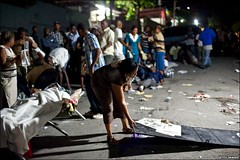
    Haiti suffered a destructive earthquake recently which killed several thousands and injured many citizens leaving its people in distress needing help very badly.

    Ghana made a donation of $3 million to the government and people of Haiti. The country also gave some cocoa products and medication.

    Some Ghanaian organizations including musicians are also making efforts to raise money and relief items to help the people of Haiti. A Ghanaian charity, the Caring Kids International has launched a fundraising effort to raise $1 million for Haiti. On Saturday a representative of the group, a student, Len Kessie arrived in Haiti as part of the group’s efforts.

    According to the released data the Guyana National Committee for Haiti Relief has raised close to $260 million.

    A report by the Stabroek News said after Guyana and Ghana, Canada was third, followed by Sweden, Estonia, Denmark, Spain, Finland, Norway and Australia. The US was ranked as the country which has pledged the most cash to Haiti with a total of $168 million followed by Canada $131 million, Spain $45 million, UK $32 million, France $31M million, Sweden $23 million, Germany $20 million, Brazil $15 million, Australia $14 million and China $13 million.

    Meanwhile, pressure is being mounted on Haiti’s creditors to write off the country’s debts.

    Source: Ghanabusiness.com
    Story from Myjoyonline.Com News:
    http://news.myjoyonline.com/news/201002/41803.asp
    Published: 2/8/2010

  • Claudia Jones: A Life of Struggle and Exile

    Claudia Jones, a Life in the Struggle

    By Clara West

    Claudia Jones was born Claudia Cumberbatch in 1915 in Port-of-Spain, Trinidad, a British colony. Though her family was well off, economic crisis after World War I forced the family to migrate to the Harlem section of New York City in 1922 to seek work. Jones’ mother, Sybil, worked in the garment industry to support the family, but died in 1927.

    Jones’ father, Charles, lost his job as an editor of a West Indian newspaper with the onset of the Great Depression and took meager-paying work as a building superintendent. Poverty and poor living conditions caused Claudia to contract tuberculosis in 1932 at the age of 17, which would haunt her the rest of her life.

    Claudia was a brilliant student, earning academic awards and high honors. But career choices for a Black immigrant woman were severely limited. Instead of going to college after high school, Jones took work in a laundry, then a factory, and a variety of other jobs in Harlem stores. Jones joined a drama group sponsored by the National Urban League and began to write a column called “Claudia Comments” for a Harlem periodical.

    In the mid-1930s, Jones joined with thousands of Harlemites to protest the injustice surrounding the case of the Scottsboro Nine. In 1931, nine Black youths had been accused of raping a white woman. Tried without adequate counsel and before an all-white jury, the nine youths were quickly convicted. The International Labor Defense, a civil rights legal group organized by the Communist Party, took over the case and tied the appeal process to a global campaign to free the nine and to expose the racist criminal justice system prevailing in the U.S.

    As a result of these experiences, Jones joined the Young Communist League in 1936. Soon after, Jones took a position on the staff of the Daily Worker, forerunner of today’s People’s Weekly World, the newspaper of the Communist Party. Jones became politically active in the youth movement, becoming the YCL’s Harlem organizer and an activist in both the National Negro Congress and the Southern Negro Youth Congress. Her eloquence as a writer and speaker, her effectiveness as an organizer and leader, and her understanding of Marxist theory speeded her advancement through the Party ranks.

    In the early 1940s, she served on the National Council of the YCL, headed its educational section, and sat on the editorial board of its periodical Weekly Review. In 1943, Jones took over as editor of Spotlight, the monthly journal of the American Youth for Democracy. Throughout this period, Jones’ political work focused on organizing unemployed youth in the struggle for jobs and equality. Jones worked closely with Harlem youth clubs, civil rights and religious groups, and immigrant organizations.

    In the summer of 1943, according to government documents, the FBI included Jones among those subversives they felt may be “considered for custodial detention.” Under FBI Director J. Edgar Hoover’s direct orders, bureaucratic processes to have Jones eventually detained were begun. It is important to note that when this order was handed down, the FBI appeared to know nothing of Jones’ birthplace and believed her to be a natural born U.S. citizen. The documents do not seem to reflect that Jones’ application for citizenship several years earlier had been denied because of her political beliefs. Orders for Jones’ detention at this point were drawn up purely because she was an important figure in the communist movement.

    Other than her political activities gathered by informants, FBI agents knew precious little about her except that she had “good” teeth, had a “neat appearance,” and attractive “dimples on her cheeks.” At this point, records indicate the FBI were unsure about her address, and, until several months later, they failed to record that she was married to Abraham Scholnick. By 1947, the FBI labeled Jones a “top functionary” and demanded “continuous, active, and vigorous investigation” of Jones from its informants and agents.

    In 1945, Jones was appointed “Negro Affairs” editor of the Daily Worker as that paper’s youngest staff person. That same year she helped found and was assigned to the National Negro Commission of the Communist Party by the Party’s National Committee. She worked closely with organizations such as the New Jersey Labor School, taught symposia at the Jefferson School for Social Research, and with inter-faith groups on the issue of civil rights and racial equality. In 1946, Jones helped organize a mass demonstration in Albany, New York to protest the slaying of two Black youths in Freeport, Long Island in New York.

    In the post war period, Jones’ published numerous articles criticizing the emerging Cold War mentality offered by the likes of Winston Churchill, rejected the anti-Semitism of the ultra right and the anti-Communists, called for end to lynching and terrorism against African Americans, and opposed the anti-labor Taft-Hartley law. In 1947, Jones accepted the position of chair of the National Women’s Commission of the Communist Party. It was during her tenure at this post that Jones first formulated the theory of the triple oppression of working-class women of color who represent a “vital link” to a “heightened sense of consciousness” of the need for a common, united struggle against oppression and exploitation.

    In her report to the Communist Party’s 1950 national convention, Jones asserted the need to “demonstrate that the economic, political and social demands of Negro women are not just ordinary demands, but special demands, flowing from special discrimination facing Negro women as women, as workers and as Negroes.” Jones also viewed racial oppression as a strong motivation and justification for proponents of U.S. imperialism and aggressive wars, making international solidarity, a strong peace movement, and a vigorous movement for equality more necessary than ever.

    In January 1948, Jones was arrested on immigration charges, despite the fact that the Immigration and Naturalization Service had told the FBI just a few months before that it did not view Jones as in violation of immigration law. Jones was held at Ellis Island and awaited deportation. The American Committee for the Protection of the Foreign Born came to her aid providing legal assistance and $1,000 bail. The Communist Party immediately launched a large campaign to prevent Jones’ deportation. Marches were held in Harlem and at federal offices downtown, and thousands of readers of the Daily Worker sent letters of protest to President Truman.

    With the able legal counsel from George Crockett, Jr., a prominent African American lawyer and future member of Congress from Detroit, Jones was not deported at this point. But in 1951, Jones was arrested again with several other Communist Party leaders, including James E. Jackson, Elizabeth Gurley Flynn, Simon Gerson, and others, for violating the Smith Act, which outlawed “advocating” the overthrow of the US government. Government agents and prosecutors ignored the fact that the Communist Party never taught or advocated such a thing. Jones was sentenced to a year in prison and ordered to pay a heavy fine. Meanwhile, Jones continued to advocate for equality. Working with the Congress of American Women, Jones protested the exclusion of women from juries, police brutality against people of color, and full employment for African American youth. Along with the Civil Rights Congress, she led protests against McCarthyism and the imprisonment of Communist Party leaders.

    Jones remained free while her case was under appeal until 1955. That year, the Supreme Court refused to hear her appeal, and she was sent to federal prison in West Virginia. While in prison, Jones suffered a heart attack and was weakened by a cardiovascular disease from which she would never fully recover.

    Released in October of 1955 after a campaign led by the Civil Rights Congress to have her sentence reduced, Jones was forced into exile to Britain. In Britain, Jones continued to advocate for racial equality and the liberation of Britain’s colonial possessions. She published the West Indian Gazette, founded London’s Caribbean Carnival (now called the Notting Hill Carnival), and traveled to the Soviet Union and China in the early 1960s.

    Jones may have even visited Viet Nam in her trip to the East. Diseases she had contracted while in U.S. prisons plagued her in her remaining years. In and out of hospitals, Jones finally succumbed to heart disease and died on Christmas Eve 1964. Her remains were buried near the grave of Karl Marx in London’s Highgate Cemetery.

    In an article that appeared in the journal Masses and Mainstream just months before her prison term would begin, Jones denounced the US government’s continued imprisonment of Communist Party leader Benjamin Davis. In Jones’ view, Davis had been arrested and imprisoned for the views he advocated, not simply his Party affiliation and certainly not for advocating the overthrow of the U.S. government. Davis had called for peace, workers’ rights, full equality for African Americans, all racial, ethnic, and national minorities and women, and for the rights of the poor and exploited.

    In a statement that would foreshadow her own future and even our own time, Jones wrote: “They’ve jailed Ben Davis. But his ideas are still abroad. It is Ben Davis himself who can best express his ideas from ladders on the streets of Harlem, in the broad arena of political and legislative struggle, in unity meetings with his people, Negro and white, and with white allies, and in the councils of his own Party. Until he can do so, the McCarthyites and the racists will have a strong weapon with which to spread fear and subversion.”

    In her autobiography, Communist Party leader Elizabeth Gurley Flynn published a poem title “Farewell to Claudia,” with whom she had spent several months in federal prison. In it she celebrated Jones’ role in the struggle and her new freedom:

    Nearer and nearer drew this day, dear comrade,
    When I from you must sadly part,
    Day after day, a dark foreboding sorrow,
    Crept through my anxious heart.

    No more to see you striding down the pathway,
    No more to see your smiling eyes and radiant face.
    No more to hear your gay and pealing laughter,
    No more encircled by your love, in this sad place.

    How I will miss you, words will fail to utter,
    I am alone, my thoughts unshared, these weary days,
    I feel bereft and empty, on this gray and dreary morning,
    Facing my lonely future, hemmed in by prison ways.

    Sometimes I feel you’ve never been in Alderson,
    So full of life, so detached from here you seem.
    So proud of walk, of talk, or work, of being,
    Your presence here is like a fading fevered dream.

    Yet as the sun shines now, through fog and darkness.
    I feel a sudden joy that you are gone,
    That once again you walk the streets of Harlem,
    That today for you at least, is Freedom’s dawn.

    I will be strong in our common faith, dear comrade,
    I will be self-sufficient, to our ideals firm and true,
    I will be strong to keep my mind and soul outside a prison,
    Encouraged and inspired by ever loving memories of you.

    CLAUDIA JONES: A life in exile

    by Marika Sherwood

    With Donald Hinds, Colin Prescod and the 1996 Claudia Jones Symposium
    published by Lawrence & Wishart, London, 1999 UK£13.99 US$22.50
    ISBN 0 85315 882 7

    Review by Kwesi Bacchra

    Friends, followers and aficionados of Claudia Jones, the mother of Carnival in Britain, have been waiting eagerly for this book since a 1996 London symposium on her life inspired the author, Marika Sherwood, to undertake an intensive period of research into the public records of Trinidad, Britain, USA and the former Soviet Union and into the archives of their various communist parties. The result is a fascinating story of the immense courage of one of the greatest Black women in the 20th century and her battles against racism, bureaucracy and sinister attempts by politicians and security forces of the East and West to silence her. And all the while she was having to cope with severe heart disease and the aftermath of TB contracted in the desperate poverty of a 1930s Harlem ghetto apartment.

    Claudia Jones was born in Belmont, Port-of-Spain, Trinidad, in 1915 but, following the loss of the family fortunes due to the post-war cocoa price crash, she was sent at the age of eight with her three sisters to join her parents in New York. Claudia’s mother died five years later and in the depression years her father was fortunate to obtain work as the janitor of a run down apartment block in Harlem. So wretched was their poverty that they could not afford the ‘graduation outfit’ to enable Claudia to receive the Roosevelt Award for Good Citizenship she had earned, and so damp was their apartment that her formal education was virtually ended in 1932 by the tuberculosis which irreparably damaged her lungs.

    The book too often assumes that the reader will have an intimate knowledge of important historical events and fails to set the political scene, forcing the interested reader to take time to search out the background elsewhere. For instance we are told that, persuaded by the spirited defence by the Communist Party of nine Negro boys falsely convicted of rape in 1935 in Scottsboro, Alabama, Claudia joined the Young Communist League where her talents as a writer and organiser were soon recognised. A more detailed description than that given in a short note of the celebrated kangaroo court trial of these unfortunate young men in the lynch-mob Deep South would have placed Claudia’s experiences as a young Black woman into context and revealed the oppressive conditions under which Black people could do little more than survive.

    Advocate for Peace “plotted violence”

    By 1948 Claudia had been elected to the National Committee of the Communist Party of USA, was the Editor for Negro Affairs on the party’s paper the Daily Worker and had been arrested for the first time under threat of deportation to Trinidad. A much sought after speaker and advocate for peace and civil rights, Claudia travelled widely in the United States but was arrested several times eventually being imprisoned for a year on trumped up charges of advocating the violent overthrow of the US government. While in prison her health deteriorated and in 1955 she was deported to England, much to the relief of the British colonial governor of Trinidad who had feared that she might “prove troublesome” had she been sent there. Once again the McCarran Act, under which Claudia was prosecuted in USA, and the relevance of Ellis Island, where she was imprisoned, should have been explained in the context of the vicious political persecution of large numbers of people contrary to their constitutional rights to freedom of thought and free speech.

    Looking forward to the support of the British Communist Party, Claudia arrived in London in December 1955, having been given an affectionate send off by 350 friends and comrades led by her closest friends, the great, Black singer/actor Paul Robeson and his wife Essie. Robeson was of course still being refused the right to travel by an American government which had the bare-faced cheek to criticise the USSR for behaving similarly towards its own dissident citizens. Claudia herself was to find that the British government was no less oppressive and antidemocratic as it refused her a full passport until 1962 in spite of representations from Trinidad’s first black prime minister, Dr Eric Williams, its white colonial governor having argued for restrictions on her freedom to travel to be maintained. The author’s difficulty in establishing the full facts is ominously clear as some forty years later the British authorities still refuse to release files on Claudia Jones for research purposes. What do they fear from this long dead Black woman?

    Racism of British Communists

    The reader is treated to an all too short but fascinating discussion of the warm correspondence her friends ‘back home’ in New York kept up with Claudia. It reveals just a glimpse of the dire financial condition she found herself in England and a flash of her grief for a lover she left behind. The deeply racist attitudes of the British Communist Party are also exposed in a well researched chapter on its relations with what they regarded as the “backward” peoples of the world. The CPGB view of this intelligent but sometimes feisty woman was clearly that, as a ‘coloured’ colonial subject of the British Empire, too much should not be expected of her. That racism is still evident today amongst old style British communists, most of whom now cower behind any other name.

    British communists, however, felt under an obligation to their American comrades to help Claudia obtain work but placed her mainly in positions which this highly competent woman found frustrating, while restricting her access to their publications and as a speaker on their platforms, even for visits of her close friend, Paul Robeson. In the USA Claudia had been used to a party which respected her, and the CPUSA had since its foundation in 1919 been the leading political group fighting for racial equality. In the absence of genuine fraternal warmth from her English party comrades, Claudia turned to the Caribbean community in London which welcomed her with affection and she soon became their undoubted leader.

    Race Riots in Britain

    In the late 1950s the social strains exerted on an English working class being forced to come to terms with the sham of their indoctrinated racial superiority culminated in attacks on Black people and rioting. In Notting Hill, west London, this resulted in the murder in May 1958 of a young Antiguan carpenter, Kelso Cochrane, by six white youths who have never been caught. This was a turning point in Black/White relations, and a committee under the chairmanship of Amy Ashwood Garvey, which included Claudia Jones, met at Trinidadian Dr (later Lord) David Pitt’s surgery to organise approaches to the government. However, the Tory government seemed more interested in pushing through racist immigration control laws and refusing to ratify the ILO Convention on Racial Discrimination. From that point until her untimely death six years later, Claudia became the foremost Black leader in Britain, sought after by progressive political leaders and acknowledged internationally as a fighter for peace.

    A Campaigning Black Newspaper

    The story of the West Indian Gazette, founded in 1958 and edited by Claudia Jones, is told by Donald Hinds, a Jamaican, who joined the paper as its first young roving reporter. Like all the other staff he was unpaid and survived by working as a bus conductor while studying part time for a Bachelor’s then a Master’s degree, becoming in due course a history teacher. He discusses the various activities of the paper which, in spite of its unceasing financial problems, was Claudia’s vanguard in her fight for a fair deal for Black people. Hinds traces the difficult relationship Claudia loyally maintained with her gentleman friend, the late Abhimanyu Manchanda, who seems to have been deeply disliked by almost everybody. This self-promoting communist from India argued with Claudia frequently about the way the paper was run and even threatened to sue her when he could not get his own way.

    Manchanda was not above spreading lies about colleagues especially if they had opposed him politically. One such was a well known left-wing writer who, according to a 1962 letter from Manchanda to Claudia while she was receiving medical attention in Moscow, had refused to sell the West Indian Gazette in the hairdressing salons of his Trinidadian mother because of its support for Nkrumah, Jagan and Castro. Havibg expressed his concern to the publishers that Hinds failed to check the veracity of the contents of Manchanda’s letter, they have promised him to include a note in any future revisions of the book refuting the allegations .

    “A People’s Art is the Genesis of their Freedom”

    In telling the story of how Claudia brought Carnival to Britain, Colin Prescod, son of Trinidadian actress Pearl Prescod, rehearses how in response to the 1958 riots Claudia began to organise Carnivals under the auspices of the West Indian Gazette, the prime purposes of which were “to present West Indian talent to the public, which at that time could not see Caribbean people as anything other than hewers of wood and drawers of water”. The programme for the first show in February 1959 clearly declared Claudia’s intentions, “A part of the proceeds of this brochure are to assist the payment of fines of coloured and white youths involved in the Notting Hill events”. For six years, these indoor Mardi Gras celebrations, which were to evolve into Notting Hill Carnival a few months after Claudia’s death, were organised in halls in west London under the slogan, “A people’s art is the genesis of their freedom”.

    These early indoor Carnival events drew a level of genuine support from famous artists, leading politicians and Commonwealth High Commissioners which was never to be seen in the outdoor Notting Hill Carnival. Rather, as the British authorities became concerned that they might not be able to control the ever growing numbers of ‘freeness’ loving Black people, they used every method they could to ban it or cut it down to the catatonic insipidity of an English garden fete. After decades of scheming opposition, in 1989 the English authorities succeeded in wrenching out of the hands of Black administrators control of the carnival they could not stop but, in doing so, they destroyed its spirit of Kaiso. Only Black people chosen by government are now allowed to run the heavily restricted Carnival of today.

    The book is completed with four chapters of selected transcripts of how participators in the 1996 Symposium remembered Claudia as friend, political activist, newspaper woman and carnivalist. It is copiously annotated, which will be a useful guide for future researchers, but it is a great pity that the publishers cut out so much of the manuscript, about one eighth, without consulting the author; and why did they refuse to publish any of the Carnival pictures? This reviewer challenged them to explain, but the anger they expressed at his questions would suggest that the charge that their actions were racist might well have been valid. However the author, an Hungarian brought up in Australia, must be commended on having produced an important historical work which will prove a valuable academic resource in future. Hopefully it will inspire students and writers to investigate the life of a great daughter of Trinidad further, and maybe one of them may be moved to write a biography with more appeal to the mass of the public.

  • Racism and Illegal Anglo-Saxon Sanctions Against Zimbabwe

    Racism and illegal Anglo-Saxon sanctions against Zim

    AFRICAN FOCUS By Tafataona P. Mahoso
    Zimbabwe Sunday Mail

    Professor Jonathan Moyo’s intervention in The Herald of February 4 2010 suggests that the sanctions issue and the imminent change in the Anglo-Saxon strategy on Zimbabwe will render MDC-T dispensable and disposable in the eyes of its white sponsors.

    This observation is confirmed by the white racist Commercial Farmers’ Union (CFU), according to The Financial Gazette story (February 4 to 10 2010) entitled “White farmers lose hope in unity government: MDC formations let us down, says CFU”.

    For the last 10 years, the MDC formations sought and enjoyed benefits from racists and racist institutions in the belief that Anglo-Saxon racism would spare them and only target the African liberation movement represented by Zanu-PF.

    MDC-T especially ignored hundreds of warnings about its ultimate disposability in the eyes of its sponsors. For example, the Zambian Sunday Post of February 2 2010 carried a feature article on the illegal Anglo-Saxon sanctions against Zimbabwe which in The Herald reprint (February 2 2010) was entitled UK, MDC and strangulation of Zim.

    Two paragraphs in that feature should strike any ideologically conscious African: The first represents the conclusion reached by Zambian Post journalists who lived in Zimbabwe under sanctions for years. This piece dealt with the myth that the sanctions target only 203 individuals: “To the contrary, the sanctions have not affected even one of 203 so-called targeted individuals (in the manner alleged by Anglo-Saxon powers or the MDC formations). After all, they, including President Mugabe, still travel to the US and EU. It is clear for all to see that the sanctions have affected the poor and ‘untargeted’. . . As at last year, three million people were estimated to have emigrated. The country recorded 90 percent unemployment levels.”

    The journalists also quoted British Foreign and Commonwealth Secretary David Miliband’s statement in the House of Commons on January 19 2010 which included the following: “A range of EU sanctions is in place . . . EU sanctions have helped to send a strong message, and . . . they have had a practical effect without hurting the Zimbabwean people, which would have been a sanction too far.”

    The view of Zambian journalists is based on three years of living in Zimbabwe under sanctions; it is also consistent with that of Sadc, the AU, NAM, Zanu-PF and the majority of the people of Zimbabwe.
    David Miliband’s view is the view of the Anglo-Saxon governments which have imposed and retained illegal sanctions on Zimbabwe; and it is the view still being peddled by the top leaders of MDC-T.

    Some readers may jump and ask why I should characterise the sanctions as racist and intended to preserve a racist power structure and race-based privilege? After all, the United States has an African-American president in the person of Barack Obama who has also sent an African-American ambassador to Zimbabwe and appointed another African-American as Assistant Secretary for African Affairs?

    George Bush’s Zidera is now Barack Obama’s Zidera? Such a question arises because white liberals have conveniently redefined racism to mean individual prejudices, often based on so-called “colour”, which definition causes many people to go around claiming to be “colour blind”.

    In Race and the Construction of the Dispensable Other, Professor Magubane makes it clear that Africans will always misunderstand racism if they do not learn and teach its 500-year history which began with the slave holocaust against Africa.

    Magubane in this regard chooses Fabian Eboussi Boulaga’s definition of racism which defines it as: “A generalised and definitive privileging of difference, whether real or imaginary, to the advantage of the accuser, and to the disadvantage of the victim, in order to justify one’s privileges or aggressiveness. It is easy to discern the characteristic elements of the racist attitude: real or imagined differences are evaluated positively or negatively, generalised, made enduring. In this way, they found an unlimited, indefeasible legitimacy for privilege or aggression. Racism’s essential mechanism is an ambiguous oscillation between the orders of biological ‘nature’ and culture, between real differences and differences that are purely imaginary.”

    And the key purpose is the accumulation and preservation of power which gives whites the right to privilege or aggression or both. Once Africans understand that they are dealing, not with individual prejudice or mere psychology, but with a strategic and institutionalised mechanism whose purpose is to yield advantages to the accuser and aggressor while compromising or eliminating the target or victim — then they will know that racism is a peculiar strategy for manipulating organised white power for the ultimate control and benefit of whites. It reserves its tactical right to treat Moise Tshombe, Afonso Dhlakama, Jonas Savimbi, Colin Powell or even Morgan Tsvangirai and Barack Obama as exceptional and privileged Africans as long as it is white power which allocates the rules of accumulation, exception and privilege. As long as white power remains intact, these “exceptional Africans” remain dispensable and disposable exceptions to the rules of white supremacy.

    When the Anglo-Saxons dumped definitions of race based on biblical myths and Christian heresies for so-called scientific definitions, they focused on physical and observable differences. Such physical and observable differences were used in such a way as to make Africans appear to be a separate species of humanity who should never have any human relations at all with white people.

    One of the founders of this bogus anthropology, Edward Long, went so far as to suggest that physical and observable differences in the Africans made them suitable as sexual partners of monkeys, donkeys, horses, dogs and orangutangs. Therefore white people should never have any human, let alone sexual, relations with Africans. That is what the slave-owning plantation masters taught their societies in order to maintain control based on class and race.

    But the same white masters did not have to adhere to such teachings all the time and everywhere. As Magubane documents:

    “While criticising white women for their lust for black men (in
    England and Jamaica), whom he spoke about with utter repugnance, Edward Long (elsewhere) boasted that there was no sin or shame in white men cohabiting with (or raping) their negresses (African women) whether free or slave, and that 19 out of every 20 white slave owners did so. Long absolved those who engaged in this practice by arguing . . . that habit and prevailing fashion reconciled such sexual escapades.”

    Magubane also quotes Scobie to the effect that “. . . as soon as a white man arrived in the West Indies, he was advised to set up an establishment with a black mistress and ‘if he hesitated, older residents’ laughed at him.” These African mistresses were accepted and used as disposable and dispensable exceptions to the rules of white supremacy precisely because their use served to bolster white power.

    Some of our readers may begin to wonder what this history has to do with the present situation in Zimbabwe and in the world. These examples show how racism has operated and survived for 500 years. Let us consider the following:

    –First, so-called integration, multi-racialism and multi-culturalism never actually abolish apartheid and racism. The Anglo-Saxon system of white supremacy has for 500 years relied on the principle of many are called but few are chosen as a way of maintaining white power especially in those cases where white numbers no longer add up to a dominant majority or in cases where resistance is too stiff to allow business as usual.

    –Second, Africans get confused about racism because they look for moral and ethical consistency in the white Anglo-Saxon system which leads them to complain about “double standards”. This observation about double standards is correct but it is besides the point, since it cannot lead to African emancipation. In fact, the white racist or white supremacist does not mind such an observation because he sees it as a statement of the silent African wish to be integrated into the white power system as an “exceptional African”.

    The African is seen as complaining thus: I really would love to belong to this system, even as a minority, if only the system could apply the same measure for human rights, equality, transparency, accountability and free and fair elections in Haiti and Afghanistan as in Zimbabwe; in Florida and Iraq as in Venezuela and Iran and so on.

    This tendency to admire the system except for its so-called double standards makes the African miss the fact that the lack of moral and ethical consistency serves the white man’s “power-consistency”.

    When the white numbers do not add up, a Muzorewa, or Tsvangirai or Obama can be allowed and should be allowed by white power to appear to have replaced white power completely, when in fact they are serving to prolong it in a situation of crisis which was supposed to bring white power to an end. The fact that more than 85 percent of all the white plantation owners in Jamaica raped or cohabited with African slave women was no proof of integration, liberalism or progressive civilisation, since the very same white men when necessary condemned and defamed the very same race of the same women as over-sexed bitches who slept with monkeys, horses and orangutangs! The fact that more than 85 percent of those white supremacists kept African mistresses and sired salve children by them was an expression of raw white power and not love or solidarity. Let us look at Zimbabwe.

    While the British persuaded the entire Anglo-Saxon axis to boycott Zimbabwe and impose illegal sanctions in the last 10 years, they were also building the biggest embassy building in Zimbabwe, competing with the People’s Republic of China which has a population of one and half billion people!

    While the US sought to convince the world that Zimbabwe was a violent and unsafe place, its embassy here was and is guarded by ordinary commercial security guards with sticks, unlike its embassies elsewhere in the world which are guarded by marines and sharp-shooting troops with machine guns placed at all corners and on roof tops. So, double standards are a constant and consistent feature of Anglo-Saxon racism. But too many Africans do not understand the full meaning of such behaviour. Here is one example: the Minister of State in Prime Minister Tsvangirai’s Office, Gorden Moyo, was reported in The Zimbabwe Independent insert for January 29 2010 as saying:

    “The British government had only picked on Prime Minister Tsvangirai as the one that could advise them on the issue of sanctions because of his democratic disposition . . . those (David Miliband’s) remarks were made about MDC-T because the British government, in their own judgment, believe the Prime Minister (Morgan Tsvangirai) is the conscience and the voice of reason in the inclusive Government, the true conscience of Zimbabwe . . . It is not our (MDC-T’s) problem that the (Anglo-Saxon) world seems to see the Prime Minister and his party as the voice of conscience.”

    That is exactly how the dispensable and disposable exception has been constructed and deployed by white power for 500 years!
    To end with Boulaga: The last 500 years of the Anglo-Saxon relationship with Africans has been characterised by the former’s “. . . use of race as a solution to the problem of (accumulating), distributing or preserving power, along with its justification, or to the problem of radical social evil, (which) is called racism. It provides a principle of categorical and moral hierarchies as well as absolute excuse.”

    Whether in Haiti, Jamaica, Iraq or Afghanistan . . . when the white Anglo-Saxon alleges certain evils and atrocities which other peoples are committing and which excuse his aggression and intervention . . . he is in fact describing his own evils, crimes and atrocities. This has been the case for 500 years. In the eyes of white supremacy, the real difference between Mugabe and Tsvangirai is not that Mugabe is a tyrant and Tsvangirai a democrat, as told by BBC.

    The real difference is that Mugabe understands and fights white supremacy and white power, while Tsvangirai has been sponsored to play the role of the dispensable exception which leaves the white power structure intact. And Gorden Moyo thinks such an ancient role for Tsvangirai is most flattering.

  • Zimbabwe Civil Servants Down Tools

    Civil servants down tools

    Herald Reporters

    Civil servants yesterday declared a nationwide strike demanding a minimum salary of US$630 per month.

    The strike is with immediate effect and comes after a meeting between civil servants’ representatives and the Government ended in deadlock yesterday evening.

    The civil service strike, which had already been declared before the meeting, is the first since the 1990s.

    Government yesterday offered a minimum salary of US$137 and a top proposal of US$248 backdated to January.

    Public Service Minister Eliphas Mukonoweshuro told unions that the extra allocation of US$4 million for all civil servants that he had offered on Tuesday was still on the table, but would this time be dished out immediately and not in April.

    He said the money would be used to give State employees US$8 and US$7 as housing and transport allowances respectively.

    After the meeting, Minister Mukonoweshuro said: “The new offer has been unveiled and I am informed by officers from my ministry that the staff associations said it is not sufficient.

    “Consultations are still going on and when we finish we will call for another meeting.”

    Addressing a joint rally that brought together unions representing different arms of the civil service in Harare yesterday, Zimbabwe Teachers’ Associa-tion president Mrs Tendai Chikore said they had given the Government sufficient time to address their grievances.

    She accused the Government of not showing commitment to resolving the crisis, saying dialogue had failed to break the impasse.

    “The issue of remuneration has been neglected by the employer for many years.

    “Government has been taking us for granted and now we are saying enough is enough,” said Mrs Chikore.

    She blasted the inclusive Government saying since its inception in February last year, the conditions for civil service had not improved despite several pledges from some high-ranking public office holders.

    During the decade of sanctions and economic hardships, civil servants never declared a strike but have now done so on the inclusive Government’s first anniversary.

    “Allow me to give a graphical picture of this: when the GNU was formed we rejoiced as we thought it was the political panacea to our socio-politico and economic challenges but today we wonder whether this was a correct premise,” added Mrs Chikore.

    Speaking a few hours after his swearing-in last year, Prime Minister Morgan Tsvangirai pledged massive salary increments for civil servants.

    He also told a rally in Manicaland that he held the “key” to unlock resources that would see civil servants’ working conditions improve.

    The promise has not been fulfilled to date with Finance Minister Tendai Biti on a number of occasions telling State employees that Treasury has no money and he cannot “squeeze water from a stone”.

    On Wednesday, soon after it became clear civil servants were ready to strike, Minister Biti said: “Government is not a productive sector . . . Our revenue levels remain depressed. We cannot draw water from a stone.”

    A day earlier, Minister Mukonowe-shuro had offered civil servants a modest April increment.

    Also addressing yesterday’s rally,

    Progressive Teachers’ Union of Zimbabwe secretary-general Raymond Majongwe said “desperate times called for desperate measures”.

    He said: “We have been neglected for so long and we have become a soft target for alternative saving options in Government spending.

    “Time has come for us to unite against our employer,” Mr Majongwe said.

    Teachers’ Union of Zimbabwe chief executive officer Mr Manuel Nyawo added: “With the little we are getting obviously we were not delivering quality service and so all civil servants countrywide, let’s work in unison and see how they will react.”

    Union leaders tried to persuade their members to avoid declaring a strike until after the meeting with Government.

    However, the gathered crowds demanded an immediate declaration.

    Public Service Association president Mrs Cecilia Alexander said: “The people have spoken . . . their patience has been overstretched and so we have to follow the wishes of the masses.”

    One of the civil servants told The Herald: “I don’t know if it is lack of seriousness or if these ministers are just insensitive.

    “Biti always brushes us off saying he has no money and Mukonoweshuro comes and offers us a pittance.

    “We are professionals and we demand to be treated as such.”

    In Harare scores of teachers immediately left their work stations.

    A survey conducted by The Herald showed that teachers reported for duty in the morning but later deserted classes and ordered pupils to return home

    “We were told to go back home when we reported for school in the morning,” said a pupil at Chinembiri Government Primary School in Highfield.

    “We were told to go home. Teachers are on strike,” said another pupil at Chengu Primary School in the same suburb.

    There was no sign of activity at Shiriyedenga Primary School in Glen Norah.

    Pupils at Kundai Primary School (Glen Norah) also said their teachers had gone on strike.

    The same situation prevailed at Budiriro 2 Primary School with a senior teacher saying his colleagues had reported for duty in the morning but later left.

    The headmaster of Glen View 2 Primary School, who identified himself as Mr Madzimure, was taking care of the pupils after teachers left their work stations.

    However, at Glen View 2 High School classes went on as normal.

    “All teachers reported for duty and conducted lessons,” said a Form 3 pupil.

    Teachers reported for duty and conducted lessons at Besa and Murape primary and secondary schools, which was the same for Madamombe, all in Seke.

    The teachers said they were unaware that their unions had called for a strike.

    “All our teachers reported for duty as usual today and conducted lessons,” said a Murape Secondary School pupil.

    The strike extended to the courts.

    At midday, the main entrances to the Supreme and the High Courts had been locked.

    However, the Master of the High Court, Mr Charles Nyatanga, was at work as were other senior officers.

    But it was business as usual at the Harare Civil Court along Fourth Street.

    The majority of civil servants are earning about US$160 monthly after Finance Minister Biti allocated US$600 million for their 2010 salaries budget.

  • Ivorians Voice Anger Amid Poll Delay

    Ivorians voice anger amid poll delay

    February 08 2010 at 12:27AM
    By Tim Cocks and Ange Aboa

    Bouake, Ivory Coast – President Laurent Gbagbo has promised Ivory Coast will hold elections this year but after years of missed deadlines, rows and political turmoil, many of his war-weary citizens no longer believe him.

    In Bouake, the main city of rebel-held Ivory Coast whose ruined buildings and potholed streets still bear witness to the war that carved the country in two, anger is growing.

    “These elections will never, ever happen,” said Diabi Bako, 30, a market trader selling books and shoulder bags in Bouake’s trash-strewn, crowded back streets.

    ‘He loses nothing by allowing obstacles to be created’
    “Even if they give us another date, it’ll just be the same thing. (Gbagbo) doesn’t want elections, because he might lose.”

    The polls were meant to happen in 2005, but bickering over rebel disarmament and voter registration have set back date after date.

    A row between Gbago and the electoral commission has made organising polls at the end of this month or in early March look all but impossible in the world’s top cocoa grower.

    Gbagbo last month accused the commission, which is led by an opposition politician, of trying to illegally add 430 000 disputed names to the voter list, although the commission says the leaked names were never intended to be on the final roll.

    Opposition challengers Alassane Ouattara and Henri Konan Bedie say Gbagbo is just stalling the process to extend his mandate, a charge he denies.

    “There’s a general lack of political will to allow the process to function smoothly,” said Richard Moncrief, West Africa Director of the International Crisis Group.

    “Gbagbo doesn’t quite know if he’ll win a fair election. He loses nothing by allowing obstacles to be created.” – Reuters

  • Ethiopian Troops Enter Somali Towns

    Ethiopian troops enter Somali towns

    By Mohamed Ahmed and Abdi Sheikh

    Mogadishu – Ethiopian troops in armoured vehicles crossed into two border towns in south central Somalia and seized the family of a man with links to al Shabaab insurgents, residents said on Sunday.

    They said troops went to El Barde and Yeed on Saturday seeking the man. Washington says al Shabaab is al-Qaeda’s proxy in the region and which has declared loyalty to al-Qaeda.

    “Ethiopian troops entered El Barde yesterday and arrested several people today. They were on-board armoured vehicles and were searching for a well-known local man who also works with al Shabaab,” a town resident, Hussein Ronow, told Reuters.

    “The man escaped, but they took with them his wife and three children. They also took the escaped man’s brother and family. The troops have now gone but I understand they are in the outskirts of the town.”

    Ethiopia invaded its Horn of Africa neighbour with tacit US support at the end of 2006 to oust an Islamist movement that was running the capital Mogadishu and much of the south.

    The Ethiopian military officially withdrew in January last year.

    Officials in Addis Ababa routinely deny that Ethiopian soldiers are on Somali soil, although they say they are providing security advice and training for Somalia’s forces.

    “Our enemies, the Ethiopians, have entered our towns and terrified residents. I understand they were searching for some of the residents,” Sheikh Aden Yare, head of al Shabaab’s administration in Bakool region, told Reuters.

    Somali government officials could not be immediately reached for comment.

    Somalia has not had an effective central government for close to two decades, spurring the rise of warlords, heavily armed criminal gangs and pirates who have been terrorising shipping off its coastline.

    The international community and neighbouring countries are worried about the wider threat posed by al Shabaab insurgents who control a large part of Somalia and are fighting its fragile government.

    For weeks, the government has been promising to launch an offensive against al Shabaab and Hizbul Islam, which both want to impose a harsh version of sharia law. – Reuters

    Reuters

    Published on the Web by IOL on 2010-02-07 22:27:32

  • Greens Congratulate Cynthia McKinney, Recipient of the ‘Peace Through Conscience’ Award

    Greens congratulate Cynthia McKinney, recipient of the ‘Peace through Conscience’ award from the Munich American Peace Committee

    GREEN PARTY OF THE UNITED STATES
    http://www.gp.org

    For Immediate Release:
    Thursday, February 4, 2010

    Contacts:
    Scott McLarty, Media Coordinator, 202-518-5624, cell 202-904-7614, [email protected]
    Starlene Rankin, Media Coordinator, 916-995-3805, [email protected]

    McKinney will accept the award at a peace conference in the same city as NATO’s Munich Security Conference, which will address the war on Afghanistan; Greens contrast McKinney’s ‘deserved’ award with Obama’s Nobel Peace Prize

    Green Party Speakers Bureau: Greens available to speak on peace, foreign policy, and other related issues: http://www.gp.org/speakers

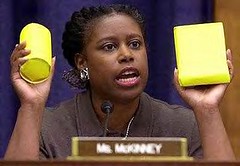
    WASHINGTON, DC — The Green Party of the United States congratulated former US Representative Cynthia McKinney after an announcement that she will receive the ‘Peace through Conscience’ award from the Munich American Peace Committee (MAPC / http://www.mapc-web.de). Ms. McKinney was the Green Party’s 2008 nominee for President of the United States.

    Ms. McKinney has been invited to participate in an International Peace Conference scheduled to take place in Munich, Germany, from February 6 to 7, coinciding with the Munich Security Conference, which will address NATO strategy towards Afghanistan, including President Obama’s planned troop escalation. A long-time proponent of abolishing NATO, Ms. McKinney is scheduled to speak on February 6 at a rally in protest of the NATO conference. After the rally, she will participate in the conference.

    MAPC will present the award to Cynthia McKinney during ceremonies of the Munich Peace Conference on the evening of February 6, 2010. The MAPC Peace Prize is normally awarded by the previous year’s winner. In Ms. McKinney’s case, the award will be presented by Andre Shepherd, a US Army Specialist who applied for asylum in Germany after objecting to the wars in Iraq.

    “I am humbled to be so recognized,” said Cynthia McKinney. “Clearly, the MAPC gave more thought to the significance of those whose struggle for peace is based on principle and an unshakeable commitment, despite the personal sacrificies required, than did the Nobel Peace Committee that rewarded our President for war.”

    Commenting on the decision to grant President Obama the 2009 Nobel Peace Prize, Ms. McKinney said, “In this way of thinking, peace is now war, lies are now truth, and ignorance is strength.”

    Ms. McKinney has urged Americans across Germany to gather in Munich and protest US and NATO war policies, noting that Germany has sent its own troops to Afghanistan. She will meet with American expatriates while in Munich.

    “We are very proud of Cynthia McKinney’s work for peace and human rights in the US and internationally,” said Dr. Justine McCabe, co-chair of the Green Party’s International Committee (http://www.gp.org/committees/intl). “Ms. McKinney has led the demand for withdrawal of US troops from Iraq and Afghanistan and strongly criticized President Obama’s announcement of a troop surge in Afghanistan. She has challenged NATO’s global expansion of military operations and demanded its abolition. Last June, after President Obama urged humanitarian aid for people in Gaza, Ms. McKinney and other Free Gaza activists tried to deliver medical and construction supplies and other relief. They were illegally intercepted by the Israeli navy in international waters and jailed, while the White House remained silent. Unlike our President, Cynthia McKinney deserves a peace prize.”

    In a presentation at the 8. Internationale Muenchner Friedenskonferenz (Eighth Munich International Peace Conference), Ms. McKinney will discuss chances for a civil and nonviolent US foreign policy, the need to end the US wars in Iraq and Afghanistan, US policies regarding Colombia and its neighbours, and efforts toward a nuclear-free world. She will pose the question “What should governments and the politicians at the Security Conference do to promote peace and justice?”

    MORE INFORMATION

    Green Party of the United States http://www.gp.org
    202-319-7191, 866-41GREEN

    Green candidate database and campaign information:
    http://www.gp.org/elections.shtml
    Green Party News Center http://www.gp.org/newscenter.shtml
    Green Party Speakers Bureau http://www.gp.org/speakers
    Green Party ballot access page http://www.gp.org/2008-elections
    Green Party Livestream Channel http://www.livestream.com/greenpartyus

    Green Pages: The official publication of record of the Green Party of the United States
    Fall 2009 issue now online
    http://gp.org/greenpages-blog

  • February is African History Month–An Essay by Norman (Otis) Richmond

    February is African Liberation Month

    Norman (Otis) Richmond
    Published Feb 4, 2010

    Black History Month must be updated for the 21st century. February should be the month that we re-double our struggle against imperialism and white supremacy, and for reparations for slavery, the slave trade and colonialism.

    This was the message that Gerald Horne, author of Black and Brown: African Americans and the Mexican Revolution, 1910-1920, left the audience with when he spoke at the beautiful Trane Studio in Toronto in February last year.

    While we joined back then in celebrating the 200th anniversary of the Haitian revolution, we must now fight for the return of Jean-Bertrand Aristide, the democratically elected president of the first African Republic. We must also stand with the people of Zimbabwe against British prime minister Tony Blair and Australian prime minister John Howard’s vicious attacks on President Robert Mugabe. The people of Zimbabwe should be allowed to resolve the contradictions among themselves. “Hands off Mugabe!” should become the cry of Africans at home and abroad, and all progressive people.

    During February – and every month – we should also call on boards of education in North America to put C.L.R. James’ classic book about the Haitian revolution, The Black Jacobins, in classrooms; demand the U.S. government return Grenada’s archives, stolen during the 1983 U.S. invasion; that boards of education in North America teach in the public schools about the global African presence and demand that reparations be paid to Africans at home and aboard for the enslavement and the colonization of the land and the people.

    Because of African people’s colonization, enslavement and dislocation, our people suffer what Harold Cruse, the author of The Crisis of The Negro Intellectual, calls historical discontinuity. We as a people still allow others to define our reality. I am concerned how others are attempting to define the month of February for their own purposes.

    McDonald’s calls it Black History Month; Harbourfront Centre refers to it as African Heritage Month. A growing minority prefers the term African Liberation Month.

    Richard B. Moore, the great Barbadian revolutionary and author of the book, The Name Negro: Its Origin and Evil Use, was clear on the issue of naming people and historical events. Moore always maintained that dogs and slaves are named by their masters; free people name themselves.

    Where did the idea of Black History Month come from? Did it drop from the skies? No. Was it conceived in the lab of a mad African scientist? Wrong again. Personally, I’m tired of hearing uninformed people remark: “They give us the coldest and shortest month of the year to celebrate Black History Month.”

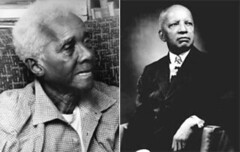
    First of all, they didn’t give us anything. The great African American historian Carter G. Woodson, his organization – the Association for the Study of Negro Life and History, which was formed in 1915 – and the masses of African people in the United States and Canada forced the system to recognize the contribution of Africans to the world. Woodson’s organization came into existence only 30 years after the Berlin Conference, where European colonial powers carved up Africa like a Thanksgiving turkey.

    Why did Woodson pick February as the time to commemorate Africa’s many gifts to humanity? Says John Henrik Clarke, in his book, Africans At the Crossroads: Notes For An African World Revolution: “Black History Week comes each year about the second Sunday in February, the objective being to select the week that will include both February 12, the birth of Abraham Lincoln, and February 14, the date Frederick Douglass calculated to have been his natal day. Sometimes the celebrations can include one day, in which case Douglass’ date gets preference.”

    February never was meant to be the only month African people reflected on their past. Clarke states: “The aim is not to enter upon one week’s study of (B)lack people’s place in history. Rather, the celebration should represent the culmination of a systematic study of Black people throughout the year. Initially, the observance consisted of public exercises emphasizing the salient facts brought to light by researchers and publications of the association during the first 11 years of its existence. The observance was widely supported among (B)lack Americans in schools, churches and clubs. Gradually, the movement found support among other ethnic groups and institutions in America and abroad.”

    We’ve come a long way since Woodson created Negro History Week in 1926. His classic book, The Mis-Education of the Negro (the inspiration for the title of singer Lauryn Hill’s The Mis-Education of Lauryn Hill), is a must read for anyone who wants to be on the right side of history.

    The time has come to update Woodson’s idea. As activist/scholar Abdul Akalimat, author of The African American Experience and Cyberspace, has pointed out: “Some of us have been promoting the notion that it was important to move from Negro to Black, from Week to Month and now it is time to move from general notion of history to the specific theme of Black history which is liberation.”

    The question is history for what? The answer is for liberation. Huge hamburger chains have appropriated images of the great kings and queens of Africa while holding up those who support the status quo in North America like “colon” and “condosleezie.” African people, like all people, have a right to determine who their friends are and who their enemies are.

    Norman (Otis) Richmond is based in Toronto, Canada. Richmond can be reached at [email protected].

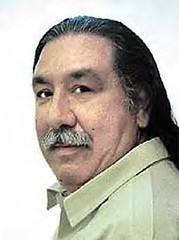
  • Former President of the Republic of New Afrika Imari Obadele. Obadele joined the ancestors on January 18, 2010 at the age of 79. He was eulogized in Atlanta, Ga.

    February 6, 2010

    Imari Obadele, Who Fought for Reparations, Dies at 79

    By DOUGLAS MARTIN

    Imari Obadele, a teacher and writer whose commitment to black empowerment fired a militant, sometimes violent effort to win reparations for descendants of slaves and to carve out, however quixotically, an African-American republic in the Deep South, died on Jan. 18 in Atlanta. He was 79.

    The cause was a stroke, said Johnita Scott, his former wife.

    Mr. Obadele (pronounced oh-ba-DEL-ee) was president of what he called the Republic of New Afrika, a country that existed as an idea. His provocative proposal was to have Alabama, Georgia, Louisiana, Mississippi and South Carolina — the heart of the old Confederacy — removed from the union and given over to black Americans.

    The demand drew the national news media’s attention. The New York Times called it “bizarre.”

    The proposal emerged in 1968, the year the Rev. Dr. Martin Luther King Jr. was assassinated. Black separatism was on the rise, with some advocates resurrecting 19th-century proposals for blacks to return to Africa.

    Mr. Obadele, who had despaired of integration into white society, demanded American land as payback for the centuries of abuse blacks had suffered. He also asked for billions of dollars and became a leader of the reparations movement.

    His organization saw itself as fighting a war of national liberation. It had a uniformed militia and engaged in gun battles with the police in Detroit and Jackson, Miss.; a police officer died in each.

    In the Jackson face-off — a raid on the group’s headquarters in 1971 — murder charges against Mr. Obadele were eventually dropped, thought eight members of his group were convicted. A year later, Mr. Obadele was convicted of conspiring to assault an F.B.I. officer and served more than five years of a 12-year sentence.

    Mr. Obadele and his supporters contended that they had become targets of the Federal Bureau of Investigation because of their political views, pointing to threats and raids by the police in the months before the Mississippi confrontation. Amnesty International in 1977 called Mr. Obadele a political prisoner, one of the first Americans so designated.

    The F.B.I. was clearly watching the group, as internal agency documents showed when they later became public. A 1968 agency memorandum urged that Mr. Obadele “be kept off the streets”; another called him one of America’s “most violence-prone black extremists.”

    In his critique of American race relations, Mr. Obadele, who had a doctorate in political science, argued that slaves should not have automatically been considered American citizens after their emancipation because they were offered no choice in the matter. If they had chosen not to become inferior members of a white society (the only possibility for them, as he saw it) or to move to another country, they should have been able to take land from the existing United States.

    Mr. Obadele also started the advocacy group National Coalition of Blacks for Reparations in America. Maulana Karenga, the black nationalist leader best known as the creator of Kwanzaa, the African-American celebration in December, wrote in 2008 in The Sentinel, a black newspaper in Los Angeles, that Mr. Obadele’s work for reparations was “essential.”

    Mr. Obadele’s views fueled a debate that had started during Reconstruction. In recent years, the issue has re-emerged among black intellectuals with the publication in 2000 of Randall Robinson’s book “The Debt: What America Owes to Blacks” and an effort by the Harvard law professor Charles J. Ogletree to assemble a top legal team to push for reparations.

    Mr. Obadele was born Richard Bullock Henry in Philadelphia on May 2, 1930, one of 12 children. He was an avid Boy Scout and as a young man helped his brother Milton start a civil rights organization that had W. E. B. Du Bois as a speaker. When Milton moved to Detroit, Richard followed.

    Richard worked there as a newspaper reporter and as a technical writer for the military. In 1963, he refused to let his son Freddy go to school and learn from textbooks he considered racist.

    Richard’s brother was a close friend of Malcolm X, and after Malcolm’s murder in 1965, Richard and Milton Henry helped form the Malcolm X Society to promote his views. Malcolm, in the face of continuing bloodshed in the civil rights struggle, had become increasingly frustrated with the philosophy of nonviolent resistance espoused by Dr. King and others. The Henry brothers began to embrace black separatism.

    In 1968, they and others formed the Republic of New Afrika and adopted African names; Milton became Gaidi Obadele. (Obadele is a Yoruba word meaning “the king arrives at home.”) At the group’s inaugural meeting in Detroit, about 200 delegates signed a declaration of independence and a “government in exile” was set up. Mr. Obadele was chosen information minister, and he published a handbook, “War in America.”

    A paramilitary unit, the Black Legion, to be clad in black uniforms with leopard-skin epaulettes, was formed.

    In March 1969, a gun battle erupted between police officers and the Black Legionnaires outside a Detroit church, leaving one officer dead. The militants were tried but not convicted in a trial that drew conflicting testimony about the confrontation.

    The Republic of New Afrika splintered the next year, with Milton, or Gaidi Obadele, saying he now rejected violence. Imari, who had now been elected president, led about 100 followers to Mississippi to build a black nation. After a deal to buy 18 acres from a farmer collapsed, the group established a headquarters in a house in Jackson.

    The local police and F.B.I. agents raided the house on Aug. 18, 1971. Some news reports said the purpose of the raid was to arrest a suspect in the Detroit killing. Others said the goal was to stop treasonous activities or to search for arms. Each side said the other fired first in a gun battle that left one officer dead.

    Though indicted in the killing, Mr. Obadele was found to have been 10 blocks away during the raid and charges were dropped. But in a related proceeding, he was convicted of conspiracy to assault a federal agent and was sent to prison.

    Mr. Obadele later earned a Ph.D. in political science from Temple University. He taught at several colleges, including Prairie View A&M University in Texas.

    He is survived by his daughters Marilyn Obadele and Vivian Gafford; his sons Imari II and Freddy Sterling Young; and numerous grandchildren and great-grandchildren.

    In 1983, Mr. Obadele was a defense witness in the trial of Cynthia Boston, a Republic of New Afrika member who was convicted in the holdup of a Brinks armored car in 1981. On the stand, he defended armed struggle.

    “We cannot tell somebody who is underground what to do,” he said. “If people feel that they must attack people who have been attacking and destroying and harming our people, then that is a decision they have to make.”

  • Euro Zone Seeks to Calm Greek Crisis Fears at G7

    Analysts’ View: Euro zone seeks to calm Greek crisis fears at G7

    (Reuters) – The euro zone’s top finance officials sought on Saturday to ease concerns about a deep budget crisis that has roiled financial markets and raised questions about the future of the single currency group.

    After a two-day meeting of finance ministers and central bankers from the G7 industrialized nations, European Central Bank President Jean-Claude Trichet said he was confident that Greece, which has been hit by the budget deficit crisis, would meet tough new belt-tightening targets.

    Here are some views from analysts and investors on the outcome of the G7 meeting:

    AXEL MERK, PRESIDENT AND PORTFOLIO MANAGER, MERK

    INVESTMENTS, PALO ALTO, CALIFORNIA:

    “Juncker’s comments suggest Europe will do something to help Greece. They have some structure in place like the European Investment Bank that can provide support. The problem in Europe is that there is not a single Treasury secretary that will coordinate that.

    Will the markets be reassured by their comments? I don’t know if that will help the market. But my hunch is that Europe has to play tough in the coming weeks because there’s a national strike coming up. Even with supposed European help, Greece will remain Greece. It’s going to continue to have a very difficult time raising revenues. It’s going to have a difficult time instituting reform. The issue is not going to go away overnight.”

    On Trichet’s comment that he is confident Greece will meet its deficit target: “I don’t why he would make such a statement. I don’t think anybody believes that. What Trichet has been saying is that Greece has to take these reforms seriously. And when you do these reforms, you’re gaining the confidence of the people and the investors.”

    ON GLOBAL COOPERATION TOWARD REGULATION REFORM

    SCOTT TALBOTT, FINANCIAL SERVICES ROUNDTABLE, WASHINGTON:

    “We urge the G7 to act in concert to modernize their respective regulatory structures…We agree with increased transparency and a global approach to financial modernization.”

    On banks contributing to the cost of government intervention to stabilize the financial system: “We agree that taxpayers should be made whole and financial institutions stand ready to pay their share of the costs. Any repayment should be timely and proportional.”

    (Reporting by Gertrude Chavez-Dreyfuss in New York and Kevin Drawbaugh in Washington; Editing by Chizu Nomiyama)

  • G7 Pledges to Cancel Haiti Debt

    G7 pledges to cancel Haiti debt

    The world’s leading industrialised nations have pledged to write off the debts that Haiti owes them, following a devastating earthquake last month.

    Canada’s finance minister announced at a summit in Iqaluit, northern Canada, that Group of Seven countries planned to cancel Haiti’s bilateral debts.

    Jim Flaherty said he would encourage international lenders to do the same.

    Bi- and multilateral lenders including international bodies cancelled some $1.2bn (£800m) of Haiti’s debt in 2009.

    “We are committed in the G7 to the forgiveness of debt, in fact all bilateral debt has been forgiven by G7 countries vis-a-vis Haiti,” Mr Flaherty said at the end of the two day gathering of finance ministers in the Arctic town.

    “The debt to multilateral institutions should be forgiven, and we will work with these institutions and other partners to make this happen as soon as possible,” he added.

    At least one million people are in need of aid in Haiti after the magnitude 7.0 earthquake which struck in mid-January, killing more than 200,000 people.

    The G7 group – which includes Canada, the US, UK, France, Germany, Italy and Japan – has been under pressure to help Haiti recover since the 12 January quake by cancelling the money owed by Haiti.

    Haiti was rated as the poorest nation in the western hemisphere even before the earthquake struck.

    Though exact figures are difficult to obtain, the exact amount owed bilaterally to G7 countries is believed to be quite small. Venezuela and Taiwan are Haiti’s other biggest bilateral creditors.

    Brown’s pledge

    In Iqaluit, British Prime Minister Gordon Brown hailed the pledge, saying: “It must be right that a nation buried in rubble must not also be buried in debt”.

    “The UK has already cancelled all debts owed to it by Haiti and I strongly welcome today’s G7 commitment to forgive Haiti’s remaining multilateral debt,” he added.

    “We will work with others to make sure this is delivered.”

    On Friday, the US voiced support for the plan to extend international debt relief for Haiti.

    “The earthquake in Haiti was a catastrophic setback to the Haitian people who are now facing tremendous emergency humanitarian and reconstruction needs, and meeting Haiti’s financing needs will require a massive multilateral effort,” said Treasury Secretary Timothy Geithner.

    He said the US would seek to reach an agreement for the funds owed to the multilateral donors, which include the Inter-American Development Bank, the International Fund for Agricultural Development and the International Development Association.

    Mr Geithner also echoed the call by the head of the International Monetary Fund (IMF), Dominique Strauss-Kahn, to provide full relief of the country’s outstanding debt to the body, including a $102m emergency loan approved in January.

    Last June, the international community agreed to cancel some $1.2bn (£800m) of the country’s total debt of $1.9bn owed to bi- and multilateral lenders including the IMF, World Bank and the US government, as part of a programme for heavily indebted poor countries.

    UK-based charity Oxfam has urged the writing off of about an additional $900m (£557m) that Haiti still owes to donor countries and institutions.

    Story from BBC NEWS:
    http://news.bbc.co.uk/go/pr/fr/-/2/hi/americas/8502567.stm
    Published: 2010/02/07 00:15:15 GMT

  • Dearborn Police Continuing Probe of FBI Fatal Shooting of Imam in Oct. 28 Raid

    Dearborn police continuing probe of FBI fatal shooting of Imam in Oct. 28 raid

    Tuesday, February 2, 2010
    By Sean Delaney, Press & Guide Newspapers

    DEARBORN — Imam Luqman Ameen Abdullah, a Muslim prayer leader accused of encouraging his followers to commit violence against the U.S. government, was shot 21 times during an FBI raid at a Dearborn warehouse last fall, according to an autopsy report released Monday.

    The autopsy was completed in November, but Dearborn police asked the Wayne County Medical Examiner’s Office to delay releasing the results until now because it could have jeopardized their investigation into the Oct. 28 shooting.

    The investigation is likely to take several more weeks, Dearborn Police Chief Ronald Haddad said Monday. His department plans to submit its report to the state Attorney General’s Office and let him decide whether to pursue any possible charges against FBI agents involved in the raid.

    “Whether it clears them, whether they’re prosecuted, it’ll be up to the next level,” Haddad said.

    FBI agents have said they were justified in shooting Abdullah because he had opened fire on the agents during a raid on a stolen-goods operation. An FBI dog was killed, prompting agents to return fire.

    The autopsy found Abdullah was hit twice in the chest, four times in the abdomen, twice in the groin, four times in the left hip and side, seven times in the left thigh, once in the scrotum and once in the back.

    Wayne County Medical Examiner Carl Schmidt said Abdullah, 53, died instantly.

    “At least half the gunshot wounds affected his vital organs,” Schmidt said, adding that he could not tell which specific bullet caused Abdullah’s death.

    Groups call incident targeted assassination

    Abayomi Azikiwe of the Michigan Emergency Committee against War and Injustice called Abdullah’s death “a targeted assassination.”

    “Whoever was responsible should be criminally prosecuted,” Azikiwe said. “After they shot him, they dumped him in a trailer like a dog.”

    According to the report, an investigator from the medical examiner’s office found Abdullah’s body on the floor of a semi-trailer full of flat-screen TVs with his wrists handcuffed behind his back.

    “It’s our understanding from talking with different sources that he was dead at the actual crime scene, said Dawud Walid, director of the Michigan chapter of the Council on American-Islamic Relations. “If that indeed is the case, then we fail to understand why he would have been handcuffed.”

    Walid, along with a coalition of community leaders and Abdullah’s supporters, have called for an independent investigation into the Oct. 28 shooting.

    “There are still a lot of questions left unanswered,” said Ron Scott, director of the Detroit Coalition Against Police Brutality. “All we know right now is (Abdullah’s) body was shot up like Swiss cheese. People need to remember: This was a religious leader who was killed.”

    Abdullah, also known as Christopher Thomas, was the imam of a small mosque in Detroit that served mostly black Muslims. The FBI claims Abdullah was also spreading a radical anti-government ideology that called for an Islamic state within the United States.

    Abdullah’s family denies allegations

    “My father was only trying to help his community,” said Abdullah’s son, Jamil Carswell. “There was absolutely no reason to shoot him 21 times.”

    The autopsy didn’t detail the types or sizes of bullets removed from Abdullah’s body. The report documents the recovery of another bullet fragment and numerous small metallic fragments recovered from the pelvis. There were no gunpowder burns on the body, indicating the fatal shots weren’t fired from point blank range.

    Schmidt said his medical tests didn’t include checking whether there was gunpowder residue on the victim’s hands. “That would be something the police would do,” he said.

    Although Abdullah was not shot in the head, he suffered cuts and abrasions on his face. Several lacerations were also found on his hands, although Schmidt said he could not confirm whether the wounds were caused by the FBI dog he allegedly killed.

    “There was no distinct pattern left as when you have a good imprint of a dog, that doesn’t mean that some of his lacerations could not have been do to a dog,” Schmidt said.

    The report concluded that the cause of Abdullah’s death was multiple gunshot wounds.

    Many groups and organizations have demanded an independent investigation, saying the fatal shooting seemed excessive.

    “The need to provide a thorough, rigorous and transparent accounting of the shooting here is plain,” Rep. John Conyers, D-Detroit, wrote in a Jan. 13 letter to U.S. Attorney General Eric Holder, asking that the Justice Department’s Civil Rights Division launch a probe into the shooting.

    Andrew Arena, special agent in charge of the Detroit FBI office, has said agents acted appropriately in the two-year investigation of Abdullah and during the raid. His office issued the following statement Monday regarding the autopsy results.

    “We’d like to ask people to wait for all the facts to come out to determine an overall reaction,” said FBI spokeswoman Sandra Berchtold. “The events that actually occurred in the warehouse have not been publicized.”

    At the time of the shooting, the FBI said six men were arrested in the raid on the warehouse and two Detroit homes. The men were arrested on charges alleging illegal possession of firearms, trafficking in stolen goods and altering vehicle identification numbers. Three other suspects were arrested days later.

    For more on this story, see future editions of the Press & Guide.

    The Associated Press contributed to this report.

    Contact Staff Writer Sean Delaney at (734) 246-2702 or [email protected].

    URL: http://www.pressandguide.com/articles/2010/02/02/news/doc4b68a13296fe6798495359.prt

  • China Calls For International Efforts to Settle the Situation Involving the ICC Actions Against Sudan

    China calls for int’l efforts to push Sudan issue settlement

    09:16, February 06, 2010

    China said Friday it would like to work with the international community to strive for proper settlement of the Sudan issue, with the precondition of ensuring peace and stability in the country.

    Foreign Ministry spokesman Ma Zhaoxu made the remarks when asked to comment on the decision by the appeals chamber of the International Criminal Court (ICC) which ordered a review of dropping genocide charges against Sudanese President Omar al-Bashir.

    “We do not expect such a move to further complicate the settlement of the Darfur issue and the peace between the North and South (of Sudan),” Ma said in a statement.

    “Such a move might disturb or even damage the cooperative atmosphere between concerned sides,” he said.

    The ICC appeals chamber judges on Wednesday ordered the ICC pre-trial judges to reconsider their decision not to charge al-Bashir with genocide, an allegation brought against him since 2008.

    Ma said, since then, China, along with some African and Arabic developing countries, as well as regional organizations such as the Africa Union and the League of Arab States, have clearly expressed their deep concern.

    Currently, the situation in Sudan is at a “complex, sensitive and critical” stage as the largest African country is to hold general elections in April and a referendum on self-determination for south Sudan is slated for January 2011, Ma said.

    “Concerned sides are also trying to pushing forward the Doha peace talks,” Ma said.

    On March 3, 2009, the ICC pre-trial court issued an arrest warrant against al-Bashir accusing him of war crimes and crimes against humanity.

    However, the ICC pre-trial chamber found there was insufficient evidence to charge al-Bashir with genocide, which pushed the ICC prosecutor Luis Moreno-Ocampo to appeal the decision on July 6, 2009.

    The Sudanese government rejects all ICC decisions and declared that it would not cooperate with the court because it did not have the jurisdiction allowing it to try Sudanese nationals outside the Sudanese territories.

    Source:Xinhua

  • Leonard Peltier and the Notorious Perversity of USA-style Justice

    I N T E R N A T I O N A L
    Havana. February 5, 2010

    Leonard Peltier and the notorious perversity of USA-style justice

    Elsa Claro

    TWO hundred years ago, the U.S. Supreme Court’s chief justice, John Marshall, ruled that the legal relationship of the land’s original inhabitants with the United States was not one of equals, but of “wardship,” given that it dealt with people “completely lacking in civil abilities.”

    When one native American said “Our work consists of procuring that those who come afterwards, the generations that have not yet been born, do not find a world worse than ours, but instead a better one…” he was focusing on what today is a serious problem stemming from foolish ambitions and the absence of an attitude of consternation regarding the planet. The idea is adjusted to other precepts, including the resentments unleashed among nations and destructive wars to dominate or steal the territory and resources of others.

    “Why do they take away by force what they can obtain with love? We are disarmed and ready to give them what they ask if they come as friends…” The idea seems so logical, basic and noble that not to proceed in that manner reveals a lack of moral authority, but the leaders of the United States during its first expansion did not ponder on such advanced possibilities, and acted the way in which they still do today: dispossessing those who were already there when they arrived, and subjecting them to the use of force or imbuing them with pessimism and impotence.

    The usurpation of the northern part of this continent could have been less degrading, even though it would always remain an unjust act, in violation of every law. It is difficult to believe, but in the 19th century, the U.S. Supreme Court decided that Indians were, by birth, “alien and dependent.” That is one of the reasons that it was included in the Constitution that indigenous peoples could not be represented in Congress.

    The nascent empire wanted to expand its geographical horizons and possess those places where there were resources to explore. That is also the source of the barbaric statement by Philip Sheridan: “The only good Indian is a dead Indian.”

    Whoever assumes that these are questions of the past is ignoring or giving short shrift to the racial discrimination that African Americans continue to suffer after so many projects with little progress, after years of struggle and the deaths of so many civil rights fighters. It is the same case, with its own particularities, of the Native Americans who live on reservations — like the Bantustans of South Africa — often on highly toxic land, and are insulted, ignored or questioned when they want to maintain their customs.

    “We do not have control over the resources on our reservation; we do not have economic power…. That is why a major controversy persists in the state of South Dakota about the problems and double standards of justice (one for “whites” and another for Indians) that we protested in the 1960s and ‘70s.”

    — Excerpt from an interview with Leonard Peltier by German political scientist Heinz Dietrich.

    Peltier is one of the longest-held prisoners in the United States, treated like one of the many “bad Indians” typically stereotyped in those “Western” flicks with which they made us believe and “demonstrated” the superiority of the criminals and the absence of virtue among the abused, who today continue to be the system’s evident victims.

    THE PELTIER CASE

    The FBI still has some 100,000 pages of secret information on Peltier. Independent investigations and those by international agencies, however, place the story of this Anishinabe/Lakota man in the 1970s — dubbed the “prodigious decade” by some because it gave the world significant changes in music and considerably broad social movements, including the anti-Vietnam War movement.

    Peltier was part of the American Indian Movement (AIM), a group committed to the progress of indigenous communities, based on the preservation of cultural pride. They were joined by the so-called traditionalists, tribes determined to maintain their customs, moral sovereignty and closeness to nature.

    Those expressions of emancipation were never smiled upon [by the U.S. authorities]. Several members of these communities were killed, and after suffering various abuses, they held a protest in 1973 in the town of Wounded Knee, on the Pine Ridge reservation. They were savagely repressed, and although the government promised to investigate complaints filed by the victims, the reservation’s conditions became worse, to the extent that the two protesting groups were unable to enact their ancestral ceremonies together.

    In the three years that followed, AIM members experienced many attacks, including their houses being burned down, and were the targets of shots fired from moving vehicles. They were injured or murdered. A campaign against them was organized depicting them as violent, lawless individuals in order to justify the attacks perpetrated by paramilitary forces with the consent of the FBI. According to diverse sources, at the time, it was the FBI that headed the fabrication of a fraudulent scheme to justify any action against these indigenous individuals.

    The growth of such a heavy, artificial environment led the traditionalists to call on the AIM activists to return to their reservations and protect them from constant, often deadly attacks. Those who responded to that plea for help included Leonard Peltier, who together with 12 others, camped out on the Jumping Bull Ranch, where a number of families were living. That’s where he was on June 26, 1975, when two FBI agents burst onto the scene in unmarked vehicles. They claimed they were following an Indian who had participated in an assault and robbery.

    Residents and police were soon involved in a shoot-out. The police asked for backup from special troops of the Bureau of Indian Affairs. They surrounded the farm, but Peltier was able to get a group of adolescents out to a safe place under the crossfire, which ended up wounding the two FBI agents. Peltier was accused of having finished them off as they lay injured.

    Immediately, three AIM leaders were blamed for this outcome: Dino Butler, Bob Robideau, and Leonard Peltier, along with Jimmy Eagle). Butler and Robideau were found innocent by the jury for having acted in self-defense, admitting that the atmosphere of alarm and unease prevailing on Pine Ridge explained why they would have shot back at police fire.

    The FBI’s reaction to this verdict was rage, and it withdrew charges against Jimmy Eagle (the man originally pursued by the FBI agents) so that the “full prosecutive weight of the Federal Government could be directed against Leonard Peltier,” according to memoranda that were accidentally leaked. This means they were capable of releasing from all guilt the individual who may have been, consciously or not, the trigger of these events, in order to transfer their complete revenge to the man who was a very prestigious and popular activist for his people. In order to guarantee the outcome they finally obtained, they ensured that Peltier was tried by a different judge than his comrades, one who stood out for the rigidity of his considerations.

    Peltier was extremely dubious about the quality of the trial to which he was to be subjected, based on the highly prejudiced approach and zeal for vendetta that was in the air in the region. He traveled to Canada, where he was arrested some months later. In order to extradite him to the United States, testimony against him was presented from a woman who despite not knowing him, claimed that she was his girlfriend and that she saw him shoot at the agents. She was not even present at the site during those events, and later retracted her statement, saying that her false testimony was given under threat and pressure from the FBI.

    In any case, Peltier was extradited, and a rigged trial took place in the United States (Fargo, North Dakota, 1977), after which Peltier was sentenced to a double life term in prison, despite expert testimony that the bullets that killed the two agents were not fired from his gun.

    According to Amnesty International, “after studying the case in depth for many years… different aspects continue to be of concern regarding the impartiality of the proceedings that led to his conviction, such as the evidence linking him to the point-blank shooting and the coercion of an alleged eyewitness.”

    Along with about 50 U.S. congress members and several members of the Canadian Parliament, Amnesty International joined with other groups demanding a new trial for Peltier, this time an impartial one, given that it is clear that the defendant suffered manipulation in the case brought against him for his extradition in 1976, for which the prosecution has retained “potentially key” ballistic evidence that “could have helped defend Leonard Peltier.”

    A SCAPEGOAT?

    Some hold that Peltier served as an element of contention against a movement that was taking shape and becoming strong at a time when the government thought it had squelched all indigenous attempts at demanding their rights. The government was particularly desirous of putting a stop to indigenous resistance because of the development of mega-energy projects on lands allocated to tribes via signed treaties.

    A large number of the treaties reached with tribal chiefs — when a fatally dissolute level of decorum still existed — were broken at different times and in their overwhelming majority. By the time the abovementioned events occurred, the idea was to repeat these violations of promises made, but it encountered the opposition of new generations united with their elders, convinced that living in harmony with nature was better than destroying it, and considering that there was no reason to cede on rights that had already been considerably diminished, and that it was preferable to defend them no matter what the cost.

    Over time, it has been learned that the Pine Ridge Reservation in South Dakota was in reality selected for a “peacekeeping” paramilitary operation by the FBI, which would have taken all of the counterinsurgency war methods it has implemented in various countries, to apply them against nonconformist Indians at a time when various protest movements of oppressed minorities were converging in the country, standing up for their rights.

    By the mid-1970s, some 60 members of the AIM or its followers had been killed. Given that the previous “warnings” carried out did not have the desired results, they went on to escalate the attacks and injustice. The context of violence was of such magnitude that the leaders and elders of the Oglala tribe created the Jumping Bull encampment — where the fatal events later occurred — to protect their families from the deadly police and paramilitary operations.

    The fact that the people were capable of organizing and resisting was intolerable to the “white authorities,” who sought a pretext and a scapegoat to put a stop to indigenous attempts at resistance. They had Peltier in their sights because of his popularity. Later, he became the right man to be used in their plan of containment. Asked why he had not been given another trial, he said, “They know that if I get a new trial, they have a snowball’s chance in hell of winning.”

    Before his case was sent to the Federal Parole Commission, he was beaten in jail, as a way of trying to dampen his activism in prison for noble causes. It was also meant to lay the bases for putting him in solitary confinement, alleging that he was centrally responsible for the disorder, and depicting him as an inveterate rebel after three decades of attempting to wear him down. That was how he was to appear before the board that was to evaluate him, in a position that was not at all advantageous.

    In July 2009 he was assessed for parole, always denied. His lawyer spoke in favor of parole, citing his good conduct and the promise of the Turtle Mountain tribe to take him into their fold.

    The parole denial was based on the idea that releasing him would “disregard the seriousness of his offenses and would promote disrespect for the law.” The commission ignored the fact that one of the former defendants had admitted shortly before that he had fired the shots that killed the agents.

    This means that not even the conclusive evidence of that spontaneous confession was enough for those who used and maintain the opinion that they are making an “example” out of him, so that others do not dare to be defiant again.

    It is shameful to know that Peltier’s next parole hearing is in 14 (!) years. The commissioners know that Peltier is suffering from several serious conditions, and is receiving poor medical attention, meaning they could become worse or even cause his death while incarcerated.

    Prominent individuals from the arts, the law and politics, as well as ordinary citizens from many countries, are demanding clemency for such a glaringly twisted case, taken to an extreme of notorious perversity.

    At this time, a letter to Barack Obama is circulating with the request that Peltier’s case be reviewed, or freedom should be given to a man who never should have been subject to such a prolonged and illegal sentence. There are no great hopes that this president, among all the others who were similarly petitioned, will be the one to absolve him.

  • Guinea Aide Blamed For Massacre

    Guinea aide blamed for massacre

    A renegade Guinean soldier was solely responsible for massacring protesters at a rally last September, an inquiry backed by the ruling junta has said.

    The probe blamed Lt Aboubakar Toumba Diakite – a soldier who shot and wounded junta leader Capt Moussa Dadis Camara last December.

    It cleared Capt Camara of involvement – contradicting the findings of an earlier UN inquiry.

    Capt Camara is still recovering from the shooting in Burkina Faso.

    The BBC’s West Africa correspondent Caspar Leighton says with so many other inquiries arriving at conclusions contrary to this one, many people will not take it seriously.

    Leader absolved

    Human rights groups say that at least 157 activists were killed and dozens of women raped during a pro-democracy rally at football stadium on 28 September last year.

    ANALYSIS

    Caspar Leighton BBC News With so much recorded testimony that runs counter to this latest assessment, it is unlikely that many will take it too seriously.

    The United Nations sent an investigation team which said more than 150 people were killed, with dozens raped and assaulted. It judged that Capt Camara and two others – Lt Diakite and Major Moussa Tiegboro Camara – bore responsibility for the killings.

    The Guinean military commission says of the three, only Lt Diakite is responsible, along with an unidentified number of the presidential guard and others. The commission says 63 people died, far fewer than other Guinean and international findings.

    Lt Diakite, in hiding since the shooting, previously told French radio that he shot Capt Camara because he feared the military leader was trying to blame him for the massacre.

    Prosecutor Siriman Kouyate, head of the Guinean commission of inquiry, laid the blame squarely on the renegade soldier.

    “Lt Toumba Diakite and a group of red berets from the presidential guard were responsible for the rapes, murders, injuries and mysterious disappearance of bodies,” he said.

    Mr Kouyate said Lt Diakite should face justice because he had disobeyed orders that the army should stay in the barracks.

    He added that Capt Camara was “responsible for nothing”.

    “It has been established that the president did not go to the stadium.”

    The Guinean commission said that 58 people had died at the stadium and another five in hospital, according to the AFP news agency.

    The commission also called for an amnesty for the opposition leaders who called for the pro-democracy protest.

    These include veteran opposition leader Jean-Marie Dore, who was last month sworn in as prime minister, tasked with steering the country towards an election in six months’ time.

    Story from BBC NEWS:
    http://news.bbc.co.uk/go/pr/fr/-/2/hi/africa/8493875.stm
    Published: 2010/02/02 18:58:01 GMT

  • Bank of America Sued Over Merrill

    Bank of America sued over Merrill

    Legal action has begun against Bank of America and its former bosses, accusing them of duping investors and taxpayers during the takeover of Merrill Lynch.

    The defendants are accused of intentionally withholding details of huge losses Merrill was suffering.

    New York state officials have filed the action against the bank, former chief executive Kenneth Lewis and former chief financial officer Joseph Price.

    Bank of America said the charges were “regrettable” and lacked merit.

    “The evidence demonstrates that Bank of America and its executives, including Ken Lewis and Joe Price, at all times acted in good faith and consistent with their legal and fiduciary obligations,” a spokesman said.

    He added that US financial watchdog the Securities and Exchange Commission (SEC) had access to the same evidence as New York state officials and had found no basis to bring charges.

    After the Merrill bailout, Bank of America received $45bn (£28.5bn) in government funds.

    ‘Arrogant scheme’

    According to the lawsuit, the accused withheld the full details of Merrill’s financial strife in order that its shareholders would approve the merger.

    They had then “manipulated” the federal government by claiming they would back out of the deal unless US bailout funds were received, it was alleged.

    “This merger is a classic example of how the actions of our nation’s largest financial institutions led to the near-collapse of our financial system,” said New York State attorney general Andrew Cuomo.

    “Bank of America, through its top management, engaged in a concerted effort to deceive shareholders and American taxpayers at large.

    “This was an arrogant scheme hatched by the bank’s top executives who believed they could play by their own set of rules. In the end, they committed an enormous fraud and American taxpayers ended up paying billions for Bank of America’s misdeeds.”

    Earlier on Thursday, the SEC said Bank of America had agreed to pay $150m to settle complaints over its handling of the merger.

    Last month Bank of America reported a net loss of $194m in the last three months of 2009. That compared with a loss of $1.8bn in the same period a year earlier.

    It added that it had repaid the $45bn government bailout money it had received but, taking the impact of this into account, it made a loss of $5.2bn.

    Story from BBC NEWS:
    http://news.bbc.co.uk/go/pr/fr/-/2/hi/business/8499281.stm
    Published: 2010/02/04 18:07:58 GMT

  • Big Banks Are Feeding Like Parasites on the Government’s Money

    Big Banks Are Feeding Like Parasites on the Govt.’s Money

    By Dean Baker, Boston Review
    February 4, 2010
    http://www.alternet.org/story/145511/

    Wall Street bankers, along with the rest of the players in the financial industry, like to think of themselves as swashbuckling capitalists. They battle cutthroat competition with one hand and oppressive government bureaucracy with the other. In reality, the financial industry is deeply dependent on the government. Far from the rugged, go-it-alone types they wish they were, they are more like well-dressed, coddled adolescents. And this is true in good times and bad.

    The industry’s dependency takes five main forms:

    -an explicit safety net provided by government deposit insurance;

    -an implicit safety net provided by “too big to fail”;

    * a special privilege of being the only untaxed casino;

    * an open invitation to raid state and local governments for fees;

    * a right to change contract terms after the fact.

    These dependencies are entrenched, and, despite loud protests to the contrary, the removal of government from the financial sector is not really on the agenda. The issue up for debate is not the virtues of the free market versus government regulation. The industry wants government regulation, just not in a way that curtails its profits.

    In thinking about regulation, then, we need a fuller appreciation of the industry’s dependency on government. This will not tell us what to do, but it should open the door to a debate about regulatory reform that takes up the real question: will regulation be structured in a way that advances the public interest or in a way that allows the financial sector to profit at society’s expense?

    Perhaps the most important financial reform to come out of the Great Depression was federal deposit insurance under the supervision of the Federal Deposit Insurance Corporation (FDIC). The FDIC largely protects banks from the sort of runs that led to the bank failures of that era.

    Banks typically keep only a small portion of their customers’ deposits on reserve, and, even then, lend most of it at interest. This practice is reasonable because customers are unlikely to want all of their money at the same time. In fact, there may be as much money deposited as withdrawn on any given day.

    But if depositors become concerned about the health of the bank, they may rush to pull money out. Those at the bank first will be able to get their money. Later arrivals will be out of luck, as the bank’s reserves will be depleted. Thus, before federal deposit insurance, runs were a logical response to the fear of bank failure.

    The FDIC completely changes the logic. By insuring the bank’s deposits, the FDIC eliminates the incentive for depositors to rush to withdraw their money. They know that their funds (up to the insured level) are safe.

    The FDIC lent an enormous amount of stability to the system, and the benefits are shared by depositors and banks alike. However, government insurance means that the market does not offer the normal discipline against risky behavior. Typically, a bank making high-risk loans must offer high interest rates in order to assuage wary depositors. But if the bank has government insurance, depositors need not worry about losing their money thanks to others’ unpaid loans.

    Thus, insurance allows the bank to attract deposits at relatively low interest rates and still incur high risk on loans. If a bank is in financial trouble and has little of its own capital at stake, the incentive to take large risks is even greater. And its customers, who are covered by deposit insurance, have no reason to be concerned about the soundness of a bank, even if the bank ends up suffering large losses and going out of business.

    The government, as the insurer, must actively regulate insured institutions so that they do not take advantage of FDIC protection. The response to the Savings and Loans (S&Ls) crisis in the 1980s is a textbook example of what can happen when the government ignores this regulatory responsibility. Heading into that decade, thousands of S&Ls were essentially insolvent.

    Instead of shutting them down-the customary response to insolvent banks-the Reagan administration encouraged them to earn their way back to solvency. Many, logically, took large risks with insured deposits. In fact, they flaunted their access to deposit insurance by offering higher interest than their competitors in order to attract more money and grow more quickly. As a result, losses more than quadrupled over the decade, eventually costing taxpayers more than $120 billion ($190 billion in current dollars).

    The story of the S&Ls is not a free-market one. Banks were exploiting the deposit insurance system. The lesson is simple: if the government insures the bank’s deposits, then it must also regulate the bank. Where the government grants insurance without oversight, banks take big risks at taxpayers’ expense.

    In addition to monitoring risk-taking at FDIC-insured banks, the government is required to enforce minimum capital-reserve requirements. Together, these safeguards ensure that the banks’ shareholders will suffer the first losses. Only then will shareholders try to prevent the bank from making overly risky bets.

    Maintaining a minimum level of capital is a difficult regulatory task. At any given time, banks have a wide variety of loans on their books. Some of these loans may be worth only a fraction of their original value, as is the case with many commercial and residential mortgages today. In principle, banks should mark these loans down to their true value so that their books represent ongoing profitability accurately and balance sheets reflect true net worth.

    However, banks have little incentive to write down a bad loan before absolutely necessary-showing a loss on their books is bad for stock prices and executive bonuses. Delaying write-downs also allows banks to misrepresent their capital position. If a bank has losses equal to 10 percent of its assets (the standard capital reserve requirement), then it has no real capital, since an accurate accounting would show that the loan losses wipe out their capital.

    Only if regulators oversee banks’ behavior on an ongoing basis will banks disclose the true value of their bad loans. Otherwise, they will have too much incentive to hide their financial condition.

    An insured bank must be a regulated bank; there is no way around this. An unregulated bank with government insurance has a license to rip off taxpayers, and unfortunately many banks have done precisely that. In particular, recent rule changes that allow banks to use “fair value” accounting instead of market accounting in assessing the value of their assets enable banks to bury large losses.

    Some argue that because deposit insurance is paid for by banks it is not a subsidy and thus does not require oversight. This is true in normal times, although not in the extreme cases like the S&L crisis, and quite likely will not prove to be completely true in the current crisis. But even in normal times, when FDIC insurance does not act as a subsidy, the system needs regulation. If the government backed off regulation while still offering insurance, as it did with the S&Ls and is doing to some extent now in allowing fair-value accounting, the losses and therefore the cost of the insurance would skyrocket. The low-risk actors in the industry would bear the costs of the risky behavior of others and, in the end, the system of insurance become unworkable, as happened with the S&Ls.

    Even if deposit insurance is privately provided, as is the case in some countries, government involvement is still necessary. Any insurance system that covers a large share of a country’s deposits has the implicit backing of the national government in the event of a crisis. No one would believe that the government would let a private insurer collapse if the simultaneous failure of many banks left it insolvent. The private insurer would be acting with an implicit government guarantee. This guarantee would entail regulation in order to prevent abuse.

    FDIC offers banks an explicit safety net. Several large institutions also enjoy an implicit safety net because they are “too big to fail” (TBTF). This safety net allows them to borrow money (other than insured deposits) at a lower interest rate than would otherwise be the case because lenders know that the government will back up the institutions’ loans if necessary.

    The implicit TBTF guarantee has become explicit in the current crisis: the government stepped in to back up debts to creditors when Bear Stearns, Fannie Mae, Freddie Mac, and AIG became insolvent. The government had no legal obligation to honor any of the debts incurred by these companies. It justified the intervention by claiming that failure to act would cause serious damage to the financial system and the economy.

    The TBTF guarantee extends well beyond this list of failed institutions. Citigroup and Bank of America would almost certainly have faced insolvency had it not been for the extraordinary measures taken by the government to support them in late 2008 and early 2009. Their status even now is questionable, with both banks operating with government guarantees for hundreds of billions of dollars of bad assets. The 2008 Troubled Asset Relief Program (TARP), coupled with access to a special FDIC loan-guarantee program and Federal Reserve lending facilities, kept several other large and troubled financial institutions alive through the worst months of the financial crisis.

    In other words, the implicit TBTF guarantee is real. After it allowed the huge investment bank Lehman Brothers to collapse, the government virtually promised that it would not allow another major financial institution to fail. Other large financial institutions took the promise seriously.

    What is wrong with that? Because lenders knew that their loans to Goldman Sachs, Citigroup, Morgan Stanley, and other giants were effectively backed by the government, they offered these companies substantially lower interest rates than they offered smaller banks. While large financial institutions are always able to get funds at a somewhat lower cost than smaller institutions, the gap in the cost of funds between small and large banks grew by half a percentage point following the collapse of Lehman. Multiplied by the assets of these institutions, the increase amounts to a $33 billion-a-year subsidy at the expense of small institutions.

    There is no reason to allow banks to reach the size of the TBTF institutions. Research on size and efficiency in the banking sector usually shows that all economies of scale can be fully realized at around $50 billion in assets-Bank of America and J.P. Morgan Chase have more than $2 trillion. That banks in the United States and elsewhere have grown so large may be an indication of the benefits of greater market power, political power, and, of course, the advantage of the TBTF subsidy itself.

    Subsidizing the largest financial institutions to the detriment of their smaller competitors is not a free-market policy. Two options could restore the balance: break up the large banks so that they are not recognized as TBTF, or impose regulatory penalties, such as larger reserve requirements, that roughly offset the benefits of the TBTF guarantee. If some banks voluntarily break themselves up into smaller units to avoid the penalty, then we will know that the penalties are comparable in size to the implicit subsidy of TBTF.

    Suppose the state of Nevada waived the 6.75 percent tax on gambling revenues for one casino in Las Vegas. That casino could promise better odds than its competitors and still have a larger profit margin. Wall Street financial institutions essentially enjoy this kind of advantage: they can profit from gambling opportunities unencumbered by the taxes paid on other forms of gambling.
    Not all investment is gambling, of course, but most short-term trades, which comprise the vast majority of trading volume, are comparable. The payoff on a bet on an oil future or credit default swap is, to a large extent, random. Research may help Wall Street traders make informed bets, but it helps serious gamblers at the horse races too. A gambler who knows the stakes is still a gambler. Yet the racetrack gambler will pay 3-6 percent in taxes on her bet, and the Wall Street gambler pays none.

    I use the term “gambling” seriously. Gambling may have a financial upside for the gambler, but it provides no benefit to the economy. If the gambler is successful– as a skilled poker player may be– he is simply taking wealth from others, not adding wealth to the economy. Short-term financial gains are similar.

    A long-term investor, however, can rightfully claim that he is providing capital to businesses that increase societal wealth. And a successful long-term investor, such as Warren Buffet, can point to many cases in which his capital allowed companies to grow. These companies presumably provide goods and services valued by society and create jobs. Of course, there are cases in which a company’s growth may not be beneficial to society on the whole, but the point remains that long-term investment has the potential to benefit the economy by creating wealth.

    Short-term speculation is unlikely to have this effect. For example, if a speculator correctly bets that oil futures will rise in price, she will have captured some of the gain that would have otherwise gone to the producer, which could have sold its product at a higher price. The speculator will probably also have imposed some cost on the purchaser (either an end user or another speculator) who will likely have to pay a higher price in the future than if the speculator had not been an actor in the market.

    Speculators can help stabilize markets by forcing prices to adjust more quickly. But “noise traders,” who act largely on rumors and focus on anticipating the behavior of other actors rather than fundamentals of supply and demand, impose a cost to the economy by moving prices away from the levels that the fundamentals suggest, thereby destabilizing markets. They make markets give out the wrong signals. If ungrounded speculation drives up a price for oil futures, oil producers might initiate drilling in areas where they will not be able to cover the extraction cost when oil prices return to a non-inflated level. The oil companies will incur losses, and the economy as a whole will suffer a waste of resources.

    Distinguishing noise trading from trades based on an assessment of fundamentals is not simple. But, as a general rule, short-term trades fall into the noise trading category more often than do longer-term trades.

    If the government sought to level the playing field across casinos, it could impose a modest tax on each financial transaction. Such a tax would disproportionately affect noise trading, since short-term traders make more transactions than long-term investors. And it could lead to more efficient markets. Not only would fewer resources be wasted in carrying through the financial transactions that support the real economy, but we might see prices that more closely reflect the fundamentals of the market.

    Despite being promoted by some of the world’s most prominent economists, such as Nobel laureates James Tobin and Joseph Stiglitz, financial-transaction taxes have not been put on the agenda in Congress. Tax proposals have been raised far more often since the fall 2008 bailout, but the industry has moved aggressively to squash any serious discussion of the per-transaction tax.

    State and local governments need a wide variety of financial services. The big actors in the industry recognize this fact and promote their products to state and local government officials who often have little understanding of the services they are buying.

    In many ways the marketing of financial services parallels the defense-procurement process: contracts and bidding are often shrouded in secrecy, and products and services are rarely standardized, so prices cannot be easily compared. In this environment political connections are extremely valuable-they often determine whose bid wins a contract.

    Just as defense contractors spend large amounts of money on lobbyists with close ties to key members of Congress or the military, the financial industry spends large amounts of money developing close ties to key officials in state and local governments. These governments hire financial-sector firms for pension-fund management, financing long-term investments such as school and road construction, and even managing the flow of spending and tax receipts. All of these subcontracted activities offer the financial industry large opportunities for profit and breed corruption.

    The current value of state and local pension funds is $2.4 trillion, with management fees and transaction costs averaging 1-2 percent a year. The revenue generated from these funds for the financial industry is in the range of $25 billion to $50 billion a year-most of it a gift from taxpayers. Pension officials could simply put their money in a large index fund, such as Vanguard, whose mix of stocks closely tracks the overall stock market. The administrative cost of keeping money in Vanguard’s main index funds is typically about 0.15 percent annually; the difference in cost for state and local governments in managing their money would be $20 to $45 billion a year.

    The industry has also earned substantial fees selling state and local governments complex financial products inappropriate for public buyers. Typically, if a state or local government wants to finance a major project, it issues a long-term bond, locking in an interest rate for perhaps 10-30 years. This way it can gradually accumulate the money needed to repay its debt. Over the last decade, however, several major investment banks made large sums selling “auction-rate securities” to these governments.

    Instead of locking in a long-term interest rate, an auction-rate security breaks up the longer period into a series of short-term loans, typically 30-90 days in duration. At the end of each period, the bond is effectively refinanced for another period. The logic is that the short-term interest rate is generally lower than the long-term interest rate, so a bond financed through successive 30 or 90 day loans may require lower interest payments than ten-year or 30-year bonds.

    In 2003 J.P. Morgan Chase used this argument to sell auction-rate securities to Jefferson County, Alabama. It also paid a bribe of $235,000 to Larry Langford, the president of the County Commission at the time. When interest rates subsequently increased, raising the cost of borrowing through auction rate securities, J.P. Morgan tried to extract a $647 million termination fee from the county in order to excuse it from its contract. Since the bribe became public and led to a criminal conviction of Mr. Langford, Jefferson County was able to get out of this contract without paying the termination fee.

    The school district of Erie, Pennsylvania had similar dealings with J.P. Morgan. The district was persuaded in 2003 to sell complex derivative instruments, called “swaptions,” with the promise of $750,000 that could be used upfront for school repairs. A swaption is essentially a bet on interest rates, with the seller taking the risk. Three years later, when interest rates took an unexpected turn, the Erie school district had to pay J.P. Morgan $2.9 million to get out of its commitments. One hundred and seven school districts in the state of Pennsylvania also became involved in the swaption business.

    These sorts of deals have become common for J.P. Morgan and other major banks. They have earned billions of dollars in fees selling derivative instruments to governments. In many instances the associated fees have little to do with markets. Large firms are preying on governments and, thereby, taxpayers. It is not clear that any of the reform proposals currently being considered by Congress will put an end to this practice.

    In our daily lives, we regularly enter into business relationships that have the character of long-term contracts. For example, most families have cable and phone service, and they pay for them on a monthly basis. Service providers, can, and often do, change the terms of these contracts. In the cases of phone, cable, and other public utilities that are subject to government regulation, changes in the terms of contracts often require the approval of a regulatory agency, which, in turn, usually requires that clear notice be given to consumers. There is no such regulation in the financial industry.

    The financial industry now draws much of its income from fees and penalties charged to customers who are late with credit card payments or overdraw their checking accounts. Banks are expected to earn $38.5 billion in 2009 on overdraft fees on debit cards and checking accounts and another $20.5 billion on credit card penalties. In 2007 these fees and penalties represented almost 20 percent of the sector’s before-tax profits.

    In many cases customers were either not aware of the fees or they did not realize how damaging they would be. Customers are frequently charged fees about which they have never been clearly notified. For example, it is now standard practice for banks to provide overdraft protection on debit cards, whereby the bank will cover the cost of a purchase even if it exceeds the money available in the customer’s account. The fee is typically six to ten dollars, so debit-card users may find themselves paying a six-dollar overdraft fee to buy a two-dollar cup of coffee. Since few people would make this purchase knowing the fees involved, the banks obviously rely on their customer’s lack of awareness about the fee. Legislation passed by Congress in the summer of 2009 requires clear notification of the fees charged on checking accounts and credit and debit cards, although it provides the banks with nine month’s grace time, during which they can continue their current practices.

    Prior to this legislation, the financial industry had a green light to change unilaterally the terms of long-term contracts in a manner enormously costly for their customers. The change notification might have taken the form of a short letter or paragraph included with advertising and other items and written in language likely to confuse anyone who does not work in finance. The government tolerates this kind of deception in few, if any, other industries. There is no reason-apart from the power of the financial industry-that rate increases or changes in terms for credit cards or bank accounts should be any less clear than the notifications required of utilities.

    The recent legislation should limit the extent to which banks can change terms of their contracts in deceptive and ad hoc ways. While this is viewed as government regulation by the banking industry and its allies, in other sectors of the economy, parties do not generally have the ability to change contracts unilaterally. Congress is merely attempting to restore familiar contract law to the sector.

    As non-standard as bank fees and penalties may seem, they do not even approach the level of exceptionalism ensured by the bankruptcy reform that the industry pushed through Congress in 2005. The central purpose of the bill was to make it more difficult for individuals to have debts reduced or eliminated through bankruptcy. The industry successfully framed proponents as enforcers of contracts, while the opponents, supposedly, wanted to excuse borrowers who were down on their luck.

    Lenders, who had poorly judged credit risk, could just as easily be accused of running to the government for help in collecting their debts. The banks presumably understood the risk that they were taking in making loans in the first place. They are in the business of distinguishing good credit risks from bad. A financial institution that is unable to make such distinctions is misallocating capital. The economy would benefit if it went out of business.

    But the bankruptcy reform went the other way, involving the government more deeply in the debt-collection process, thereby increasing the value of the bad loans issued by banks and other lenders. The new law did not just apply to debt assumed after 2005, but retroactively. Borrowers who had taken out credit card debt-loans under one set of bankruptcy rules were faced with a different, stricter, set of rules if they eventually fell on economic hardship. Again, not a story of the free market. This is a transfer of wealth from debtors to creditors-yet another case where the banks used their political power to override market outcomes.

    The debate over regulation in the financial industry has been badly distorted. The government must be directly involved in the operation of the industry, most obviously through deposit insurance, but also through many other channels. Industry advocates want to end or weaken regulations that reduce their profits, but they are not willing to end the government supports that make their profit and survival possible.

    The debate must be returned to appropriate grounds: a question of how best to structure regulation. Which regulations structure the financial industry so that it will serve the larger economy? This means providing incentives for the industry to better serve consumers and investors, rather than providing incentives to prey on them. There should not be large returns for writing deceptive contracts. Nor should short-term speculation be the most effective way to get rich.

    The economy thrived in the three decades following World War II with a financial sector that was proportionately one-fourth of its current size. There is no reason that the financial sector should use up a larger share of the economy’s resources today than it did three decades ago. Effective regulation will restore the financial sector to its proper role in the economy.

    Dean Baker is co-director of the Center for Economic and Policy Research and author of the forthcoming book, Taking Economics Seriously (M.I.T. Press, 2010).

    2010 Boston Review All rights reserved.

  • Larry Hales Speaks Tonight in Detroit on Building March 4 Day of Action to Defend Education

    For Immediate Release

    February 4, 2010

    Event: Meeting on Building March 4 Day of Action to Defend Education
    Location: 5920 Second Ave. (near Antoinette) Tonight, Feb. 4 at 7:00pm
    Contact: 313.559.7074
    E-mail: [email protected]
    URL: http://www.mecawi.org or http://www.defendeducation.org

    Larry Hales Speaks Tonight in Detroit on Building March 4

    They Say Cut Back! We Say Fight Back! Money for Education Not War and Bank Bailouts!

    Are you tired of the attacks on education? Sick of budget cuts and tuition hikes? Sick of billions going to wars and bank bailouts!

    On March 4, 2010, students and workers across the United States will take action to defend education against increased privatization of K-12 schools and budget cuts, layoffs, furloughs, tuitions increases and student loan debt.

    Last fall California students took bold action, occupying a number of universities including the Univ. of Calif. at Berkeley and San Francisco State. The action and energy from California have sparked the interest of many across the U.S., who then reached out to California students-workers to make their March 4 statewide day of action a national day.

    Come this evening and meet Larry Hales, a March 4 organizer from Fight Imperialism, Stand Together (FIST). Discuss your experiences and the fightback against the cuts, layoffs, fee hikes, and the re-segregation of public education. Learn how you can get involved.

  • Nigeria News Update: Information Minister Breaks Ranks With Cabinet Over Absence of President Yar’Adua

    Yar’Adua: Akunyili Breaks Ranks With Cabinet

    Tells President To Hand Over To Jonathan

    By Ikechukwu Amaechi, Editor, Nigerian Daily Independent

    INFORMATION and Communications Minister, Dora Akunyili, on Wednesday took a rare step by a Minister by breaking ranks with her colleagues to demand that President Umaru Yar’Adua hands over to Vice President Goodluck Jonathan.

    Tempers boiled over at the Federal Executive Council (FEC) meeting in Abuja as the united front which the cabinet hitherto presented on the non-compliance with Section 145 of the Constitution by Yar’Adua splintered.

    A source said Akunyili has not resigned, but is thoroughly fed up with “the charade” and is “prepared for the worst.”

    She has “cleared her conscience,” whatever happens, recounted the source, an aide who did not want to be named.

    On January 27, the federal Attorney General and Justice Minister, Michael Aondoakaa, told Nigerians after a FEC meeting that the cabinet unanimously agreed that Yar’Adua is fit to continue in office, even with his poor health.

    But Akunyili disagreed on Wednesday, to the chagrin of most other FEC members. She bared her mind in a memo which was neither accepted nor debated, but which, nevertheless, caused much uproar in the cabinet chambers.

    Another source at the meeting said Akunyili – in the memo which was later withdrawn – asked her fellow Ministers to listen to Nigerians and respect the Constitution.

    “We were all surprised at the memo. We did not anticipate it. But it was very frank,” the source narrated.

    Akunyili was said to have pledged her loyalty to Yar’Adua and his government, but insisted that it is morally wrong for him to refuse handing over power to Jonathan 72 days after he took ill and was hospitalised in Saudi Arabia.

    She reportedly thanked Yar’Adua for giving her and her colleagues the opportunity to serve the country, stressing that “Yar’Adua is very dear to me and indeed to all of us.”

    She noted, however, the debate that has trailed his inability to comply with Section 145 of the Constitution and the sharp division of opinion nationwide.

    While acknowledging the argument of those who insist that Jonathan does not need to be sworn in to act as President, Akunyili, nevertheless, noted that the country is in great danger.

    The source recounted: “She pointed out that several Permanent Secretaries, including that of her ministry, are yet to be sworn in due to (Yar’Adua’s) absence, thereby creating a dangerous vacuum.

    “She noted that (Jonathan) cannot take any document to the Senate, and the fact that the Movement for the Emancipation of the Niger Delta (MEND) has resumed hostilities because they have been kept in limbo due to (Yar’Adua’s) absence.

    “Akunyili also noted the unprecedented swearing in of the new Chief Justice, Aloysius Katsina-Alu, by his predecessor, Idris Kutigi, and noted that the power vacuum created in the judiciary has compounded Nigeria’s image problem.

    “She observed the uncomplimentary remarks by the United States, the United Kingdom, and other European nations recently on Nigeria, insisting that all these threaten the country’s economy.”

    In the memo, Akunyili noted that there is unanimity of opinion – as exemplified in the position of civil society groups, the Senate and the Eminent Persons Group (EPG) led by former Head of State, Yakubu Gowon, and former President Shehu Shagari – that Yar’Adua should comply with Section 145 by transmitting a letter to the National Assembly (NASS) so that Jonathan can act as President.

    “We love our President but he is not infallible,” Akunyili stated, faulting the argument that he may not be in a position to write the letter.

    “If (he) signed the 2009 supplementary budget into law from his hospital bed in Saudi Arabia, how come he could not write the letter? Before he left Nigeria, he had the moral obligation to write that letter.”

    Akunyili argued that even if the mistake has been made, it behoves him to right the wrong.
    She warned of a looming crisis if the impasse is allowed to persist, and advised her colleagues to do the right thing.

    “The polity is overheated and posterity will judge us harshly if we fail to hearken to the voice of reason by obeying the Constitution. I wish to advise that we retrace our step because our stand on the matter is very embarrassing.”
    Akunyili reminded the cabinet that it is in the interest of Yar’Adua, his family, and the country for him to hand over to Jonathan, because even if he returns today, he cannot assume office immediately since he would need time to recuperate.

    “If we fail to act now, history will not forgive us.”

    Daily Independent reliably gathered that all hell was let loose in the Council chambers, as “most of the Ministers went wild, accusing her of treachery. They insisted that the memo should not be discussed and should be withdrawn. They threatened her with sack.”

    After the meeting, however, about 10 Ministers went up to thank her for speaking their minds, it was leant.

    Attempts to contact Akunyili were not successful, but a source said she came to her office, picked most of her personal belongings, and left.

    Asked if she has resigned from the cabinet, the aide who pleaded anonymity, said no.

    “But she is so disgusted with the whole charade and is prepared for the worst. She is not afraid of anything. She will go to Anambra today (Wednesday) for the election and await the next move.

    “She is happy she has cleared her conscience,” the aide added.

    Dora Akunyili drops a bomb

    By Elizabeth Archibong and Gowon Emakpe
    Nigeria Next
    February 4, 2010 09:35AM

    The cabinet must stop lying to Nigerians about President Yar’Adua’s illness and face up to the reality that he is no longer able to perform his duties; information minister Dora Akunyili bluntly admonished fellow ministers yesterday.

    At the regular weekly meeting of the Executive Council of the Federation, Mrs Akunyili stunned her colleagues by presenting a memo in which she challenged them to tell Nigerians the truth about the president’s health and stop deceiving the people.

    The Council had, at its meeting last week, reiterated its position that Mr. Yar’Adua, who has been away in Saudi Arabia for medical treatment in the last 73 days, was still capable of leading the country. The ministers also said the president did not have to write a letter to the National Assembly empowering his deputy, Vice President Goodluck Jonathan to act on his behalf.

    Mrs. Akunyili, however, ensured that yesterday’s meeting did not follow the usual bland form when she submitted a memo to the council asking members to face up to the incapacitation of the ailing president and seek the right means to transfer power to Mr. Jonathan in the interest of the nation.

    The memo said the Council should support the decision of the Senate and several other Nigerian leaders who have asked Mr. Yar’Adua to transmit a letter to the National Assembly to intimate it of his ill health and the need to stay away from office until he is well enough to return.

    Hostile response

    According to our sources, Mrs Akunyili had wanted to submit the memo through the cabinet office but was worried that the office might sit on the memo so she took it to the Council meeting to distribute.

    NEXT however learnt that as soon as she began to do that, the Minister of Justice and Attorney General of the Federation stood up to challenge her. He said what she was doing was irregular and she should have passed it through the cabinet office. Both the Minister of Water Resources, Ruma Sayyadi and his colleague in charge of transportation Diezani Allison-Madueke also supported Mr. Aondoakaa that she should follow procedures.

    At this point, a perplexed Akunyili looked up to the Vice President for support but Mr. Jonathan told her to withdraw the memo and pass it through the requisite channels. With no support from her colleagues, Mrs Akunyili left the meeting and Mr. Yayale went around collecting all copies of the memo. Inevitably, the meeting which ended in less than two hours, discussed only one memo before it dispersed, without considering even the customary approval of contracts.

    In a surprising twist, many of the ministers went to meet her and praised her candour after the meeting.

    Mrs Akunyili told NEXT yesterday that she was not willing to speak on the event. “I do not want to discuss it,” she said.

    It was noticed that some of the ministers left immediately after the meeting and the rest went for a close door meeting with Mr. Jonathan.

    Wednesday’s disagreement was the first sign of a break in the membership of the Council, most of whom owe their positions to Mr. Yar’Adua and are therefore loath to be seen as being disloyal to their benefactor. The council, made up of ministers, the Vice President and the Secretary to the Government of the Federation, is the only authority empowered by the constitution to decide on the capability or otherwise of the president to continue in office.

    One of the lawyers who have taken the Council to court, Bamidele Aturu, said yesterday that the action of Mrs. Akunyili is a sign that the ministers have finally realised that the game is up. “Unfortunatey for them, I think it is too late for them to extricate themselves from the mess,” he said. “Mrs Akunyili has been part of the game for the past 70 days. She could resign from the Council. I think the order we got from the court is helping us to see through the council and they are now under a lot of pressure.”

    Mr. Aturu said Mrs. Akunyili was beginning to labour under the weight of her conscience and Nigerians should expect some ministers to come clean and let Nigerians know where they stand.

    “That may help mitigate the opprobrium with which Nigerian will hold them. The resolution they passed was odious. We need to know whether the FEC resolution on Yar’Adua was actually passed. I wrote the AG to ask for the resolution on behalf of my client. I have not received any feedback.”

    Back to court

    Two weeks ago, a federal high court in Abuja ordered the Council to determine, within 14 days, the health status of Mr. Yar’Adua. But the Minister of Justice and Attorney General of the Federation, Michael Aondoakaa, said shortly after last week’s meeting that the president was fit enough to continue in office.

    Following the resolution by the Executive Council of the Federation that Mr. Yar’Adua is capable of discharging the functions of his office, Messrs Farouk Adamu Aliyu and Sani Hussaini Garun Gabbas, plaintiffs in the suit which made the High Court to direct that Mr Yar’Adua hand over to Mr. Jonathan, yesterday went back to the court, seeking for an order declaring the resolution of Executive Council of the Federation illegal and unconstitutional.

    In a motion ex-parte yet to be argued, they are seeking for an order quashing the resolution of the Executive Council of the Federation passed on the 27th of January, 2010 declaring Mr. Yar’Adua capable of performing the functions of his office.

    The plaintiffs, through their counsel, Mr. Aturu, are asking the court to declare that the resolution purportedly passed by FEC on the 27th of January, 2010 declaring Yar’Adua capable of performing the functions of his office was unreasonable, irrational, unconstitutional and unlawful.

    Specifically, they are seeking the court to issue an order of mandamus directing Executive Council to, within seven days, consider, pass and publicise the resolution envisaged under section 144 of the 1999 Constitution.

    Dora stands up

    NEXT
    February 4, 2010 08:54AM

    It was bound to happen. Our president has vanished from public view, terminally ill, for the past 73 days. An increasingly perplexed country has been kept in the dark as to his dire condition, which we have reported categorically in this newspaper as including brain damage.

    Our cowardly political class initially watched in silence. But gradually, as the days stretched into weeks and the weeks into months, many have found their voices. Prodded by elements of civil society and the press, including, proudly, this newspaper, our political leaders slowly rose to the occasion. Former President Olusegun Obasanjo delivered one of the loudest messages, calling on President Umaru Yar’Adua to follow the path of honour and resign on account of ill-health. Former heads of state and gray eminences, including the normally taciturn Shehu Shagari, also called on the vegetating Yar’Adua to resign. Even the Senate joined the action, as did the traditionalist northern council of elders, the Arewa Consultative Council.

    But the most recalcitrant has been Yar’Adua’s cabinet, which is charged with the constitutional duty of triggering the process of replacing an incapacitated president. The cabinet, which has among its members at least a handful of supposedly reputable people, including petroleum minister Odein Ajumogobia, and the finance minister, Mansur Muhtar, utterly failed to do its duty to the country.

    Instead, ministers buried their heads in the proverbial sand, discussing the award of contracts week after week even as state institutions crumbled and government effectively ceased to function. The cabinet, under pressure, even went so far as to issue a faceless statement claiming that the president was able to fulfil the functions of his office.

    By last week, our cabinet ministers stood alone as believers in the physical and mental capacities of the president to lead our country. But yesterday, the shame proved too much for Dora Akunyili, the information minister, who proclaimed in the cabinet that the lying must stop.

    While the bitter-enders sought to shout her down, according to reports, others began to find their long repressed voices. There’s hope for our country after all.

    Mrs. Akunyili was hardly the most likely minister to demonstrate the spine to stand up when her colleagues were overwhelmingly prostrate. As information minister, an oxymoronic job if ever there was one, she is obliged daily to dissemble and parse and obfuscate. Her job is essentially impossible, its main requirement being to put lipstick on our national pig.

    But she is a woman whose reputation previously was pristine, on account of her heroism in cleaning up the poisonous pharmaceutical industry once dominated by fake products that killed children. She was courageous in the face of assassination attempts and determined and well-funded foes. She was rightly celebrated the world over as an example of what Nigeria could achieve.

    Yesterday Dora Akunyili confronted her supine colleagues and demanded that the obvious truth be finally acknowledged. She was man enough to do so where so many are such cowards.

    Thursday, February 04, 2010

    Reps in rowdy session over Yar’Adua, Senate acts today

    From Alifa Daniel) and John-Abba Ogbodo, (Abuja)
    Nigerian Guardian

    TENSION, verbal abuse and near-degeneration into fisticuffs marked a debate by the House of Representatives on the absence and health status of President Umaru Musa Yar’Adua yesterday.

    But unlike the Senate, the House of Representatives, for the second time in two weeks, failed to demand a letter of vacation from Yar’Adua. The Nigerian leader is spending the third month in a hospital in Saudi Arabia.

    With a few voices of dissent, which were not even heard by the House leadership, the members through a voice vote stopped a motion seeking to compel Yar’Adua to, within two weeks, transmit a letter to the National Assembly on his absence.

    But the Senate appears relentless in its efforts to resolve the riddle over Yar’Adua’s continued absence from office for three months.

    Today, the Upper House will attempt to find out whether Yar’Adua actually transmitted a letter on his vacation to the Legislature that was allegedly not delivered by a presidential aide.

    Also yesterday, Senate President David Mark on the floor of the Upper House announced a meeting of all Peoples Democratic Party (PDP) senators to address Yar’Adua’s dilemma.

    At the Lower House, the first sign that all was not well came even before the plenary session began. Two members from the South-South zone, Igo Aguma and Henry Dickson, exchanged hot words as they entered the chamber for the session. It got to a stage where Aguma passed through Dickson’s raining insults on him and other colleagues.

    Shortly after that, the Speaker’s procession entered the chamber and when he (Dimeji Bankole) called for the chamber’s prayers, the echoes of members confirmed that the House was in for a rowdy session.

    When the session started, Sani Abdul from Bauchi State raised a point of order on matters of privilege. He said that as a Nigerian, the tension in the country over the leadership vacuum had affected him and his constituents. He submitted that the situation was a breach of his privileges and those of his constituents. Sani said the House set up a team that was supposed to visit Yar’Adua in Saudi and report back but that had not been done.

    Bankole asked the leader of that delegation and Deputy Majority Leader of the House, Alhaji Baba Shehu Agaie, to brief the House and he said they had procured visas and would leave for Saudi yesterday.

    Other lawmakers, including Henry Dickson, cited Order 5 of the standing rules of the House and argued that their privileges had been breached because the leadership of the House failed to make available copies of the letters presented by various groups to the House on the issue of the health of the President.

    Bankole directed that copies of the letters and all the court judgments on the matter be made available to members without delay.

    Then Sani Abdul raised a constitutional order but Bankole asked him to raise a motion using the right channel. Emmanuel Jimeh from Benue State also raised Order 9 (1) 6, saying that the matter had been ruled upon by the Speaker and should not be revisited until the delegation to Saudi returns.

    Abdul Ningi pleaded with the House to allow Sani to raise his motion. The speaker obliged him.

    Aminu Tambuwal said Sani had raised the issue and should be allowed to move the motion and let the matter be put to rest. But Ike Chinwo said since a delegation had been mandated and the committee had expressed its readiness to travel to Saudi Arabia, the matter should not be debated until the team returns.

    Finally, Sani moved the motion and asked Yar’Adua to comply with section 145 by transmitting a letter to the National Assembly. He added that the President’s absence had generated tension in the country. “The President should comply with the constitution within two weeks.”

    It was seconded by Anas Adamu. Bankole asked Sani to continue and there was a wild reaction from the members. Some protested that the matter be rested.

    Some lawmakers observed that those thinking that by transmitting the letter to the National Assembly Yar’Adua would be transferring powers to the Vice President were wrong.

    Speaking against the motion, Ningi said Nigeria as a nation is at the crossroads and should be guided by the constitution and the rules of the House. He appealed to members to realise the role of the parliament. The lawmaker advised that the matter be referred to the Executive arm of government based on the principle of separation of powers. He said section 145 deals with transmission of a letter by the Executive to the National Assembly. He consequently advised that it is not the duty of the parliament to tell the Executive to transmit the letter.

    Femi Gbajabiamila said: “It is a fact that the President has been away for three months just as it is a fact that the Vice President, Senate President and the Speaker have not seen him. The motion is not asking us to compel the President to transmit the letter.”

    Bankole drew his attention to the prayers of the motion, which sought to give the President two weeks to transmit the letter, which amounted to compelling him.

    Mohammed Ali Ndume, who also spoke against the motion, urged members to respect the constitution. He added that the Executive Council presided over by the Vice President came up with a resolution that the President is still fit to perform his duties.

    The Speaker put the question and member overwhelmingly voted against the motion through a voice vote.

    A drama took place as a member from Imo State, Independence Ogunlewe, who struggled to speak against the motion but was not recognised by the Speaker before the voice vote, was sighted chasing a member from Kano State, Ado Dogo. Ogunlewe towards the end of the debate stood up even when not recognised and was making an attempt to speak.

    After the voice vote, Dogo was said to have jokingly told Ogunlewe that if he did not take time, the chamber would still suspend him. This, according to members close to them, made Ogunlewe who was suspended for one month last year, to attempt to fight his colleague.

    Expected to meet the Senate on the letter purportedly written by Yar’Adua on his ill-health to the lawmakers is the Presidential Adviser on National Assembly Matters, Senator Mohammed Abba Aji. He is to appear before the Senate today to explain his role on the non-transmission of the said letter, which was based on Section 145 of the 1999 Constitution.

    The 91 senators were billed to meet last night in the official residence of the Senate President David Mark for what sources described as part of efforts to reduce the onslaught on the party’s controlled presidency in the Upper House.

    Most of the lawmakers pushing for the President to transmit a letter to the Assembly are on the platform of the PDP.

    Mark had announced the meeting on the floor of the Senate yesterday just as he said that Aji would meet with the lawmakers at noon today.

    A national newspaper (not The Guardian) had reported early December that Aji had got a letter from the President but turned back on his way to the President on reading the content. He was said to have discouraged Yar’Adua from sending the letter.

    Aji has however denied the story but the heat was turned on him when a top government official told senators that the letter was indeed written but could not explain why it was not delivered.

    The Guardian had however learnt that some close personal aides were the ones whose bidding Aji carried out in failing to submit the letter.

    Reps reject motion on Yar’adua’s handover

    Written by Nasidi A. Yahaya
    Thursday, 04 February 2010 01:03

    The House of Representatives yesterday threw out a motion seeking to ask President Umaru Musa Yar’adua to send a vacation letter to the National Assembly to enable Vice President Good luck Jonathan act as president.

    The House rejected the motion which aims at putting pressure on the president to comply with Section 145 of the 1999 Constitution.

    Rep Muhammad Sani Abdu (ANPP, Bauchi State) had prayed that the House urge the President to transmit the letter to the national Assembly within two weeks, saying his absence has negatively affected running the affairs of the country.

    But speaking against the motion, Rep Abdul Ningi (PDP, Bauchi State) said the House must be guided by the constitution which prescribes the powers of all arms of governments, saying the House lacks power to urge the president to transmit his vacation letter to the National Assembly in order for the Vice President to be the acting President.

    Rep Mohammed Ali Ndume (ANPP, Borno State) said there is no need for the president to transmit the letter to the National Assembly, pointing out that the Federal Executive Council (FEC) which the VP presides over said the President is capable to rule the country.

    Rep Aminu Waziri Tambuwal (PDP, Sokoto State) opined that since the Vice president is exercising all presidential powers, there is no need in asking him to transmit the letter to the National Assembly.

    But Reps Femi Gbajabiamila (AC, Lagos State), James Idachaba (PDP, Kogi State) and Henry Dickson (PDP,Bayelsa State) who spoke in favour of the motion, saying there is the need for the President to transmit the letter to the National Assembly.

    However, when the vote was put by the Speaker Dimeji Bankole on whether the House should compel President Yar’adua to transmit the vacation letter to the national Assembly within two weeks, majority of the MPs voted against it.

    Airport screening: US may delist Nigeria

    Written by Abdulmutallib A. Abubakar with Agency reports
    Thursday, 04 February 2010 01:15

    The United States will soon review the list of countries whose air travellers are subject to tighter screening and could remove nations such as Nigeria if they are no longer deemed to be security threats, United States Assistant Secretary of State for African Affairs Johnnie Carson said in Accra, Ghana yesterday.

    He said, “There is going to be a review soon and if it turns out that the warning is no longer applicable to Nigeria, it would be removed. The United States has nothing against the people and the government of Nigeria and we still maintain good relationship with that country.” He said the measure was designed to “create awareness” about possible threats.

    Passengers travelling from or through the 14 countries to the United States are subject to special pre-flight screening under the measure, including body pat-downs and carry-on luggage searches.

    The 14 countries on Washington’s list are Cuba, Iran, Syria, Sudan, Afghanistan, Algeria, Iraq, Lebanon, Libya, Nigeria, Pakistan, Saudi Arabia, Somalia and Yemen.

    Nigeria, Saudi Arabia and Algeria in particular voiced their displeasure at being included in the 14-country list, which the US Government unveiled last month after a botched Christmas Day attempt to blow up a U.S. airliner by the Nigerian student Faruk Umar Abdulmutallab.

    The Assistant Secretary is expected to arrive in Nigeria shortly in continuation of his African tour.

    Another military coup d’etat?

    By Sabella Ogbobode
    Nigerian Daily Triumph

    THERE are times when the prospect of a coup can be predicted with a high degree of certainty. At other times, such predictions or expectations come to nil. Generally, coups happen because of converging factors within and outside of the political arena. Single-factor coups are rare. When they happen, however, they happen because of a gaping hole in the political landscape. That is to say, they happen because of a lingering or dangerous vacuum in leadership. And power vacuum is what we have in today’s Nigeria.

    Unlike in previous years, staging a coup in Nigeria is easier said than done. Not unattainable, though. And even if it were possible, one is not sure that the military and the security wing, along with their civilian posse, have the stomach for the global outcry and condemnation that is likely to follow. What’s more, there are domestic non-state actors that are likely to challenge the coupists. How to handle such groups may be tough: curfews may be violated, borders may be abridges; and the telecommunications network may be hard to switch off.

    The military and her agents may also find that the days of Nigerians — everyday Nigerians — laying low and or celebrating their adventures and misadventures are over. 2010 is vastly different from the 1960s or the 1970s and the 1980s. Times have changed. In an age where people are soulfully clamoring for good governance, accountability and constitutionalism, military coup d’etat may not be the solution to the countless ills that have become institutionalized in the Nigerian vein and marrow.

    That Nigeriais a mess is beyond dispute. That the vast majority of the men and women in power, or within the corridors of power, are mentally challenged is beyond question.

    Frankly, the apple is not just sour; it is rotten. The fish is not just emitting foul odor from its head; no, the entire fish is decaying. Reasonable people who were in doubt of the fetidity that is Nigerian-leadership have had their doubts cast aside (as a result of the events of the last 60 or so days). Nigeria is a mess, a bloody mess. But a coup?

    A coup? Of course! It is why Nigeria is Nigeria and Nigeria is where anything is possible. Things that are impossible in most societies are possible in Nigeria; while things that are possible in most other societies are impossible to accomplish in Nigeria. It is precisely because of these anomalies that it would be unwise to discount coups in present day Nigeria. One only needs to listen to chatters to know that this government may be sacked within the next 120 days. It may be sacked unless the right things are done. The irony is that the right things are not difficult to do. Unbridled personal ambition has blinded most: self before country; personal aggrandizement before national security.

    If a coup does happen, it may be bloody. Bloody in the sense that a lot of lives will be lost; and government buildings and installations bombed. There may be several trips to the executioner’s den. And in fact those who have been calling for Rawlings-style operation would be shocked. Regional and international outcries and condemnations may not matter. The world would understand. It may be better to clean house now, rather than wait for it to crumble. Nigeria is at once decaying and crumbling.