Author: Pan-African News Wire

  • Sudan News Update: NCP Condemns ICC Decision Against President Bashir; Southern Referendum Debated

    Sudan ruling NCP condemns ICC decision against Bashir

    Thursday 4 February 2010

    February 4, 2010 (WASHINGTON) – The ruling National Congress Party (NCP) issued a statement on Thursday morning decrying what it described as “persistent targeting” by the International Criminal Court (ICC) against Sudan and president Omer Hassan Al-Bashir.

    On Wednesday the five-member appeal chamber reversed a majority decision by the Pre-Trial Chamber that excluded the crime of genocide from the arrest warrant issued for the Sudanese president but kept the counts of war crimes and crimes against humanity.

    The ICC prosecutor Luis Moreno-Ocampo accused Bashir of masterminding a campaign to get rid of the African tribes in Darfur; Fur, Masalit and Zaghawa, something which Khartoum vehemently denies labeling the accusations leveled at the Sudanese president as “lies” and a “Western conspiracy”.

    Ocampo filed a challenge afterwards arguing that the Pre-Trial judges used a higher evidentiary threshold than is required at this stage of the proceedings in determining whether Bashir had genocidal intent.

    “The Pre-Trial Chamber applied an erroneous standard of proof when evaluating the evidence submitted by the Prosecutor and, consequently, rejected his application for a warrant of arrest in respect of the crime of genocide. Therefore, the decision by the Pre-Trial Chamber not to issue a warrant of arrest in respect of that crime was materially affected by an error of law. It is therefore appropriate to reverse the Impugned Decision to that extent” the appeal chamber written decision read.

    The case has been sent back to the Pre-Trial chamber to review the case anew and enter a new decision consistent with today’s ruling. The judges may take anywhere between a few weeks to one year before they complete their reconsideration of the genocide counts.

    Sudan’s ruling party reiterated the country’s position that they do not recognize the jurisdiction of the court and threatening to repeat the scenario of expelling agencies that “exceed the law and violate the sovereignty and pride of Sudanese people”.

    Following the March, 2009 ICC indictments, the Sudanese president expelled a dozen aid groups from Darfur accusing them of supplying false info to the Hague based court.

    The NCP said that the timing of the decision coincides with peace talks in Doha and the April elections and urged the Sudanese people to ignore the court and focus on national building issues. The party led by Bashir hailed the African Union, Arab League, Organization of Islamic Countries (OIC) and other groups in backing Sudan against the ICC moves.

    Ocampo welcomed the decision and warned Bashir he needed to “get a lawyer,” adding he would present fresh evidence to the court in a second bid to have Bashir charged with genocide.

    “Expelling humanitarian assistance is a great element of his genocidal intentions,” Moreno-Ocampo told Reuters.

    “When he expelled these people who were providing the water and the food he confirmed his intention to destroy his people. So I would like to present this new aspect of the case.”

    Several Rights groups around the world hailed today’s decision saying it brings the justice issue into the spotlight.

    “Today’s decision is a strong reminder that President al-Bashir is wanted for heinous crimes committed in Darfur,” Elise Keppler, Human Rights Watch’s International Justice Program senior counsel, said in a release. “President al-Bashir is a fugitive from justice who needs to appear in The Hague to answer to the allegations against him.”

    Amnesty International senior legal advisor Christopher Hall echoed the same position.

    “I think little by little, the vice is closing in on him and at some point he will have to face a trial in the International Criminal Court in the same way that President Milosevic or President Taylor or numerous other officials from Rwanda and Sierra Leone have had to face trials,” said Christopher Hall.

    U.S. Assistant Secretary of State for African Affairs Johnnie Carson said in Ghana that Bashir should go to the ICC to face justice. “We think that President Bashir should present himself to the court to face charges,” Carson told reporters.

    There was no reaction so far from any of Bashir’s backers in the Arab, African or Islamic states.

    Darfur’s main rebel group welcomed the ICC’s decision, saying it is the logical conclusion to be made.

    “The destruction that was inflicted upon Darfuris speaks for itself. It was not a conventional warfare. Bashir was in charge and he had publicly told the army that he does not want any prisoners or wounded from Darfur” JEM official spokesperson Ahmed Hussein Adam told Sudan Tribune from Doha.

    Adam reiterated that the ruling will have no impact on the political process currently underway with Khartoum.

    “The legal path is separate from the political one. Justice and peace go hand in hand but as far as JEM is concerned peace remains our strategic objective and our position is unchanged. The ICC is an independent institution carrying out a legal task” he said.

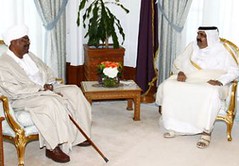
    Bashir flew to Qatar today on a brief visit in which he met with the ruler Sheikh Hamad bin Khalifa Al-Thani . Sudanese state minister for foreign affairs said that the talks tackled the stalled peace talks hosted by Qatar between Khartoum and Darfur rebel groups.

    Sudan renews confidence in Qatari efforts to end Darfur conflict

    Thursday 4 February 2010

    February 3, 2010 (DOHA) — President Omer Al-Bashir reiterated his support to the Qatari efforts to end the seven year conflict in Darfur, a Sudanese official said following a brief visit he paid to Doha today.

    Emir of Qatar, Sheikh Hamad bin Khalifa al-Thani meets Sudan’s President Omar Hassan Al-Bashir (R) at his office in the capital Doha, February 3, 2010. (QNA) Bashir was in the Qatari capital for talks with Emir of Qatar Sheikh Hamad bin Khalifa Al-Thani on the peace process to end the armed conflict in Darfur.

    Since September 2008, Qatar has been chosen as venue for the peace talks in Darfur after Libya’s failure in 2007 to bring rebels to talks it had hosted. But, the joint efforts of Qatar and the AU-UN mediator seem bothered by continuous interferences from different countries and organizations.

    Sudan, through Bashir’s visit has reaffirmed its support and confidence in the Qatari initiative to resolve the problem in Darfur and stressed its continuation with the Qatari venue, said Amin Hassan Omer, government top negotiator.

    Omer also said Sudan has pledged to make the needed efforts in order to ensure its success, adding the talks tackled ways to enhance and accelerate the peace process.

    Sudan and the rebel Justice and Equality Movement (JEM) signed a goodwill agreement one year ago in February 2009. However as the government did not implement the agreement the rebel JEM suspended its participation in the process.

    Since the mediation convinced JEM to resume the peace talks with Khartoum with the participation of the other rebel groups reunited after efforts by the Libyan and American facilitators. But JEM rejects their participations asking these groups to merge within the movement.

    Also, the efforts of the mediation seem obstructed by criticisms made by the US envoy Scott Gration who has bad relations with the main rebel groups and an initiative launched by the former South African President Thabo Mbeki. In addition recently the new UNAMID head said he wants “to make peace in Darfur” because there is no peace to keep there.

    Chad’s Deby to visit Sudan on Monday

    Thursday 4 February 2010

    February 3, 2010 (NDJAMENA) — Chadian President Idriss Deby Itno announced Wednesday he will fly to Khartoum next Monday for talks on normalization process with his Sudanese counterpart Omer Al-Beshir.

    Visiting president Deby and president Al-Bashir shake hands in Khartoum on December 10 2003 (AFP) “I am going to Khartoum on 8th of February to have talks with President al-Beshir,” Deby told a visiting delegation from the Parliamentary Assembly of the Francophonie on Wednesday.

    “At the time I am talking to you, he has not yet been informed, so I’m giving you this scoop. He will be informed at the end of this meeting,” he further said.

    The visit comes after direct talks between the two countries to normalize relations and settle the five year difference over support to rebel groups in both countries.

    The two countries are expected to deploy patrols soon along the border to prevent rebels from crossing on both sides.

    Since last October, President Al-Bashir sent his adviser Ghazi Salah Al-Deen Attabanti to inform President Deby of Sudan’s readiness to improve ties and end the tensions between the two countries.

    However, Chadian President seemed for some time reluctant and asked Sudan to take concrete steps to prove its willingness.

    “I am a man of dialogue and openness. War has never settled things and I know what I’m talking about, dear parliamentarians. Chad wants to live in perfect harmony with all its neighbours,” Deby said.

    Bashir and Deby were close allies in the past. It was reported that when security reports mentioned flow of arms from Chad to the rebels in Darfur, he had refused such reports. The former rebel Deby took power in a military coup in 1990, with Sudan’s backing.

    Kenya supports Southern Sudan self-determination referendum – Odinga

    Thursday 4 February 2010.

    February 4, 2010 (NAIROBI) — The Kenyan Prime Minister Raila Odinga has urged the international community to support a referendum to be held next year on southern Sudan self-determination adding Kenya is committed to outcome of this popular consultation.

    Raila Odinga Odinga remarks supporting southern Sudan independence come following statements by the chiefs of the African Union, Jean Ping and the United Nations Ban Ki-Moon on the need to preserve Sudan’s unity.

    Following a protest letter by the President of southern Sudan government to the Secretary General of the United Nations Ban Ki-Moon, the UN said Ban was supporting efforts to make unity attractive.

    “I strongly urge the entire international community to pursue a similar course and offer maximum assistance in implementing the referendum’s outcome, whatever it might be,” said Raila on Wednesday.

    He emphasized that Kenya was fully committed to and would respect the outcome of the self determination referendum, whether it favors maintaining unity or creation of an independent state in southern Sudan.

    The Kenyan Prime Minister said the AU and UN stand would undermine the principle of peaceful resolution of disputes of which the CPA is an outstanding example globally. “Having done so much to advance this historic process of self-determination, it is preposterous that anyone would seek a pre-determined outcome in the referendum,” he added.

    Raila called on the Intergovernmental Authority on Development (IGAD), which sponsored the peace process hosted at the time Kenyan government to take lead in the ensuring the implementation of the CPA.

    “IGAD was familiar with all the issues concerning the CPA and was in a better position to resolve outstanding issues such border demarcations at the oil-rich Abyei region and the population census process.”

    UNAMID denies Sudan’s claim that it aided Darfur rebels

    Thursday 4 February 2010

    February 3, 2010 (EL FASHER) – The African Union – United Nations Mission in Darfur (UNAMID) strongly denied that it had given supplies to rebels, dismissing the accusations recently made by the spokesman of the Sudanese Armed Forces that the Mission is in collaboration with the Justice and Equality Movement.

    Nigerian soldiers serving with the United Nations-African Union Mission in Darfur (UNAMID) The hybrid peacekeeping mission was responding to allegations made Monday that the peacekeepers willingly supplied the rebel Justice and Equality Movement (JEM) with food and fuel.

    The Sudanese army spokesman said that JEM hijacked six trucks belonging to UNAMID, after which the peacekeepers did not report the incident to authorities. He also claimed that on January 25 another two trucks loaded with 70 barrels of fuel had gone missing.

    JEM rebels in recent months are reported to have returned into Darfur from rear bases in Chad, due to improving relations between the capitals at Khartoum and N’djamena.

    “UNAMID has never and will never collaborate in the form described with any parties to the conflict in Darfur. The Mission does not and shall not deviate from its responsibility and mandated obligation to serve as an impartial and honest broker in the peace process,” stated the Mission’s public information division.

    The peacekeepers said that they have established good relations with the Government of Sudan at all levels, which these “unfounded allegations” will not affect.

    The Mission added that it “remains committed to implementing its mandate and its priorities, as established by the new Joint Special Representative Ibrahim Gambari, of enhancing the security of civilians and internally displaced people in Darfur; continuing to provide proactive support to the ongoing peace process; and assisting in the normalization of relations between Chad and the Sudan.”

    UN chief’s anti-secession remark triggers South Sudan protest

    Tuesday 2 February 2010.
    By Philip Thon Aleu

    February 1, 2010 (BOR) – A group of Southern Sudanese marched to the base of the United Nations Mission in Sudan (UNMIS) here Monday protesting an anti-secessionist statement attributed to the UN Secretary General. This remark also generated criticism among South Sudanese academics in Khartoum.

    Protesters at the UNMIS base in Bor on February 1, 2010. Ban Ki-moon had said Saturday that UN and the AU would work to avoid southern Sudan secession in a referendum scheduled for January 2011. The UN chief in a joint interview with AFP and RFI radio said “The UN has a big responsibility with the AU to maintain peace in Sudan and make unity attractive… We’ll work hard to avoid a possible secession.” His statement came one day after similar statements by the chairman of the African Union (AU) Commission Jean Ping who said secession would lead to another war in Sudan and push Darfur rebels to seek self-determination.

    The protesters hold banners saying “our future lies in our independence.” In a written speech delivered at UNMIS compound, the angered group claims that Ban Ki-moon’s remarks at the 14th African Union (AU) summit on Saturday in Addis Ababa never “examined the negative part of [Sudan’s] unity.”

    Bor protesters say Ban’s statement indicates that the UN admires Sudan’s wars, slavery and illiteracy under Khartoum administration. “Sudan has never been in peace not because the people Sudanese communities are against peace but…the government had been misruling….rich cultures,” the protest speech reads in part.

    The demonstrators, mainly youth, call on the UN chief to apologize saying “Ban Ki-moon, repent before judgment.”

    An officer at the UN camp, flanked by his colleagues at the UNMIS says at the time the letter was issued that the peacekeepers’ mandate does not include deciding on the future of Southern Sudan. The officer apologized for the local understanding of the UN chief’s statement and pledged to hand the letter to higher authorities.

    SOUTH SUDANESE INTELLECTUALS OPPOSE UNITY

    In an interview today with Professor Deng Awuor who teaches social studies at Juba university campus at Kodoro, east of Khartoum, he outlined historical reasons for the split expected next year in the 2011 referendum for secession of the South.

    He said that British and Egyptians jointly ruled Sudan for over 40 years but failed to make unity attractive between Sudanese Africans in the south and Arabs in the north. Instead they initiated and introduced detrimental policies of divide and rule which were later on adopted by successive Khartoum-based ruling elites, he said.

    He said they never succeeded in anything including making unity of the country attractive nor did they lay down strong foundation for unity but deployed divisive policies which recognize provincial leaderships.

    The independence of the country on 1st January 1956 came when issue of identity became the central issue to those who regards themselves as the real Sudanese through oppressive initiatives in managing affairs of the African tribes.

    In forum discussions at the university, one of the contributors said that the Comprehensive Peace Agreement was to build and repair the long strained south-north relationship, giving a last chance – a period of six years – to the repressive and extremist leaders in Khartoum to make unity attractive, but they failed to make it.

    “If Sudanese people and government could not make it possible to make unity attractive, can the AU and the UN Secretary General make unity attractive within one year?” he posed.

    According to the participant, Africans, whether they are Sudanese, Muslims or Christians want the best initiative against discriminatory tradition and culture, and work to liberate the corrupted African minds, hearts and souls by tradition and culture that do not respect human rights.

    “If UN and AU can do this within one year, before the deadline for referendum, the enslaved and oppressed African people of the southern Sudan may accept to stay as one in a United States of Sudan,” he said.

    However, he was quick to add UN, the AU and the free developed world know the history of the struggle of the African people in Sudan, especially the people of the southern Sudan and Darfur to transform the colonial thinking and minds of those who have clung to power using religion. He said individuals in the center, since entrance of Mohamed Ali in 1820, have continued to behave like a colonial power and treat the indigenous African tribes as slaves.

    “African tribes in Sudan today are enslaved and their mind being corrupted by Arab Islamic ideology, and imprisoned by imposed Arab religion, tradition and culture which only serve the interest of the Arab Islamic leaders, and care less about the unity of Sudan,” he explained.

    The African people of the southern Sudan have given them enough time to change their discriminatory behaviors and culture and to live as equal citizens in Sudan but refused and continued to kill, discriminate, corrupt the mind, heart and soul of our people to make them go to hell, he said.

    Another participant too furiously said the Secretary General has acted out of his capacity hence making it impossible for him to understand – “he comes from the culture equal our own as South Korea was once part of North Korea,” he said.

    “How come he is so quick to forget such history?” he posed.

    Ngor Arol Garang contributed to this report from Khartoum.

  • Soldiers Deaths Draw Focus to U.S. in Pakistan

    February 4, 2010

    Soldier Deaths Draw Focus to U.S. in Pakistan

    By JANE PERLEZ
    New York Times

    ISLAMABAD, Pakistan — The deaths of three American soldiers in a Taliban suicide attack on Wednesday lifted the veil on United States military assistance to Pakistan that the authorities here would like to keep quiet and the Americans, as the donors, chafe at not receiving credit for.

    The soldiers were among at least 60 to 100 members of a Special Operations team that trains Pakistan’s paramilitary Frontier Corps in counterinsurgency techniques, including intelligence gathering and development assistance. The American service members are from the Special Operations Command of Adm. Eric T. Olson.

    At least 12 other American service members have been killed in Pakistan since Sept. 11, 2001, in hotel bombings and a plane crash, according to the United States Central Command, but these were the first killed as part of the Special Operations training, which has been under way for 18 months.

    That training has been acknowledged only gingerly by both the Americans and the Pakistanis, but has deliberately been kept low-key so as not to trespass onto Pakistani sensitivities about sovereignty, and not to further inflame high anti-American sentiment.

    Even though the United States calls Pakistan an ally, the country, unlike Afghanistan and Iraq, has not allowed American combat forces to operate here, a point that is stressed by the Pentagon and the Pakistani Army, the most powerful institution in Pakistan.

    Instead, the Central Intelligence Agency operates what has become the main American weapon in Pakistan, the drones armed with missiles that have struck with increasing intensity against militants with the Taliban and Al Qaeda in the lawless tribal areas.

    The American soldiers were probably made targets as a result of the drone strikes, said Syed Rifaat Hussain, professor of international relations at Islamabad University. “The attack seems a payback for the mounting frequency of the drone attacks,” Professor Hussain said.

    If the American soldiers were the targets, the attack raised the question of whether the Taliban had received intelligence or cooperation from within the Frontier Corps.

    The three soldiers were killed, and two other service members wounded, in the region of Lower Dir, which is close to the tribal areas. According to police officials in the region, the armored vehicle in which they were traveling was hit by a suicide bomber driving a car. Earlier reports from Pakistani security officials said the soldiers had been killed by a roadside explosive device.

    To disguise themselves in a way that is common for Western men in Pakistan, the American soldiers were dressed in traditional Pakistani garb of baggy trousers and long tunic, known as shalwar kameez, according to a Frontier Corps officer. They also wore local caps that helped cover their hair, he said.

    Their armored vehicle was equipped with electronic jammers sufficient to block remotely controlled devices and mines, the officer said. Vehicles driven by the Frontier Corps were placed in front and behind the Americans as protection, he said.

    Still, the Taliban bomber was able to penetrate their cordon. In all 131 people were wounded, most of them girls who were students at a high school adjacent to the site of the suicide attack, the Lower Dir police said.

    The soldiers were en route to the opening of a girls school that had been rebuilt with American money, the United States Embassy said in a statement. The school was destroyed by the Taliban last year as they swept through Lower Dir and the nearby Swat Valley, where a battle raged for months between the Pakistani Army and the Taliban.

    A spokesman for the Pakistani Taliban called reporters hours after the attack against the Americans and claimed that his group was responsible.

    The Pakistani Army currently occupies Swat, and in an effort to strengthen the civilian institutions there and in Dir, some of the American service members on the Special Operations team have been quietly working on development projects, an American official said.

    The presence of the American military members in an area known to be threaded with Taliban militants would also raise questions, said Khalid Aziz, a former chief secretary of the North-West Frontier Province, which includes Swat and Dir.

    Mr. Aziz said it was odd that American soldiers would go to such a volatile area where Taliban militants were known to be prevalent even though the Pakistani security forces insisted that they had been flushed out.

    The usual practice for development work in Dir and Swat called for Pakistani aid workers or paramilitary soldiers to visit the sites, he said.

    The Americans’ involvement in training Frontier Corps recruits in development assistance was little known until Wednesday’s attack.

    “People are going to be very suspicious,” said Mr. Aziz, who is now involved in American assistance projects elsewhere. “There is going to be big blowback in the media.”

    An American development official said that encouraging the Frontier Corps to become expert in humanitarian aid was an important part of the trainers’ counterinsurgency curriculum.

    Last summer, for example, the American military trainers helped distribute food and water in camps for the more than one million people displaced from the Swat Valley by the fighting, the official said. But that American assistance, too, was kept quiet.

    The 500,000-strong Pakistani Army led by Gen. Ashfaq Parvez Kayani, the standard-bearer of Pakistan’s strong sense of nationalism, is resistant to the appearance of overt military assistance, least of all from the unpopular Americans, that would make the army look less than self-reliant on the battlefield.

    Over the last several years, as the Qaeda-backed insurgents increased their hold on Pakistan’s tribal areas and used their base to attack American and NATO forces in Afghanistan, the United States military asked for permission for combat soldiers to operate in the tribal zone, according to American officials. Pakistan rebuffed the requests, they said.

    Whether American soldiers are based in Pakistan is often raised by Pakistani politicians, students and average Pakistanis, many of them suspicious of American motives.

    The question of the presence of American soldiers in Pakistan is also prompted by the fact that the American military provides important equipment to the Pakistani Army, including F-16 fighter jets, Cobra attack helicopters and howitzers.

    Capt. Jack Hanzlik, a spokesman for the United States Central Command in Tampa, Fla., said 12 other service members had been killed in Pakistan since Sept. 11, 2001. The three soldiers who died Wednesday had been assigned to a Special Operations command in Pakistan. But he said they were not commandos from the elite Delta Force or Special Forces, also known as the Green Berets. The United States has about 200 military service members in Pakistan, Captain Hanzlik said.

    The three names of the soldiers killed were not released Wednesday because United States military officials were still notifying the next of kin.

    Reporting was contributed by Ismail Khan from Peshawar, Pakistan; Pir Zubair Shah from Islamabad; and Elisabeth Bumiller and Eric Schmitt from Washington.

  • China-Africa Economic and Technology Cooperation Committee of CESC Founded in Beijing

    China-Africa Economic and Technology Cooperation Committee of CESC founded in Beijing

    08:37, February 04, 2010

    A gathering was held in Beijing Wednesday to mark the establishment of the China-Africa Economic and Technology Cooperation Committee (CAETCC) of China Economic and Social Council (CESC).

    About 80 diplomats from over 40 African countries and near 100 Chinese officials attended the gathering.

    Zhao Qizheng, chairman of the Foreign Affairs Committee of the National Committee of the Chinese People’s Political Consultative Conference (CPPCC) said that China would like to share the development experience with the African countries, to overcome difficulties in the process of development and boost bilateral cooperation.

    CAETCC official Wei Jianguo said, the committee would work to actively promote exchanges and cooperation between the Chinese business circle and African countries.

    Ghanian Ambassador to China Helen Mamle Kofi said that China’s remarkable achievements in the process of globalization gave Africa an aspiring example to follow in terms of economic, financial, social,technological and cultural integration.

    She said, there is also the need for the CAETCC to regularly send “credible, timely and comprehensive information” to the investment and business community and, together with African officials, to provide accurate information regarding their countries.

    The CAETCC is a working platform created by the CESC in an effort to deepen bilateral relations between the CESC and the economic and social councils and similar institutions in Africa, promote China-Africa economic and technological cooperation and increase mutual understanding and friendship among people from both sides.

    Source:Xinhua

  • Demonstration and Press Conference Condemns Cover-up of FBI Assassination of Imam Luqman Ameen Abdullah

    February 2, 2010 http://detnews.com/article/20100202/METRO01/2020394

    Justice Dept. investigating fatal shooting of imam by FBI

    PAUL EGAN
    The Detroit News

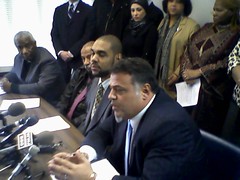
    Detroit– The U.S. Justice Department is conducting what it calls a routine investigation into the FBI shooting death of Imam Luqman Ameein in Dearborn, but the development was hailed by those calling for a probe into the October incident. U.S. Rep. John Conyers, D-Detroit, who had called for the investigation along with a coalition of civil rights groups, announced at a news conference today the investigation was under way.

    “On the surface, someone being shot 21 times raises quite a few questions in the criminal justice system,” said Conyers, who chairs the House Judiciary Committee.

    Alejandro Miyar, a spokesman for the Justice Department in Washington, confirmed the investigation but said it would have been conducted regardless of a request by Conyers or anyone else.

    “The FBI’s inspection division conducted a review,” Miyar said. “The civil rights division has received the FBI’s report and is now conducting an independent review of the shooting.”

    An autopsy report released Monday showed Abdullah was shot 21 times and said the medical examiner found his dead body handcuffed inside a trailer when he arrived at the Dearborn warehouse that was the scene of the shooting.

    “On the surface, someone being shot 21 times raises quite a few questions in the criminal justice system,” said Conyers, who chairs the House Judiciary Committee.

    The FBI said it was investigating a radical and violent separatist group and was about to make arrests in connection with a sting operation into alleged fencing of stolen goods when Abdullah opened fire, killing an FBI dog and bringing return fire from agents at the warehouse.

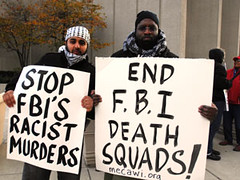
    But Abayomi Azikiwe of the Michigan Emergency Committee against War and Injustice called Abdullah’s death a “targeted assassination.”

    Special Agent Sandra Berchtold, a spokeswoman for the FBI in Detroit, said Monday the autopsy report is only one piece of information in the case and asked the public to reserve judgment until all the facts are in.

    The Dearborn Police Department is conducting an investigation, and the FBI has completed an internal investigation of the shooting that has not been made public.

    Dawud Walid, executive director of the Michigan chapter of the Council on American-Islamic Relations, said his group filed Freedom of Information Act requests Monday seeking more information about the raid on the Dearborn warehouse, including any FBI video of the incident. Since the FBI controlled the warehouse as part of its sting operation, it is likely the shooting was captured on video, Walid said.

    Conyers and others also expressed concern about an incident the night of Oct. 28 when they say Detroit police entered Abdullah’s mosque at prayer time with guns drawn.

    Nabih Ayad, who represents Abdullah’s wife, Amina, as well as a defendant in the federal indictment handed down in the Abdullah case, said using a dog to confront a Muslim creates an environment for hostility because dogs are seen as unclean.

    “Why did they have to gun him down 21 times?” Ayad asked.

    Amina Abdullah said the autopsy report caused her great pain. “I don’t eat; I don’t sleep,” she said.

    Ron Scott of the Detroit Coalition Against Police Brutality said he is concerned federal grants to local law enforcement to create multi-jurisdictional task forces are creating “what amounts to a national police force.”

    [email protected]”>[email protected] (313) 222-2069

    February 2, 2010 http://detnews.com/article/20100202/METRO01/2020354

    Detroit imam’s autopsy report raises ire

    He was shot 21 times in FBI raid; critics call action unjustified

    GEORGE HUNTER AND DOUG GUTHRIE
    The Detroit News

    Dearborn — An autopsy report released Monday prompted renewed calls for an independent federal investigation into the death of a local mosque leader during an FBI raid in October.

    Imam Luqman Ameen Abdullah was shot 21 times during a raid on a Dearborn warehouse, according to the report. The cause of death was multiple gunshot wounds.

    Abayomi Azikiwe of the Michigan Emergency Committee against War and Injustice called Abdullah’s death “a targeted assassination.”

    “Whoever was responsible should be criminally prosecuted,” said Azikiwe, who joined a protest at Dearborn Police headquarters Monday. “After they shot him, they dumped him in a trailer like a dog.”

    FBI agents have said they were justified in shooting Abdullah because he opened fire during their raid on a stolen-goods operation.

    Agents said an FBI dog was killed, prompting them to return fire. Only four of the more than 20 agents at the scene fired shots, said a person familiar with the investigation.

    But some claim the FBI unfairly targeted Abdullah, and the shooting wasn’t justified — allegations U.S. Judiciary Committee Chairman John Conyers mentioned in a Jan. 13 letter to U.S. Attorney General Eric Holder.

    “These concerns are only inflamed when the special agent in charge of the Detroit FBI office asserts — before investigation has been completed — that ‘I’m comfortable with what our agents did,’ ” Conyers, D-Detroit, wrote.

    The autopsy found Abdullah was hit twice in the chest, four times in the abdomen, twice in the groin, four times in the left hip and side, seven times in the left thigh, once in the scrotum and once in the back.

    Dawud Walid, executive director of Council on American-Islamic Relations Michigan, said his organization is requesting copies of the autopsy photographs and has hired an independent pathologist to review the findings. He said the group also wants to see the results of a necropsy on the dog, to confirm it was killed by bullets from a nonpolice weapon, as investigators have said.

    “The results we have seen so far are disturbing, and we are going to be investigating more,” Walid said. “Three shots in the genital area, and the broken jaw, and a bullet in the back: We don’t know how he would have gotten that.

    “If he is killed instantly, why is his body found with his hands handcuffed behind his back?”

    Special Agent Sandra Berchtold, a spokeswoman for the FBI, said Monday, “This is only one piece of information in this case. We ask that before people make a decision, they wait until all the facts come out.”

    A federal indictment alleged Abdullah led a radical separatist mosque and stolen goods ring.

    Wayne County Medical Examiner Dr. Carl Schmidt concluded in his autopsy that Abdullah had several abrasions on his hands, although Schmidt said he could not confirm whether the wounds were caused by a dog.

    “At some point his back was turned,” Schmidt said. “Whether that means someone meant to shoot him in the back or not, I couldn’t say. He must have been slightly turned to the left (at the time of the shooting).”

    Schmidt said his probe could not determine whether Abdullah was shot while lying down.

    The county’s medical examiners routinely testify that they use police reports about circumstances and investigators’ observations in helping them arrive at their conclusions. But Schmidt said Monday his office received no information from law enforcement sources to aid in the autopsy’s findings.

    The autopsy didn’t detail the types or sizes of 13 bullets removed from Abdullah’s body. There were no gunpowder burns on the body, indicating the fatal shots weren’t fired from point blank range.

    Schmidt said his medical tests didn’t include checking whether there was gunpowder residue on the victim’s hands. “That would be something the police would do,” he said.

    Although Abdullah was not shot in the head, he suffered cuts and abrasions on his face, and a fracture of the bone behind his upper lip. A tooth fragment and broken denture were received with the body.

    Posted: 12:13 p.m. Feb. 2, 2010 | Updated: 2:39 p.m. today

    Imam’s autopsy report stuns widow

    BY BEN SCHMITT
    FREE PRESS STAFF WRITER

    The widow of a Detroit imam shot to death by FBI agents said today that she was appalled to learn her husband died from 21 gunshot wounds.

    “It’s really hard and it’s really painful for me,” Amina Abdullah, 36, said of the autopsy report detailing the death of Luqman Ameen Abdullah. “I was shocked. I was almost going to faint. I couldn’t eat, and I couldn’t sleep.”

    Amina Abdullah was married 10 years to the imam, said her attorney Nabih Ayad. Ayad also said the government is not trying to deport her to Tanzania.

    “She’s concerned about going back home,” Ayad said.

    Amina Abdullah appeared at a news conference this morning in Detroit with U.S. Rep John Conyers, who is calling for an independent investigation into the imam’s Oct. 28 death in a Dearborn warehouse.

    Ayad told reporters he would also like a second autopsy done because he is concerned about reports of lacerations to Abdullah’s hands and wonders if an FBI dog bit him before he fired back.

    The autopsy report was completed in November, but it was not released until Monday at the request of the Dearborn Police Department, which is investigating the incident.

    Dawud Walid, executive director of the Michigan chapter of the Council on American-Islamic Relations (CAIR), said he filed a Freedom of Information Act request to learn whether there is any FBI video of the incident. Walid said he has a hunch that video exists since agents hand controlled the warehouse as part of its undercover investigation.

    Conyers said he asked Attorney General Eric Holder to have the Justice Department’s Civil Rights Division look into the Oct. 28 incident.

    “All we want is simple fairness,” Conyers said, adding that he is concerned that the autopsy report took so long to be released. “On the surface, someone being shot 21 times raises quite a few questions in the criminal justice system. It also may involve the hate crimes law.”

    According to the autopsy report, when an investigator from the Medical Examiner’s Office arrived at the scene of the shooting on Oct. 28, the body of Abdullah, 53, was found on the floor of a semi-trailer full of flat-screen TVs with his wrists handcuffed behind his back.

    The FBI told the investigator that when “officers arrived, officers asked to see his hands, and they informed him that if he didn’t comply, they were going to send a dog in.” Agents said they opened fire after Abdullah shot the dog.

    Andrew Arena, special agent in charge of the Detroit FBI office, has said agents acted appropriately in the two-year investigation of Abdullah and during the raid. Agents sought to arrest the cleric and 10 other people on suspicion of dealing in stolen goods.

    Posted: Saturday, 30 January 2010 6:30PM

    WWJ Radio 95 in Detroit

    Group Pushes For Investigation Of Imam’s Death

    A civil rights group on Saturday reiterated its call for an independent investigation into the death of a Muslim prayer leader killed during an FBI raid in October following reports he was shot 21 times.

    Dearborn police have scheduled a news conference for Monday to release autopsy results in Luqman Ameen Abdullah’s death, however a Detroit television station WJBK-TV and the Detroit Free Press both reported details about the autopsy from sources they didn’t identify.

    WJBK-TV, citing a source close to the investigation, reported Friday that an autopsy found Abdullah, 53, was shot in the chest, abdomen, thigh and back during the Oct. 28 raid. The Detroit Free Press, citing a person familiar with the case, also reported Saturday the imam was shot 21 times.

    Both WJBK-TV and the Free Press said Abdullah was handcuffed, but the Free Press’ source said the handcuffing apparently occurred after the shooting and was in line with procedure. One shot struck Abdullah in the back, the Free Press said.

    The Council on American-Islamic Relations said it wants an independent investigation. Dawud Walid, executive director of the group’s Michigan chapter, knew Abdullah and said the reported autopsy details raise “disturbing questions.”

    “How was the imam shot in the back?” Walid asked in a statement. “Was it proper procedure to handcuff either a dead body or a mortally wounded suspect? If the agents found the imam alive following the shooting, did they call for medical assistance? All these questions need answers.”

    CAIR’s Michigan chapter plans to have an independent forensic pathologist review the autopsy report after it is released.

    FBI spokeswoman Sandra Berchtold told The Associated Press on Saturday that she couldn’t comment on the reports.

    The Wayne County Medical Examiner’s Office said no one was available to discuss the reports until Monday.

    A message seeking comment was left Saturday with Dearborn Police Chief Ronald Haddad.

    On Saturday, Haddad told the Free Press that the news conference will not end the investigation.

    “Our responsibility to the community is to ensure that we investigate this incident to obtain an accurate accounting of what occurred,” Haddad said. “It is complex, and once completed we can move forward.”

    The FBI has said that Abdullah was fatally shot while resisting arrest and firing a gun inside a Dearborn warehouse. He was the imam, or prayer leader, of a neighborhood mosque in Detroit.

    The FBI wanted Abdullah on charges of weapons violations and conspiracy to sell stolen goods. He was described as a leader of a national radical Sunni group that wants to create an Islamic state within the U.S.

    Abdullah’s family has denied the allegations.

    Eleven people have been indicted on federal charges in the FBI’s investigation of Abdullah. Ten of the 11 are charged with conspiring to possess and sell stolen goods, from computers to furs.

  • Blast Hits Pakistan Resulting in Three US Military Deaths

    Wednesday, February 03, 2010
    16:57 Mecca time, 13:57 GMT

    Blast hits Pakistan school opening

    The blast was reportedly caused by an improvised explosive device

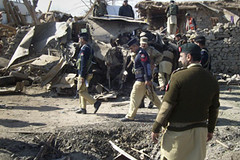
    A roadside bomb has killed at least eight people, including three US military personnel and four school girls, near a girls’ school in northwest Pakistan.

    Local police said that Wednesday’s blast was caused by an improvised explosive device.

    The US embassy in the Pakistani capital, Islamabad, said the Americans were in the area to attend the opening ceremony of the girls’ school when the bomb exploded.

    “Three Americans were killed and two injured in a terrorist bomb explosion at about 11:20am today in the Lower Dir district of Pakistan’s federally-administered tribal areas,” the embassy said in a statement.

    “The Americans were US military personnel in Pakistan to conduct training at the invitation of the Pakistan Frontier Corps. They were in Lower Dir to attend the inauguration ceremony of a school for girls that had recently been renovated with US humanitarian assistance.”

    Pakistani officials said an Frontier Corps soldier and four schoolgirls also died.

    “We have four dead bodies (in this hospital). They are schoolgirls aged 10 to 15. We have received 65 injured, most of them are girls,” Mohammed Wakeel, chief doctor at the local Taimargara hospital, said.

    Taliban claim

    Pakistan’s Taliban claimed responsibility for the bombing and threatened more attacks.

    “We claim responsibility for the blast,” Tehreek-e-Taliban Pakistan (TTP) spokesman Azam Tariq said.

    The school had been blown up in January 2009 and rebuilt with the help of a foreign aid organisation.

    Foreign aid workers and journalists have been particularly interested in girls’ education in parts of northwest Pakistan, where Taliban fighters opposed to co-education have destroyed hundreds of schools.

    On Tuesday, at least 29 people were killed and many more wounded in a suspected US drone attack in the North Waziristan region of Pakistan.

    Officials said a series of missiles rained down on Dattakhel village in the Degan area of North Waziristan, part of Pakistan’s semi-autonomous tribal region near the Afghan border.

    They said the missiles struck suspected fighters’ hideouts and a training centre.

    ‘Backlash fear’

    Al Jazeera’s Kamal Hyder, reporting from Islamabad, the Pakistani capital, said there were reports that up to 19 missiles had been fired.

    “One thing is quite clear – this was perhaps one of the largest attacks carried out so far,” he said.

    “There is expected to be a backlash because just recently the military had clearly said that they had not given any tacit approval for the Americans to conduct such a strike and there is tremendous opposition inside Pakistan. The military is aware of that.”

    Tribesman in the area of the attack had claimed that they shot down at least two US drones in the past. Those reports have not been confirmed.

    The US never confirms drone attacks, but its forces in neighbouring Afghanistan and the Central Intelligence Agency are the only ones known to use the unmanned aircraft capable of firing missiles.

    The attacks have often resulted in civilian deaths, stirring anger among Pakistanis and even bolstering support for the Taliban and anti-US sentiment.

    The US has increased drone attacks inside Pakistan since a suicide bomber crossed over the Pakistani border and killed seven CIA employees in an attack in eastern Afghanistan on December 30.

    Source: Al Jazeera and agencies

  • After Massacre, Guinea Sees Hope of Lifted Chains

    February 3, 2010
    After Massacre, Guinea Sees Hope of Lifted Chains

    By ADAM NOSSITER
    New York Times

    CONAKRY, Guinea — Something rare has happened in a region often given to brutal autocracy: power has been peacefully transferred to a civilian, just four months after an army massacre that recalled the worst of Africa’s past.

    On Sept. 28, at least 150 demonstrators died in this city’s main stadium. More than 100 women were raped or sexually abused, a United Nations panel found, while many other protesters were beaten — including the man who is now Guinea’s prime minister.

    Now, the swift and unexpected turn of events has surprised Guineans, who wonder warily if the new prime minister, Jean-Marie Doré, a gaunt and wily opposition leader who left the stadium bleeding, can actually deliver democracy in a country that has never truly known it. The omnipresent military, arbiter of power for decades, hovers in the background, a potential foot on the fragile plant of civilian rule.

    “Things have happened so fast,” said Sydia Touré, a widely respected opposition leader.

    “This is something we couldn’t have imagined two months ago,” he said. “It’s a new vision.”

    People here are still trying to understand exactly how the transition occurred, as the larger question arises of whether Guinea holds any lessons for the region’s future.

    It was, bitterly for Guineans, the massacre that might have finally unchained this long-repressed country. An unusual set of events followed: the grave wounding in December of the country’s military dictator, Capt. Moussa Dadis Camara, in an assassination attempt; then what appeared to be acquiescence by his second-in-command, Gen. Sékouba Konaté, to a switch to civilian leadership; and finally the scene of hope last week when Mr. Doré took power and promised the nation its first truly free elections within the year.

    “Democracy!” people shouted after Mr. Doré left a downtown restaurant, slapping the hands of well-wishers from his S.U.V. He was guarded, paradoxically, by the same cadre of red-bereted presidential guards responsible for the stadium massacre.

    “It’s you: Jean-Marie!” the crowd yelled.

    Guinea could be the rare case in which swift international sanctions actually worked, politicians and diplomats here say. Sharp words from the United States and France in October were quickly followed by travel and aid bans, which struck hard in an impoverished land where over half the budget is financed from abroad.

    The United Nations and the International Criminal Court investigated the stadium massacre, with the United Nations focusing on the junta — including its erratic chief, Captain Camara — for crimes against humanity. Pressure built, and the government gave in.

    “We now know to what degree the international community is allergic to violations of human rights in general, and unpunished massacres in particular,” Mr. Doré said in an interview last week, outside a raucous but hopeful — and aboveground — meeting of former opposition parties.

    Mr. Touré, a former prime minister and now a likely candidate for president, said: “The pressure from the international community, the pressure was very strong, and very fast. The horizon was closed very quickly.”

    All the makeshift promise and risk of this country’s new democratic experiment were evident at the meeting of former opposition members, in a brightly painted open-air former restaurant called Buddies First. Representatives of about 40 political parties and 30 organizations crowded in. Leaders who a few months ago had gone into hiding, nursing wounds from the massacre, sat in the front row and cheered as the gathering chose a spokesman.

    “People have died for this,” said the man eventually picked, François Lonsény Fall, a former prime minister.

    “We have a historic mission to give our country, for the first time, democratic institutions,” he told the crowd.

    That will not be easy in Guinea, where one dictator has replaced another in the 52 years since its separation from France. First there was a Stalinist, Sékou Touré, who saw plots everywhere and killed dozens of people to stamp them out; then a military man, Lansana Conté, who bled the resource-rich country dry as his entourage enriched itself; and finally Captain Camara, who ruled until a disgruntled member of his guard shot him in the head early in December.

    Hope was tempered by wariness at the meeting. “There’s a new momentum that is promising, but it must be well managed,” said Mouctar Diallo, president of an opposition political party who was beaten at the stadium and forced into hiding afterward. “We are optimistic but vigilant.”

    Much depends on General Konaté, a burly career military man whose decision to allow opposition forces to pick an interim prime minister — Mr. Doré — was critical in defusing Guinea’s crisis. Diplomats here say General Konaté, the junta’s ailing former defense minister, appears uninterested in political power. Unlike other senior officers, he was not implicated in the massacre, and he has publicly warned about the dangers of isolation and upbraided troops over extortion against civilians.

    “What we have from Konaté now is different,” said Mr. Touré, the opposition leader, referring to the tradition of political meddling by the military. “There is a sincerity there.”

    Mr. Doré, 71, is something of an unknown as well, despite a long presence on Guinea’s political scene. He is from the same region, Guinea’s forests, as Captain Camara, which helped secure him the position of intermediary between opposition forces and the junta.

    Mr. Doré’s main role is to form a government — with 10 representatives from the former opposition, 10 from the junta and 10 from provincial governments — and oversee preparations for elections. A fierce competition for these positions is now under way, and Mr. Doré is already being criticized for being too slow, a week after taking office.

    Elected twice to Guinea’s largely impotent Parliament, Mr. Doré refused to sit in it after 2002 elections to protest electoral fraud, but he kept lines open to the country’s succession of dictators, according to the Guinean press. On the nation’s future, he gives the measured responses of a political professional.

    “I can’t predict what’s going to happen, but I think the army and its chief understand the necessity for Guinea of ending this incoherence,” he said.

    There have been brief outbursts of joy to greet what appeared to be the return of civilian rule, but also much wariness. Mr. Doré has given ambiguous statements about running for president, and some worry that he will be reluctant to hold elections in which he is not a candidate. Many also worry about the military.

    “I’m really genuinely cheered that people are concerned here, that they aren’t dropping their guard, assuming it’s done,” said the American ambassador in Conakry, Patricia N. Moller. “Because it’s not done.”

    That wary hope was evident. “We’re a little relieved, but there is concrete work to be done,” said Hourana Camara, a fisherman. “We haven’t seen anything yet.”

    Ian Fisher contributed reporting.

  • Nationalisation of Mines is Not Governmental Policy

    ‘Nationalisation of mines is not govt policy’

    CAPE TOWN, SOUTH AFRICA Feb 02 2010 09:53

    Nationalisation of South Africa’s mines is not government policy, although there is healthy debate on the issue, Mineral Resources Minister Susan Shabangu said on Tuesday.

    The African National Congress Youth League reiterated on Monday it would push for the nationalisation of local industries, starting with mines, saying investors afraid of the process were not welcome.

    “Nationalisation of mines is not government policy. In my lifetime there will be no nationalisation of mines,” Shabangu told a media briefing at a mining conference.

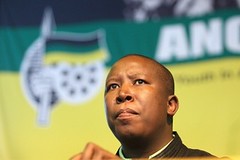
    ANC Youth League leader Julius Malema has been one of the most vocal campaigners for a more leftist economic policy under President Jacob Zuma. His demands include that the state should assume majority ownership of mines.

    South Africa is the world’s biggest producer of platinum and one of the top producers of gold, although the influence of mining on GDP has declined, particularly as gold reserves become exhausted.

    But any talk of nationalisation of mines is likely to unnerve investors already worried that Zuma could give in to pressure from labour union and communist allies who helped him to power last year. These allies are demanding a swing to the left, away from existing pro-business policies, as payback. — Reuters

    Source: Mail & Guardian Online
    Web Address: http://www.mg.co.za/article/2010-02-02-nationalisation-of-mines-is-not-govt-policy

  • African Union Wraps Up Summit on Continental Crises

    AU wraps up summit on Africa’s crises

    ADDIS ABABA, ETHIOPIA Feb 02 2010 14:41

    African leaders on Tuesday wrapped up their annual summit less divided and looking at brighter economic prospects but still facing a raft of conflicts, including Sudan’s predicted break-up.

    The African Union’s peace and security commissioner said on Tuesday that a resolution was adopted overnight increasing the pressure on Madagascar leader Andry Rajoelina, who seized power in a coup in March and did not attend the summit.

    “We have already started getting replies from some of the parties, but we are waiting for the response of the party that took the unilateral decisions that have called into question the agreements,” Ramtane Lamamra said.

    The 53-member body’s approach to Madagascar had last year been typical of African discordance, with Libyan leader and outgoing AU president Moammar Gadaffi breaking from the tough stance of the organisation’s executive.

    UN Secretary General Ban Ki-moon had also stressed in his opening speech that the continent needed to curb power-grabs.

    The situation in Sudan, where tension has been escalating in the run-up to a 2011 referendum in which the south is widely expected to choose independence from Khartoum, has featured high on the summit’s agenda.

    Many observers fear that a secession in Sudan — Africa’s largest country, bordering nine others — could further destabilise one of the continent’s most volatile regions.

    Senegal’s president, meanwhile, has been trying to drum up support for the fight against al-Qaeda’s North African branch, saying the network’s campaign was taking on “new and disturbing” forms.

    Abdoulaye Wade appealed to Senegal’s neighbours to join a round table with neighbouring countries to tackle the issue of al-Qaeda in the Islamic Maghreb (AQIM).

    “This desert terrorism is taking new and very disturbing forms … But countries like Senegal, or Mali, can do nothing on their own. It is an international problem. Western powers will have to intervene too,” he said in an interview.

    On the economic front experts said they see signs of a rebound on the continent.

    African Development Bank (AfDB) chief, the Rwandan Donald Kaberuka, expects the continent’s economy to grow by between 4,5% and 5% this year and by 6% in 2011.

    “The problems aren’t behind us yet but we’re starting 2010 on a more optimistic note. Contrary to what we had feared the big donors have respected their commitments towards Africa,” he said.

    Kaberuka’s forecast is slightly more optimistic than the 4,3% growth announced by a top UN official last week at a ministerial meeting ahead of the summit. — Sapa-AFP

    Source: Mail & Guardian Online
    Web Address: http://www.mg.co.za/article/2010-02-02-au-wraps-up-summit-on-africas-crises

  • Carter G. Woodson and African-American History Month

    Carter G. Woodson and African-American History Month

    84th anniversary of popular recognition of struggle and advancement

    by Abayomi Azikiwe
    Editor, Pan-African News Wire

    February 2010 represents the 84th anniversary of the founding of Negro History Week, now known as African-American History Month. This month of commemoration was initiated by historian Dr. Carter G. Woodson, who worked tirelessly for many years to popularize the dissemination and study of the history of African people in the United States and throughout the world.

    Carter Godwin Woodson originally came from New Canton, Virginia, where he was born on December 19, 1875. Woodson was born into a poor southern family and worked in the coal mines of Kentucky. He was not able to enroll in high school until he was 20 years old.

    He would later attend the University of Chicago and Harvard University where he obtained undergraduate and graduate degrees. He was awarded a Ph.D from Harvard University in 1912, becoming the second African-American to receive this degree after W.E.B. DuBois in 1896.

    The challenge of W.E.B. DuBois, Carter G. Woodson and other African-American historians was to refute the racist propaganda disguised as history which sought to provide the ideological justification for the mass enslavement of African people and the continuation of jim crow and racist terror.

    Historical Studies Prior to the Intervention of African-American Scholars

    One of the major contributions of historians such as DuBois and Woodson is that they scientifically challenged and debunked the myths of the “southern slave-owning aristocracy” and “black docility”. These views could no longer stand up to the research presented in the narratives developed by African-American historians.

    What is often not emphasized in the historical remembrance of African slavery in American society, is the level of resistance by the captives to the plantations owners, overseers and the legal codes which reinforced this system of exploitation. Notions and theories of African slave resistance were largely absent from the scholarly treatment of this long episode in American history until relatively recent times. One of the early 20th century historians, Ulrich B. Phillips, did much to advance the racist views of southern former slave owning families and their communities.

    In Phillips’ book entitled, “American Negro Slavery: A Survey of the Supply, Employment and Control of Negro Labor as Determined by the Plantation Regime,” published originally in 1918, he contends that the overwhelming tendency among southern slave holders was a liberalized form of administrative control which resembles a patriarchal or paternalistic model of slave management.

    As a result of the biased views held by Phillips and other white historians, their flawed emphasis and interpretation of data leads the reader to no particular insights or conclusions related to the African slave as a conscious human being within the production process taking place within southern society as a whole.

    All of the viewpoints presented by observers of the slave system in Phillips’ work reinforce the idea of the inferiority of African peoples and the supposed moral fortitude of the southern slave owners. These views related to the slave-master relationship contend that they are the natural order of things between Africans and Europeans.

    The Birth of African-American Studies

    However, new schools of thought arose during the early 20th century to counteract the apologists for the antebellum slave system and the rebel confederacy during the Civil War. DuBois declared in 1909 that the cultural presence of the ancestral origins of the slaves played a significant role in shaping the character of American life: “The mystic spell of Africa is and ever was over all America. It has guided her hardest work, inspired here finest literature, and sung her sweetest songs. Her greatest destiny—unsensed and despised though it be—is to give back to the first of continents the gifts which Africa of old gave to America’s fathers’ fathers.”

    According to Jacqueline Goggin in her political biography of Woodson, ‘In 1915 he founded the Association for the Study of Negro Life and History to encourage scholars to engage in the intensive study of the past as it related to Africans and their descendants through the world. Prior to this work, the field had been largely neglected or distorted in the hands of historians who accepted the traditionally biased picture of blacks in American and world affairs.” (Goggin)

    In 1916, Woodson founded the Journal of Negro History, which remained an important scholarly publication under his direction for more than 30 years. His academic work led him to Howard University and West Virginia State College as a professor and administrator.

    Over the years he authored numerous important books including “The Negro in Our History” (1922); “The Education of the Negro Prior to 1861” (1915); and “A Century of Negro Migration” (1918). In 1933, during the Great Depression, he published his best known work, “The Miseducation of the Negro,” where he attacked the white capitalist influence over schooling designed for African-Americans during the early 20th Century.

    In the book there is a chapter entitled “Political Education Neglected” where Woodson says that “Even the few Negroes who are elected to office are often similarly uninformed and show a lack of vision. They have given little attention to the weighty problems of the nation; and in the legislative bodies to which they are elected, they restrict themselves as a rule to matters of special concern to the Negroes themselves, such as lynching, segregation and disenfranchisement, which they have well learned by experience. “

    Woodson then goes on to point out the contributions of African-American elected officials during Reconstruction when he says that “This indicates a step backwards, for the Negroes who sat in Congress and in the State Legislatures during the Reconstruction worked for the enactment of measures of concern to all elements of the population regardless of color. Historians have not yet forgot what those Negroes statesmen did in advocating public education, internal improvements, labor arbitration, the tariff, and the merchant marine.” (Mis-education, pp. 94-95)

    Woodson’ Legacy and the African-American Struggle

    Woodson died in 1950 at the age of 75. He did not live to see the emergence of the mass civil rights and black power struggles starting in mid-1950s and extending through the early 1970s. He was able to witness the emergence of a militant student movement in 1960 that led to the formation of the Student Nonviolent Coordinating Committee (SNCC) and the later Black Panther Party.

    It was during these times that the movement demanding the implementation of African-American Studies programs in K-12 education and in institutions of higher learning emerged. Tremendous protests were carried out at numerous schools, colleges and universities that won concessions that introduced course work that recognized the contributions and essential role of African-Americans in U.S. and world affairs.

    The work of Woodson, DuBois and other African-American scholars provided the intellectual basis for the advancement of ethnic and multi-cultural studies. Every major school district and institution of higher learning has been the center of debate and struggle over the character of the academic curriculum and the admission and status of African-Americans and other oppressed people of color in the United States.

    Despite these gains related to the adoption of African-American and multi-cultural studies programs and curriculums, as well as admission of people of color to historically white institutions, the current economic crisis has witnessed the wholesale attack on such gains that were made during the civil rights and black power era. Today school districts and colleges are cutting back and laying off educational workers who gained their positions as a result of the mass movements over the last five decades.

    These attacks on higher education and their disproportionate impact on African-Americans and other oppressed people must be taken up in the current student movement against the major downsizing taking place in all areas of education in the U.S. With the upcoming March 4 National Day of Action to Defend Education, students and educational workers must demand the continuation, restoration and full funding of all academic programs that serve the oppressed and exploited groups that have traditionally been excluded from position of power and influence in the country.

    These major cutbacks in education funding must be rejected and students and workers should demand that money be taken away from the banks and the Pentagon and given to the people to ensure quality education for all. The interests of youth and workers must supersede those of the corporations and the military.

  • Justice Groups Join Conyers in Push for Investigation Into Slain Detroit Imam’s Assassination by FBI Agents

    MEDIA ADVISORY

    FOR IMMEDIATE RELEASE
    CONTACT: Ron Scott, 313.399.7345
    February 1, 2010

    Justice Groups Join Conyers in Push for Luqman Investigation

    In the wake of the recently-released autopsy report on the shooting of Imam Luqman Abdullah, CAIR (Council on American Islamic Relations) of Michigan, the Detroit Coalition Against Police Brutality, the NAACP’s Detroit Branch, ACLU’s Michigan Branch, and MECAWI (Michigan Emergency Committee Against War and Injustice) will join 14th District U.S. Congressman John Conyers, Chairman of the House Judiciary Committee, TODAY:

    Tuesday, February 2, 2010
    10:00 a.m.
    220 Bagley
    Tenth Floor Conference Room
    Detroit, MI 48226

    Congressman Conyers will announce that a U.S. Justice Department investigation of the Luqman shooting will be initiated per his request to Attorney General Eric Holder.

    Luqman was killed by law enforcement officers from various local, state and national police agencies. “Many community organizations have begun to come together to find out why a multijurisdictional task force comprised of federal, state and local officials had a virtual free-for-all in the shooting of Imam Luqman, who was shot 21 times, including 12 times below the waist,” said Coalition spokesperson Ron Scott.

    Scott went on to say that the coalition of groups has been working to bring this matter to greater attention to Detroit, the nation and the world. “An independent investigation will go a long way towards accomplishing this,” he added.

    The justice organizations plan to continue their efforts to see justice in the Luqman case and to support the ten defendants whose criminal trials will be held over the next year. “This is just the beginning of a large movement. The community has long asserted that this is necessary to fend off what appears to be sanctioned violence by official police organizations,” continued Scott.

    The groups are calling for the following:

    * Independent investigation of all events leading up to the shooting of Imam Luqman.
    * Evaluation of the members of the multijurisdictional task force.
    * Clarification of protocols and oversight.
    * Criminal prosecution of those officers who may have been involved in the shooting.
    * Immediate conclusion to the investigation of the shooting by the Dearborn Police Department so that all the facts may be known.

  • Zimbabwe Women’s Participaton in Economy Low, Says Minister

    Women’s participation in economy low — Minister

    New Ziana.

    Despite the crafting of legislation to empower them, the level of participation of women in various spheres of the economy is still low, a Cabinet minister has said.

    Speaking on Friday, Women Affairs, Gender and Community Development Minister Dr Olivia Muchena said although the concept of empowerment had been grasped at the grassroots, women still lacked capacity.

    “We have ordinary rural village women in possession of mining claims but have nothing to use,” she said.

    Dr Muchena said this in a lecture delivered to 30 beauty contestants in camp for the Miss Tourism Zimbabwe finals.

    At least 18 laws have been crafted, since independence, to specifically leverage and empower women.

    She said with adequate support, women could contribute significantly to the turnaround of the country’s economic fortunes.

    “Of the 50kg of gold purchased with funds availed by TN Bank, 20kg came from women miners,” she said.

    She said there were fewer women on top in the corporate world in Zimbabwe compared to countries such as South Africa.

    “We are not yet there,” she said.

    Dr Muchena pointed out that the journey of empowerment had to be fast-tracked through the Constitution and affirmative action.

    Meanwhile, the minister urged the models to take their chosen profession seriously.

    “Modelling is a career and you can start charting a career path through it,” she said,

    The minister added that the girls had the whole world opened up and needed to establish networks that were beneficial.

    She said the girls existed in an era with vast opportunities and that various ministries stood ready to assist them realise their aspirations.

    Dr Muchena urged the girls to remain objective and not to forget their African values.

    “Celebrate the African beauty as seen and understood through African eyes and values,” she said.

    She lamented the fact that the standards of beauty under which girls were operating were being determined elsewhere.

    Selection of the country’s beauty and tourism ambassador takes place on Saturday. — New Ziana.

  • South African Youth Group Wants State Ownership of Mines

    S.Africa youth group wants state ownership of mines

    Mon Feb 1, 2010 1:33pm GMT
    By Peroshni Govender

    JOHANNESBURG (Reuters) – The militant youth wing of South Africa’s ruling ANC reiterated on Monday that it would push for the nationalisation of local industries starting with mines, saying investors afraid of the process were not welcome.

    ANC Youth League leader Julius Malema has been one of the most vocal campaigners for a more leftist economic policy under President Jacob Zuma, demanding among other issues that the state should assume majority ownership of mines.

    The country’s mines minister said last year that South Africa would not nationalise mines, although the African national Congress said it would allow debate on nationalisation.

    South Africa is the world’s biggest producer of platinum and one of the top producers of gold, although the influence of mining on GDP has declined, particularly as gold reserves become exhausted.

    Malema said the youth movement had drafted proposals to be presented to the ANC later this year, including amendments to the mineral and petroleum resources development act “wherein the state should own not less than 60 percent of the shares”.

    “Our position is that banks are going to be nationalised (but) we want to start first with the mines. Our position is inspired by the Freedom Charter,” Malema told a media briefing.

    The Freedom Charter was adopted in 1955 by the ANC and parties representing South Africans marginalised under apartheid.

    “If there is an investor who is afraid of our restructuring, they are not welcome,” Malema said.

    In a statement, the youth league said nationalisation should be accompanied by a thorough transformation of state-owned enterprises, adding that it would involve expropriation “with or without compensation”.

    The comments are likely to further unnerve investors already worried that Zuma could give in to pressure from labour union and communist allies who helped him to power last year and are demanding a swing to the left, away from existing pro-business policies, as payback.

    “If any investor leaves here … other investors are going to come,” Malema said on Monday. “Investors must be aware we have a strong communist friend China… They will invest here, they will mine here.”

    Local media reported last month that top ANC officials were pushing for the state to take over ownership of South Africa’s central bank, one of the few in the world to still be owned by private shareholders.

    Zuma said in a TV interview last month that talk about debating controversial economic policy points between the ANC and its allies should not worry investors because nothing has been decided about policy.

    Zuma would not say what his personal position is on nationalisation, only that the matter has not been discussed widely by the alliance.

  • China Warns Obama Over Dalai Lama

    China warns Obama over Dalai Lama

    By Michael Bristow
    BBC News, Beijing

    China has warned the US president that it will harm ties between the two countries if he meets the Dalai Lama.

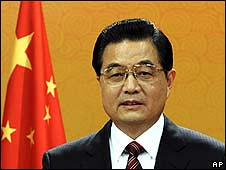
    Chinese Communist Party official Zhu Weiqun said there would be “corresponding action” if the meeting went ahead.

    The White House has indicated that Barack Obama intends to meet the head of Tibetans in exile.

    Mr Zhu’s comments follow talks between China and the Dalai Lama’s representatives in China.

    The talks yielded little progress, with both sides reiterating positions that were “sharply divided”.

    No compromise

    Mr Zhu talked at length about China’s view on a possible meeting between Mr Obama and the 1989 Nobel Peace Prize winner.

    He said: “It will seriously undermine the foundations of Sino-US political relations.”

    Mr Zhu, of the Chinese Communist Party’s United Front Work Department, said China would retaliate.

    “If [the meeting] does happen we will take corresponding action to make relevant countries see their mistakes,” he said.

    These comments come straight after a disagreement between China and the US about the sale of American military equipment worth $6.4bn to Taiwan, an island China considers its own.

    Mr Zhu was speaking at a press conference to discuss the recent five-day visit to China by the Dalai Lama’s representatives.

    This is the 9th time the two sides have met since 2002, but there is little common ground between them, as the Communist Party official acknowledged.

    “The positions of the two sides are sharply divided,” he said.

    “We have become accustomed to this – this has become a norm rather than an exception.”

    According to China, at this latest round of meetings the Tibetans again reiterated their hopes for the introduction of greater autonomy in the Himalayan region.

    Mr Zhu said there was no possibility of the “slightest compromise” on the issue of sovereignty in Tibet.

    He also attacked the Dalai Lama, who he said was a troublemaker.

    The Dalai Lama fled Tibet in 1959 after a failed uprising against Chinese rule.

    “He should make a thorough self-examination of his words and deeds and radically correct his political positions if he really expects results of contact and talks,” said the Chinese official.

    The talks between China and the Tibetans in exile, based in Dharamsala in India, follow an important conference held last month by Chinese leaders to review their Tibet policies.

    The meeting established China’s goal of bringing about “leap-forward development” and long-term security in the region, which saw major unrest in March 2008.

    Despite riots and demonstrations directed against Chinese rule, Beijing believes its policies in Tibet are correct.

    “The conference especially demonstrated the brilliant achievements in Tibet in the new century,” said Mr Zhu.

    Story from BBC NEWS:
    http://news.bbc.co.uk/go/pr/fr/-/2/hi/asia-pacific/8492608.stm
    Published: 2010/02/02 05:22:45 GMT

  • Haiti Could Send US ‘Child-Traffickers’ Home For Trial

    February 2, 2010

    Haiti could send US ‘child-traffickers’ home for trial

    Will Pavia in Port-au-Prince and James Bone in New York

    (Ben Gurr/The Times)

    The American missionaries arrested and branded as “kidnappers” in Haiti originally planned to pick up orphans from the streets of the quake-ravage capital, according to a planning document.

    The ten Americans stand accused of illegally transporting children out of Haiti after attempting to cross the border into the Dominican Republic in a bus loaded with 33 children, apparently without the required government authorisation.

    The five men and five women remained in gloomy cells at the back of the police headquarters in Port-au-Prince yesterday, awaiting the decision of a judge.

    Marie Laurence, the Haitian Minister for Culture and Communications, raised the possibility that they may face trial in the United States.

    “Whether they will have to follow the process here in Haiti or to follow the process in the United States, it is for the judge to decide… based on the law in Haiti,” she said.

    She added: “It appears that some of these children have mothers and fathers.”

    Max Bellerive, Haiti’s Prime Minister, confirmed that not all the children were orphans. “It is clear now that some of the children have live parents,” he said. “And it is clear now that they knew what they were doing was wrong.”

    The Idaho-based New Life Children’s Refuge had been planning to build an orphanage in neighbouring Dominican Republic, but swung into action when the earthquake hit Haiti.

    “The number of Haitian orphans is estimated to have increased 300 per cent as a result of the catastrophic earthquake… Thousands of children have lost their parents, are are injured, hungry, thirsty and alone with limited chance of survival without help,” said a planning document posted on a church web-site.

    The group launched a two-week “rescue mission” to save Haitian orphans “abandoned on the streets, makeshift hospitals or from collapsed orphanages” in Port-au-Prince and take them to a refuge set up in a rented 45-room hotel in the Dominican resort of Cabarete.

    The document said the team would arrive in the Dominican Republic on January 22 and drive a bus into Port-au-Prince the following day.

    The goal was to “gather 100 orphans from the streets and collapsed orphanages, then return to the DR”. The New Life Children Refuge was incorporated as a charity in November by two women — Laura Silsby, 40, who runs a personal shopper website, and her family’s nanny Charisa Coulter, 24 — who are members of the Central Valley Baptist Church in Meridian, Idaho.

    The charity is dedicated to “rescuing, loving and caring for orphaned, abandoned and impoverished Haitian and Dominican children, demonstrating God’s love and helping each child find healing, hope, joy and new life in Christ.”

    Five of the 10 arrested are members of the 500-strong congregation at Central Valley Baptist Church and at least three are members of the East Side Baptist Church in Twin Falls, Idaho, also part of the Southern Baptist Convention, America’s largest Protestant denomination.

    “We came here literally to just help the children. Our intentions were good,” Ms Silsby said from detention. “We wanted to help those who lost parents in the quake or were abandoned.” The group was in the process of buying land to build a 200-child orphanage, school and church in Magante on the north coast of the Dominican Republic.

    After the earthquake, the missionaries decided they could not wait. “Given the urgent needs from this earthquake, God has laid upon our hearts the need to go now vs. waiting until the permanent facility is built,” the planning document said.

    The rented 45-room hotel was intended to provide a shelter for up to 150 children, from infants to 12-year-olds.

    Missionaries budgeted $620 each for air-fares – $220 from Boise, Idaho to Las Vegas, and $400 from Las Vegas to the Dominican Republic – and appealed for donations to help play the estimated $1,800 to charter a bus in the Dominican Republic.

    The mission also asked for tax-deductible donations of medical supplies, nappies, children’s clothing, toys, 90 twin-sized beds and other supplies.

    “We will strive to also equip each child with a solid education and vocational skills as well as opportunities for adoption into a loving Christian family,” the planning document said.

    The group eventually took the children from the custody of Haitian pastor Jean Sanbil of the Sharing Jesus Ministries. It insists it paid no money for them.

    Drew Ham, the assistant pastor at Central Valley Baptist Church, said the 25-year-old church had conducted missions in Haiti before but none setting up an orphanage.

  • ExxonMobil: In Or Out of Africa?

    ExxonMobil: In Or Out of Africa?

    February 1, 2010 – 8:16 pm
    Christopher Helman is the Southwest Bureau Chief of Forbes, based in Houston

    ExxonMobil’s earnings announcement today ($19 billion in 2009 net income) didn’t shed any new light on the future of the company’s $4 billion bid for Kosmos Energy. The rumor in oil-land is that Exxon’s deal to buy Kosmos has already been scotched, and the parties are just waiting until the end of the exclusivity period to officially call it off. Dallas-based Kosmos has a juicy position in a host of newly discovered oil and gas fields off the coast of Ghana, including a quarter-stake in Jubilee, thought to hold upwards of 2 billion barrels of oil and gas equivalents.

    What happened? The Ghanaian government denounced the deal from the beginning, asserting its rights to make its own preemptive bid for Kosmos. Both England’s BP and China’s Cnooc announced that they would be willing to sweeten the pot for Kosmos. Though BP subsequently pulled itself out of the running, the belief is that BP Chief Tony Hayward is just being patient, waiting for Exxon to leave the game before stepping up again. A joint venture of BP and Cnooc taking over Kosmos for something like $5 billion sounds about right. Exxon declined to comment on Ghana; Kosmos didn’t respond to requests for comment.

    Whither Exxon? Don’t expect any whining from Rex Tillerson and company. In fact, Exxon might not mind losing Kosmos at all. Since the tentative deal was struck last fall, the Ghanaian government is thought to have unilaterally changed the terms of the licenses government much of the Kosmos acreage, claiming for the state all the natural gas produced from at least some of the fields. Besides, Exxon is busy orchestrating its $40 billion takeover of XTO Energy.

    But don’t count Exxon out of Africa yet. Earlier this month Exxon was named as one of the supermajors likely to partner with U.K.-based Tullow Oil in developing Uganda’s Lake Albert Rift Basin. Since then Tullow (which is also a partner in Ghana with Kosmos and Anadarko Petroleum) has reportedly narrowed its list to China’s Cnooc and France’s Total. A likely scenario: within a couple years Exxon ends up buying out Tullow ($10 billion market cap) to get both its Ghana and Uganda assets. Tullow has 90% of its reserves in Africa, with other projects in Madagascar, Congo and Sierra Leone.

  • Protest the Cover-up of the Assassination of Imam Luqman Ameen Abdullah

    For Immediate Release

    Monday, February 1, 2010

    Event: Press Conference to Release Autoposy of Slain Imam Luqman Ameen Abdullah
    Location: Dearborn Police Department, Michigan Near Southfield, Feb. 1, 10:15am
    Action: Protest the Cover-up of the Assassination of Detroit Imam
    Sponsor: Michigan Emergency Committee Against War & Injustice (MECAWI)
    Contact: 313.671.3715 or 887.4344
    E-mail: [email protected] or [email protected]
    URL: http://www.mecawi.org

    Protest the Assassination of Imam Luqman Ameen Abdullah and Subsequent Cover-up

    On Monday, February 1, Dearborn Police will release the long suppressed autoposy report on the death of Detroit Imam Ameen Abdullah. The Islamic leader was killed in Dearborn by FBI agents on October 28. Since Imam Abdullah’s death many local and national Islamic, African-American and human rights organizations have refused to accept the law-enforcement version of events.

    The Michigan Emergency Committee Against War & Injustice has condemned the assassination of the African-American leader and is demanding that all relevant information pertaining to the case be made public. In addition, we are demanding that those responsible for the unjustified death of Imam Abdullah be held criminally liable.

    Preliminary reports on the autopsy suggests that the imam was shot 21 times, with numerous gunshot wounds found below his waist and in the back. The imam was then handcuffed and placed in a prone position.

    MECAWI views the murder of this Muslim leader as a continuation of the federal government’s counterintelligence program aimed at neutralizing and liquidating African-American leadership. This assassination took place alongside the escalating repression against Muslims in the United States and the expansion of U.S. wars abroad in Afghanistan, Iraq and Yemen.

    All those who seek justice for the family and friends of Imam Luqman Ameen Abdullah should participate in the press conference and demonstration.

    Abayomi Azikiwe,
    Media Liaison

    MEDIA ADVISORY
    FOR IMMEDIATE RELEASE

    CONTACT: Ron Scott, 313.399.7345
    Abayomi Azikiwe, 313.671.3715

    January 31, 2010

    Coalition Challenges Police Killing, Demonstrates at Luqman Autopsy Press Conference

    The Detroit Coalition Against Police Brutality will join with MECAWI (Michigan Emergency Committee Against War & Injustice) and other organizations to express outrage over the autopsy report that indicated that the late Imam Luqman Abdullah of the Masjid Al-Haqq in Dearborn was shot 21 times by law enforcement officers. The demonstration will be held:

    Luqman Kiling Demonstration

    Monday, February 1, 2010
    10:15 a.m.

    Across the street from Dearborn Police Headquarters

    Michigan Avenue at Mercury Drive

    “A long trail of blood has come to this news conference this morning,” said Coalition spokesperson Ron Scott. “It has been a long time since we’ve seen the carnage that is described in this autopsy report. While the Dearborn Police Department and the FBI will present those findings in an attempt to justify this undercover assault, no words can silence the pain of Luqman’s family and the Muslim and African American communities as a whole who see this as an acceleration of police violence.

    “The Coalition continues to call for an independent investigation of the Luqman shooting,” continued Scott “We find it interesting that it has taken so long for the autopsy report to be released. People throughout Detroit, Michigan, the nation and the world are appalled that a religious leader’s body could be ripped apart like this in a torrent of bullets. We will continue to continue to draw attention to these unprecedented acts of violence.”

  • Malawi to Assume African Union Presidency

    Sunday, January 31, 2010
    19:29 Mecca time, 16:29 GMT

    Malawi to assume AU presidency

    Gaddafi said he would continue to push his dream of a fully integrated Africa

    The president of Malawi has been chosen to assume the rotating presidency of the African Union, Muammar Gaddafi, the Libyan leader and the body’s outgoing chairman, has said.

    Gaddafi told an AU summit in Addis Ababa, the Ethiopian capital, on Sunday that Bingu wa Mutharika would replace him, ending speculation that the Libyan leader would seek another term.

    “My brother [and] president of the republic of Malawi will replace me and take over,” Gaddafi said at the opening day of the three-day summit attended by Ban Ki-moon, the UN secretary-general.

    Gaddafi’s presidency of the AU has been marked by his efforts to promote his vision of a “United States of Africa”, although little progress has been made during his 12 months in charge.

    The veteran Libyan leader, elected chairman of the 53-nation AU at its annual summit last year despite opposition from some African leaders, said he would continue to push his dream of a fully integrated continent.

    “There is no need for any title, I’ll remain in the front struggling,” Gaddafi said.

    Libyan lobbying

    Al Jazeera’s Amr El-Kahky, reporting from Addis Ababa, said: “Key players in Africa were reluctant to endorse the lobbying and the request of the Libyan leader to keep the chairmanship of the African Union for another year.

    “He [Gaddafi] says he wants to complete what he has started – it’s mission unaccomplished or unfinished business – but they told him behind closed doors that they are going to act according to the charter, which dictates the rotation of the chairmanship of the AU.

    “That’s why, within three minutes, Gaddafi has declared that he will hand over the presidency to Malawi.”

    In his acceptance speech, Mutharika said it was time for Africa to fulfill its promise, adding “the time has come for Africa to develop Africa”.

    “Africa is not a poor continent but the African populations are poor when we have actually a lot of natural resources,” he said.

    Earlier, the UN chief criticised power-grabs in Africa in a speech to the continent’s leaders at the summit.

    Ban expressed concern about a resurgence of “unconstitutional” power changes in Africa and rapped attempts by incumbents to change the law in order to continue in power.

    “The resurgence of unconstitutional changes of government in Africa is a matter of serious concern,” he said.

    “We must also guard against the manipulation of established processes to retain power.”

    Africa has been dogged by political crises in the last year, including in Madagascar where Marc Ravalomanana was removed in an army-backed coup in March.

    ‘Succession structures’

    In Guinea, the army seized power in December 2008 before massacring opposition followers in a football ground who protested against the coup.

    Speculation that Gaddafi would seek another term was rife as the summit got under way and diplomats said he was likely to dominate talks, overshadowing scheduled discussions on the continent’s conflicts.

    However, Moses Wetangula, Kenya’s foreign affairs minister, had maintained that “clear succession structures within the AU” would make it hard for Gaddafi to cling on.

    “Every chairman serves one calendar year, unless there are serious extenuating circumstances, that would require continuation,” he said.

    Southern African Development Community (Sadc) presidents unanimously resolved that it is time Malawi, a southern Africa nation, assumed the leadership of the AU.

    The Sadc heads of state nominated Mutharika at their regional summit in Kinshasa, Democratic Republic of Congo (DRC), in August 2009 to represent them during the elections of the AU chairman.

    Source: Al Jazeera and agencies

  • The Massachusetts Election and the Challenges Ahead

    The Massachusetts election and the challenges ahead

    By Fred Goldstein
    Published Jan 27, 2010 5:07 PM

    The victory of right-wing candidate Scott Brown in the Massachusetts senatorial election throws into bold relief the crisis for the workers and the oppressed in this country. It is one of leadership, politics and organization.

    Many lessons are being drawn by the Democratic Party leadership, various liberal pundits, labor union leaders and others about what happened in Massachusetts. But, simply stated, there is one overriding lesson. The dismal record of the Democratic Party leadership and the Obama administration’s utter subservience to the banks and corporate interests have left the base of the Democratic Party out in the cold — leading to disillusionment and confusion.

    Having to choose between the needs of their base — the masses of workers, the poor and oppressed communities, and the progressive middle class — and their corporate masters, the top Democratic Party leadership showed once again that it is a captive of corporations and their lobbyists. The administration is surrounded by bankers, finance officials, corporate representatives, generals and admirals — just as every previous administration has been.
    Hand-in-hand: Big business and government

    The understandable enthusiasm and high hopes that accompanied the historic election of the first African-American president, and the pushing back of racism that this represented, are waning as Barack Obama follows the well-trodden path of all those who step into the role of chief executive for U.S. imperialism.

    The disillusionment and anger that were bound to set in were first expressed in the defeat of liberal multimillionaire and former banker Gov. John Corzine of New Jersey. The defeat of Massachusetts Attorney General Martha Coakley, the Democratic candidate for senator in that state, is another expression of that same disillusionment.

    The problem at the moment is that the right wing is feeding on that disillusionment, and will try to gain ground within the working class and the middle class to sow racism, militaristic ideology and division, in the midst of a deepening economic crisis.

    The forces behind Brown

    This is what let Brown, a little-known, right-wing Republican and Massachusetts state senator, defeat the state’s attorney general in the Jan. 20 Senate race for a seat held by Ted Kennedy for close to half a century.

    The Brown victory has thrown the Democratic Party and the Obama administration into a crisis. It tipped the voting balance in the Senate, depriving the Democrats of a filibuster-proof majority and thus threatening the health care bill and possibly the rest of the Obama administration’s legislative agenda. The Brown victory further signified that Democratic candidates may be in jeopardy in the 2010 congressional elections.

    Brown is a Republican who campaigned with a blend of right-wing, reactionary positions plus demagogic appeals to the working class. His campaign was supported by the so-called Tea Party movement — a network of ultra-rightists and fascist elements that surfaced during the town hall meetings and poured vile racism and fraudulent anti-communist attacks on President Obama.

    The Tea Party groups are coordinated under the umbrella of Freedom Works, a right-wing foundation headed by Dick Armey. This former U.S. representative from Texas funneled funds from the health care industry and the oil, coal and utility companies into the creation of phony “grassroots” movements against the health care bill and environmental programs. Right-wing networks around the country directed millions of dollars into the Brown campaign.

    Brown denounced the bloated health care bill, backroom deals by the Obama administration and government spending. He played on the fear of increased taxes and called for creating jobs. He drove around in a pickup truck to create the image of a “man of the people.”

    At the same time he came out for waterboarding and denounced legal representation for prisoners, such as those in Guantánamo. He was a champion of the so-called “war against terror.” He opposed legislation legalizing undocumented workers. He condemned cap-and-trade legislation to reduce carbon emissions — not because it is totally ineffective, but because it is “big government intervention.”

    To add to the confusion and deception, Brown praised Kennedy and did not play the race card against Obama. On the other hand, he was supported by the most virulent racist and fascist elements in capitalist society and undoubtedly strengthened them politically.

    Martha Coakley, on the other hand, ran a lackluster and belated campaign, basically defending the program of the Obama administration on health care, job creation, etc.

    There have been endless post-election analyses of the upset. Some attribute it to the poor campaign run by Coakley. They bemoan that the outcome would have been different if only she had run a more effective campaign and had not made blunders, like not recognizing the name of a famous Boston Red Sox pitcher; if only she had not been so aloof, had not gone on vacation, etc., etc.

    But this is taking a completely narrow view of the defeat. What are the circumstances that allowed a gaffe or a lackluster campaign to become decisive in an electoral race for a “liberal” seat held by the multimillionaire Kennedy dynasty for decades? Obama won Massachusetts by 67 percent. Brown beat Coakley by 52 percent to 47 percent.

    Economic emergency and backroom deals

    Bob Herbert, the only African-American op-ed columnist for the New York Times, wrote an angry piece on Jan. 23 after the Brown victory, entitled “They Still Don’t Get It.” Wrote Herbert: “There is an economic emergency in the country with millions upon millions of Americans riddled with fear and anxiety as they struggle with long-term joblessness, home foreclosures, personal bankruptcies and dwindling opportunities for themselves and their children.”

    Regarding the health care bill, which Coakley had to defend and Brown ran against, Herbert wrote: “No one in his or her right mind could have believed that a workable, efficient, cost-effective system could come out of the monstrously ugly plan that finally emerged from the Senate after long months of shady alliances, disgraceful backroom deals, outlandish payoffs and abject capitulation to the insurance companies and giant pharmaceutical outfits.”

    Add to this that the banks have humiliated the Obama administration by first taking bailouts from the government and then giving out billions of dollars in bonuses to their executives. They are now pulling in record profits, refusing to lend money or readjust mortgages, and working to sabotage all restraint on their financial manipulations.

    Meanwhile, unemployment together with underemployment is at 27 million to 30 million. Three million homes went into foreclosure last year, and millions more are expected. Hunger, poverty, wage cuts, pressures on the job, loss of health care and every other hardship are growing.

    The big question on the minds of the workers is when this will stop and who will put a stop to it.

    The greatest potential resource that the workers in this capitalist society have is the unions. But at the moment, the rank and file is paralyzed by the complete absence of any independence or struggle at the leadership level.

    In the Massachusetts election 29 percent of Brown voters had voted for Obama in 2008. An AFL-CIO poll showed that union members voted 49 percent to 46 percent for Brown. These are the numbers that should be zeroed in on.

    Workers and others who voted for an African-American president in 2008 have now swung to a right-wing candidate because of demagogy and because there was no place else to go.

    A challenge to fight back

    That is the challenge to all the advanced elements in the U.S. All those who are against capitalism, racism, imperialism, who are partisans of the workers and the oppressed in the unions, the communities, the political movements on the campuses, youth and students, must find an organizational form to come together on a national and regional level to launch a massive movement to fight back — to fight for jobs and to formulate a minimum program that can express the interests of the workers and the oppressed independently of the capitalist parties.

    The liberals, social democrats and labor leadership are all fixated on the electoral arena as the primary form of political struggle. They are directly or indirectly supporters of or dependent upon the Democratic Party.

    Electoral struggle is a legitimate form of struggle but cannot be substituted for mass mobilization and class combat. The way to influence legislation in this country historically has been through strikes, sit-ins, takeovers, rebellions and mass resistance of all types.

    The crisis in the Democratic Party has become a crisis for the labor unions and social democrats in general. They have led the masses along behind the Democratic leadership. This is the party that just sent 30,000 more troops to Afghanistan, rains down missiles from Predator drones in Pakistan, still occupies Iraq, sent 12,000 troops to occupy Haiti, supports Israel in its suppression of the Palestinians, builds bases in Colombia, sponsored a coup in Honduras, and so on.

    The crisis of the Democratic Party should not be our crisis. It should be turned into an opportunity for the broad movement of the workers, especially the labor unions, to declare their independence, to expose the capitalist interests behind the economic crisis, to fight for class unity of the workers — organized and unorganized, documented and undocumented, employed and unemployed — to open up a struggle in the streets and workplaces, and to put forward its own political program.

    We should not allow the right wing to co-opt disillusionment in the midst of an economic crisis. The working class in this country is a sleeping giant. It is time for every revolutionary to think long and hard about how to go about helping this giant awake and shake the ground under the decadent ruling class, whose profit system is bringing hardship without end.

    Articles copyright 1995-2010 Workers World. Verbatim copying and distribution of this entire article is permitted in any medium without royalty provided this notice is preserved.

    Workers World, 55 W. 17 St., NY, NY 10011
    Email: [email protected]
    Page printed from:
    http://www.workers.org/2010/us/massachusetts_election_0204/

    Executive Office of the President
    MICHAEL FROMAN, Deputy Asst. to the President Citigroup
    VALERIE JARRET, Asst. to the President Chicago Stock Exchange
    JAMES L. JONES, National Security Adviser Chevron

    White House Office
    SEAN KENNEDY, Special Asst. on Legislative Affairs AT&T

    Commerce Dept.
    MARC BEREJKA, Senior Policy Advisor, Microsoft
    DENNIS F. HIGHTOWER, Deputy Secretary Designate Accenture

    Defense Dept.
    WILLIAM J. LYNN, Deputy Defense Secretary Raytheon

    Energy Dept.
    WILLIAM BRINKMAN, Director, Office of Science & Technology Lucent Technologies
    STEVEN E. KOONIN, Under Secretary for Science BP (formerly British Petroleum)

    State Dept.
    JACOB J. LEW, Deputy Secretary Management & Resources Citigroup
    JUDITH A. MCHALE, Under Secretary of Public Diplomacy Discovery Communications
    GEORGE J. MITCHELL, Special Envoy to Middle East Defense Logistics Agency

    Treasury Dept.
    MATTHEW KABAKER, Deputy Asst. Secretary Blackstone Group
    MARK A. PATTERSON, Chief of Staff to the Secretary Goldman Sachs
    JAKE STEWART, Counselor to the Secretary Alcoa
    KIM N. WALLACE, Asst. Secretary Legislative Affairs Lehman Brothers/Barclays Bank
    NEAL S. WOLIN, Deputy Secretary Hartford Financial Services

    SOURCE: BUSINESS WEEK, FEB. 1-8

  • Strategic Interests: When the Jihadists Take Mogadishu

    Strategic Interests

    by J. Peter Pham, Ph.D.
    World Defense Review columnist

    When the Jihadists Take Mogadishu

    Last Friday, the African Union (AU) Peace and Security Council voted to extend for another six months the mandate of its woefully undermanned military force in Mogadishu. The AU Mission in Somalia (AMISOM), composed of some 5,000 soldiers from Uganda and Burundi, has been besieged by Islamist insurgents since its arrival nearly three years ago, losing dozens of its members to repeated attacks like the suicide bombing last September 17, which killed seventeen peacekeepers, including the deputy force commander, Brigadier General Juvénal Niyoyunguruza of Burundi, and wounded some forty others.

    Despite the peacekeepers’ valiant efforts, they cannot be expected to confer legitimacy and viability on Somalia’s “Transitional Federal Government” (TFG) when it does not possess those qualities in its own right. Hence, the international backing of the regime may not be sufficient to ensure its survival and that it is very possible—if not likely—that, by the end of the year, the TFG’s few remaining outposts in the capital will have fallen to its opponents. Thus policymakers and analysts need to consider what will be the consequences of such a victory by the jihadists.

    Of course the mere possibility that the Harakat al-Shabaab al-Mujahideen (“Movement of Warrior Youth,” al-Shabaab), the insurgent group declared a “specially designated global terrorist” by the United States two years ago and a “listed terrorist organization” by the Australian government last year, and its allies in the Hisbul Islam (“Islamic party”) movement led by Sheikh Hassan Dahir ‘Aweys, a figure who appears personally on both United States and United Nations antiterrorism sanctions lists, might actually triumph is so anathema to some members of the international community that they have essentially been rendered incapable of rational analysis about the situation.

    As a result, their actions hasten the very outcome that they seek to prevent at all costs. Thus the shipment, first reported last week by the Mareeg news service, that the TFG had imported a large shipment of arms, including tanks—the latter representing a considerable escalation from the “technicals,” improvised battle wagons constructed by mounting a machine or anti-aircraft gun on a pickup truck or four-wheel drive vehicle, which have been ubiquitous in the Somali conflict. It later emerged that the shipment came on Sierra Leonean-flagged vessel, the MV Alpha Kirawira, which, according to a press release by the European Union Naval Force (EU NAVFOR) Somalia’s Operation Atalanta, was chartered by the UN Support Office for AMISOM (UNSOA) and escorted out of the Kenyan port of Mombasa by the Spanish frigate SPS Navarra and accompanied all the way to Mogadishu by the French corvette FS Commandant L’Herminier.

    Unfortunately, what I noted here six months ago with respect to the unfortunate U.S. shipment of arms to the TFG earlier this year is also true about the current consignment: it is likely to prove that a “poorly thought-out gesture may have handed the Islamist extremists both the weapons and the nationalist (and anti-American) card to use in their fight against the TFG.” (One does not have to agree with all her conclusions to acknowledge the validity of the assertion made in the essay by Bronwyn Bruton of the Council on Foreign Relations for the November/December 2009 issue of Foreign Affairs that “had it not been for the United States’ counterterrorism efforts, the sharia courts and al-Shabaab might have remained marginal.”)

    In fact, as I have had occasion to argue, “if any further proof is needed of the failure of the policy of simply shipping weapons to the TFG is a mistake of startling proportions,” it is the evidence from the open markets of Mogadishu that “the TFG is both so corrupt and so lacking in capacity that sending it materiel has only made it more convenient for the insurgents fighting it—who are well-financed thanks to their foreign donors, both state and non-state—to simply replenish their arsenals on the open market.”

    The observation about the weakness of the TFG should, of course, come as no surprise given the extra-legal machinations which were required one year ago by the Special Representative of the UN Secretary-General and the appositely-created parliamentarians just to give birth to the regime’s current incarnation under the supposed “moderate” Islamist Sheikh Sharif Sheikh Ahmed (see my report at the time on this episode).

    My colleague, Michael Weinstein of Purdue University, is quite on target when he noted in an analysis last week that while, “in the sense of international recognition, the TFG is Somalia’s ‘legitimate’ government and [al-Shabaab and Hisbul Islam] are the ‘armed opposition’; in the sense of power and momentum, the TFG and the rest of the anti-Shabaab coalition … form a variegated and divided opposition” as the jihadists go about their strategy of encircling the transitional regime in Mogadishu by achieving dominance in the central regions of Hiraan, Galguduud, and southern Mudug.

    As I reported last week, it was Dhuusamareeb, the capital of the Galguduud region, which was being contested; it now appears that fierce fighting is taking place across the region, including its commercial hub at Guriceel. Even if the jihadists lose any specific battle, it is unlikely that their overall strategy will be frustrated given their broad momentum and deep resources.

    Moreover, Professor Weinstein is also correct in dismissing the wishful thinking of some that fissures are opening up among the insurgents, noting both that al-Shabaab’s “contending factions made a demonstration of unity on January 1 at a ceremony in Mogadishu showing off hundreds of newly trained fighters” and that “despite its conflicts with [Hisbul Islam] in the deep southern regions, [al-Shabaab] appears to be able to collaborate with Hisbul Islam tactically and, perhaps, strategically elsewhere.” In fact, in fighting this week around Beledweyne, capital of Hiraan and Somalia’s second largest city in terms of population, armed units from the two Islamist groups were fighting side by side.

    These considerations are important when one begins to tally up estimates of relative strengths of the various opposing factions and compare their training and command-and-control structures. Well-informed analysts estimate that al-Shabaab has somewhere between 4,000 and 7,000 fighters in and around Mogadishu, at least one-third of whom have had advanced training from its foreign jihadist allies, who apparently exercise a great deal of control over them. In addition, al-Shabaab has up to 6,000 fighters scattered around the country.

    The group also has anywhere between 500 and 1,500 foreign jihadists who have flocked to its banner from as far away as Nigeria and Pakistan as well as several hundred Somalis from the diaspora. Hisbul Islam’s organization is more clan-based, with perhaps as up to 5,000 fighters around the capital, the majority of whom hail from the Hawiye clan of Habar Gidir, and perhaps as many as 3,000 elsewhere in the southern and central Somalia.

    Although only about 10 percent of Hisbul Islam’s forces have had advanced training, most of those more skilled fighters are deployed in or close to Mogadishu, thus increasing their impact. The Ahlu Sunna wal-Jama’a (roughly, “[Followers of] the Traditions and Consensus [of the Prophet Muhammad]”) militias opposing al-Shabaab in the central regions have maybe several thousand members, but most of these are clansmen mustered on an ad hoc basis, rather than a standing force, notwithstanding Ethiopian efforts to train and assist them.

    In contrast, the TFG claims to have 5,000 troops, although that figure is inflated with clan militiamen it manages to hire from time to time and over whom it has no effective control. At the most, the regime of Sharif Ahmed may actually command 1,500 poorly trained fighters. However, what it does have, thanks to the largess of its foreign benefactors, is an excess of armaments.

    This, however, is a double-edged sword. As the representative of one Mogadishu-based Somali non-governmental organization told me over the weekend, the lack of training and the large amounts of ammunition means that TFG troops can and do fire at will—and the resulting high level of “collateral” civilian casualties hardly improve to the TFG’s popularity.

    So, what will happen if the TFG collapses?

    First, the event, however undesirable, needs to be kept in perspective: while the jihadists in Somalia and their allies abroad will undoubtedly try to capitalize on the propaganda value of their victory, it really does not change the strategic balance that much. As I told a Congressional hearing last June, “even without taking Mogadishu, al-Shabaab and its allies have already succeeded in carving out a geographical space where they and like-minded jihadist groups can operate freely … even without toppling the TFG, al-Shabaab has already achieved a major objective of jihadists worldwide by securing a territorial base from which they can carry out attacks elsewhere, especially against targets on the Arabian Peninsula.”

    Even a supporter of continued backing of the TFG like Ken Menkhaus of Davidson College has acknowledged in a RUSI Journal article last August: “While a Shabaab victory in Mogadishu would constitute a major political setback, it would not appreciably worsen the security threat that exists in Somalia.”

    Second, the jihadists’ Wahhābist ideology is as alien to the Somali tradition of Islam as the foreign trainers and fighters they have imported along with it; therein lie the seeds of their downfall. The brutal hudud punishments that have been meted out in areas controlled by al-Shabaab this past year—including public stonings, beheadings, amputations, and floggings—have revolted the majority of Somalis even as the militants’ petty social regulations—like the order, handed down last month and enforced last week with the imprisonment of dozens, requiring men in the port of Kismayo to have their moustaches and grow beards—have irritated them needlessly. Without a foreign “invader” like the AMISOM force to rally nationalist sentiment against them, al-Shabaab and its allies will be forced to rely on pure terror to keep the masses under control.

    Third, conquering a collapsed state is easy enough when faced with a weak opponent like the TFG, but administering the country is another matter entirely. The very ties to foreign terrorist and other jihadist networks that will have facilitated al-Shabaab’s military victory will leave any regime led by the group isolated internationally.

    A sign of things to come, as it were, was last week’s decision by the UN’s World Food Program, which provides emergency food assistance to more than 3 million Somalis, to suspend its program in southern Somalia, which distributes food to one million people, because of what it described in a statement as “the imposition of a string of unacceptable demands.” Nor is autarky an option given that the relatively few highly-qualified Somali professionals from the diaspora that the TFG has managed to lure back to the country would most certainly flee again in the face of a jihadist takeover.

    Fourth, the defeat of the TFG will present the international community with logistical challenges of monumental proportions for which contingency plans ought to be developed now, even if it is not politically possible to publicly acknowledge their existence.

    Someone will need to quickly evacuate the AMISOM peacekeepers and their equipment, including artillery and armored vehicles, to prevent them from falling into the hands of the insurgents—the AU certainly does not possess this type of massive airlift capability.

    Then, the international community in general and relief organizations in particular will need to be ready to cope with large numbers of Somalis trying to escape Mogadishu’s newly ensconced extremist rulers. The 20,000 refugees who, in response to the WFP pullout, trekked toward already-packed camps in Kenya this week from the immediate border districts of southern Somalia may just be the start of a mass exodus.

    Fifth, the development will be a wake-up call: the combination of the irredentist claims of the some of the radical Somali Islamists and the wider jihadist agenda of others will galvanize regional opposition. Thus far, Ethiopia has been most sensitive to the challenge, but Kenya and other countries in the Horn of Africa have grown increasingly concerned.

    The subregional Inter-Governmental Authority on Development (IGAD) rallied together last year for an unprecedented appeal for the sanctions on Eritrea which the UN Security Council imposed on the Asmara regime last month for its role in supporting the Somali insurgents. A Somali regime headed by al-Shabaab can expect similar treatment from neighbors anxious to prevent the spread of its noxious ideology as well as to protect their own territorial integrity and national security.

    Sixth, the collapse of the TFG may have a silver lining insofar as it forces the international community to finally get over its nearly two-decade-long fixation with southern and central Somalia and move beyond repeated “top-down” efforts, each more disastrous than its predecessor, to install a central government (there have been fourteen such abortive attempts since 1991, with the current version of the TFG representing a fifteenth try). Instead, driven by the necessity of containing a jihadist regime in Mogadishu and, eventually, rolling it back, a “bottom-up” approach will have to be adopted.

    Thus legitimate and functional Somali entities—whether they are found in the nascent states like Somaliland and, to a certain extent, Puntland in the northern regions or in local communities and civil society structures in parts of central and southern Somalia—may finally get the recognition and engagement that has been lacking for all too long.

    The TFG has had its chance. If, after more than five years since its inception and hundreds of millions of dollars in foreign aid and military support, it has proven unable to rally to its banner the very populace it purports to represent, there is nothing that any outsider can or should do to impose its writ upon southern and central Somalia.

    Rather, it is time for Somalia’s neighbors and other international partners to undertake a long-overdue triage and henceforth refocusing scarce resources on minimizing the fallout from the interim regime’s collapse and strengthening the salvageable parts of the former Somali state, thereby simultaneously safeguarding their own legitimate national interests in regional security and stability.
    ———————————————————————————————
    — J. Peter Pham is Senior Fellow and Director of the Africa Project at the National Committee on American Foreign Policy in New York City. He also holds academic appointments as Associate Professor of Justice Studies, Political Science, and African Studies at James Madison University in Harrisonburg, Virginia, and non-resident Senior Fellow at the Foundation for the Defense of Democracies in Washington, D.C. He currently serves as Vice President of the Association for the Study of the Middle East and Africa (ASMEA).

    Dr. Pham has authored, edited, or translated over a dozen books and is the author of over three hundred essays and reviews on a wide variety of subjects in scholarly and opinion journals on both sides of the Atlantic. In addition to the study of terrorism and political violence, his research interests lie at the intersection of international relations, international law, political theory, and ethics, with particular concentrations on the implications for United States foreign policy and African states as well as religion and global politics.

    Dr. Pham has testified before the U.S. Congress on numerous occasions and conducted briefings or consulted for the U.S. and foreign governments as well as private firms. He has appeared in various media outlets, including CBS, PBS, CBC, SABC, VOA, CNN, the Fox News Channel, MSNBC, National Public Radio, the BBC, Radio France Internationale, the Associated Press, Reuters, The Wall Street Journal, The New York Times, The Washington Post, The Washington Times, USA Today, National Journal, Newsweek, The Weekly Standard, New Statesman, and Maclean’s, among others.

  • China Leading Global Race to Make Clean Energy

    January 31, 2010

    China Leading Global Race to Make Clean Energy

    By KEITH BRADSHER
    New York Times

    TIANJIN, China — China vaulted past competitors in Denmark, Germany, Spain and the United States last year to become the world’s largest maker of wind turbines, and is poised to expand even further this year.

    China has also leapfrogged the West in the last two years to emerge as the world’s largest manufacturer of solar panels. And the country is pushing equally hard to build nuclear reactors and the most efficient types of coal power plants.

    These efforts to dominate renewable energy technologies raise the prospect that the West may someday trade its dependence on oil from the Mideast for a reliance on solar panels, wind turbines and other gear manufactured in China.

    “Most of the energy equipment will carry a brass plate, ‘Made in China,’ ” said K. K. Chan, the chief executive of Nature Elements Capital, a private equity fund in Beijing that focuses on renewable energy.

    President Obama, in his State of the Union speech last week, sounded an alarm that the United States was falling behind other countries, especially China, on energy. “I do not accept a future where the jobs and industries of tomorrow take root beyond our borders — and I know you don’t either,” he told Congress.

    The United States and other countries are offering incentives to develop their own renewable energy industries, and Mr. Obama called for redoubling American efforts. Yet many Western and Chinese executives expect China to prevail in the energy-technology race.

    Multinational corporations are responding to the rapid growth of China’s market by building big, state-of-the-art factories in China. Vestas of Denmark has just erected the world’s biggest wind turbine manufacturing complex here in northeastern China, and transferred the technology to build the latest electronic controls and generators.

    “You have to move fast with the market,” said Jens Tommerup, the president of Vestas China. “Nobody has ever seen such fast development in a wind market.”

    Renewable energy industries here are adding jobs rapidly, reaching 1.12 million in 2008 and climbing by 100,000 a year, according to the government-backed Chinese Renewable Energy Industries Association.

    Yet renewable energy may be doing more for China’s economy than for the environment. Total power generation in China is on track to pass the United States in 2012 — and most of the added capacity will still be from coal.

    China intends for wind, solar and biomass energy to represent 8 percent of its electricity generation capacity by 2020. That compares with less than 4 percent now in China and the United States. Coal will still represent two-thirds of China’s capacity in 2020, and nuclear and hydropower most of the rest.

    As China seeks to dominate energy-equipment exports, it has the advantage of being the world’s largest market for power equipment. The government spends heavily to upgrade the electricity grid, committing $45 billion in 2009 alone. State-owned banks provide generous financing.

    China’s top leaders are intensely focused on energy policy: on Wednesday, the government announced the creation of a National Energy Commission composed of cabinet ministers as a “superministry” led by Prime Minister Wen Jiabao himself.

    Regulators have set mandates for power generation companies to use more renewable energy. Generous subsidies for consumers to install their own solar panels or solar water heaters have produced flurries of activity on rooftops across China.

    China’s biggest advantage may be its domestic demand for electricity, rising 15 percent a year. To meet demand in the coming decade, according to statistics from the International Energy Agency, China will need to add nearly nine times as much electricity generation capacity as the United States will.

    So while Americans are used to thinking of themselves as having the world’s largest market in many industries, China’s market for power equipment dwarfs that of the United States, even though the American market is more mature. That means Chinese producers enjoy enormous efficiencies from large-scale production.

    In the United States, power companies frequently face a choice between buying renewable energy equipment or continuing to operate fossil-fuel-fired power plants that have already been built and paid for. In China, power companies have to buy lots of new equipment anyway, and alternative energy, particularly wind and nuclear, is increasingly priced competitively.

    Interest rates as low as 2 percent for bank loans — the result of a savings rate of 40 percent and a government policy of steering loans to renewable energy — have also made a big difference.

    As in many other industries, China’s low labor costs are an advantage in energy. Although Chinese wages have risen sharply in the last five years, Vestas still pays assembly line workers here only $4,100 a year.

    China’s commitment to renewable energy is expensive. Although costs are falling steeply through mass production, wind energy is still 20 to 40 percent more expensive than coal-fired power. Solar power is still at least twice as expensive as coal.

    The Chinese government charges a renewable energy fee to all electricity users. The fee increases residential electricity bills by 0.25 percent to 0.4 percent. For industrial users of electricity, the fee doubled in November to roughly 0.8 percent of the electricity bill.

    The fee revenue goes to companies that operate the electricity grid, to make up the cost difference between renewable energy and coal-fired power.

    Renewable energy fees are not yet high enough to affect China’s competitiveness even in energy-intensive industries, said the chairman of a Chinese industrial company, who asked not to be identified because of the political sensitivity of electricity rates in China.

    Grid operators are unhappy. They are reimbursed for the extra cost of buying renewable energy instead of coal-fired power, but not for the formidable cost of building power lines to wind turbines and other renewable energy producers, many of them in remote, windswept areas. Transmission losses are high for sending power over long distances to cities, and nearly a third of China’s wind turbines are not yet connected to the national grid.

    Most of these turbines were built only in the last year, however, and grid construction has not caught up. Under legislation passed by the Chinese legislature on Dec. 26, a grid operator that does not connect a renewable energy operation to the grid must pay that operation twice the value of the electricity that cannot be distributed.

    With prices tumbling, China’s wind and solar industries are increasingly looking to sell equipment abroad — and facing complaints by Western companies that they have unfair advantages. When a Chinese company reached a deal in November to supply turbines for a big wind farm in Texas, there were calls in Congress to halt federal spending on imported equipment.

    “Every country, including the United States and in Europe, wants a low cost of renewable energy,” said Ma Lingjuan, deputy managing director of China’s renewable energy association. “Now China has reached that level, but it gets criticized by the rest of the world.”